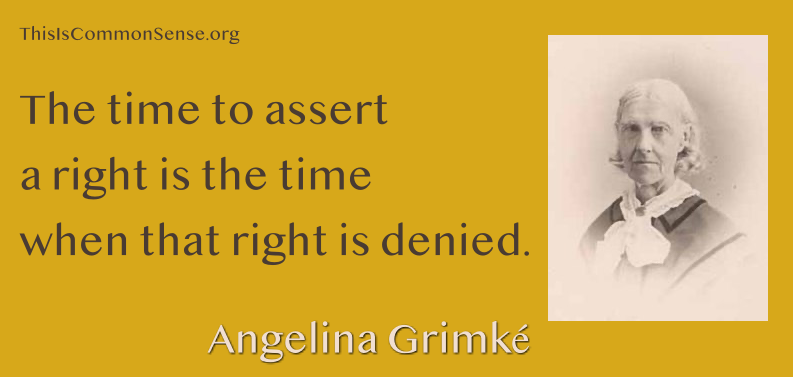
It’s nice to elect the right people, but that isn’t the way you solve things. The way you solve things is by making it politically profitable for the wrong people to do the right things.
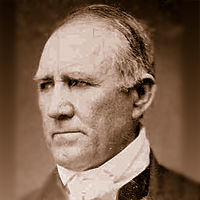
Milton Friedman, c. 1977
Milton Friedman
It’s nice to elect the right people, but that isn’t the way you solve things. The way you solve things is by making it politically profitable for the wrong people to do the right things.
Milton Friedman, c. 1977
On October 10, 1957, Ayn Rand’s dystopian/utopian novel Atlas Shrugged was published. Written to expound and defend an individualist, freedom/free-market point of view, it is one of the most influential and literarily successful didactic novels ever written.
On October 10, 1973, Austrian-born American economist, Ludwig von Mises* (pictured above) died.
Two-hundred fifty-nine years earlier, the French law-maker and Jansenist Pierre le Pesant, sieur de Boisguilbert died.
Both economists were known for their defenses of freer markets: le Pesant for pioneering the critique of mercantilism, arguing that a nation’s wealth consisted in what its people produce and trade; Mises for systematizing economic theory and advancing the critique of both socialism and latter-day mercantilism (what he called “interventionism”).
In January 1958, following the publication of Atlas Shrugged, Mises wrote Ayn Rand a letter of congratulations.
In this weekend’s podcast, Paul Jacob starts off talking about what he has been working on in Michigan. Michigan voters have some No votes to place at the polls! So do Arkansans.
And the lessons from these two states are universal, or nearly so:
An amibitious Roman used to buy and bribe his way through all the inferior magistracies up to the consulship, counting upon getting a province at last out of whichhe could extort enough to recoup himself, pay all his debts, and have a fortune besides. Modern plutocrats buy their way through elections and legislatures, in the confidence of being able to get powers which will recoup them for all the outlay and yield and an ample surplus besides.
I regard plutocracy, however, as the most sordid and debasing form of political energy known to us. In its motive, its processes, its code, and its sanctions it is infinitely corrupting to all the institutions which ought to preserve and protect society. The time to recognize it for what it is, in its spirit and tendency, is when it is in its germ, not when it is full green.
William Graham Sumner, “Democracy and Plutocracy,” in Earth Hunger and Other Essays (1914), pp. 294–295.
On October 9, 1635, Protestant theologian Roger Williams was banished from the Massachusetts Bay Colony as a religious dissident after he spoke out against punishments for religious offenses and giving away Native American land. He moved south, founding Providence Plantations, where he worked for separation of church and state, the rights of aboriginal Americans, and against slavery.
Michiganders? Arkansans? You’ve measures to vote No on. Everybody else? What’s going on in these states is worth paying attention. Paul Jacob explains. And covers the big stories of the week:
Two resolute men, acting in concord, may transform an Empire, but an ordinary resourceful duck can escape from a dissentient rabble.
Ernest Bramah, as quoted by Lin Carter, Kai Lung Unrolls His Mat, introduction (Ballantine Books, 1974).
The date October 8, 1582, does not exist in the records of Italy, Poland, Portugal and Spain, the result of that year’s implementation of the Gregorian calendar.
Fearing a Catholic plot, Protestant countries adopted the more accurate calendar much later. By the time Britain and its colonies got on board in 1752, eleven days had to be “disappeared.” This caused riots in some places, as people suspected some horrible chicanery — and in actual fact the inspiration for the “Give us our eleven days” protest had something to do with taxes, so it might not have been as idiotic as it now seems.
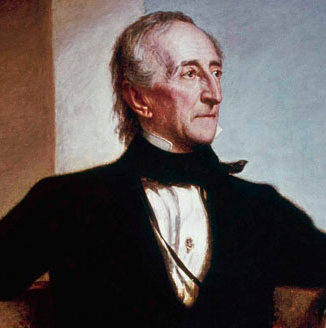
On October 8, 1793, American merchant, president of the Second Continental Congress (1775–1777) and first and third Governor of the Commonwealth of Massachusetts, John Hancock (b. 1737), died.
There was some furor.
It is unfashionable, politically, for anyone — even a black man, or especially a famous black man — to admit the obvious truth that “White Lives Matter.”
It appears that chic faux-lib’rals regard the slogan “Black Lives Matter” as some sort of trademark that precludes extension to other races. Only people of color may use an “X Lives Matter” kind of branding.
Idiotic. And racist. But ABC News laid out the case as if it were clearly established truth: “The [White Lives Matter] phrase has been described by the Anti-Defamation League and Southern Poverty Law Center as a white supremacist hate slogan that originated in 2015 as a racist response to the civil rights movement Black Lives Matter.”
And yet a statement like “White Lives Matter” or “Human Lives Matter” can only be hate speech if you think one usage defines words forever.
Which of course is precisely what some are trying to establish here.
Why? Well, the better to engage in angry, hateful ideological pseudo-discourse: shaming; marginalizing; de-humanizing.
Ye also posed with Candace Owens, a conservative commentator for The Daily Wire, wearing those shirts, and that, too, really annoyed people.
Not that it should. Ye was once married to a white woman, and Candace is married to a white man. They are making a commonsense point here: if you can’t say your spouse matters, what kind of spouse are you? And if you cannot extrapolate that mattering principle more generally, what kind of human are you?
This is Common Sense. I’m Paul Jacob.
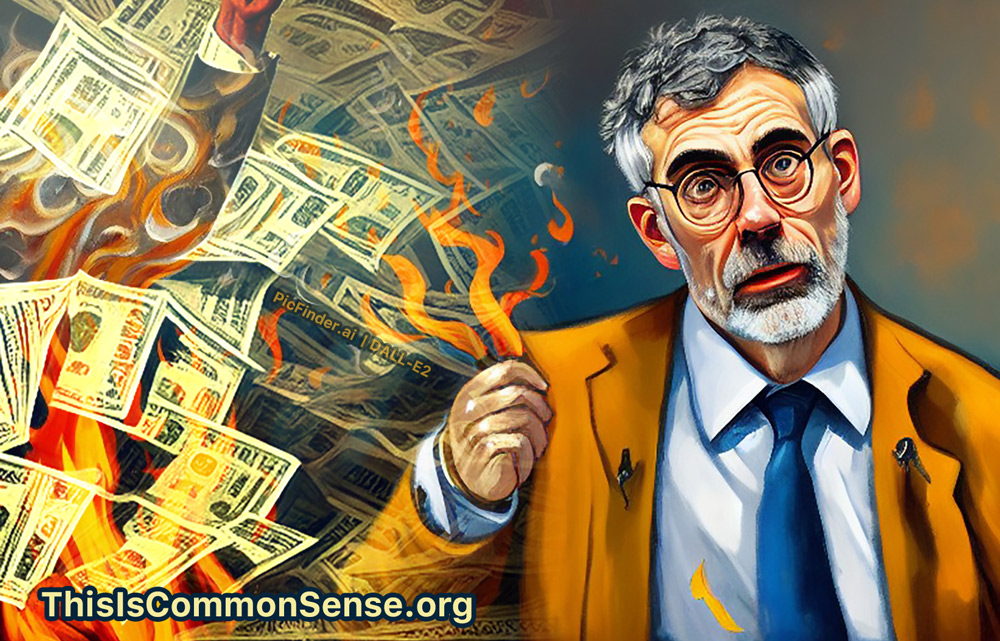
Illustration created with DALL-E
See all recent commentary
(simplified and organized)
See recent popular posts
Take heed, therefore, wicked prelates, blind leaders of the blind; indurate and obstinate hypocrites, take heed. . . .
William Tyndale, Preface to The Practice of Prelates (1531).