Categories
Today

George Mason

On October 7, 1691, the charter for the Province of Massachusetts Bay was issued.

Also on a seventh day of the tenth month, King George III issued the Royal Proclamation of 1763, which closed Indigenous lands in North America north and west of the Alleghenies to white settlements.


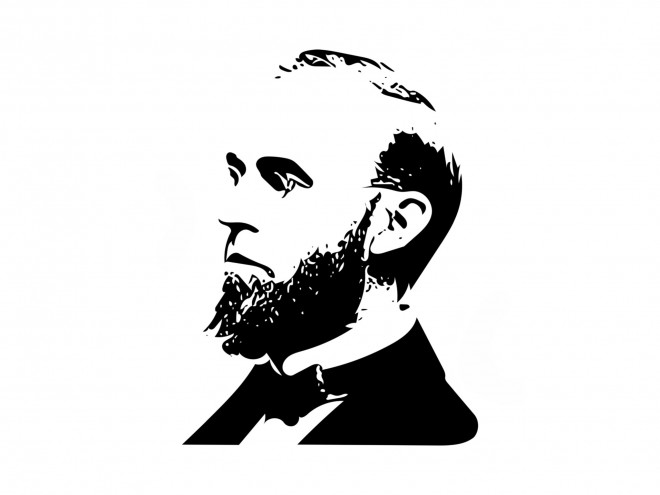
On October 7, 1792, George Mason — “The Father of the Bill of Rights” — died. He had drafted the Virginia Declaration of Rights in 1776, and, at the time of the drafting and ratification of the Constitution, had insisted on the addition of articles to solidify state’s and individual rights within the new order.

George Mason (pictured) has been honored in numerous ways, including by the United States Postal Service with an 18¢ Great Americans series postage stamp; a bas-relief in the Chamber of the U.S. House of Representatives as one of 23 honoring great lawmakers; and with an annual award named for him presented to a person who has made significant, lasting contribution to the practice of journalism in the Commonwealth, awarded by the Society of Professional Journalists, Virginia Pro Chapter.


On October 7, 2003, California Governor Gray Davis was recalled and Arnold Schwarzenegger voted into Davis’s previous gubernatorial spot.

Categories
First Amendment rights general freedom government transparency political challengers

Pro Bono No Bueno

The twisty highways and byways of campaign finance regulation bring us to another strange pass.

The Texas Ethics Commission is considering whether to effectively ban pro bono legal work for candidates. The method? Mandate that such work be regarded as an in-kind contribution subject to campaign finance regulations. 

David Keating, president of the Institute for Free Speech, observes that most candidates “can’t afford to hire counsel and spend probably hundreds of thousands of dollars challenging the constitutionality of a law where the opinion may not come out until after the election. . . . Basically, the opinion would slam the courthouse door shut to candidates and most political committees.”

Campaign finance regulation has always meant curtailing speech and the activities that enable it and flow from it. This latest regulatory prospect is more of the same. As long as campaign finance regulation exists, there will always be obnoxious new ways to use it to hamper speech and action.

The commissioners, apparently seeing some merit in the pro-pro bono argument and therefore judging the issue at least worth mulling, have deferred their decision. It would have been far better to simply accept Keating’s objections and put an end to the proposed new crackdown then and there.

Meanwhile, Texans — especially potential candidates — must sit on the edge of their seats until the commission decides whether to make it prohibitively expensive to fend off unconstitutional assaults on candidates and campaigns. 

Not unlike the unconstitutional assault exemplified by campaign finance regulation itself.

This is Common Sense. I’m Paul Jacob.


PDF for printing

Illustration created with DALL-E

See all recent commentary
(simplified and organized)
See recent popular posts

Categories
Thought

Denis Diderot

In order to shake a hypothesis, it is sometimes not necessary to do anything more than push it as far as it will go.

Denis Diderot, On the Interpretation of Nature (1753, as quoted in Selected Writings [1966] edited by Lester G. Crocker).
Categories
Today

William Tyndale

October 6 is the traditional date commemorating the martyrdom of William Tyndale, in 1536. Tyndale translated the New Testament and much of the Old into the English of his day, and in the process added more new words into the English language than any other single wordsmith, with the possible exception of Shakespeare. He also laid the ground for the later, and more famous, King James (“Authorized”) Edition of the Bible.

Among his memorable coinages and turns of phrase coined as translations from Hebrew and Greek into English include

  • Passover (constructed from the Hebrew Pesach or Pesah)
  • scapegoat
  • a moment in time
  • the powers that be
  • the salt of the earth
  • a law unto themselves
  • it came to pass
  • the signs of the times
  • filthy lucre
Categories
Accountability defense & war general freedom social media

Pentagon Personae

We think of Facebook and Twitter as platforms for you and me and our fellow citizens to share information and opinions and photos and just plain fun.

But our government agencies are also on those platforms, secretly as well as openly.

And not just for fun and games.

It’s a serious information war out there — with mis- and dis- elements, too — and Facebook and Twitter may be in over their heads.

“The takedowns in recent years by Twitter and Facebook of more than 150 bogus personas and media sites created in the United States,” wrote Ellen Nakashima in the Washington Post in mid-September, “was disclosed last month by internet researchers Graphika and the Stanford Internet Observatory. While the researchers did not attribute the sham accounts to the U.S. military, two officials familiar with the matter said that U.S. Central Command is among those whose activities are facing scrutiny.”

Ms. Nakashima’s report begins with the big news: “Colin Kahl, the undersecretary of defense for policy, last week instructed the military commands that engage in psychological operations online to provide a full accounting of their activities by next month,” and we are told of a “sweeping audit” to probe how the Pentagon “conducts clandestine information warfare.”

This is largely in response to Facebook and Twitter identifying and removing “fake accounts suspected of being run by the U.S. military in violation of the platforms’ rules.”

Social media companies took down actual U.S. military psy-op accounts. But it is worth noting that the report does not mention Facebook or Twitter taking down foreign equivalents, though that has happened in the past.

It might be time to reconsider all government activity in social media.

This is Common Sense. I’m Paul Jacob. 


PDF for printing

Illustration created with DALL-E

See all recent commentary
(simplified and organized)
See recent popular posts

Categories
Thought

Ernest Bramah

It is a mark of insincerity of purpose to spend one’s time in looking for the sacred Emperor in the low-class tea shops.

Ernest Bramah, “The Transmutation of Ling,” in The Wallet of Kai Lung (1900).
Categories
Today

A Republic

On October 5, 1910, the Portuguese monarchy was overthrown and a republic declared.

Categories
crime and punishment Fourth Amendment rights general freedom

Fourth Amendment Dead?

Unconstitutional actions are constitutional.

A federal judge doesn’t say so explicitly, but that’s what his ruling amounts to.

The case, which we discussed previously, involves U.S. Private Vaults, a Beverly Hills company that the Federal Bureau of Investigation raided last year. The company has been fined $1.1 million for money laundering because it let dealers anonymously keep cash in its safe deposit boxes.

Judge Gary Klausner concedes that the FBI lied to obtain a warrant, planning to seize the property of all boxholders whether or not there was any evidence of a crime against a given boxholder. And to this day, “specific criminal conduct has not been alleged against customers.” Nevertheless, Klausner ruled that despite the lie, it was constitutional for the FBI to grab the boxes’ contents.

Of course, if the warrant authorizing the FBI to ignore Fourth Amendment protections against unreasonable searches and seizures had been honestly solicited, that still would not have transmuted unconstitutional actions into constitutional ones.

“The court does not deny that the government had an improper motive when it applied for its warrant,” observes Rob Johnson, an attorney with the Institute for Justice, which is representing the boxholders.

“But it says that fact is irrelevant unless the improper investigatory motive was the only reason that the Government opened the safety deposit boxes. . . . If today’s shocking decision stands, it will set a dangerous precedent that will allow the FBI and other law enforcement agencies to bypass the Fourth Amendment.”

Thankfully, the Institute for Justice doesn’t regard the case as closed. It will appeal.

This is Common Sense. I’m Paul Jacob.


PDF for printing

Illustration created with DALL-E

See all recent commentary
(simplified and organized)
See recent popular posts

Categories
Thought

John Locke

Men living together according to reason, without a common superior on earth, with authority to judge between them, is properly the state of nature. But force, or a declared design of force, upon the person of another, where there is no common superior on earth to appeal to for relief, is the state of war: and it is the want of such an appeal gives a man the right of war even against an aggressor, tho’ he be in society and a fellow subject. Thus a thief, whom I cannot harm, but by appeal to the law, for having stolen all that I am worth, I may kill, when he sets on me to rob me but of my horse or coat; because the law, which was made for my preservation, where it cannot interpose to secure my life from present force, which, if lost, is capable of no reparation, permits me my own defence, and the right of war, a liberty to kill the aggressor, because the aggressor allows not time to appeal to our common judge, nor the decision of the law, for remedy in a case where the mischief may be irreparable. Want of a common judge with authority, puts all men in a state of nature: force without right, upon a man’s person, makes a state of war, both where there is, and is not, a common judge.

John Locke, from the Second Treatise on Civil Government (Thomas Hollis Edition. [London: A. Millar et. al.] 1764), Chapter Three: “Of the State of War.”
Categories
Today

SpaceShipOne

On October 4, 2004, SpaceShipOne became the first private craft to fly into space, thereby winning the Ansari X Prize for private spaceflight.