Categories
First Amendment rights general freedom national politics & policies

Riot Cops to a Tea

Here’s a federal budget cut: Air Force One and all other presidential travel services. The prez doesn’t need to travel. Keep the Executive Entourage in Washington, DC.

This struck home to me when I saw video of police in full riot gear, called up specifically to keep Tea Party people from gathering to greet the president at an event in Quincy, Illinois.

The cops marched around and repelled the Tea Party folk, moving them back, away from the president and his admirers.

President Obama’s Secret Service and crowd control experts are carrying on the tradition of George W. Bush. I haven’t heard Orwellian talk of “free speech zones,” but that doesn’t mean that free speech or the mere waving about of signs is encouraged by the president.

Presidential outings and speeches are tightly controlled. They are now mere political events, designed to shore up the president’s party.

So there’s no reason, in the age of mass media, for American taxpayers to continue to pay for them. The president can speak in front of the camera, on radio and the Internet, and he can speak on the White House steps. But spending one more cent on presidential roamings to rally partisan troops just isn’t very American. Not if all sides aren’t allowed to participate.

What was unacceptable under Bush remains unacceptable under Obama. But I doubt if we’ll hear many on the left protest this marginalization of dissent.

Wrong crowd, I guess.

This is Common Sense. I’m Paul Jacob.
Categories
Accountability national politics & policies too much government

Fearing Free Fall

The European Union is bailing out Greece. Fearing financial contagion, EU’s policy wizards decided to throw 100 billion euros at Greece, in tandem with demands for austerity.

New spending restrictions are tough enough to elicit the verdict of “savage” from Greece’s public employee unions. But are they “savage” enough?

The euros-to-the-rescue scheme occurred only after collapses of Portuguese and Spanish bonds. As mentioned last Friday, things aren’t good on Europe’s other southern peninsulas, either.

The “Domino Theory” remains a dominant metaphor. Once, we feared countries would fall like dominos to communism. Now, it’s like dominos into insolvency.

But propping up a tipped domino isn’t easy.

Drastic solutions, like expelling the duplicitous Greek nation-state from the EU? Not on the table. The apparent aim of the bailouts? Keep as many of the major players responsible for the fiasco in as good a shape as possible.

If, on the other hand, every politician were fired and every contract with unsustainable giveaways to public employee unions were dissolved as part of bankruptcy, might future policy makers be a little more cautious?

Meanwhile, the dominos keep falling. The day after announcing the bailout, the euro plummeted.

My question: What happens when “too big to fail” is applied not to a tiny country like Greece, but to the good ol’ US of A?

What if we’re too big to bail out?

This is Common Sense. I’m Paul Jacob.

Categories
Accountability

Is It Fraud Fraud?

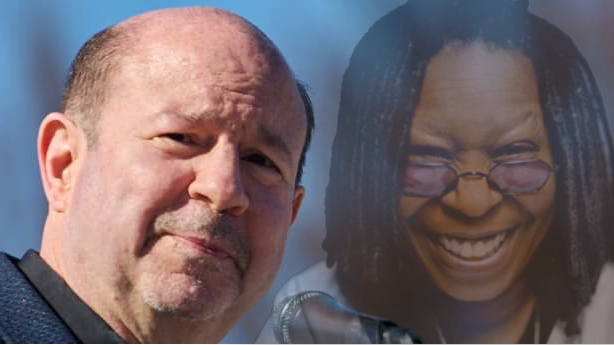
The subpoena of the week was filed by Virginia’s attorney general, Ken Cuccinelli, against the University of Virginia. Cuccinelli demands to see the work product — emails and other documentation — of one of the august institution’s former professors, Michael Mann, a well-known advocate of global warming catastrophism. He was one of those whose emails with British climatologists outed him as a savvy, perhaps fraudulent manipulator of data.

The attorney general filed the demand for information under the Virginia Fraud Against Taxpayers Act, which allows the state to prosecute and receive damages from employees and vendors who make false claims for payment, or submit false records in a contract with the state, or defraud the state.

Former Professor Michael Mann proudly confessed, in his most notorious email, to fiddling with the data to concoct the infamous “hockey stick” graph of global warming. Now he insists that everything he did was legit. His critics counter that his treatment of the data was deliberately propagandistic, not scientific at all.

But did it amount to fraud?

It’s some kind of fraud, surely. But is it less than the legal real deal or is it, as Whoopi Goldberg might put it, “fraud fraud”?

Well, I guess that’s why the attorney general is fishing: To find out.

Predictably, Mann and other academics have protested the investigation. It will have a chilling effect on research, they say.

Well, if it has a chilling effect on fraudulent research, all to the good, I say.

This is Common Sense. I’m Paul Jacob.

Categories
nannyism

The Skinny on Fat

Many Americans are overweight or even obese. I’m one of them.

You probably are, too. After all, the media keeps ominously hyping that nearly two-thirds of us fit these categories. Of course, being “overweight” and being “obese” are not exactly identical.

A plurality of 37 percent of us are overweight. Only 27 percent are obese. Said another way, 73 out of a hundred Americans are not obese.

Problem solved?

Not exactly. Obesity is still a very real health and well-being problem for a great many folks.

Plus, obesity provides politicians with a new reason to take and spend more tax money. The city council in Washington, DC, wants to spend $23 million additional dollars over the next four years to fight obesity. The program will be financed through a proposed one-cent per ounce soft drink tax. Funny, though, the soda tax will bring in $16 million a year, more than the $10 million needed for fighting the fat.

In the spirit of slimming down, you might think the city could have found something to cut to afford the new program. But politicians aren’t prepared to take their own advice.

I need to lose some weight. I figure I’ll exercise more, and stop allowing myself so many calories. The cost to me? Nothing. Heck, I’ll save money.

The cost to you? Not one thin dime.

Care to join me? Let’s call it the Starve-a-Politician Diet.

This is Common Sense. I’m Paul Jacob.

Categories
government transparency national politics & policies

Democrats Give the Internet to the FTC?

Congress has all the backbone of a jellyfish. Tasked with sole power to declare war, it delegates such decision-making to the Executive Branch every chance it gets. The U.S. hasn’t declared war since World War II, but is now engaged in two land wars in Asia.

Further, for a long time, Congress has handed over law-writing tasks to various regulatory divisions of the Executive Branch. This may have gotten worse with the recent Democratic hegemony. Example? Congress is maneuvering to give the Internet over to the Federal Trade Commission.

Pelosi’s little platoons have hidden this momentous change in the recent banking regulation bill. But as Ed Morrissey of Hotair.com notes, the Internet had nothing to do with the recent financial collapse, another iteration of which the new bill is ostensibly designed to prevent

So why sneak this provision into an unrelated bill?

Maybe to come down on one side of the Net Neutrality debate without ever really confronting the issues.

People engaged in this debate about regulating Internet and bandwidth pricing may disagree about a lot of things, but surely they all agree that Congress should legislate for the Internet openly and honestly, not make its biggest decisions in obscure provisions of a measure that will be voted on only to solve utterly unrelated problems.

You may be thinking, FCC, FTC — does it matter? Well, I bet it really matters to some powerful Democrat. Hence the sneaky maneuvers.

This is Common Sense. I’m Paul Jacob.

Categories
national politics & policies too much government

The Inglorious Mess That Is Greece

Ah, the glory that was Greece! Too bad the modern country is anything but. The nation-state of Greece is going broke, and going broke spectacularly.

And, dare I say it, instructively?

Everybody’s blaming everybody else, there. But the simple truth of the matter is that the politicians of Greece — both socialist and “conservative” — enticed citizens to go along with a sustained binge of spending, spending far beyond revenues.

And then the government lied to European Union HQ in Brussels about how much it was spending over revenues.

And, you guessed it, Greece continued to borrow even more.

Yes, public spending in Greece was more out-of-control than government spending here in America. And that’s why it’s instructive. What is happening right now to Greece is happening elsewhere in Europe — Italy, Spain, Portugal — and is on pace to happen to us, too.

Greece does have one option the good ol’ US of A doesn’t have: It can go begging to the European Union. So far, saner heads in the EU are saying “no,” but that may not last.

While we don’t have that option, Greece lacks ours: With the Euro as its standard, it’s constrained from the monetary fiddling that American leaders are tempted with. Inflation. Hyperinflation.

When things get worse here, we’ll hear talk of huge tax hikes, confiscations, and sovereign default.

But also expect a lot of what Greek politicians did: Lying.

Inglorious, eh?

This is Common Sense. I’m Paul Jacob.

Categories
free trade & free markets national politics & policies too much government

The Chamber, Loaded Against the Free Market

You are familiar with the notion that businesses support the free market, while concerned citizens demand some sort of “regulatory oversight” by government.

It’s a canard.

Oh, some businessmen do indeed support free markets and decry subsidies — and lots of businesses oppose this regulation or that — but, on the whole, the major support for a regulatory regime, or for subsidies and tariffs, for almost any scheme of government control of business, is usually business itself.

Like individuals, businesses too often turn to government for special advantages — over other businesses, or over taxpayers.

That’s why the United States Chamber of Commerce gave Congressman Ron Paul such low marks. You could hardly find a more pro-free-market gentleman in Washington. But, as Timothy Carney notes in the Washington Examiner, 90 percent of Democrats got higher marks on the Chamber’s 2009 congressional scorecard than did Paul, who also got the lowest marks of any Republican.

Why?

Rep. Paul opposed the recent stimulus bill. And he opposed subsidizing the tourism industry as well as solar energy.

The Chamber is a typical business lobbying outfit, favoring an inefficient, mixed economy because some of its leading members hope to milk the taxpayers.

If you are a member of the Chamber but support the fair play of the free market, not the rigged play of government-business “partnerships,” you might want to speak up against your Chamber’s policies.

Or join another group.

This is Common Sense. I’m Paul Jacob.

Categories
responsibility too much government

Fiasco Economics

Every time a financial fiasco hits, politicians readily expand regulations. But what’s the point of adding to the regulatory barrage if it’s all just for show?

They studiously avoid asking the right questions:

  1. What previous regulations caused (or helped cause) the fiasco?
  2. What previous regulations that could have prevented the fiasco weren’t enforced?

Economist Gerald O’Driscoll, Jr., writing in the Wall Street Journal, adds a few notes of caution to the current regulation madness. Most regulatory bodies get “captured” by the businesses they regulate. A huge amount of research shows how supposedly anti-business regulations serve the interests of some businesses at the expense of their competitors.

It’s the crony capitalist equivalent to politicians making it harder for challengers using “campaign finance” regulations. Same game, different venue.

O’Driscoll also explains which regulations weren’t enforced prior to the recent meltdown — those against fraud. This form of regulation is not like the regs politicians usually propose. It’s basic rule of law, the government’s first responsibility.

And regarding Lehman Brothers, Goldman Sachs, and Bernie Madoff, government failed.

O’Driscoll argues that multiplying rules and regulations is not merely the wrong response, but a sorry repeat of the last century’s “great intellectual failure.” Pity, then, to see the current administration push just that.

Following this path will just lead to the same old recycling of the boom and bust cycle. Freedom and responsibility — where criminal fraud is actually fought by government, not encouraged — work better.

This is Common Sense. I’m Paul Jacob.

Categories
free trade & free markets national politics & policies

The Right Stuff Needs No Subsidy

When the president, in a rare fit of fiscal sanity, proposed cutting back on NASA, the subsidized sector of the high tech industry — the military-industrial complex — felt a shiver.

The first, I hope, of many.

NASA has long had a special, high-toned place in that hierarchy of government-funded industries. It’s the civilian wing of the military’s industrial juggernaut. As if to prove that government can accomplish things, NASA actually landed men on the moon. And it kept an ungainly shuttle program going long after its rightful expiration date.

But it’s time for private enterprise to take over in the space industry.

High time.

Still, questions remain — at least in the public mind. As a fascinating MSNBC article put it, “Can private companies build and operate space vehicles safe enough to carry astronauts?” The article’s author, James Oberg, focuses on the emerging market of space taxis, but does ponder the possibility of putting real astronauts out in space, privately. He consulted skeptical NASA engineers, who wondered how unsubsidized, for-profit businesses could mimic NASA’s record.

Where’s their collective experience?

Answer: Let most of NASA go, and that experience would be up for hire.

Our hopes for the future conquest of space depend, in part, on ceasing to subsidize it. Congress and the president should embrace that future, and realize that it is time to relinquish their control over another whole industry.

This is Common Sense. I’m Paul Jacob.

Categories
too much government

UNkindest Cut of All

One of the sad truths about trying to help folks in far, distant lands, is that so much of the aid gets soaked up in overhead.

But if you think it’s bad with charities, prepare to wince at the United Nation’s Haitian peacekeeping efforts. It turns out that only 4.6 percent of the $495.8 million the UN spends on salaries, hazard pay, and the like goes to “national staff” on the ground in Haiti. The rest goes to support staff at some remove from the island nation’s devastation.

So does $461.9 million out of $495.8 million seem like a good cut for overhead?

Seems steep to me.

The entire budget is well over $700 million. Nearly $200 million of that comes from U.S. taxpayers.

The Fox News story from which I harvested these figures goes on to discuss the boats used to house some personnel. $112,500 per day. One of the boats is nicknamed “The Love Boat.” I don’t think I want to know more.

This should be a big story, except that, in context of today’s typical government operations, it’s not out of the ordinary. These days, operations often get judged not by the good done but by the number of people and dollars associated with it.

People in Haiti suffer. So we naturally don’t want to complain about money spent helping them. But, like so much else in government, efficiency is out of the question.

This is Common Sense. I’m Paul Jacob.