Categories
Common Sense crime and punishment free trade & free markets general freedom nannyism responsibility too much government

Must the War Go On and On?

I was still a kid, but I remember: as the Vietnam War dragged on, and on, we Americans continued to receive hopeful missives about how the next assault, or regroup, or dedication of manpower and weaponry, would lead to better results.

That’s what came to mind as I read the latest dispatch from the War on Drugs, in the Los Angeles Times. “White House announces push to combat growing heroin epidemic,” ran the headline.

So, it’s growing again? Haven’t I read this about a thousand times?

Talk about a familiar story:

The path to heroin addiction and overdoses can begin when patients are legally prescribed drugs containing opium, said Dr. Walter Ling, professor of psychiatry and founding director of the Integrated Substance Abuse Program at UCLA. . . .

“Once they get hooked they find out it’s very expensive to get these medicines and it’s much cheaper on the street. . . . That leads to street heroin abuse, which leads to the increase in opium overdoses,” Ling said.

But the rest of the story? Not reported.

Oh, sure: we were regaled with how dangerous the cheap street drugs are, because of how they are diluted. What we are not told, though, is that this is not a characteristic of heroin, as such, but of illegal heroin.

Decriminalize it. Let the legitimate market do what black markets cannot: provide responsible information that would discourage accidental overdoses.

Instead, we have a new and futile $1.3 million plan.

We’re overdosing on government. The cure is to cut down government to the proper dose.

This is Common Sense. I’m Paul Jacob.


Printable PDF

Addiction


Categories
Common Sense folly ideological culture media and media people national politics & policies

Iconoclasm Spasms

As America stands upon a precipice of insolvency, as southern European nations undergo the spasms of sovereign debt catastrophe, as many of our citizens call the Chinese devaluations of their money “currency wars,” obsessing about political symbolism seems . . . a tad . . . trivial.

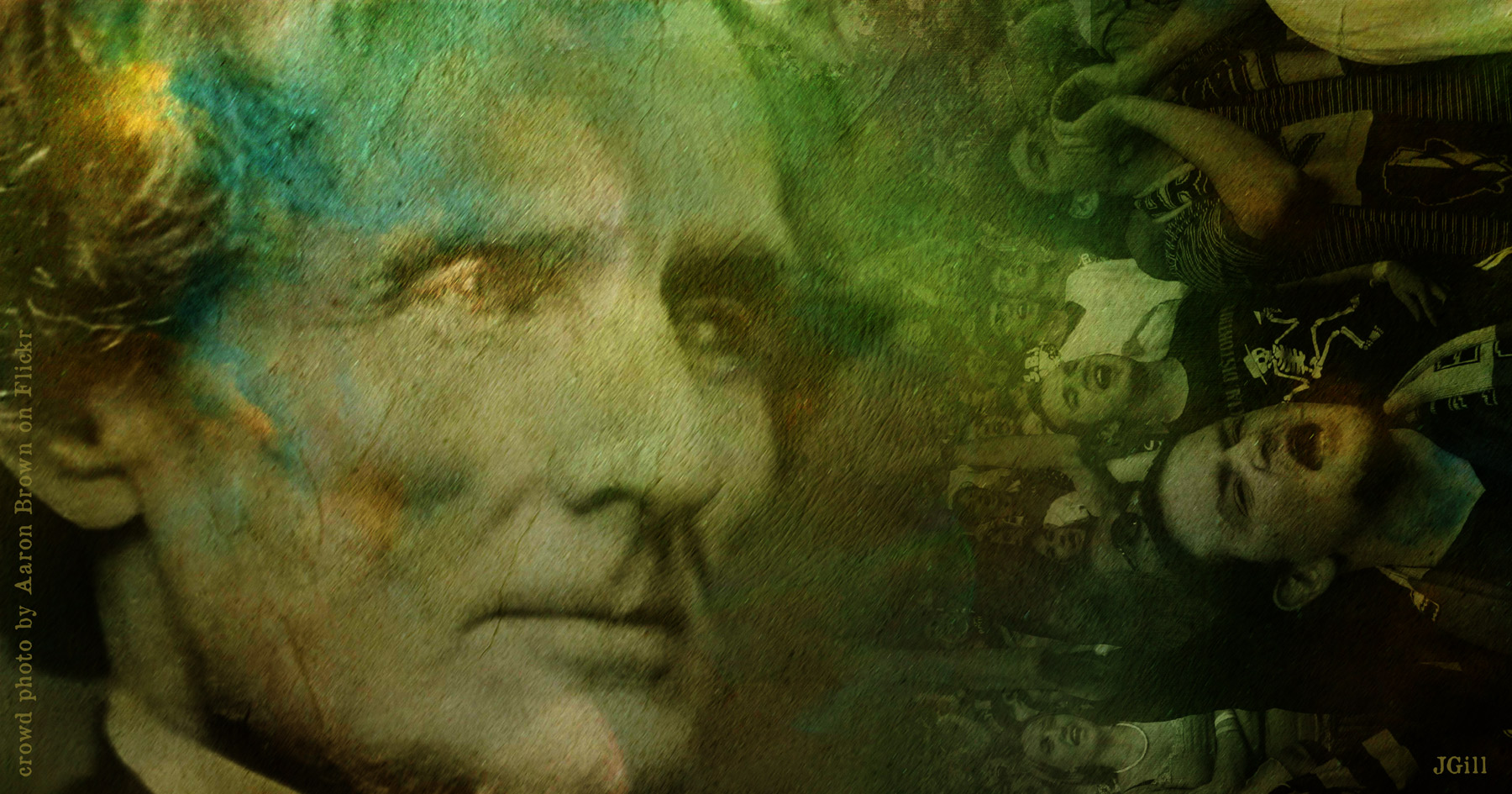
First it was the Confederate Flag. Now it’s Jefferson Davis.

He’s dead. And as a result of his 126 years in the “post-living” state, he quite literally doesn’t matter for the future of the United States.

And yet the Confederacy’s president (1861-1865) is in the news again. As Charles Paul Freund relates at Reason, the dead rebel prez has been having a figurative “bad summer.” How? The University of Texas has decided to move his statue into a museum, away from public eyes; some Georgians want to obliterate the Stone Mountain tableau that features Davis along with Stonewall Jackson and Robert E. Lee; there’s talk of renaming Virginia’s “Jefferson Davis Highway”; etc.

Davis died unrepentant, refusing to ask Congress for a pardon for his part in the Confederacy after the secessions of 1860 and ’61. And yet he was pardoned in 1978, posthumously, by the Democratic Congress and President Jimmy Carter, who yammered on in a Fordian “long national nightmare is over” fashion, saying the pardon would, at long last, “clear away the guilts and enmities and recriminations of the past.”

I’m not convinced it did a thing.

And about the current proposals? I don’t think any highway should be named after any politician. Of the other ideas, I don’t really care. Much.

Nevertheless, fights over political symbols have long been important. Why? My guess: to deflect our attention — away from the future, and to the past.

This is Common Sense. I’m Paul Jacob.

Printable PDF

Jefferson Davis


Categories
Common Sense crime and punishment general freedom jury rights and duties U.S. Constitution

Guess Who Else Nullifies?

Citizens have more power than they exercise. But folks in government aren’t exactly falling all over each other in the rush to help citizens participate and realize their potential.

Take juries. There are few more awesome responsibilities than sitting on a jury. And one of the things you can do, as a juror, is to refuse to follow the law or the judge, instead making your decision contrary to the immediate, official directive. Disapprove of a bureaucracy’s “legal” prosecution of an individual or group? Judge the law as well as the facts. Acquit.

Glenn Reynolds, writing in USA Today, shows that this practice has a long, honorable history in our country — he not unreasonably mentions how northern abolitionists fought the Fugitive Slave Act — and, if you, the juror, push it, “there’s nothing anyone can do about it…

Of course, prosecutors have essentially the same power, since they’re under no obligation to bring charges against even an obviously guilty defendant. But while the power of juries to let guilty people go free in the name of justice is treated as suspect and called “jury nullification,” the power of prosecutors to do the exact same thing is called “prosecutorial discretion,” and is treated not as a bug, but as a feature in our justice system.

Reynolds concisely makes the case that jury nullification is, itself, a designed feature of our American constitutional tradition, and not nearly so buggy as “prosecutorial discretion.”

Why? Its tendency is to liberate us from usurping government action.

Prosecutors’ “discretion” (on the other hand) gives folks in government more power over our lives. And ruins many.

This is Common Sense. I’m Paul Jacob.

Printable PDF

Jury Duty


Categories
Accountability Common Sense general freedom government transparency too much government

(Un)Intended System Failure

The system worked. The problem? The system doesn’t work.

Last year’s successful term limits ballot initiative in Grand Rapids pitted two pro-limits ladies with scant political experience against a united big business/big labor opposition campaign, sporting Dr. Glenn Barkan, professor emeritus of political science at Aquinas College, as treasurer.

Just before Election Day, Professor Barkan’s group stuffed mailboxes with advertisements warning residents: “Don’t let your vote be shredded.” The mailings seemed odd in two more respects: (1) there was no mention of “term limits,” and (2) according to campaign finance reports, the professor’s committee didn’t have enough money for mass mailings.

Then, after the election, the committee filed reports acknowledging big money raised and spent prior to the election.

“It just seemed odd that they could do all the mass mailings with little money,” said term limits advocate Bonnie Burke. “We ran a totally above-board campaign and they have these seasoned people and they weren’t sticking to the rules.”

Michigan’s Bureau of Elections concluded the professor’s committee “deprived voters from knowing the source and amount of more than half of the contributions it received. . . .” The group was fined $7,500.

The system worked! Reporting led to a violation, which led to a complaint, which led to an investigation, which led to the imposition of a fine.

But to what point?

As my colleague at Liberty Initiative Fund, Scott Tillman, who filed the complaint, explains, “Campaign finance laws do not stop connected insiders from gaming the system and hiding donations. Big money can ignore the laws and pay the fines if they get caught.”

Even worse, Tillman warned, “Campaign finance laws intimidate and discourage outsiders and grassroots activists from becoming active in politics.”

Is either result unintended?

This is Common Sense. I’m Paul Jacob.

Printable PDF

Campaign Finance Follies


Categories
Common Sense crime and punishment general freedom government transparency national politics & policies U.S. Constitution

Swarms of Officers to Harass

Two wrongs don’t make a right.

It’s simple but true. And, as a corollary, let me add that using the power of the federal government to harass individuals or groups one happens to dislike or disagree with is wrong.

You might recall that our Declaration of Independence rebuked King George for sending “hither swarms of Officers to harass our people.” Or consider the recent civil-rights-violating behavior of the IRS against conservative groups during President Obama’s administration.

Yesterday, I proposed to end all taxpayer subsidies to Planned Parenthood. Obviously, I’m not a fan of the organization. And neither are the Republican presidential candidates — especially Louisiana Gov. Bobby Jindal.

“Planned Parenthood had better hope that Hillary Clinton wins this election,” Jindal boasted at last week’s JV presidential debate hosted by Fox News, “because I guarantee you that under President Jindal, January 2017, the Department of Justice and the IRS and everybody else that we can send from the federal government will be [looking] into Planned Parenthood.”

Speaking with reporters after the debate, Mr. Jindal doubled down, suggesting there might also be a role for the Environmental Protection Agency and perhaps other tentacles of the federal Leviathan.

Jindal has removed Planned Parenthood from Louisiana’s Medicaid program. That’s within his legitimate power. But directing an assault against anyone using the IRS and other federal agencies is both wrong and . . . against the law.

It promises not change but the same rotten, rights-robbing, goon-squad government we have now. Just with a different color shirt.

This is Common Sense. I’m Paul Jacob.

Printable PDF

Playing cards


Categories
Common Sense general freedom ideological culture national politics & policies

Abort the Subsidy

Common Sense generally steers clear of the abortion issue. Arguably, for “common sense” reasons.

I’ve always been pro-life, but I’ve also been skeptical of government’s ability to improve the situation, to save unborn lives via the criminal justice system.

No law forces women to have abortions; it’s voluntary. I’ve long hoped that ultrasounds and other technological advances will change hearts and minds, nudging couples to choose to abort less often, making abortion even more rare than when it was illegal. I gladly note that the number of abortions has fallen 12 percent since 2010.

Certainly, I’ve prioritized my political action in a different direction: affecting greater representation, better government, via citizen-initiated checks on power.

Yet, the recent videos showing doctors and other Planned Parenthood personnel chatting about the sale of fetal body parts implicates a lot more than just abortion. For starters, the footage triggered my gag reflex, and then my sense of justice for the unborn, and sense of decency in the treatment of their remains.

And what about justice and compassion for people deeply offended (myself among them) at being forced to fork over $528.4 million tax dollars each year to an organization performing the most abortions?

Let’s be pro-choice and abort the taxpayer subsidy to Planned Parenthood.

Those who continue to approve of Planned Parenthood’s work would remain free to support it. Personally. Voluntarily. Likewise, if you revile the organization, you should also be free to not fund it.

Isn’t such respect for each others’ heartfelt beliefs also just common sense?

I think so. I’m Paul Jacob.


Printable PDF

12 Week old fetus


Categories
Common Sense general freedom ideological culture national politics & policies responsibility

Supremacist Progressives?

“Thank you, Seattle, for being one of the most progressive cities in the United States of America,” socialist-cum-Democratic presidential candidate Bernie Sanders shouted to the large crowd in the City of Goodwill.

Seconds later, two women with a local Black Lives Matter group jumped the stage, threatening to shut down the event. Quickly, they were rewarded for their extortion-by-tantrum. Sen. Sanders and company relinquished the microphone, podium and stage.

The kidnapped crowd booed the violation, only to be screamed at by Marissa Johnson, one of the protesters, as “a bunch of screaming white racists,” who practice “white supremacist liberalism.”

“I was going to tell Bernie how racist this city is, filled with its progressives, but you did it for me,” Johnson added.

Angry audience members yelled, “How dare you?!” and “How dare she call me a racist.”

“You guys are full of bull-$@%# with your ‘black lives matter,’” she chided, acknowledging that the event had already recognized the anniversary of Michael Brown’s shooting in Ferguson, Missouri.

What a fascinating marriage of outrage and entitlement!

And yet . . . real grievances abound.

“Welcome to Seattle,” Johnson told Bernie, “where our Seattle Police Department has been under federal consent decree for the past three years, and yet has been riddled by use of force, racial profiling, and scandals throughout the year.”

Sen. Sanders doesn’t even stand up for his own speech rights, much less ours. Apparently fearing the loudmouths, he proved unwilling to confront them or address their complaints.

Sanders and his “progressive” Democrat comrades (governing cities like Baltimore and Seattle) must take responsibility for the results of their policies, and admit that the black voices shouting against racism are shouting at them.

This is Common Sense. I’m Paul Jacob.

Printable PDF

Bernie Sanders and Black Lives


Categories
Common Sense

Townhall: The (Un)Intended Consequences of Campaign Finance Regs

Something happened in Grand Rapids. There was a political campaign, complete with contribution reports; a complaint was filed; a determination was made and fines were even imposed — which have been called “kind of steep.” But what comes shining through is not the hooray-for-us message, “the system works.” Far from it. Read about it on Townhall. Come back here for more information:

Categories
Common Sense general freedom ideological culture media and media people national politics & policies Popular

Are Democrats Socialists?

Does it matter that the chair of the Democratic National Committee doesn’t know if her party is socialist?

MSNBC’s Chris Matthews was grilling Debbie Wasserman-Schultz on the meaning of Sen. Bernie Sanders’s popularity within the Democratic Party. Mrs. Wasserman-Schultz responded by boasting that the Democrats “really are a Big Tent Party.” Then Matthews veered out her comfort zone of horse-race politics and self-congratulatory posturing.

“What is the difference between a Democrat and a Socialist?” he asked.

Mrs. W-S chuckled. Uncomfortably.

“I used to think there was a big difference,” Matthews went on. “What do you think it is?” Mrs. W-S evaded, blathering on how it is that the difference between Democrats and Republicans is what will really count in the upcoming election.

Karl Dickey, at the Examiner, holds that Democrats, today, are socialists: “one only needs to look at the Democratic Party’s platform to understand that it is a socialistic political party.”

Meanwhile, Juan Williams, discussing the issue on Fox News’s The Five, argues that there is a big difference between Democrats and socialists: Dems just like regulation and redistributing wealth; socialists want to nationalize industry and run everything through a central bureau.

And that is the definition that anti-socialist economists Yves Guyot and Ludwig von Mises settled on. Technically, Williams is right.

But the fact that the head of the Democratic Party waffled on the distinction says more about the party than a definitive answer would have.

This is Common Sense. I’m Paul Jacob.

Printable PDF

Deer in the Headlights


Categories
Common Sense folly ideological culture media and media people national politics & policies political challengers responsibility

Gross Domestic Prevarication

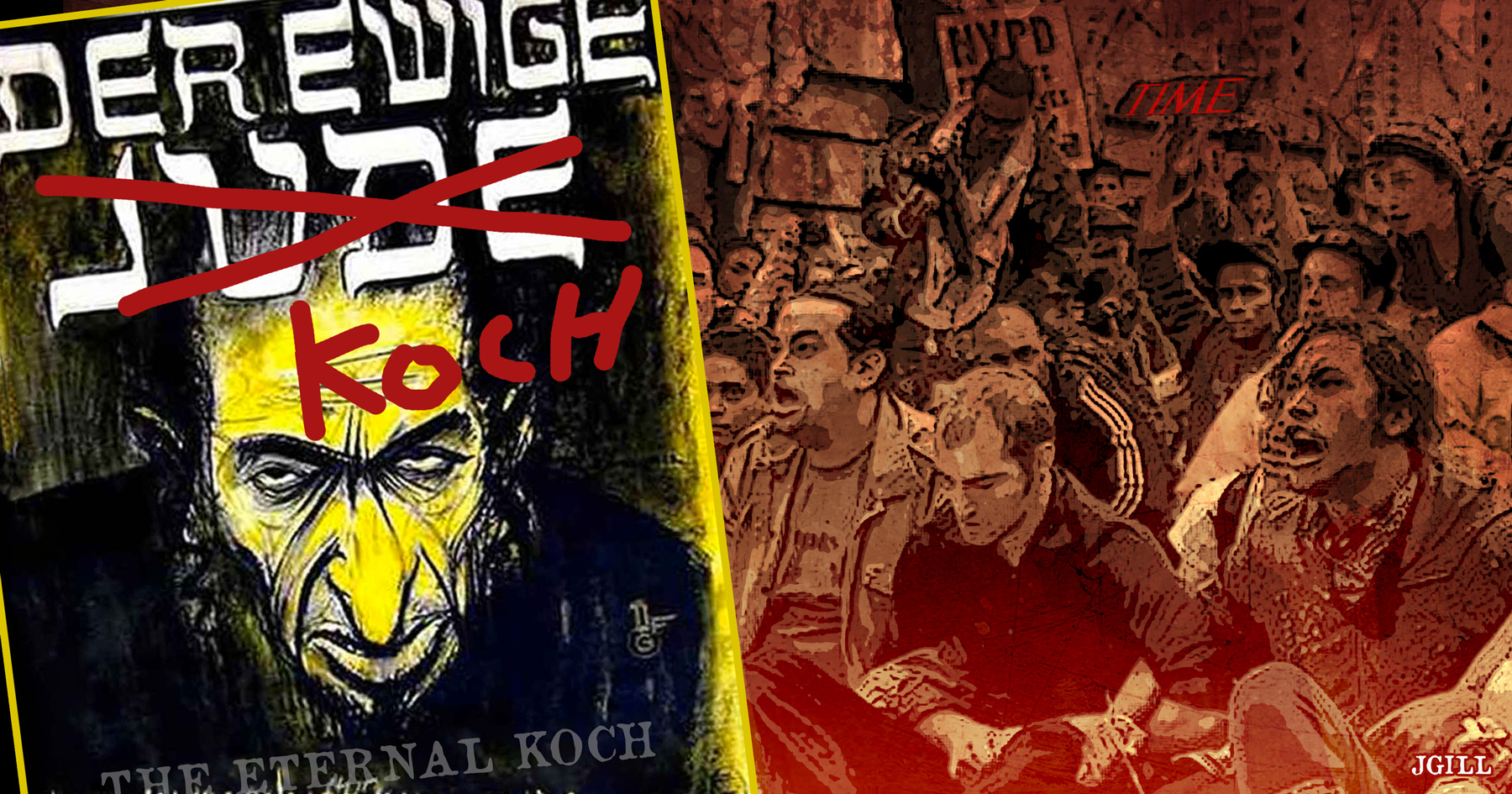
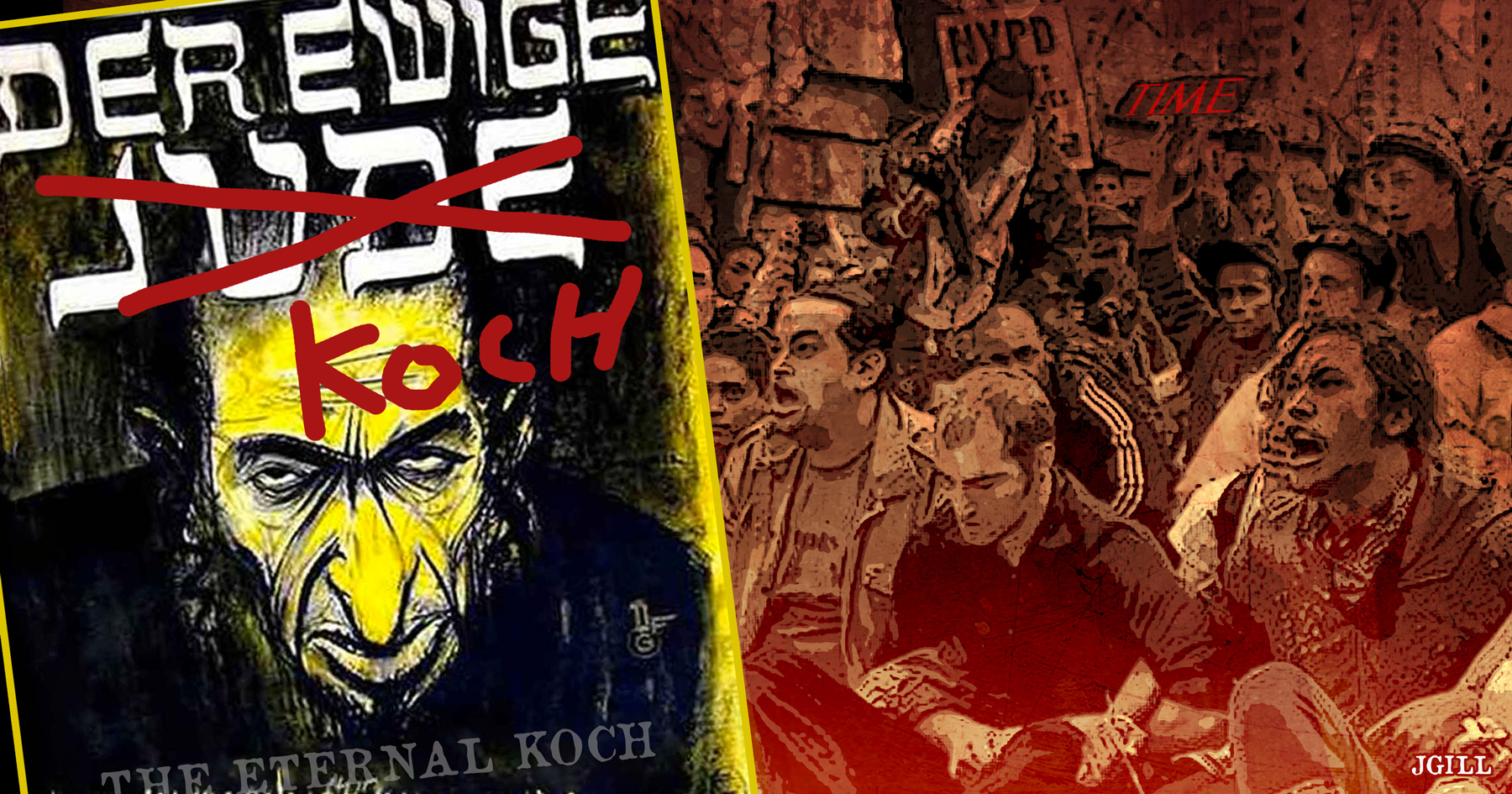
A sign of these sorry times for professional journalism: Time magazine runs a dishonest smear against Charles Koch, completely twisting the billionaire’s remarks at a recent meeting of major donors in Orange County, California.

“Charles Koch Says US Can Bomb Its Way to $100,000 Salaries,” screamed the headline. The sub-heading added, “Building bombs and using them is one way to growth, the billionaire suggests to allies.”

What did Mr. Koch actually tell the assembled crowd of major donors?

“I think we can have growth rates in excess of 4 percent. When I’m talking about growth rates,” explained Koch, “I’m not talking about that GDP, which counts poison gas the same as it counts penicillin. What a monstrous measure this is. If we make more bombs, the GDP goes up — particularly if we explode them.”

In other words, while Time’s headline portrayed Koch as a warmonger, the billionaire businessman wasn’t suggesting this country “Bomb Its Way” anywhere. Certainly not “to growth.” In fact, Koch was making the opposite point: true economic growth can’t come from producing or using “poison gas” or other munitions.

Apparently, I wasn’t the only one who had found this article’s headline to be a flat-out concocted falsehood; Time soon changed the headline.

Yet, even the re-written headline was sort of a slap: “Charles Koch Mocks Common Measure of Prosperity.” Only after reading the sub-head — “Calls ‘monstrous’ the notion that GDP values bombs as much as medicine” — was it clear that Koch was making a very common sense point.

This is Common Sense. I’m Paul Jacob.


Printable PDF

Eternal Koch