Categories
Common Sense

Townhall: The (Un)Intended Consequences of Campaign Finance Regs

Something happened in Grand Rapids. There was a political campaign, complete with contribution reports; a complaint was filed; a determination was made and fines were even imposed — which have been called “kind of steep.” But what comes shining through is not the hooray-for-us message, “the system works.” Far from it. Read about it on Townhall. Come back here for more information:

Categories
Common Sense general freedom ideological culture media and media people national politics & policies Popular

Are Democrats Socialists?

Does it matter that the chair of the Democratic National Committee doesn’t know if her party is socialist?

MSNBC’s Chris Matthews was grilling Debbie Wasserman-Schultz on the meaning of Sen. Bernie Sanders’s popularity within the Democratic Party. Mrs. Wasserman-Schultz responded by boasting that the Democrats “really are a Big Tent Party.” Then Matthews veered out her comfort zone of horse-race politics and self-congratulatory posturing.

“What is the difference between a Democrat and a Socialist?” he asked.

Mrs. W-S chuckled. Uncomfortably.

“I used to think there was a big difference,” Matthews went on. “What do you think it is?” Mrs. W-S evaded, blathering on how it is that the difference between Democrats and Republicans is what will really count in the upcoming election.

Karl Dickey, at the Examiner, holds that Democrats, today, are socialists: “one only needs to look at the Democratic Party’s platform to understand that it is a socialistic political party.”

Meanwhile, Juan Williams, discussing the issue on Fox News’s The Five, argues that there is a big difference between Democrats and socialists: Dems just like regulation and redistributing wealth; socialists want to nationalize industry and run everything through a central bureau.

And that is the definition that anti-socialist economists Yves Guyot and Ludwig von Mises settled on. Technically, Williams is right.

But the fact that the head of the Democratic Party waffled on the distinction says more about the party than a definitive answer would have.

This is Common Sense. I’m Paul Jacob.

Printable PDF

Deer in the Headlights


Categories
Common Sense folly ideological culture media and media people national politics & policies political challengers responsibility

Gross Domestic Prevarication

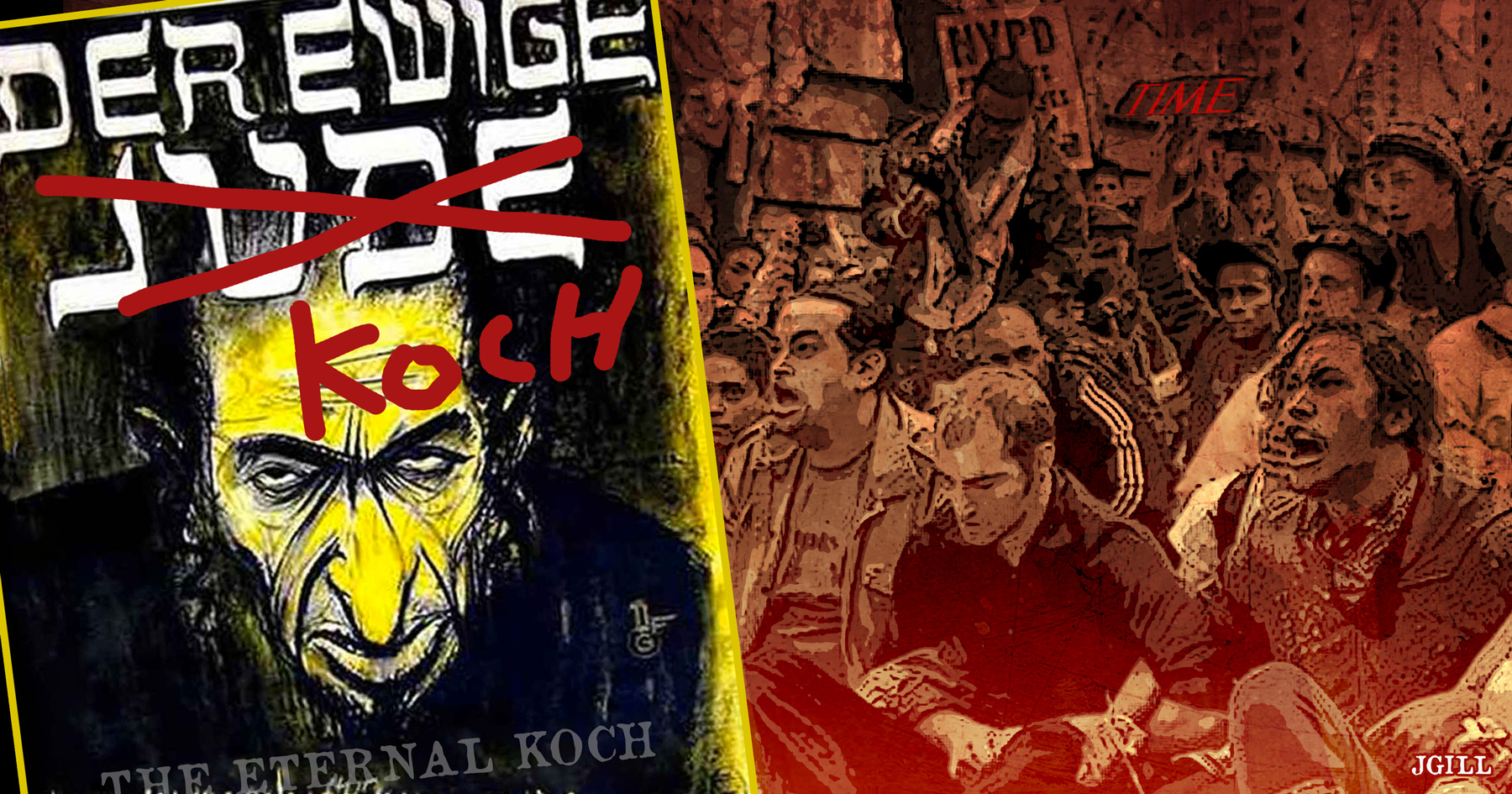
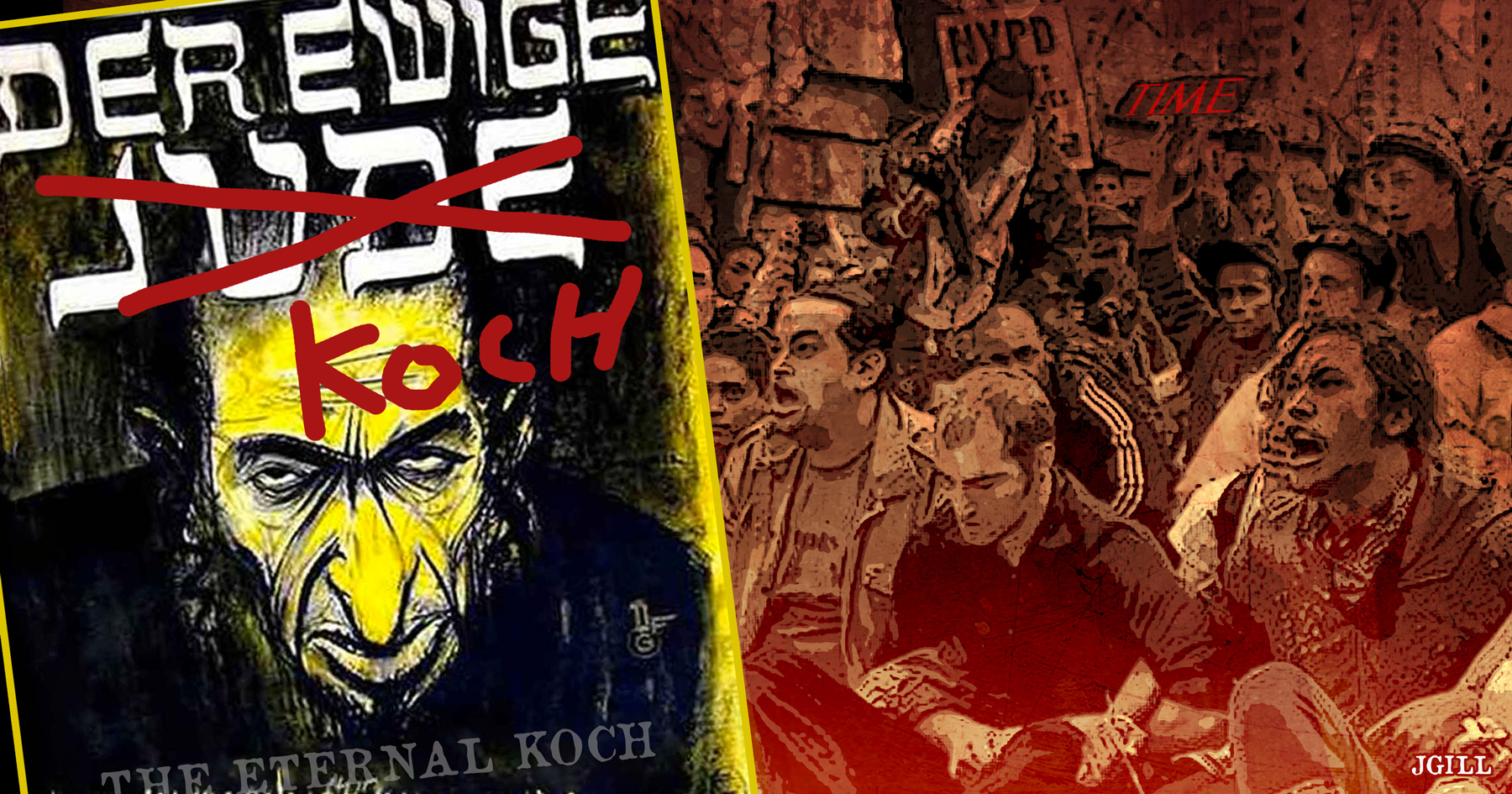
A sign of these sorry times for professional journalism: Time magazine runs a dishonest smear against Charles Koch, completely twisting the billionaire’s remarks at a recent meeting of major donors in Orange County, California.

“Charles Koch Says US Can Bomb Its Way to $100,000 Salaries,” screamed the headline. The sub-heading added, “Building bombs and using them is one way to growth, the billionaire suggests to allies.”

What did Mr. Koch actually tell the assembled crowd of major donors?

“I think we can have growth rates in excess of 4 percent. When I’m talking about growth rates,” explained Koch, “I’m not talking about that GDP, which counts poison gas the same as it counts penicillin. What a monstrous measure this is. If we make more bombs, the GDP goes up — particularly if we explode them.”

In other words, while Time’s headline portrayed Koch as a warmonger, the billionaire businessman wasn’t suggesting this country “Bomb Its Way” anywhere. Certainly not “to growth.” In fact, Koch was making the opposite point: true economic growth can’t come from producing or using “poison gas” or other munitions.

Apparently, I wasn’t the only one who had found this article’s headline to be a flat-out concocted falsehood; Time soon changed the headline.

Yet, even the re-written headline was sort of a slap: “Charles Koch Mocks Common Measure of Prosperity.” Only after reading the sub-head — “Calls ‘monstrous’ the notion that GDP values bombs as much as medicine” — was it clear that Koch was making a very common sense point.

This is Common Sense. I’m Paul Jacob.


Printable PDF

Eternal Koch


Categories
Common Sense crime and punishment general freedom

Ultra Anti-Civilization

The stabbing event at a Thursday “Gay Pride” march in Jerusalem reveals an element of the much-talked-about “clash of civilizations” not often discussed any longer. But it used to dominate the conversation.

Why? It was not a Muslim jihadist who stabbed six people and ultimately killed one of them, a 16-year-old girl (she died in the hospital this weekend).

It was an Orthodox Jew.

That is, the man arrested at the event, identified as Yishai Schlissel, certainly looked Orthodox, when I saw him on TV, briefly, in an early report. The BBC now refers to him an “ultra-Orthodox Jew” (“ultra” theirs; emphasis, mine). He had previously carried out a similar attack in 2005.

“Israel’s government would have ‘zero tolerance’ for Jewish extremists, Prime Minister Benjamin Netanyahu said at a security cabinet meeting on Sunday,” according to a BBC report.

What suspect Schlissel shares with other terrorists is not merely a rock-hard belief that certain other people are sinful and corrupt, etc. He somehow also believes that he may assume the role of judge and executioner . . . of people he only knows by their differences.

This is beyond “ultra.” Schlissel repudiates not only the rule of law (since he acts outside it), but a basic idea that has grown in Western civilization — from roots found in his own religion.

Liberty.

The essence of liberty? Leaving peaceful people you disagree with alone.

It is more than possible for the religiously orthodox to get along with the un-orthodox. We can all get along if we respect each others’ rights, regardless of our differences.

This is Common Sense. I’m Paul Jacob.


Printable PDF

Against tolerance


Categories
Common Sense crime and punishment nannyism responsibility

First, Do No Harm

I wish Annette Bosworth were my doctor. Since she lives and practices medicine more than1300 miles away, in South Dakota, that’s not to be.

Sadly, the question to be answered, officially, is whether Dr. Bosworth will be permitted to provide medical care to anyone in her state. Following convictions on 12 felony counts pertaining to petitions she circulated, the South Dakota Medical Board has asked Bosworth to surrender her license.

Today, Annette appears at a hearing before the medical board regarding the ultimate resolution of her status to legally practice medicine. Announcing she would fight to try to save her license, Dr. Bosworth declared, “I just can’t give up.”

No one seems to doubt that she is a caring and capable physician. At her sentencing, Judge John Brown noted the many letters he received supporting her, mostly from patients, concluding that, “you did good work.”

Even Attorney General Marty Jackley, who prosecuted her, agreed: “I join in the court’s recognition coming from those that know Dr. Bosworth best, her medical patients, that she is capable of helping them. . . .”

“It’s just a terrible shame,” offered her attorney Robert Van Norman, “for her, for all of us, in a rural state, to lose permanently this woman’s talents.”

It’s difficult to remain optimistic, given that Dr. Bosworth and the state medical board have clashed again and again over the years. Yet, if the board follows the “do no harm” principle of medicine, they’ll not prevent Dr. Bosworth from regaining her license and again providing the highest quality of care to the people of South Dakota.

This is Common Sense. I’m Paul Jacob.


Printable PDF

Annette Bosworth


Categories
Common Sense crime and punishment general freedom nannyism privacy responsibility

Pain Economies

Looking for a new doctor, a colleague of mine called his friend’s primary care clinic, and was told, “We are taking all patients except pain management cases.”

He was thankful his health issues were not pain-related.

After reading Leslie Kendall Dye’s Salon piece, “But what if I actually need my painkillers?” you will easily understand: America doesn’t make it easy for those who must fight constant pain.

Ms. Dye’s story is harrowing. Her chronic pain, the residue of a ballet injury, makes her personal, day-to-day experience not primarily about economizing pleasures, but economizing pains.

So she takes Tramadol. Regularly. Even with the drug, her agony too often returns. What she tries to do is carry on with as little relief as possible while living an active, normal life, always risking excruciating pain levels.

And she’s constantly harassed and inconvenienced and probed and lectured. “Each time I take my painkiller prescription to a pharmacy, I can’t help feeling suspected of a crime.”

She’s not paranoid.

The government is out to get her. And her doctors.

All to “save” the lives of people who “abuse” the drugs.

I read about cases of lost souls, overdoses, suicides, black market pills, portions of towns laid waste by narcotic abuse, and I worry. I worry for the addicts, but I also worry for those of us who would not be able to carry on without responsible pain management.

She admits to feeling “conflicted” about this.

My prescription? Feel less conflicted. Were today’s standard individual responsibility, not societal responsibility, responsible patients would suffer less.

This is Common Sense. I’m Paul Jacob.

Printable PDF

Pain Medicine Police


Categories
Common Sense incumbents meme term limits

Scandal-Less

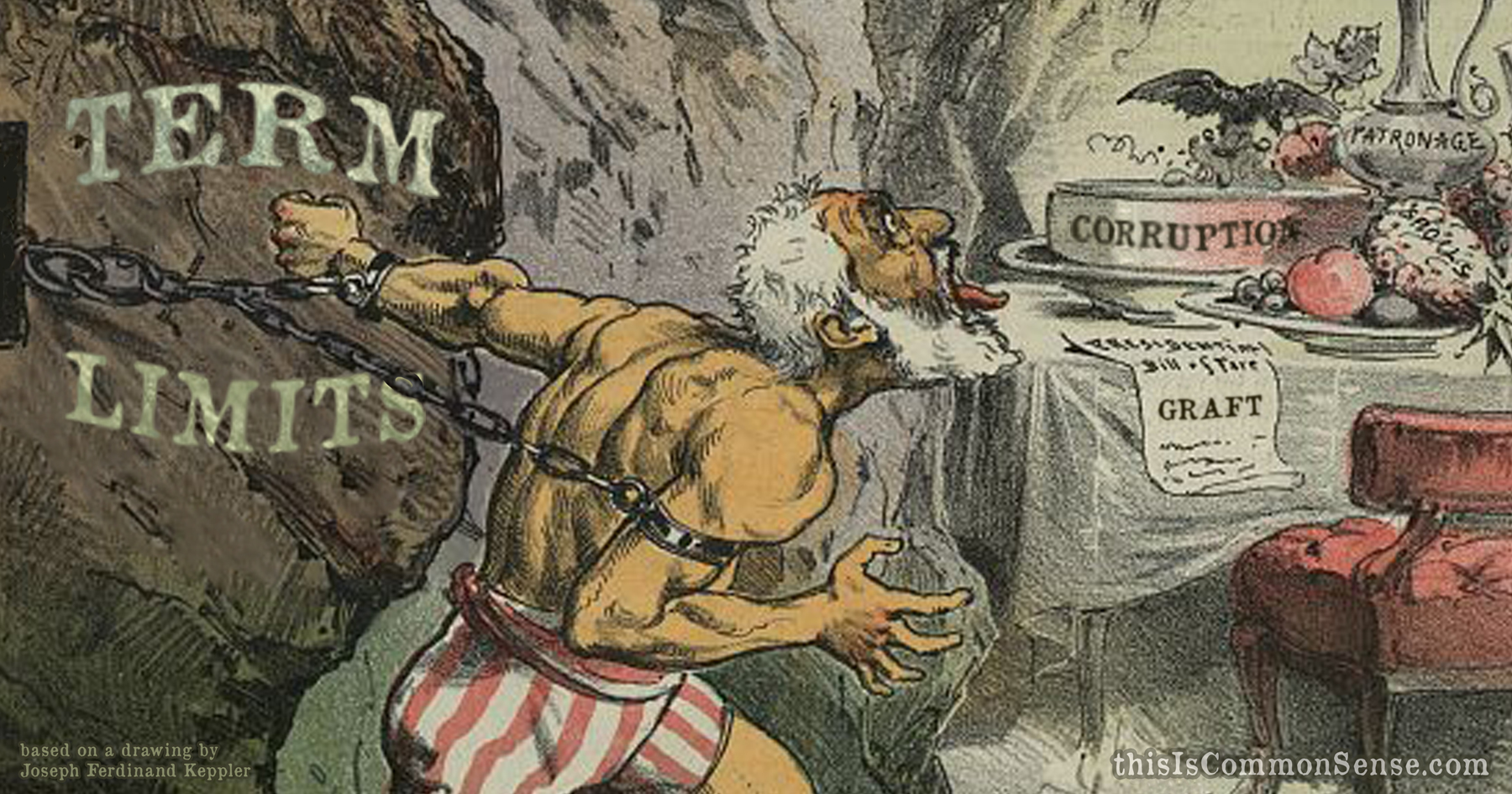
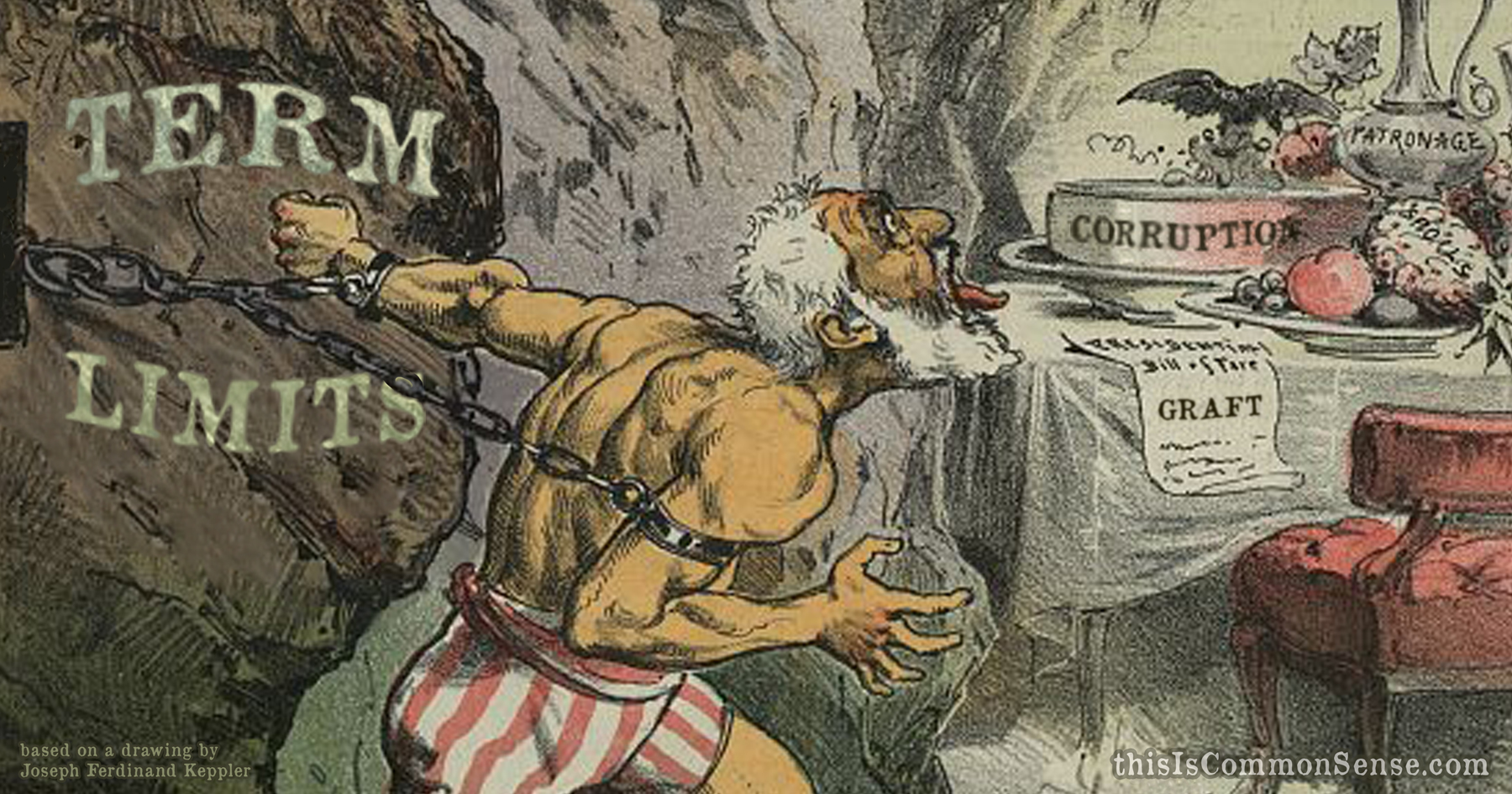
In the 15 states voters have enacted term limits for their state representatives and senators, those politicians and the lobbyists and heads of powerful interest groups constantly complain that the limits are a problem.

I know. That’s why I like term limits.

Am I a broken record on the subject? Perhaps. But let me tell you about a different type of record . . . criminal.

“Are term limits good ideas for Pa. elected officials?” asked a Newsworks.org headline, after Steve Reed, the former 28-year mayor of Harrisburg, Pennsylvania, “was arrested on nearly 500 criminal charges that included corruption, theft, bribery and dealing in proceeds of unlawful activity.”

“Top N.Y. lawmaker arrested on corruption charges,” read a January USA Today headline. Sheldon Silver, after more than 20 years as Assembly Speaker was “arrested on federal corruption charges alleging he was involved in a multimillion-dollar kickback scheme for more than a decade.”

In 2009, after Massachusetts saw its third House Speaker in a row indicted, I ranked New Jersey, Illinois and Massachusetts as the three most corrupt states. The top contenders all have one thing in common: a lack of term limits.

A couple years ago, I joined Greg Upchurch, a St. Louis patent attorney and entrepreneur at a conference on term limits in Missouri. Greg (the driving force behind the state’s 1992 initiative) told the audience, mostly opposed to term limits, that the limits are here to stay.

Before term limits, Upchurch pointed out, legislative leaders were going to prison for corruption. With term limits, there simply haven’t been such scandals.

This is Common Sense. I’m Paul Jacob.

Printable PDF

Term Limit Protection


Categories
Common Sense folly free trade & free markets general freedom national politics & policies

Cruz “Loses”

When Sen. Ted Cruz gave an impassioned speech on the Senate floor, last week, he ruffled a few feathers. Calling Senate Majority Leader Mitch McConnell a liar in front of everybody is just not done. “Elder party statesmen have not been amused,” the Los Angeles Times reports:

On Sunday, 81-year-old Orrin G. Hatch of Utah, the GOP’s most senior senator, opened the chamber’s session with a reminder to colleagues of the ground rules.

“Squabbling and acrimony may be tolerated on the campaign trail,” said Hatch, who urged senators colleagues toward comity and decorum, and to keep their egos in check.

Cruz defended himself. “It is entirely consistent with decorum . . . to speak the truth.”

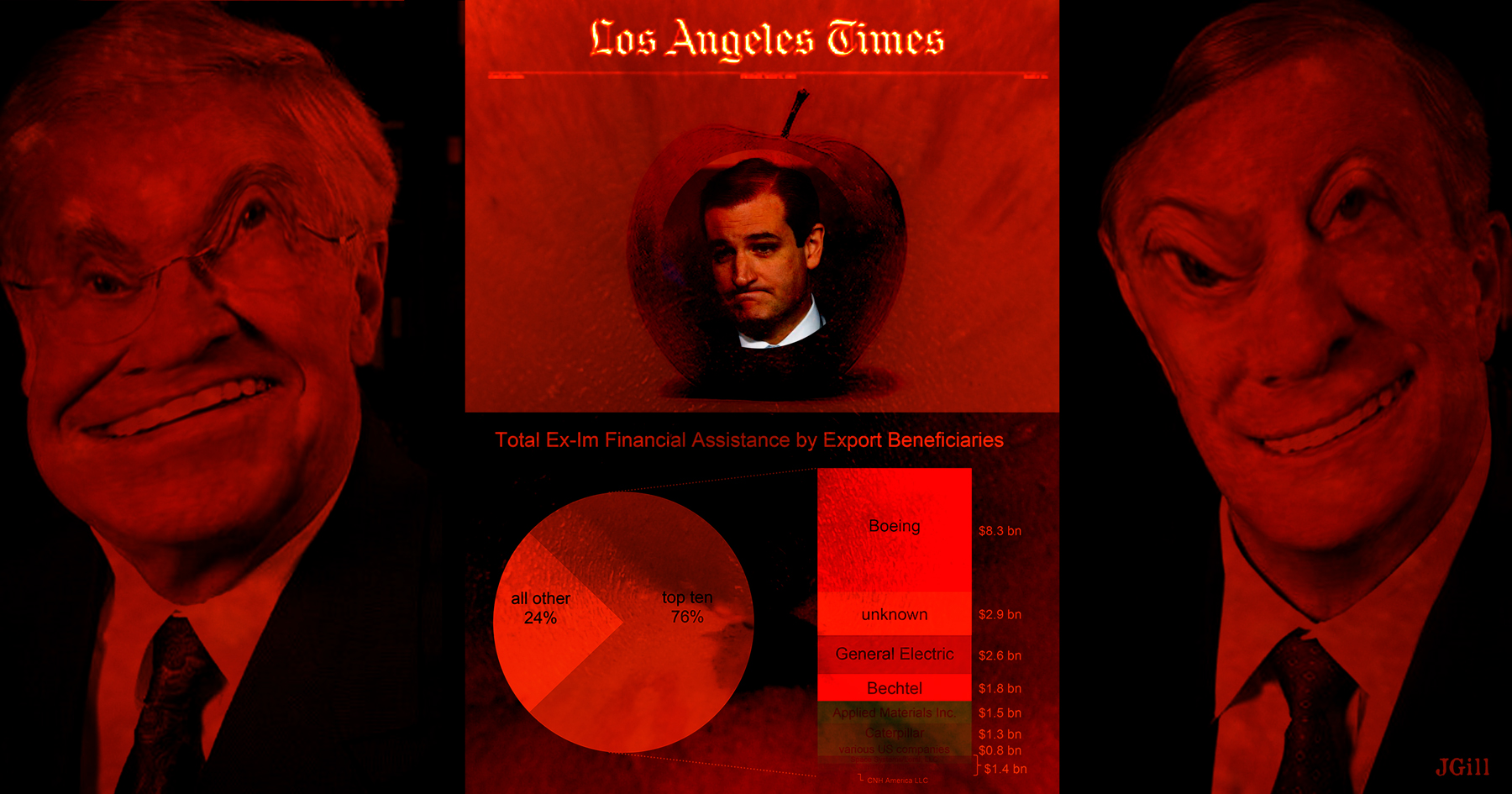
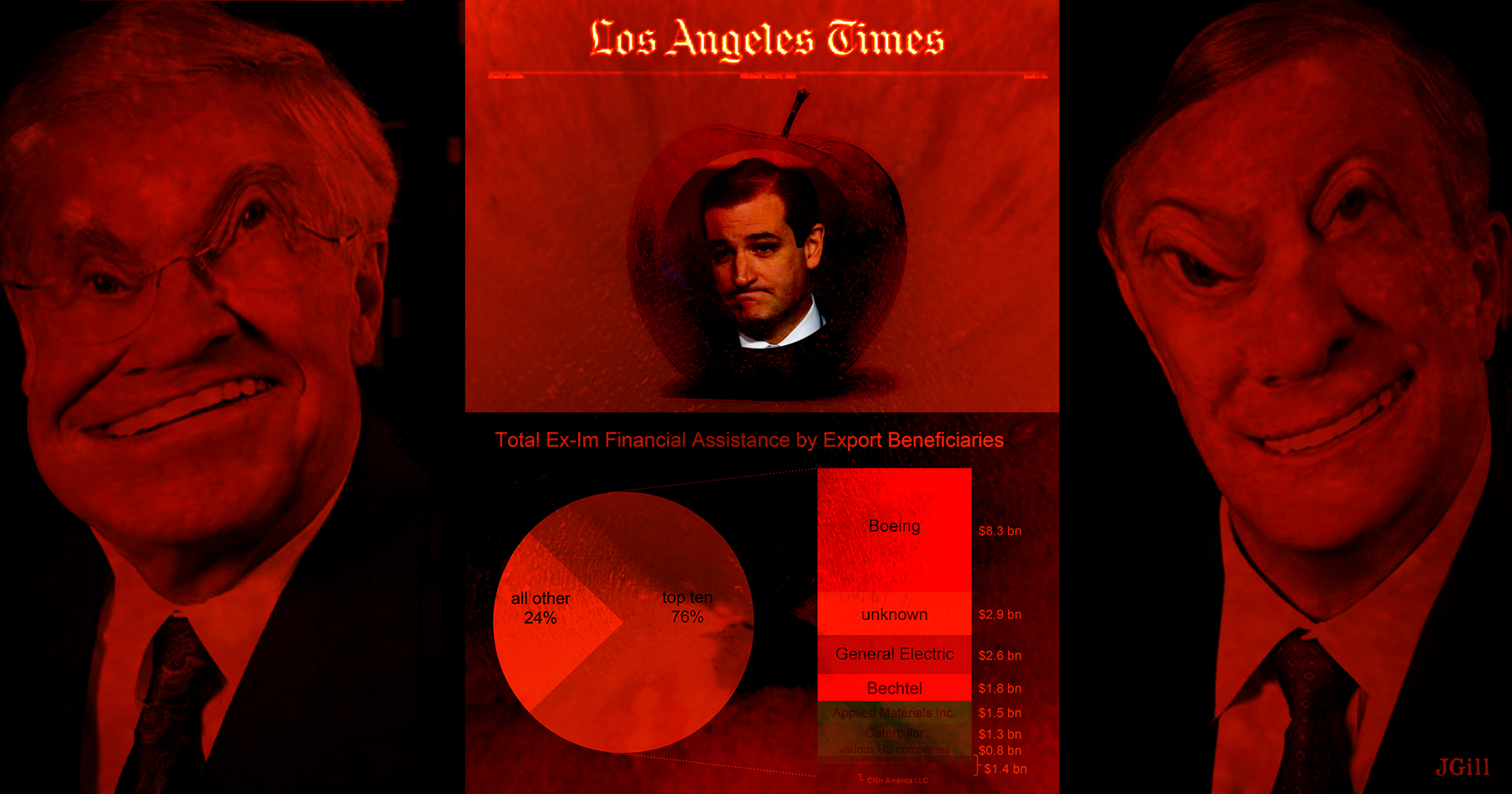
The “squabble” was over the Export-Import Bank, mainly. Cruz blurted out how McConnell had betrayed his own party members in the Senate by cutting a backroom deal for the crony-capitalist moral hazard that is the Ex-Im.

Regardless (or because of?) Cruz’s truth-telling, the Senate rebuffed Cruz and “voted to advance the Export-Import bank and deny the presidential hopeful a vote on his amendment.”

Crony capitalism continues.

But note an odd aside in the LA Times’s account. The paper went out of its way to identify Ex-Im as “opposed by the powerful Koch brothers but supported by a bipartisan coalition of business interests, including the U.S. Chamber of Commerce.”

The Kochs were brought up . . . for what reason?

So vilified by the left, these days, the Kochs are a red herring . . . which the Times threw into the issue like an Erisian apple, nudging Democratic readers not to sympathize with Cruz.

We can’t have his anti-crony-capitalist stance attract Democratic readers, now, can we?

This is Common Sense. I’m Paul Jacob.


Import-Export Boogymen

Printable PDF


Categories
Common Sense general freedom national politics & policies too much government

Forget Frankenstein

Some proposals are so shocking and not common that, no matter how rational or sensible, we cannot legitimately call them “common sense.”

Could this be one?

You tell me.

Congress is right now struggling to pass a highway funding bill. Authorized funding by the federal government on roads ends with the passing of this month, July. So, blogs Scott Shackford at Reason, “the legislature has to pass something. Because the legislature has to pass something, people are trying to squeeze everything into it.”

And our illustrious president wants to revive the recently dead, the Export-Import Bank. “When he was a senator, Barack Obama knew the program was nothing but corporate welfare,” writes Shackford. “But now as president, he has flip-flopped and is trying to keep the institution alive.”

I don’t know if the prez will ultimately succeed, cajoling Congress to revive the monster by stuffing it into the roads bill, but at least “Sen. Marco Rubio has introduced an amendment to the highway bill that would kill the bank and unload its assets to the treasury.”

Go, Rubio! Getting rid of the Ex-Im Bank is just anti-crony common sense.

So what’s the “uncommon” sense? This out-of-the-mainstream notion: We don’t need a federal transportation bill at all. It’s not as if states cannot secure funding for roads. (They already do.) Devolve the whole Interstate system back onto the states!

Radical? Maybe. But the federal government just spends and spends without much sense. Distribute the responsibility for roads to the states; let Congress figure out how to manage its remaining tasks.

For a change.

I think this is . . . Common Sense. I’m Paul Jacob.


Printable PDF

Import Export


Categories
Common Sense folly free trade & free markets general freedom national politics & policies too much government

Fifteen or Fifty or Zero?

Washington Post columnist Catherine Rampell just stumbled into a truth. Raising minimum wages could be disastrous. Depending on the rate.

While “Bernie Sanders, Martin O’Malley and a host of other well-intentioned liberals want to hike the federal minimum wage to $15 an hour,” she calls the proposal “badly misguided.”

And yet she says that the current federal wage floor, at “just $7.25 an hour . . . is absurdly low.”

Why, this Friday, she notes, marks six years since the last minimum wage hike!

Rampell recognizes that raising the minimum wage to $50/hour would cause unemployment, massively. She also realizes that, in many low-wage states, the mere $15 rate would do the same. But raising “the federal minimum wage to $10.10”? Might work! “This is a trade-off . . .”

Yes. Stop right there. Trade-offs, indeed.

She wants us to think about getting the rates right.

Employers and job-seekers do that already, in the marketplace. If businesses don’t pay enough, the workers will move on to employers who will. Force businesses to hire workers for more than their productivity? Unemployment results.

A minimum wage rate helps some and hurts others. Rampell admits that, appearing to “accept” 500,000 people losing their jobs as collateral damage to boost wages for others.

Her proposed fine-tuning of rates supposes that politicians have greater knowledge about the “proper” price of labor than employers and job-seekers. Moreover, she ignores the inevitable political game, whereby politicians take credit for rewarding some, while hiding the costs imposed on others.

Finding the “right minimum wage” rate is mainly about hiding the victims . . . so voters won’t notice.

This is Common Sense. I’m Paul Jacob.


Printable PDF

Finding the Right Balance