Categories
Thought

William Harvey

Man comes into the world naked and unarmed, as if nature had destined him for a social creature, and ordained him to live under equitable laws and in peace; as if she had desired that he should be guided by reason rather than be driven by force; therefore did she endow him with understanding, and furnish him with hands, that he might himself contrive what was necessary to his clothing and protection. To those animals to which nature has given vast strength, she has also presented weapons in harmony with their powers; to those that are not thus vigorous, she has given ingenuity, cunning, and singular dexterity in avoiding injury.

William Harvey, De Generatione Animalium (1651).
Categories
Thought

Martin Luther King, Jr.

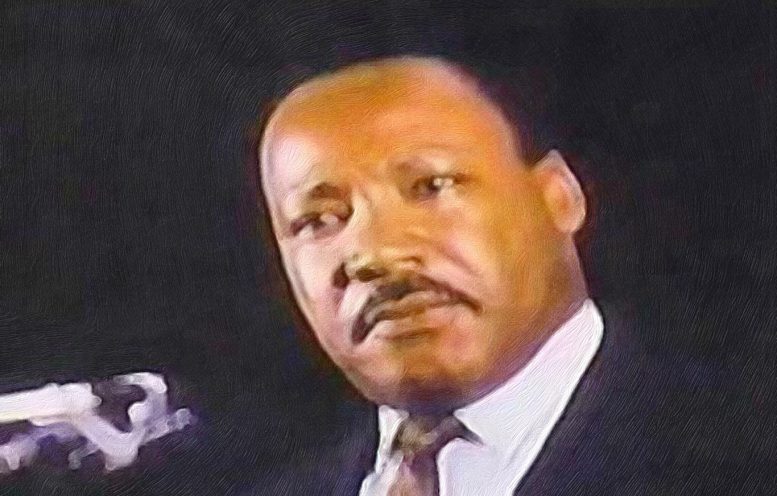
“Well, I don’t know what will happen now. We’ve got some difficult days ahead. But it doesn’t really matter with me now. Because I’ve been to the mountaintop. I don’t mind. Like anybody, I would like to live a long life; longevity has its place. But I’m not concerned about that now. I just want to do God’s will. And He’s allowed me to go up to the mountain. And I’ve looked over. And I’ve seen the Promised Land. I may not get there with you. But I want you to know tonight, that we, as a people, will get to the Promised Land. So I’m happy, tonight. I’m not worried about anything. I’m not fearing any man. Mine eyes have seen the glory of the coming of the Lord.”

Martin Luther King, Jr., the conclusion of his “Mountaintop” speech (April 3, 1968).
Categories
Thought

Jules Verne

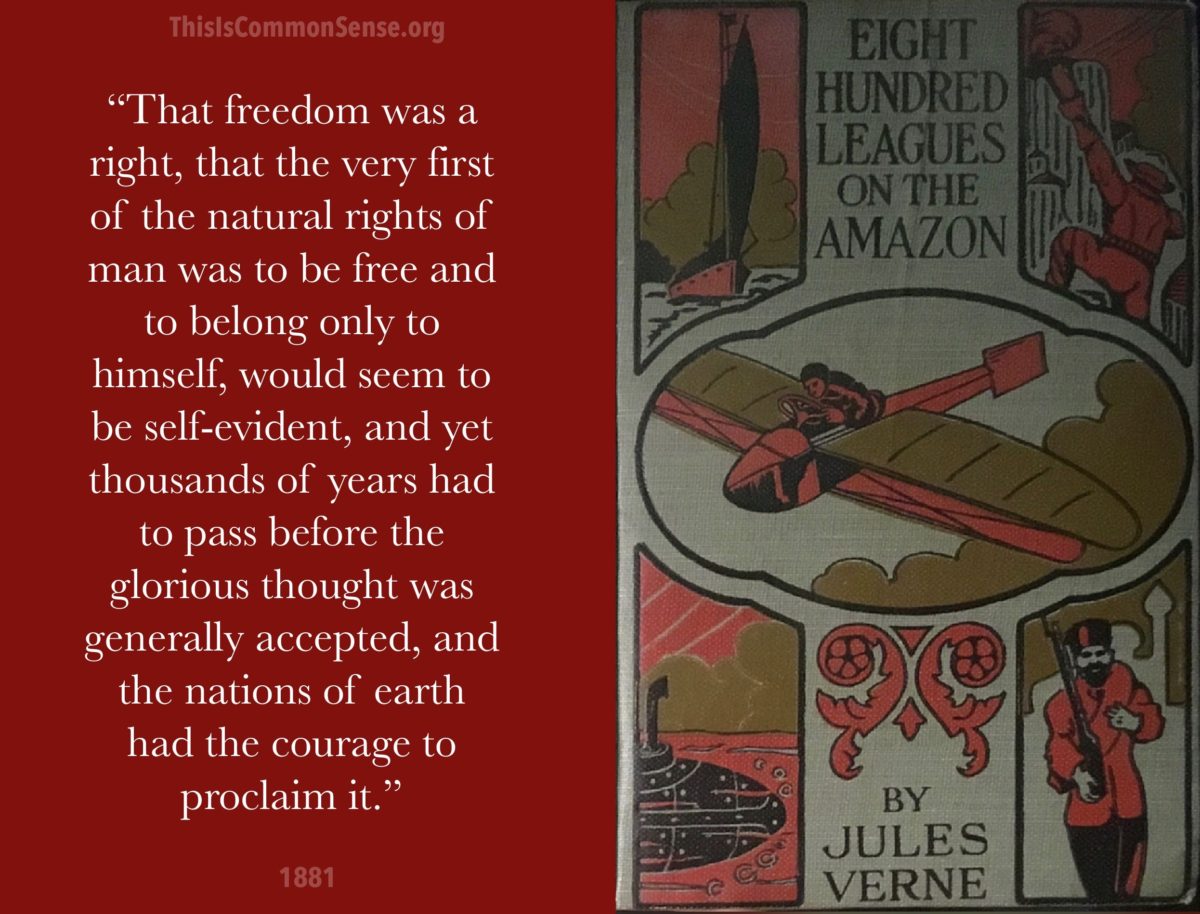
That freedom was a right, that the very first of the natural rights of man was to be free and to belong only to himself, would seem to be self-evident, and yet thousands of years had to pass before the glorious thought was generally accepted, and the nations of earth had the courage to proclaim it.

Jules Verne, Eight Hundred Leagues on the Amazon (1881), p. 2.
Categories
Thought

Cato

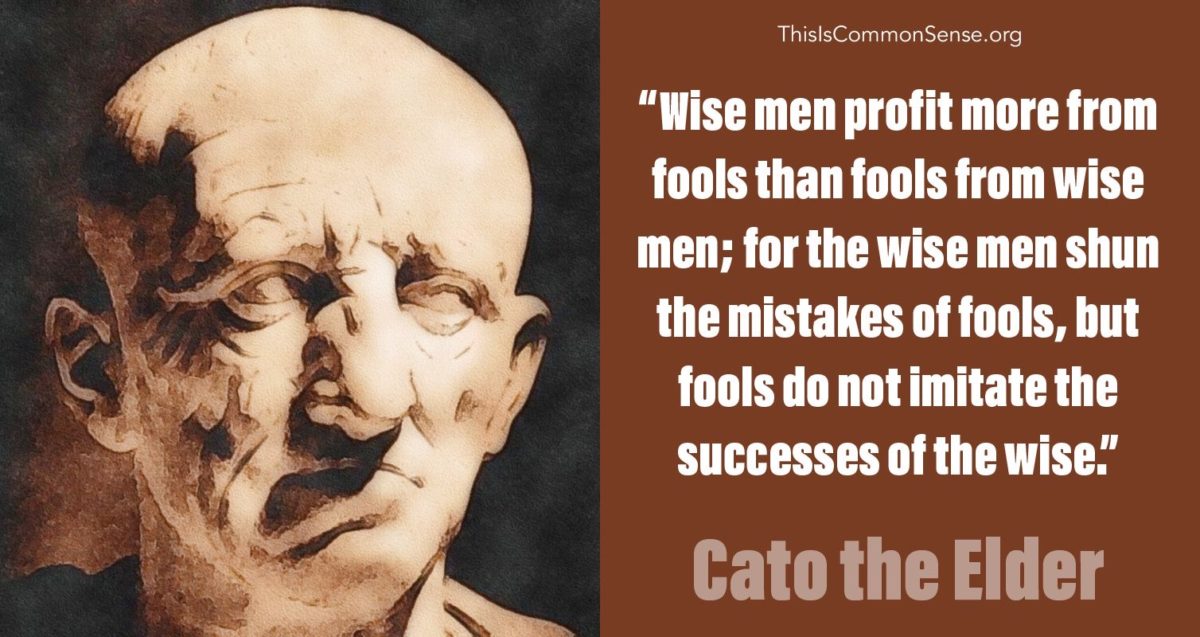
Wise men profit more from fools than fools from wise men; for the wise men shun the mistakes of fools, but fools do not imitate the successes of the wise.

Cato the Elder, as quoted in Plutarch’s Life of Cato.

Categories
Thought

Arthur Schopenhauer

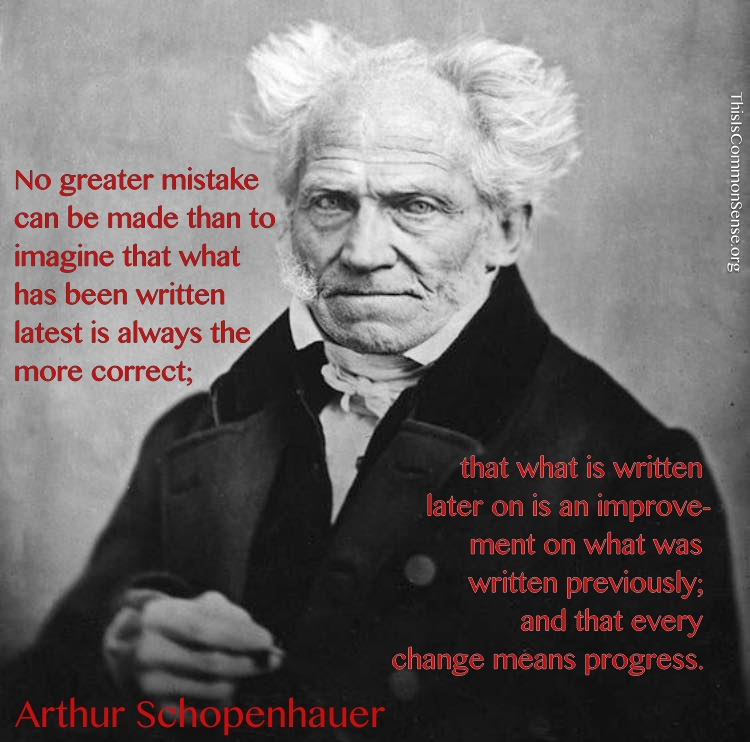
No greater mistake can be made than to imagine that what has been written latest is always the more correct; that what is written later on is an improvement on what was written previously; and that every change means progress.

Arthur Schopenhauer, “On Authorship” in The Essays of Arthur Schopenhauer (T. Bailey Saunders, translator).

Categories
Thought

Bernhard von Bülow

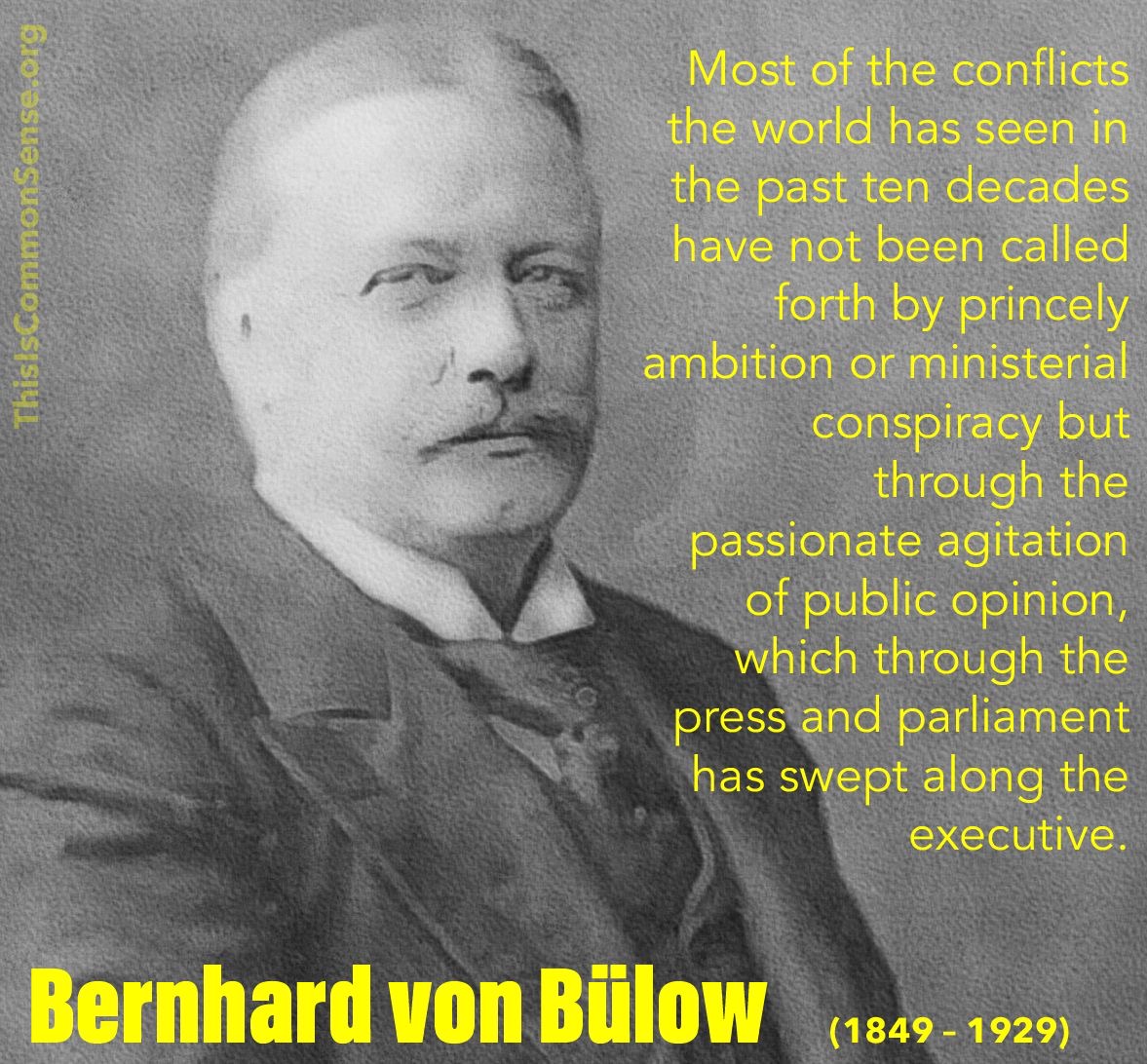
Most of the conflicts the world has seen in the past ten decades have not been called forth by princely ambition or ministerial conspiracy but through the passionate agitation of public opinion, which through the press and parliament has swept along the executive.

Bernhard von Bülow, as quoted in “Karl Kraus, the Press, and War” (International Policy Digest, March 27, 2014), by Franz-Stefan Gady. Von Bülow (1849 – 1929), created Fürst von Bülow in 1905, was a German statesman who served as Secretary of State for Foreign Affairs for three years and then as Chancellor of the German Empire from 1900 to 1909.
Categories
Thought

Matt Walsh

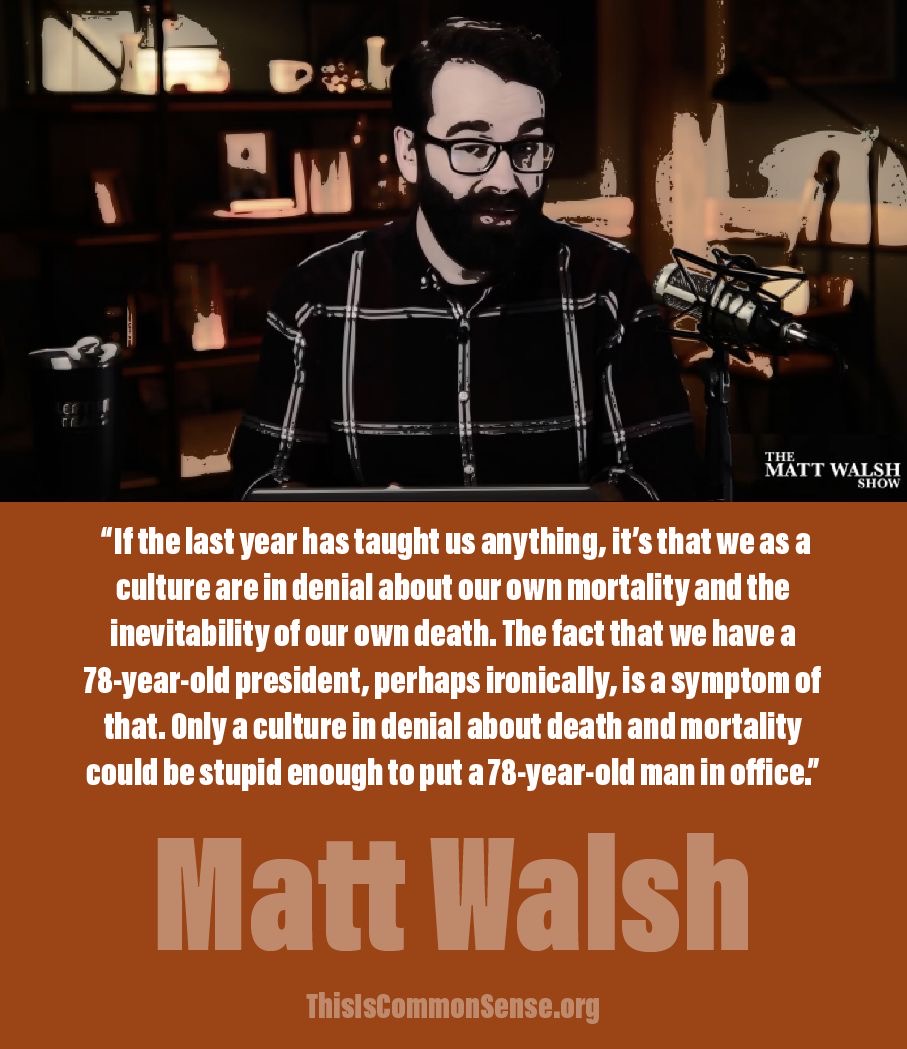
If the last year has taught us anything, it’s that we as a culture are in denial about our own mortality and the inevitability of our own death. The fact that we have a 78-year-old president, perhaps ironically, is a symptom of that. Only a culture in denial about death and mortality could be stupid enough to put a 78-year-old man in office.

Matt Walsh, The Matt Walsh Show, Ep. 687; “Is It Time We Put An Upper Age Limit On The Presidency?” (March 26, 2021).
Categories
Thought

Patrick Henry

Is life so dear, or peace so sweet, as to be purchased at the price of chains and slavery? Forbid it, Almighty God! I know not what course others may take; but as for me, give me liberty, or give me death!

Patrick Henry, March 23, 1775, speech at  St. John’s Church in Richmond, Virginia.

Categories
Thought

Aldous Huxley

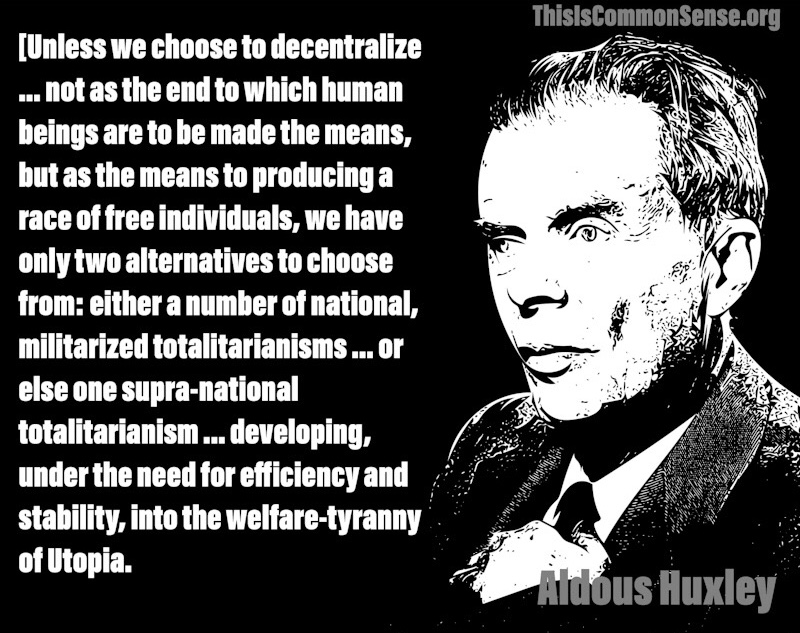
[U]nless we choose to decentralize and to use applied science, not as the end to which human beings are to be made the means, but as the means to producing a race of free individuals, we have only two alternatives to choose from: either a number of national, militarized totalitarianisms, having as their root the terror of the atomic bomb and as their consequence the destruction of civilization (or, if the warfare is limited, the perpetuation of militarism); or else one supra-national totalitarianism, called into existence by the social chaos resulting from rapid technological progress in general and the atomic revolution in particular, and developing, under the need for efficiency and stability, into the welfare-tyranny of Utopia. You pays your money and you takes your choice.

Aldous Huxley, foreword to a later edition of Brave New World (first published 1932).
Categories
Thought

Herbert Spencer

One would have thought that in these anti-monopoly days, when the calamities resulting from selfish legislation have awakened public attention, men would take especial care not to permit anything involving an approach to exclusive privileges, to make its appearance upon the political arena, without raising a vigorous outcry against it. But the expectation is not realised. The doctrine that it is the duty of the state to protect the public health, contains the germ of another gigantic monopoly.

Herbert Spencer, The Proper Sphere of Government, Letter IX (W. Brittain of London, 1843), first appearing serially in The Nonconformist.