Paul Jacob applies ancient principles to the news:
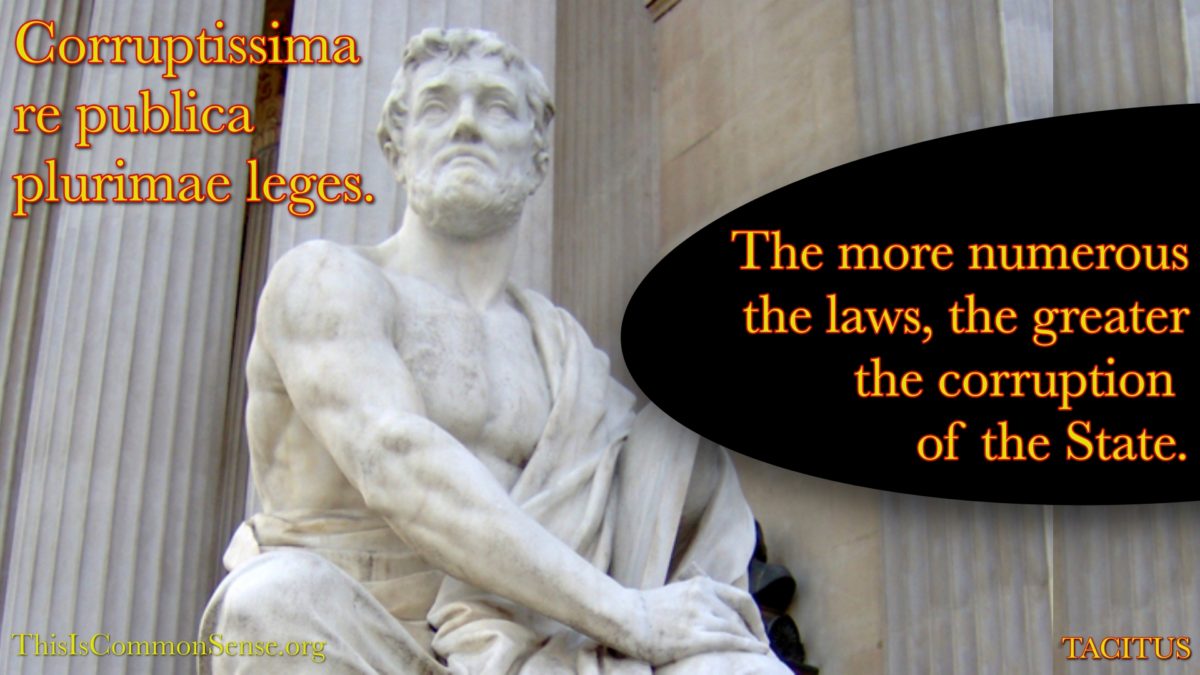
Paul Jacob applies ancient principles to the news:
The best form of government is that which is most likely to prevent the greatest sum of evil.
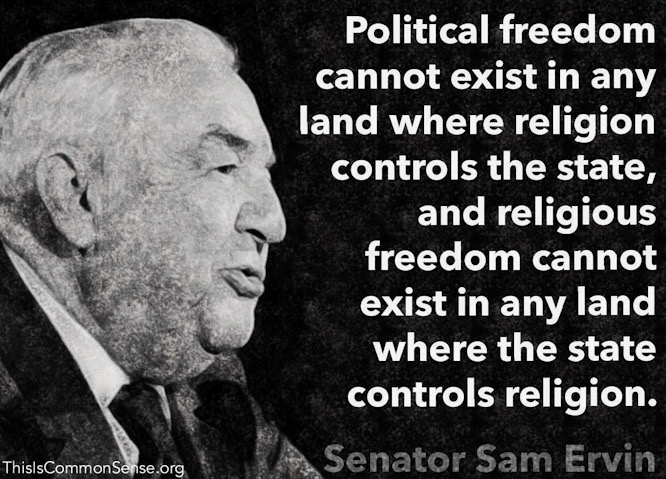
Political freedom cannot exist in any land where religion controls the state, and religious freedom cannot exist in any land where the state controls religion.
Samuel James Ervin, Jr., (1896-1985).
The United States was founded by the brightest people in the country — and we haven’t seen them since.
Gore Vidal, Matters of Fact and Fiction (1978)
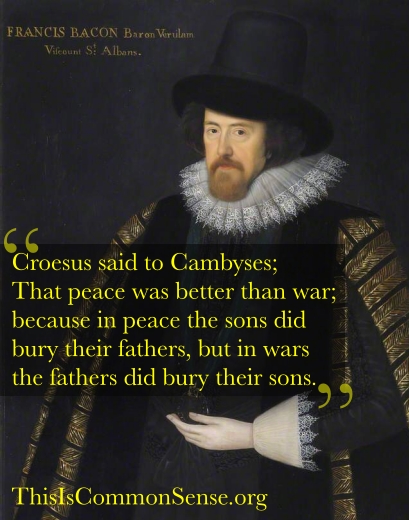
Croesus said to Cambyses; That peace was better than war; because in peace the sons did bury their fathers, but in wars the fathers did bury their sons.
Francis Bacon, Apophthegms, New and Old (published 1625).
Though not part of the official curricula, in the schools the intellectuals learned the lessons of their own greater value in comparison with the others, and of how this greater value entitled them to greater rewards.
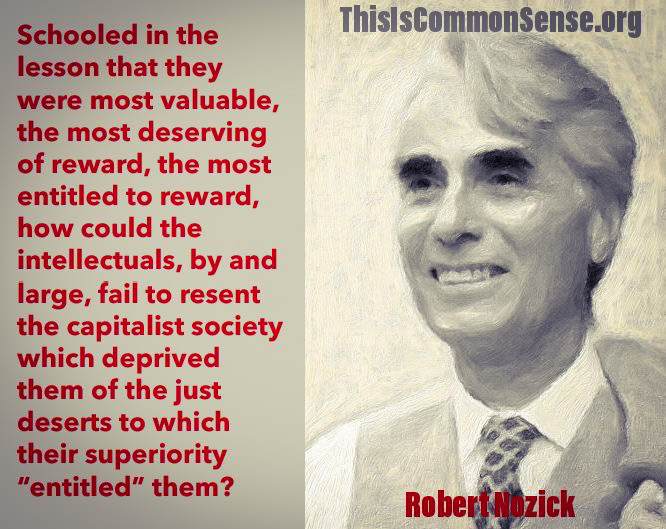
The wider market society, however, taught a different lesson. There the greatest rewards did not go to the verbally brightest. There the intellectual skills were not most highly valued. Schooled in the lesson that they were most valuable, the most deserving of reward, the most entitled to reward, how could the intellectuals, by and large, fail to resent the capitalist society which deprived them of the just deserts to which their superiority “entitled” them? Is it surprising that what the schooled intellectuals felt for capitalist society was a deep and sullen animus that, although clothed with various publicly appropriate reasons, continued even when those particular reasons were shown to be inadequate?
Robert Nozick, “Why Do Intellectuals Oppose Capitalism?” Cato Policy Report January/February 1998
When it comes to big government secrets, we usually only learn the truth after it becomes irrelevant.
Richard M. Dolan, on his YouTube channel.

If, as I believe, the ends of men are many, and not all of them are in principle compatible with each other, then the possibility of conflict — and of tragedy — can never wholly be eliminated from human life, either personal or social. The necessity of choosing between absolute claims is then an inescapable characteristic of the human condition. This gives its value to freedom as Acton conceived of it — as an end in itself, and not as a temporary need, arising out of our confused notions and irrational and disordered lives, a predicament which a panacea could one day put right.
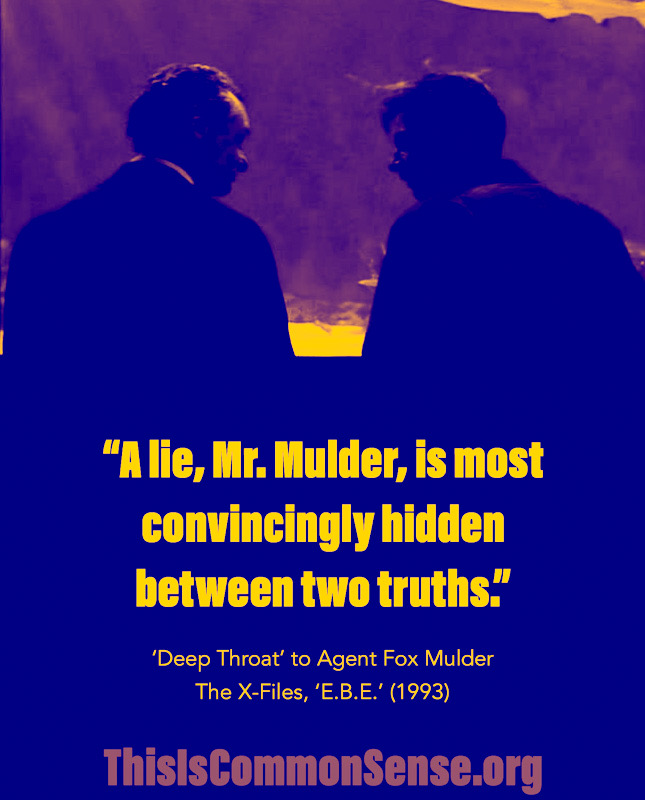
Deep Throat to FBI agent Fox Mulder The X-Files in the first season episode, “E.B.E.” (1993), written by Glen Morgan and James Wong.
A lie, Mr. Mulder, is most convincingly hidden between two truths.
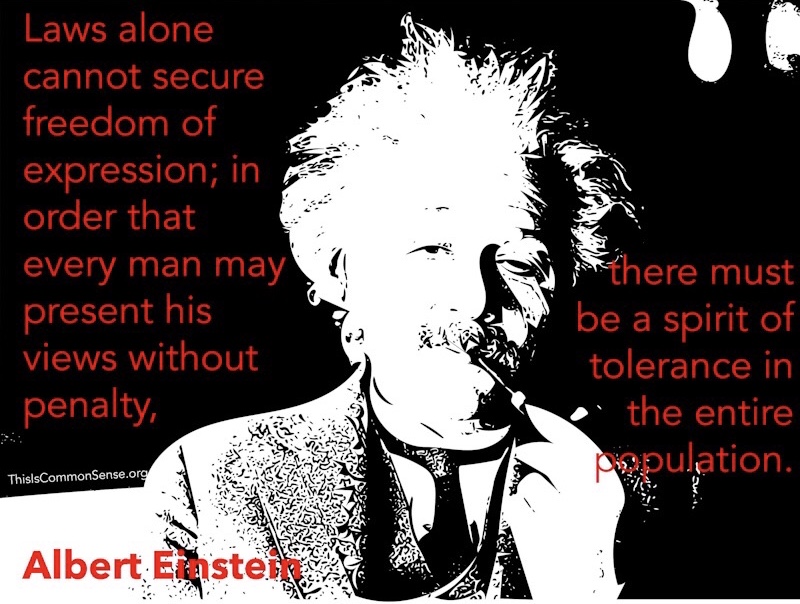
Laws alone cannot secure freedom of expression; in order that every man may present his views without penalty, there must be a spirit of tolerance in the entire population.
Albert Einstein, Ideas and Opinions (1954).