Categories
First Amendment rights ideological culture Internet controversy social media

Domination by Pseudo-experts

It’s official.

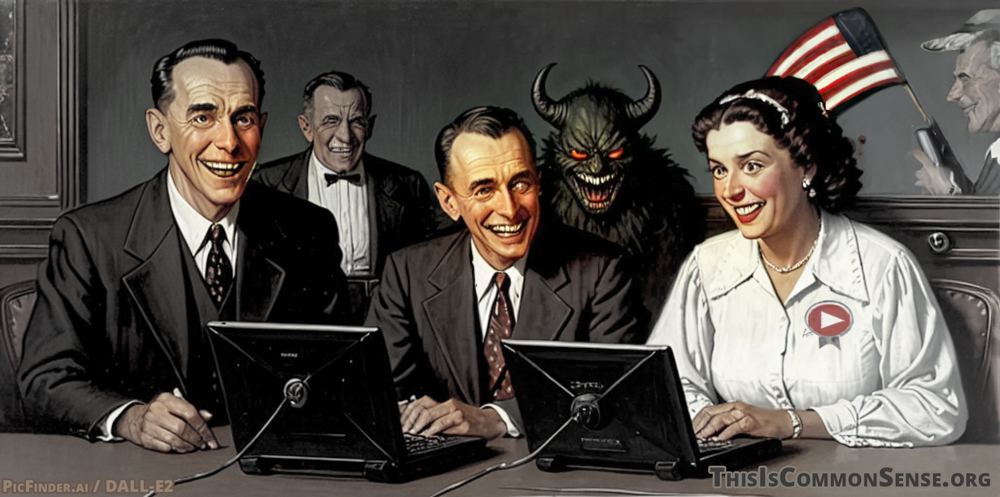
The overt and covert censorship of social-media posts over the last several years has been extensively documented in a new congressional report, “The Weaponization of ‘Disinformation’ Pseudo-experts and Bureaucrats: How the Federal Government Partnered With Universities to Censor Americans’ Political Speech.”

Anyone paying attention knew that this was happening. We knew that Google, Facebook, pre-Musk Twitter and others of the biggest social-media companies were systematically stopping account holders from uttering opinions that contradicted official government doctrines about COVID-19, elections, and other matters.

We also knew that government officials were publicly and vehemently “suggesting” that social media companies try harder to stomp speech that some government officials disagree with.

We didn’t know — until government emails and other documents came to light thanks to various lawsuits — how routinely, behind the scenes, many federal officials were directing the censorship of specific disapproved posts.

The report’s authors say that as the 2020 election approached and the pandemic raged, people sought to discuss “the merits of unprecedented, mid-election-cycle changes to election procedures” and other controversial matters. But “their constitutionally protected speech was intentionally suppressed as a consequence of the federal government’s direct coordination with third-party organizations, particularly universities and social media platforms.”

We have other sources of many of the facts here outlined. But the fact that the abuses are being formally acknowledged and detailed by the anti-censorship wing of the federal government — instead of being swept under the rug, as is traditional — may help prevent this form of election interference from happening again.

This is Common Sense. I’m Paul Jacob.


PDF for printing

Illustration created with PicFinder / Firefly / DALL-E2

See all recent commentary
(simplified and organized)
See recent popular posts
Categories
First Amendment rights Internet controversy social media

Memester to the Pokey

It was a joke. For which he’s been sent to prison.

A political joke online.

Admittedly, it wasn’t very funny. It certainly wasn’t new. That is, the general idea has been floating around for as long as there have been ballot boxes. 

The ur-form of the joke is “Hey, [political opponent], why don’t you deposit that ballot right here in this handy receptacle [trash can]?”

The specific joke that got Douglass Mackey into big trouble sported an image of a smiling black woman in front of a white-on-blue “African Americans for Hillary/President” sign, along with the message: “Avoid the line. Vote from home. ¶ Text ‘Hillary’ to 59925 ¶ Vote for Hillary and be a part of history.”

It arguably flirted with dirty tricks of the sort honest people don’t engage in. But a lot of partisans do that sort of thing, not just Mr. Mackey, who posted the joke to his now-defunct “Ricky Vaughn” Twitter account. A better version of the joke about the same time was not only never prosecuted, the link to it’s still on Twitter (X). It just so happens, however, to have been made by a Democrat . . . against Trump voters.

Trolls flirting with Dirty Trick status are not criminals; there is the First Amendment. But what Mackey was successfully prosecuted for (he was sentenced last week to seven months) was “Election Interference.”

Tellingly, ZERO is the number of voters stepping up to testify that they were tricked into texting 59925 and then not voting by his lame meme. If there were any, they might understandably be too humiliated to bear witness.

Curiously, the law he violated does not mention misinforming a person as a criterion for criminality.

A country that selectively prosecutes this sort of thing — can it be said to be free?

This is Common Sense. I’m Paul Jacob.


PDF for printing

Illustration created with Picfinder and Firefly

See all recent commentary
(simplified and organized)
See recent popular posts
Categories
crime and punishment Second Amendment rights social media

A Gun with His Name On It

An “X” post by a Trump spokesperson implicated the former president in a crime.

What followed implicates the U.S. Government in something far worse.

But first, to clarify:

  1. By “X” I mean “Twitter.” Remember, Elon Musk changed the name of his social media company.
  2. By “Trump” I mean, of course, Donald John Trump, former president of the United States running the same office, a man surrounded by armed guards at all times.
  3. By “crime” I mean an infraction of federal law, not a willful abuse of someone’s rights at common law. 
  4. The crime in question is the act of receiving “any firearm or ammunition which has been shipped or transported in interstate or foreign commerce” by a person “under indictment . . . a crime punishable by imprisonment for a term exceeding one year.” Trump’s been indicted quite a number of times, recently, and therefore isn’t legally allowed to buy a gun.

The initial tweet said Trump admired a Glock that had his name stamped on it. It was the “Donald Trump edition,” gold-colored, retailing for under a thousand bucks. Trump’s on video saying he wants one of these handguns.

When X went all a-twitter with the implications, spokesman Steven Cheung took down his post and the campaign issued a corrective: “President Trump did not purchase or take possession of the firearm. He simply indicated that he wanted one.” 

This is all explained by Jacob Sullum at Reason, who goes on to indicate that the law makes no real sense. The obvious absurdity of not allowing a well-guarded presidential candidate to guard himself with gun of any kind, that’s one thing. Flouting the Second Amendment by prohibiting the innocent, i.e. not yet proven guilty, from bearing arms, looks far worse — a policy of rights suppression.

This is Common Sense. I’m Paul Jacob.


PDF for printing

Illustration created with PicFinder.ai

Corrigendum notice: a correction was made late on the date of publication [Trump is not a “Jr.,” as originally stated].

See all recent commentary
(simplified and organized)
See recent popular posts
Categories
First Amendment rights general freedom social media

Must Known Musk

Enthusiasts for prohibiting political dissent must know that the First Amendment protects the right to utter controversial speech.

They must know that there’s no constitutional loophole for speech that they disagree with. 

Another “must know”? That calling the public statements of political opponents “misinformation,” “disinformation,” “hate speech,” etc. is no substitute for open discussion.

They just don’t care. 

They just know that if they keep plugging away, struggling to muzzle the badspeech, they’re more likely to get their way than playing by the rules of free speech and open debate.

Their determination is well shown in a new California law, AB587, passed about a year ago. The law compels social media companies to institute moderation policies to squelch “hate speech,” “extremism,” “disinformation,” “misinformation,” “radicalization,” etc.

Although AB587 is anti-transparently called a “transparency measure,” main author Assemblyman Jesse Gabriel admits the point: to force social media companies to “moderate or remove hateful or incendiary content on their platforms,” like “hate speech and disinformation.”

Since Elon Musk’s Twitter is affected by the new law, Musk is suing to block it.

According to his lawsuit, AB587 “compels companies like X Corp. [Twitter] to engage in speech against their will, impermissibly interferes with [their] constitutionally protected editorial judgments” and “has both the purpose and likely effect of pressuring companies . . . to remove, demonetize, or deprioritize constitutionally protected speech that the State deems undesirable or harmful.”

Politically, Mr. Musk has emerged as one of the country’s most frustratingly contradictory figures, often doing great things, sometimes very bad ones. With this lawsuit, even his enemies must know he is in the right.

This is Common Sense. I’m Paul Jacob.


PDF for printing

Illustration created with PicFinder.ai and DALL-E2

See all recent commentary
(simplified and organized)
See recent popular posts
Categories
crime and punishment First Amendment rights social media

Big-Gov-Google-Plex

A major presidential candidate is suing YouTube for censorship.

The candidate’s a Democrat.

That’s right. Democrats can also be muzzled by social media companies . . . that is, by big corporations that obey the First Amendment-violating instructions of government officials.

Democratic Presidential candidate Robert F. Kennedy, Jr., has filed a lawsuit against YouTube and its parent company, Google, for collaborating with the federal government to violate his free speech rights by removing various of his videos from YouTube.

Kennedy’s sins include openly disputing Official Government Doctrines about COVID-19 and the pandemic. Doctrines espoused by, among others, the incumbent he is running against.

The title of the complaint names only “Google LLC” and “YouTube LLC.” But the document makes clear the originating role of the federal government in censoring Kennedy. The complaint is avowedly about “freedom of speech and the extraordinary steps the United States government has taken under the leadership of Joe Biden to silence people it does not want Americans to hear.”

YouTube’s conduct “may be fairly treated as that of government itself,” the filing explains. “For example, although it cited its own COVID vaccine misinformation policies when censoring Mr. Kennedy, the policies rely entirely on government officials to decide what information gets censored.”

The relief that Kennedy seeks includes restoration of the deleted videos and an order declaring Google’s speech-banning misinformation policies to be “unconstitutional on their face.”

Kennedy wants to be able to state his views and distinguish them from the incumbent’s without being routinely censored by the Big-Gov-Google-plex.

Google and other social media companies must somehow be prevented from colluding with politicians and bureaucrats to interfere in the democracy they only pretend to support.

This is Common Sense. I’m Paul Jacob.


PDF for printing

Illustration created with PicFinder.ai and DALL-E2

See all recent commentary
(simplified and organized)
See recent popular posts
Categories
First Amendment rights media and media people social media

First Amendment: Irrelevant?

For at least three years, we have all suspected — well, known — that the federal government has been pressuring social-media companies to censor speech that government officials dislike regarding the pandemic and other matters.

One clue: officials like Jennifer Psaki, White House press secretary from 2021 to 2022, forbiddingly and publicly demanded that social-media firms do more to suppress disapproved speech.

Even so, many left-wingers stressed that once allegedly open public forums like YouTube, Facebook, pre-Musk Twitter et al. were private entities with every darn right to set standards for posting. 

Just market decisions, that’s all that was happening here!

Now that litigation has delivered so much evidence that government agencies have been colluding to censor, directly and chronically “working with” social-media firms to suppress dissent, many on the left are not even pretending to favor protection of First Amendment rights to express speech they disagree with.

Jonathan Turley notes that according to The New York Times, a recent ruling temporarily enjoining the Biden Administration from colluding to censor would, by fostering open discourse, lamentably “curtail efforts to combat disinformation.”

Washington Post editors and others on the left “no longer deny censoring,” agrees Jeffrey Tucker. “Now they defend censorship as a policy in the national interest. . . . They don’t even pretend to have respect for the First Amendment that gave rise to the national media in the first place. They now seek a monopoly of opinion and interpretation.”

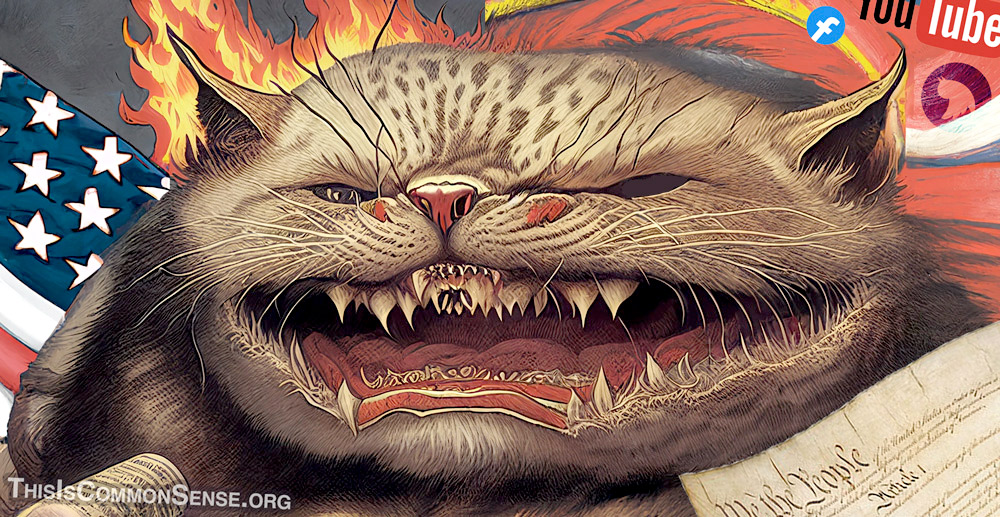
Yes. Cat’s out of the bag.

This is Common Sense. I’m Paul Jacob.


PDF for printing

Illustration created with PicFinder.ai

See all recent commentary
(simplified and organized)
See recent popular posts
Categories
First Amendment rights judiciary social media

Censors Cancelled

The verb is “enjoin.”

In a July 4 preliminary injunction, Judge Terry Doughty has enjoined federal officials from communicating with social-media companies except on matters pertaining to criminality or threats to national security.

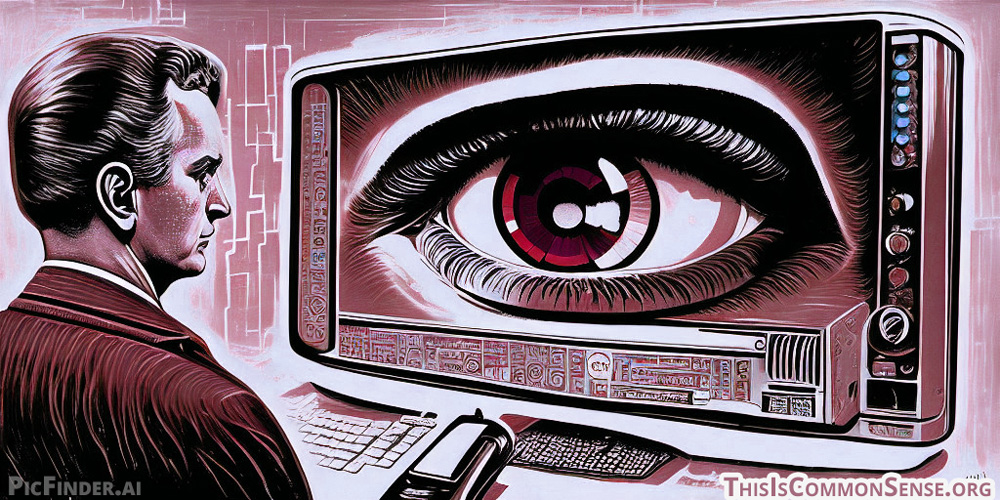
“The Plaintiffs are likely to succeed on the merits in establishing that the Government has used its power to silence the opposition,” explains Doughty. The government “seems to have assumed a role similar to an Orwellian ‘Ministry of Truth.’”

For a few years now, government officials have asked social-media personnel to censor speech on topics like the pandemic, elections, and laptops dropped off by Hunter Biden, speech that officials want to suppress only because they disagree with it or find it inconvenient. Politically.

A lawsuit brought by Missouri and Louisiana argues that federal officials pressured and colluded with social-media companies to block speech protected by the First Amendment.

Some critics of this and other lawsuits — and of more non-formal objections to the government’s conduct — say that what has been exposed in documents brought to light during litigation, and in the Twitter files, cannot be called governmentally instigated censorship at all.

What’s really going on, they burble, is nothing more than persons working for the FBI, the CDC, the White House, and other such government-force-backed entities idly wondering — in incidental and nonbinding casual conversation, mind you — whether the social-media company they’re just happening to hobnob with could come down like a ton of bricks on the accounts of persons saying things that government officials disapprove. No big deal.

Not the most plausible pseudo-exculpation I’ve ever heard.

The relevant adjective? “Guilty.”

This is Common Sense. I’m Paul Jacob.


PDF for printing

Illustration created with PicFinder.ai

See all recent commentary
(simplified and organized)
See recent popular posts
Categories
First Amendment rights ideological culture Internet controversy social media

Google Can’t Have That

Over the last several years, one has put one’s YouTube speech at risk by addressing such verboten or intermittently suppressed topics as pandemic policy, vaccine efficacy, origin of the COVID-19 virus, “climate change” (are winter, summer, and all natural disasters really caused by carbon footprints? inquiring minds want to know!), 2020 election fraud, and whatever else inspires post-Enlightenment institutional censors to clatter into action.

Because of the emails and other documents that have come to light in various lawsuits, we now know for sure that social-media companies have not been censoring independently. 

They’ve been in cahoots with government agencies — agencies eager to find corporate workarounds to the First Amendment.

A recent target of Google’s YouTube? Robert F. Kennedy, Jr.

Running for president as a Democrat in competition with the alleged incumbent, Joe Biden, this son of assassinated 1968 Democratic presidential candidate Bobby Kennedy is disturbing the serene pools of so-called thought that constitute Acceptable Opinion and Settled Science.

I often disagree with Kennedy. But I feel that he isn’t just feeding me B.S.; he actually believes stuff. 

He may be mostly wrong, but I prefer that to mostly crooked.

Google has just deleted another Kennedy video, one in which he converses with Canadian psychologist Jordan Peterson about climate change, COVID-19, and a possible link between exposure to chemicals and sexual dysphoria.

This last musing seems dubious. But, whatever, let the guy talk. Except — hold on — isn’t RFK Jr. causing Joe Biden a lot of political trouble?

Can’t have that. 

Or, anyway, Google can’t have that. 

Or whichever Biden administration officials are directing Google (or vice versa) can’t have that.

This is Common Sense. I’m Paul Jacob.


PDF for printing

Illustration created with PicFinder.ai

See all recent commentary
(simplified and organized)
See recent popular posts
Categories
Internet controversy national politics & policies social media

Dys Glitch

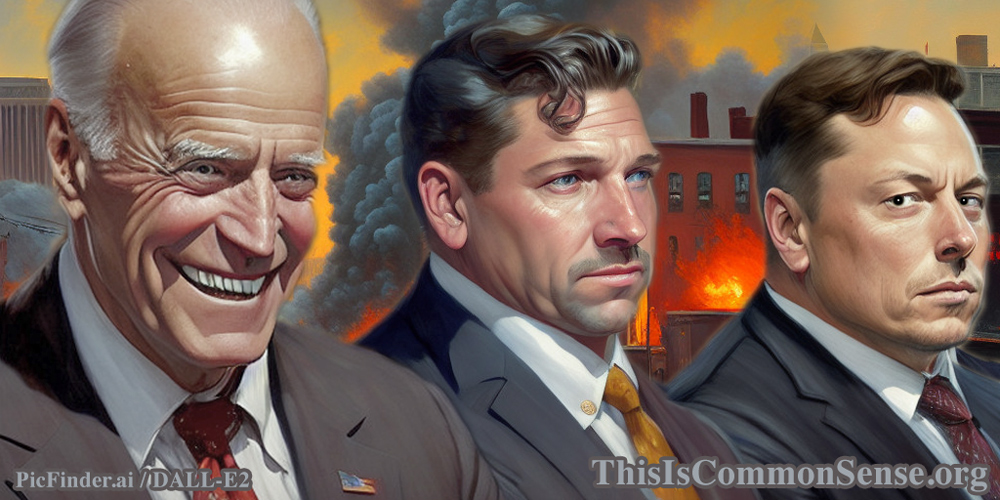
After some technical glitches in livestreaming Florida Governor Ron DeSantis’s announcement of his presidential run, the snide tweets poured in.

“‘This link works,’ Biden posted on his Twitter account,” The Epoch Times attempted to regale us, “sharing a link to a donation page for his campaign as the DeSantis team and Twitter owner Elon Musk struggled to resolve the glitches plaguing their scheduled Twitter Spaces interview.” 

But the worst was also from The Biden — nobody believes that Joe himself is in charge of his own Twitter account — in which a few “positions” of DeSantis received mockery, leading popular YouTuber/Rumblist Viva Frei to respond with “Is this really the best you could piece together? You couldn’t fragment the sentences more if you tried. Pathetic.”

And that’s really where we’re at. Newscasters and the Twitterati made much of the Twitter Space glitch, but not even Donald Trump, Jr., with his hashtag “#DeSaster,” did much more than weakly echo his father’s heyday on Twitter.

This is not 2016. 

Everybody seems tired.

There are a number of challengers, already, in the running to oust feeble Joe Biden. Donald Trump himself, of course, and now Ron DeSantis, whom we are told runs a distant second to the former president. Neither man seems likely to reach beyond the conservative half of the electorate. Only Robert F. Kennedy, Jr., a Democrat, offers much “newness,” and he’s afflicted by a hard-to-listen-to cracked voice: spasmodic dysphonia, “a specific form of an involuntary movement disorder called dystonia that affects only the voice box.”

Metaphor for the race so far? There’s a lot of “dys” in the tone of our times, but it’s just not very profound. If the future weren’t at stake, one wouldn’t even bring it up.

This is Common Sense. I’m Paul Jacob.


PDF for printing

Illustration created with PicFinder.ai and DALL-E2

See all recent commentary
(simplified and organized)
See recent popular posts
Categories
First Amendment rights Internet controversy social media

Whose Brains Fell Out?

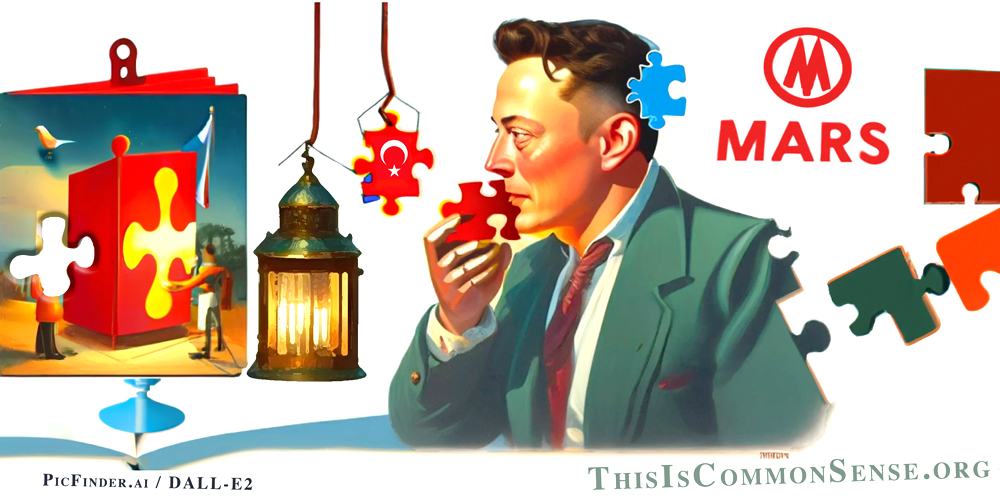
Just before the Turkish presidential election, the Turkish government ordered Twitter to block content that its strongman incumbent apparently found inconvenient. (The election isn’t over; a runoff is scheduled for May 28.)

We don’t know what Twitter was told to censor. All we know is that, although now guided by the somewhat pro-free-speech policies of Elon Musk, Twitter complied, saying it did so “to ensure Twitter remains available to the people of Turkey. . . .”

Journalist Matthew Yglesias tweeted that Twitter’s compliance “should generate some interesting Twitter Files reporting.” This is an allusion to internal Twitter communications released by Musk showing how readily and frequently pre-Musk Twitter censored dissenting speech at the behest of U.S. government officials.

The jibe got under Musk’s skin. “Did your brain fall out of your head, Yglesias?” Musk counter-tweeted. “The choice is have Twitter throttled in its entirety [in Turkey] or limit access to some tweets.”

But Twitter doesn’t control Turkish policies. It only controls its own policies.

Had Twitter refused and then, in turn, been throttled in Turkey, every Twitter user there would have known about the censorship by their government. Some might have protested. But only a few people in Turkey will know about the Twitter-abetted censorship.

Musk has in effect announced that Twitter will censor anything governments want if only a government willing to block Twitter does the asking. And what tyrants do is up to them. 

Whether we cooperate with their tyranny when we have the means to resist? 

That is up to us.

This is Common Sense. I’m Paul Jacob.


PDF for printing

Illustration created with PicFinder.ai and DALL-E2

See all recent commentary
(simplified and organized)
See recent popular posts