Categories
free trade & free markets regulation

Dining Out on Cause and Effect

Could a barren, charred, devastated landscape be the actual intended goal?

In California as in Washington, lawmakers and chief executives apparently have a long list of nice things to destroy and are crossing them off one by one, as if on the payroll of aliens from outer space wanting to conquer earth without doing very much conquest-work themselves.

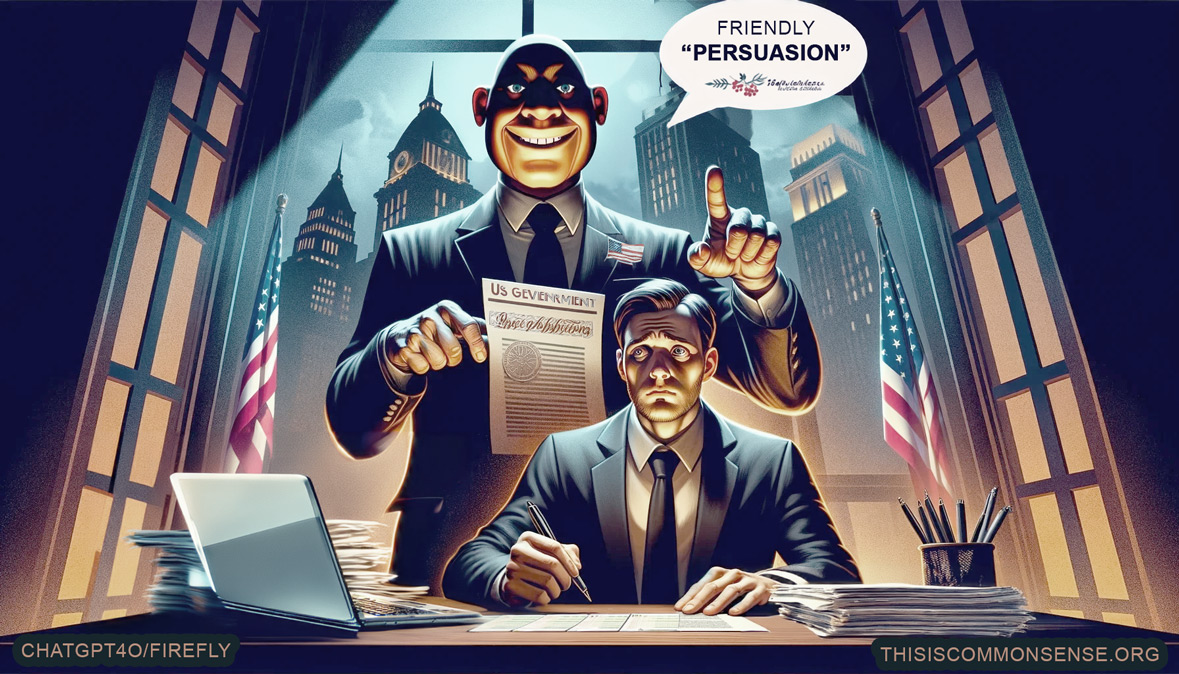
Part 99-C of the plan is to price entry-level labor and entry-level restaurant dining out of the market by hiking the minimum wage of fast-food workers even further beyond the market rate for the labor and its actual productive value to employers: now to $20 an hour.

Already, prices for restaurant meals are going up, and restaurant workers are being laid off.

The $20 minimum is a compromise that restaurant owners accepted in lieu of probably paying a $22 per hour minimum. Like letting burglars take only most of the silverware and letting them return at will.

Even more looting of employers is to come, if employee and activist Angelica Hernandez has her way. “We’re going to have to keep speaking up and striking to make sure we are heard.” She wants her dough and doesn’t care about the consequences for others. Policymakers rush to appease her and those like her.

So is omni-destruction the actual intended goal?

Or is it that the mental powers of the crusaders and politicians and too many voters don’t extend so far as the relationship between cause and effect?

This is Common Sense. I’m Paul Jacob.


PDF for printing

Illustration created with PicFinder and Firefly

See all recent commentary
(simplified and organized)
See recent popular posts

Categories
regulation subsidy

The Hail of It

Early yesterday, an out-of-control container ship ran into the Francis Scott Key Bridge over the Patapsco River in Baltimore. Early reports claimed that a dozen vehicles and 20 people went into the cold water, with only two survivors, so far, being rescued; last I heard, however, the total went down to six missing after the initial rescues.

It looks like an accident, and accidents happen, sometimes horrific ones. There’s a reason “thoughts and prayers” are mentioned at such times, all other talk seeming vastly inappropriate.

Nevertheless, President Joe Biden immediately promised that the federal government would pay to replace the bridge.

Eleven days earlier a more humdrum disaster gave us greater license to speculate. “Thousands of panels on a solar farm southwest of Houston, Texas, were damaged by a powerful hailstorm on March 15,” a Newsweek report informs us. “Aerial footage showed rows of cracked photovoltaic cells at the Fighting Jays Solar Farm near Needville in Fort Bend County. . . .” A vast array of solar panels, ruined by something not unheard-of in Texas: “baseball-sized hail stones” falling from the sky.

And seeping out of the panels? Toxic chemicals.

This is something that we, the voting public, must confront: the fact that most “green energy” replacements are fragile and often environmentally hazardous. Compared to natural gas they are ecological disasters.

While Joe Biden yammers about funding a new bridge, we need to force a more important conversation, about removing subsidies for pseudo-green alternative energy sources. 

To save us from the poorhouse as well as from environmental disaster.

This is Common Sense. I’m Paul Jacob.


PDF for printing

Illustration created with PicFinder and Firefly

See all recent commentary
(simplified and organized)
See recent popular posts

Categories
crime and punishment general freedom regulation

Monopoly vs. Monopoly

The Biden Administration makes much of its pro-consumer actions. President Sleepy Joe never tires of boasting about how his regulations favor consumers over credit card companies. Considering the massive taxation that his administration supports, however, saving a few bucks on overdraft fees looks a bit absurd in context.

As does the administration’s ramped-up anti-trust actions.

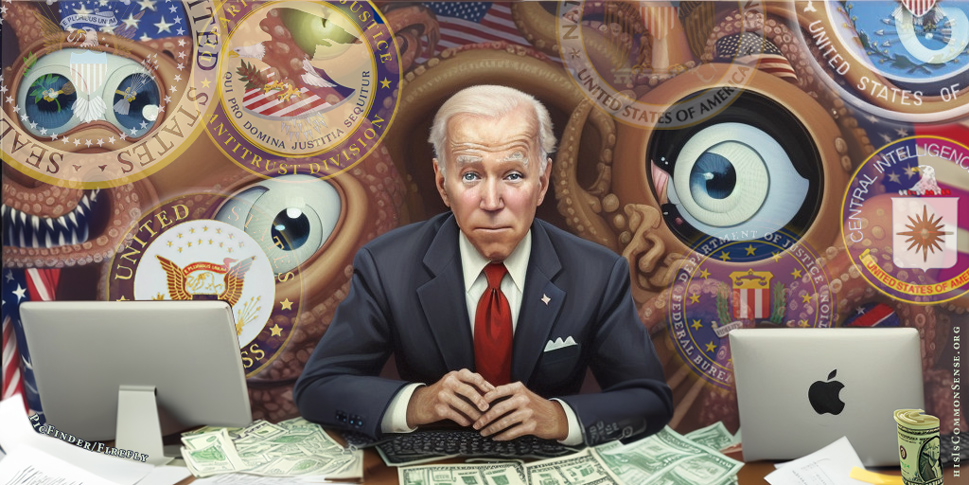
The federal government has now attacked Apple. On anti-trust grounds. For being a monopoly.

The humor in this was noted by anti-intellectual property theorist Stephan Kinsella, tweeting on X: “‘U.S. Sues Apple, Accusing It of Maintaining an iPhone Monopoly’ We grant you patent and copyright monopoly privileges and you use them to build up a monopoly? How dare you!”

Jeffrey A. Tucker of the Brownstone Institute was less amused, and less concerned with Apple’s reliance upon intellectual property, which he claims is secondary to the company’s useful products: “The very notion that the government is trying to protect consumers in this case is preposterous. Apple is a success not because they are exploitative but because they make products that users like, and they like them so much that they buy ever more.”

At issue is how Apple products work so well together but not so well with other manufacturers’ products. “The Justice Department calls this anticompetitive even though competing is exactly the source of Apple’s market strength,” insists Tucker.

Maybe it’s really about this principle: the government giveth; the government taketh away: blessed be the name of the Biden.

In full disclosure, I have an iPhone, which I hate, and a Microsoft Surface Book, which I also hate. I’m open to any of their competitors, which I might hate less.

This is Common Sense. I’m Paul Jacob.


PDF for printing

Illustration created with PicFinder and Firefly

See all recent commentary
(simplified and organized)
See recent popular posts

Categories
crime and punishment national politics & policies regulation

Stop the Work Stoppers

Republican Representative Kevin Kiley of California has introduced H.J. Resolution 116 to block “the rule submitted by the Department of the Labor relating to ‘Employee or Independent Contractor Classification Under the Fair Labor Standards Act.’ ”

116 is a legislative attempt to thwart legislation by regulators.

Labor’s rule is modeled on the AB5 Act passed in California several years ago. Catering to unions, AB5’s idea was to kill the livelihoods of many gig workers or freelancers by making it much harder for companies and independent contractors to deal with each other.

The new rule, too, aims to kill competition with unions and expand the pool of employees who can be unionized.

AB5 caused a firestorm, leading to citizen initiatives, court battles, and victories and setbacks for besieged employers and freelancers. There’s been some backtracking of AB5, in part because sponsoring lawmakers realized that it hurt even favored constituencies. But California is still a land mine for would-be freelancers.

The Labor Department is trying to impose AB5-style reclassification on the national level now that national lawmakers have failed to pass legislation to do it.

These days, the many dictators in our government often regard legislative means of passing legislation as an option only of first resort. If that fails, well, stick it to the people some other way.

So Kiley — and, hopefully, an effective congressional majority — must pass a law saying no, regulators, you may not pass this law in the guise of a regulation.

This is Common Sense. I’m Paul Jacob.


PDF for printing

Illustration created with PicFinder and Firefly

See all recent commentary
(simplified and organized)
See recent popular posts

Categories
initiative, referendum, and recall local leaders nannyism regulation

Discrimination, California-Style

How far will a California lawmaker go to try reverse a validly enacted and also very good citizen initiative?

In 1996, California voters passed Proposition 209, the California Civil Rights Initiative, which prohibits the state government from imposing race-based, ethnicity-based, or sex-based preferences.

Prop 209 added a section to the California Constitution stating that the government “shall not discriminate against, or grant preferential treatment to, any individual or group on the basis of race, sex, color, ethnicity, or national origin in the operation of public employment, public education, or public contracting.”

In 2020, friends of racial discrimination tried to revive racial preferences through a referendum. But voters shot it down, even though proponents outspent opponents 14 to one.

Now California Assemblyman Corey Jackson wants to revive racial preferences another way. His bill, ACA7, would not touch the language of Proposition 209. But it would empower the governor to make exceptions. What exceptions? Any he wishes, as long as he spews the right rationalizations when he does so.

Law professor Gail Heriot, who has launched a change.org petition to oppose the measure, says that “ACA7’s proponents are hoping that voters will be fooled into thinking that it is just a small exception. In fact, it gives the governor enormous power to nullify Proposition 209.”

ACA7 has passed the House and now goes to the state senate, awaiting the magic of legislative action. Heriot says Californians should let their senators know where they stand on the bill. I don’t disagree.

This is Common Sense. I’m Paul Jacob.


PDF for printing

Illustration created with PicFinder and Firefly

See all recent commentary
(simplified and organized)
See recent popular posts

Categories
free trade & free markets regulation too much government

The AB5 Agenda

AB5 is the code name for legislation passed in California a few years ago to kill freelance work. 

Ex-freelancers hate AB5; employers who can’t afford to convert contractors into regular employees hate AB5. 

Unions, on the other hand, love AB5; lawmakers also love AB5.

A California citizen initiative partly reversed it. Then the Ninth Circuit at least temporarily reversed the reversal.

Though Democrats have made several attempts to bring it to the federal level, Congress has not passed a federal version of AB5. But now the Department of Labor is acting to impose a rule to challenge the status of many independent contractors, scheduled to take effect March 11. This AB5-like rule enunciates six criteria determining whether contract work may still be called contract work.

This affects what I do. One of my dozen jobs is citizen-initiative work. Various state governments have done all they can apart from comprehensive AB5-like rules to impede my ability to collaborate with petitioners to get citizen initiatives on the ballot. It is most efficient to pay these contractors per thing they do instead of earning a fixed salary or getting paid an hourly wage. 

Politicians and bureaucrats know this.

If the Labor Department’s new rule takes effect, will contractors working with me pass the test? Or will we all be thrown into chaos and confusion?

It is being challenged in court. 

Many voters — who are, after all, wage-earners or salaried employees — may not care very much; it may seem irrelevant to them. But it is time for them to inquire why some politicians and union bosses want to destroy the ability of freelancers to freely work for outfits short of becoming full-time employees.

For the ramifications will reach far beyond my niche “industry.”

This is Common Sense. I’m Paul Jacob.


PDF for printing

Illustration created with PicFinder and Firefly

See all recent commentary
(simplified and organized)
See recent popular posts
Categories
general freedom regulation too much government

Unlimited Limits

Do politicians understand limits? 

They seem to have this notion that they may limit us every which way . . . with no natural or civilized limit set upon the limits they may impose.

Take California lawmaker Scott Wiener.

This state senator (District 11-D.) has introduced a bill to force carmakers to install a gadget limiting vehicle speed to a maximum of ten miles per hour above the speed limit. The murderous gadget would be installed starting with 2027 car models.

I foresee problems. Hence that word “murderous.” Wouldn’t it be kind of dumb to have to go slower than the traffic all around you if that other traffic consists of pre-2027 vehicles going markedly faster than the speed limit?

Also, mightn’t emergency vehicles often have good reason to zip along faster than this gadget-imposed maximum?

Not to worry. The Hill reports that emergency vehicles would be exempt, “and the California Highway Patrol could authorize the system’s disabling in certain other cases.”

Touble is, any vehicle can, at any time, become an “emergency vehicle” — if an emergency requires it to move faster than the Wiener-imposed limit. Do you then call up the California Highway Patrol and ask that the gadget be disabled? What if you have five seconds to act? That’s not much time to beg the California Highway Patrol to give you control over your own property.

I detect hazards in letting government control every aspect of our lives and every movement we make. Can we put on the brakes, please?

This is Common Sense. I’m Paul Jacob.


PDF for printing

Illustration created with PicFinder and Firefly

See all recent commentary
(simplified and organized)
See recent popular posts

Categories
free trade & free markets regulation too much government

SAD Regulators

Americans are getting sicker and fatter on government-approved, corporate-made foodstuffs, yet government continues to crack down on the sale of natural and home-made foods.

The classic case is raw, whole milk. I’ve talked about this before. The most recent case is from Amish country, where the State of Pennsylvania raided a farm “on suspicion of selling ‘illegal milk,’ among other products,” explains The Epoch Times, and the farm “is being sued by the Pennsylvania Office of the Attorney General and Pennsylvania Department of Agriculture.” 

The Amish farm “has been ordered to halt all sales of its dairy products, inspiring widespread anger over what critics have called a blatant example of government overreach.”

At issue is government interference in farmers and customers freely choosing to skip the major grocery outlets multinational companies and dealing with each other on a local, free-market basis. “Capitalist acts between consenting adults,” as Robert Nozick put it.

But it’s especially galling when placed in the wider context of the FDA’s and USDA’s obvious failure to produce a healthier populace. Though the state’s attorney general insists that “we cannot ignore the illnesses and further potential harm posed by [the] distribution of these unregulated products,” the illnesses caused by what many call the Standard America Diet (SAD) go unnoticed and unregistered as such. 

One standard for “the market,” another for the regulators.

Meanwhile, the State of Wisconsin is pushing a new bill to impose a $20,000 annual sales cap on participants in the state’s cottage food industry, “one of the most restrictive in the nation,” explains Suranjan Sen, an attorney at the Institute for Justice — a legal aid outfit often mentioned in these pages.

The very point of the law is to protect brick-and-mortar grocery and baked-goods stores — not the health of consumers. It has the backing of powerful lobbyists.

Looking for healthier foods and healthier economies? Don’t look to government.

This is Common Sense. I’m Paul Jacob.


PDF for printing

Illustration created with Midjourney

See all recent commentary
(simplified and organized)
See recent popular posts

Categories
First Amendment rights regulation

Again Allowed

Retired engineer Wayne Nutt wants to be able to speak freely about engineering problems.

North Carolina, in the form of its Board of Examiners for Engineers and Surveyors, disagrees. The Board sought to prohibit his speech unless he obtained a professional license, and it threatened him with sanctions.

As Institute for Justice puts it, the Board ordered Nutt “to stop talking about math in public.”

In response, Nutt sued, with IJ’s help.

Nutt often writes letters or speaks at public meetings to discuss problems with the designs of buildings and other structures. He also testified in court about flooding of a housing development. This is what caught the attention of the Board, which claims that for Nutt to utter such testimony or any public statements enlisting his specialized knowledge is illegal, amounting to practicing engineering without a license.

“I like the freedom to be able to speak up,” Nutt says.

I sympathize with this desire, as did the Founders who gave us the First Amendment to protect freedom of speech. Fortunately, so does Chief Judge Richard Myers of North Carolina’s Eastern District. He has just issued a favorable ruling in the case.

“This is a win for more than just me,” Nutt says. “There are a lot of people in the same situation — people who have expertise that they’ve been blocked from talking about. This decision is an affirmation that the First Amendment protects all of our rights to share what we know.”

This is Common Sense. I’m Paul Jacob.


PDF for printing

Illustration created with Midjourney

See all recent commentary
(simplified and organized)
See recent popular posts

Categories
folly general freedom regulation

There Ought Not Be a Law

Not everything that we dislike should be illegal. Not everything that we like or want should be made mandatory. 

To most of us, this is common sense. 

We lack the totalitarian impulse.

But every day, otherwise-inclined people, including lawmakers, notice another aspect of our lives that they decide must no longer be free. If they can’t fix our bad thinking — by sending us to reeducation camps for summary brainwashing — they can at least regiment our conduct.

The latest victims of this totalitarian impulse are owners of big stores that sell toys. Often, toys for boys are in one section, toys for girls in another. Barbie dolls are not on the same shelf as firetrucks and water pistols.

It’s a great hardship — supposedly — for a little girl who likes fire trucks or a little boy who likes Barbie dolls to cross the aisle to the opposite-gender toy section.

Enacted in 2021 and taking effect in 2024, California’s new law says that “keeping similar items that are traditionally marketed either for girls or for boys separated makes it more difficult for the consumer to compare the product and incorrectly implies that their use by one gender is inappropriate.”

So the new law compels stores with at least 500 employees to “maintain a gender-neutral section” that is so labeled. First violation, $250 fine. Further violations, up to $500.

There ought to be a law making such laws illegal. 

A constitution, maybe? 

Meantime, the affected stores should sue.

This is Common Sense. I’m Paul Jacob.


PDF for printing

Illustration created with PicFinder and Firefly

See all recent commentary
(simplified and organized)
See recent popular posts