Categories
property rights regulation

The Developer’s Lot

If you’re going to own things, don’t own them in New York City.

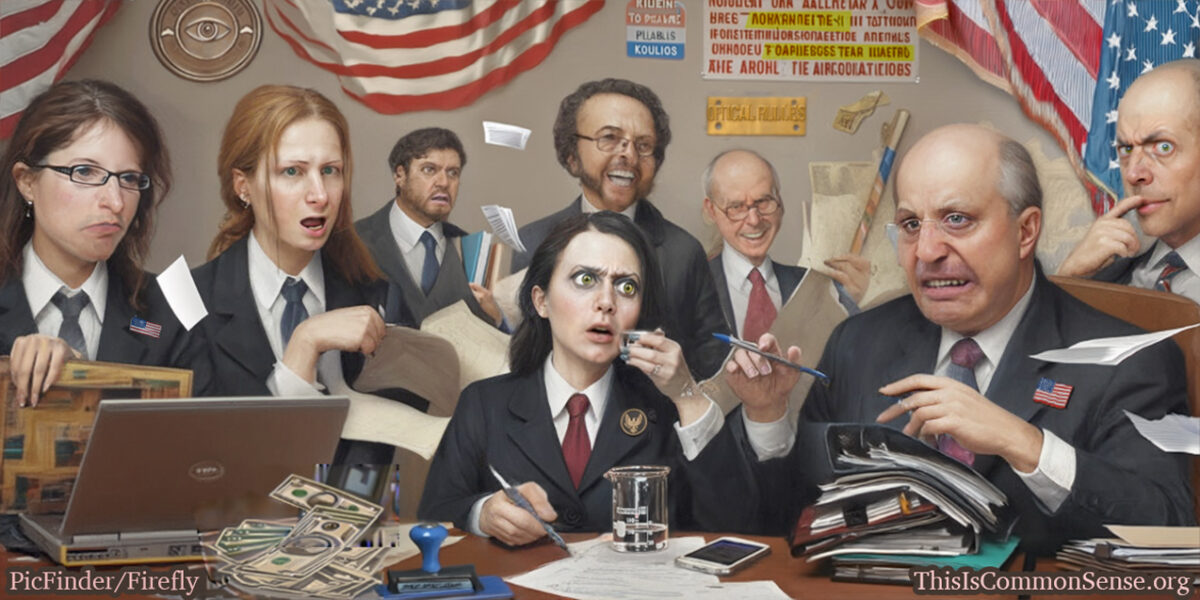
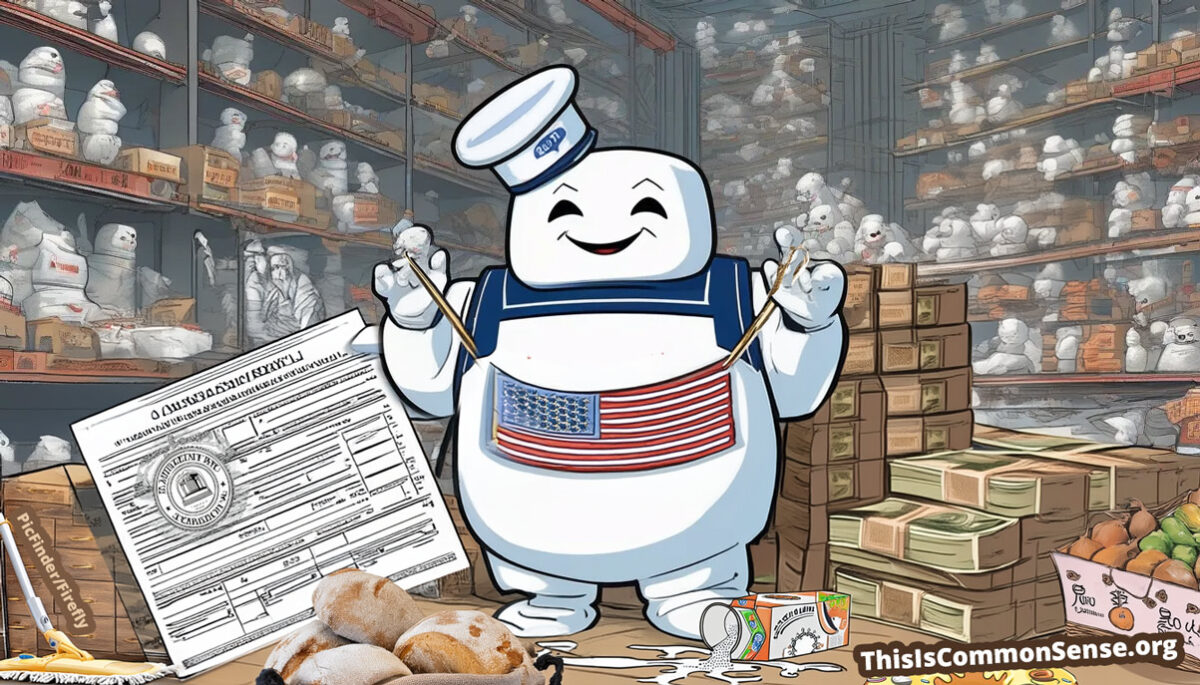
This town is an epicenter of official looting, as, for instance, what the city’s Parks Department is doing to “perplexed plaintiff” Theodore Trachtenberg.

Trachtenberg owns a lot in New York, on which he hopes to build housing. Before he could proceed, he had to remove a tree from the lot.

“Therefore,” the city — the Parks Department, the city, it’s all the same gang — is fining him $230,000.

Why? Well, they want money is why. If you can invest in NYC housing, this means you have money. 

If a little girl without money were to pluck a dandelion in her back yard, Parks would fine her only a quarter, maybe.

Trachtenberg is suing. The filing says: “Parks did not plant the tree, has never performed any work on, nor took care of the tree, nor has even registered it on its online resource called NYC Tree Map.”

The insanity is slightly complicated by a claim that two small trees on a nearby sidewalk were damaged by the work.

“The ownership of those two trees is not being contested, but the damage is,” says Mikhail Sheynker, Trachtenberg’s lawyer. Sheynker says he hasn’t observed the damage that the city describes.

But he has observed that in the 1990s, “the Parks Department didn’t really issue fines over trees. But they figured out this is a moneymaker.”

Trachtenberg should have developed a tract in some other burg.

This is Common Sense. I’m Paul Jacob.


PDF for printing

Illustration created with PicFinder and Firefly

See all recent commentary
(simplified and organized)
See recent popular posts

Categories
national politics & policies property rights regulation

National Control

Is federal rent control, just proposed by Commissar Biden, a good idea or bad?

Well, it’s good in one way — great to torpedo the incentives and capital of owners while reducing the supply of rental units and further eroding property rights. 

All of which is bad.

Very bad.

A few details of the economic principles being blithely ignored by Biden and/or his handlers are explained by The Wall Street Journal (“another classic White House policy contradiction: Subsidize housing, then discourage its development”), Mises.org, and Breitbart Business, among other places.

What are the chances that this pot shot at the economy will become law in the near future: slim or none?

Slim. 

Not none, unfortunately — we’ve seen too many unthwarted federal attacks on the property rights of landlords and owners, including during the COVID-19 pandemic.

The chances are considerably more than slim if there’s a Biden Simulacrum 2 administration.

The goal of Biden and/or his handlers is to make clear to persons who want something for nothing — a goodly percentage of Biden’s constituency — that even a near-brain-dead party leader or his puppeteers can come up with scads of new schemes to loot fellow Americans as long as Biden or a Biden-type is at least nominally in office.

So if you want more pelf, along with an expiring economy with a war of all against all, vote for Biden! 

Or whoever replaces him at the Democratic convention.

If you want freedom, prosperity, respect for property rights and each other, don’t.

This is Common Sense. I’m Paul Jacob.


PDF for printing

Illustration created with PicFinder and Firefly

See all recent commentary
(simplified and organized)
See recent popular posts

Categories
crime and punishment judiciary regulation

The Court v. the Power Grabbers

The U.S. Supreme Court giveth and the U.S. Supreme Court taketh away.

A slew of Supreme Court decisions is keeping us off balance. While we were still reeling from the blow delivered by Murthy v. Missouri’s go-ahead for federal suppression of social-media speech, the court also acted to rein in runaway bureaucrats.

The decision, which some call a “major blow to big government”  — let’s see how it plays out before echoing this — is Loper Bright Enterprises v. Raimondo. In this 6-3 ruling to limit the administrative state’s power to expand its power, the court reversed its own 1984 ruling, Chevron USA v. NRDC.

According to Stanford Law professor Michael McConnell, Chevron meant that when the actions of a federal agency — to stop you from cleaning up a pond (“wetland”) on your own property or whatever — end up being litigated, courts must “defer to the agency’s own construction of its operating statute” unless that construction is too wildly unreasonable.

Agencies consequently enjoyed “considerable leeway in determining the scope” of what they can do to us. 

Guess what. They typically prefer more power to less, less constitutional restraint to more.

“Chevron is overruled,” the new ruling states. Courts must “exercise their independent judgment in deciding whether an agency has acted within its statutory authority, and courts may not defer to an agency interpretation of the law simply because a statute is ambiguous.”

Maybe more courts will now more often stop runaway bureaucrats in their tracks.

This is Common Sense. I’m Paul Jacob.


PDF for printing

Illustration created with PicFinder and Firefly

See all recent commentary
(simplified and organized)
See recent popular posts

Categories
crime and punishment free trade & free markets regulation

Natural vs. Regulated

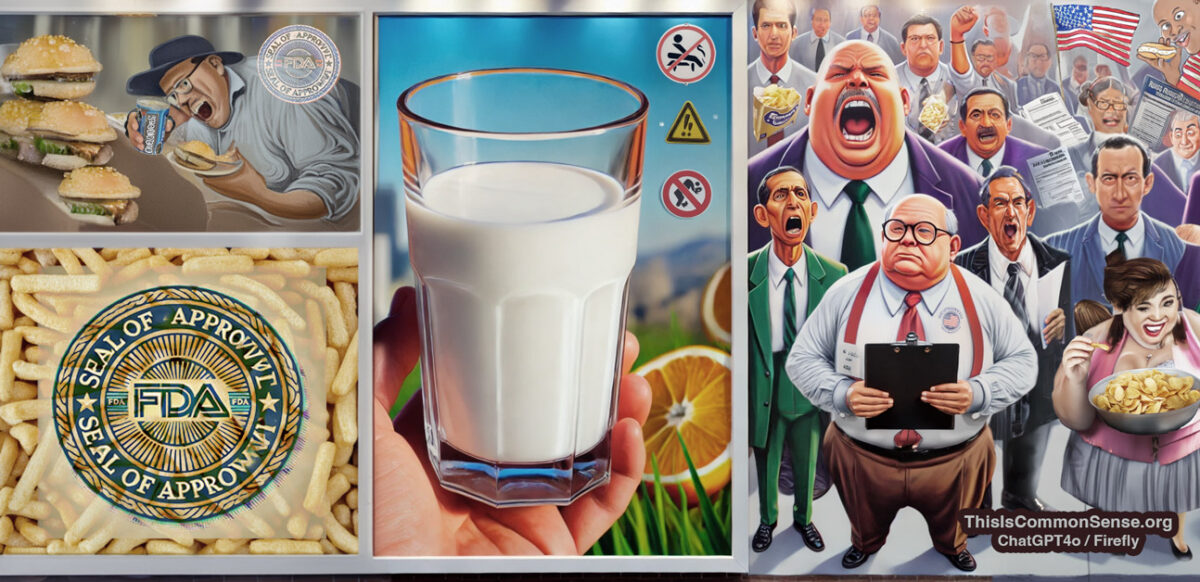
“I don’t need metabolically unhealthy politicians and obese bureaucrats watching out for my health,” The Telegraph quotes an anonymous source. 

The subject? “How milk became the new culture war dividing America,” published on June 22. It’s a “natural” vs. “technological” debate.

“For more than 130 years, Americans have been instructed that drinking milk that comes directly from a cow’s udder can be dangerous,” Tony Diver’s article begins, but how it ends is telling: “‘With respect to the question of food being natural — arsenic is natural,’ Prof Schaffner said.” And so, too, he says, is cyanide. 

“Sharks are natural. Those things can all kill you. So just because something is natural does not mean that it’s safe.’”

That sounds like something I’d say. 

But is it something to say about raw milk?

Consider the historical context. Raw milk and its products have been produced for human consumption for millennia. Of course there are dangers, and pasteurization has done wonders to curb bacteriological infections and death. Still, a lot of people wonder what we’ve lost in the pasteurization process. Nutrition and immune system health, for example. So for decades — perhaps as long as there have been regulations to make pasteurization mandatory — there’s been a “pro-natural” backlash.

On the Nature side, we note that our populations aren’t as healthy as you’d expect from the benevolent tyranny of politicians, regulators, and, uh, “obese bureaucrats.”

So, last week, “the latest bill to repeal an outright ban on raw milk hit the governor’s desk in Louisiana, after similar efforts in West Virginia, Iowa, Georgia and North Dakota.”

If signed into law, Louisianans will be able to purchase raw milk in stores — “albeit with a warning, in capital letters, that it is ‘not for human consumption.’

“Everyone, including the legislators, knows that instruction will be ignored.”

There’s something sickness-inducing about that.

This is Common Sense. I’m Paul Jacob.


PDF for printing

Illustration created with ChatGPT4o and Firefly

See all recent commentary
(simplified and organized)
See recent popular posts

Categories
free trade & free markets general freedom regulation

Leave Us Alone to Do Our Work

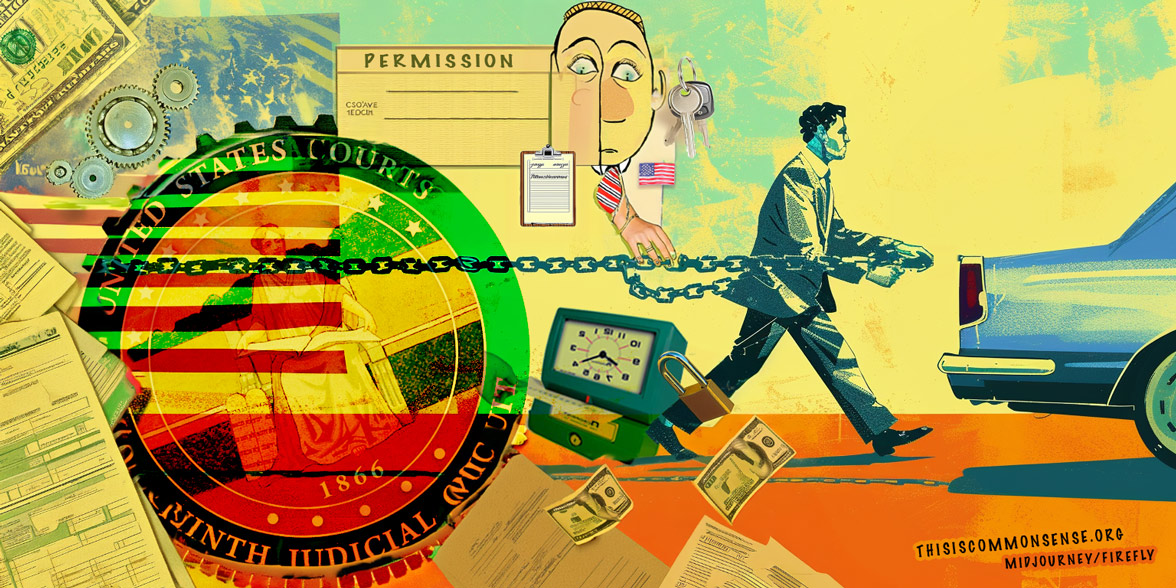
Drearily, an appeals court has dismissed Uber’s challenge to California’s anti-gig-work law.

According to the 9th Circuit, the ride-sharing company couldn’t show that the California anti-freelancer law AB5, which took effect in 2020, unfairly targeted Uber while allowing other types of contract work to continue unhindered.

In fact, the many exceptions to AB5 — determined by abundance or lack of political pull of various groups — mean that Uber is hardly alone in suffering from uneven application of the law.

But suppose AB5 had in fact been evenly imposed on everybody. Suppose every single gig worker in California, without exception, had been forced to become a regular employee of all of his clients — with all the additional costs for employers that this entails — or else lose all work altogether.

This would be worse, not better. 

Inconsistent tyranny is bad for the victims. Absolutely consistent and uniform tyranny is bad for the victims — which would be greater in number.

Maybe the 9th’s misjudgment won’t stand. If the case makes its way to the U.S. Supreme Court, maybe the high court will unambiguously affirm our right to contract with each other in order to make a living and get stuff done.

Meanwhile, the fate of Uber also hinges on another court case, one determining the fate of Proposition 22, a 2020 California initiative affirming Uber’s right to contract with drivers.* A labor union says Prop 22 is unconstitutional. The state supreme court is deciding whether this is so. 

It is not so.

This is Common Sense. I’m Paul Jacob.


* Citizens in Charge, a pro-initiative and referendum group, for whom I serve as president, filed an amicus or friend of the court brief with the California Supreme Court in this case.

PDF for printing

Illustration created with Midjourney and Firefly

See all recent commentary
(simplified and organized)
See recent popular posts

Categories
ideological culture national politics & policies regulation

DEI Virally Decoded

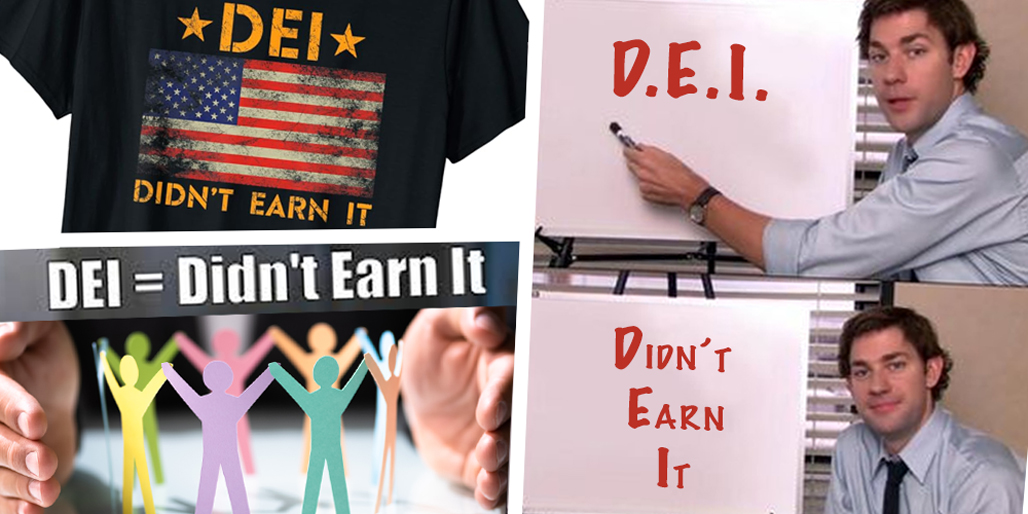
Is “Didn’t Earn It” — the latest scam-decoding translation of officialdom’s acronymic jargon for race-conscious and gender-conscious affirmative-action policies, DEI — really catching on?

If so, maybe we’ll get back all the sooner to sanity. 

That is, in universities, workplaces, and other hunting grounds of the DEI dictators who have inherited the mantle of reverse discrimination first inflicted on Americans via the affirmative-action quota policies of the 1970s.

John Tierney suggests that the popularizers of the apt “Didn’t Earn It” meme may well help rid us of “today’s most egregiously indefensible phrase: ‘Diversity, Equity and Inclusion.’”

These woozy words are supposed to divert our attention from what DEI policies really mean: systematic discrimination against academic, professional, and other merit in favor of typically irrelevant physical characteristics like skin color and gender.

DEI discrimination is being imposed on ever more of our institutions, even at the cost of risking our lives. If unqualified applicants are being admitted into UCLA Medical School in order to appease the arbiters of DEI, then failing basic tests of medical knowledge after they get in — what happens if and when they start treating patients?

A single telling phrase (Tierney credits journalist Ian Cheong and cartoonist Scott Adams) can’t shoulder the whole burden of stopping DEI. True enough.

Fortunately, it’s got help. 

In Congress, Republicans have introduced legislation to shut down DEI offices and forbid federal contractors from imposing the ugly indoctrination of DEI training and DEI statements.

We can all pitch in.

This is Common Sense. I’m Paul Jacob.


PDF for printing

See all recent commentary
(simplified and organized)
See recent popular posts

Categories
judiciary national politics & policies regulation

Regulatory Pressure?

Should government regulators be able to urge financial institutions to cancel clients that regulators dislike for political reasons? Such as oil companies and groups advocating Second Amendment rights?

Although a court of appeals has said Yes, the Supreme Court has just said Maybe No in a case involving the National Rifle Association (NRA v. Vullo).

The NRA hasn’t won final victory. But the court is unanimously letting it proceed with its lawsuit, which argues that by pressuring banks and insurance companies to cancel their business with the NRA, New York regulator Maria Vullo violated its freedom of speech.

The Supreme Court seems to accept an artificial distinction, though, between a regulator’s “persuading” an organization to hurt a client and “forcing” it to do so.

An official with power over a company who seeks as a government official to “persuade” that company to do something is engaging in coercion. The implicit threat is: “I have the power to hurt you if you don’t do this little favor for me.”

Moreover, in sending the case back to the lower court, the Supreme Court has also said that it may consider whether Ms. Vullo is protected by qualified immunity, the get-away-with-anything card that government officials are too often able to rely on when they commit wrongdoing.

So this decision is hardly a final, definitive victory for the NRA and other victims of thug-regulators. But at least the NRA can keep fighting — for itself and the rest of us.

This is Common Sense. I’m Paul Jacob.


PDF for printing

Illustration created with ChatGPT 4o and Firefly

See all recent commentary
(simplified and organized)
See recent popular posts
Categories
education and schooling ideological culture regulation

To Die for DEI

Next time you’re being operated on, you probably don’t want your doctor to be someone trained and hired solely because he satisfied affirmative-action criteria.

We’ll have to especially worry about this possibility, though, if trends at certain institutions continue — including at universities such as UCLA Medical School. There, up to half the students are now flunking basic tests of medical knowledge.

By design.

In November 2021, a new dean of admissions, Jennifer Lucero, “exploded in anger” because an admissions officer had doubts about admitting a black applicant whose academic credentials were way below the average of other students at the school.

“Did you not know African-American women are dying at a higher rate than everybody else?” she wanted to know, demonstrating a capacity for non sequiturs. Forget scores: “we need people like this in the medical school.”

The time for UCLA professors and admissions officers to raise hell about Lucero’s illegally race-conscious admissions policies was then, or sooner. At least now, though, many are speaking out.

“I don’t know how some of these students are going to be junior doctors,” one instructor tells the Free Beacon. “Faculty are seeing a shocking decline in knowledge of medical students.”

“I wouldn’t normally talk to a reporter,” says another. “But there’s no way to stop this without embarrassing the medical school.”

Well, word is out now — and in abundant detail. Let’s hope it’s not too late to set this school and others back on the right track.

This is Common Sense. I’m Paul Jacob.


PDF for printing

Illustration created with PicFinder and Firefly

See all recent commentary
(simplified and organized)
See recent popular posts
Categories
crime and punishment First Amendment rights general freedom regulation

Criminal Discrimination?

It’s okay.

You don’t have to associate with criminals. You don’t have to employ them and worry how they’ll act on the job. It’s not your duty to give criminals or persons with a criminal record access to your life or property and hope for the best.

If only we could leave it at that. 

That’s not our world though. In our world, our government, working hard to rip America apart in every way possible, is suing the Sheetz chain of convenience stores because it doesn’t hire applicants with a criminal record.

The “problem” is that too many such failed applicants are nonwhite.

The Equal Employment Opportunity Commission accuses Sheetz of “disproportionately screening out Black, Native American/Alaska Native and multiracial applicants.” The agency babbles that “employment practices causing a disparate impact because of race or other protected classifications must be shown by the employer to be necessary to ensure the safe and efficient performance of the particular jobs at issue.”

Of course, the “disparate impact” exists not because of these classifications but because the denied applicants have criminal records. Sheetz didn’t decline these applicants because of their skin colors.

Nevertheless, Sheetz is supposed to have somehow “shown” that refusing to hire applicants with criminal records reduces Sheetz’s own risks and the risks for customers.

Elon Musk, commenting on this story, has it right: “You know The Joker is running things when the law-abiding are being prosecuted by the government for not hiring criminals!”

These days Uncle Sam and The Joker do look alarmingly similar.

This is Common Sense. I’m Paul Jacob.


PDF for printing

Illustration created with PicFinder and Firefly

See all recent commentary
(simplified and organized)
See recent popular posts

Categories
Common Sense national politics & policies regulation subsidy

Electric Class Warfare

Star Trek may have adversely affected American politics. Its techno-communist utopian militarism was one thing, its attitude towards engineering? Perhaps worse.

In how many episodes did Captain Kirk demand that Scotty push the warp drives further, or decrease the time required for a task — arbitrarily according to his need, not actual possibility?

And, because television: presto, it was done; just in time for the finale!

We see that in the push for electric vehicles (EVs). 

The EV mandates, explains The Epoch Times, “will likely cause a sizable wealth transfer from rural red regions of the United States to urban blue sections, and to wealthy Democrats who reside in them. . . .”

For while Democrats say they’re trying to “save the planet” from an increase in atmospheric carbon, really, analyst Robert Bryce counters, “it’s a type of class warfare that will prevent low- and middle-income consumers from being able to afford new cars.”

How? The EPA’s new “rules are the strictest in history and will effectively force carmakers to have one-third of new car sales be plug-in EVs by 2027 and more than two-thirds by 2032.” But according to the Texas Public Policy Foundation, “as much as $48,000 of the cost of the average EV sold in the United States is paid not by the owner but in the form of ‘socialized costs’ that are spread out among taxpayers and electricity consumers over a 10-year period.”

So the new rules will reduce the supply of gas-powered vehicles, driving up costs. And the increased number of already-subsidized vehicles will also be paid by taxpayers at large, while the benefits go to . . . mostly Democrats in the bluest counties of the bluest states, as statistics show.

In recent years, Democrats have prided themselves that their “blue states” subsidize “red states,” mocking the “rugged individualist” pretensions of the hapless bubbas in flyover country. But now such boasts ring hollow. 

This is the far-flung future? 

Subsidy and regulation spoil the Star Trek promise.

This is Common Sense. I’m Paul Jacob.


PDF for printing

Illustration created with PicFinder and Firefly

See all recent commentary
(simplified and organized)
See recent popular posts