Categories
ideological culture national politics & policies Popular

Hat Hate

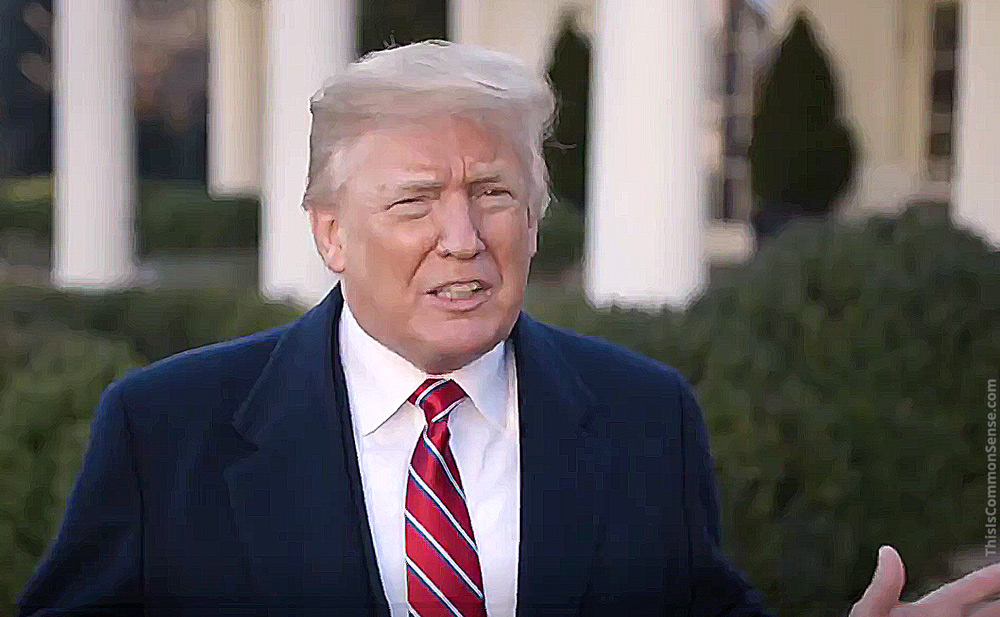
I will concede — at least “arguendo”  — that President Trump is awful. But I will not concede that he is uniquely awful. His Tweets and signature verbal provocations aside, he is arguably better than his predecessors.*

Arguably.

Which means that his cribbed campaign slogan, “Make America Great Again,” affixed to an ultra-simple red hat, is the last thing we should fixate on. 

You know, as a symbol of “hate.”

Even Andrew Sullivan, in lambasting the media — and the left in general — over their insane over-reaction to the Covington kids’ non-existent “racism” and “disrespect” (“The Abyss of Hate Versus Hate, Intelligencer), could not help himself when it comes to the MAGA hat. Amidst his defense of the lads, Sullivan wrote that “they should not have been wearing MAGA hats to a pro-life march.”

Why not? Mr. Trump has taken pro-life action.

“They aren’t angels,” Sullivan went on, “they’re teenage boys.”

The President is no angel either. But he was duly elected. And he hasn’t started any unconstitutional wars** or suppressed the freedom of the press.

MAGA is said to be a statement of “white supremacy,” but, well, there are non-whites who find that absurd. For good reason. 

This all indicates a deeper problem: an over-indulgence in symbolism — real and contrived.

In the immortal words of “motorist” Rodney King, “can we all JUST get along? Can we get along? Can we stop making it, making it horrible for the older people and the kids?”

This is Common Sense. I’m Paul Jacob.


* Admittedly a low bar.

** Unlike other presidents we could name.


PDF for printing

MAGA, white, hat

See all recent commentary
(simplified and organized)
See recent popular posts


Categories
Accountability ideological culture national politics & policies Popular

The Obstruction

The federal government “shutdown” — now on reprieve — has been and continues to be a rather strange charade. Various political players make motions towards one another, and we, the people, are supposed to guess the real meaning. 

Which is usually conceived as

  1. All about President Trump’s “Wall”;
  2. All about the Pelosi-Schumer commitment to never letting Trump get away with his Evil Agenda; or
  3. The great huge, honking divide in America that grows every day.

I suspect it is about all these things and more — which is easy to say, since these three issues are intimately related.

 And as if playing a subtle joke on us all, the standoff that appears as obstructionism is about a proposed obstruction at the southern border: literally a “Mexican standoff.”

Meanwhile, a different security measure has received attention.

Americans have, rather spontaneously, been taking canned and packaged foods, and even fresh produce, to unpaid but “forced-to-work” TSA agents. A heartwarming story. Sure. But the Transportation Security Agency, cobbled together in the wake of the 9/11 attacks, is spectacularly ineffective, an example of “security theater.” TSA agents repeatedly fail internal tests.

Congress could, of course, take this opportunity to disband this airport security worker agency. If managed by the airlines or any entity but the federal government, TSA wouldn’t have suffered through the shutdown. 

Tragically, Congress long ago ceased being functional, responsible, or even the eensiest, teensiest bit respectable. And a divided public stands little chance of forcing a change. 

This is Common Sense. I’m Paul Jacob.


PDF for printing

building a divide, wall, immigration, ideology, Trump, Pelosi

See all recent commentary
(simplified and organized)
See recent popular posts


Categories
general freedom ideological culture Popular

Toxic Smile?

Smirking is a subset of smiling. But what is a grimace? 

Nick Sandman, the offending Covington, Kentucky, Catholic high school student who triggered so much outrage last weekend, smiled. The effrontery!

Seeing a snippet of video, a social media mob formed, leaping to the conclusion that young Mr. Sandman was being disrespectful of an older Native American man who — chanting and drumming right up in his face — should have been “shown respect.” 

And not smiled? Instead, what: frowned? Cried? Bowed?

Smirks are irksome. Sure. But the young man’s facial expression seemed to me an attempt, only half-successful, to smile — a covered-over grimace. 

Understandable. The Covington youngsters — waiting to be picked up — had been targeted earlier by a group of nutty “Black Hebrew Israelites” who taunted at them for being . . . white. And the Native American man, Nathan Phillips, had singled Mr. Sandman out, violating his personal space. A grimace could be accounted for as putting “a brave smile on the situation,” as we used to say. 

But that was not how the Twitter mobs interpreted it. And of course the young Catholic students were wearing “MAGA hats” (pro-Trump “Make America Great Again” baseball caps) which were later said to be racist. And the pro-life rally he and his friends attended was said to be sexist

Can we all calm down? If we disagree on so much that even smiling is scandalous, maybe take a breath. 

In the midst of it all, economist Bob Murphy reminded us of the previous culture-war fracas, the Gillette “toxic masculinity” ad, tweeting “if you see a mob picking on a boy, Gillette wants you to intervene.”

Masculinity wasn’t to blame for the mobbing. 

Toxic political correctness was. 

This is Common Sense. I’m Paul Jacob.


PDF for printing

smirk, smile, Covington, MAGA, PC

See all recent commentary
(simplified and organized)
See recent popular posts


Categories
national politics & policies political economy Popular

Re-Packaging Nonsense as Wisdom

When committed to folly, clever people make it look wise.

An article last week in Forbes, “The Green New Deal: How We Will Pay For It Isn’t ‘A Thing’ — And Inflation Isn’t Either,” by Robert Hockett, says that “how could we pay for it?” challenges have already been answered best by Rep. Alexandria Ocasio-Cortez. 

She demands to know why only “useful ideas,” like hers, get challenged that way. “Where were the ‘pay-fors’ for Bush’s $5 trillion wars and tax cuts, or for last year’s $2 trillion tax giveaway to billionaires?”

Where? Here!

And anywhere there’s common sense.

Hockney has his own retort, though, retrieving from the peanut gallery of economics an idiocy called “Modern Monetary Theory” (MMT). 

“Congress will authorize necessary spending, and Treasury will spend,” he writes. Government funds are “never ‘raised’ first” because “federal spending is what brings that money into existence.” 

Look, the United States has indeed come to rely upon debt financing. But it wasn’t always the rule. More importantly, the widespread and long-term effects are where post-gold standard monetary creation gets tricky. 

So are MMT advocates. Tricky, that is. What they hide are the dispersed costs, many of which we pay in higher prices.

Their main “contribution” — as stated in the National Review, of all places, yesterday — is that “When a government issues its own currency, as our federal government does, it is in a financial situation different from those of most institutions or households.”

Not really. When a household writes checks it knows will bounce, it does pretty much the same thing.

When governments rely upon debt money, someone is still getting ripped off. With government, though, it isn’t the businesses holding bad checks, it is all of us.

This is Common Sense. I’m Paul Jacob.


N.B. This episode of Common Sense has been corrected from the email version: the author of the Forbes article is not the painter David Hockney.


PDF for printing

green new deal, AOC, money, folly

See all recent commentary
(simplified and organized)
See recent popular posts

Categories
folly ideological culture media and media people Popular

Inclusivity Not Included

The 3rd annual Woman’s March strolled by over the weekend — a tiny fraction of its former self. 

Two years ago, close to a million protesters converged on Washington, D.C., while this year’s event “appeared to attract only thousands,” The Washington Post reported, “mirroring lower turnout at marches . . . across the country.”

“[A] movement that once bragged about its inclusivity,” explained a separate news analysis, “has been roiled by reports of battles over diversity, hate speech and branding.”

In addition to squabbles over corporate ownership of the very name of the “Women’s March,” the leaders of the main organization have been accused of anti-Semitism. “Board members Linda Sarsour, Carmen Perez and Women’s March, Inc., co-president Tamika Mallory, have publicly affiliated with and praised anti-Semitic Nation of Islam leader Louis Farrakhan,” notes the Capital Research Center’s Influence Watch website.

March founder Teresa Shook called on them to resign, charging “they have allowed anti-Semitism, anti-LBGTQIA sentiment and hateful, racist rhetoric to become a part of the platform . . .” The Democratic National Committee and a number of progressive groups have withdrawn their support.  

But the “inclusivity” was always fake. As a “women’s” march, it started out excluding half the population. Nothing wrong with women having events or organizations that focus on issues of particular interest to females; it’s just not inclusive.

And let’s not ignore that pro-life women were specifically booted from participating in the original 2017 event.  

“Is the Women’s March more inclusive this year?” a USA Today article asked before last year’s pink-hatted festivities. 

Apparently not. This year, everyone was excluded fromthe Eureka Women’s March — cancelled because those hoping to participate were “overwhelmingly white.”

With all this inclusion, no wonder we are so divided.

This is Common Sense. I’m Paul Jacob.


PDF for printing

women, woman, march, inclusion, in group, out group

See all recent commentary
(simplified and organized)
See recent popular posts


Categories
folly ideological culture national politics & policies Popular

Skepticism in Order

It is not a question of “belief,” says Anastasios Tsonis. 

In “The overblown and misleading issue of global warming,” this emeritus distinguished professor at the University of Wisconsin-Milwaukee explains that in a “scientific problem ‘believing’ has no place,” going on to clarify: 

“In science, we either prove or disprove.”

And regarding climate there is no “settled science.” Lacking unquestionable experimental context — “we have only one realization of climate evolution” — no matter how strong our opinions, skepticism is always in order.

But let us admit the obvious, the “global warming”/“climate change” debate has been frustrating for just about everybody. And much of this is the result of dogmatism.

“The fact that scientists who show results not aligned with the mainstream are labeled deniers is the backward mentality,” Tsonis insists. “We don’t live in the medieval times, when Galileo had to admit to something that he knew was wrong to save his life.”

He argues that our lack of knowledge means that we should be circumspect about whether humans have caused the bulk of recent climate change. “Climate is too complicated to attribute its variability to one cause. We first need to understand the natural climate variability” — which, he says, “we clearly don’t.” 

Tsonis concludes talking about problems more urgent than climate change. We can (and should) quibble with his list, but we should be open about our reasoning.

One reason for concentrating on these other issues is that we might be more likely to gain clarity on them.

And thus might be able to do something not foolish.

This is Common Sense. I’m Paul Jacob.


PDF for printing

denier, climate change, globlal warming, skepticism, science

See all recent commentary
(simplified and organized)
See recent popular posts


Categories
meme Popular

Why Do You Want People to Starve?

In the 20th century, 100 million people were killed by “caring” socialist ideologues who were certain they knew exactly what everybody else “deserved” and who were eager to use government violence to enforce those opinions.

See all recent commentary
(simplified and organized)
See recent popular posts

Categories
international affairs meme Popular too much government

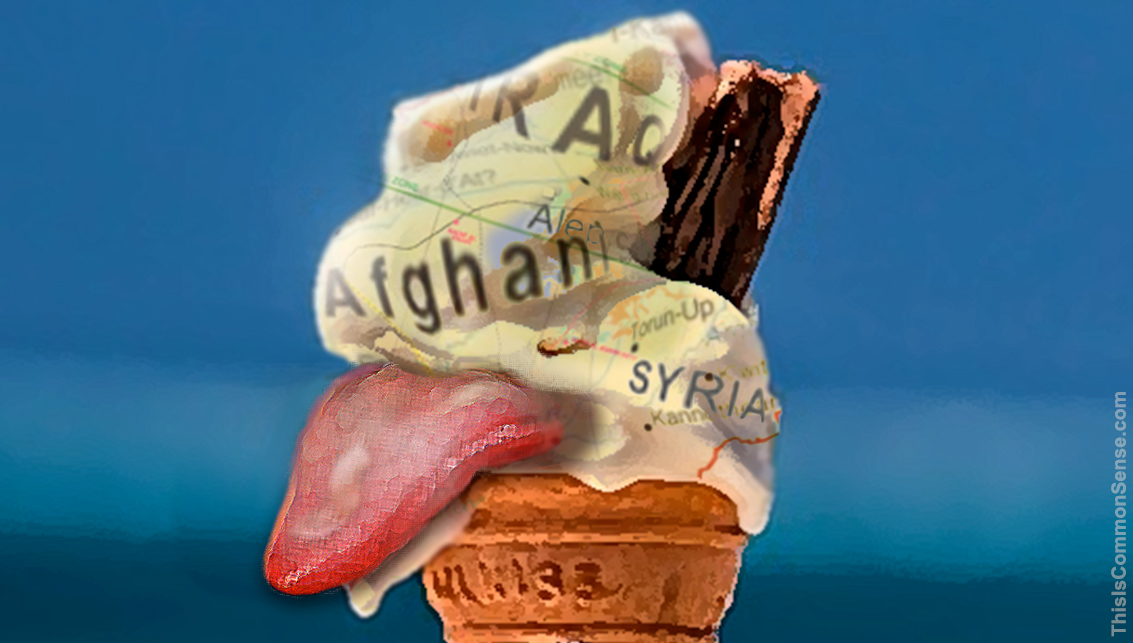
What Kind of Ice Cream Cone?

When I wrote about the Donald’s change of troop positions abroad last week, it was less than completely clear that the US President aimed to withdraw troops from Afghanistan as well as Syria. But multiple reports on the day I posted “Strategic Disengagement” make it clearer: about half of America’s 14,000 troops stationed there are scheduled to exit.

Why not all?

Well, you can see how entrenched foreign intervention is for American leaders. While most of the GOP policy establishment howled at Donald Trump’s betrayal of the cause (whatever that cause is, exactly), so, too, did many of the Democrats. And they seem awfully earnest. More earnest than one has reason to expect from the objectors to “George W. Bush’s wars.”

Even Noam Chomsky came out saying that the U.S. should stay in Syria to save the Kurds, and Howard Dean tweeted that American troops must remain in Afghanistan for the sake of women’s rights.

What we are witnessing are eternal programs that do not ever — and cannot ever — fulfill their basic purpose. No amount of occupation of Syria or Afghanistan or Iraq is going to give us what the neoconservatives promised: freedom and democracy and jubilation in the streets.

Freedom and democracy do not work that way.

There is a term for such impossible-to-win/impossible-to-stop policy messes: “self-licking ice cream cones.”

The term means a “self-perpetuating system that has no purpose other than to sustain itself,” which is just standard operating procedure for domestic bureaucracies.

But in foreign military action?

Awfully cold imagery, and too comic . . . for tragedy.

This is Common Sense. I’m Paul Jacob.


PDF for printing

self licking ice cream, war, foreign policy, government

See all recent commentary
(simplified and organized)
See recent popular posts

Categories
international affairs Popular too much government

Strategic Disengagement

The policy was announced in a Tweet: President Trump said it was time to pull out of Syria. We won, he explained. “After historic victories against ISIS, it’s time to bring our great young people home!”

There is, of course, much outcry among Republicans, Sen. Lindsey Graham (R-SC) and pundit Ben Shapiro making the same point: this is, in the senator’s words, “a huge Obama-like mistake.”

But not a few are supportive. “U.S. forces should not be engaged in Syria — or any country,” explained Rep. Justin Amash (R-Mich), “without legitimate military justification AND proper congressional authorization.”

And there is no doubt that after pulling out of the region — and yes, it looks like Trump is readying forces for a pull-out of the expensive and ridiculous Afghanistan occupation — there will be outrageous horrors. But are they America’s? 

Should they be?

The problem with trying to solve every worldwide conflict is clear: by intervening, we make those conflicts ours.

The idea that the American military can successfully micromanage conflicts around the world seems implausible. And increasingly counter-factual. 

The same logic against intervening in the domestic economy to “wisely” promote some businesses and demote others also applies against most foreign military intervention: “unintended” consequences get conjured up, and even blowback.

Also, somehow, almost no one ever consults Just War theory to test various proposed interventions. Instead, military interventionism is all audacious hope and lofty language.

No realism, despite “Mad Dog” Mattis’s protests to the contrary.

Foreign policy scholar Earl Ravenel had the perfect term for what Trump may be and should be doing: strategic disengagement. We have much to gain from a more restrained — and constitutional — foreign policy.

This is Common Sense. I’m Paul Jacob.


PDF for printing

Donald Trump, Trump, Syria

See all recent commentary
(simplified and organized)
See recent popular posts


Categories
free trade & free markets ideological culture Popular

Creeping Bernie-ism

If you have been watching Tucker Carlson, recently, on Fox or in his bizarre interview with Ben Shapiro, you might have noticed something peculiar: the conservative newsman-commentator sometimes sounds awfully similar to Bernie Sanders.

Both think that if some of Amazon’s and Walmart’s employees are not paid “enough” to live without government assistance, that means the companies are being subsidized by taxpayers. 

Ryan Bourne finds this odd, too, judging it “peculiar” to suggest that, “when setting wages, a company employing low-skilled workers should ignore the value of the tasks the employee actually undertakes for them.”

It’s almost as if these guys haven’t thought it through.

“If Sanders is right that programs such as food stamps modestly subsidize employers who pay low wages,” Bourne argues, “then his hugely expensive Medicare-for-all and free-college-tuition proposals would constitute a massive subsidy to low-wage employers.”

Similarly, when Donald Trump and his allied Republicans push for what we used to call “workfare” requirements, that would mean that the jobs the recipients get also constitute subsidies.

Both Carlson and Sanders apparently assume that companies pay workers according to the needs of the workers determined by subsistence levels — presumably by the old Marxian Iron Law of Wages — and not according to their competitive productivity. That is, what they are worth.

As is common with demagogues, Sanders and Carlson both blame the only companies that are at least paying low-skilled workers something, rather than all those other companies and potential benefactors who aren’t paying them at all.

This is Common Sense. I’m Paul Jacob.


PDF for printing


» See popular posts from Common Sense with Paul Jacob HERE.