Categories
Accountability incumbents initiative, referendum, and recall insider corruption local leaders political challengers term limits

Sneaky Lobbyists Prefer Sneakiness

The Arkansas Chamber of Commerce’s CEO and chief lobbyist, Randy Zook and Kenneth Wall, have formed Arkansans for Common-Sense Term Limits. 

The Chamber has a burning hatred for term limits — Common-Sense or otherwise — just like every other lobbyist and special interest. But Zook and Hall are fibbing in their name because they realize that voters love term limits. 

The ballot committee’s stated purpose? To “advocate for the disqualification or defeat” of the Arkansas Term Limits Amendment, which citizens just petitioned onto the ballot, collecting 129,000 signatures.

Defeating such a popular ballot measure isn’t likely. Instead, these politically-experienced lobbyists are preparing to sue, hoping to disqualify valid voters’ signatures on some ginned-up technicality, feigning confusion over the clear ballot language — anything that might keep democracy from coming this November.*

At issue? The difference between real term limits and ridiculous ones.

That is, between term limits set by citizens and those set by legislators themselves. 

Currently, legislators can serve for 16 years in a single seat under the state’s “limits.” And because two-year Senate terms aren’t counted at all, senators can stay as long as 22 years. 

Legislators snuck this past voters in 2014 with a ballot title claiming only to “establish” term limits . . . amidst other lies. Politicians thereby turned Arkansas’s toughest-in-the-nation term-limit law into the nation’s very weakest — a significant 50 percent longer than limits in any other state.**

Unfazed by all the corruption in the Arkansas Legislature, Chamber lobbyists are focused on putting politicians in their pocket for as long as possible. 

But those pesky Arkansas voters are once again in the way.

This is Common Sense. I’m Paul Jacob.


* After recently threatening to challenge the signatures of another initiative petition, Zook had to admit that he was not aware of a single problem or deficiency in the petition. But he quickly added, “It’s a very complicated process.”

** Arkansas’s term limits were the same as Michigan’s until 2014, three terms, six years in the House and two-terms, eight-years in the Senate.

PDF for printing


Original photo by Jeff Kubina
 

Categories
Accountability government transparency insider corruption local leaders media and media people nannyism national politics & policies political challengers Regulating Protest responsibility

Not Fine with Feinstein?

Could it be that Sen. Dianne Feinstein, Democrat of California, may not be liberal enough?

The San Francisco Democrat has ostensibly represented the Golden State in the United States Senate for the last 26 years. Before that, Feinstein spent eight years on San Francisco’s Board of Supervisors and then a decade as mayor.

Now, after 44 consecutive years as a public official, what does the 85-year-old Feinstein seek? More. That is, another six-year lease on her powerful perch in the U.S. Senate.

But the Executive Board of the California Democratic Party — Feinstein’s Party — just said, “No way!”

A whopping 65 percent of the 333-member board opted for State Sen. Kevin de León, a fellow Democrat seen as more “progressive.” Only seven percent supported endorsing Feinstein.

Keep in mind that Feinstein is already on the November ballot. She was the leading vote-getter in California’s primary last month. Yet, she received only 44 percent of the vote: a majority does favor someone else.

In February, 2,700 activists at the State Democratic Party Convention in San Diego voted 54 to 37 percent for State Sen. De León over U.S. Sen. Feinstein.

“Feinstein, who spends much of her time in Washington, has had a distant relationship with party activists for years,” noted the Los Angeles Times report.

Still, what Democratic Party activists want may not matter so much. Mrs. Feinstein enjoys tremendous name recognition and, according to the Times, has “$7 million in campaign cash socked away as of May, ten times what De León had.”

That money seems to be Sen. Feinstein’s real base of support.

This is Common Sense. I’m Paul Jacob.


PDF for printing


Categories
general freedom ideological culture insider corruption media and media people national politics & policies political challengers

Plantation Revolt

The #Walkaway movement started with Brendan Straka, who proclaimed that his tribe — the liberal Left — had become “intolerant, inflexible, illogical, hateful, misguided, ill-informed, un-American, hypocritical, menacing, callous, ignorant, narrow-minded, and, at times, blatantly fascistic.”

Mr. Straka’s beef — and the general tenor of the pile-on Twitterstorm — was not about Democratic Party policy, as Scott Adams noted. It was about the left-of-center movement’s rhetorical/propagandistic rut. Since the election of Donald Trump, Democrats had come to rely almost exclusively on the feeding of frenzy by psychological manipulation, by ginning up fear.

Straka’s appeal to “walk away” became a hit, especially amongst those “racial, sexual, and religious minorities in America” that he says the Democrats have treated as if they owned.

Yet the Washington Post pooh-poohs the trend as just a social media blip — over-hyped by the very nature of the medium itself.

Plausible?

David Catron says no. Before the #WalkAway movement, he writes in The American Spectator, African-American voters had already walked away from Hillary Clinton’s candidacy in enough numbers to allow Trump his victory. And this bodes badly for the Democratic Party, for, as Catron quotes YouTube sensation Candace Owens, “I’ve seen black liberals go conservative, but never seen a black conservative go liberal.”

It doesn’t take many defections, says Carton: “All that is needed is about 5 percent more African-Americans to vote Republican and another 5 to 10 percent to simply stay home.”

But be warned: wishful thinking and Straka’s litany of political vices — “groupthink, hypocrisy, division, stereotyping, resentment” — can overtake any movement pretty quickly.

Anti-leftists in general and Republicans in particular are not immune to mass mania and suicide-by-panic.

This is Common Sense. I’m Paul Jacob.


PDF for printing


Categories
Accountability ballot access folly general freedom ideological culture initiative, referendum, and recall media and media people national politics & policies political challengers responsibility U.S. Constitution

Should Non-Citizens Vote?

“A lot of people would like to say this is an immigration issue. It’s really not,” offered Gary Emineth, the head of North Dakotans for Citizen Voting and a candidate for state senator.  

“It’s really about preserving the right for U.S. citizens, and in our case, North Dakota residents, to only be the voters in all elections across the state of North Dakota,” added Emineth. “And that’s why we want it in the constitution.”

Turning in more than 35,000 voter signatures on petitions last Friday, Emineth and others placed a constitutional amendment on this November’s ballot that, if passed, would make voting the exclusive right of U.S. citizens in North Dakota.

Elsewhere in the country, Emineth points out, non-citizens are already voting — in Chicago and San Francisco, and in 11 cities across Maryland. Moreover, campaigns are underway across the country to give non-citizens the vote — in California, Connecticut, New York City, Boston and Montpelier, Vermont.

Opponents claim the North Dakota measure is completely unnecessary, as the state doesn’t currently allow non-citizens to cast a ballot, nor has any city yet attempted to allow non-citizens to vote. But Emineth’s goal is to keep it that way.

Moreover, University of North Dakota Law Professor Steven Morrison acknowledged to The Forum in Fargo that “the proposed amendment does clean up what could be a grammatical loophole since the word ‘every’ doesn’t conclusively exclude non-citizens from voting. . . .”

It is a very simple proposition: Do you want voting to be the exclusive right of U.S. citizens? Or should non-citizens be allowed to vote?

Coming to a ballot near and Fargo.*

This is Common Sense. I’m Paul Jacob.


* With some help from Liberty Initiative Fund.


PDF for printing


Categories
Accountability crime and punishment ideological culture media and media people moral hazard national politics & policies political challengers responsibility

Black Mask Terrorism

I was in Arkansas on Saturday when the downtown streets of Portland, Oregon, “exploded into its worst protest violence of the Trump era,” as The Guardian explains. “More than 150 supporters of the far-right Patriot Prayer group fought pitched street battles with scores of anti-fascist protesters. In total, nine people were arrested.”

Notice that “Patriot Prayer” — a group sponsored by a Republican Senatorial candidate, and which says it stands for free speech — was labeled “far right” while the “anti-fascist protesters” were not called “far left.”

Characteristically, The Guardian vagues it up. “Violence suddenly ‘erupted,’” noted a Romanian YouTuber of the British rag’s evasiveness. “Who started it? We don’t know.”

Well, from the videos I saw it looked like the “anti-fascists” started it. The “patriots” were marching down the street when a young man, with helmet and backpack, and a young women, dressed in black, marshaled antifa mobs towards the legal march, and then stones and bottles were thrown, and explosives, too . . . into the Patriot Prayer rally.

Note: the Patriot Prayer group had filed the paperwork for the march; antifa had not. The Portland police did not protect the licensed marchers, but did revoke their license, telling everyone to disperse (threatening “duress” to the non-compliant) after the violence broke out.

If you did not carefully look at more than one video, you might be confused. Indeed, not all videos showed the crucial break from peace to violence.

So, what other clues might one look for?

In old cowboy movies, whoever ganged up masked, and wore black, were usually the bad guys.

Antifa — thanks for providing the clues: masks, black fighting gear, and Luciferian handsigns.

This is Common Sense. I’m Paul Jacob.


Categories
crime and punishment general freedom ideological culture moral hazard nannyism political challengers privacy Regulating Protest too much government

Don’t Enable Tyrants

If I deliberately help somebody to do evil things — and nobody is holding a gun to my head — I am thereby doing evil myself.

A person should not let himself be in that position. Not even if he’s “just doing my job” and looking for a non-evil job would be demonstrably inconvenient. To have a motive for doing a bad thing is not by itself exculpatory.

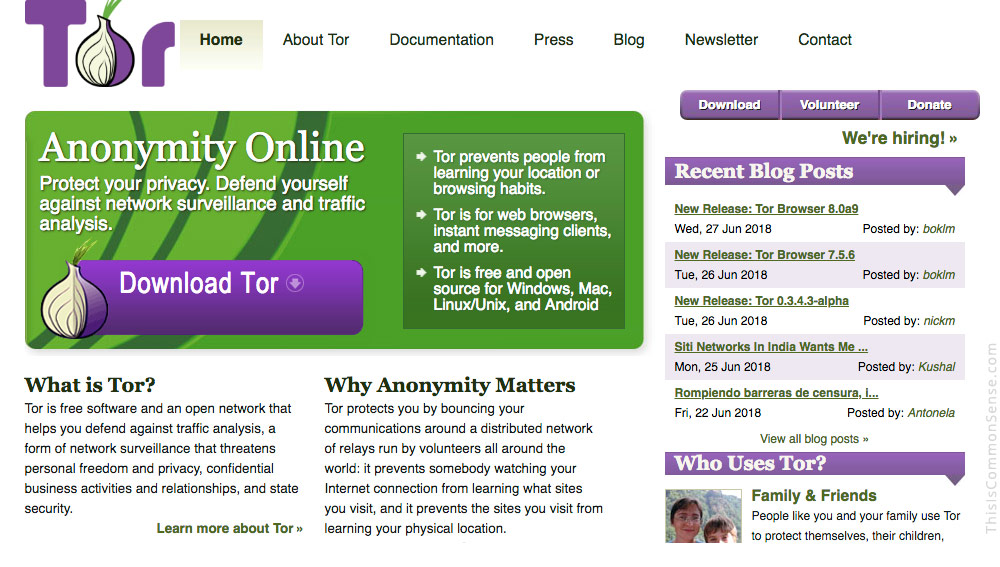
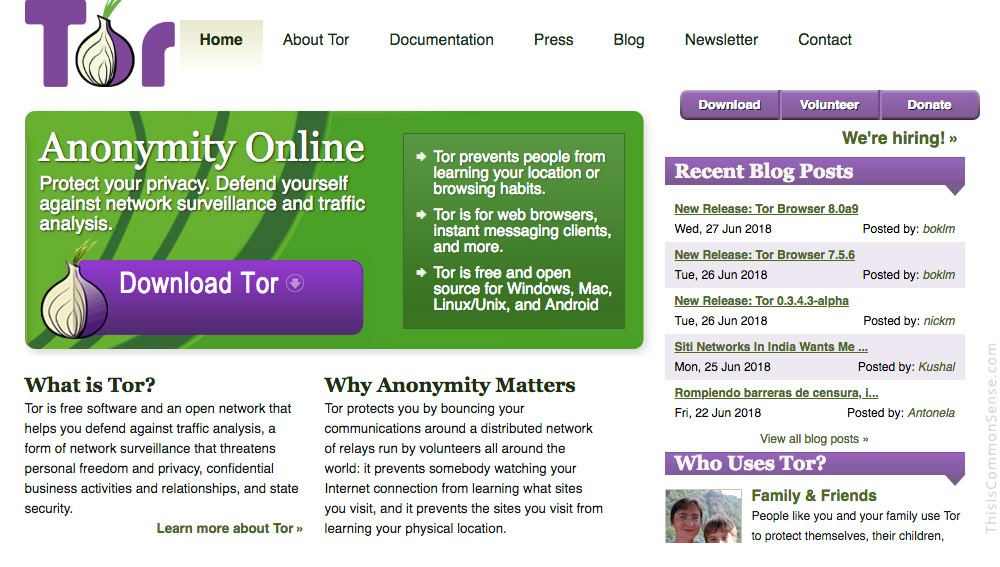
What provokes this observation is a newly amplified assault by the Venezuelan government on the rights of its citizens. The government is seeking to violate the right to peacefully read stuff on the Web by blocking Tor software, which allows users to elude government surveillance and reach banned websites.

Venezuelan dictators Chavez, now dead, and Maduro, still there, have never hesitated to stomp freedom in the name of a spurious greater good. Somebody like Maduro is certainly unscrupulous enough to go after Tor for thwarting censorship. So he fulfills that requirement. I doubt that he possesses very extensive programming ability.

Tor may not be perfect, but it’s pretty robust. You need substantial resources, such as those at the disposal of a government, to stop it. You also need to know what you’re doing. The coders on Venezuela’s stop-Tor team are probably smart enough to grasp the purpose of their work.

They and all other such collaborators should defect to the other side: that of programmers working to protect innocent people from government-sponsored cyber-assault.

This is Common Sense. I’m Paul Jacob.


PDF for printing


Categories
Accountability crime and punishment First Amendment rights general freedom ideological culture national politics & policies political challengers Regulating Protest

Assaults Not Allowed

Have Americans forgotten that freedom makes getting along easier?

We do not all have to like each other. We do not even all have to be nice to each other. We just don’t have license to hit or hornswoggle our fellows. Hate speech may be bad, but it is hate assaults — not talk — that should be punished by law.

Yes, free people are at liberty to insult each other, call each other nasty names, even demean each other. And those insulted, besmirched, and dissed may return in kind or shrug the negatives off.

But we needn’t let it go at that.

Bill Ottman, founder and CEO of Minds.com, reminds us that there is more than one way to skin a hate. When coming across vile nonsense and worse, “the most important question is how we deal with these situations,” he writes.

We may be able to find the answer in the work of Daryl Davis, a famous blues musician with a hobby of  befriending members of the Ku Klux Klan. According to him: “Once the friendship blossoms, the klansmen realize that their hate may be misguided.” By having dinner with Klansmen, he has inspired over 200 members to give up their robes.

Ottman goes on to call for a concerted effort to reclaim a future for “internet freedom and human rights.” That’s a good idea.

Don’t accept the premise that, to get along, we must squelch speech. Instead, ignore disagreeable people trying to make us feel bad.

And look for ways to persuade those who hate us.

We can be adults about this. And keep freedom of speech.

This is Common Sense. I’m Paul Jacob.


PDF for printing


Categories
Accountability general freedom government transparency initiative, referendum, and recall local leaders national politics & policies political challengers term limits

The Other Maine Thing

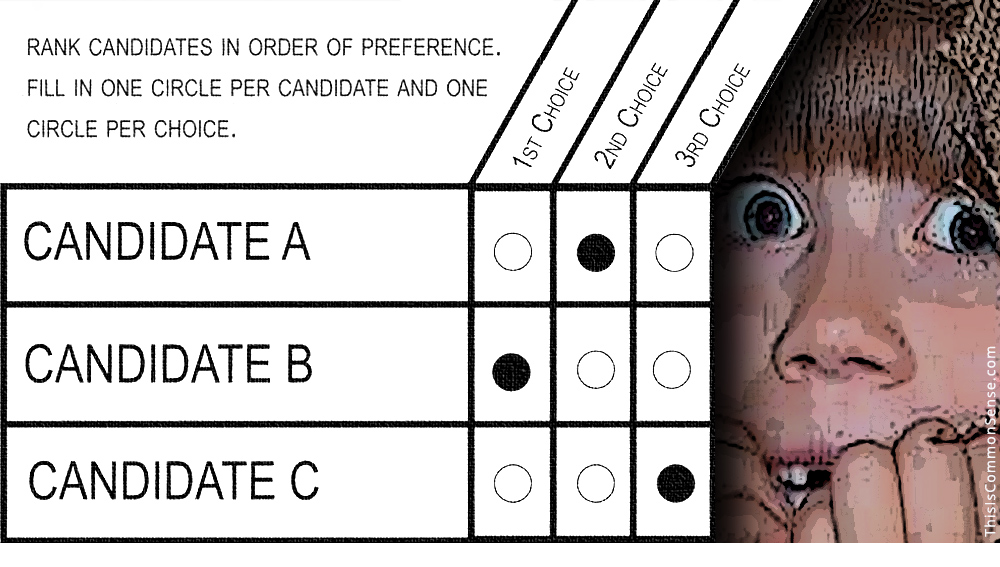
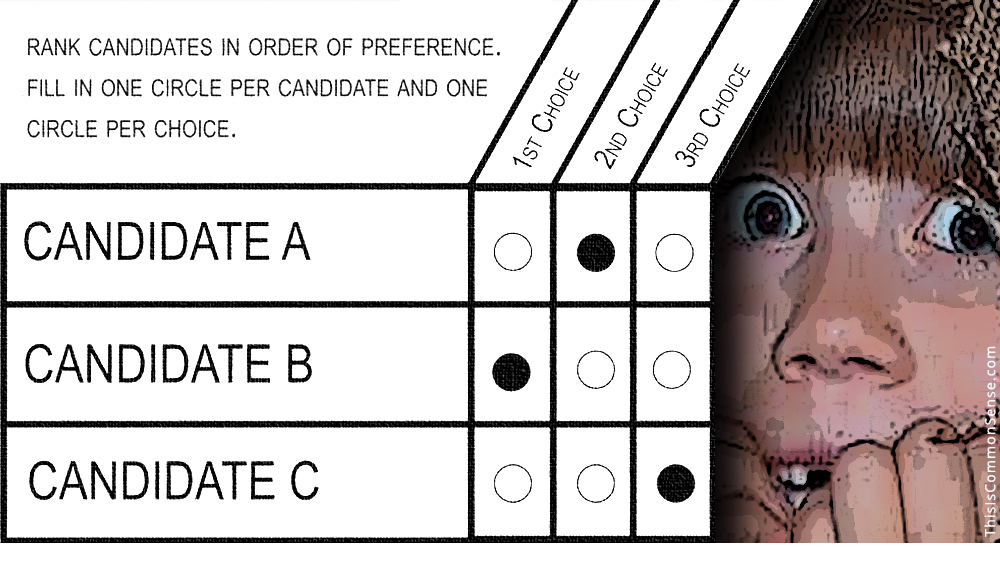
Tuesday’s biggest election news was the victory for Ranked Choice Voting (RCV) in Maine. This is the second statewide vote for this reform, which allows voters to rank the candidates by first choice, second choice and so on.*

Voters first passed it in 2016, but the next year the voters’ “representatives” in the legislature repealed the law, overturning their vote.

Undeterred, RCV supporters filed a referendum and again went out and gathered enough petition signatures to refer the legislature’s repeal to a vote of the people. On Tuesday, Maine’s voters vetoed the legislature, keeping Ranked Choice Voting.

Initiative and referendum sure are helpful.

RCV is not partisan; it requires the winner to have some level of support from a majority of voters and fixes the wasted vote problem. In Maine, however, the Republican Party opposed. On election day, Republican Gov. Paul LePage even threatened not to do his duty and certify the results.

Paul Jacobs (Vice chair of the [FairVote] Board) whom I once knew and thought was a good American,” a Republican friend posted on my Facebook page, “has helped unleash the hounds of Hell” . . . adding that “now the voters are so confused by the terrible procedure that voting will be a nightmare this Tuesday!”

Yet voters used the new voting system for the first time Tuesday in candidate primaries before deciding Question 1 on their ballot — about keeping RCV. As one Portland voter put it, “It’s pretty easy to do, despite the negative publicity.”

We need more control over government with our vote. And when voters speak, politicians should listen.

It wouldn’t hurt political activists to listen, too.

This is Common Sense. I’m Paul Jacob.


* I’ve discussed the idea in this space many times — there’s more information on how it works here.

PDF for printing


Categories
general freedom incumbents local leaders national politics & policies political challengers U.S. Constitution

The First Shall Be Last

We were taught in school that the first ten amendments to the Constitution make up the Bill of Rights. True enough.

But not completely true — as I pointed out at Townhall.

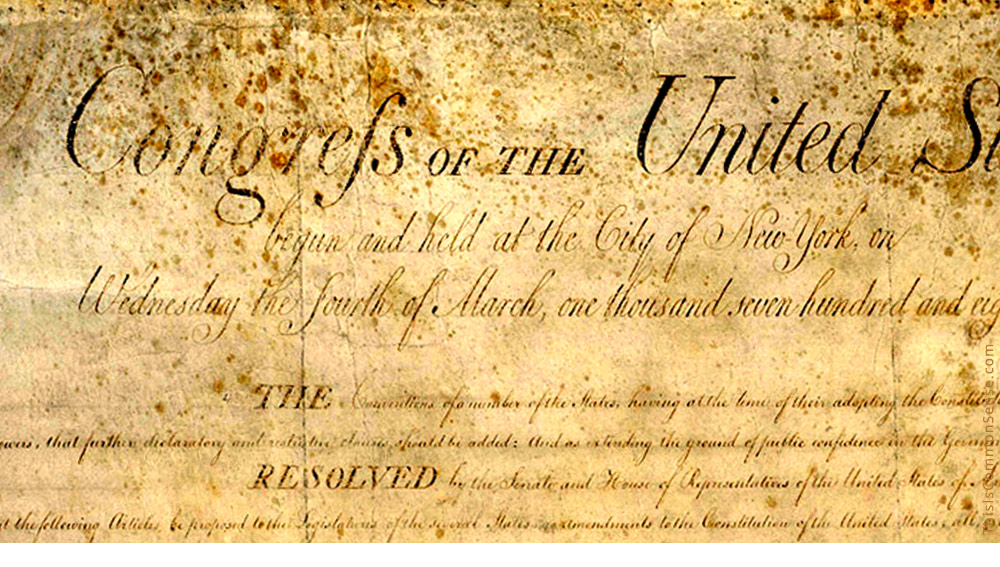
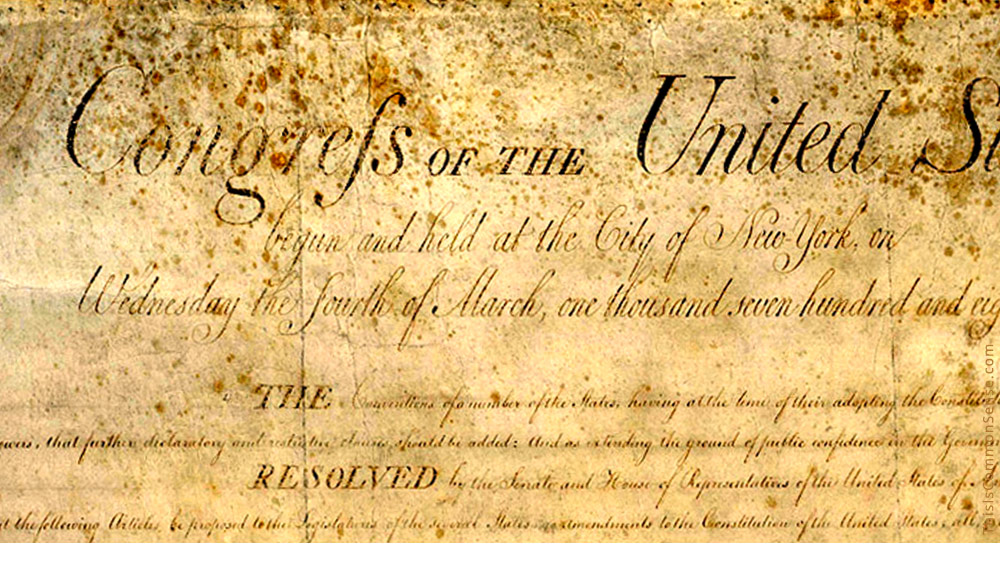
In 1789, Congress passed and sent to the states twelve constitutional amendments, called “articles.” Our current First Amendment was billed as Article the Third.

The first two of the original batch did not pass at that time: Article the First and Article the Second. That latter article, after more than two centuries of wandering around legislatures, was finally ratified by the necessary three-fourths of the states as the 27th Amendment to the Constitution. In 1992.*

As for the rejected Article the First, last Tuesday, Eugene M. LaVergne filed a motion, pro se, before a federal three-judge panel convened in the D.C. Circuit to hear his challenge to “the validity and Constitutionality of the 2010 Apportionment of the U.S. House of Representatives.” He and four other rabble-rousing New Jersey citizens are challenging the courts to acknowledge a surprising truth: the original Article the First was actually ratified.

On June 21, 1792, Kentucky’s legislature voted to ratify, making it the twelfth of fifteen states at that time to do so.

It’s a complicated story. One of the elements is a clerical error.

But rectifying this old mistake would have huge repercussions.

How huge? Currently the lower house of Congress has a mere 435 members. Were this amendment acknowledged, that number would soar to over 6,150 members.

And that would be a good thing.**

This is Common Sense. I’m Paul Jacob.


* Sadly, its sensible prohibition — “No law, varying the compensation for the services of the Senators and Representatives, shall take effect, until an election of representatives shall have intervened” — was immediately rendered toothless by the automatic cost of living salary adjustments congressmen had already provided themselves.

** Skeptical? Well, click here for a preview of more detailed arguments to come.

PDF for printing


Categories
Accountability general freedom incumbents insider corruption local leaders moral hazard political challengers Regulating Protest term limits

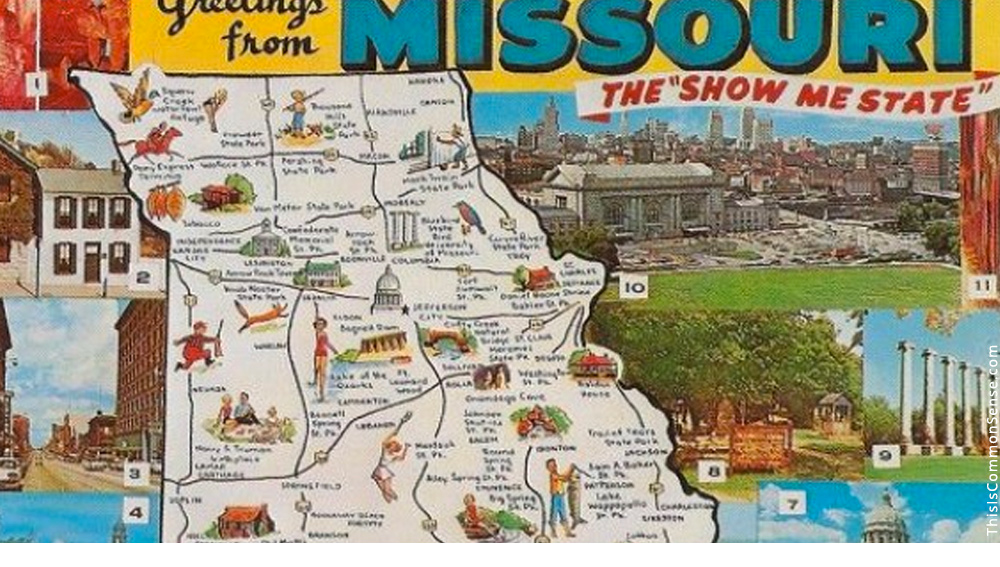
Missouri Shows Article V Action

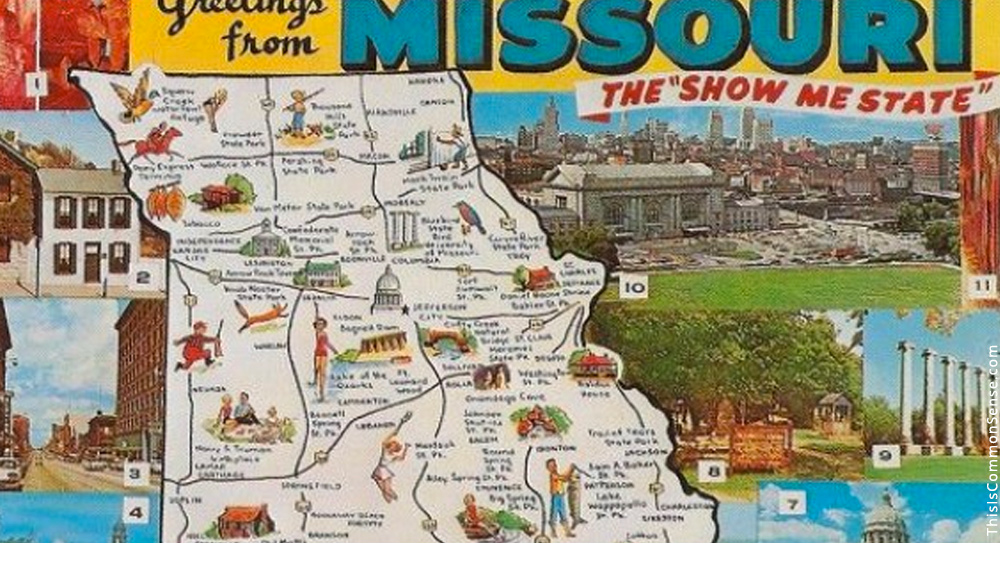
There’s good news and there’s good news from the Show Me State.

First the good news. The Missouri House declined to follow the lead of the Missouri Senate during its recent legislative session in advancing a ballot measure to make a travesty, mockery and sham of state legislative term limits.

The proposed weakening of the limits would have doubled maximum legislative tenure from eight years to 16 years. Further, it would also have excluded terms already served from counting toward the new limit.

Had the measure ultimately been enacted, some incumbents would have been able to sit in a single seat for up to 24 years. This assault on term limits is dead . . . at least until next year.

Now the good news. The lawmakers deserve high praise for issuing a formal call for an amendment convention to consider the single subject of congressional term limits, making Missouri the third state to do so (after Florida and Alabama). In mid-May, the resolution for a Term Limits Convention easily passed in both chambers.

Thanks to a provision in Article V of the Constitution, if two thirds of the states (34 states) submit a similar application to convene a term limits amendment convention, the convention must be convened. The amendment that the convention produces would then be submitted to the states for ratification. Three fourths (38) are required to ratify.

We’re only in the first-steps stage here, but first steps are crucial.

Thanks for showing us how to do it, Missouri.

This is Common Sense. I’m Paul Jacob.


PDF for printing

Missouri, show me, Article V, term limits, legislature, congress,