Categories
folly ideological culture media and media people national politics & policies political challengers responsibility

The Women-Haters

“You’ve just spoken eloquently about the sexism, the misogyny and inequity around the world,” CNN anchor Christiane Amanpour said* to defeated presidential candidate Hillary Clinton, “but do you believe it exists here still?”

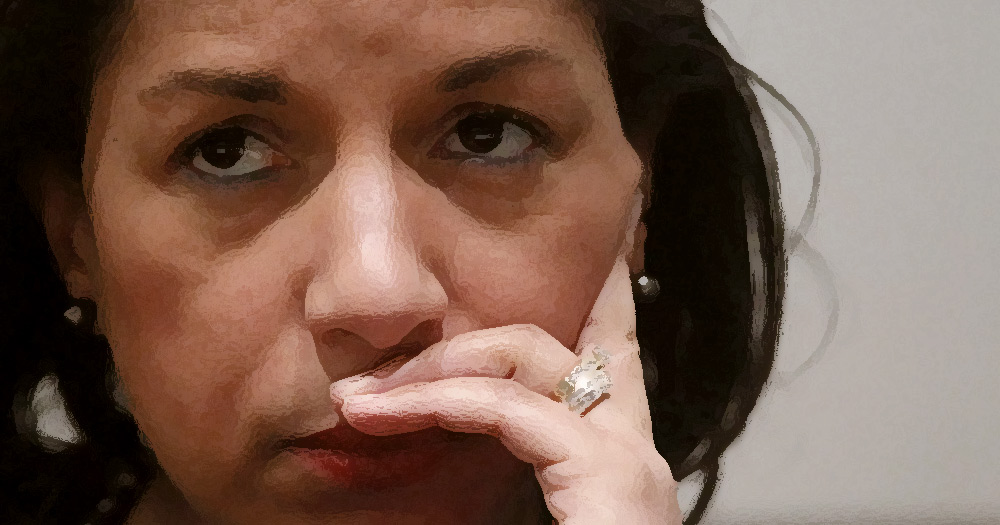
The audience at Tuesday’s Women for Women International luncheon in New York City erupted in laughter, cutting Amanpour off. A second round of chortles ensued when Hillary Clinton touched the side of her face in wonderment, uttering, “Hmmm?”

“Were you a victim of misogyny?” Amanpour continued. “And why do you think you lost the majority of the white female vote. . . ?”

“Well, the book is coming out in the fall,” Hillary joked. “Yes,” she went on, turning serious, “I do think it played a role.”

Noting that “other things did, as well,” Mrs. Clinton decried Russian interference. Back to misogyny, however, she added: “It is real. It is very much a part of the landscape politically, socially and economically.”

Hmmm, indeed. So, most white women didn’t vote for Hillary Clinton because they hate women . . . per se?

All women?

Simply because they’re women?

“An example that has nothing to do with me, personally,” explained Mrs. Clinton, “is this whole question of equal pay. We just had Equal Pay Day in April, which is how long women have to work past the first of the year to make the equivalent of what men make the prior year in comparable professions.”

Hillary is mistaken about the Gender Pay Gap, which compares completely dissimilar professions (and hours worked, qualifications, etc.). Plus, this same gender pay gap was found at the Clinton Foundation, her U.S. Senate staff, her State Department and among her campaign staff.

Hillary Clinton — misogynist?

This is Common Sense. I’m Paul Jacob.


* The full interview is here. But you can cut to the chase here.


PDF for printing


Categories
Accountability free trade & free markets initiative, referendum, and recall insider corruption moral hazard national politics & policies porkbarrel politics too much government

A Wall of Separation

Whatever you think of Thomas Jefferson’s letter to the Danbury Baptists, wherein he celebrated the First Amendment for “building a wall of separation between Church & State,” let’s agree that it would have been nice had he penned another letter — to the Waterbury Methodists or someone — urging a wall of separation between Sports and State.

Last week, actor Tom Hanks became another brick in my hoped-for wall. “It’s a billion-dollar industry,” Hanks said of the National Football League.

[T]hey have billion-dollar TV contracts. All the owners are billionaires. And yet when they want to build a stadium they’re going to use for 10 weeks out of the year, they expect the city taxpayers to buy the building.

Hanks is livid. The recent “deal” that lured his beloved Oakland Raiders to Las Vegas included $750 million in public funds to build a $1.9 billion stadium. The Raiders are planning to stay in Oakland for the 2017 and 2018 seasons, while that new stadium is built. “When the Raiders leave,” the beloved star declared, “I am going on an NFL moratorium for two years.”

Unfortunately, Hanks appears more angry that his team is leaving (eventually), than with the principle that taxpayers ought not be ripped off.

Subsidizing businesses is cronyism, not capitalism. It’s even more outrageous when the poor must pay for the rich.

But how to stop it? In every city where citizens can propose ballot initiatives, let’s petition and pass measures requiring a public vote before any such subsidy.

It may not be the great wall I’d prefer, but it’s a high hurdle providing taxpayers some important protection.

This is Common Sense. I’m Paul Jacob.


Printable PDF


Categories
crime and punishment First Amendment rights general freedom ideological culture moral hazard national politics & policies Regulating Protest U.S. Constitution

Thorns in the Parade

Portland, Oregon, styles itself as “The City of Roses.” For over a century, this Pacific Northwest city has held an annual Rose Festival, complete with multiple parades.

This year, there will be at least one parade less.

“The annual 82nd Avenue Rose Parade and Carnival scheduled for Saturday have been canceled because of threats against the Multnomah County Republican Party, a longtime participant in the parade,” we learn from the Portland Tribune. “In a Tuesday afternoon email, the 82 Avenue Business Association, which sponsors the Rose Festival-sanctioned event, said it canceled the entire event because [it] could not guarantee the safety of the community.”

KOIN-6 News reported that the threats came from the Direct Action Alliance, an “antifa”-styled group that “created a Facebook event called ‘Defend Portland from Fascists at the Avenue of Roses Parade.’ The group wanted to disrupt the march because of ‘Nazis and fascists’ participating.”

Now, what you regard as “white supremacist” and what young pseudo-antifascists think of as “white supremacy” are probably very different. I doubt that many real Nazis and fascists would have marched on Saturday.

But the identification issue is irrelevant. If fascists want to peacefully parade, let them.

What is objectionable? Those who engage in violence to suppress views of which they disapprove.

Also objectionable? The organizers and the City of Roses police, who, by caving in, let free speech and assembly be squelched.

Spontaneous marches did occur on parade day, corralled to the left and right sides of the street. Literally and figuratively. Three violent activists were arrested but not identified by affiliation.

Portlanders used to worry that the clouds would rain on their parades. Now, it is ideological violence casting a dark shadow.

This is Common Sense. I’m Paul Jacob.

Printable PDF


Categories
Accountability free trade & free markets general freedom national politics & policies tax policy

Death and . . .

It’s a sure thing — that most folks will like President Trump’s tax cuts. Though we don’t yet know all the details.

When it comes to taxes, less is more

That is, if you’re paying taxes. It is no great mystery that people like it when their own taxes are reduced.

But what about reducing other people’s taxes?

“The core economic case for tax cuts is that they reduce the obstacles to creative and productive activities,” economist Don Boudreaux explained yesterday at the Café Hayek blog.

Cutting the corporate tax rate — which even former President Bill Clinton supported during last year’s campaign — won’t immediately appear in people’s paychecks, but can stimulate economic growth helping everyone. Recent experiences in both Britain and Canada bear this out.

Cutting taxes, of which “the rich” pay more, can also spur growth.

Yet, these ideas do not dominate popular discussions of tax cuts. Boudreaux lamented media reporting that treats any tax reduction as simply a “‘gift’ to high-income earners,” dubbing the coverage: “Biased. Benighted. Blind.”

“Suppose that freedom of the press were reported in the same way as . . . a ‘giveaway to the press’?” he asked. “Most people, of course, do not own newspapers or other media outlets.”

Boudreaux concluded, “When the press is free, the chief beneficiaries are the general public.”

Freedom — of both the press and to keep more of the fruits of our labors — helps the common man. As well as the uncommon man. A tax cut for me helps me directly, and you indirectly. And vice versa. Just as a free press is great for those in journalism as well as those of us not in journalism.

That is not blind, but eyes open; not benighted, but enlightened; not biased, but . . .

. . . Common Sense. I’m Paul Jacob. 


Printable PDF


Categories
Accountability folly free trade & free markets moral hazard national politics & policies porkbarrel politics

Super-Subsidize Me

“In American political discourse, those on the side of the sick, poor, and underprivileged tend to favor more federal government intervention,” writes Heartland Institute policy advisor David D’Amato at The Hill. He explains that many “see government as . . . rather like a charity . . .”

Sure, government can act charitably, except that its money isn’t given voluntarily, and the recipients are often not so needy.

Earlier this month, the stock price of electric car company Tesla, Inc. rose high enough to overshadow General Motors. That’s great news for billionaire Elon Musk, Tesla’s CEO. But an Investor’s Business Daily editorial noted, “[T]he company is heavily reliant on taxpayer support.”

Who benefits (in addition to Musk)? “A study published by the National Bureau of Economic Research found that 90% of electric car subsidies go to the top 20% of households,” the editorial stated. IBD added that it was “a lot of welfare-for-the-rich for very little environmental benefit.”

In addition to funding advanced technology, American taxpayers have spent $6.7 billion over the last few decades to subsidize stadiums for wealthy sports team owners. The latest? In Clark County, Nevada, taxpayers forked over $750 million ($354 for every resident) to bribe — er, bring — the Oakland Raiders to Las Vegas.

The ridiculous Minnesota legislation to feed $5 million in state funds to start two shrimp farms almost seems reasonable in comparison. Almost.

“Maybe growing shrimp in Minnesota is a great idea,” admits John Hinderaker of the Center of the American Experiment. “If so, the owners should do what other small businessmen do: either find investors, or get a bank loan.”

Government’s crony capitalism taxes the poor to give to the rich.

This is Common Sense. I’m Paul Jacob.


Printable PDF


Categories
general freedom local leaders national politics & policies political challengers U.S. Constitution

Wag that Tail, Dog

Last November, Maine voters passed a ballot measure, Question 5, to begin electing their federal representatives to Congress, and their governor and state legislators, using Ranked Choice Voting. This selection mechanism allows voters to rank their choices, thereby removing the “spoiler effect” that often pushes citizens to support the lesser of two popular evils.*

Last month, Maine’s State Senate submitted advisory questions to the Maine Supreme Court about the new law’s constitutionality.

It is indeed constitutional. “Those who argue that ranked-choice voting conflicts with the Constitution,” explained Marshall Tinkle** in the Bangor News, “seem to be reading things into it that simply are not in the text.”

Last week, the Maine Supreme Court heard oral arguments. Justices Donald Alexander and Joseph Jabar seemed concerned about ranked-choice voting making it easier to vote for the person and not the party.

That’s not unconstitutional. But is it somehow bad?

“We are going to have a lot of people abandoning the political parties if ranked-choice voting remains,” argued Alexander. Or perhaps the parties might better serve voters?

The attorney representing the Committee for Ranked Choice Voting, James Kilbreth, reminded the justices that the voters have spoken, and as to the resistance by legislators in implementing their will, he remarked, “This is the tail-wagging-the-dog kind of problem.”

The courtroom broke out in laughter when Chief Justice Leigh Saufley responded, “Mr. Kilbreth, it’s a fairly large tail.”

I’m a big fan of ranked choice voting***, but the court’s decision is not about the policy. It’s about whether the dog (the people) will wag the tail (the legislators) or vice-versa.

This is Common Sense. I’m Paul Jacob.
 

* Portland, the state’s largest city, has used ranked choice voting since 2011.

** And Tinkle should know, since he “wrote the book” on the subject — the reference book, The Maine Constitution.

*** I serve on the Board of Directors of FairVote, an organization that promotes ranked choice voting and other methods to make every person’s vote count.


Printable PDF


Categories
Accountability moral hazard nannyism national politics & policies responsibility term limits too much government

Ida-Heave-Ho

“Is there any chance the vetoes can be overridden?” asked a reader in response to yesterday’s commentary on Idaho Gov. Butch Otter’s veto of two pieces of common-sense legislation.

It’s a good question, because the bill reforming civil asset forfeiture and the bill easing regulations that block employment in cosmetology both passed by wide margins. Unfortunately, the answer is NO. 

According to the Gem State’s constitution, the governor has ten days after legislation reaches his desk or, at the session’s end, ten days after the legislature adjourns to decide whether to sign or veto a bill. If he vetoes after adjournment, it cannot be overridden — unless the legislature comes back into session.*

Only the governor can call legislators back into session, which is exceedingly unlikely if a new session would entail a veto override.

It turns out that Idaho is one of only six states where legislators are unable after adjournment to override a veto. Still, the problem’s simple enough to solve: legislators could propose a constitutional amendment changing the process.

Senator Steve Vick did just that, in 2014 and again in 2016. But though his amendment garnered the two-thirds majority needed in the Senate, the House never took it up. He plans to reintroduce it next year.

There’s another constitutional change needed: term limits for the governor. A 2015 poll found a whopping 84 percent of Idahoans favor such limits. Yet, legislators may be squeamish, knowing that those same voters (by that same margin) also want legislators term-limited.

Sometimes it is amazing,” Idaho Politics Weekly’s Bob Bernick explained, “how elected officials can just ignore the will of voters.”

This is Common Sense. I’m Paul Jacob.
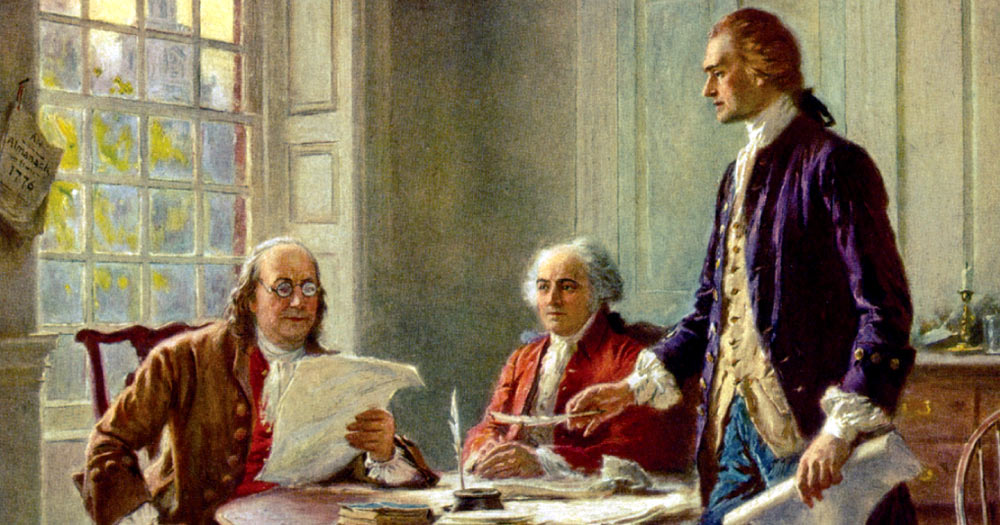
 

* Gov. Otter also vetoed the legislature’s repeal of the state sales tax on groceries, the timing of which legislators are challenging in court.


Printable PDF


Categories
Accountability general freedom local leaders moral hazard national politics & policies property rights responsibility too much government U.S. Constitution

A Bad Haircut

Eric Boehm over at Reason excoriated Idaho Gov. Butch Otter for giving libertarians “the double bird salute.” Boehm wondered if the governor, in vetoing two bills earlier this month, had been merely “trying to make libertarians mad.”

That’s not exactly fair.

The two blocked bills, one reforming unjust civil asset forfeiture and the other easing pernicious regulation of cosmetology, did certainly appeal to libertarians. But they also appealed to conservatives and liberals. And both passed with bipartisan support.

House Bill 139 would have reduced the number of training hours for a cosmetology license and allowed folks to fix hair at special events like weddings without a license, etc. “The fact that many lawmakers, Republicans and Democrats, liberals, moderates and conservatives, are working together to advance legislation in the interest of economic opportunity and prosperity,” argued Wayne Hoffman of the Idaho Freedom Foundation, “is a thing of beauty for a profession that’s all about beauty.”

But beauty is in the eye of the beholder. Those who run cosmetology schools probably like more mandated hours and folks in the profession might wish for less competition. Governor Otter said as much, complaining that HB 139 was written “without input from interested parties or due regard for the health, safety and welfare of the public.”

Just how dangerous is a bad haircut?

Putting safety in context, Hoffman explained that the current mandated hours of training for a cosmetology license “is more than is required to become an EMT in Idaho.”

Gov. Otter vetoed HB 202, the civil asset forfeiture reform, at the behest of “law enforcement” — the very interested parties who gain from taking people’s stuff without bothering to charge or convict them of a crime.

That makes no sense . . . according to Common Sense. I’m Paul Jacob.


Printable PDF


Categories
Accountability government transparency incumbents local leaders national politics & policies responsibility

A+ in Arrogance

The folks in Congress represent ‘We, the People’ . . . well, theoretically, at least. They’re supposed to work for us. We are their bosses. We pay their salary.

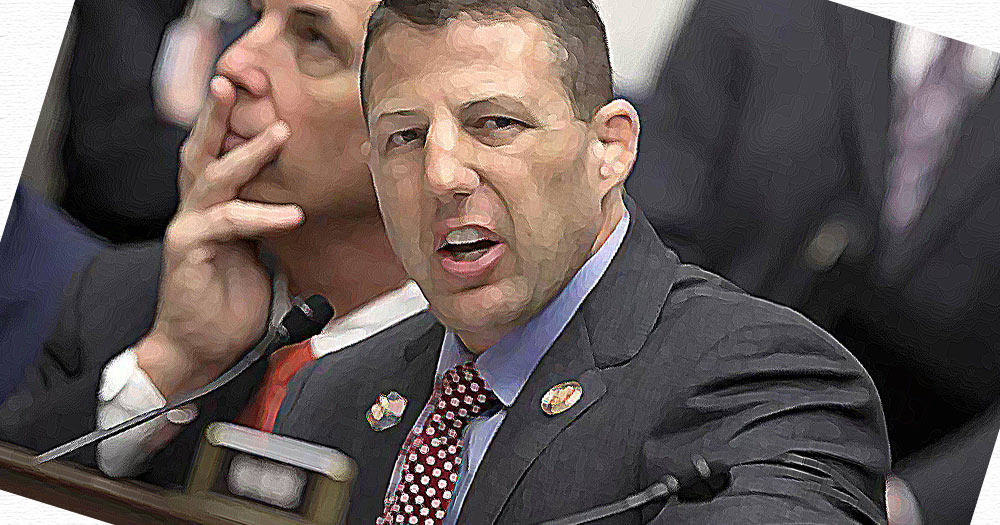
But not U.S. Rep. Markwayne Mullin, the third-term Republican from the rural Second District of Oklahoma. At two recent town hall meetings, the former professional mixed martial arts fighter responded to comments that the people pay his salary and health insurance with a sort of verbal karate-chop.*

“You say you pay for me to do this. Bullcrap,” he aggressively retorted. “I pay for myself. I paid enough taxes before I got there and continue to through my company to pay my own salary. This is a service. No one here pays me to go.”

Mullin’s taxpayer-funded PR professional, Amy Lawrence, was nice enough to explain the prickly, arrogant ranting of her boss, noting that, “Like all business owners, Congressman Mullin pays his taxes, which contribute to congressional salaries.”

Which means — yes sirree! — that of course his constituents pay his salary, when they also “contribute” their taxes. The fact that Rep. Mullin pays taxes, too, doesn’t change that fact.

And, though Mullin claims being a member of Congress is not how he makes “his living,” he does, nonetheless, deposit into his bank account a not inconsequential $174,000 a year in congressional salary.

Moreover, as a member of Congress, Mullin also gets to flout the Obamacare law with a special health insurance deal.

A town hall set for Tahlequah was canceled . . . for security reasons.

This is Common Sense. I’m Paul Jacob.
 

* His comments in Jay, Oklahoma, are available here; his Okemah comments, here. An entire hour video of his Okemah remarks are here (the portion about his pay begins at 24:48).


Printable PDF

Rep. Markwayne Mullin, Oklahoma, salary, congressional, pay, representation, representative


Categories
free trade & free markets general freedom ideological culture moral hazard nannyism national politics & policies responsibility too much government

Escape from New York

“New York City is a walled maximum security prison,” exclaimed posters for Escape from New York (1981, R). “Breaking out is impossible.”

Now, as part of new legislation giving “free college” to New Yorkers, politicians take the same high concept from the film and extend it to the entire state.  

What, you ask, does Escape from New York have to do with free college?

First, it’s not actually free college, but only free tuition for state and city colleges.* And note that tuition costs currently run less than half the price tag of room-and-board, books and fees. Moreover, the freebie is only for students whose parents earn less than $100,000 annually, beginning in Fall 2017. In 2018, the threshold jumps to $110,000 and to $125,000 in 2018.*

Gov. Andrew Cuomo, a likely 2020 Democratic Party presidential candidate, pushed the idea of bestowing free tuition in his State of the State address months ago. He also brought in Vermont Senator Bernie Sanders, who dangled free college during the 2016 campaign and has now introduced legislation in Congress.

But the Empire State Legislature amended the bill. Knowing full well the economic climate created by their previous policies, these venerable solons feared New Yorkers might take the free tuition, earn a degree and quickly move.

To someplace with jobs, perhaps.

So, the legislation requires student recipients of the free money to remain in the state – not escape – for as many years as they received the free moolah.

How will they keep graduates from leaving? Well, the movie trailer hyped that, “The bridges are mined. The rivers are patrolled.”

And those who leave also must pay back the tuition as a loan.

If caught.

This is Common Sense. I’m Paul Jacob. 
 

* There’s also a subsidy program for those attending private institutions of higher learning, if those colleges match the $3,000 the State puts up.

** New York state ranks 16th in median household income, at $60,850 in 2014. Therefore, the cap will deny this benefit to quite a few upper middle class and wealthier families.


Printable PDF