Categories
media and media people national politics & policies subsidy

Propaganda Shoved Where?

The continued existence of “public radio” and “public television” is out of place in these United States. Not because it’s partisan — all news vendors tend to toe some partisan line — but because it’s partisan and taxpayer subsidized.

Though NPR aficionados tend to downplay the subsidies to NPR and PBS, what public media boosters have more consistently done is deny the partisanship

They have no standing any longer — if the evidence of our senses weren’t enough. 

In “The Bell Finally Tolls for National Public Radio,” Matt Taibbi explains how the media behemoth’s CEO Katherine Maher admitted NPR’s and PBS’s partisanship in her defense of it.

That won’t help her case in Congress, though, notes Mr. Taibbi. 

While the New York Times insists that tax-funded “public” media “improves the lives of millions of Americans” and “strengthens American interests” (presumably by being relentlessly progressive), it has no defense to Taibbi’s indictment: the branches of the Corporation for Public Broadcasting have taken “the country’s signature public news shows into an endless partisan therapy session, a Nine Perfect Strangers retreat for high-income audiences micro-dosing on Marx and Kendi.”

Taibbi makes clear just how annoying the dish served by CPB/NPR/PBS is, the entities seeing no “problem with taking funds from a huge plurality or even a majority of citizens and pursuing a nakedly politicized, ear-splitting propaganda project in opposition to the views of those people. NPR is the vegetables we refuse to eat, administered up a different entrance for our own good.”

I was thinking about the blight upon our eyes and ears and reason, but point taken.

De-fund National Public Propaganda immediately.

This is Common Sense. I’m Paul Jacob.


PDF for printing

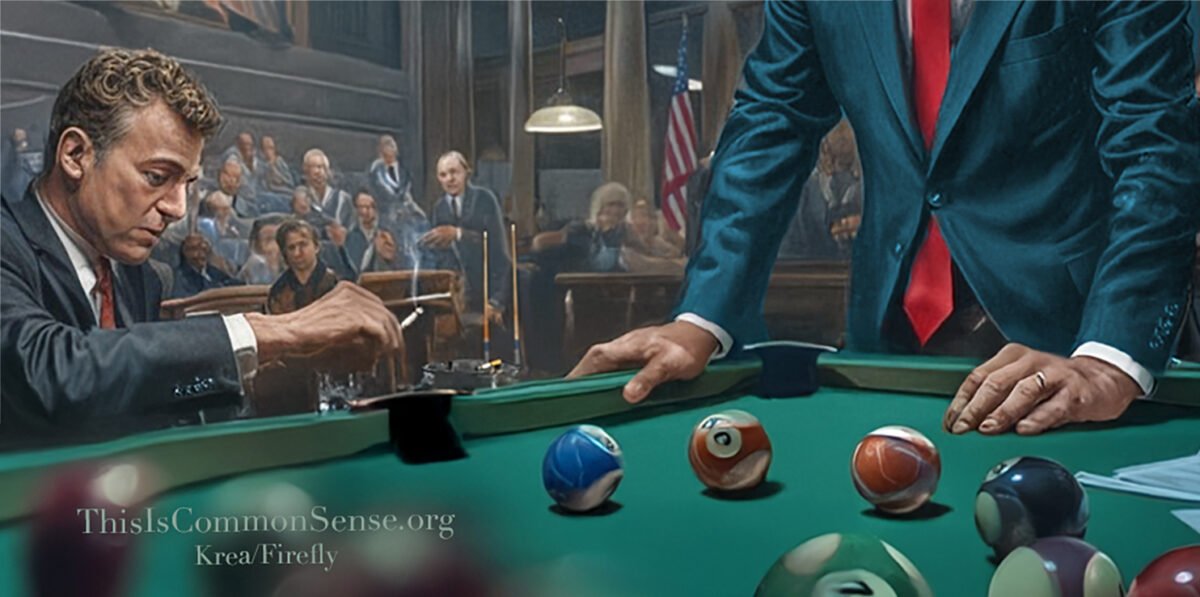
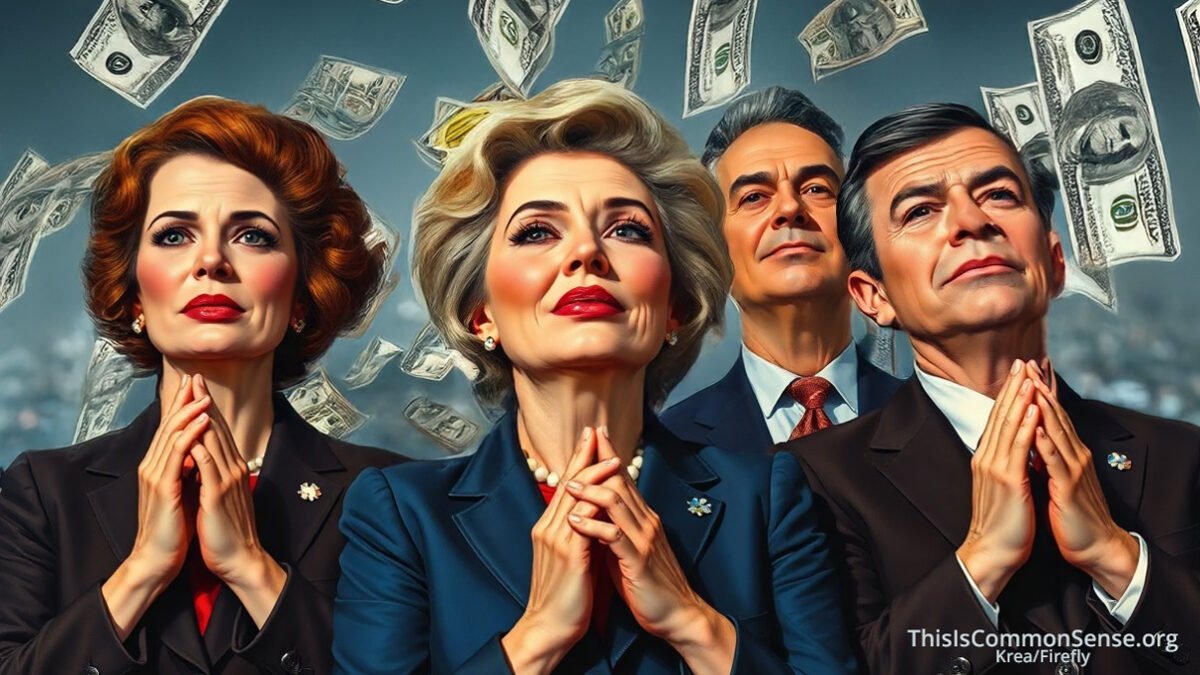
Illustration created with Krea and Firefly

See all recent commentary
(simplified and organized)
See recent popular posts

Categories
Accountability national politics & policies scandal

The Autopen Question

When the Heritage Foundation’s Oversight Project offered its report on the Biden Administration’s use of the presidential “autopen,” in March, the legality of many of President Joe Biden’s signatures were placed in jeopardy.

Since then, Republicans in Congress and Trump in the White House have been pushing the case that White House staff often used the autopen sometimes without the presidential awareness.

Since then, Republicans in Congress and President Trump have been pushing the case that White House staff often used the autopen and sometimes without presidential awareness.

If so, with the non-stroke of a non-pen, could much of what came out of 1600 Pennsylvania Avenue for four years be un-done?

“The full picture of what Mr. Biden did on pardon and clemency decisions,” the New York Times explains, “and how much he directed those decisions and the actions of his staff, including the use of the autopen, may come down to tens of thousands of Biden White House emails that the National Archives has turned over as part of the investigation by the Trump White House and the Justice Department.”

Times reporters investigated some of the emails, offering a tentative-if-predictable conclusion: “the Biden White House had a process to establish that Mr. Biden had orally made decisions in meetings before the staff secretary, Stefanie Feldman, who managed use of the autopen, would have clemency records put through the signing device.”

And of course Biden himself defends the integrity of his administration: “Let me be clear: I made the decisions during my presidency.

“I made the decisions about the pardons, executive orders, legislation and proclamations.” 

Trust him!

The Times has been working to encourage us to trust the ex-president. Its March article, “How an Autopen Conspiracy Theory About Biden Went Viral,” clearly shows its bias — a context piece before any real investigation.

This is Common Sense. I’m Paul Jacob.


PDF for printing

Illustration created with Krea and Firefly

See all recent commentary
(simplified and organized)
See recent popular posts

Categories
national politics & policies partisanship

Unserious Resolution

Impeachment is serious business, but the folks in Congress who advanced the most recent impeachment agendum are anything but.

The man to be impeached is President Trump, of course. And it was Rep. Al Green (D.-Tx.) who formally filed the paperwork. Trump, Rep. Green accused, had failed to “notify or seek authorization from Congress before the U.S. launched strikes on three Iranian nuclear sites over the weekend,” explains Sarah Fortinsky of The Hill

The resolution, dated June 24, 2025, is limited to a single article: “Abuse of Presidential Powers by Disregarding the Separation of Powers — Devolving American Democracy into Authoritarianism by Unconstitutionally Usurping Congress’s Power to Declare War.” 

The bit about authoritarianism is the real stretch. 

“President Trump’s unilateral, unprovoked use of force without congressional authorization or notice constitutes an abuse of power when there was no imminent threat to the United States” — that part is certainly arguable. 

But the rest, which alludes to “January Sixth” and criticizes that Trump “called for the impeachment of federal judges,” is mere partisan foolishness.

Rep. Green must have known it would go nowhere. One hundred twenty-eight Democrats sided with all 216 Republicans, leaving a mere 79 Democrats voting to move forward with impeachment.

Meanwhile, Republicans and the Administration are calling the bombing strike a success, a grand example of Trump’s “peace through strength” game-plan.

An impeachment might be believable, even commendable, if it came from a member of his party, or — if from Green or another Democratic supporter of the move, such as Alexandria Ocasio-Cortez — had been brought against a sitting Democrat president, such as Obama or Biden.

As it is? Just another partisan ploy.

The kind of thing Americans are rightly sick of.

This is Common Sense. I’m Paul Jacob.


PDF for printing

Illustration created with Krea and Firefly

See all recent commentary
(simplified and organized)
See recent popular posts

Categories
national politics & policies privacy

The State vs. Our Privacy

The policies of the new Trump administration have given us only partial reprieves from the war on freedom of speech.

The war is still chugging along. It extends even to our most private communications, including those now hidden from prying eyes by encryption. Revived legislation in the U.S. Senate threatens the providers of such encryption.

Reclaim the Net’s Dan Frieth observes that under the STOP CSAM Act of 2025 (S. 1829), which targets “child sexual abuse material,” providing a “secure, privacy-focused service could be interpreted as ‘facilitating’ illegal activity, regardless of whether the provider can access or verify the content being transmitted.”

The legislation stipulates that providers may defend themselves from charges of “facilitating” illegal activity by showing that it is “technologically impossible” to remove CSAM without disabling their encryption. But firms would still often have to go to court to make this case, and “many platforms may adopt invasive scanning out of fear, not necessity, just to avoid liability, with real consequences for privacy and user trust.”

Defaulting to routine invasive scanning means an end to providing users with encryption, including users threatened by despotic regimes.

Current law already requires platforms to report known examples of material that entails the sexual abuse of children.

Any good or service that can be put to good use can also be put to evil use. Just as we shouldn’t penalize the makers of knives, forks, mail, curtains, roads, and guns for their use by criminals, the makers of encryption services should also not be so punished.

Nor should we grant to government bodies such a frightening dystopian power, accumulated to override our basic freedoms.

This is Common Sense. I’m Paul Jacob.


PDF for printing

Illustration created with Krea and Firefly

See all recent commentary
(simplified and organized)
See recent popular posts

Categories
national politics & policies political economy regulation

Ultra-Absurd?

Sen. Josh Hawley (R-Missouri) is oh-so-ultra.

USA Today dubs him a “conservative” in the title of a recent article on a proposed minimum wage hike, and then an “ultraconservative” (emphasis added) in the first word of the article itself

Why does this “ultraconservative” join a Democratic senator in raising the federal minimum wage to $15? They both seem to assume that minimum wage laws raise wages.

For hundreds of years, economists have argued they don’t. On the face of it, these laws merely prohibit jobs paid below a certain rate. They disemploy. 

When the government prohibits low-wage compensation, businesses shift productive processes to keep afloat; when a factor is suddenly made more expensive, they adjust. With more automation, for example.

At least, the USA Today article mentions, briefly, that the Congressional Budget Office forecasts that some individual workers and families would see their livelihoods diminished by the higher minimum — which is the only part of the coverage of the new, more restrictive (higher) minimum wage regulation that gets to the meat of the issue: what minimum wage laws actually do. 

A related article back home in the Springfield News Leader (a member of the “USA TODAY NETWORK”) explores the question of Missouri’s minimum wage and what activist economists call the state’s “minimum living wage” — and it is relevant at least to this extent: states have different economic climates, and wage rates differ region to region in the United States, so it’s very relevant to a senator from his state affecting his state’s economy with a regulation applying equally to all states.

Which is to say that the minimum wage issue should be a state issue.

If an issue at all.

“Ultraconservative” Hawley’s bill is ultra-misguided.

This is Common Sense. I’m Paul Jacob.


PDF for printing

Illustration created with Krea and Firefly

See all recent commentary
(simplified and organized)
See recent popular posts

Categories
ideological culture national politics & policies

The Uninvited

There’s talk of proof that Iran now possesses a nuclear weapons capacity; Israel bombed the targets; war drums are beating — but for a short time yesterday, the news was all abuzz over the Trump Critic Snub.

The federal government’s official debt rushed to the $37 trillion mark — but Senator Rand Paul (R-Ky.) took a few moments to shake his head over how he and his grandson were singled out by not being invited to the White House picnic.

“I just find it so incredibly petty,” Senator Paul said. “It’s really kind of sad that this is where we are.”

Politics is a petty business, too often, and this sure looked like one of those moments to upgrade the word with a capital P. Or with a T, for You-Know-Who.

Oddly, though, often it was the senator who was besmirched with the P word, not the prez!

“His complaint has sparked bipartisan mockery online,” explains Newsweek. “Vince Langman, a self-described member of the MAGA movement, told his 381,000 followers on X, formerly Twitter: ‘Rand Paul crying like a school girl because President Trump uninvited him from the White House picnic is the funniest thing I’ve seen on X in weeks.’”

I don’t know. Is it funnier than the Deep State admitting that it had been faking and fanning the flames of the UFO craze all along? 

Or blaming Senator Paul for noticing and not the White House for the actual snub?!?

The attack on Paul is dumb: the Kentucky senator has always been an equal opportunity critic.

Thankfully, Rand Paul and his grandson — and, presumably, Rep. Thomas Massie, another Big Beautiful Bill critic — are back on the picnic list.

Maybe they can hold a moment in silence, amidst the fun, as the debt hits $37 trillion.

This is Common Sense. I’m Paul Jacob.


PDF for printing

Illustration created with Krea and Firefly

See all recent commentary
(simplified and organized)
See recent popular posts

Categories
Accountability government transparency insider corruption national politics & policies

RFKj’s Clean Sweep

“All of the guardrails for this kind of a committee, which I served on many years ago, have simply disappeared,” says Sara Rosenbaum, Professor Emerita of Health, Law and Policy at George Washington University. 

She’s referring to Secretary of Health and Human Services Robert F. Kennedy’s “retiring” of the entire 17-member Advisory Committee on Immunization Practices (ACIP).

You know, the group that did such a bang-up job for the Centers for Disease Control during the pandemic.

“After the US Food and Drug Administration (FDA) approves vaccines based on whether the benefits of the shot outweigh the risks,” the BBC explains, “ACIP recommends which groups should be given the shots and when, which also determines insurance coverage of the shots.”

A lot of money rides on what this board determines, you see.

Which is a big element of Kennedy’s complaint against the whole of the Big Pharma/Big Government complex. “The committee has been plagued with persistent conflicts of interest and has become little more than a rubber stamp for any vaccine,” he wrote in the Wall Street Journal prior to what he calls a “clean sweep.” “Most of ACIP’s members have received substantial funding from pharmaceutical companies, including those marketing vaccines.”

Various newspaper reports quote a lot of experts expressing their shock and worry, but — in the articles, mind you — avoid Kennedy’s key points.

After the corruption of “science” by Big Government during the pandemic, sweeping out the old board gets an enthusiastic thumbs up. 

Let’s hold the new board members fully accountable; perhaps they could break with tradition by not holding any meetings in secret.

This is Common Sense. I’m Paul Jacob.


PDF for printing

Illustration created with Krea and Firefly

See all recent commentary
(simplified and organized)
See recent popular posts

Categories
deficits and debt national politics & policies

Elon’s Out

“Elon Musk says he is ‘disappointed’ by the price tag of the domestic policy bill passed by Republicans in the House last week and heavily backed by President Trump,” explains CBS News. 

The “price tag” is indeed a whopper, if by price we mean what Donald Trump’s ballyhooed “Big, Beautiful Bill” (the One Big Beautiful Bill Act orBBB) added to the debt: an expected $3.3 trillion over ten years.

“I think a bill can be big or it can be beautiful,” Mr. Musk claims, laughing, in an upcoming CBS News Sunday Morning interview — a portion leaked as a teaser by CBS on Tuesday. “But I don’t know if it can be both. My personal opinion.”

An opinion shared by many — just not those “in government.”

Which is apt, since Musk is out. He expressed his “personal opinion” as he was exiting the Department of Government Efficiency (DOGE). The exit isn’t the big story. We knew from the beginning that Musk’s time at DOGE was not going to last forever. 

Which highlights the up-in-the-air aspect of DOGE’s mission and future.

Note that Musk is capable of artful politics. His official statement appeared on X: “As my scheduled time as a Special Government Employee comes to an end, I would like to thank President [Donald Trump] for the opportunity to reduce wasteful spending.” 

This rosy view of his exit may mask much muck. “Musk made himself a total pariah,” first-ousted Trump strategist Steve Bannon told The Free Press. “He had access, admiration, unlimited resources — and by his own actions toward people, blew it all.”

How did he blow it? By actually doing something?

Musk concluded his official exit statement by hazarding that DOGE’s “mission will only strengthen over time as it becomes a way of life throughout the government.” That’s precisely what’s in doubt.

This is Common Sense. I’m Paul Jacob.


PDF for printing

Illustration created with Krea and Fireflly

See all recent commentary
(simplified and organized)
See recent popular posts

Categories
free trade & free markets national politics & policies

Newsom Defends Gas-Car Ban

Last week, the U.S. Senate voted 51 to 44 to repeal a Biden-era waiver that let California set its own standards for regulating air pollution, stricter than national standards. 

Congress’s action means that California may no longer ban sale of new gas-powered cars by 2035.

With presidential prospects in mind, Governor Gavin Newsom has recently been trying to position himself as one of the less-unhinged Democrats; he has a podcast and talks (!) to conservatives. To keep up this act, he would have had to accept defeat of his autocratic attempt to circumvent markets and outlaw consumer choice in the auto industry.

Instead, Newsom is suing to overturn Congress’s good deed, which he says is all about “making America smoggy again.”

“This is not about electric vehicles,” he says. “This is about polluters being able to pollute more.” More than what? Gas cars aren’t a new thing. And electric cars, for all their novelty and appeal, come with a host of trade-offs from high price to extra weight to battery-charging problems — and EV pollution

Slogans don’t change that.

The tradeoffs hardly make electric cars automatically preferable to consumers free to make up their own minds what kind of car to buy.

When electric cars sell and develop in competition with gas vehicles, fine; no problem. But when government makes gas vehicles disappear by fiat? The salutary incentives provided by direct competition will also disappear. And our roads become filled with ill-fit technology.

The most fundamental issue here is not electric vehicles. And it’s not pollution. 

It’s freedom

To which Governor Newsom, sad to say, remains staunchly opposed.

This is Common Sense. I’m Paul Jacob.


PDF for printing

Illustration created with Krea and Firefly

See all recent commentary
(simplified and organized)
See recent popular posts

Categories
media and media people national politics & policies

Trump = Bad

“In an extraordinary stretch of just over two weeks,” Naftali Bendavid reports in The Washington Post, “three former presidents have taken to the public stage to sound the alarm against the current occupant of the White House, despite the tradition that former presidents generally refrain from publicly criticizing their successors.”

It turns out that “Obama, Biden and Clinton did not explicitly name Trump,” admits the Post’s senior national political correspondent, though he argues “their message was unmistakable.”

Wait. The three former opposition party presidents bravely took on President Donald Trump but not one has enough courage to mention him by name?

Bad communication skills — no wonder why Trump is president.

“The three Democrats said, as much by their presence as their words,” writes Bendavid, “that these are unusual times for American democracy, that norms are being disregarded and extraordinary measures are required.”

Today’s Washington journalist! 

More a psychic diviner of the deep inner meaning of a former president’s mere presence than mere observer. 

Bendavid failed, however, to detail any specifics from the former commanders in chief as to the “extraordinary measures” that are somehow now “required.”

“Think of [former presidents] as a sort of advisory council to the people of the United States,” he quotes a historian from Columbia University. “And when the advisory council sounds the alarm, the people should listen.”

Wake up, people! Your former leaders have spoken: Trump = bad. 

Thus we witness the national press corps continuing to miss the point. The people are not moved by these ex-presidents — at least not in their direction. 

From political heavy-weights to legacy media newsmen, the more the DC establishment attacks President Trump, the more a sizable group of voters like him. 

Trump is validated as the outsider. 

The more popular outsider. 

This is Common Sense. I’m Paul Jacob. 


PDF for printing

Illustration created with Krea and Firefly

See all recent commentary
(simplified and organized)
See recent popular posts