Building a mega-state to fight corporate power…
…is like giving yourself AIDS to fight the flu.
Click below for a high resolution version of this image:
Building a mega-state to fight corporate power…
…is like giving yourself AIDS to fight the flu.
Click below for a high resolution version of this image:

Donald Trump and Bernie Sanders winning in New Hampshire is as good an indicator as any that Americans — or at least Live Free or Die staters — are tired of the bipartisan Establishment. Victories for a billionaire iconoclast and a self-designated socialist.
Both are “players” in their distinct ways: the former a publicity-minded entrepreneur who boasts of having been a briber of politicians, the latter as a long-term senator with a consistently pro-government-growth voting record.
But both are plausibly outsiders, too. Trump speaks off the cuff and in an entertainingly anti-PC manner, and Sanders proclaims a love of government so strong that he willingly embraces a label with a very negative record throughout the last century.
Indeed, Trump’s many words and Sanders’s One Word serve to negate these two candidates’ “establishment feel.”
But if elected, would either rock the Establishment boat?
Based on his voting record, Sanders is liable to continue the bipartisan “War, Always War” strategy abroad, along with the same domestic policy of “Spend, Always Overspend.”
That is Establishment.
Trump is less of a warmonger than Sanders, oddly enough: The Donald has criticized the Iraq War, argued that Russia should take care of its nearby Syria problem, and offered that China should worry about North Korea . . . in other words, he can conceive of foreign areas being outside of American purview.
But Trump is as protectionist as Sanders, and loves taking property from private individuals (with “just compensation”) and giving it to developers . . . like himself. You cannot get more Establishment than that.
Still, New Hampshire voters know something, and that something is undoubtedly that something must change.
This is Common Sense. I’m Paul Jacob.

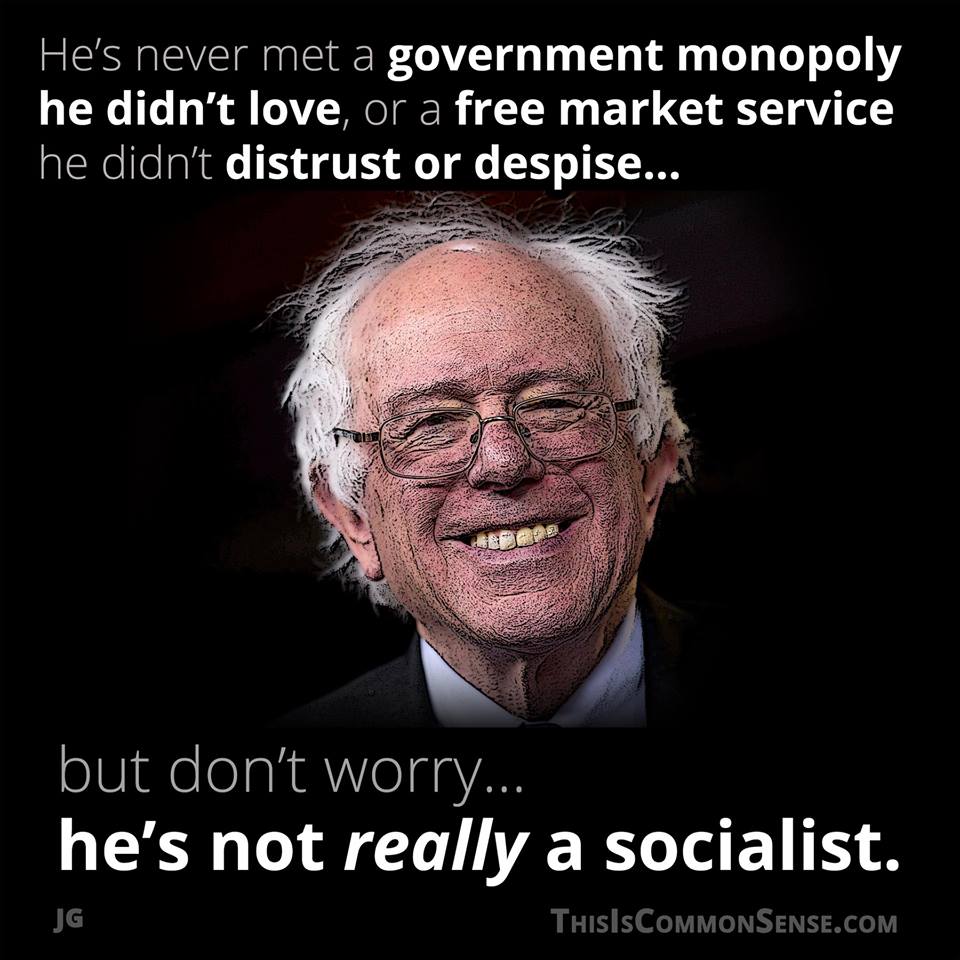
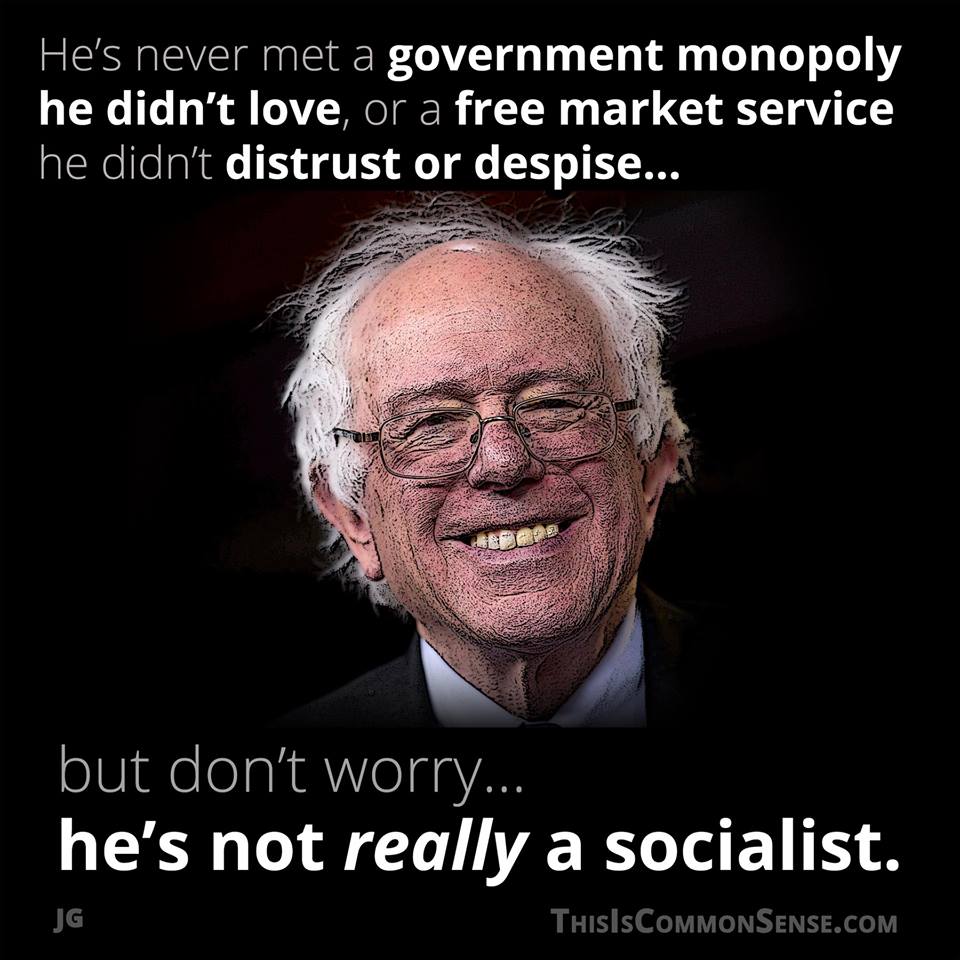
He’s never met a government monopoly he didn’t love, or a free market service he didn’t distrust or despise…
…but don’t worry, he’s not really a socialist!
Click below for a high resolution version of this image:
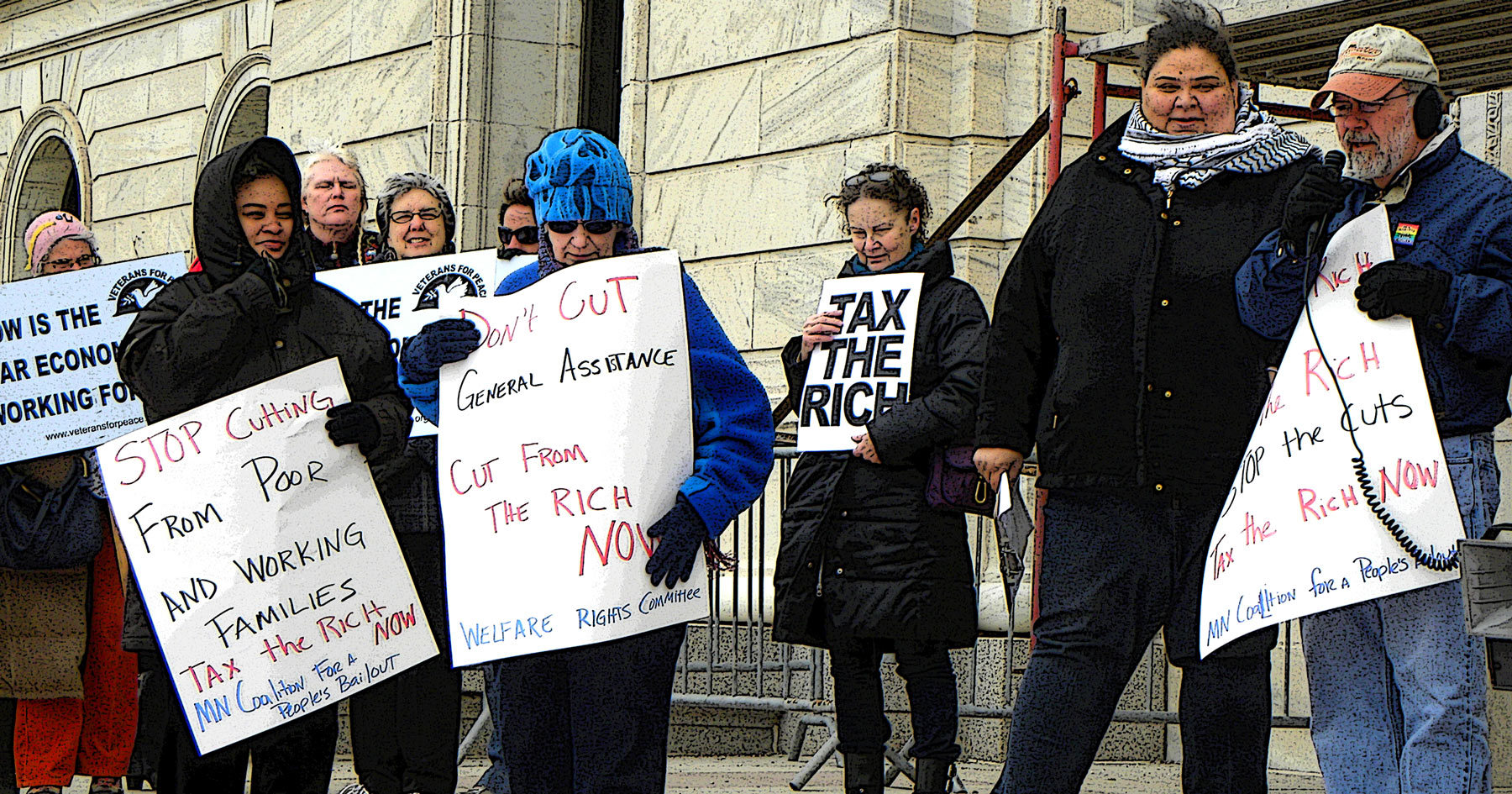
Bernie Sanders is worse than merely wrong about the rich not paying their fair share of taxes.
It’s we, the much-lauded “Ninety-nine Percenters,” who don’t pay enough!
At least, when we figure taxes paid against direct subsidies/services rendered: taxes minus transfers. And, according to the Congressional Budget Office, only the top quintile of income earners — including the much-abhorred One Percenters — pay appreciably more in taxes than they receive in “benefits.”
In a republic, you would expect the masses to pay taxes, receiving only indirect benefits, like a broadly defined “security” and “the rule of law.”
The calculation of who is and is not a net tax-payer or net tax-consumer has to be difficult. I certainly haven’t vetted the studies carefully. But previous accountings also show that the super-rich pay the bulk of income taxes in America.
How to put the system aright?
Don’t tax us more!
Bernie’s preference, to tax a whole lot more as well as to provide more subsidies and “benefits,” will only make a bigger mess.
Unfortunately, doing the right thing (cutting back on the giveaways at all levels) is politically . . . tricky.
But there’s something missing in all this: the indirect hazards of the “benefits” . . . the opportunity costs involved when we get hooked on hand-outs. The most trapped people in America are those who pay the least and take the most. The dollar-value of their received transfer payments measure neither their dependency nor their consequent lack of upward mobility.
How could we figure real harms and helps embedded in the current system, when some “benefits” are, in fact, detriments?
This is Common Sense. I’m Paul Jacob.
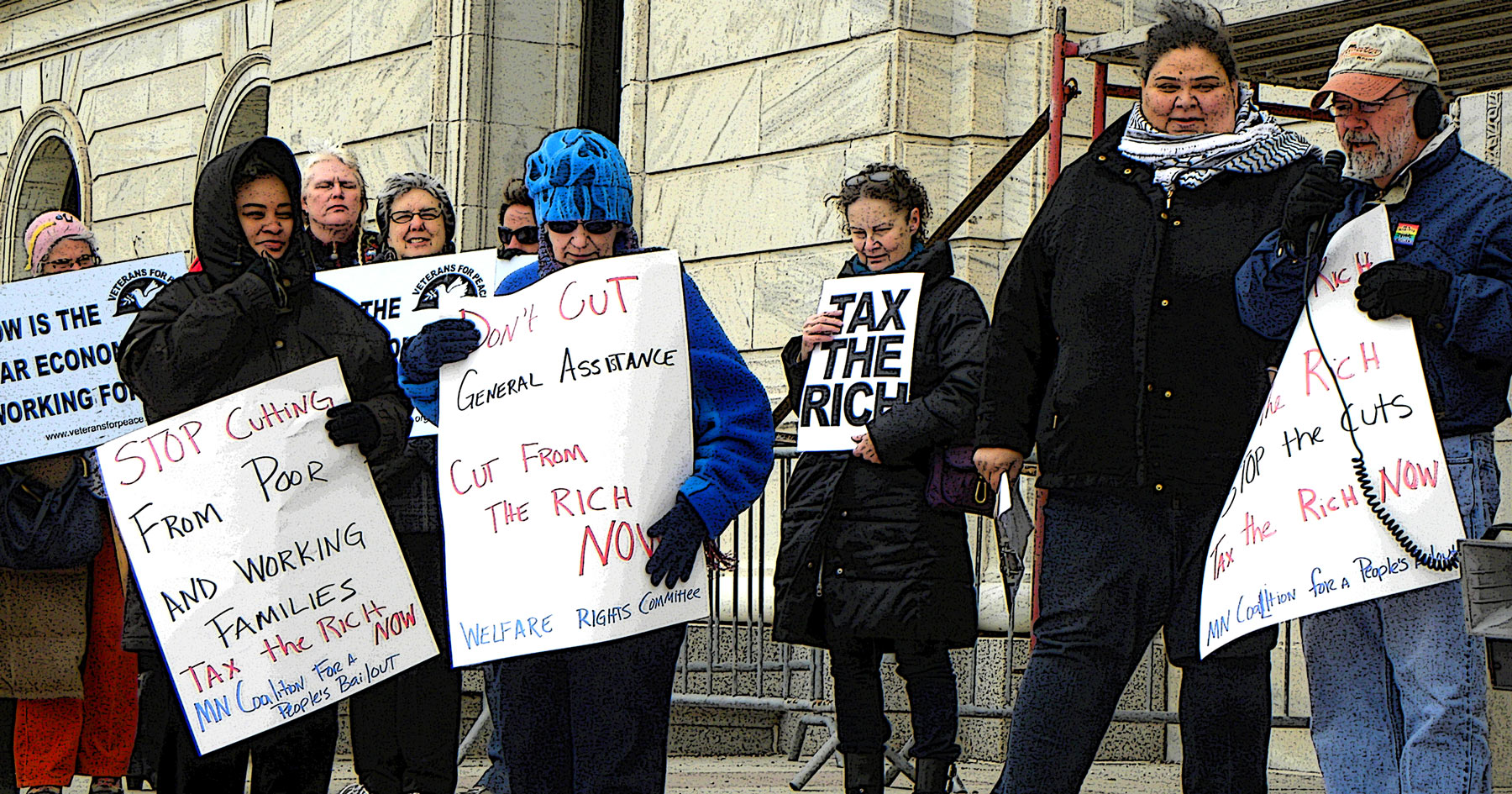

Both Germany and Japan now transfer money, on net, from the young to the old. Austria, Slovenia, and Hungary, The Economist reports, do the same.
The instrument of this transfer? Well, the elephant in the room: those nation’s entitlement programs — their versions of our “Social Security.”
John O. McGinnis, George C. Dix Professor in Constitutional Law at Northwestern University, explains how unnatural the direction of the transfer is. Normally, societies “give more to the young than the young can ever repay.” Remember the truism, “the children are our future”? Families, McGinnis explains, “exemplify this principle. Socially too, the intergenerational flow of resources is what creates civilization as each generation receives benefits from the previous one.”
Taking from the young to give to the old, on the other hand, is not just counter-intuitive. It stifles innovation, entrepreneurship, progress itself.
What drives the trend? It is complicated. But the politics behind redistributionist programs is the main culprit:
The elderly vote more than the young, who have more distractions, and politicians are thus all too eager to give them goodies. And while individually the elderly would like to direct more resources to their young relatives, when they act in politics they face a kind of tragedy of the commons. They cannot prevent others from living off the state, so they might as well do themselves.
As my generation, the infamous Baby Boom, retires, the demographics turn Social Security against society’s main purpose: building a future. The culture refocuses on retirement . . . preparing for death.
Another way — on top of growing debt and increasing regulatory burden — we’re leaving our kids with less than we had.
This is Common Sense. I’m Paul Jacob.


The presidential campaign officially begins in Iowa. The Hawkeye State is also the nation’s corn-growing champion. Each year, Iowans sell 47 percent of that crop to produce ethanol, which accounts for a not-insignificant 8 percent of the state’s gross product.
Ethanol has friends in Washington, too. Congressional wizards have mandated that the gasoline pumped into cars throughout the land be diluted with ethanol — talk about a market guarantee!
At National Review, Jeremy Carl explains that “energy-policy experts of all political stripes can agree . . . mandates and subsidies to promote the use of corn ethanol (a policy first implemented by Jimmy Carter) are wasteful boondoggles that harm our environment and food supply while imposing billions of dollars of hidden costs on consumers. However, most energy-policy experts are not running for president in the Iowa caucuses.”
In 2008, both Sen. Hillary Clinton and Sen. John McCain flip-flopped to support the ethanol subsidies they had previously opposed.
But, this year, Sen. Ted Cruz and Sen. Rand Paul haven’t pandered along.
When Cruz rose to first place in the polls, Gov. Terry Branstad attacked, arguing, “It would be a big mistake for Iowa to support [Cruz]” because “his anti-renewable fuel stand . . . will cost us jobs, and will further reduce farm income . . .”
Yesterday, Fox News Sunday host Chris Wallace asked Cruz, “Why should [Iowa] voters side with you over the six-term governor of this state?”
“I think there should be no mandates and no subsidies whatsoever,” Cruz replied.
In today’s Iowa caucus, can Cruz overcome the forces of crony corn?
This is Common Sense. I’m Paul Jacob.

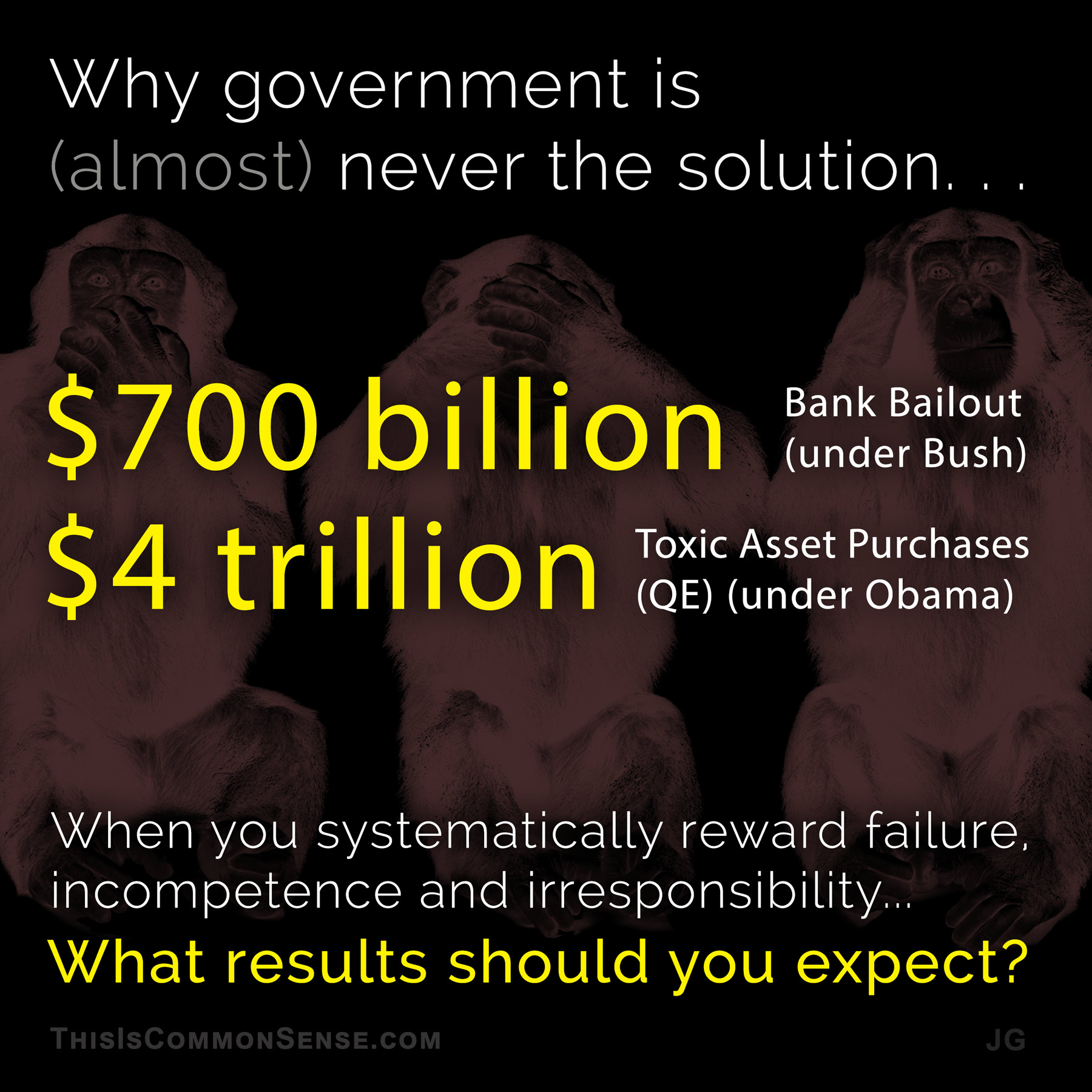
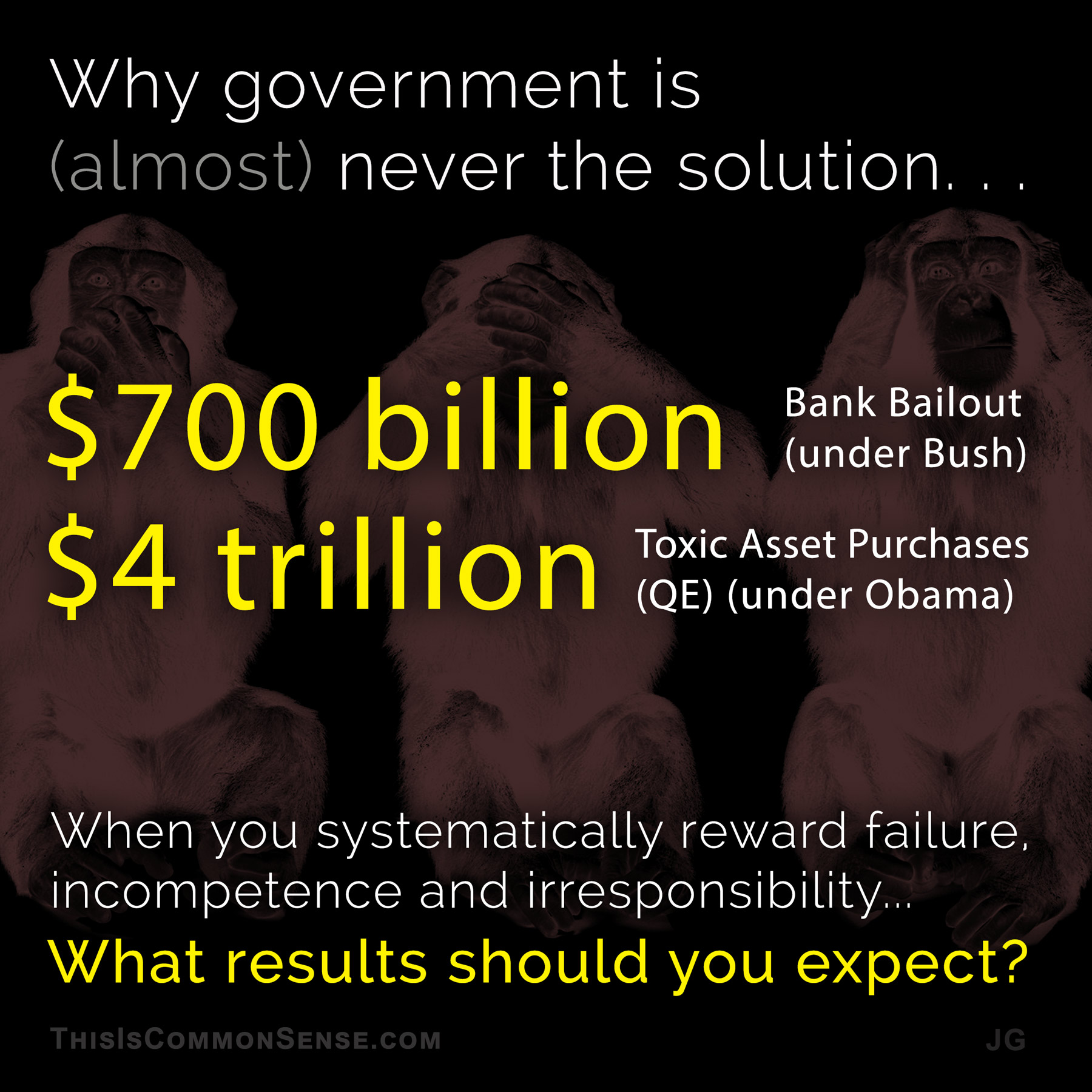
When you systematically reward failure, incompetence and irresponsibility…what results should you expect?
QE – Toxic Asset Government Purchases
Click below to get a high resolution version of this image:
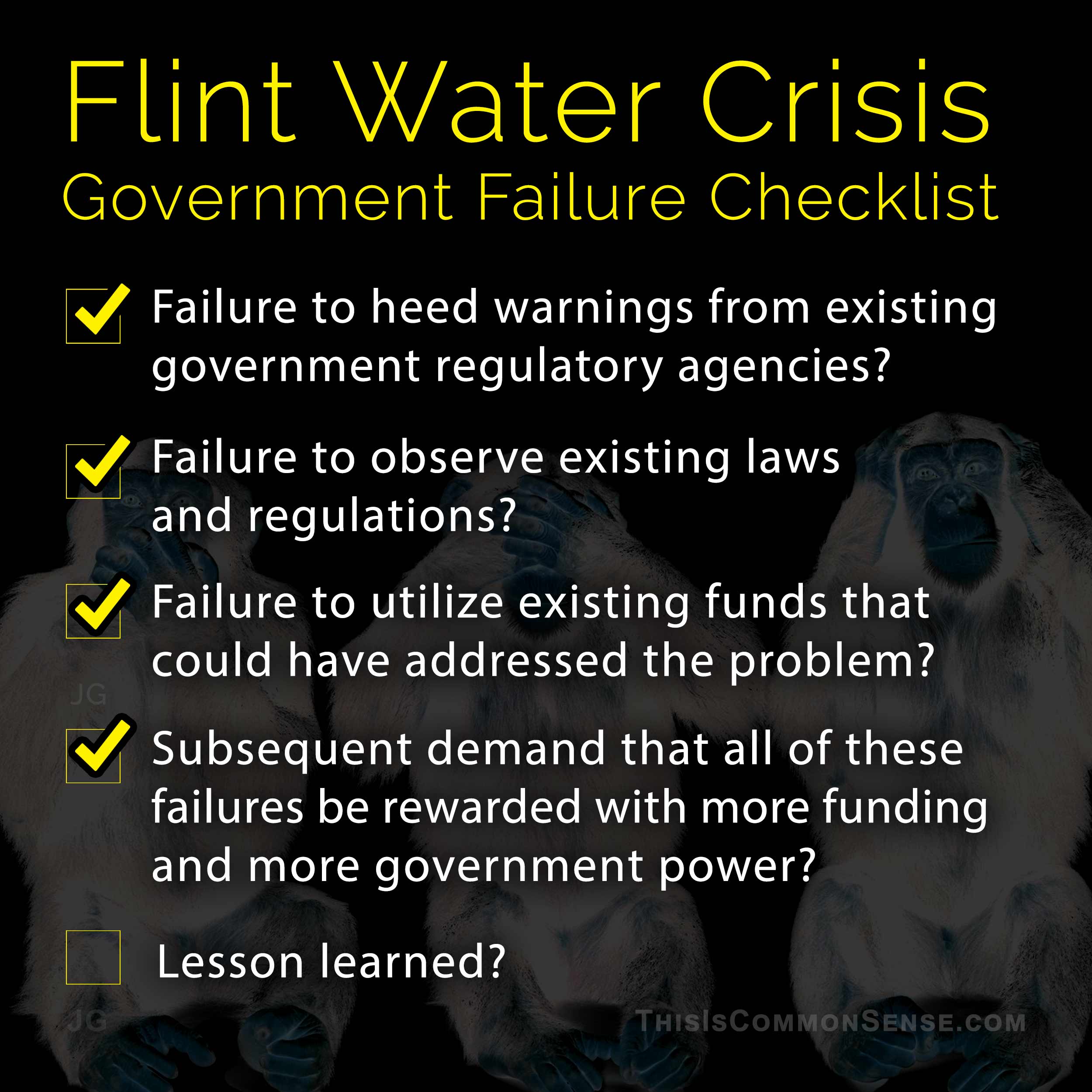
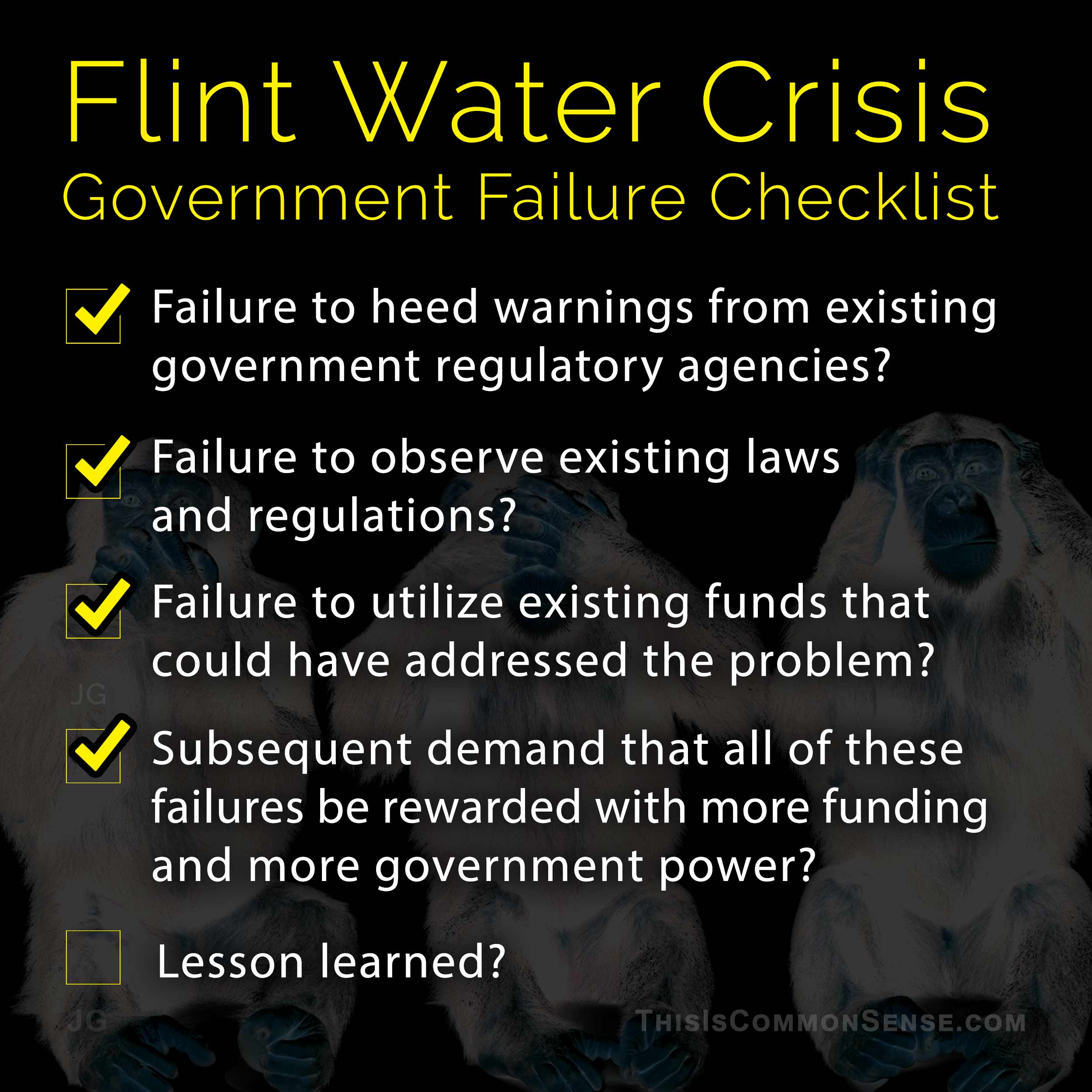
Government failure checklist. . .
Reference:
The Government Poisoned Flint’s Water—
So Stop Blaming Everyone Else
Flint’s water crisis isn’t a failure of austerity. It’s a failure of government.
Click below for high resolution version of this image.
People who spend other people’s money in Indiana are applauding their amazing ability to write big checks and hand them out.
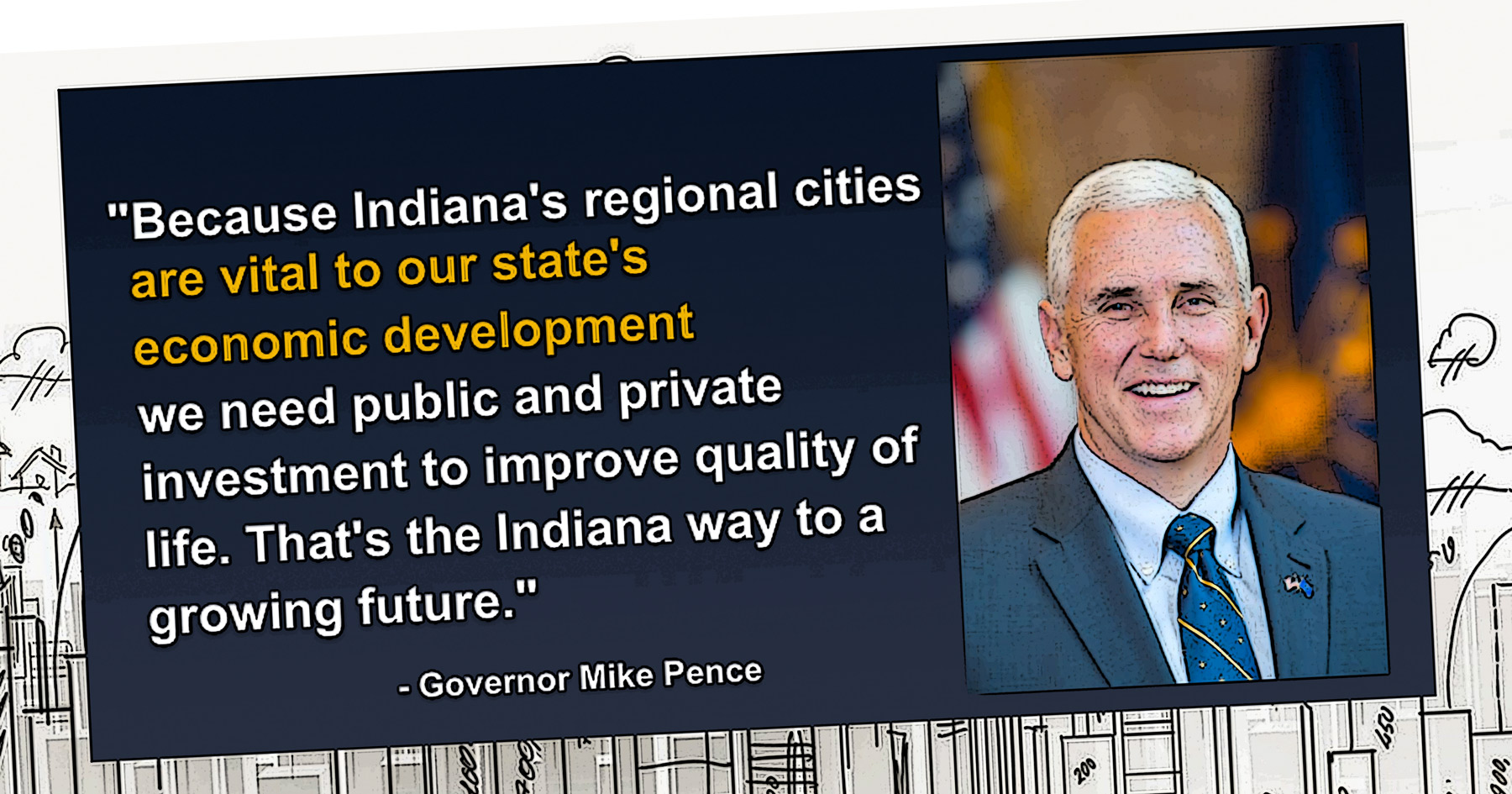
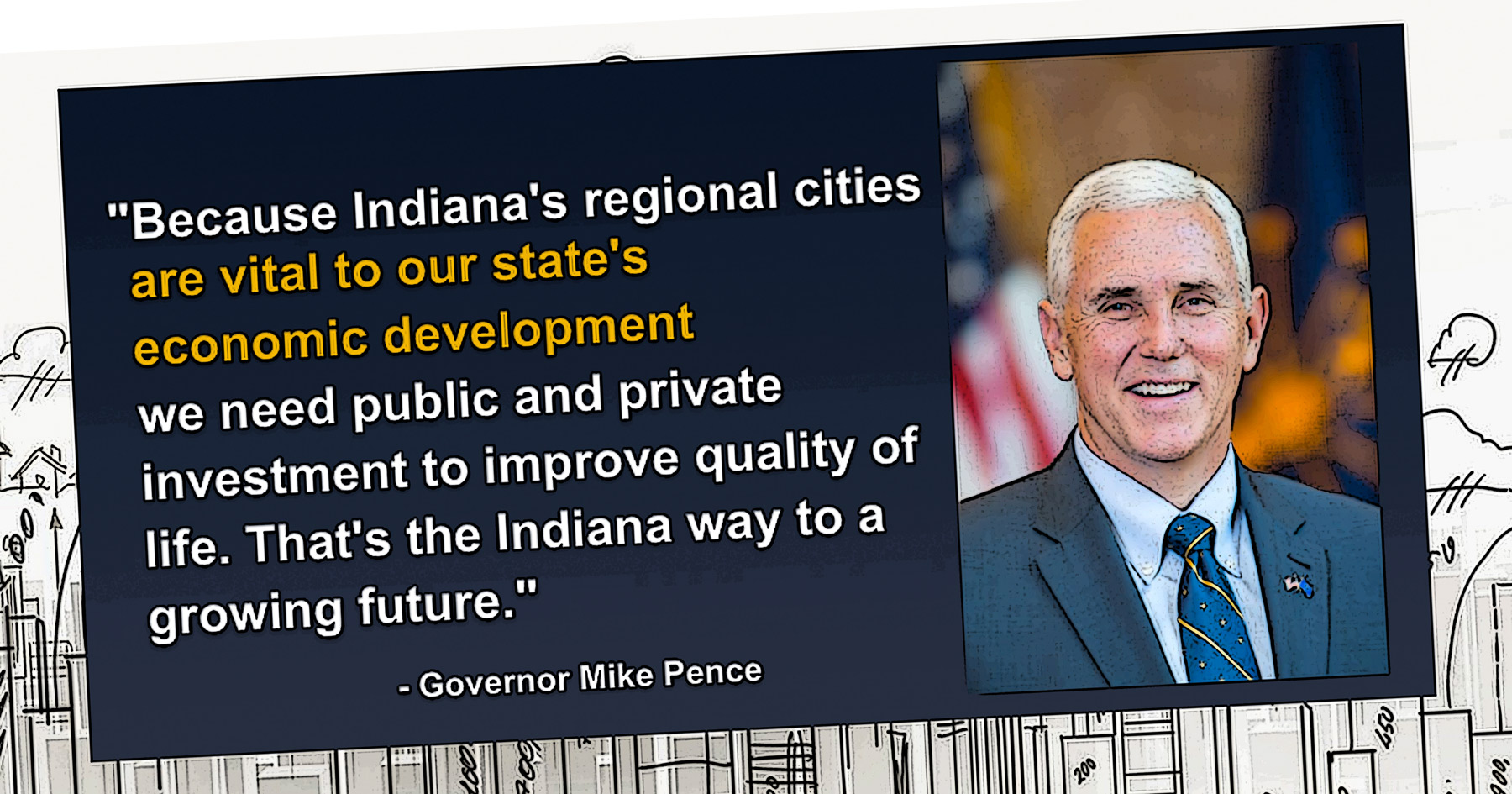
The Regional Cities initiative — enacted by the Republican legislature and heralded by the Republican governor — just awarded grants of $42 million of taxpayer dough to three of seven county consortia in the Hoosier State.
“This is big. This is a big deal in Indiana,” Gov. Mike Pence told reporters, “and I believe it’s part of a third century strategy for growth that will pay dividends for generations.”
Really? Government redistribution will fuel “growth” . . . and “pay dividends”?
The more-spending “strategy” is “geared toward quality of life projects ranging from economic development and job creation, to improved recreational and arts opportunities,” according to WNDU-TV in South Bend, adding that, “The Regional Cities Initiative is aimed at the younger generation and giving those people more reasons to love — than leave the state.”
Love it or leave it, eh?
“The public has been told that we have some sort of $42-million jackpot to spend on wonderful things,” explains Fort Wayne City Councilman Jason Arp in his Indiana Policy Review. “What hasn’t been made clear is that with the award comes [an] obligation not only to match that $42 million with taxpayer and private money but a separate eight-year commitment to a portfolio of $1.4 billion in projects. . . .”
In other words, it’s a classic government-spends-our-money-better-than-we-can program.
The Regional Development Authority will, in the end, “have discouraged actual entrepreneurship, innovation and free enterprise,” Arp explains. In their place? A “sort of unaccountable directorate.”
Growing ever bigger to better spend our hard-earned dough.
This is Common Sense. I’m Paul Jacob.
Bernie Sanders has risen in the polls. He may even beat Hillary Clinton in the first caucus and primary contests for the Democratic presidential nomination.
A cause for celebration! Witnessing a huge hunk of Americans accept Mrs. Clinton, the consummate and corrupt insider, is too disheartening.
Bernie Sanders, for all his faults, is at least not an insider like Hillary.
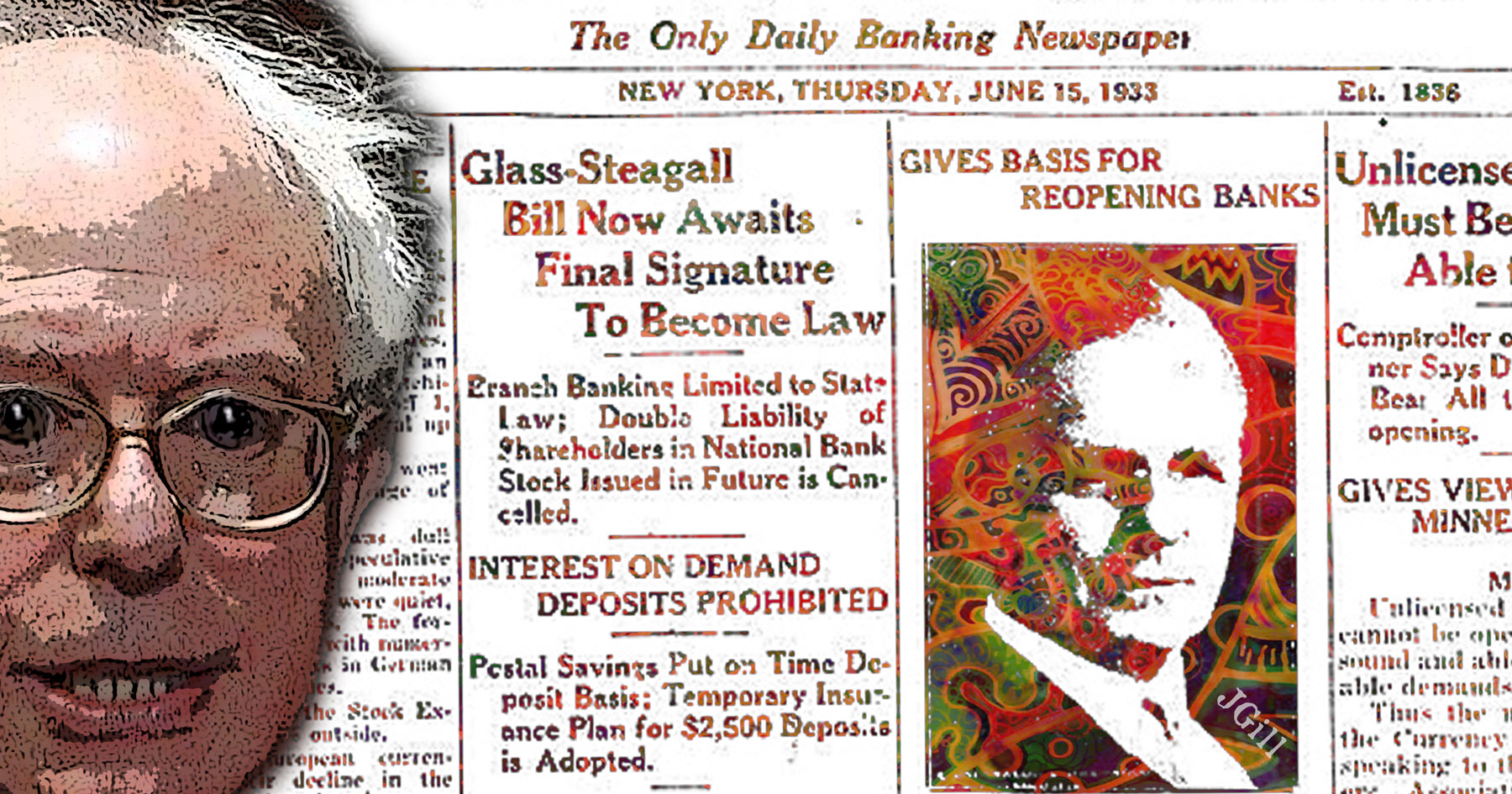
And even when he’s obviously wrong, he’s a breath of fresh atmosphere. Take his recent call for turning the credit ratings institutions into non-profits, or into government-run bureaus. It’s good to hear someone on the left blame something other than the partial repeal of Glass-Steagall as the cause of the Crash of 2008, and (thus?) of the current “Great Recession.” Glass-Steagall was utterly irrelevant to the institutions that were hit hardest in 2008’s collapse; it has, nevertheless, served as leftists’ idée fixe for years now. Embarrassing.
The ratings agencies, on the other hand, did play a part in the crash.
Still, remember: their prominence and importance (and very existence) in financial sectors rests entirely upon one provision of FDR’s New Deal.
More importantly, Bernie’s favored solution — government bureaus — is no solution at all. Europe’s ratings system failed in 2008, too, as Mark A. Calabria has noted, and “it was the international financial regulators, not the rating agencies, who decided that Greek debt was ‘risk-free.’”
Earth to Bernie: government regulatory failure is normal.
Calabria agrees that we need to have a political conversation about the ratings agencies, but insists it be “based on facts,” not ideology.
I’m all for the facts, but ideologies are inevitable. And ideologies promoting Big Government inevitably fail.
This is Common Sense. I’m Paul Jacob.