Categories
Accountability general freedom media and media people moral hazard nannyism national politics & policies porkbarrel politics responsibility too much government U.S. Constitution

A Good Tragedy Not Wasted

No matter how “not as bad as we feared” President Donald Trump may be appearing, as we close out the year let’s remember why some of us did not trust him in the first place: his knee-jerk reactions are too often witlessly statist.

The speeding Amtrak train that derailed over I-5 in Washington State on Monday was a horror show, sure. And we have come to expect the President — any President, either party, all administrations — to provide words of comfort after such events. Trump conformed to expectations.

And, admittedly, his initial Tweet was all very proper. But his verbal response was . . . very . . . Old School. After mentioning the federal government’s role in handling the tragedy — “monitoring” and “coordinating with local authorities” — he used the event as an excuse to expound upon the idea that the event provides “all the more reason why we must start immediately fixing the infrastructure of the United States.”

This is bad, old-fashioned policy opportunism. The worst time to cook up “solutions” is right after a tragedy. That’s when emotions are highest and reason is lowest.

More importantly, the train was going through its initial run over newly upgraded infrastructure!

One could more reasonably surmise that the recent infrastructure upgrade was the cause of the derailment — though, let us be honest, it looks like the train was way above the stretch’s speed limit.

Note to Donald Trump: just because there’s a microphone in front of you doesn’t mean you are required to “make a point.” That’s not the President’s job.

Mister, we could use a man like . . . Calvin Coolidge again.

This is Common Sense. I’m Paul Jacob.


PDF for printing


Categories
Accountability crime and punishment education and schooling folly general freedom moral hazard nannyism national politics & policies too much government

Leave Them Kids Alone

This just in: oblivious little boys still play cops and robbers.

Just as in days of old.

Wait. Hold on. Breathe. Just breathe. This sociological fact doesn’t mean that we’re a nation of incipient international terrorists but for the galumphing grace of grumpy zero-tolerant schoolmasters.

Common sense says you don’t suspend toddlers from school for wiggling their fingers as if wielding a gun, or for sculpting a “gun” out of a slice of Wonder Bread or Freihofer’s. Yet evidence continues to mount that all too many teachers and administrators are immune to considerations of reasonableness when it comes to kids who misbehave. (Or “misbehave.”)

Such enemies of childhood innocence must be hindered. So let’s give two and a half cheers to Ohio lawmaker Peggy Lehner, who proposes to legislate an end in her state to suspending children in the third grade or younger who aren’t threatening anybody. (I’m not sure why kids in grades later than third can’t catch the same break.)

A new, probably imperfect government regulation is not the only way to counter blunderbuss government-school policies. The most fundamental alternative is the free market.

Ideally, no public-school monopoly plagued by mandatory insane rules would exist. Ideally, all K-12 (and university) educational offerings would be provided by an unregulated market economy, making it much easier for families to drop insane schools and patronize sane ones. The pressures of market competition would encourage school officials to become students of common sense.

We are not there yet.

This is Common Sense. I’m Paul Jacob.


PDF for printing


Categories
Accountability general freedom moral hazard national politics & policies responsibility

The Online Manipulation of Democracy

There exist many sneaky ways to get other people to do what you want, voluntarily — effectively blurring the line between legitimate persuasion and fraud.

When large, almost unavoidable private companies apply those techniques to targeted groups of voters, that blur might look something very much like election fraud.

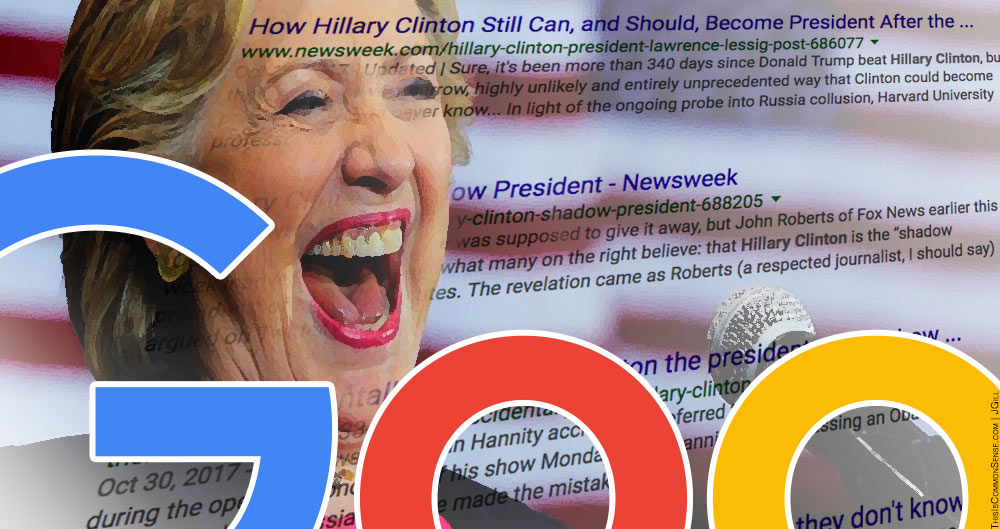
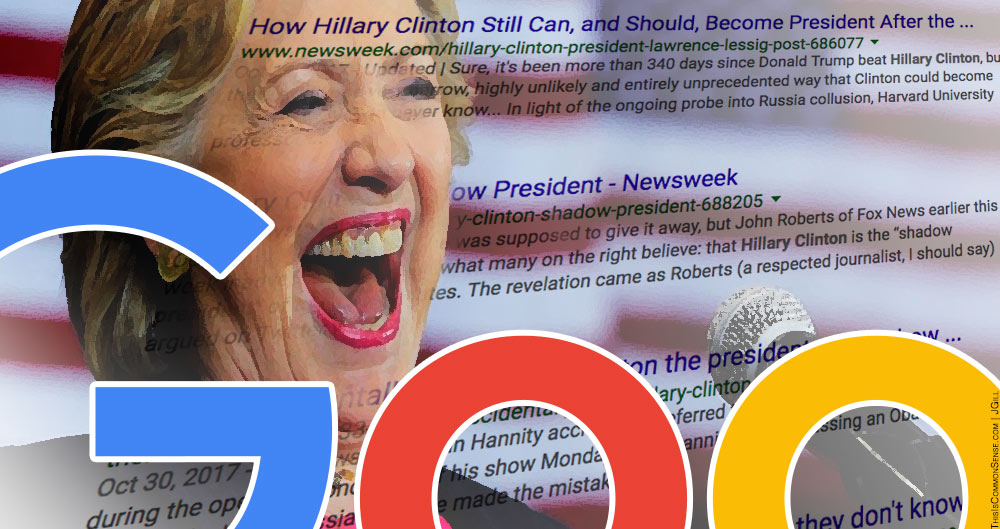
Harvard psychologist Dr. Robert Epstein has been studying hidden online persuasion techniques. Interviewed by Tom Woods last Friday, the doctor explained several sub rosa persuasion techniques, especially the fascinating Search Engine Manipulation Effect (SEME), which he says has been replicated in studies by other researchers. 

SEME, he argues, is a “genuinely new” way to manipulate masses of people — without them realizing it.

And it sports “one of the largest effects ever to be discovered in the behavioral sciences.” Google, it turns out, can influence voter and consumer behavior merely by ordering search results in specific ways. Going into his first study, he suspected he might discover a 2 percent influence on voter behavior. He got 48 percent, instead.

There is more: not only can Google do this, the behemoth does do this — Epstein has documented that Google did it in the last election. 

Supporting, or to the benefit of, Hillary Clinton.

Understandably, Epstein scoffs at the “fake news” panic as something insubstantial in comparison. The potential impact of this online manipulation dwarfs the allegations of Russian influence.

I wonder: Did Mrs. Clinton know that her very special high-tech friends were pressing their very big thumbs onto the scale of democracy?

It seems a very old tech — the Electoral College — effectively counteracted the manipulation.

This time.

This is Common Sense. I’m Paul Jacob.


PDF for printing

Categories
crime and punishment First Amendment rights general freedom government transparency ideological culture media and media people moral hazard nannyism national politics & policies too much government

No Joking Matter

He thought he was just horsing around.

Using the popular app WeChat, a Chinese construction worker supervisor Chen Sho Uli made a gossipy joke about government officials while chatting in a chat group. But being too casual about what you say — and where — can be dangerous in China. For his sin Chen was incarcerated for several days.

Picking quarrels” is another no-no in the country.

In lieu of Orwell’s telescreen in every room, modern Internet technology enables repressive governments to punish citizens for thoughtcrime that becomes app-speech crime. If the Chinese government can spy on you, it will. And penalize you for remarks it deems offensive to the dignity of the state.

Because of such repression, blogger Stephen Green observes that “strong encryption is everybody’s friend — except the tyrant’s.”

Agreed. Encryption is an important line of defense.

But some societies require this more than others, because harmless, incidental communications are not equally attacked by government, from country to country. Which means that encryption is actually a second line of defense.

The first is a cultural and political tradition respecting individual rights.

For one thing, robust encryption helps only those who engage in hyper-careful private discourse, or hyper-careful anonymous public discourse. Encryption won’t help thinkers of controversial thoughts who wish to express those thoughts publicly and under their own name. Everywhere we can, then, we must strengthen both the technological and cultural defenses of open discourse — recognizing that the latter is the more crucial and fundamental.

This is Common Sense. I’m Paul Jacob.

PDF for printing


Categories
education and schooling folly general freedom ideological culture moral hazard nannyism responsibility

The Common School Agenda

The rise of campus radicalism, write Heather Heying and Bret Weinstein in the “Washington Examiner, appears to “validate every fantasy the Right ever had about the Left.”*

Heying and Weinstein, who have resigned their positions at Washington State’s public liberal arts college, Evergreen, detail what went wrong at the college they “loved.”

A sociologist was hired as college president, and he systematically bred an activist movement reminiscent of the Cultural Revolution. That’s how our two extremely popular professors found themselves defending free speech and non-compliance against angry crowds of students spurred on by college administrators and “equity” officers.

Heying and Weinstein plausibly assert that these protests arise directly from the “‘equity and inclusion’ movement, cloaked in words that sound benevolent and honorable” but serve as little more than “a bludgeon.” And definitely “not like protests many readers will remember from their own college days.”

But are they really that surprising?

Government-run and -funded education hit these United States in a big way with the 19th century’s Common School movement. And not primarily to ensure “proper education.” The rationale was political . . . to more-than-nudge immigrant children to assimilate to our republican way of life.

The political element from our schools never left — and became more Left with each and every “revolution” in educational methods, and each increase in government involvement.

So, does training students to become violent mob activists bent on suppressing ideas they don’t approve of seem out of place?

It certainly is expensive. In more than one way.

This is Common Sense. I’m Paul Jacob.
 

* And note that this piece did not appear in the left-of-center Washington Post — echoing the hesitance the mainstream and leftstream press have shown towards Bret Weinstein’s story in the first place.


PDF for printing


Categories
Accountability folly general freedom local leaders media and media people moral hazard national politics & policies responsibility

Another Election “Against”

As I write, Democratic candidate Doug Jones has just taken the stage to declare himself the winner of the Alabama Senate race, the one in which Roy Moore became more infamous than famous, and better known for the worst kind of reasons.

The final counts are not in, and I suppose there could be a turnaround at the last moment, but it doesn’t look like it. It looks like Republicans lost the seat. Hillary Clinton is already crowing that this is a sign of more Democratic victories to come.

Maybe.

Too soon to tell.

Meanwhile, what to make of it all? Jones has declared that “This entire race has been about dignity and respect. This campaign has been about the rule of law.” And I am not certain that is a good description. It seemed to me what the campaign turned into was a referendum on whether voting for a man accused of sexual assault and statutory rape was a good idea.

There were also Republicans thankful that Moore lost. “Decency wins” is what Senator Jeff Flake tweeted; “Suck it, Bannon,” is Meghan McCain’s eloquent taunt. (Steve Bannon had backed Moore.) Reason’s Scott Shackford probably put it best, writing that “Polls have closed in Alabama as voters there decide between controversial former judge Roy Moore and … um … not Roy Moore.”

The modern American political process is now firmly a matter of reiterating this pattern: voting against more than for.

A horrible development? Well, there sure is a lot more to be against in American politics, than for.

This is Common Sense. I’m Paul Jacob.


PDF for printing


Categories
general freedom incumbents local leaders moral hazard national politics & policies responsibility too much government

Democracy — or Too Much Government?

The Democratic Party’s Unity Reform Commission met last week to concoct measures to pull the party from the brink of madness and oblivion.

The commission’s main recommendation? Limit the role of “superdelegates” in the nomination process.

Great — a first step I’ve long advocated. But the whole system needs more serious reform.

Jay Cost covered some of the problems associated with the parties’ candidate selection processes, yesterday, in the online pages of the National Review. Unfortunately, he went off the rails about an alleged “trend toward an unadulterated democratic nomination process,” which he regarded as a “major mistake.”

He misdiagnosed both the problem and the Democrats’ proposed cure. Neither is “too much democracy.”

America’s partisan voters keep selecting bad candidates because the major party duopoly is a rigged game — designed and regulated by incumbents for incumbents to solidify a protected class of insiders.

Which voters understandably seek to overthrow on a regular basis.

The problem is the whole primary process, which is faux-democratic, a clever ruse to prevent real challengers from emerging, forcing effective politicians through the two-party mill.

To make things more democratic — to add effective citizen checks on power and privilege — the parties need to be completely divorced from official elections. That is, junk the whole primary system, making the parties bear fully the costs of their own selection processes. Further, the general elections should be thrown open to a wider variety of parties and candidates, with the voting system itself reformed to avoid the sub-optimal results of our first-past-the-post system.

The problem with our politics isn’t “too much democracy” so much as “too much partisan government.”

This is Common Sense. I’m Paul Jacob.


PDF for printing


Categories
Accountability crime and punishment government transparency moral hazard national politics & policies

New Standards?

This is a country trying to establish, and certainly a U.S. Senate trying to establish new standards for acceptable behavior,” Peggy Noonan told her fellow panelists on Meet the Press yesterday.

She is at least half mistaken.

Groping a woman who is stuck posing for a photo with you at the state fair, as Sen. Al Franken (D-Minn.) was accused, has never, ever been publicly viewed as “okay” or “nice work if you can get it.” And believe-it-or-not, Americans are not ambivalent about the propriety of Congressman John Conyers (D-Mich.) taking meetings in his underwear. Nor do folks find it fathomable that members of Congress such as Rep. Blake Farenthold (R-Tex.) paid off their accusers with our tax dollars.

The standard has always been that such behavior is 100-percent wrong. And yet Ms. Noonan is correct to suggest a new official standard for . . . both houses of Congress.*

But in a recent video for Breitbart, actor Jackie Mason mocks the idea of sexual harassment training. “When you’re three years old, you learn how to behave with people. You learn how to control yourself,” Mason rants. “Now Congressmen, who are 67 years old and 98 years old, are being told they have to take training at this age to learn how to behave with women.”

We see that, in media, in Hollywood, in Silicon Valley and among the corporate elite, credible allegations of sexual abuse are met with swift action: firings, dismissals, contracts voided. Out!

Our “representatives” should be ashamed not merely of their loathsome colleagues, but of being “out-democracied” by corporate America.

This is Common Sense. I’m Paul Jacob. 

 

* The current House system protects powerful politicians and staffers with secrecy and even uses taxpayer money to pay off victims.


PDF for printing


Categories
crime and punishment First Amendment rights general freedom moral hazard property rights too much government

A Cakewalk Case?

The Justices seem split — on the “gay cake” case.

A Christian baker had no trouble selling a gay couple a pre-made cake, out of his showcase, but balked at selling a custom wedding cake of any kind. According to NPR’s Nina Totenberg, the couple understood that requesting a “gay” themed cake would go too far. But the baker’s refusal to decorate any wedding cake seemed unacceptable.

In Colorado, where the cake didn’t get made, there is a public accommodations law that says businesses must serve all customers regardless of race, religion, or sexual orientation. So Colorado went after the baker, the baker hired a lawyer, and Masterpiece Cakeshop v. Colorado Civil Rights Commission was heard by the Supreme Court this week.

Commonly billed as a conflict between First Amendment-guaranteed religious freedom* and the civil rights of citizens as defined and protected by a state law, it almost defies easy solution.

One could argue that the First Amendment right to freely associate (including the right not to associate) should extend to business. But that goes against legislation built up since the 1964 Civil Rights Act, which in many places ended an often violent racial segregation** no one wants back. However, a custom-made wedding cake is also expressive and therefore speech.

One could decide for Colorado on federalist grounds. And the late Justice Antonin Scalia, Ms. Totenberg tells us, argued that a general law not directed at a religion does not allow a specifically religious defense.

But one defense of the baker may work. The Colorado Civil Rights Commission has not applied its rulings equally. It sided with non-Christian bakers who refused to make cakes for Christians requesting Bible-verse cakes.

And that “takes the cake.”

This is Common Sense. I’m Paul Jacob


* In this regard, Justice Kennedy stated from the bench that it seemed to him “that the state in its position here has been neither tolerant nor respectful of Mr. Phillips’ religious beliefs.” Kennedy will likely be the swing vote.

** No small amount of this violence, segregation and discrimination was coerced by state laws in defiance of the Fourteenth Amendment and the Bill of Rights.


PDF for printing


Categories
folly free trade & free markets general freedom moral hazard nannyism national politics & policies property rights responsibility too much government

What’s the Big Deal?

Big news: in a $69 billion deal, CVS Health Corp. plans to buy Aetna Inc. The AP story by James F. Peltz says the move “would shake up healthcare industry.”

Should we worry?

Because corporations aren’t cancerous, growth and consolidation are not to be feared as such.

But speaking of cancerous growths . . . the federal government will not likely take the news of the merger with the tranquility of a Taoist sage.

Over at Forbes, last month, Bruce Japsen predicted that the deal wouldn’t go through, arguing that “a full-blown merger of the healthcare giants would be complicated and unlikely given recent antitrust scrutiny in the sector and given that the drugstore chain is already going into business with an Aetna rival, Anthem.”

Government antitrust to the rescue?

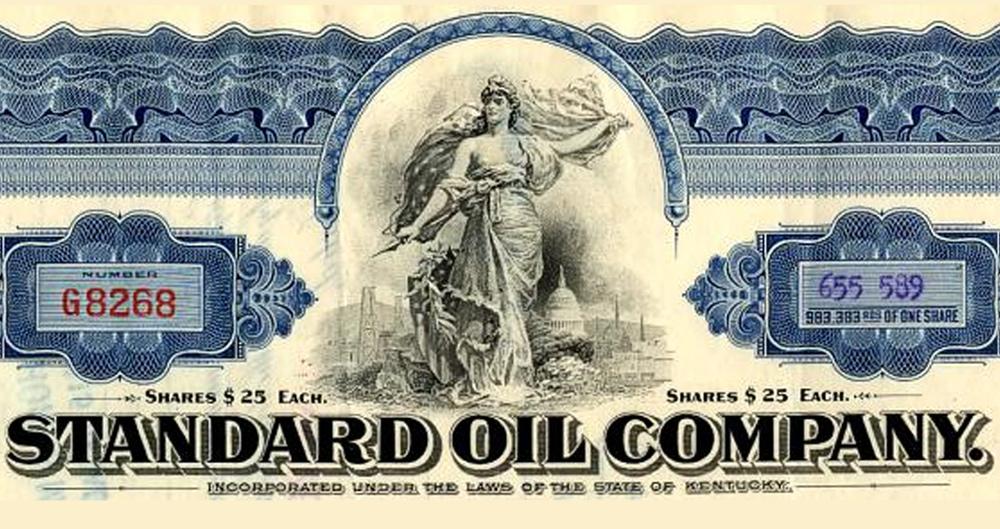
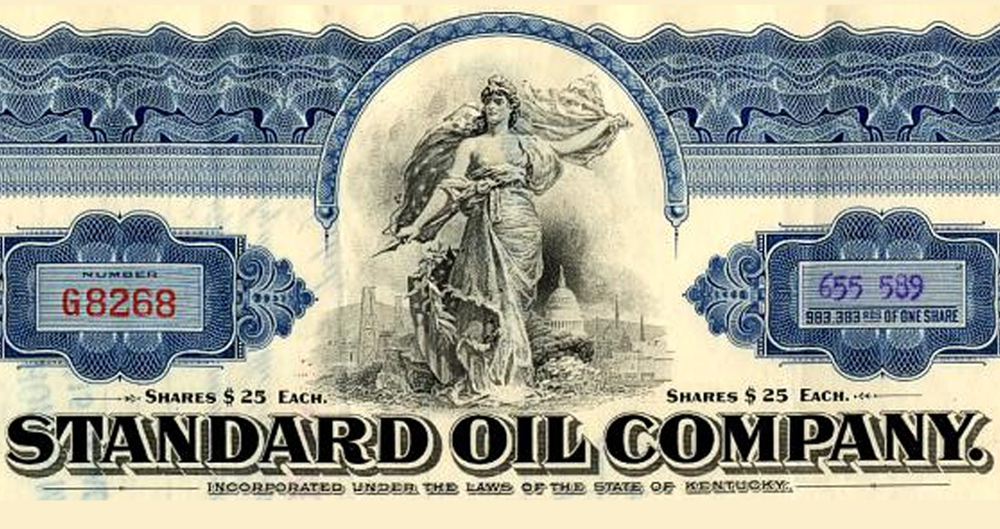
No. We may have been schooled to believe that antitrust “protects competition,” but it has always limited competition, instead. Antitrust was always about fear — of bigness. It was definitely not designed to help consumers. The classic case is the infamous break-up of Standard Oil, which produced more fuel while lowering prices — even as it grew humongous.* Standard Oil grew because it satisfied consumer demand. Which is what businesses are for.

And yet government broke it to pieces, using antitrust rationales, for the benefit of some producers, some businesses.

Think of it as crony capitalism in action.

So, my remaining question runs like this: is the CVS/Aetna merger a response to pure market demand, or as a way to wiggle around insane state and federal regulations?

Health care in America is sick. The merger is not likely the cure. But it would not kill the patient.

We have government for that.

This is Common Sense. I’m Paul Jacob.

 

* For background, consult the studies of economist Dominick T. Armentano.


PDF for printing