Categories
Accountability crime and punishment folly general freedom ideological culture media and media people moral hazard national politics & policies Popular

Yesterday’s NOW

Once upon a time, the National Organization for Women winked to President Bill Clinton and scorned his accusers Paula Jones, Juanita Broaddrick, and others. This all came back to me while discussing powerful men sexually harassing and assaulting women, at Townhall yesterday.

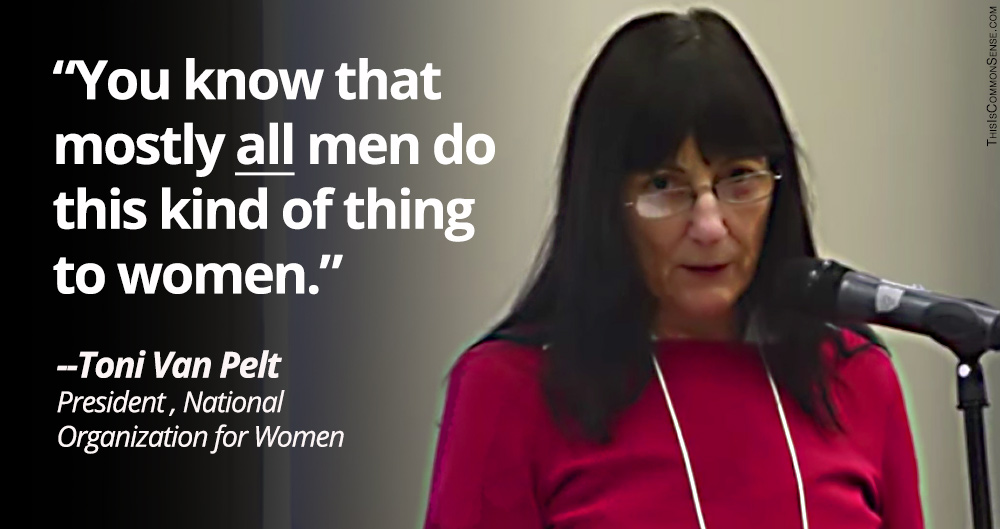
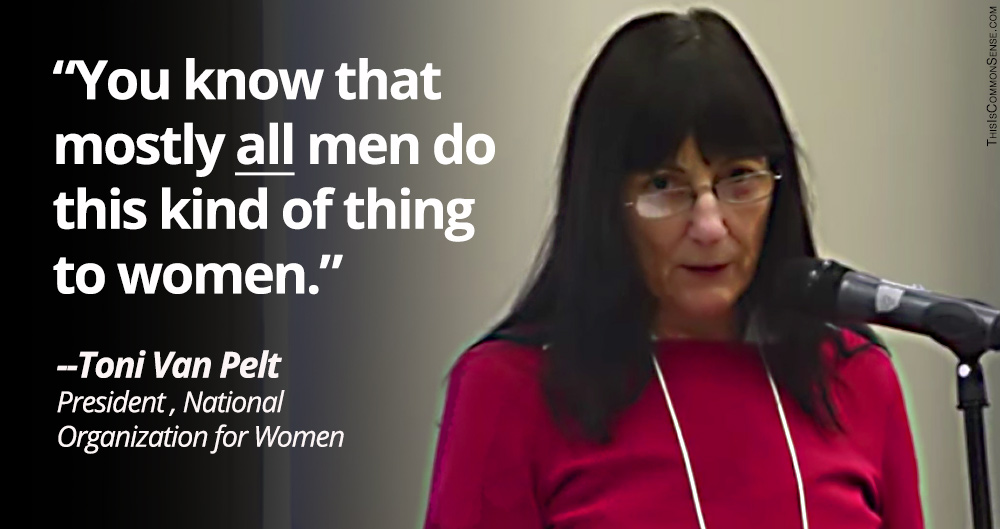
NOW’s current president, Toni Van Pelt, spoke with the Washington Examiner regarding recent allegations against liberal Sen. Al Franken (D-Minn.). Not to be outdone by the group’s partisan or pusillanimous past (take your pick), Van Pelt offered, “We could ask all of the men in Congress to resign, is that what you’re asking me?”

She added, going all in, “You know that mostly all men do this kind of thing to women. It’s like saying there’s a good airline or a good bank, saying there’s some entity out there that is not sexist.”

Say what?

“That’s gender bias and stereotyping of the most egregious kind,” writes ethicist Jack Marshall at his Ethics Alarms blog. “I just expect the champions of equality, fairness, mutual respect and civility to believe in and live by the principles they claim so indignantly and self-righteously to be fighting for.”

And not scapegoat all men.

Yet NOW’s Madame Defarge declares: “They all should resign, every man in every industry.”

Marshall knows how to categorize such talk: “Under the definition of ‘hate group’ used by the Southern Poverty Law Center — ‘any group with beliefs or practices that attack or malign an entire class of people’ — Toni Van Pelt, speaking on behalf of her organization, has demonstrated that the National Organization for Women belongs on its list.”

Blaming an entire sex, while excusing the actual abusers . . . should end NOW.

This is Common Sense. I’m Paul Jacob.

PDF for printing


Categories
Accountability crime and punishment insider corruption media and media people moral hazard national politics & policies responsibility too much government

Congress Bites Taxpayers

Is it even humanly possible to be sleazier and more disgusting than the Harvey Weinsteins of Hollywood?

Sadly, and clearly . . . yes. There is the U.S. Congress.

In 2011, after 175 years in operation, the House page program — whereby young people came to work and learn in the capitol — was shut down. Why? For Weinsteinian reasons, because pages were being sexually propositioned and harassed.*

Now, once again, Congress leads the way . . . downward . . . not only into a culture rife with sexual coercion, but also into one with few options for victims and plenty of protections for victimizers. Members of Congress have given more effort to keep complaints quiet and protect misbehavior than to stop misbehaving.

And there’s more . . .

“Between 1997 and 2014,” the Washington Post reports, “the U.S. Treasury has paid $15.2 million in 235 awards and settlements for Capitol Hill workplace violations, according to the congressional Office of Compliance.” That’s shelling out nearly $1 million a year, though the information doesn’t detail how many complaints were for sexual misconduct.

It is despicable when individuals or companies pay hush money to silence accusers, hiding the criminal sexual behavior of powerful men. But, for goodness sake, at least we don’t have to pay for it!

Conversely, Congress’s sexual abuse slush fund comes from you and me, taxpayers.  

Regarding the swirling allegations against Alabama GOP Senate candidate Roy Moore, Sen. Cory Gardner (R-Colo.) argued that Moore “does not meet the ethical and moral requirements of the United States Senate.”

Well, then, he will fit right in.

This is Common Sense. I’m Paul Jacob.
 

* The program ended several years after the Mark Foley scandal — and there were others. The official rationale? A tight budget (stop laughing) and technology, which purportedly made the work pages were doing unnecessary. But note that the Senate continues its use of pages.


PDF for printing


Categories
Accountability folly free trade & free markets general freedom ideological culture media and media people national politics & policies responsibility

Coffee in the Age of Covfefe

You might think that that coffee could not be spoiled by today’s politics, but, well, consider the Keurig line of coffee-related products. I’m a Starbucks man, myself, but one of the great things about capitalism is that I can have my tall (or grande) latte and you can have your home-brewed Keurig cup of java.

Enter Media Matters.

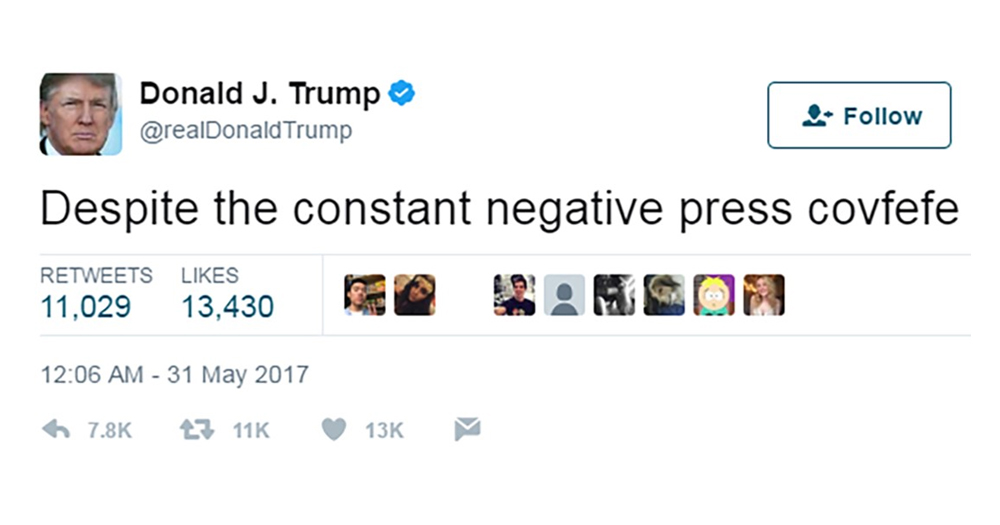
You might think of the outfit as the subject of President Trump’s enigmatic tweet of several months back . . .

. . . which is all he wrote.

He obviously meant “negative press coverage,” but got distracted. And the typo took on a life of its own.

But Media Matters, a dirty player in the politico-cultural wars (pretending to be a watch dog outfit), stepped in. One of Media Matter’s negative employees tweeted

Good afternoon @Keurig. You are currently sponsoring Sean Hannity’s show. He defends child molester Roy Moore and attacks women who speak out against sexual harassment. Please reconsider.

And Keurig capitulated, pulling their ads from Hannity’s show.

Now, as far as I can tell*, Sean Hannity did not defend “child molester Roy Moore.” Understandably, Hannity’s fans struck back, not only initiating a public boycott, but made the whole thing viral by trashing the Keurig coffee makers in online videos.

This is the result of going full Alinsky.**

And there appears to be a clear bad guy here, clearer even than Roy Moore’s alleged crimes: Media Matters lied to squash Hannity for reasons having nothing to do with the Alabama Senatorial race.

Media Matters embodies “covfefe.” And the negativity has spilled out of politics and into the beauty of everyday life. Coffee.

This is Common Sense. I’m Paul Jacob.
 

* The YouTube recording of Hannity’s interview of Judge Moore that I listened to has been pulled, so there’s no point in linking to it. Instead, consider Ben Shapiro’s take and other non-covfefe at The Daily Wire.

** Never go full Alinsky.


PDF for printing


Categories
general freedom ideological culture media and media people moral hazard national politics & policies too much government

To Anachronism in Heaven

Symbols sure seem important in politics and government. I love the Statue of Liberty. Others may cherish the Lincoln Memorial and Mount Rushmore more. I’ve even heard people wax poetic on the images we find on our coinage.

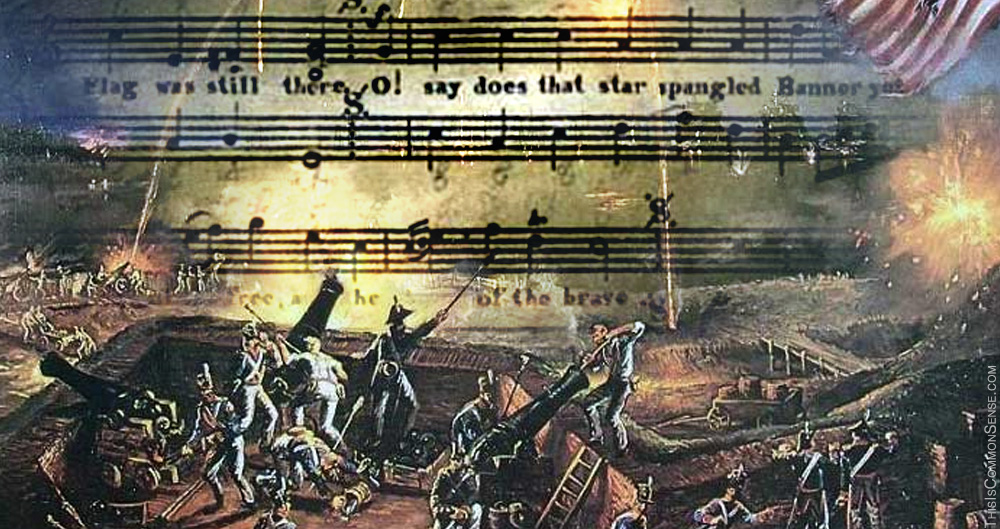
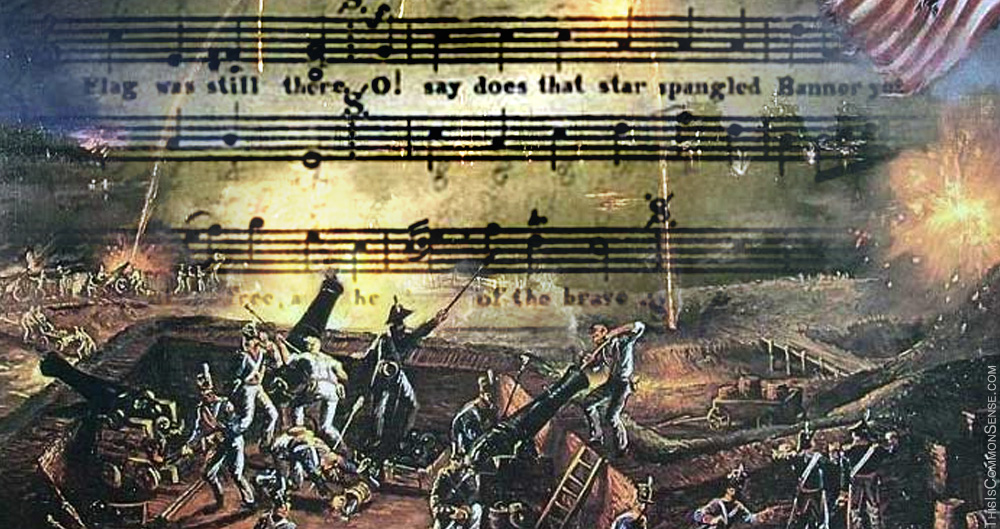
But what about “The Star-Spangled Banner”? The lyrics are not general at all, but instead an exultation about a moment of victory in a very bad war that our union almost lost way back in 1814.

The melody leaps all over the place, making it difficult to sing.

But its words are what stick in some peoples’ craws.

No, not the florid, old-fashioned* phrasings. What bothers some people is all the violence . . . and a mention of the word “slave.”

Now, if the song were about slavery, or even mentioned the enslaved ancestors of current Americans, I’d side with the California branch of the NAACP, which wants to junk the old warhorse.

But the offending line does not seem to be what these activists say it is, one of “the most racist, pro-slavery, anti-black songs in the American lexicon.” The words refer, instead, to British sailors and soldiers:

No refuge could save the hireling and slave

From the terror of flight, or the gloom of the grave. . . .

The phrase “hirelings and slaves” means “mercenaries and conscripts.” Wednesday, on Fox, Tucker Carlson grilled a cheerful advocate of the NAACP position, whose main point was “unity.” He doesn’t think the anthem promotes “unity.”

But what would? Doesn’t taking on the anthem constitute just another divisive salvo in the culture wars?

We’ve bigger problems.

This is Common Sense. I’m Paul Jacob.

 

* The tune is by John Stafford Smith, who wrote it for the Anacreontic Society. Because the original version is usually called “To Anacreon in Heaven,” and because the phrasings of Francis Scott Key’s originally titled “In Defense of Fort McHenry” are “old-fashioned” and arguably “anachronistic,” we have the title of this Common Sense outing.


PDF for printing


Categories
Accountability First Amendment rights folly media and media people moral hazard national politics & policies too much government U.S. Constitution

Our Royals Are Not Amused

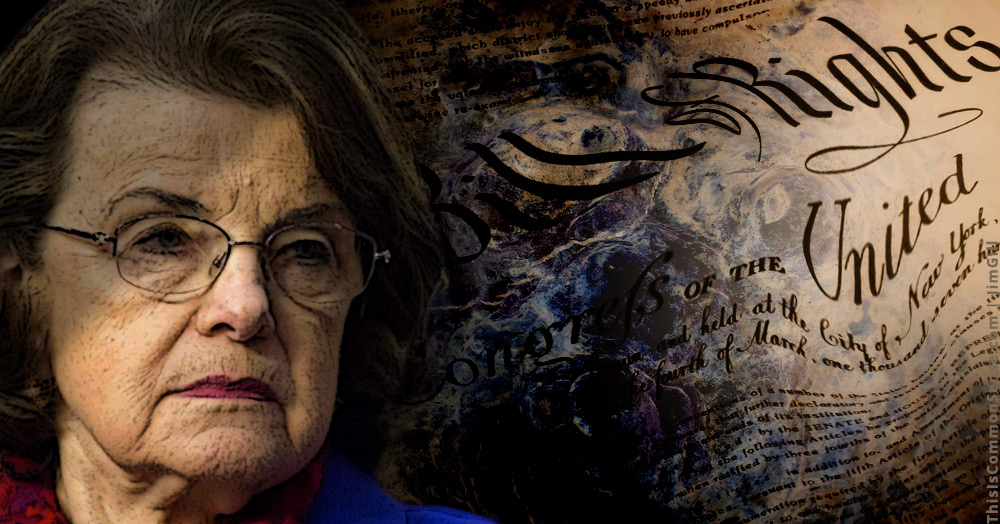
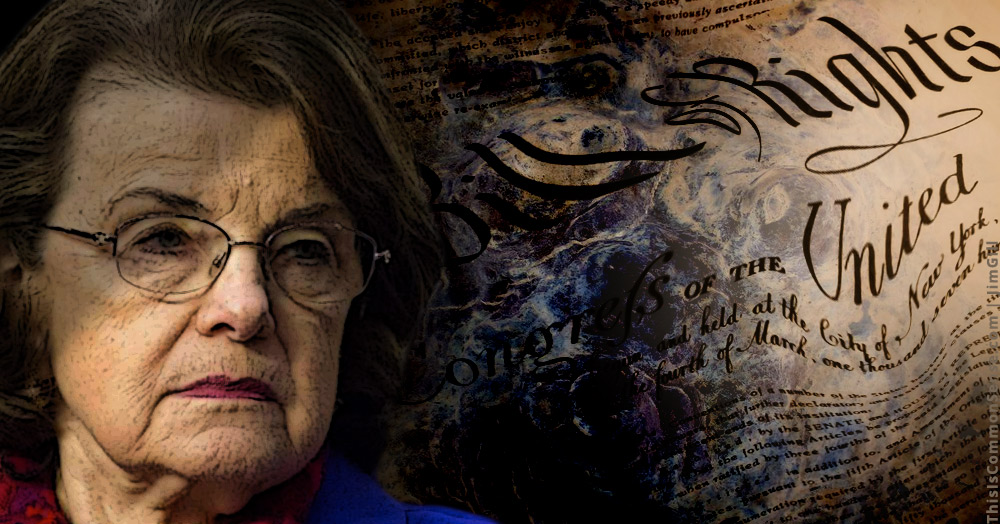
“You created these platforms,” Sen. Dianne Feinstein (D-CA) informed the top legal minds at Facebook, Twitter, and Google, “and now they’re being misused.”

“And you have to be the ones who do something about it — or we will.”

Take that as a threat.

But also take it as the grand moment when the Establishment showed its hand.

Consider: Facebook, Twitter, and YouTube (a Google product) are “media platforms.” So are books, libraries, newspapers and newsstands. Imagine being a king right after Johannes Gutenberg invented the printing press. Very quickly, the world changed.

People thought differently. And they began demanding change from government. The sovereigns had to make room for subjects-turned-citizens.

Royalty and aristocracy did try to regulate the new platforms of information and opinion. Censorship was all-too-common. The rulers killed upstarts for writing the wrong things, saying the wrong things.

So, which side would you be on, Mrs. Feinstein?

That is Scott Shackford’s basic take on this. I’m with him.

I just wish to expand: in my lifetime the media platforms of newspapers and television were regulated. Heavily. Mergers and business purchases were subject to government permission; the electromagnetic spectrum was licensed rather than treated as private property, and the actual content of radio and TV shows were regulated by the FCC.

And the Feinsteins of Washington got awfully secure in their positions. Had the regulation of American media done its trick?

Enter new media, uncorking the bottle of opinion.

No wonder the Establishment is scared.

We shouldn’t let them regulate political content on the Internet. Demand, instead, the opposite: a complete repeal of the regulation of business management — and non-criminal content regulation — of all media platforms

This is Common Sense. I’m Paul Jacob.

PDF for printing


Categories
crime and punishment folly general freedom ideological culture media and media people moral hazard national politics & policies responsibility

Five Fascist Things

Mass protests have been planned for this Saturday in many major cities across the country. “On November 4, 2017,” says the Refuse Fascism website:

Take To The Streets And Public Squares in cities and towns across the country continuing day after day and night after night — not stopping — until our DEMAND is met:

This Nightmare Must End:

The Trump/Pence Regime Must Go!

In the Name of Humanity, We REFUSE to Accept a Fascist America!

The group took out a full-page ad in the New York Times, repeating all that along with the ominous “Nov 4 • It Begins.”

Now, I am against fascism. You may have noticed that . . . reading between the lines. I’m for limited government, a classical liberal, a modern libertarian. Fascism arose in no small part as a replacement for liberalism, which fascists scorned for not promoting activist government.

And though I’m not gung-ho about President Trump, I do not see much fascism coming from the White House. I challenge tomorrow’s protesters to name five fascist things* the new president has done . . . that the previous president had not also done.

And then, I ask, what practical way could you oppose these putatively fascist things without taking to everybody’s streets until you get your way?

Also, please keep non-violent, as promised. When protesters become rioters, bad things happen — including conjuring up greater authoritarian sentiment from some.

That reaction may not be fascism. But it wouldn’t be good.**

And, on the right: don’t welcome civil war, as some have already done.

Do you want to see blood running in the streets? I sure don’t.

This is Common Sense. I’m Paul Jacob.

 

* Or four? Three? Two? One? Remember, we are talking about new fascism.

** Alas, everything bad in this world is not automatically fascism.


PDF for printing


Categories
Accountability crime and punishment government transparency insider corruption media and media people moral hazard national politics & policies responsibility

Stranger Counsels

The office of special counsel, like that of the special prosecutor in days (and administrations) of yore, is a strange one. Not mentioned in the Constitution, it is institutionally slippery. An executive branch position designed to investigate the executive branch — there is no way it cannot be . . . “problematic.”

Just in time for Halloween, Special Counsel Robert Mueller, tasked with looking into the Russian connections of the Trump administration — particularly electoral mischief* — landed his first fish this week, Paul Manafort and Rick Gates. The two have been charged with, and pled innocent to, twelve criminal counts related to their activities in Ukraine before their association with Trump. There are tax dodging charges, too, including something called “conspiracy to commit money laundering.”

And while the whole bizarre Russia story has now launched into a feeding frenzy, it appears that it just became . . . mundane. “Legal experts said the court filings indicate Mueller is running a serious, deliberative, and far-sighted inquiry,” says The Atlantic.

Meanwhile, the weird relations between the Clintons and Russia loom on the horizon, rather like that smoky monster from the Upside Down on Stranger Things 2.

But hey, none of this is shocking. Troll through the modern state and you will find corruption. You can land all sorts of fish.

Including suckers.

Could we be those suckers?

Since this sort of thing can always be found — and the Manafort skullduggery seems somewhat tangential to Russian electoral influence, despite the man having served a stint as Trump’s campaign manager — is this just a way to get us to look the other direction from anything really meaningful?

This is Common Sense. I’m Paul Jacob.
*And let’s not pretend this is new. Foreign influence was an issue in the campaign of 1800.


PDF for printing

Categories
Accountability Common Sense folly general freedom media and media people moral hazard nannyism national politics & policies responsibility term limits too much government

It’s the Stupid Spending

These United States are approaching a crisis. Mounting debt seems increasingly unpayable. Sovereign default and financial chaos are “in the offing” — drifting from the (future) horizon to the (present) shore.

The costs of our debt load have been accommodated as astute economists predicted, with the weakest recovery in American history.

Seven years ago I wrote:

According to increasing numbers of Americans, it’s the level of spending by government that must decrease. We must balance budgets. Soon.

One could play sloganeer and say “It’s the spending, stupid”; or, twist that, to say “It’s the stupid spending.” But however you formulate the problem, what the new Republican House must do is find a way to cut spending.

They haven’t. Is there any reason, even with super-duper businessman Donald Trump riding herd, that they will make net cuts?

We can expect gross spending to increase and the debt to balloon even bigger.

Why?

Well, we are trapped.

Even the politicians themselves feel trapped.

You see, once the government begins a program, a constituency comes to depend upon it, and resists being “betrayed.” And the media supplies a steady stream of sob stories about the brutality of “austerity.” Politicians fear the passion of voters reacting to a specific hyped human need more than the general desire for less spending. So politicians increase the stupid spending.

Well, if the politicians are trapped, release them. Free them.

How? Term limits.

Congressional term limits would un-trap not just the pols — it’d free the voters, too. Let’s end the pretense that sending the same politicians to Washington term after term can produce local prosperity. Oh, the power of incumbency may lavish benefits on career congressmen, but it doesn’t pay off for the rest if us.

This is Common Sense. I’m Paul Jacob.
 

* It was President Harry Truman who said that term limits would “help to cure senility and seniority — both terrible legislative diseases.”


PDF for printing


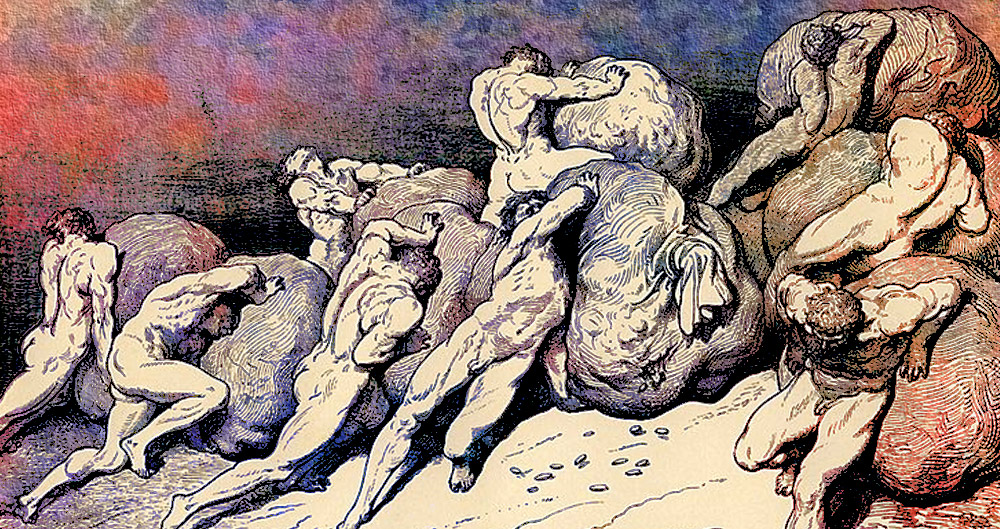
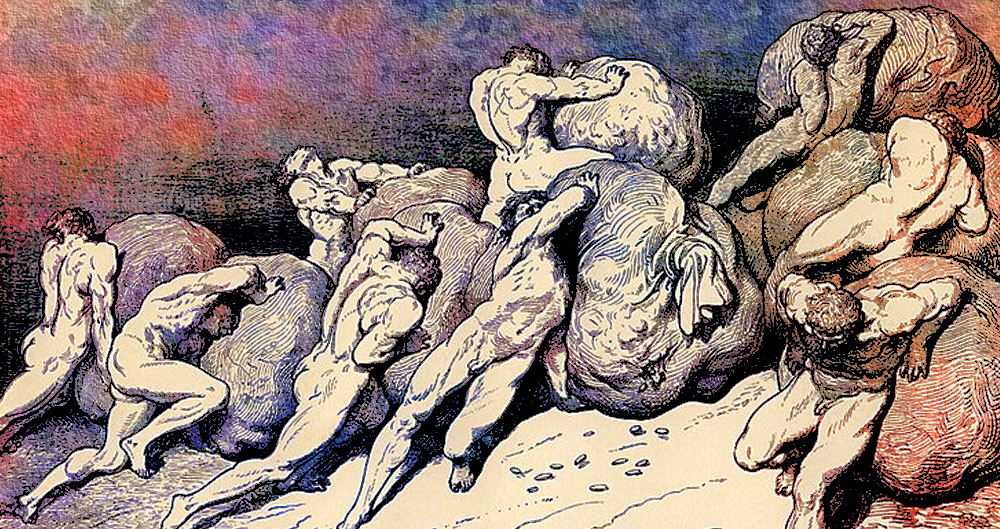
Illustration: Gustave Doré, Avaricious and Prodigal”


Categories
Accountability local leaders media and media people moral hazard national politics & policies political challengers responsibility term limits

Sic Transit Gloria Flake

Yesterday, a major American politician gave up.

Sort of.

Senator Jeff Flake, the junior member of the upper chamber from the State of Arizona, took to the Senate floor to announce that his “service in the Senate will conclude at the end of my term in early January, 2019.”

Actually, most of the speech was an appeal to President Trump.

Or a lambasting.

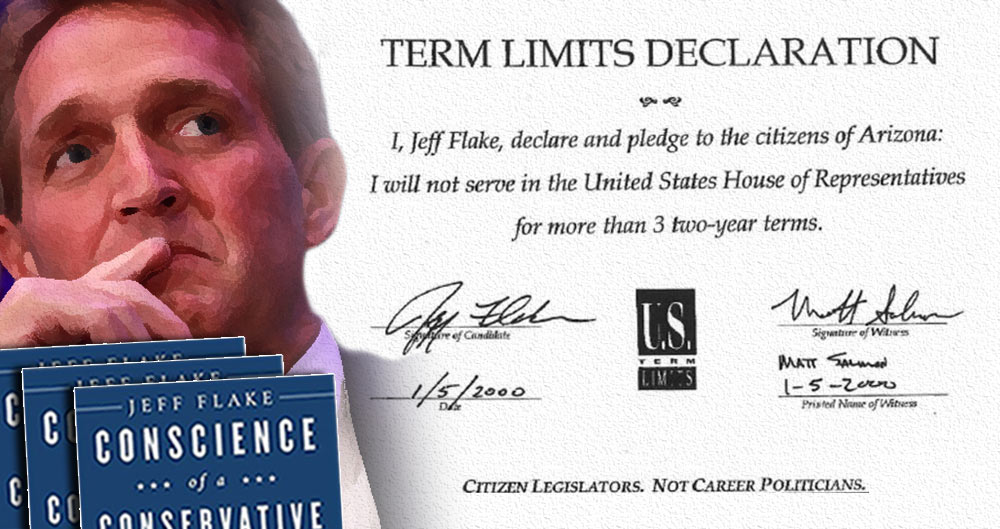
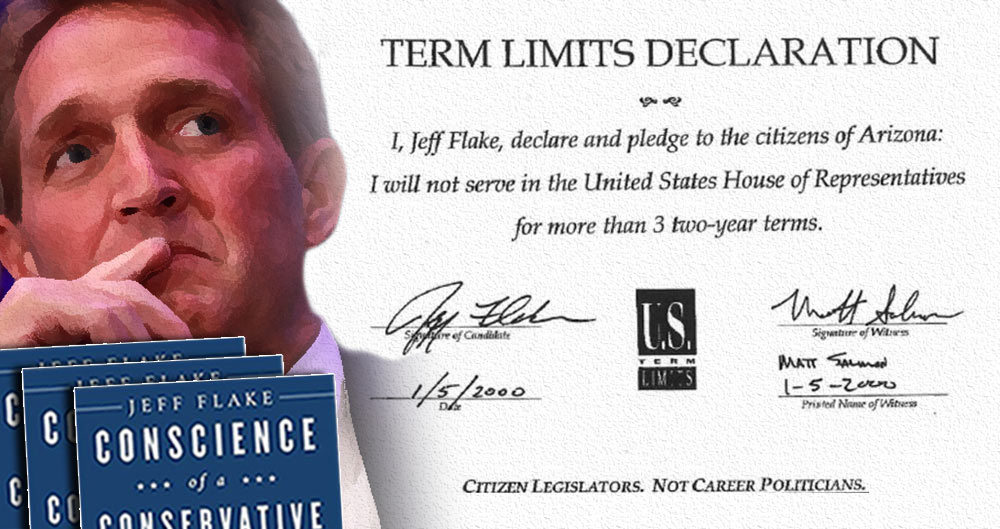
In either case, he was echoing his recent book, Conscience of a Conservative: A Rejection of Destructive Politics and a Return to Principle, which columnist David Brooks has described as a “thoughtful defense of traditional conservatism and a thorough assault on the way Donald Trump is betraying it.”

In the Age of Trump, anti-Trumpian manifestos are . . . controversial in GOP ranks. And his opposition has cost him. All bets were against him winning re-election.

“I believe that there are limits to what government can and should do,” Flake wrote in a letter to supporters, going on to say “that there are some problems that government cannot solve, and that human initiative is best when left unfettered, free from government interference or coercion.”

Solid principles. Principles I share. But how principled was Flake? He began his career promising to limit his own terms, in accordance with . . . conservative principles. And yet the man from Snowflake, Arizona, broke that promise in 2006, holding on to his House seat for three more terms.

For his remaining 14 months in the Senate, Flake can return to the principle he reminded himself of in yesterday’s speech: “Sustained incumbency is certainly not the point of seeking office.”

There’s life after Congress. And Jeff Flake can do good things in the real world.

This is Common Sense. I’m Paul Jacob.

PDF for printing


Categories
Accountability media and media people moral hazard national politics & policies responsibility

Asleep at the Constitution

Are we at war in Niger, too? Do our “representatives” in Congress know?

The answer to the first question is, obviously, yes. The answer to the second is, admittedly, no

Yesterday, Meet the Press host Chuck Todd asked hawkish Sen. Lindsey Graham (R-S.C.) what the four U.S. soldiers ambushed and killed weeks ago were doing in Niger. “I can say this to the families,” Sen. Graham offered, “they were there to defend America,” before conceding that, “[W]e don’t know exactly where we’re at in the world militarily and what we’re doing.”

Oh.

Graham acknowledged he had been unaware U.S. military forces were even in the African country. And still hasn’t “been briefed.” Later in the program, Senate Majority Leader Chuck Schumer (D-N.Y.) also confessed his profound ignorance . . . before reading in the newspaper about the deaths of four soldiers there.

Still, Sen. Graham expressed great hope that Sen. John McCain (R-Ariz.) could “create a new system” to ensure that “if somebody gets killed there, that we won’t find out about it in the paper.”

Huh?

Doesn’t Congress’s job description include something about debating and deciding on policies, providing funding, and checking executive power?

Not, surely, cuddling in ignorance and burping up pablum.

Cradled in their long-term careers, our congressional delegates neither debate, deliberate, nor oversee much of anything.

In any case, we can be sure that Congress’s role in our constitutional system is not to scoop reporters to war news.

This is Common Sense. I’m Paul Jacob.

PDF for printing