Categories
general freedom international affairs

Blizzard Fallout

“I’ve already deleted my Blizzard account,” offered the young man while taking my Starbucks order. 

Blizzard Entertainment is a video game developer based in Irvine, California. Earlier this week, the company rescinded the Grandmasters tournament winnings of Hearthstone esports player Ng Wai Chung, whose professional name is “Blitzchung,” banning him from pro competition for one year. 

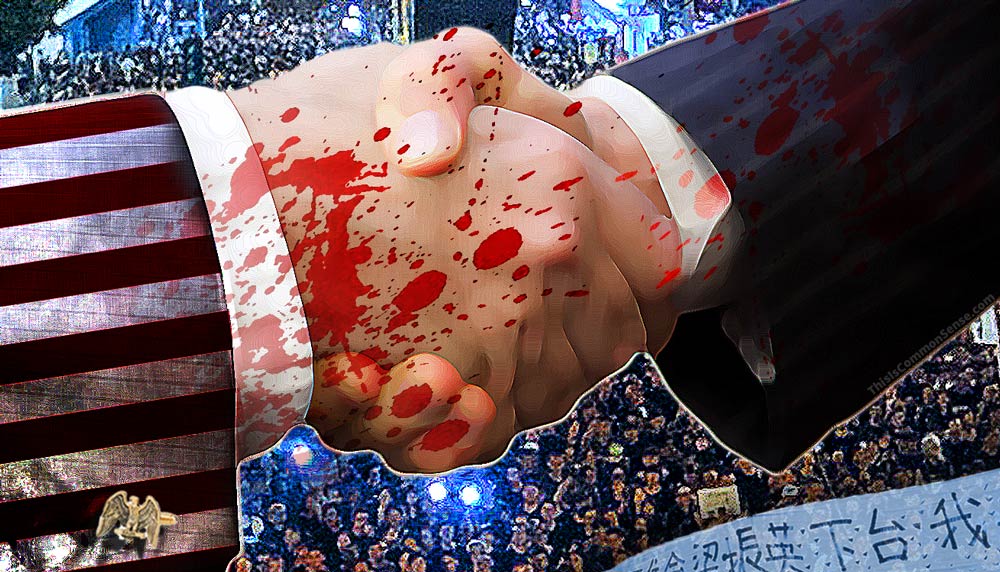
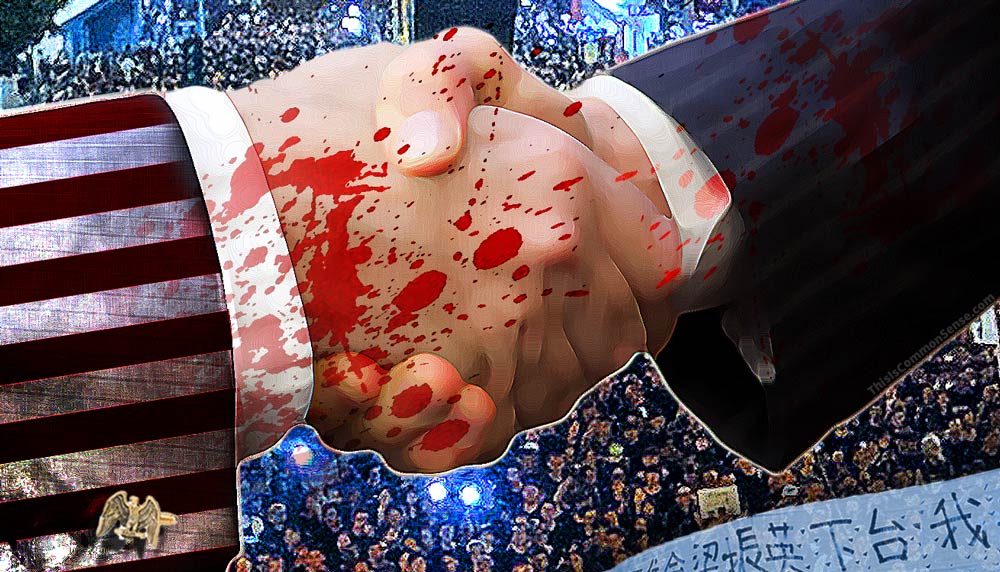
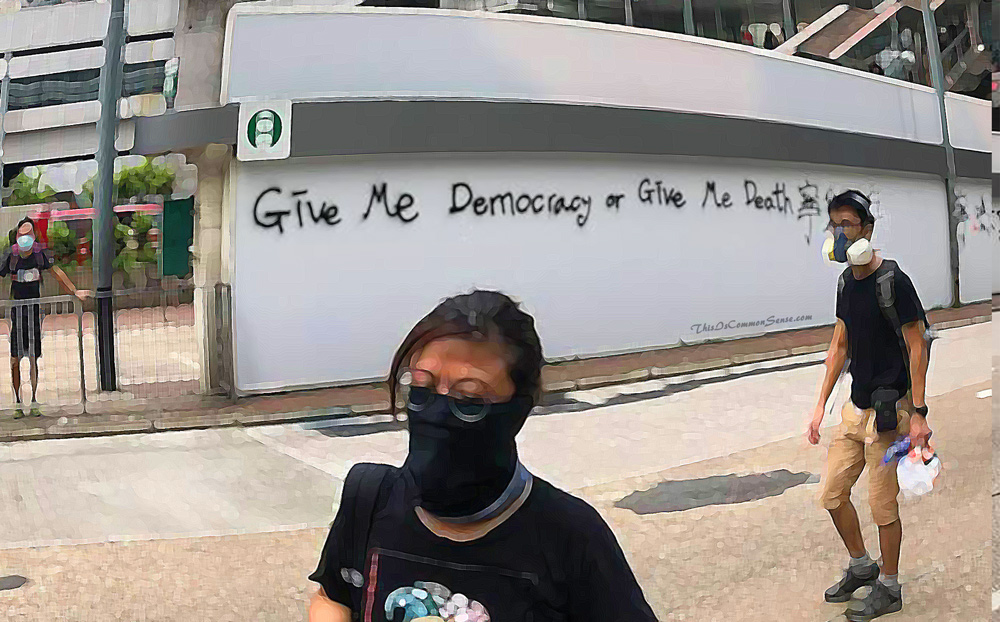
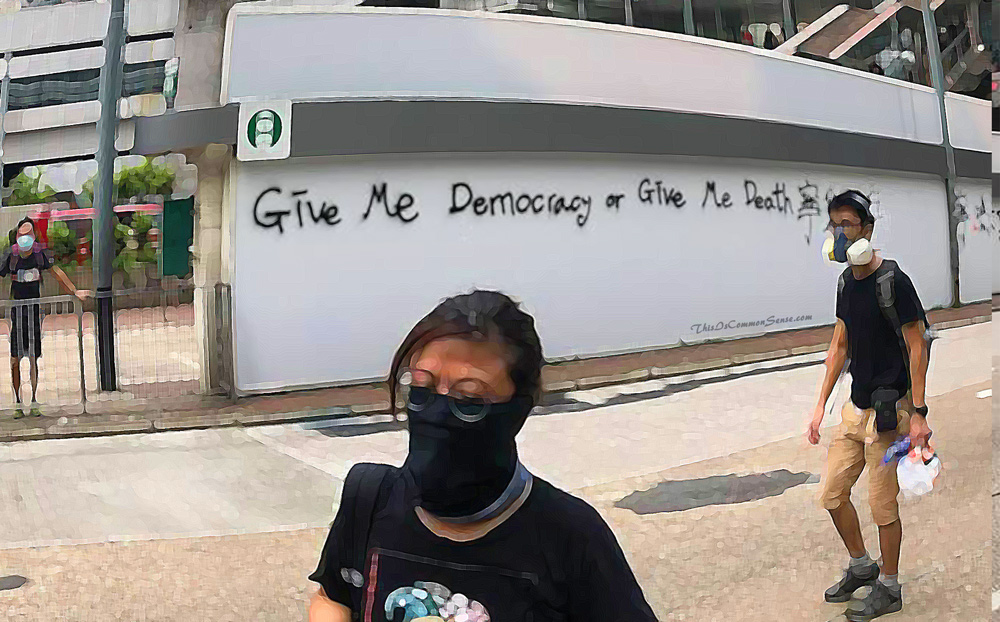
Why? In a post-match interview, the Hong Kong native, donning a gas mask, declared, “Liberate Hong Kong!”

The company claims Blitzchung violated tournament rules disallowing “any act that, in Blizzard’s sole discretion, brings you into public disrepute, offends a portion or group of the public, or otherwise damages Blizzard.” More likely, the censorship comes from Tencent Games, a large Chinese company, with a 5 percent ownership stake in Blizzard’s parent company.

“I can’t just sit there doing nothing,” Chung told reporters, “watching our freedom being destroyed bit by bit.”

Blitzchung’s courageous stand has, thankfully, received rewards, too, for he is receiving offers from other, more politically conscious gaming outfits. 

And Blizzard faces a serious customer backlash, along with employee walkouts and dissent.

On Wednesday, I bemoaned the fickle stand taken by Houston Rockets GM Daryl Morey, who tweeted, “Fight for freedom! Stand with Hong Kong!” but then deleted the tweet under pressure from the Chinese government. Then, yesterday, an NBA spokesperson apologized that a CNN reporter was blocked from asking Rocket players a question about the controversy.

The NBA may be scared of totalitarian China’s economic bullying, but fans are speaking out. At exhibition games between NBA and Chinese Basketball Association teams, in both Philadelphia and Washington, D.C., fans wore shirts and held signs saying, “Free Hong Kong.” 

Speaking truth to power across the globe.

This is Common Sense. I’m Paul Jacob.


PDF for printing

Ng, Activision, Blizzard, games

See all recent commentary
(simplified and organized)
See recent popular posts

Categories
general freedom ideological culture international affairs

Stand By Your Tweet

Last Friday, Daryl Morey, the general manager of the National Basketball Association’s Houston Rockets, tweeted a graphic repeating the Hong Kong protesters’ chant, 

“Fight for freedom!

“Stand with Hong Kong!”

But before I could hit “like,” he deleted it amid the massive backlash from the Chinese Communist Party (CCP) and the Chinese companies it rules. 

The owner of the Rockets, with billions in NBA business at stake, immediately distanced himself from his GM — and human rights — tweeting that, “@dmorey does NOT speak for the @HoustonRockets” and “we are NOT a political organization.”

Rockets star James Harden apologized on Chinese state television, adding, “We love China. We love playing there.”

Despite suggesting that it does not “Stand with Hong Kong,” the NBA did reiterate that “the values of the league support individuals’ educating themselves and sharing their views on matters important to them.”

“I did not intend my tweet to cause any offense to Rockets fans and friends of mine in China,” GM Morey penitently explained in yet another tweet. “I was merely voicing one thought, based on one interpretation, of one complicated event. I have had a lot of opportunity since that tweet to hear and consider other perspectives.”

On Facebook, Brooklyn Nets owner Joe Tsai posted a defense of China’s anti-democratic action in Hong Kong. “Supporting a separatist movement in a Chinese territory is one of those third-rail issues,” the Taiwan-born businessman wrote.

Let’s hope Hongkongers — for the last 18 weeks risking life and limb by demanding basic democracy, rather than totalitarian control by China — were not counting on a more steadfast commitment from Morey. 

Or the wealthy owners of the Rockets or Nets. 

Or the NBA. 

This is Common Sense. I’m Paul Jacob.


PDF for printing

Fight for Freedom, Stand by Hong Kong,

See all recent commentary
(simplified and organized)
See recent popular posts

Categories
ideological culture international affairs

War Minus One Warmonger

At long last, John Bolton’s 17 month tenure in the Trump Administration is over.

I won’t pretend not to be pleased. Yet I also do not pretend this national security advisor was always and completely on the wrong side. He has consistently claimed to have an ulterior motive for his favored never-ending war footing: “Individual liberty is the whole purpose of political life, and I thought it was threatened then” — when he was a teenager and exposed to the ideas of Barry Goldwater — “and I think it’s threatened now.”

Unfortunately, he rejected the lesson that our Founders knew all too well: constant war-making doesn’t yield freedom. “Of all the enemies to public liberty,” James Madison wrote, it is war that “comprises and develops the germ of every other.” Madison’s list of reasons for war’s dangers include

  • Debts and taxes; 
  • Rule of the many by the few;
  • Discretionary executive power;
  • Special favors greed economy;
  • Propaganda; etc.

Nevertheless, folks like John Bolton continue to think that we can be free while our military micromanages the “resolution” of every conflict across the globe. 

Meanwhile, Donald Trump, who often comes off like a war skeptic, continues to side with the interventionists. 

“We’re going to keep a presence” in Afghanistan, Trump said the other day. “We’re reducing that presence very substantially. We’re not fighting a war over there. We’re just policemen.”

. . . policemen who do not arrest anybody . . .

Not a recipe for freedom. Here or in Afghanistan. 

This is Common Sense. I’m Paul Jacob.


PDF for printing

John Bolton, war, defense, peace,

Photo by Gage Skidmore on flickr

See all recent commentary
(simplified and organized)
See recent popular posts

Categories
international affairs

Buying Ice

The president wants to buy more land.

On our dime.

“The idea of the U.S. purchasing Greenland has captured the former real-estate developer’s imagination,” began a Wall Street Journal report last week. Donald Trump has asked about it anyway, “with varying degrees of seriousness.”

Grønland — “Kalaallit Nunaat” — is Danish territory now. But the United States does run the Thule Air Base on the glacier-dominated island already. So it might seem . . . natural.

The last major American purchase of territory from another sovereign power was, actually, from the Kingdom of Denmark back in 1917, when the United States obtained the U.S. Virgin Islands

The notion of buying Greenland was floated back during the Truman administration, too. So there is ample precedent. Which gives Trump a plausible context to advance a destabilizing meme for his upcoming visit to Denmark, where he will no doubt be doing some “negotiating” . . . about more important matters.

And what might those be? Well, matters like the country’s contributions to its own defense. Denmark is low on the list of contributing NATO participants, devoting only 1.7 percent of GDP to defense, not the treaty level of 2 percent.

It’s mainly just amusing, of course — probably even to Trump himself. “It’s just something we’ve talked about,” he’s explained. “We’re very good allies with Denmark. We’ve protected Denmark like we protect large portions of the world, so the concept came up.”

Of course, the U.S. doesn’t need Greenland. And it certainly doesn’t need to spend money it doesn’t have to do so.

Still, there have been and will be more idiotic proposal floated this election season. Plenty.

This is Common Sense. I’m Paul Jacob.


Greenland, Trump, land, territory, purchase, ice,

Photo from pixabay

See all recent commentary
(simplified and organized)
See recent popular posts
Categories
general freedom international affairs Popular

Protests and Propaganda

Poised to gobble up Hong Kong whole, completing the process Britain began when it ceded the colony back to China in 1997, the government of China remains concerned about world opinion, for it engages in massive propaganda.

“When a projectile struck a Hong Kong woman in the eye this week as protesters clashed with the police, China responded quickly,” explains an article in the New York Times. “Its state television network reported that the woman had been injured not by one of the police’s bean bag rounds, but by a protester.”

But that’s not the only kind of propaganda. If you have spent any time on Instagram, for example, you have probably seen the posts of Chinese people decrying the scandal and shame of how Hong Kongers resist government efforts at hegemony.

There is a name for this latter form of propagandist, “the fifty cent party” because the Communist Party is said to pay social media users for each pro-government post . . . though almost certainly not 50¢.*

The basic idea, according to General Secretary Xi Jinping, is to “to strengthen media coverage … use innovative outreach methods … tell a good Chinese story, and promote China’s views internationally.”

And managing its own population, as when, according to the Times, state media “posted what it said was a photo of the woman counting out cash on a Hong Kong sidewalk — insinuating, as Chinese reports have claimed before, that the protesters are merely paid provocateurs.”

These young street protestors are almost certainly not mercenaries, though they have sometimes faced what appear to be hired thugs. 

The protests are a kind of insurrection. Strong resistance, at least, to being totalitarianized.

This is Common Sense. I’m Paul Jacob.


PDF for printing

Hong Kong, police, riots, protests, violence,

See all recent commentary
(simplified and organized)
See recent popular posts

Categories
international affairs national politics & policies Popular

Who’ll Stop the Wars?

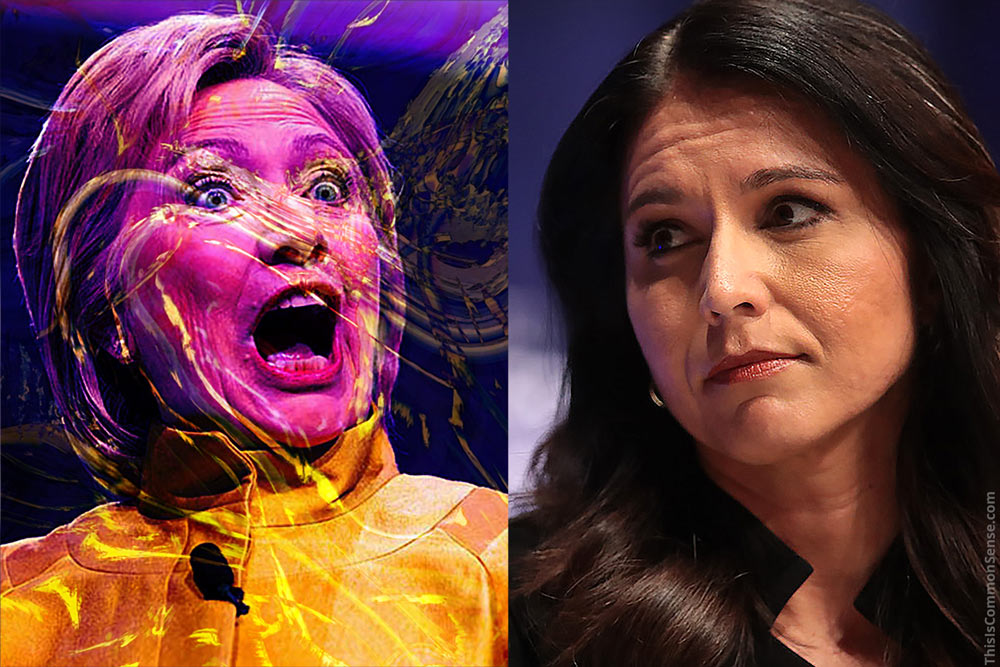
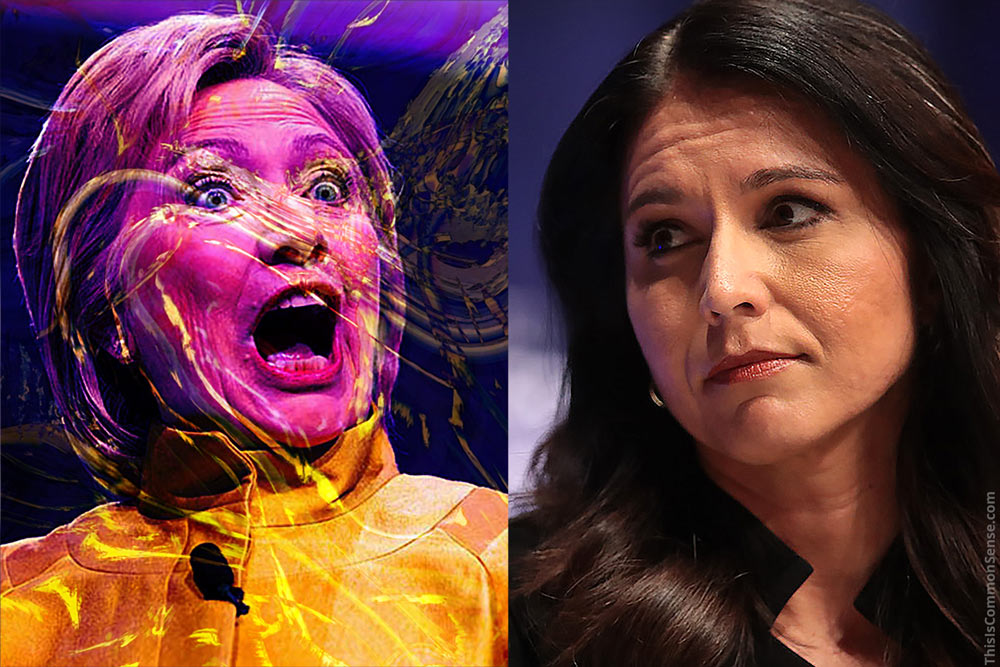
“Why were you the lone voice out there going after the neo-cons, going after the people who took us into these wars?” Chris Mathews, host of MSNBC’s Hardball, asked presidential candidate Rep. Tulsi Gabbard (D-Hawaii) after Wednesday night’s debate. 

Pro-peace candidates do well with voters, but still most politicians and the media remain hawkish. The only time “the mainstream media fawned” over President Trump was after airstrikes against Syria.  

“I deployed to Iraq in 2005 during the height of that war,” she told Mathews. “I served in a medical unit where every single day I saw that terribly high human cost.”

Contrasted with former Vice-President Joe Biden, who voted for the Iraq War as senator, Gabbard pledged not to “bend to the whims of the military-industrial complex or the foreign policy establishment.”

“Today the Taliban claimed responsibility for killing two American service members in Afghanistan,” MSNBC’s Rachel Maddow had posed during the debate. Noting that “leaders as disparate as President Obama and President Trump” have wanted “to end US involvement,” Maddow inquired of Rep. Tim Ryan (D-Ohio), how he might get us out?

Instead, he argued: “We must be engaged in this.” That led Gabbard to cut in, calling Ryan’s answer “unacceptable.” 

“We have to bring our troops home from Afghanistan,” she declared. “We are no better off in Afghanistan today than we were when this war began [nearly 18 years ago].”

Offered the opportunity, not one of the other eight candidates on the stage addressed the country’s longest war. 

This is a problem, since, as I’ve repeatedly posited in this space, there is no plan to defeat the Taliban, only to negotiate power-sharing with them.

Ceaseless intervention.

This is Common Sense. I’m Paul Jacob.


PDF for printing

Tulsi Gabbard, Democratic Presidential Debate, war, peace, foreign policy,

See all recent commentary
(simplified and organized)
See recent popular posts

Categories
folly international affairs national politics & policies Popular

Remember . . . the Maine?

“President Trump warned Thursday that America ‘will not stand’ for Iran shooting down a U.S. drone over the Strait of Hormuz,” a Fox News report summarizes, “while at the same time leaving open the possibility that the attack was unintentional.” 

This incident immediately follows the previous week’s apparent provocation, attacks on Japanese oil tankers in the same vicinity — also said by our government to have been caused by the Iranian military. Nearly everyone now regards these events as portending war,* which some see as a long time coming, since American relations with Iran have been antagonistic since the late 1970s, when Shia clerics raised a popular revolt to oust the American-installed thug, er, Shah.

While Mr. Trump was incredulous that the strike on the drone (opposite of a drone strike) could have been intentional, the rest of us can dare doubt even more: Can we really trust the “intelligence” that blames Iran’s military or paramilitary Revolutionary Guard for these puzzlingly dangerous provocations?

Not based on past performance.

The “intelligence” used to justify America’s several wars with Iran’s neighbor, Iraq, seems more disinformation than mere misinformation. And we now know that the Gulf of Tonkin incident enabling U.S. escalation into Vietnam was a lie.

We should even “remember the Maine!” — the questionable rationale for the Spanish-American War.

Lying to start wars is obviously not unheard-of in our history. Indeed, some insiders have itched for war so badly that they have plotted false flag ops against the American people.

The truth of what is happening now may not be known for years . . . by us . . . or even by President Trump.

This is Common Sense. I’m Paul Jacob.


* According to the New York Times, late yesterday President Trump authorized and then de-authorized a strike against Iran.

PDF for printing

war, false flag, Iran, Iraq, lies,

See all recent commentary
(simplified and organized)
See recent popular posts
Categories
folly international affairs moral hazard Popular

For Freedom in Venezuela

Last week’s coup in Venezuela flopped, it’s reported. But “coup” isn’t quite right: a popular rebellion failed to spark defections from key military commanders, who have become the end-all and be-all of Nicolás Maduro’s reign-at-rifle-point and rule by decree

Anyone with open eyes can see the illegitimacy of the Maduro regime. When governments shoot their own people and run over them with tanks or armored personnel carriers, there ceases to be any use in debating the fine points of political philosophies.

Facing the current impasse, opposition leader Juan Guaidó told a CBS News reporter he is “open” to U.S. military intervention, adding: “I want a free election now, no dictatorship, for kids in Venezuela not to starve to death.”

That doesn’t mean the U.S. should intervene, which I think would be a mistake for both us and, ultimately, the people of Venezuela — possibly turning a widely supported uprising into a protracted civil war.

“Before the bombers take off, let’s just answer a few quick questions,” Fox News host Tucker Carlson suggests. “When was the last time we successfully meddled in the political life of another country? Has it ever worked? How are those democracies we set up in Iraq and Libya and Syria and Afghanistan?”

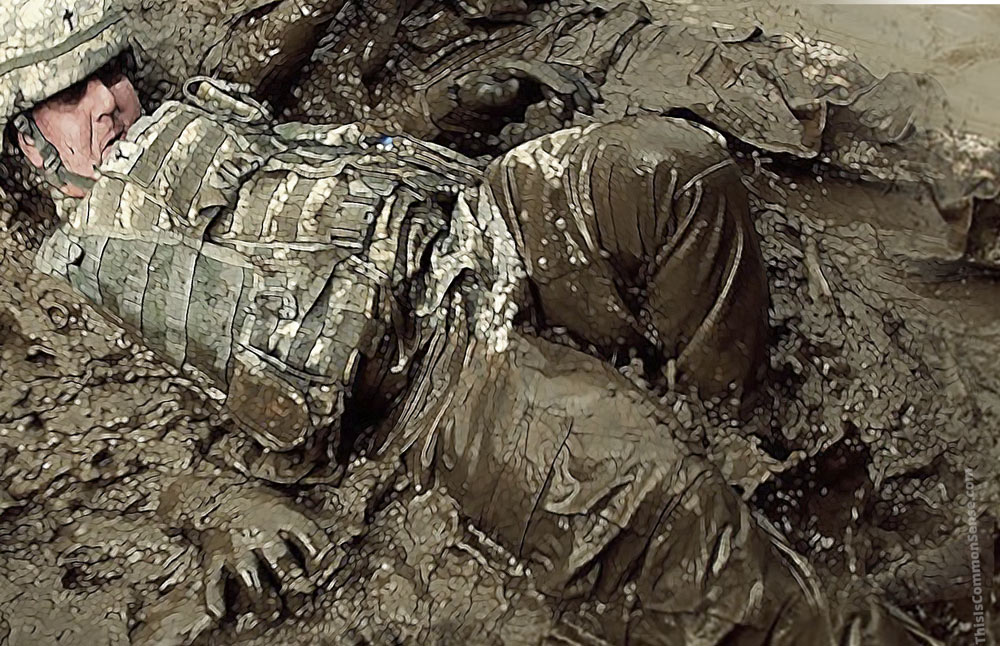
I don’t doubt a sweeping military victory should the U.S. invade Venezuela, but it is getting out that always proves so difficult.

This is Common Sense. I’m Paul Jacob.


Note: Last week, a number of Venezuelan soldiers did indeed switch their allegiance from the despot to demonstrators — reminding me of the inspiring pacification of the initial Chinese troops sent to restore “order” in Tiananmen Square some 30 years ago. The head of Maduro’s Bolivarian Intelligence Service (SEBIN) also defected.

PDF for printing

Venezuela, quagmire, mud, Maduro, socialism,

See all recent commentary
(simplified and organized)
See recent popular posts

Categories
general freedom international affairs Popular

Bellicose Exclusions

“Jones and his Infowars nutritional supplement sales empire are having a bit of a rough moment,” wrote Justin Peters last year at Slate, “since the bellicose conspiracist has recently been banned from several social media and podcast platforms due to his hostile and hateful behavior.”

Like much of the commentary on Alex Jones, as well as on his colleague Paul Joseph Watson, there is something . . . off . . . about the characterization.

Bellicose?

Sure, he pushes bizarre accounts of conspiracies,* and on a personal level Alex Jones shouts and yells and blusters and worse.

But there is one way he is not bellicose. Alex Jones is almost consistently against war in general and America’s world-policing in particular.

And so, too, has been Paul Joseph Watson — who along with Jones was kicked off Facebook last week.**

If you are generally against war, being called “bellicose” and “hostile” must be galling, especially when personalities at CNN and MSNBC stand hand-in-hand with most at Fox in their obvious onscreen lust for actual warfare, drone bombings, and “tough choices.”

Yes, I know: Watson has been a withering critic of First World immigration policies and of the illiberalism he sees in Islamic cultures, and he relentlessly mocks Third Wave Feminism. That must be his “hateful” — and “hostile”? — element. 

Yet, this seems less about hate and more about ideological disagreement.

More importantly, just whose interests are being served by social media’s current deliberate policy of marginalization?

The biggest cheers for ousting Jones and Watson — outside major media — echo from the left. But how is cheering on the consolidation of the military-industrial complex in leftists’ interest? 

The current “war against Internet freedom” looks very bad for . . . dissent.

This is Common Sense. I’m Paul Jacob.


 * One of which he has even confessed to be “psychotic.”

 ** Others ousted include racial nationalists such as Paul Nehlen and Louis Farrakhan, gay conservative provocateur Milo Yiannopoulos, and Laura Loomer. Their stances on military interventionism are less clearly anti-.

PDF for printing

Alex Jones, Paul Joseph Watson, war, MSM, mainstream media,

Photo Credit: Tyler Merbler from USA

See all recent commentary
(simplified and organized)
See recent popular posts

Categories
international affairs

Victory & Surrender

Former U.S. Ambassador to Afghanistan Ryan Crocker sums up in a single word the recently announced framework of an agreement between the United States of America and the Taliban: Surrender.

“This current process bears an unfortunate resemblance to the Paris peace talks during the Vietnam War,” writes Crocker in a Washington Post op-ed. “Then, as now, it was clear that by going to the table we were surrendering; we were just negotiating the terms of our surrender.”

He’s not wrong. 

It may seem strange that, after successfully toppling the Taliban government, a savage regime that had given safe haven to Al-Qaeda to launch its 911 attacks against us, we would now, nearly two decades later, be anxious to cut a deal with that same Taliban, even possibly bringing them into a power-sharing role.

Anything to get the heck out of Kabul and back to the good ol’ USA. And it is a recognition, right or wrong, that the Afghan government is unsustainable.

The alternative? Keep a significant contingent of U.S. troops in Afghanistan . . . forever. Or until we have fashioned a brand new westernized-Afghanistan that is no possible threat to us.

Yep, forever. 

“Winning may not be an available option,” contends a new Rand report, “but losing . . . would be a blow to American credibility, the weakening of deterrence and the value of U.S. reassurance elsewhere, an increased terrorist threat emanating from the Afghan region, and the distinct possibility of a necessary return there under worse conditions.” 

The same mistaken reasons we stayed in Vietnam. 

This is Common Sense. I’m Paul Jacob.


PDF for printing

See all recent commentary
(simplified and organized)
See recent popular posts