Categories
initiative, referendum, and recall

Democratic Dreams

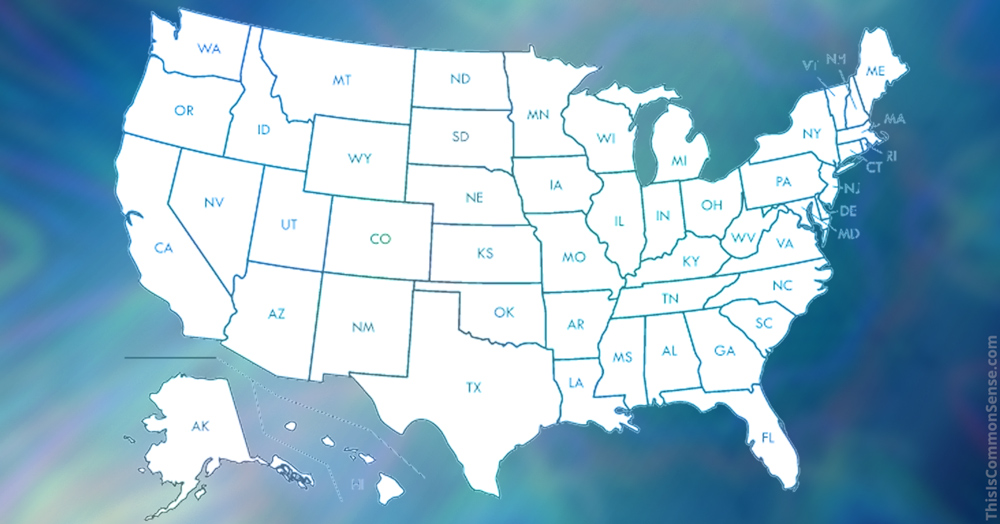
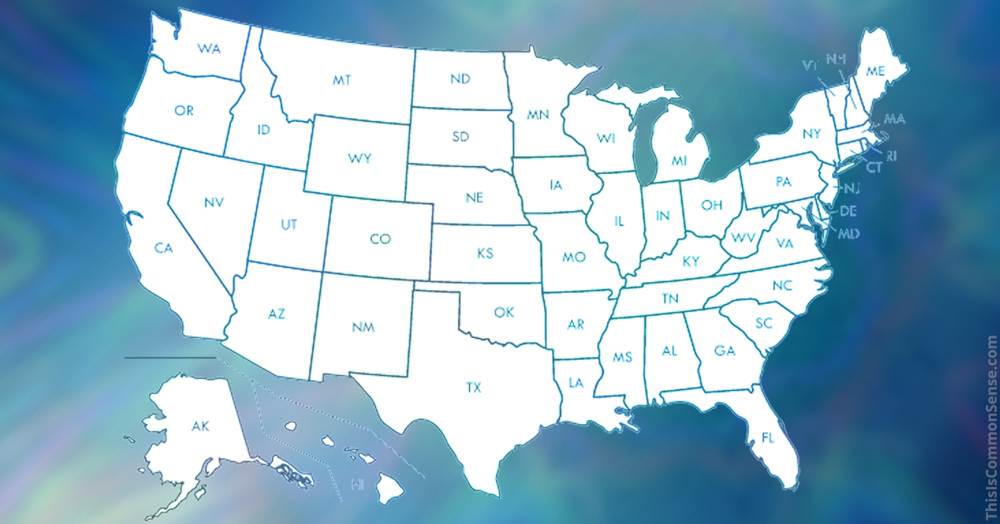
On Wednesday, I said we should, to borrow the vernacular, “have a conversation” about a national referendum.

Billionaire investor, environmentalist, and Democratic presidential candidate Tom Steyer proposed the idea, which I’ve loved conceptually since my friend, former Alaska Sen. Mike Gravel (also a Democratic presidential candidate), first advocated it decades ago.

But that ol’ devil — he’s in the details. (Decidedly not the latest lingo.) What might a national initiative and/or referendum process look like?

Given that it would require a constitutional amendment — meaning ratification by 38 of the 50 states — the process must win broad support to be enacted.

Here’s what I propose: Allow any statutory initiative measure to be petitioned onto a federal General Election ballot with signatures equaling 6 or 8 percent of the country’s population* and as verified by election officials in each state. Require a concurrent majority, whereby for a measure to pass it must garner not only a majority of the vote nationally, but also a majority vote in at least 20 states — or even in a majority of the states.

An initiative proposing a national constitutional amendment should do more. Require, say, a petition signature threshold of 10 or 15 percent and not merely a majority of the vote nationally to pass, but mirroring the current amendment process, mandate a majority in each of at least 38 states.

If U.S. Term Limits is successful in getting 34 states to call a convention to propose an amendment for congressional term limits, a national referendum process could follow in those footsteps. 

Talk about two ideas that will pop blood vessels in the heads of professional politicians and their special interest cronies!

Dare to dream.

This is Common Sense. I’m Paul Jacob.


 * This should simply follow the figures of the most recent census, of course.

PDF for printing

US, United States, national referendum, initiative, voting, democracy, elections,

See all recent commentary
(simplified and organized)
See recent popular posts
Categories
initiative, referendum, and recall political challengers term limits

A Different Conversation

“Here’s the difference between me and the other candidates,” says billionaire investor-turned-presidential aspirant Tom Steyer. “I don’t think we can fix our democracy from the inside. I don’t believe Washington politicians and big corporations will let that happen.”

Of course, if this Democrat becomes president of these United States, that’s hardly the outside.

“For me,” Steyer continues, “this comes down to whether you trust the politicians or the people.”

Well, I certainly trust the people a whole lot more than I trust the politicians.* 

“If you say you trust the people, are you willing to stand up to the insiders and the big corporations and give the people the tools they need to fix our democracy?” Steyer asks. 

Which tools? “A national referendum, term limits, eliminating corporate money in politics, making it easy to vote.”

The toolkit’s a mixed bag.

Eliminating corporate money means repealing part of the First Amendment, and silencing non-profit corporations such as U.S. Term Limits, MoveOn.org, the NRA, Planned Parenthood, National Right to Life, etc., etc. 

Mr. Steyer also worries that, without reform, “We won’t be able to . . . pass any of the great plans proposed by the Democratic candidates running for president.”

We should be so lucky.

Still, here is another Democratic presidential candidate endorsing congressional term limits. And we do need a direct democratic check on Washington, the ability for citizens to initiate reforms such as term limits and take unpopular legislation to a referendum. 

I’m not sanguine that Steyer will get the policy details right, but as fellow Democratic candidate Sen. Kamala Harris is fond of saying, “Let’s have that conversation.”

This is Common Sense. I’m Paul Jacob.


* Constitutional protections for our basic rights, as in The Bill of Rights, mean we do not have to trust government, directly democratic or representative.

PDF or printing

billionaire, Tom Steyer, candidate, president, election, campaign,

See all recent commentary
(simplified and organized)
See recent popular posts

Categories
education and schooling initiative, referendum, and recall tax policy

Taxing Panicsville

There is a big problem with Delaware school districts asking voters for additional tax money via ballot referendums. You see, sometimes the people don’t vote the way school officials and politicians want.

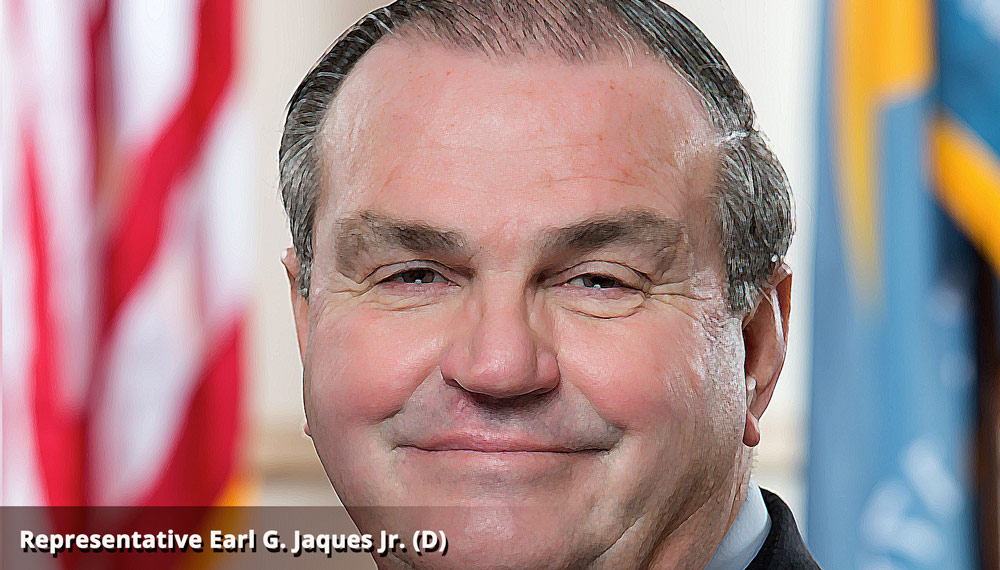
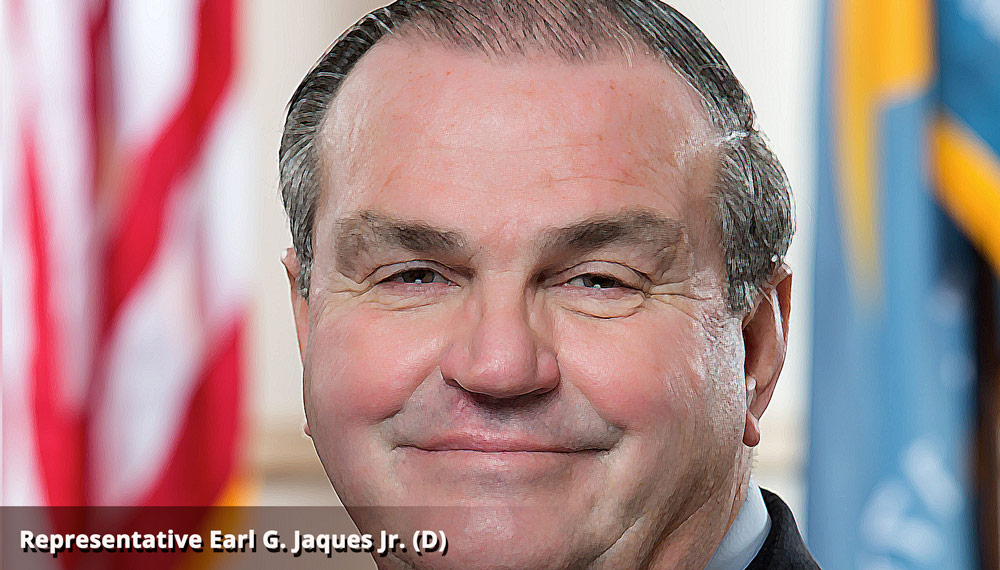
Have no fear: Rep. Earl Jaques (D-Glasgow) has authored House Bill 129 to solve this thorny problem. 

“This bill creates a mechanism,” its official summary reads, “by which school boards may increase funds for a school district both with and without a referendum.” 

Meaning, of course, without a referendum . . . since current law requires a public vote. 

“That way, [school districts] know the money is there if they need it, and they don’t abuse it because they know it’s there,” explained Jaques. “The problem with the referendum system is that they have to ask for more than they actually need, because they know it’s going to be a long time before they can come back.”

“Despite his assurances that the system would not be abused,” the Dover Post reports, “technically, school districts could raise taxes by 2 percent each year.” Or by any increase in the Consumer Price Index, whichever is higher.

Inexplicably, three stories — in the Dover Post, Newark Post and Delmarva Now — told readers it was the “lower” of the two. The bill clearly says the “higher.” Odd that media outlets would not grasp the ever-so-subtle difference between the words “higher” and “lower.”

“Everybody’s in ‘Panicsville,’ but it’s really not that way at all,” offered Jaques. “We, my colleagues in the legislature and I, could raise your income tax right now, and what’s your recourse? Vote us out at the next election.”

Excellent advice.

This is Common Sense. I’m Paul Jacob.


PDF for printing

Earl G. Jaques

See all recent commentary
(simplified and organized)
See recent popular posts

Categories
Fourth Amendment rights initiative, referendum, and recall

Big Brother or Barney Fife?

Alaska, Washington, Oregon, Montana, Missouri, Oklahoma, Louisiana, New Hampshire — these are the states that have shouted a big NO to the Federal Bureau of Investigation’s citizen scanning agenda and its database of 640 million faces. 

“As the FBI amasses hundreds of millions of photos for its facial recognition program (with little in the way of safeguards),” asks J. D. Tuccille in Reason, “is it also going to force us to bare our faces for cameras as we move through an increasingly surveilled country?”

Tuccille suggests wearing hats big enough to cover our faces from intrusive cameras. 

Most states do not prohibit surveilling people en masse or at random. And though Kimberly J. Del Greco, deputy assistant director of the FBI’s Criminal Justice Information Services Division, assures us of the operation’s above-board character — “there have been no findings of non-compliance, and no observations of unauthorized requests” — the possibilities of abuse are precedented . . . by past government surveillance.

So, is it any solace that it has so far proved wildly inaccurate? 

Sure, the aforementioned Del Greco claims the FBI’s algorithm is 99 percent accurate. But another study found one system in place with a sorry 98 percent inaccuracy rate. “It’s a creepy police state as administered by Barney Fife,” writes Tuccille. And while that is “pretty damned funny,” it would be not even a little bit funny if “you’re arrested based on a bad match.”

Constraining governments to forswear such practices on the streets, malls and public places of America is surely a good candidate for citizen use of initiative and referendum rights, where available — in states and cities around the U.S.

For these are not supposed to be the United States of Big Brother.

This is Common Sense. I’m Paul Jacob.


PDF for printing

big brother, Barnie Fife, surveillance, face recognition,

See all recent commentary
(simplified and organized)
See recent popular posts

Categories
initiative, referendum, and recall insider corruption

The Man Who Had No Idea

“I have no idea.” 

So responded Florida Rep. Jamie Grant (R-Tampa Bay) to a question about how petition circulators on 2018 ballot initiative campaigns were paid. 

“Is there evidence that signatures collected by a person . . . paid per hour or paid per signature are more fraudulent?” asked Rep. Tina Scott Polsky (D-Boca Raton), following up.

“If you’re asking specifically on the petition process,” Grant admitted, “I don’t know the answer to that.”

Rep. Grant should know. His 18-page amendment — slapped onto completely unrelated legislation, House Bill 5, in the waning hours of the last day of the legislative session —  criminalizes paying petition circulators based on the number of signatures they gather.

Which is precisely what you pay circulators for: gathering as many voter signatures as possible. Grant claims his ban will prevent fraud — without evidence there has been any fraud.

Instead, a tap-dancing Grant blurted out that Wells Fargo, the bank, is “a fantastic example” that “broken commission structures will lead to bad actions.” But his bill doesn’t address banking fraud. 

Not ridiculous enough? He went further, comparing Floridians enacting a constitutional amendment to the Russian government meddling in our elections. 

What does a foreign government’s black-ops scheme have in common with the constitutional ballot initiative process whereby millions of Florida voters sign petitions and then must approve amendments by a supermajority vote of at least 60 percent?

Nothing. 

Which is the sum of Grant’s knowledge. 

Well, there is one thing Rep. Grant testified to with certainty: His legislation will hike the cost of initiative campaigns, making it even more difficult for citizens to check politicians . . . like Grant. 

Don’t sign it, Gov. DeSantis, veto.

This is Common Sense. I’m Paul Jacob.


PDF for printing

lorida Rep. Jamie Grant (R-Tampa Bay)

See all recent commentary
(simplified and organized)
See recent popular posts
Categories
Accountability initiative, referendum, and recall insider corruption

Representative or Reprehensible?

Seventy-seven million. 

That is the dollar amount of “financial errors” that North Dakota State Auditor Joshua Gallion discovered in the last year, after launching performance audits at twice the rate of his predecessor.* 

So, uncork the champagne! Huzzahs all around! Back slaps.

But the back-slappers in the state legislature took a much different tack. 

In the waning days of this year’s now-adjourned legislative session, in the opacity of a conference committee, a change somehow slipped into a bill. No future audits without legislative approval. 

As news hit of this handcuffing of the elected watchdog, taxpayers turned livid. And legislators started tap-dancing, claiming that “the legislation had nothing to do with the new aggressiveness Gallion brought to the job.”

Finally, Rep. Keith Kempenich, the author of the change, confessed: “A lot of legislators started having some issues with the way things were going and wanted to reel him in.” 

Kempenich added that the auditor’s work “isn’t supposed to embarrass people.” At his Minuteman Blog, Arthur Mason countered that such financial mismanagement is “worthy of embarrassment.”

Governor Doug Burgum, who has “felt the sting of a Gallion audit,” signed the bill; calls for the legislature to reverse their gutting of accountability have fallen on deaf ears.

Concerned citizens were already organizing to defeat the legislature’s proposed constitutional amendment giving themselves a veto on voter-initiated amendments, requiring a re-vote if politicians don’t like the people’s first vote. Now an additional effort is forming to petition a referendum or new initiative onto the ballot to stop the power-mad politicians from neutering the state auditor. 

Who do these legislators think they are? 

Seems North Dakota’s solons are in desperate need of still another reform measure: term limits. 

This is Common Sense. I’m Paul Jacob. 


* Prior to Gallion’s 2016 election, the state auditor post had for 44 years been a hereditary fiefdom, held by Republican Robert Peterson for 20 years and, before that, for 24 years by Peterson’s father.

North Dakota, State Auditor,

See all recent commentary
(simplified and organized)
See recent popular posts

Categories
initiative, referendum, and recall

Swampy Moves

Late Friday, in the closing hours of Florida’s legislative session, an amendment “was thrown onto the lifeboat of a different, unrelated bill in a last-ditch effort,” reported the Miami Herald, “to limit citizen-driven ballot initiatives.” 

With poisonous provisions appended, House Bill 5 rushed through both chambers in mere hours with party-line GOP support. It’s now headed to the desk of Republican Governor Ron DeSantis (R) for a signature.

Or, better yet, a veto.

The legislation forbids campaigns from paying more to petition circulators who work harder and gather more voter signatures. Years ago, California Governor Jerry Brown vetoed an identically ridiculous and mean-spirited prohibition passed by that state’s Democratic-dominated legislature, writing: “It doesn’t seem very practical to me to create a system that makes productivity goals a crime.”

Surely, Gov. DeSantis is as adverse to government regulations and red-tape as was Governor Moonbeam. 

HB 5 also mandates that a bold statement be placed on the ballot next to any measure estimated to have “increased costs, decreased revenues, a negative impact on the state or local economy, or an indeterminate impact for any of these areas.” Wait . . . if this information is so important to voters, why only inform them when the message is “negative” or “indeterminate,” but not when positive

The sneaky maneuver “goes to show,” Florida Conservation Voters Director Aliki Moncrief noted, “how little respect [legislators] have for Florida voters.” The leader of one ballot measure effort called it the “ultimate of swampy moves.”

Ask Gov. DeSantis to defend the voters by vetoing HB 5 — call (850) 488-7146 or email him.

This is Common Sense. I’m Paul Jacob.


PDF for printing

Florida, Governor, Ron DeSantis, initiative, referendum,

See all recent commentary
(simplified and organized)
See recent popular posts

Categories
initiative, referendum, and recall national politics & policies Popular

The Cost of Reparations

Nearly 180 years ago, the Jesuits who ran Georgetown University sold 272 enslaved persons to save the institution from insolvency. In a non-binding referendum earlier this month, the university’s undergraduate students voted to impose a student fee of $27.20 per semester to fund reparations for the descendants of those slaves.

Small potatoes? Well, when the slavery reparations idea catches fire outside of a student body, the dollar amounts talked about expand beyond mere double digits. 

Which can be awkward. The leader of the Congressional Black Caucus, Rep. Karen Bass (D-Calif.), complains that slavery reparations are often “used . . . to ridicule African-Americans, as if what black people are interested in is a check.”

Nonetheless, White House aspirant Rep. Julián Castro (D-Tex.) reminds Democrats that “when it comes to Medicare for All” as well as “tuition-free or debt-free college, the answer has been, ‘We need to write a big check.’” Castro contends Uncle Sam ought not skimp on “compensating the descendants of slaves.”

The slicker Democratic contenders for the 2020 presidential race have conveniently embraced legislation introduced in the House by Rep. Sheila Jackson Lee (D-Tex.) to establish a commission to study the idea — allowing presidential aspirants to talk up the proposal to black audiences while assuring less enthusiastic audiences that they are merely committed to studying it.

One lesser known candidate, author Marianne Williamson, didn’t get the memo, however. She proposed “a $100 billion plan of reparations to be paid over 10 years,” to be disbursed for purposes of “economic and educational revitalization to be achieved within the black community.”

By federal spending standards, a tiny figure. But even at ten times that figure, check-propelled revitalization seems unlikely.

Students of politics take note.

This is Common Sense. I’m Paul Jacob.


PDF for printing

slavery, reparations, blacks, guilt, white

See all recent commentary
(simplified and organized)
See recent popular posts

Categories
ballot access initiative, referendum, and recall

The Rest of the News

Reid Wilson’s very welcome reporting in The Hill, recently, was headlined, “GOP legislators clamping down on voter initiatives.” 

This disrespect for the people and their basic, democratic check on legislative power is far too common, and something about which people need to know.

For instance, ballot measures in Florida already must garner a supermajority of 60 percent to win, but politicians are now proposing that threshold be hiked still higher to 67 percent. Not to mention bills to burden petitioners with unconstitutional restrictions.

Though most of the attacks are coming from Republican-dominated legislatures, the article also made clear that Democratic Party legislators in several liberal states — California, Oregon, Washington — are also trying to “take power away from voters.”

But the article lacked some very pertinent information, allowing politicians to make some terribly misleading charges against direct democracy. 

“In the last seven elections, we’ve actually changed our constitution 20 times,” complains Arkansas State Sen. Mat Pitsch, the sponsor of legislation making petitioning for citizen-initiated ballot measures more onerous. “We’re averaging three changes every other year. Things that normally are voted on by elected representatives were making their way through constitutional ballot measures.”

Sen. Pitsch thinks legislators should make these decisions, instead of voters. How convenient. 

But the state’s motto is “The People Rule.”

Honest people can disagree about how often state constitutions should be amended, but 20 amendments in 14 years does not make Arkansas one of the more prolific states. Moreover, consider the genesis of those 20 amendments. Only three were citizen-sponsored measures; the other 17, the vast majority, were placed on the ballot by . . . legislators! 

A fact the reader should have been told.

This is Common Sense. I’m Paul Jacob.


PDF for printing

Matt Pitsch, Arkansas, initiative, citizen, ballot,

See all recent commentary
(simplified and organized)
See recent popular posts

Categories
initiative, referendum, and recall term limits

Catnip for Arrogant Politicians

Arkansas Sen. Alan Clark pretends that his bill, Senate Joint Resolution 15, would toughen the term limits that apply to him.

Clark’s masterpiece, which sailed through the Senate 27–3 on Tuesday, most certainly does not. While it purports to toughen term limits from 16 years to 12 years, read the fine print.*

First, these legislators are grandfathering themselves in at 16 years. 

Second, Clark’s amendment removes the current lifetime limit, allowing politicians to return to office after just four years out.

For another 12 years.

And then perhaps an additional dozen years.**

What is going on here, you ask?

Well, in 2014, Arkansas legislators had tricked voters, referring a dishonestly worded measure onto the ballot. It claimed to establish term limits and ban gifts from lobbyists to legislators. The amendment accomplished neither; lobbyists continue to ply legislators with food and drink while existing term limits were weakened.

Last year, a citizens group turned in 135,000 voter signatures to place the strict limits citizens had originally enacted (1992) onto the ballot. But a lobbyist lawsuit with technical signature challenges won a 4-3 state supreme court decision blocking the initiative. 

Nonetheless, it was too late to remove the measure from the ballot. Votes were cast, just not counted. Fortunately, the Arkansas Times’ Max Brantley released vote totals in three large counties showing that the citizen-sponsored term limits had won big.

Which scared Arkansas’ prima-donna careerists, Clark especially, to create the current exercise in representing themselves, not the citizens of Arkansas.

This is Common Sense. I’m Paul Jacob.


* Clark’s constitutional amendment originally contained a provision taking term limits for state legislators out of voters’ hands by banning use of the initiative process to propose changes. Thereafter, only legislators could address the length of their own careers. That bit of self-interested boss-rule was jettisoned, apparently, as too obviously and arrogantly anti-voter.

** Those additional years — which, depending upon longevity, could extend past three decades — come with additional pension benefits, too.

PDF for printing

Alan Clark, Arkansas, term limits,

See all recent commentary
(simplified and organized)
See recent popular posts