Categories
initiative, referendum, and recall

Seeing What’s There

“One can squint and see ballot measures as a kind of super-survey of the electorate, with much larger samples and actual stakes,” wrote Sasha Issenberg over the weekend in The Washington Post. “The results then can be interpreted as a pure representation of voter preferences on discrete issues, without the vexing overlay of partisan polarization, incumbency, candidate personalities, scandal or gaffes.”*

Which “can be seductive,” he warns in an essay entitled, “Ballot measures don’t tell us anything about what voters really want.”

Nothing

Mr. Issenberg is willing to toss out these results because “ballot measure contests operate within a framework so different from elections for public office — with few financial limits”** and “lopsided spending.”

He cites Florida’s Amendment 2, pushing the state’s minimum-wage up to $15, where the yes-side spent nearly 10 times as much as the no-side. And California’s victorious Proposition 22, which he argues “declined to protect gig workers” even though that is exactly what it does, and where supporters also outspent opponents roughly ten to one. 

Issenberg also points to marijuana-related issues passing while widely outspending opponents. “In New Jersey, where more than two-thirds of voters said yes to legalization,” he explains, “supporters spent 65 times more than the leading opposition committee . . .” 

But that only amounts to proponents spending half-a-million, which doesn’t go very far in Jersey. 

While Issenberg, the author, journalist, and UCLA political science teacher, acknowledges that “a higher minimum wage and marijuana legalization are broadly popular” and don’t require greater spending, he argues that lopsided “multiples” of spending, like in New Jersey, “are unimaginable in the world of people running for office.” 

Really?

Just try. Numerous candidates for office run without any opposition at all or completely token competition. Take Illinois’s 4th congressional district, where incumbent Democrat Jesús Garcia outspent his Republican challenger by a margin of 704 to one — $593,219 to $843.

Look at the ballot measures decided weeks ago. Don’t squint; put your glasses on, if you need them. And unlike Issenberg, believe your eyes.

This is Common Sense. I’m Paul Jacob.


* Initiatives can suffer from the “personalities, scandal or gaffes” of their proponents. Still, there is clearly far less partisanship and no incumbent, per se.

** Actually, ballot measures have no limits at all. The federal courts have ruled that campaign contributions can corrupt candidates receiving them, but since ballot initiatives are written down in black-and-white and cannot be changed after the election, financial contributions cannot corrupt a ballot measure. 

PDF for printing

See all recent commentary
(simplified and organized)
See recent popular posts

Categories
initiative, referendum, and recall

Voting in Black & White

In a nation divided over color — red for Republicans and blue for Democrats — voters united around the country to pass and defeat measures at the ballot box. No grayness in the results, as in the presidential election. The returns are black-or-white.

Before the election, I highlighted Citizens in Charge’s fight against measures designed to wreck the citizen initiative process in Arkansas (Issue 3), Florida (Amendment 4) and North Dakota (Measure 2). I’m glad to report voters slapped back all three.

Last week, I celebrated the defeat of California’s Prop 16, which sought to re-establish racial preferences, and the passage of a myriad of state measures related to ending drug prohibition, including Oregon voters legalizing psychedelic mushrooms and decriminalizing harder drugs . . . as well as conservative Montanans and South Dakotans allowing recreational marijuana use.

A whopping 89 percent of Michigan voters passed Proposal 2: “A proposed constitutional amendment to require a search warrant in order to access a person’s electronic data or electronic communications.”

Illinoisans turned down a constitutional amendment giving “the State authority to impose higher income tax rates on higher income levels, which is how the federal government and a majority of other states do it.” Apparently, voters weren’t impressed by that ballot language pitch . . . or by the who’s who of politicians, public employee unions and special interests promoting it.*

California voters defeated Proposition 21, 60-40, an attempt to expand rent control, and by nearly that margin approved Prop 22, providing Uber and Lyft a Get-Out-of-Regulatory-Hell card.

Not every electorate was wise. Thanks to Proposition 208, Arizona will “impose a 3.5% tax surcharge on taxable annual income over $250,000 for single persons or . . . $500,000 for married persons filing jointly . . . to increase funding for public education.” 

In other news, Mississippians voted themselves a new flag, and Rhode Island changed its name to “Rhode Island” — jettisoning the “and Providence Plantations” that has always been part of its official name. Back in 2010, 78 percent of citizens gave a firm NO; this time, Question 1 passed by 53-47 percent.

This is Americans showing our true colors.

And usually Common Sense. I’m Paul Jacob.


* A short list courtesy of Ballotpedia includes: Governor J.B. Pritzker (D), who donated $54 million to the effort, State Senator Christopher Belt (D), State Senator Don Harmon (D), Speaker of the House Michael Madigan (D), State Representative Robert Martwick (D), Democratic Party of Illinois, AFSCME Illinois Council No. 31, American Federation of Teachers, Associated Fire Fighters of Illinois, Chicago Federation of Labor, Chicago Teachers Union, Illinois AFL-CIO, Illinois Education Association, Illinois Federation of Teachers, National Education Association, SEIU Healthcare Illinois, SEIU Illinois State Council, AARP, Chicago Jobs Council, Democracy for America, Equality Illinois, Illinois Alliance for Retired Americans, Illinois Economic Policy Institute, Indivisible Chicago Alliance, Indivisible Illinois, Latino Policy Forum, League of Women Voters of Illinois, Planned Parenthood Illinois Action, Sierra Club Illinois and Think Big Illinois.

PDF for printing

See all recent commentary
(simplified and organized)
See recent popular posts

Categories
ideological culture initiative, referendum, and recall

Best Indicator

The pollsters were way off. Again.

Sure, there were a couple outfits that, prior to Election Day, said the race between Trump and Biden was going to be close, but most portrayed Biden as way ahead.

Instead, it’s a squeaker.

Still, Biden’s pulling ahead — Michigan was declared for the Democrat as I type this.

Before we blame the pollsters for drawing the wrong conclusions from their data, let’s not draw the wrong conclusions from the most important data of all: Tuesday’s actual votes.

We must remember: people vote for and against candidates for a variety of reasons — personal, tribal, single-issue, broad-spectrum, you-name-it. But how do we determine their actual political values?

Here’s one good indicator, voting . . . on ballot measures.

From Tuesday’s elections we learn, at the very least, that the American people are not foursquare behind the socialistic pandering of Kamala Harris.

Just before Election Day, the Democratic Vice Presidential candidate explained why equality of treatment wasn’t enough: people must be compensated for their past disadvantages, to make outcomes equal. She was pushing a recent meme common on the left, framed as “equality” versus “equity.”

Mrs. Harris may be on her way to Number One Observatory Circle (the vice president’s residence) and then the White House, but Americans aren’t onboard her socialistic egalitarianism. On Tuesday, her home-state Californians repealed Proposition 16, which would have stricken down an equal rights measure of the 1990s in favor of a compensatory hiring and firing scheme based on racial qualifications. 

Woke socialists really like this sort of thing. Yet supposedly ultra-blue (pink?) Californians defeated it 56/44.

Once the politics of personality and party are put aside, Americans are not as divided as the political class wishes we were.  

This is Common Sense. I’m Paul Jacob.


PDF for printing

See all recent commentary
(simplified and organized)
See recent popular posts

Categories
initiative, referendum, and recall national politics & policies term limits

The Next Election

“If Tuesday’s vote sparks unrest,” a weekend Washington Post feature informed, “customers at Fortitude Ranch will be secure behind walls patrolled by armed guards.”

The Post highlighted a pricey survivalist “get away” in West Virginia and hyped for the rest of us “that violence could erupt, especially if the vote count drags on for days without a clear winner.”

Just as an aside, doesn’t it seem like we are getting less information about what happened yesterday and a lot more “news” about what is going to happen tomorrow? 

Anyway, I think we can trust each other. We’ve got to. Not on TV, but in real life. 

Part of that trust is believing that one election loss won’t alter all previous societal norms [cough: court-packing]. Yes, elections have consequences, but in a free country, losing an election should not be a scary event. Look at me, I have only voted for one winning candidate in my entire life!!!*

Whatever happens tomorrow . . . or days or weeks later . . . don’t worry. You have rights and there shall be another election before too long. Right? 

Rights?

“Eternal vigilance” being the rule about defending basic things like rights, the next election will always be the most important.

Ballot measures in Arkansas, Florida and North Dakota are about the next election. 

Sadly, dangerously, they seek to make it much harder and more expensive for citizens to petition issues onto the state ballot and gain an up or down decision from the voters. That’s why Citizens in Charge is fighting to defeat all three.

Proponents shriek that wealthy out-of-state interests must be stopped from changing the state constitution, but not a single word in any of the three amendments even touches on out-of-state funding. Instead, each makes the process more cumbersome and expensive, undercutting grassroots groups while having little effect on moneyed interests.

In North Dakota, voters passed a reform measure in 2018 creating a state ethics commission. The ballot issue was funded by an out-of-state group, and thoroughly despised by state legislators . . . who referred Measure 2 to the ballot.

Measure 2 allows the legislature to veto a vote of the people for a constitutional amendment and require the vote to be held a second time. Beyond the ugly optics of politicians vetoing the people, it will make passing an initiative amendment much more costly — again empowering wealthier interests at the expense of the less well-heeled.

In Florida, a constitutional amendment already requires a 60-percent supermajority vote. Amendment 4 would require the measure win a second time by that supermajority. In the nation’s third largest state, the expense of a second campaign weighs in favor of long-term established political interests and against grassroots reform.

In Arkansas, Issue 2 seeks to further weaken the already weakened term limits and Issue 3 endeavors to wreck the petition process to block a future term limits initiative. Previously, I’ve explained the duo of amendments as the “Lifetime Politicians Ruin Christmas Amendments.” Today, a “Trojan” Horse travels Arkansas telling the tale

Which is critical because Arkansas legislators refused to clue-in voters. The ballot titles that legislators placed on both measures tell voters precisely zero about the actual constitutional changes being voted upon. 

That our own representatives are attempting to knock out an important democratic check on themselves is not “the small stuff.”

We had better sweat it. 

And you can help Citizens in Charge fight back. It’s too late to do more toward tomorrow’s votes in Arkansas, Florida and North Dakota. With earned (free) media work and a shoestring budget of Facebook ads, we got our message out in all three states and have a shot to defeat each one.

Help us fight the new bills we know are coming as legislative sessions begin in January. Support our work with activists in Arkansas and North Dakota fighting Issue 3 and Measure 2, respectively, as they go on offense to demand change — perhaps by initiative.

Good luck to America tomorrow, but the campaign to prevent critical grassroots democratic checks from being hobbled and chopped and blocked continues. Because there is another election in 2022.

This is Common Sense. I’m Paul Jacob.


* And I still regret it. Who was it? Well, ours are secret ballots, but I will fully disclose the sordid details in the first three minutes of my podcast this weekend.

PDF for printing

See all recent commentary
(simplified and organized)
See recent popular posts

Categories
initiative, referendum, and recall

A Referendum to Reinstate Racism

Fighting racism should be at least conceptually easy.

The California Assembly referred to Golden State voters Proposition 16, a constitutional amendment that would repeal a previous constitutional amendment voters had authorized in 1996, with Proposition 209. 

That amendment “stated that discrimination and preferential treatment were prohibited in public employment, public education, and public contracting on account of a person’s or group’s race, sex, color, ethnicity, or national origin,” Ballotpedia explains. “Therefore, Proposition 209 banned the use of affirmative action involving race-based or sex-based preferences in California.”

But important and well-monied interests really want to “use affirmative action programs that grant preferences based on race, sex, color, ethnicity, and national origin. . . .” 

The list of supporters is a veritable Who’s Who of California Democrat pols and corporations and major lobbying organizations. They’ve spent almost $20 million and counting. 

The opposition, organized as Californians for Equal Rights, consists of a smattering of Republican pols and a few non-partisan organizations such as Students for Fair Admissions, and has spent about $1.2 million.

While fighting racism with a prohibition on discrimination in government hiring, and the like, is simple, clear, and across-the-board, fighting racism by preferring individuals of some races over those in others is cumbersome. And nutty.

And wrong.

Usually billed as “compensation” for past ills, it fosters a politics of resentment and inevitably leads to society-wide racial feuding.

Why so popular among “blue” pols? 

There’s money in divisiveness, pitting one group off another.

Over 16 times more money, apparently.

Think of Prop 16 as a litmus test. Will “blue” California buy into the politics of racial division? 

Or will Golden State voters stick with the color-blind principles most Americans favor?

This is Common Sense. I’m Paul Jacob.


PDF for printing

See all recent commentary
(simplified and organized)
See recent popular posts

Categories
Accountability initiative, referendum, and recall

Instead of Kidnapping

Regarding the lockdowns, I said in the last episode of my podcast, “we’ve kind of accepted the Chinese model.” 

You know: extreme; cruel; totalitarian. 

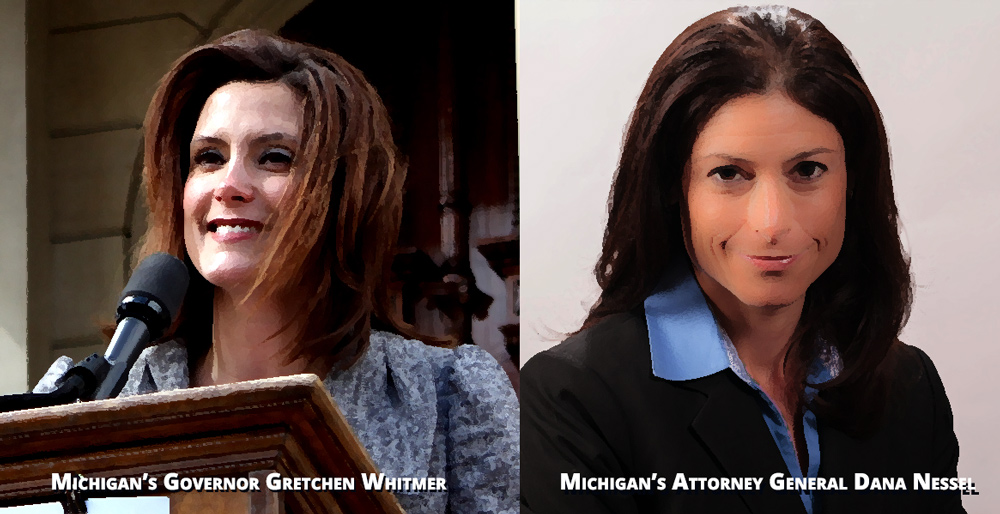
And few officials in these United States seem more “Chinazi” than Michigan’s Governor Gretchen Whitmer and her Attorney General Dana Nessel. 

Their authoritarian behavior has inspired quite a bit of anger, and even, it appears, plotting for a kidnapping.

Fortunately for citizens who voted these two lockdowners into office, insurrection is not necessary to re-establish a rule of law. Let mlive.com explain: “Earlier this month, the Michigan Supreme Court ruled that a 1945 state law Whitmer used to sign executive orders during the extended COVID-19 state of emergency was unconstitutional. The court said Whitmer did not have the authority to continue a state of emergency without the support of the Legislature, essentially ending her orders signed past April 30.”

Yet the AG has decided to enforce Whitmer’s unconstitutional edicts, nonetheless.

The political backlash is now quite legal and above-board, for the state’s Board of State Canvassers has approved petition language to recall Nessel.

On the petitions, which will be circulated on Election Day, the explanation for the recall will read as follows: “Dana Nessel, on Thursday, August 6, 2020, Announced plans ramping up efforts to enforce Gov. Gretchen Whitmer’s Executive Order 2020-148.”

The petition has been spurred by Albion, Michigan, resident Chad Baase. He is incensed, as he should be, that Nessel “violated her oath of office by enforcing an executive order which violated the Michigan constitution, therefore she violated the constitution.”

 “She needs to be held accountable,” Baase insists, and it’s great that he has found a peaceful way in democracy’s ultimate recourse: the recall vote.

This is Common Sense. I’m Paul Jacob.


PDF for printing

See all recent commentary
(simplified and organized)
See recent popular posts

Categories
ballot access initiative, referendum, and recall Voting

Worms for Early Bird Voting?

Election Day is six weeks away. Yet, in my home state of Virginia, voting began last week.

Is it responsible to cast a ballot so early? 

You may know with metaphysical certainty how you’re voting for president — even in the event of some major cataclysm — but have all the state rep and city council and ballot measure campaigns also played out fully enough for you?

Here in Virginia, we get few candidate races in our split-up state and federal elections, much less ballot issues to decide. I could have made all my (very few) choices months ago. But I trust that in a more competitive and healthy representative democracy we would more want to hear out the candidates.

A lot can happen in six weeks. And you cannot change your vote once it’s cast.*

The new Democratic-controlled Legislature — in reaction to the pandemic, to prevent crowding at the polls — expanded the early voting period this year. It started September 18 and ends October 31.** 

There are costs to expanding early voting — including making campaigns more expensive to run and win. Disabled from marshaling advertising into a two-or-three-week period before the vote, campaigns are forced to sustain publicity for a month. Or longer. 

While better-funded incumbents have little difficulty with the added cost, it cripples challengers. It especially handicaps grassroots ballot initiative proponents battling public employee unions or the Chamber of Commerce. 

Make the voting process comfortable and easy for citizens. But let’s be certain not to make it comfortable and easy for incumbents and special interests.

This is Common Sense. I’m Paul Jacob.


* In Sweden, you can change your early vote, informs my friend Bruno Kaufmann, a journalist and direct democracy advocate. They call it “second voting.” 

** Though several other states routinely allow more than six weeks of early voting.

PDF for printing

See all recent commentary
(simplified and organized)
See recent popular posts

Categories
initiative, referendum, and recall term limits

Lifetime Politicians Ruin Christmas

Legislators, anxious to further weaken their own term limits, placed Issue 2 on the Arkansas ballot. 

The current limit is already a loiteringly long 16 years — thanks to a dishonestly worded, legislatively referred 2014 ballot amendment, which weakened the voter-initiated limits.*  

Voters came back in 2018 to restore the original six-year House and eight-year Senate limits, placing a measure on the ballot that from various public reports received nearly 80 percent of the vote. But an Arkansas supreme court decision forbade counting those votes.

Still, politicians are back with another term limits attack. Issue 2 lowers the 16-year limit to 12 years. Huh, lowers? Stay with me. Issue 2 grandfathers everyone elected this year or before. Current office holders get the full 16 years — plus no lifetime limit (that gets nixed), allowing politicians to return for another 12 years after a short break. 

No wonder the citizens’ group Arkansas Term Limits opposes Issue 2, calling it “The Lifetime Politician Amendment.”

Not unrelated, there is also Issue 3. Arkansas legislators have repeatedly attacked term limits and the only way for citizens to get a real term-limit on the ballot: the citizen petition process. 

“Advocates acknowledged the amendment, [Issue 3], would make it harder to qualify proposals for the ballot,” the Arkansas Times’ Max Brantley explained, “but generally saw that as a good thing.”

One poison-pill provision would slice six months from the petition process, moving the deadline from warm, sunny July to cold, dark January — and forcing campaigns to flood Christmas shopping with petitioners trying to gather signatures.

Call it “The Ruin Christmas Amendment.” 

Putting 2 and 3 together: The Lifetime Politicians Ruin Christmas Amendments.

This is Common Sense. I’m Paul Jacob.


* Want to holler at that politician author who hoodwinked voters? Go to a federal prison . . . where Senator Woods relocated after convictionson political corruption. 


PDF for printing

See all recent commentary
(simplified and organized)
See recent popular posts

Categories
initiative, referendum, and recall insider corruption term limits

The Limits of Corruption

Another corrupt, term-limits-hating, careerist politician bites the dust. 

“Federal prosecutors say Republican Speaker Larry Householder and four others — including a former state GOP chairman — perpetrated a $60 million federal bribery scheme,” reports the Dayton Daily News, “connected to a taxpayer-funded bailout of Ohio’s two nuclear power plants.”

Last year, a citizen-initiated referendum campaign sought to give voters the final say on the legislature’s $1.5 billion baby. “The relentless machinations of HB 6’s backers,” Cleveland Plain-Dealer columnist Thomas Suddes points out, “kept [that] repeal effort launched against the bill off Ohio’s ballot.”

At a news conference to explain the arrest of Householder and his co-conspirators on racketeering charges, federal prosecutors detailed some of the ways the scheme illegally blocked last year’s referendum effort. 

Now, the rush is on to repeal House Bill 6.

Mr. Suddes is correct that “[t]he legislature also won’t be OK till voters amend the Ohio Constitution to make it easier to place issues on the statewide ballot for up-or-down votes.” 

But when he goes on to argue that term limits are “part of that problem”?

The only thing Ohio’s term limits need is to make the limits lifetime — forbidding legislators from returning after a timeout. Householder had previously been speaker from 2001 to 2004. “While he officially left office due to term limits,” informs the Plain-Dealer, “he departed Columbus amid an FBI investigation that closed without charges.”

Householder also came to our attention back in March, when he called Ohio’s eight-year limits “pretty oppressive.” Before the pandemic, he was pushing a ballot measure designed to weaken the term limits law and serve until 2036 — foreshadowing what Putin* did later in Russia. 

This is Common Sense. I’m Paul Jacob.


* I referred to them as “two pols in a pod,” but now, Householder reminds me more of former Arkansas State Sen. Jon Woods, who after sponsoring a deceptive ballot measure to weaken term limits was convicted on multiple felony charges and is serving his current term in prison.

PDF for printing

See all recent commentary
(simplified and organized)
See recent popular posts

Categories
initiative, referendum, and recall national politics & policies

Greater Idaho Goes Forward?

An Oregon casePeople Not Politicians v. Secretary of State Clarno, was decided last week in favor of People Not Politicians, a group that has struggled obtaining signatures to qualify Initiative Petition 57 (IP 57) for the November 2020 ballot — while observing the governor’s stay-at-home orders.

It is hard to collect petition signatures under social distancing.

So the court is forcing the Secretary of State to give the group some leeway in advancing their redistricting measure.

This is good news for another citizen activist group, Move Oregon’s Border. Chief Petitioner Mike McCarter wants to place initiatives on county ballots in eastern, southern, and southwestern Oregon. His idea is to split off from Willamette Valley politics altogether, leaving wokester Portland — of the comedy Portlandia and antifa riots fame — in the distance.

But he does not want to form a new state. The secession is mere prelude to accession . . . to Idaho!

It has been a long time since the United States has fissioned a state, West Virginia during the Civil War being the most recent — Maine and Kentucky before that.

Great idea? Well, this goes far beyond these two western states. California is ripe for break-up, for by such a political reformation the ratio of citizens to representatives could be increased in favor of citizens.

The idea of calling the proposed new, larger State of Idaho “Greater Idaho” seems a bit much. Surely “Idaho” would do.

But the idea is politically more possible because it wouldn’t change the partisan complexion of the United States Senate, thus avoiding riling up one of the two major parties.

Other fissions, and fusions, would be much harder. Too bad. People should be able to insist on better representation. Democratically.

This is Common Sense. I’m Paul Jacob.


PDF for printing

See all recent commentary
(simplified and organized)
See recent popular posts