Categories
election law initiative, referendum, and recall local leaders

Obscenely Unacceptable

“F*ck this sh*t.”

That’s how the erudite opponents of Michigan’s Citizen Only Voting Amendment responded to supporters submitting a petition with more than 750,000 voter signatures to place the measure on the November ballot. 

Sans the asterisks, actually, which I supplied.  

Back in 2022, these oppositionists, fraudulently calling themselves Voters Not Politicians (VNP), helped politicians weaken Michigan’s voter-enacted term limits. 

Now they’re fighting an initiative that I’m promoting, which would: (1) clarify that only U.S. citizens are eligible voters at the state and local level, (2) mandate that the Secretary of State check the voter rolls to ensure it contains only citizens, and (3) require photo ID to vote.

VNP argues this measure is “voter suppression,” after actively urging their liberal activists to “disrupt circulation” of our petition in order to suppress a vote on it. “If this campaign gets enough signatures to get their proposal on the ballot,” VNP acknowledged, “it’s likely to pass.”

Why might voters support the amendment? 

“In Michigan, there have been incidents where non-citizens have not only been allowed to register but then were able to cast ballots,” explained a recent Detroit News editorial. “While the number of incidents is few, that the loophole exists at all is unacceptable.”

At a capitol news conference before delivering 199 boxes of petitions, Sen. Ruth Johnson, a former two-term Secretary of State, told reporters, “You need ID to get a library card to check out a book. You need ID to get a fishing license. And you should have an ID to vote.”

“Only citizens of the United States should be voting in our elections,” offered Rep. Ann Bollin, a former local election clerk. “It is not rocket science. It is common sense.”

This is [expletive deleted] Common Sense. I’m Paul Jacob. 


PDF for printing

Illustration created with Nano Banana

See all recent commentary
(simplified and organized)
See recent popular posts

Categories
crime and punishment initiative, referendum, and recall

Petition Cop Stop

“Petition fraud investigator hired by Arkansas secretary of state’s office,” headlined an article in the Arkansas Democrat-Gazette, “checks canvassers at church.”

Patrick Hall was the government agent who whipped out his badge on a couple of Arkansans. Why? They had been wantonly using their First Amendment rights to petition their government last week outside Little Rock’s Unitarian Universalist Church.

“I did feel a little bit intimidated,” volunteer petitioner Julie Taylor acknowledged, after being questioned and ID’d by Barney Fife — er, Mr. Hall.

Samantha Boyd, a spokesperson for the secretary of state’s office, confirmed that Hall had stopped the petition circulators, demanding and photographing their IDs.

“Our office would like to emphasize that no one is ever required to provide proof of identification or engage with our employees,” she said, defending his actions, “it is voluntary,”

She further explained that Hall’s was a “non-law enforcement position created to organize any reports of petition fraud.” So, why brandish the badge? And what reports did he hope to “organize” by playing cop?

Amusingly, one of Officer Hall’s questions regarded whether Taylor needed to check his ID to collect his signature on her two petitions. While a statute requiring petitioners to view the government ID of every would-be petition signer had passed Arkansas’s legislature, it was recently blocked by a federal judge because it “likely infringed on First Amendment rights.”

So, here is Secretary of State Cole Jester’s office using a pretend policeman to harass citizens engaged in First Amendment activity in order to push compliance with a law that has been enjoined for its obvious unconstitutionality.

One of the petitions Taylor was carrying “would give citizens a fundamental right to sign and circulate petitions,” and — as the organization that sponsored it (Protect AR Rights) puts it — “protect the process from irregular, unauthorized, or politically motivated interference.”

Viva la initiative!

This is Common Sense. I’m Paul Jacob.


PDF for printing

Illustration created with Nano Banana

See all recent commentary
(simplified and organized)
See recent popular posts

Categories
initiative, referendum, and recall local leaders

Deliciously Dead

The bill died. Had it lived, it would have — in the words of Tim Eyman — taken away Washington State voters’ “right to initiative, they would stop all dissent.” 

Who’s the “they”? Democrats running the State legislature, who had, Eyman says, been “pushing this thing really hard this session.”

But they gave up. The opposition to the bill was just too strong. Democrats let it die before the scheduled vote on the Senate floor. 

So what was wrong with the bill? 

“SB 5973 would have required a minimum of 1,000 signatures to be submitted to the Secretary of State from those who support the measure, before the issue is given an official title and signature gathering can begin to ensure ‘viability’ of the issue,” explains Carleen Johnson of The Center Square. It would “also have banned the practice of paying signature gatherers for the number of signatures they acquire.”

It was, as opponents called it, an “initiative killer.” You can see why fighting the bill was so important. 

And remember, “initiative killers” are everywhere — at least everywhere initiative and referendum rights are in place. 

Politicians, who allegedly serve citizens, don’t like it when citizens work around their machinations. So they regularly throw up roadblocks to the initiative process — anything to make it harder for citizens to limit their incessant lust for more taxes, terms of office, etc.

Citizen activists all across the country have their work cut out for them. But, until the next major legislative attack (tomorrow): celebrate!

And don’t forget to thank Tim Eyman and other Washington activists for stepping up to defend everyone’s rights.

This is Common Sense. I’m Paul Jacob.


PDF for printing

Illustration created with Nano Banana

See all recent commentary
(simplified and organized)
See recent popular posts

Categories
initiative, referendum, and recall

Initiative Killers

“Almost nothing is more sacred for the voters,” says Sam Reed, former Secretary of State in Washington State, “than their right to petition to change laws or to refer laws to the voters.”

He reminded members of the Senate State Government and Elections Committee that “the initiative process is utilized by progressives, conservatives, and nonpartisan individuals. . . . For over 100 years, the initiative process has served our citizens well and any changes made to it must be justified.”

Reed argues that the changes in Senate Bill 5973 (as well as in House Bills HB 2599 and 2260) are in no way justified.

“The stated reason for this bill is to stop fraudulent or forged signatures from being counted. But that’s already being done. Besides substantial penalties deterring such actions, the Secretary of State is extremely diligent and reviews every petition sheet and every signature and any that are even remotely questionable are set aside and never counted.” This means that “all of SB 5973’s requirements will substantially burden the Secretary of State’s already overworked staff and the citizen signature gathering process without any added benefit.”

The bills add more requirements that end up being more burdensome on an already high-hurdled petitioning process.

“All aspects of the proposed bill (SB 5973 / HB 2599) impose severe restrictions, limitations, and onerous requirements on circulators and ballot measure campaigns,” adds attorney Nicholas Power, pointing out that the bill’s intent section “admits there hasn’t been any fraud for 12+ years.”

What’s really going on with these bills?

Politicians generally don’t like citizens creating laws any more than they like citizens limiting their terms in office. It really cramps their style.

So, they want to kill the initiative. Instead, let’s keep cramping their murderous style.

This is Common Sense. I’m Paul Jacob.


PDF for printing

Illustration created with Nano Banana

See all recent commentary
(simplified and organized)
See recent popular posts
Categories
initiative, referendum, and recall

A Place Without Hope?

“Don’t lose hope.”

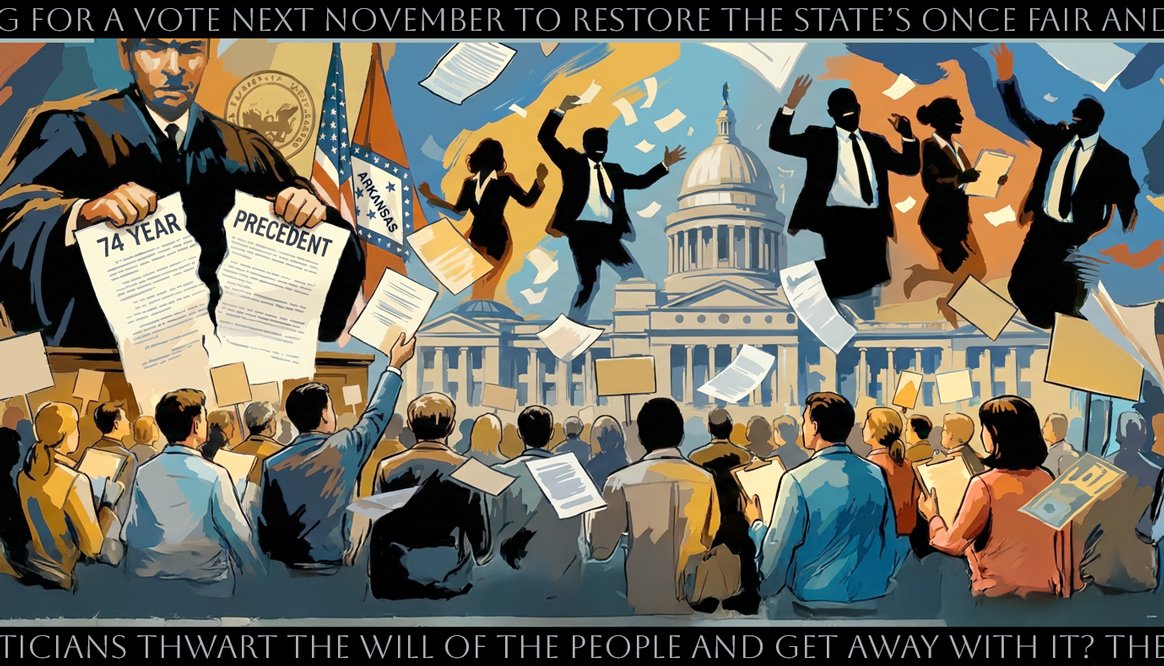
That’s what Bonnie Miller, president of the League of Women Voters of Arkansas, told her fellow Arkansans after the state’s highest court overturned a 74-year precedent. The justices ruled that constitutional amendments passed by citizens’ initiative can be amended or repealed by legislators with a two-thirds vote of both chambers. 

Without the issue ever going back to voters.

Sure, this might seem to follow from a constitutional provision: “No measure approved by a vote of the people shall be amended or repealed by the General Assembly . . . except upon a yea and nay vote on roll call of two-thirds of all the members elected to each house of the General Assembly . . .”

But in 1951, the Arkansas Supreme Court declared it “inconceivable” that “the General Assembly could amend or repeal a constitutional amendment initiated by the people,” concluding that the term “measure” simply did not apply to a constitutional amendment. Today’s Supremes reversed this bedrock understanding, thereby empowering the legislature. (Note that the legislature is not seeking to overthrow their own constitutional amendments.)

For more than a decade, the Natural State’s solons have passed statute after statute — and even proposed several constitutional amendments — designed to destroy the citizen initiative process. Their attempts have been consistently defeated by voters at the polls. In addition, last month a federal judge finally struck down several burdensome restrictions that legislators had passed on petitioning.

Now there are also two ballot initiatives — one by Protect AR Rights and another by the League of Women Voters — petitioning for a vote next November to restore the state’s once fair and accessible ballot initiative process.

How long can politicians thwart the will of the people and get away with it? The people of Arkansas are finding out.

This is Common Sense. I’m Paul Jacob.


PDF for printing

Illustration created with Nano Banana

See all recent commentary
(simplified and organized)
See recent popular posts

Categories
general freedom initiative, referendum, and recall

A Sporting Chance

Maine may become the first state to place a Protect Girls Sports measure on the statewide ballot. 

A group appropriately enough called Maine Girl Dads has been standing up on this issue and constitutes the core of a newly formed ballot question committee, Protect Girls Sports in Maine. On Election Day weeks ago, the committee launched an initiative petition that needs 68,000 registered voter signatures in order to give voters the choice to designate public school sports as male, female or co-ed. 

Let every person participate. But stop allowing males to enter and dominate sports set aside for women. Or to lurk in their locker rooms.

It’s no wonder why the issue of permitting 6’4’ men transitioning to identify as women to compete against females has caused a stir — they’ve won competitions by wide margins, setting new records.

And, in several cases, the dangerous physical mismatches created have also resulted in injuries to women.

That’s not sportsmanlike, for there are very real biological differences between men and women and, in virtually every athletic activity, men have significant physical advantages: speed, quickness, strength. 

Which is why there has been no issue with women transitioning to identify as men competing in men’s sports. Because they are at a distinct disadvantage and, therefore, not a factor. 

Over the weekend, I traveled to Portland to hear NCAA champion swimmer Riley Gaines speak and learned that the Protect Girls Sports effort has surpassed 68,000 signatures and is now working on extra signatures to thwart any possible challenge.

“It’s time we made Maine Girl Sports safe for girls again,” says Alisha Lawson of Moms for Maine Girls, adding that the measure will be: “Common Sense. Voter Enacted.”

I’m all for it.* I’m Paul Jacob.


* To be clear, I’m actively helping this Maine campaign.

PDF for printing

Illustrations created with Krea and Firefly

See all recent commentary
(simplified and organized)
See recent popular posts

Categories
crime and punishment ideological culture initiative, referendum, and recall

Mostly Democratic

An email from Voters Not Politicians (VNP) predicts that if a certain popular ballot measure gets enough signatures “it’s likely to pass.”

Great! Wonderful to see democracy in action, eh?

Not so much for this leftwing political action committee, however. “We have to keep this proposal off of Michigan’s ballot in 2026,” the email went on.

The initiative petition in question is Michigan’s Citizen Only Voting Amendment, which (1) clearly establishes that “only” U.S. citizens are eligible voters in all state and local elections, (2) mandates that the Secretary of State check the voter rolls for citizenship status, and (3) requires photo ID to vote. 

Polls have shown upwards of 80 percent of Michigan voters support the measure. Perhaps spurred on by the noncitizens who were shown to have voted unimpeded in last November’s presidential election.

How will VNP honchos accomplish their mission of suppressing a petition for a public vote on this ballot initiative? They urge folks to “learn how to peacefully disrupt circulation.” 

“Disrupt”? That doesn’t quite go with “peacefully.” 

Last month, Charlie Kirk was assassinated speaking on a college campus. According to a recent poll,* the percentage of Democrats who believe “Americans may have to resort to violence” to achieve political goals has doubled this year. Back in April, a survey found that a majority of self-identified “left-of-center” respondents agreed it was “somewhat justified to murder President Trump.” The same survey found that 15 percent found it “completely justified.”

Destroy democracy to save it? 

As chairman of Americans for Citizen Voting: We won’t let you. Stop trying to block us and others from speaking. Instead, speak out against our measure to your heart’s content. 

I also suggest looking for a rallying slogan that fits better with “peacefully.” 

This is Common Sense. I’m Paul Jacob.


* From 12 percent of Democrats saying so in May of 2024 to 28 percent this year. The percentage of Republicans believing violence may become necessary is higher still — 29 percent in 2024 and 31 percent in 2025. A whopping 77 percent of the public cited political violence as “a major concern.”

PDF for printing

Illustration created with Krea and Firefly

See all recent commentary
(simplified and organized)
See recent popular posts
Categories
initiative, referendum, and recall international affairs

Democracy Defending Democracy

This year’s most important election takes place tomorrow. 

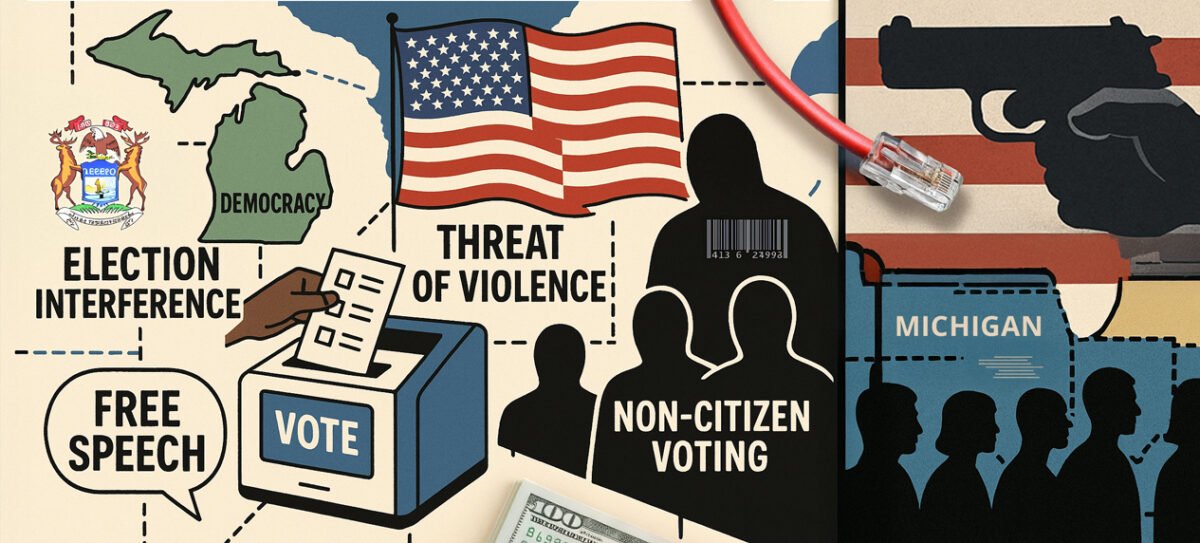
On Saturday, in Taiwan — Asia’s most democratic nation — more than 20 percent of the country’s unicameral legislators serving in the Legislative Yuan will face the voters in a massive, multi-step, typhoon-size recall campaign. 

Coinciding with a real typhoon striking this island nation. 

Which could impact turnout. 

Which matters. 

To successfully oust each officeholder, both a majority of the turnout must agree as well as for that majority to equal 25 percent of all the registered voters in the district. 

“Supporters of the recall movement have portrayed their campaign as ‘anti-communist,’” reports CNN, “seeking to get rid of ‘pro-China’ opposition KMT lawmakers they perceive as collaborators of Beijing’s ruling Communist Party, which vows to ‘reunify’ Taiwan, by force if necessary.” 

Taiwan has divided government. President Lai Ching-te heads the Democratic Progressive Party (DPP), which does not desire reunification with Chinese Communist Party-ruled China, either by force or surrender, and has been working to improve Taiwan’s military posture. The 113-seat Legislative Yuan, controlled by a coalition between the Kuomintang (KMT) and the smaller Taiwan’s People Party (TPP), has “undermined democratic institutions and national security by obstructing Lai’s administration,” including “freezing defense spending” when China’s military threats are escalating.

The KMT has 24 legislators up for recall tomorrow and another seven in a recall election next month. Meanwhile, KMT efforts to respond by launching recalls against DPP lawmakers completely fizzled. 

Taiwanese billionaire Robert Tsao, a major backer of the recall effort, labeled the 31 KMT lawmakers being recalled “China’s ‘Trojan Horse’ in Taiwan.” 

A KMT official recently called the recall “totally unconstitutional and undemocratic.”

Really? The main point of democracy is to allow the peaceful removal of government officials.

This is Common Sense. I’m Paul Jacob.


PDF for printing

Illustration created with Krea and Firefly

See all recent commentary
(simplified and organized)
See recent popular posts
Categories
initiative, referendum, and recall secession

Seceding from Chicago

Thirty-three rural Illinois counties have voted — count ’em, 33, with seven added just last November — to secede from their state.

Sort of.

The citizens of those counties have approved non-binding measures saying they wish to secede. In this case, the initiative and referendum process has been used as a form of petitioning.

They want a divorce. From Chicago and Cook County. 

The reasons? The age-old country-city divide: taxes, scope of government, a complete clash of values.

On the table are two counter-offers.

“Instead of seceding and forming a 51st state,” suggests Indiana’s Speaker of the House Todd Huston, “they should just join us.”

This is pretty much what the Oregon secessionists are trying to do with their “Greater Idaho,” as covered here in the past.

In February, the Indiana House passed a bill to create a bipartisan committee to explore the notion; it now heads to the Senate.

Indiana’s lieutenant governor said it would “Make Illinois Great Again.”

Illinois’s governor, on the other hand, dubbed it a “stunt.”

But District 109 State Representative Charlie Meier has taken those 33 expressions of extreme dissatisfaction seriously, offering an alternative: reconstruct the State Senate so that one senator would be elected from districts made up of three contiguous counties, rather than the cumbersome gerrymandered array that  has been legally challenged by Republicans — giving rural counties more say, more political oomph.

For that’s what it’s really about.

Note that two previous attempts to separate from Chicago and Cook County  — in 1925 and 1981 — hailed from the Windy City itself. 

Now it’s the rest of the state that wants out.

Interesting development in comparative power and grievance, no?

This is Common Sense. I’m Paul Jacob.


PDF for printing

Created with Krea and Firefly

See all recent commentary
(simplified and organized)
See recent popular posts

Categories
initiative, referendum, and recall Update

Measures for Measures

November 2024: There were 146 ballot measures certified for statewide ballots in 41 states. On the Fifth, “Election Day,” these measures were decided by voters. 

According to Ballotpedia, from “2010 to 2022, the average number of statewide ballot measures in an even-numbered year was 161,” making 2024 slightly below average — noting that Louisiana will decide four constitutional amendments on December 7, and five states decided nine measures earlier in the year, bringing the total for the year up to 159.

  • A record number of abortion-related measures were decided this year: eleven.
  • Drug-use policies were on state ballots, including for marijuana (recreational, three; medicinal, two) and psychedelics: six
  • Democratic processes were on state ballots, including both for and against ranked-choice voting: ten.
  • Democratic processes more specifically about voting were also on state ballots, including citizenship requirements (all passed) and voter i.d.: ten
  • Labor policies, including minimum wage policies, were on ballots as well: seven.
  • The number of education-related measures was the highest in in 18 years: twelve

Ballotpedia is a great resource, and if you are looking for good information about what people are voting for and against, ballotpedia.org should be your first resource.