Categories
Accountability general freedom government transparency media and media people nannyism national politics & policies responsibility too much government

Ad Budget Slashed

Republican politicians, who had been running since 2010 on killing ObamaCare, did not. Not when they had a chance. Despite dominating Congress, they failed, because

  1. they opted for a goofy way to do it (the House’s AHCA plan being a terrible mess, probably worse than the monster it was trying to replace) and
  2. partly because the libertarians — along with a few “liberal” Republicans — blocked it in the Senate.

But that’s the olds; here’s the news: the Trump Administration has cut back ObamaCare’s advertising budget.

Progress?

I’m not sure. Maybe. Probably not.

The facts: ObamaCare outreach has been cut by 90 percent, and outsourcing grants to groups engaging in sign-up efforts have been cut by 40 percent:

The Trump administration downplayed the impact of boosted ad spending, noting that during 2017 open enrollment there was a decline of 5 percent in overall sign-ups. It also saw a 42 percent decline in first-time enrollment and enrollment of people who pay their premiums decline by 500,000 people.

So, it seems natural to respond to a perceived decline in “demand” with a reduction in “supply” — or any attempt to drum up more “customers” for subsidized policies.

Also natural is the partisan fall-out, with Democrats crying “foul” over the decided lack of support for their program. As Peter Suderman noted over at Reason, ObamaCare became partisan because it started out partisan.

But it was always — from conception in the Heritage Foundation braintrust* to its current choking gasps — an unworkable monstrosity.

And folks of all parties — and none — should be able to understand that.

This is Common Sense. I’m Paul Jacob.
 

* Note: the Heritage folks not unreasonably distance themselves from their past association with some of ObamaCare’s core notions, and others are skeptical of the distancing.


PDF for printing


Categories
Accountability free trade & free markets general freedom national politics & policies property rights Regulating Protest

Union Dues, Don’ts

You may soon be able to shred your union card — if you are careful.

By “you” I mean You, the reluctant union member.

If you’re not one, though, perhaps you know somebody who is, someone who’d be happy to learn that the Supreme Court is on the verge of dealing a huge setback to coercive unionism.

John Hinderaker explains at Power Line. The Supreme Court is expected to soon decide a major case in a way that “bar[s] public employees from being forced into unions, or from being required to support unions via the fiction of ‘fair share contributions.’ ” (Much of that money goes straight to Democratic Party coffers.) With Neil Gorsuch now on the bench, a 4-4 holding pattern is expected to become a 5-4 decision in favor of plaintiffs suing for freedom from mandatory union membership.

Sounds good.

Problem is, though, that union officials are working to trick members into paying dues in perpetuity. For example, Education Minnesota is trying to con its 86,000 teachers into signing “Membership Renewal” forms assenting to automatic renewal of fees – unless the signatory makes a special effort to opt out.

The union hopes members will sign the cards and forget about them, continuing to fund the unions, and Democratic politics, indefinitely — even if the high court rescues everyone from mandatory membership.

So, if you happen to be trapped in a union at the moment — watch what you sign. And watch the news.

This is Common Sense. I’m Paul Jacob.


PDF for printing


Categories
Accountability crime and punishment folly general freedom ideological culture local leaders media and media people moral hazard national politics & policies political challengers property rights Regulating Protest responsibility

Alt-Comparisons

“There is no comparison,” concluded Washington Post columnist Margaret Sullivan, after spending her entire column doing just that, i.e. comparing Antifa, the so-called “alt-left,” with Nazis and white supremacists, the so-called “alt-right.” 

When Trump spoke about Charlottesville violence on both sides, Sullivan argued, “He was comparing things that aren’t the least bit equal, neither in scale nor in intent.”

Sullivan trumpeted statistics compiled by the Anti-Defamation League. The U.S. had 372 politically motivated murders between 2007 and 2016, with 74 percent committed by right-wing extremists and only 2 percent by left-wing extremists.*

Yet, those perpetrating 2 percent of such slayings can legitimately be compared to those perpetrating 74 percent — and also likened to thugs who beat down opponents in the street (thankfully without murdering them).  

All of the above use violence to achieve political goals.** Some are more deadly than others, but the violent actions of all should be condemned. 

Sullivan acknowledged that “it’s safe to say that most news consumers, if they know anything about antifa, know what the president has told them, and what they’ve gleaned from the club-wielding protesters shown endlessly on TV . . .”

Are citizens not supposed to take note of the violence in living color right before their eyes?

And why are folks uninformed? Could the mainstream media’s failure adequately to cover, say, previous Antifa rioting at Berkeley and elsewhere have something to do with it?

Lastly, Sullivan called on the media “to resist conflating [Antifa] with liberal groups.” Agreed. And let’s have the same fairness in not conflating Nazis and the KKK with conservatives.   

This is Common Sense. I’m Paul Jacob. 

 

*  By the process of elimination, “moderate extremists” are apparently committing close to a quarter of all political killings.

** I’ve not drilled down into these stats, or figured out what, precisely, qualifies as “political.”


PDF for printing


Categories
free trade & free markets general freedom ideological culture national politics & policies

Workers’ Days

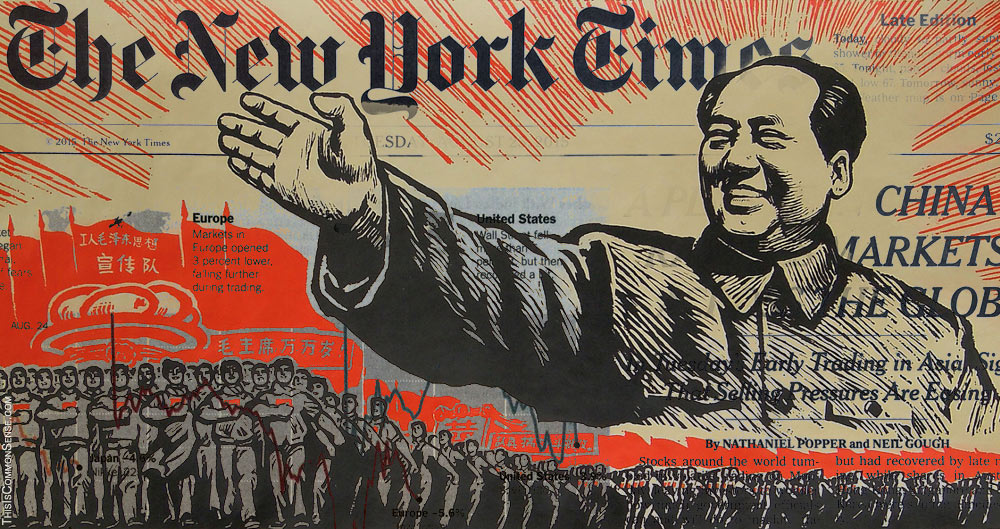
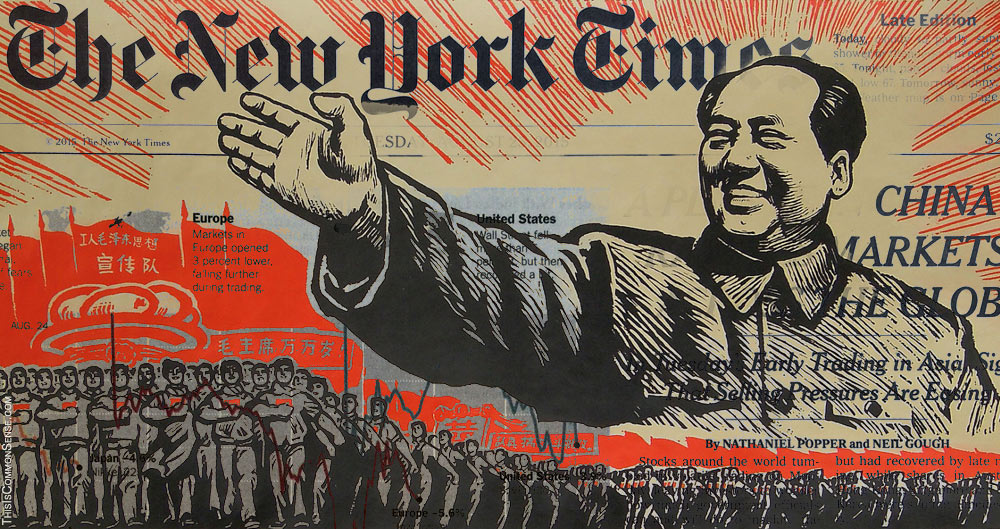
Today is Labor Day. But it is worth remembering, “Labor Day” in most other countries is May 1 — also called “International Workers’ Day.”

One thing to be thankful for on our American Labor Day is that we can celebrate labor — perhaps, like me, you will celebrate it by working! — and not have it serve as a celebration of communism.

For yes, it was the socialists and communists who cooked up the original May Day labor celebration, in part to commemorate 1886’s workers’ protest gone horribly wrong, the Haymarket debacle. In the 19th century, much of the impetus for collectivism came from workers themselves, under the impression that they could do better if they rebelled and expropriated the capitalists’ holdings and “worked for themselves.”

For some reason these activists rarely struck out on their own, becoming entrepreneurs.

Nowadays, alas, many top-level entrepreneurs lean toward socialism, and it is the non-government working people who resist more government, and thereby the socialist program. Indeed, the most enthusiastic clade of socialists in America today seem to be in the ranks of the unemployed.*

Oregon was the first of these United States to make an early September celebration an official Labor holiday, in 1887. Seven years later, the federal government got on board. President Grover Cleveland signed it into law soon after the disastrous Pullman strike, to promote a more rule-of-law friendly celebration of workers, and avoid thinking about rioting and murder and police violence.

So, even folks like me, who labor in the vineyards of the people’s politics while still supporting private property and freedom of contract, can celebrate.

Or take a last summer nap.

Without any communists hiding under the hammock.

This is Common Sense. I’m Paul Jacob.

 

* In less than two centuries, socialism went from proletarian to Lumpenproletarian. Karl Marx? Rolling over in his grave.


PDF for printing


Categories
Accountability general freedom initiative, referendum, and recall local leaders political challengers Regulating Protest too much government

Know Your BS

“Help me get my B.S. in the voters pamphlet,” read the subject-line of Tim Eyman’s email

Eyman is a practitioner of the art of the voter initiative, foremost in his state, Washington, and one of the most effective nationwide.*

This particular call to action concerns the voter pamphlet statements about a tax increase placed on Washington State’s November ballot by the mayor and city council in Tim’s hometown of Mukilteo.

“In the pro statement,” Eyman explained, “they wrote that the need for the tax increase was ‘indisputable.’” Which his rebuttal countered with: “Politicians always say the need for higher taxes is ‘indisputable.’ We call B.S. on that.”

It is rather to the point.

But soon he received word from the city that, “The Auditor feels the language is inappropriate and would like you to choose different wording.” Rather than “We call B.S. on that,” it was suggested that he might use: “We call foul.”

Eyman objected. He pointed out that B.S. is used ubiquitously; he sent the city examples.

“I called the ACLU,” his email noted, and “they thought it was B.S. for the government to say you can’t say B.S.”

Eyman’s own attorney, Stephen Pidgeon, sent the city a detailed letter pointing out that this is exactly the speech protected under the First Amendment.**

The City of Mukilteo has yet to announce a final decision. Tim Eyman invites all of us to send an email to encourage the city to Let Eyman Keep his B.S. in the Voters Pamphlet.

This is Common Sense. I’m Paul Jacob.

 

* He was once even dubbed “America’s No. 1 freedom fighter” — by me.

** Pidgeon also offered, “While the pious may construe the inference of these two alphabetic avatars as meaning something crude, my client may very well have been referencing an ancient Latin phrase ‘Bubulum Stercus’ which no average voter would ever find inappropriate.”


PDF for printing


Categories
Accountability folly free trade & free markets general freedom ideological culture media and media people nannyism national politics & policies too much government

Political Regroupings

What’s true for hurricanes is true for the Democratic Party.

After a disaster, it takes a while to regroup, really get a handle on what went wrong. Men and women take some time to absorb new realities.

A few interesting think pieces have come out of the left and center-left, recently, trying to digest what is wrong with the Democrats that they lost so much ground last year — even to someone like Donald Trump. To serious people, the “Russians did it” and “the Deplorables!” are not exactly winners.

Hillary Clinton may be stuck in that mode, but the Democratic Party needn’t be.

The more radical response came from John B. Judis, whose name was big in lefty magazines when I was young. His article “The Socialism America Needs Now,” in his old stomping grounds, The New Republic, tried to make the case for a vague leftism that could be called socialism, if you stretch the term, emphasizing bigger government without seeming too . . . Marxist.

Meanwhile, Mark Lilla has a new book of a somewhat more perceptive nature. Interviewed in Salon, Lilla makes much of the fact that while “smack in the middle” of the GOP’s website “is a list of 11 principles” . . . the Democratic Party could sport “no such statement.” Just a bunch of interest groups.

Interesting. Because, today, I went to GOP.com and saw no such principles list. But I did find a lot of Trump stuff . . . and a bunch of links to “identity groups.”

Talk about regrouping!

This is Common Sense. I’m Paul Jacob.


PDF for printing


Categories
Accountability crime and punishment First Amendment rights general freedom media and media people moral hazard nannyism national politics & policies property rights responsibility too much government

Google: Disagreement

Once upon a time, Google penned a stern note to self: “Don’t be evil.”

What you regard as avoiding evil, though, depends on what you regard as doing good.

Does Google think it’s “good” to fire someone for offering reasoned objections to vapid pieties about why there are more men than women working as programmers, and about how to fix the problem? Assuming it is a problem.

If the answer is yes, then it’s up to more reasonable people to say, “No, Google, stomping on candid internal discussion of your (bad) politics and policies is not ‘doing good.’”

Alas, some Google critics push for a “remedy” worse than the problem: government force. They want government to impose new prohibitions and mandates on large private firms that help people to spread their opinions.

I don’t necessarily agree when a firm — Google, Twitter, PayPal or anybody else — stops providing services to persons expressing views that managers and HR departments disdain. Yet I may agree. No one is morally obligated — and no one should be legally compelled — to help spread the views of others.

I certainly refuse to distribute any installment of “Common Sense” guest-authored by The Anti-Paul-Jacob Club.

When market actors make bad decisions without violating anyone’s rights, others have many powerful and peaceful means of opposing those decisions. Criticism. Boycott. Competition.

But we shouldn’t seek to outlaw the decision-making.

The right to freedom includes no guarantee that one will always do the right thing as others see it.

This is Common Sense. I’m Paul Jacob.


PDF for printing


Categories
Accountability folly general freedom moral hazard national politics & policies

Of Course, You Know, This Means War

When Steve Bannon was booted out of the White House, my thoughts turned immediately to war. As I wrote in frustration on Friday,

Bannon’s departure probably means the slim chance that the US might withdraw from “our” open-ended, never-ending occupation of Afghanistan has been foreclosed.

If we don’t win the war by ushering in a completely transformed, modernized and westernized Afghanistan, at least our children and grandchildren and great grandchildren, etc., etc., will each have. their turn.

Of course, if the fabled “Graveyard of Empires” continues to work its historic magic, maybe future generations won’t face that burden: the United States could fall . . . as a worldwide imperial presence. And, if our global military archipelago fails — for, say, want of wealth to throw overseas — do we have any reason to believe that our republic would bounce back?

There remains more than enough reason to work for foreign policy sanity.

Prior to his evening national address on the day of the eclipse, Trump explained what he intends to do in Afghanistan — send 4,000 more troops.

Meanwhile, Steve Bannon’s door-slapped rump did not dissuade him from tweeting out what he intends to do “on Capitol Hills, in the media, and in corporate America”:

If there’s any confusion out there, let me clear it up: I’m leaving the White House and going to war for Trump against his opponents. . . .

Call this the Bugs Bunny Policy: “Of course, you know, this means war!

And considering the promises made in the President’s speech, we can amend that to “of course, this means never-ending war.”

This is Common Sense. I’m Paul Jacob.


PDF for printing


Categories
Accountability general freedom local leaders term limits too much government

Term Limits for the Memories

Opponents say term limits destroy “institutional knowledge.”

Imagine legislatures where unsophisticated solons blindly fashion public policies lacking any knowledge of the pluses or minuses of past legislation.

Well . . . actually that explanation bears a striking resemblance to the status quo in our career-dominated Congress. Who wants that?

Now comes an interesting real-world example of such institutional memory: term limits itself.

Back in 1991, residents of Jacksonville, Florida, petitioned a limit of two consecutive terms for city council members onto the ballot — after the city council voted not to place it before voters. When voters had their say, a very loud 82 percent endorsed term limits.

The Florida Times Union called it a “landslide decision.”

That was 26 years ago.* Last month, Councilman Matt Schellenberg proposed that the voter-enacted two-term limit should be replaced by a more politician-friendly three-term limit. He wants to stay in office for 12 years, rather than just eight.

“I think we restrict democracy when we put limits on us,” he declared. “I find the position of being on the council for 12 years is a perfect number . . .”

That’s when Councilman John Crescimbeni offered a dose of outside-the-institution memory, explaining that council members who voted against placing term limits on that 1991 ballot were run over.

“Six of the ten people who voted against [term limits] didn’t come back to office,” Crescimbeni warned. “If you want to push the green button tonight, I suspect that’s going to seal your fate.”

Suddenly, the city council decided to push off making any decision . . . until this week’s meeting. **

This is Common Sense. I’m Paul Jacob.

 

* A new poll commissioned by U.S. Term Limits shows  that Jacksonville voters oppose weakening their term limits law by a better than four-to-one margin.

** Your displeasure can be communicated to the Jacksonville council by calling (904) 630-1377.


Printable PDF


Illustration based on a photograph by Mark Bonica


Categories
Accountability folly general freedom ideological culture media and media people moral hazard nannyism national politics & policies too much government U.S. Constitution

Statues and Limitations

“Should they take down the Jefferson Memorial?”

That is what PBS’s Charlie Rose asked Al Sharpton. Now, the “Reverend” is not my go-to source for political insight, but his answer* caught my attention.

“I think that people need to understand that, when people that were enslaved and robbed of even the right to marry and had forced sex with their slave masters, this is personal to us,” replied Rev. Sharpton. “My great-grandfather was a slave in South Carolina . . . Our families were victims of this.”

Asked if this precluded “public monuments” for “everyone associated with slavery,” Sharpton argued: “When you look at the fact that public monuments are supported by public funds, you are asking me to subsidize the insult to my family.”

One can attack the messenger, Sharpton, sure. But what if we instead think of him as our neighbor? I certainly wouldn’t want to insult a neighbor, much less make him pay for the privilege.

Notably, the Reverend embraced privatization, suggesting, “You have private museums.” Privatizing controversial monuments would certainly solve Sharpton’s stated problem.

Of course, the logic behind taking down statues or dismantling the Jefferson Memorial — or merely privatizing them — might also lead to changing the names of cities, counties and states, rivers and mountains. And it’s not just Washington and Jefferson — twelve presidents were slave owners, including Union General U.S. Grant.

Who knows how many are undeservedly memorialized?

Frankly, I’ve never liked the name of my Virginia county: Prince William. A liberty-loving people ought not be stuck with such a monarchial brand.

Let the people decide.

But by vote, not street brawl.

This is Common Sense. I’m Paul Jacob.

 

* This exchange begins at the 15:22 mark in the interview.


PDF for printing