Categories
Accountability folly general freedom local leaders media and media people moral hazard national politics & policies responsibility

Another Election “Against”

As I write, Democratic candidate Doug Jones has just taken the stage to declare himself the winner of the Alabama Senate race, the one in which Roy Moore became more infamous than famous, and better known for the worst kind of reasons.

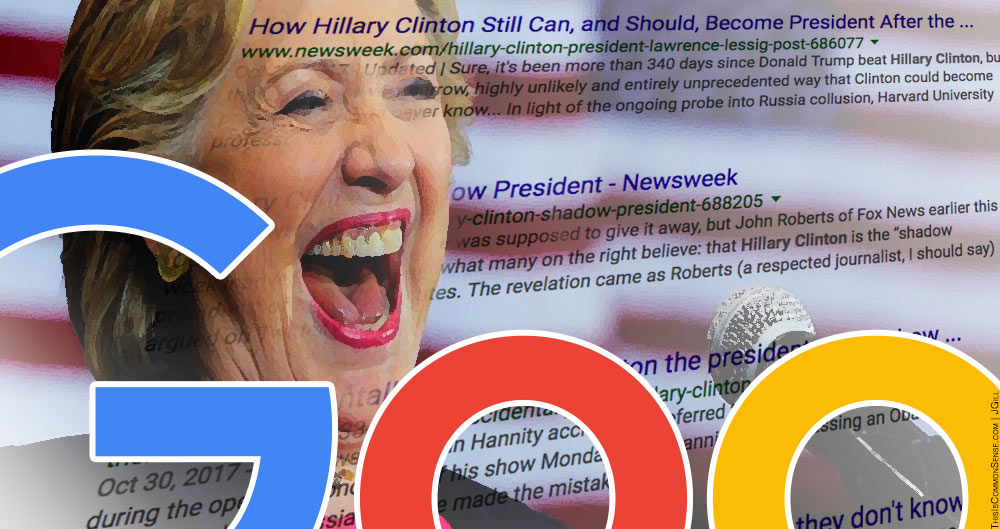
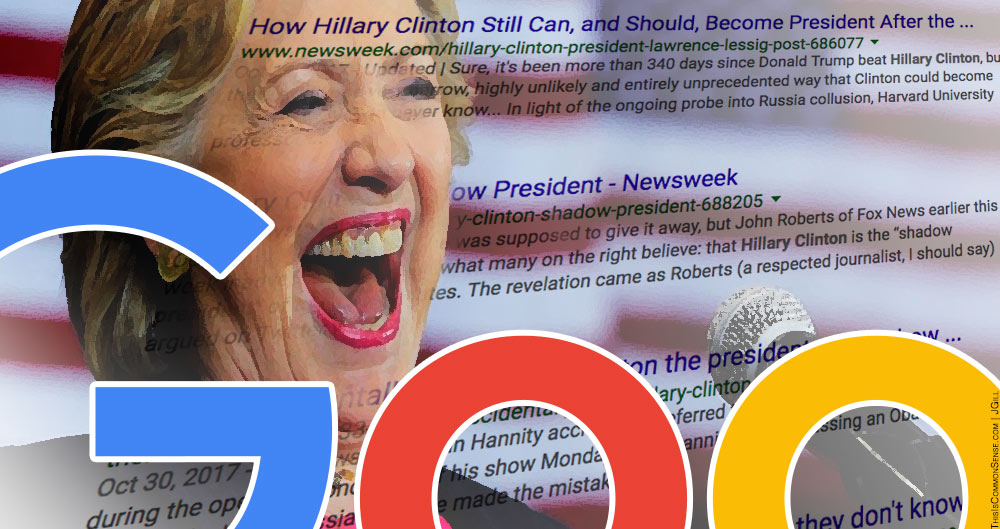
The final counts are not in, and I suppose there could be a turnaround at the last moment, but it doesn’t look like it. It looks like Republicans lost the seat. Hillary Clinton is already crowing that this is a sign of more Democratic victories to come.

Maybe.

Too soon to tell.

Meanwhile, what to make of it all? Jones has declared that “This entire race has been about dignity and respect. This campaign has been about the rule of law.” And I am not certain that is a good description. It seemed to me what the campaign turned into was a referendum on whether voting for a man accused of sexual assault and statutory rape was a good idea.

There were also Republicans thankful that Moore lost. “Decency wins” is what Senator Jeff Flake tweeted; “Suck it, Bannon,” is Meghan McCain’s eloquent taunt. (Steve Bannon had backed Moore.) Reason’s Scott Shackford probably put it best, writing that “Polls have closed in Alabama as voters there decide between controversial former judge Roy Moore and … um … not Roy Moore.”

The modern American political process is now firmly a matter of reiterating this pattern: voting against more than for.

A horrible development? Well, there sure is a lot more to be against in American politics, than for.

This is Common Sense. I’m Paul Jacob.


PDF for printing


Categories
general freedom incumbents local leaders moral hazard national politics & policies responsibility too much government

Democracy — or Too Much Government?

The Democratic Party’s Unity Reform Commission met last week to concoct measures to pull the party from the brink of madness and oblivion.

The commission’s main recommendation? Limit the role of “superdelegates” in the nomination process.

Great — a first step I’ve long advocated. But the whole system needs more serious reform.

Jay Cost covered some of the problems associated with the parties’ candidate selection processes, yesterday, in the online pages of the National Review. Unfortunately, he went off the rails about an alleged “trend toward an unadulterated democratic nomination process,” which he regarded as a “major mistake.”

He misdiagnosed both the problem and the Democrats’ proposed cure. Neither is “too much democracy.”

America’s partisan voters keep selecting bad candidates because the major party duopoly is a rigged game — designed and regulated by incumbents for incumbents to solidify a protected class of insiders.

Which voters understandably seek to overthrow on a regular basis.

The problem is the whole primary process, which is faux-democratic, a clever ruse to prevent real challengers from emerging, forcing effective politicians through the two-party mill.

To make things more democratic — to add effective citizen checks on power and privilege — the parties need to be completely divorced from official elections. That is, junk the whole primary system, making the parties bear fully the costs of their own selection processes. Further, the general elections should be thrown open to a wider variety of parties and candidates, with the voting system itself reformed to avoid the sub-optimal results of our first-past-the-post system.

The problem with our politics isn’t “too much democracy” so much as “too much partisan government.”

This is Common Sense. I’m Paul Jacob.


PDF for printing


Categories
crime and punishment First Amendment rights general freedom moral hazard property rights too much government

A Cakewalk Case?

The Justices seem split — on the “gay cake” case.

A Christian baker had no trouble selling a gay couple a pre-made cake, out of his showcase, but balked at selling a custom wedding cake of any kind. According to NPR’s Nina Totenberg, the couple understood that requesting a “gay” themed cake would go too far. But the baker’s refusal to decorate any wedding cake seemed unacceptable.

In Colorado, where the cake didn’t get made, there is a public accommodations law that says businesses must serve all customers regardless of race, religion, or sexual orientation. So Colorado went after the baker, the baker hired a lawyer, and Masterpiece Cakeshop v. Colorado Civil Rights Commission was heard by the Supreme Court this week.

Commonly billed as a conflict between First Amendment-guaranteed religious freedom* and the civil rights of citizens as defined and protected by a state law, it almost defies easy solution.

One could argue that the First Amendment right to freely associate (including the right not to associate) should extend to business. But that goes against legislation built up since the 1964 Civil Rights Act, which in many places ended an often violent racial segregation** no one wants back. However, a custom-made wedding cake is also expressive and therefore speech.

One could decide for Colorado on federalist grounds. And the late Justice Antonin Scalia, Ms. Totenberg tells us, argued that a general law not directed at a religion does not allow a specifically religious defense.

But one defense of the baker may work. The Colorado Civil Rights Commission has not applied its rulings equally. It sided with non-Christian bakers who refused to make cakes for Christians requesting Bible-verse cakes.

And that “takes the cake.”

This is Common Sense. I’m Paul Jacob


* In this regard, Justice Kennedy stated from the bench that it seemed to him “that the state in its position here has been neither tolerant nor respectful of Mr. Phillips’ religious beliefs.” Kennedy will likely be the swing vote.

** No small amount of this violence, segregation and discrimination was coerced by state laws in defiance of the Fourteenth Amendment and the Bill of Rights.


PDF for printing


Categories
general freedom ideological culture media and media people Popular

Memed Into the Public Domain?

When the definitive history of the 2016 presidential election is written, the central figure may turn out to be . . . a frog.

“Pepe,” to be precise.

The cartoon frog with red lips started out as a minor figure in a Matt Furie webcomic, but came to symbolize so much more.

“This iconic amphibian has been labeled a Nazi, condemned by a presidential candidate, and now is at the center of an important First Amendment battle in an era of unlimited replication, imitation, and mutation,” writes Zach Weissmueller in a highly entertaining story in Reason. “It’s a fight that involves the alt-right, Trump voters, a powerful Washington, D.C.-based law firm, and the anonymous online image board 4chan. . . .”

Mike Cernovich, the pro-Trump, anti-SJW publicity artist, has found himself at the center of the legal controversy. He’s hired a lawyer.

Oddly — or maybe not, politics and culture wars being what they are — the lawyer for Pepe’s creator makes much of the alt-right/hate group usages of Pepe:

“You can’t copy other people’s ideas and claim free speech,” says Tompros. “[The alt-right is] absolutely free to spout hate in some other form. We just don’t want them using Pepe the Frog to do it.”

Contra Furie’s lawyer, you are allowed to copy others’ ideas in a free society. Copyright is something a bit narrower. Trickier.

This fight over the satirical use of a Trickster figure may turn out to be a legal and cultural landmark. “Fair use” could come to mean what Mr. Cernovich’s lawyer argues, ideas “memed into the public domain.”

Meanwhile, to the many causes of Hillary Clinton’s cruel fate in 2016, we can add a cartoon frog.

This is Common Sense. I’m Paul Jacob.

PDF for printing

Categories
folly free trade & free markets general freedom moral hazard nannyism national politics & policies property rights responsibility too much government

What’s the Big Deal?

Big news: in a $69 billion deal, CVS Health Corp. plans to buy Aetna Inc. The AP story by James F. Peltz says the move “would shake up healthcare industry.”

Should we worry?

Because corporations aren’t cancerous, growth and consolidation are not to be feared as such.

But speaking of cancerous growths . . . the federal government will not likely take the news of the merger with the tranquility of a Taoist sage.

Over at Forbes, last month, Bruce Japsen predicted that the deal wouldn’t go through, arguing that “a full-blown merger of the healthcare giants would be complicated and unlikely given recent antitrust scrutiny in the sector and given that the drugstore chain is already going into business with an Aetna rival, Anthem.”

Government antitrust to the rescue?

No. We may have been schooled to believe that antitrust “protects competition,” but it has always limited competition, instead. Antitrust was always about fear — of bigness. It was definitely not designed to help consumers. The classic case is the infamous break-up of Standard Oil, which produced more fuel while lowering prices — even as it grew humongous.* Standard Oil grew because it satisfied consumer demand. Which is what businesses are for.

And yet government broke it to pieces, using antitrust rationales, for the benefit of some producers, some businesses.

Think of it as crony capitalism in action.

So, my remaining question runs like this: is the CVS/Aetna merger a response to pure market demand, or as a way to wiggle around insane state and federal regulations?

Health care in America is sick. The merger is not likely the cure. But it would not kill the patient.

We have government for that.

This is Common Sense. I’m Paul Jacob.
 

* For background, consult the studies of economist Dominick T. Armentano.


PDF for printing


Categories
Accountability folly general freedom government transparency initiative, referendum, and recall local leaders moral hazard national politics & policies term limits

Illinois’s Chicken-and-Fish Supreme Court

A constitution is the law of the land only to the extent that it’s enforced. And in Illinois, the right of citizen initiative — provided for in the state constitution — is not enforced.

The constitution’s wording is explicit: “Amendments . . . may be proposed by a petition signed by a [specified number of electors]. . . . Amendments shall be limited to structural and procedural subjects contained in Article IV.”

Does that Article IV discuss the subject of election procedures, including eligibility requirements, thereby opening the door to a citizen-initiated term limits amendment? Yes, it does. Section 2, subsection (c), for example, specifies citizenship, age, and residency requirements.

Yet the Illinois Supreme Court has repeatedly chucked the results of effective petition drives to get a state legislative term limits question on the ballot.

The justices rely on the venerable Fallacy of Tortured Misreading.

Former Illinois legislator Jim Nowlin recently pointed out that in 1976, the court concluded that the wording about how initiative proposals “‘shall be limited to structural and procedural subjects’. . . meant a proposal must make both kinds of changes.” The lone dissenter on the court “opined to the effect: When I see a restaurant sign that says, ‘We have chicken and fish,’ that doesn’t mean you have to order both chicken and fish!”

The right of citizen initiative is a crucial means of reforming government when those in government won’t reform themselves. The citizens of Illinois have that right. But, for now, they also don’t.

That ain’t Common Sense. I’m Paul Jacob.


PDF for printing


Categories
Accountability general freedom government transparency ideological culture insider corruption moral hazard nannyism national politics & policies responsibility too much government U.S. Constitution

Invulnerable Government

As of this week, there are two heads of the Consumer Financial Protection Bureau.

Two claimants to the throne, so to speak.

The bureau’s previous director, Richard Cordray, resigned last week, and as he left he appointed a deputy director, Leandra English. Ms. English sent out a nice Thanksgiving email, billing herself as “Acting Director.”

Meanwhile, in advance of Cordray’s exit, President Trump appointed Mick Mulvaney to fill the role. Mulvaney showed up at work yesterday and took possession of the director’s office. He ordered a hiring freeze . . . and brought donuts.

It gets juicier. English has filed suit against the president and his appointee, claiming to be, herself, the directorship’s rightful heir. She cites the enabling legislation, which allowed for deputization by the director. And she cites her commitment to the agency’s mission, of which Mulvaney and Trump have none.

Republicans generally regard the agency as having gone rogue.

And the squabble over the directorship sure seems to validate that charge.

The legality? Presumably, the legislation that established the agency — which deliberately insulated the CFPB from oversight by funding it from the Federal Reserve — does not void an established law, the Vacancies Act, which does allows the president to fill vacated posts.

Sen. Elizabeth Warren has taken up English’s side in the dispute, because she believes in the agency’s mission.

Now, I get it: to make government as impregnable as a high mountain fortress is an idea that many folks flirt with, from time to time. But the results are always the same: government secure from democratic checks and constitutional balance.

Come on, Democrats! Give democracy a chance.

This is Common Sense. I’m Paul Jacob.


PDF for printing


Categories
Accountability folly free trade & free markets general freedom ideological culture media and media people moral hazard nannyism national politics & policies Popular responsibility

Don’t Think Different

What do we know for sure about the resignation of Apple’s “vice president of diversity and inclusion,” Denise Smith?

  1. She is a black woman who landed in hot water for saying that a group of blue-eyed blond men can also be “diverse,” because “they’re going to bring a different life experience and life perspective to the conversation. Diversity is the human experience. I get a little bit frustrated when diversity . . . is tagged to the people of color, or the women, or the LGBT.”
  2. An uproar ensued among persons who favor making characteristics like sex and skin color — as opposed to talent, perseverance, intellect — a top priority in hiring.
  3. Smith then apologized, seeming to disparage her own correct and much-needed statement defending genuinely relevant diversity.
  4. She has left Apple.

What outsiders don’t know for sure is whether Apple asked Smith to leave because of what she said. We can be merely 99.99 percent sure that Apple requested her departure for making her excessively un-same and sane observation.

Not good, Apple.

Excellence and common sense should never be sacrificed to “diversity.” Sub-perfect “diversity” has not impaired Apple’s ability to make popular and effective smartphones bought by persons of every description.

Indeed, no company should be in the least concerned with promoting “diversity” if this means trying to increase the proportions of employees of a certain race, sex, weight, height, blood type, timbre, etc. even when such traits are blatantly irrelevant to prospective job performance.

This is Common Sense. I’m Paul Jacob.


PDF for printing


Categories
folly general freedom ideological culture media and media people

Ingrates of the Fourth Estate

Today is Thanksgiving. I hope that doesn’t offend anyone.

It ought not. But modern humans can be pretty touchy.

“This will be our last press briefing before the Thanksgiving holiday . . .” White House Press Secretary Sarah Huckabee Sanders announced Monday, “so I want to share a few things that I’m thankful for and I think it would be nice for you guys to do so as well before asking your questions.”

Then, after reciting a bevy of her own blessings, Sanders opened to Q&A, inviting thankful preambles to journalistic questions.

The press corps seemed unperturbed. One reporter was thankful for living in the greatest country on earth. Several expressed gratitude for the First Amendment; one was even thankful “for this exercise.”

“I’m thankful to my father, 96-years-old and going strong,” Newmax’s John Gizzi stated sincerely, “and to my wife, my heroine, I’m thankful to her for saying yes . . . on the fourth request.”

To light laughter, Gizzi continued, “My question is about Zimbabwe . . .” And the room erupted.

But this lightheartedness was not universal:

  • John Kirby’s article at CNN was headlined, “How Sarah Sanders humiliated the press.”
  • Newsweek’s Nicole Goodkind wrote, “The White House turned its Monday press briefing into a kindergarten game . . . And the reporters followed [Sanders’] orders.”
  • In the New Yorker, Masha Gessen claimed Sanders treated the reporters “the way a sadistic teen-ager would treat a group of third graders.”

I’m grateful that we are free . . . to complain, to disagree, to express outrage. But I’m also glad that on this day each year we can tune out all that, appreciate all we have and gain a few ounces at the dinner table.

This is Common Sense. I’m Paul Jacob. 


PDF for printing


Categories
Accountability folly general freedom ideological culture media and media people moral hazard nannyism national politics & policies Regulating Protest

Trouble in Transmission

Weeks ago, students Brandon Albrecht and Tayler Lehmann hosted a weekly program on their university-funded, 225-watt FM station.

But not anymore.

“We have a group here called the Queer Devil Worshippers for a Better Future,” Albrecht told his University of Minnesota-Morris audience. “It’s kind of like our version of Antifa here at Morris.”

“Except they’re nicer,” co-host Tayler Lehmann chimed in. “And less violent.”

“The only reason they’re non-violent is because there are not enough of them. And everybody knows everybody here at Morris,” Albrecht continued. “You see one tranny that’s trying to punch someone . . . I’m not going to dox anybody and name them on air. But you two know if I say ‘the tranny who looks like he’s going to punch someone.’”

A short time later, station manager Carter Young, with a UMM policeman in tow, entered the studio and demanded they leave.

“What happened?” inquired Lehmann.

“You said a couple words that break FCC violations [sic],” she replied.

“What word?” Albrecht asked.

“Specifically, ‘tranny.’ That is a hate slur. Not allowed on the radio. I need you to leave.”

“Did you have to call the police?” inquired a third unidentified student.

“Yes, because this is an FCC violation; you are breaking the law.”

The students’ “Deplorable Radio” program has been permanently suspended.

But KUMM 89.7 now admits that the word “tranny” is not “in violation of FCC community standards.” The station then accused the duo of hosting an earlier show while intoxicated, which they flatly deny. Now a spokesperson claims the issue is “compliance with DJ expectations and station standards.”

Meaning? The publicly-owned station does not like their politics.

You might want to call or email the station . . . while such speech is still permitted.

This is Common Sense. I’m Paul Jacob.


PDF for printing