Categories
folly free trade & free markets general freedom moral hazard nannyism responsibility too much government

Signature Nonsense

Did anyone really need this?

Last year, California’s Governor Jerry Brown signed into law Assembly Bill No. 1570, which concerns collectibles, particularly signed-by-author or artist books. But it doesn’t mention books, and is confusingly written. What a mess.

Who asked for it?

It certainly wasn’t the struggling booksellers who have come to depend on signed authors’ copies. In the Age of Amazon.com, book vendors need to add value to stay afloat.* Author-signed copies help.

The law says that for signed-by-creator collectibles sold for more than $5 — yes, a mere five smackers — sellers must provide customers a Certificate of Authentication. The law specifies nine “helpful” directions for said certificates. So imagine an edition of Brian Doherty’s Radicals for Capitalism, signed by the author at, say, a non-profit dinner, or at a bookstore signing, or even a late-night bar —discounted to not much over five bucks.** The bookseller must not only provide a certificate, but list the book’s provenance. Talk about an added cost of doing business.

I mention Mr. Doherty not merely because of his excellent book, but because he has not unreasonably confessed that “my own interests could be harmed by any attempt to actually enforce the letter of this law.”

This week on EconTalk, economist Mike Munger mentioned the market’s built-in regulatory features — reputation being the most obvious — for helping consumers avoid getting ripped off buying books . . . and paintings . . . and anything else improved by creator signature.

But, really, can’t we make do with a little caveat emptor as well as caveat lector? Better than regulations this dense.

This is Common Sense. I’m Paul Jacob.
 

* The number of independent bookstores plummeted (down a thousand) around the country between 2000 and 2007. But there seems to be an increase since then, despite (or because of?) Abebooks and Alibris and other dot coms.

** I found a signed copy of Doherty’s history at Abebooks for $10.


Printable PDF


Categories
folly free trade & free markets local leaders moral hazard nannyism property rights responsibility too much government

Housing Horror

Housing in Oregon’s north-central urban region is becoming more and more like San Francisco’s — out of the budgetary reach of huge swaths of average workers.

“The median rental household can’t comfortably afford a two-bedroom apartment in 28 of Oregon’s 36 counties,” Elliot Njus writes for The Oregonian. But it is worst in Portland and the three counties in the region: Multnomah, Washington, Clackamas. 

The findings come from a group called the National Low Income Housing Coalition. Njus quotes Alison McIntosh, of another group, the Neighborhood Partnerships, who not unreasonably concludes that “folks are really struggling to make ends meet.”

Well, yeah. This was predicted, long ago.

The state of Oregon began a comprehensive land-use planning system, decades ago, to prevent urban sprawl. At about the same time the Portland-region’s three major counties began a concentrated effort to . . . concentrate populations within the area. Confine them. Regulate them. Economists and other critics* from the very beginning predicted rising housing costs. And other problems.

Now, of course, the usual groups react in precisely the wrong ways: rent control. The State House in Salem recently passed legislation to uncork rent control. Thankfully for renters, the Senate nixed the idea. 

But we can be sure this proven housing killer (a disaster where tried) will resurface. Common sense (as well as reams of economic research) tells folks how bad an idea this would be, exacerbating the problem it aims to solve.

Alas, some folks look at government more as magic than as just another flawed, human institution.

This is Common Sense. I’m Paul Jacob.
 

* One set of critics can be found at the Cascade Policy Institute, which describes Oregon’s land-use regulatory system as “the nation’s most restrictive” — adding that “every square inch of Oregon has been zoned by government planners, with the result that development of any type is prohibited on most private land.”


Printable PDF


Categories
crime and punishment free trade & free markets general freedom moral hazard nannyism too much government

Sin, Soda and Say

Government policy in Seattle, Washington, is being driven by an outright socialist on the city council. The mayor, apparently starving for attention, proposed a goofy new sin tax last year.

Now, writes Reason’s Baylen Linnekin, “Seattle lawmakers are expected to vote early next week on a citywide soda tax that would add more than $2.50 to the cost of a twelve-pack of soda.”

The tax’s proponents’ rationale is too familiar: sugary sodas are bad for us, so we must be discouraged from drinking them.

Besides, politicians want to spend our money.

The problem, of course, is that the more successful they are at the first task, discouraging the ‘sin’ itself, the less revenue for them to throw at voters to prove their ‘caring’ nature . . . and buy votes.

But it is not as if those are the only competing factors involved. “The tax would undoubtedly drive consumers,” writes Linnekin, “to buy more groceries in the city’s suburbs.” Bellevue and Kirkland are nice towns. And nearby.

Arguing for a tax like this — as a social engineering mechanism — is not only crude, but flies in the face of the very best wisdom, that of Jean-Baptiste Say:

A tax can never be favorable to the public welfare, except by the good use that is made of its proceeds.

But elitist nannyism corrupts politicians, who make it their job to steer our consumption.* And they tend to be resistant to the “best scheme of finance,” which is, as J.-B. Say put it, “to spend as little as possible; and the best tax is always the lightest.”

If the tax goes in, Seattleites, drive to out-of-town Costco or Walmart.

Then drive your greedy nannies out of office.

This is Common Sense. I’m Paul Jacob.
 

* Considering the mayor’s push to include diet sodas in the sin tax, how competent at this are they? It’s the sugary drinks that are known killers, but the diet drinks are mainly imbibed by wealthier folks. The mayor wants to appease the socialist on the council, and pointedly not favor the “privileged.”


Printable PDF


Categories
Accountability folly free trade & free markets general freedom initiative, referendum, and recall nannyism national politics & policies property rights responsibility too much government

Minimum Shock

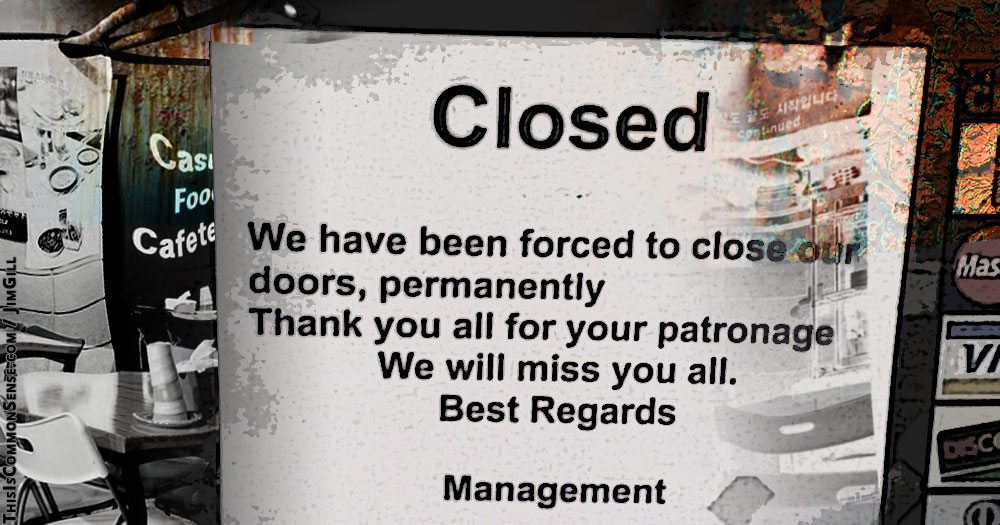
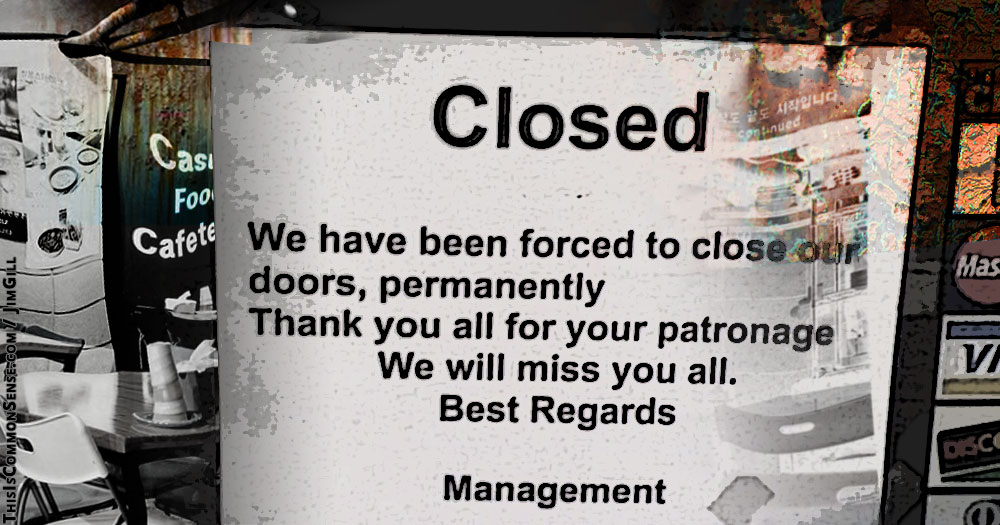
“Three restaurants vacated the Bay this week, with Berkeley’s Bistro Liaison getting the most attention,” the San Francisco edition of Eater informs us. “It’s a bittersweet exit for the owners, who plan to start new careers.”

The week in question was in February. But this was not an isolated event. Sixty-four Bay-area restaurants and fast food joints closed their doors this last winter.

That is a lot of closures.

Why?

Every eatery has a different story, but the entry December 17* provides a big clue: minimum wage hikes.

Citizens should hardly be surprised. They got what they asked for. The minimum wage went up to $13.00 per hour last July, and will go up another two bucks next year. And this was the result of a citizen initiative. “On November 4, 2014, San Francisco voters passed Proposition J, raising the minimum wage to $15.00 by 2018,” the City Office of Labor Standards and Enforcement tells us.

And the thing about minimum wage laws is that they do not — either by magic or by law — directly raise any wages. They, by law and quite directly, prohibit wage contracts below the minimum established.

Businesses then react, struggling to accommodate the newly imposed costs. Sometimes they keep all their employees and economize on other inputs, but often they must re-arrange hours and workers and whole production schemes.

If hemmed in elsewhere, they just go out of business.

Just as one should expect, according to the law of supply and demand.**

Citizens might wish to reconsider. That is, initiate a measure to repeal a previously successful initiative . . . that gave us this unsuccessful policy.

This is Common Sense. I’m Paul Jacob.
 

* The entry reads thusly: “OAKLAND — alaMar Kitchen and Bar as you know it is shuttering on December 17, but will reopen in the new year with a fast casual format. The owner points to minimum wage raises and the cost of doing business in the Bay Area as the reasons cited for the closure/change.”

** It is often said that businesses just “raise prices” and “pass along the costs” to consumers in general, but, for reasons of supply and demand, they cannot do this without decreasing sales and thus revenue.


Printable PDF


Categories
Accountability free trade & free markets general freedom local leaders media and media people nannyism national politics & policies porkbarrel politics responsibility tax policy too much government

Ballots & Books

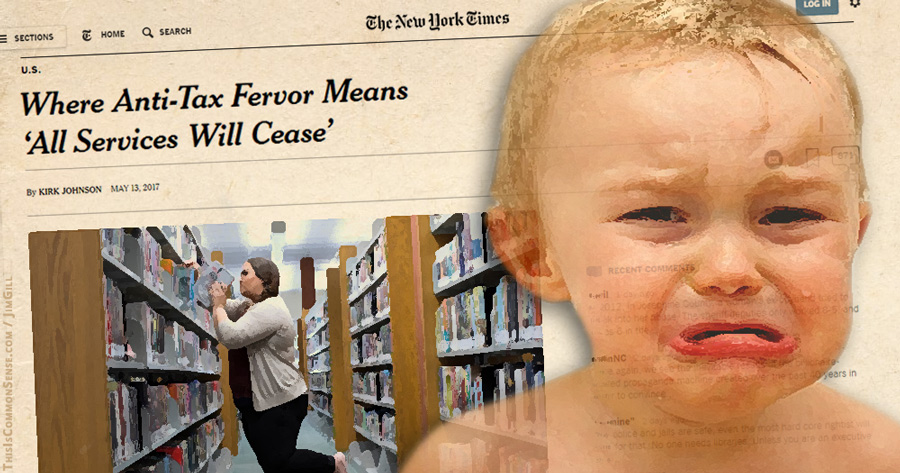
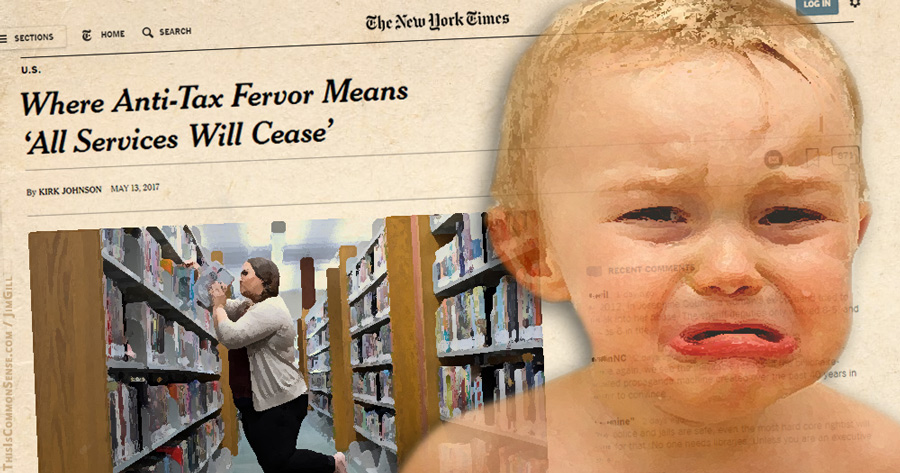
The people of Roseburg, Oregon, aren’t paying enough in taxes. That’s the upshot of Kirk Johnson’s recent New York Times article, “Where Anti-Tax Fervor Means ‘All Services Will Cease.’”

“For generations in America,” readers are informed, “small cities . . . declared their optimism and civic purpose with grand libraries that rose above the clutter of daily life and commerce.”

And then, the unthinkable: “last fall, Douglas County residents voted down a ballot measure that would have added about $6 a month to the tax bill on a median-priced home and saved the libraries from a funding crisis.”

How dare voters so vote? Didn’t they know the Times wanted those libraries fully funded? Where was the “optimism and civic purpose” of Roseburgians?

“We pay enough taxes,” said auto mechanic Zach Holly.

“The trust is gone from people who are paying the bills,” acknowledged an elected commissioner one county over.

Even Jerry Wyatt, who voted for the library tax, decried that, “There’s no end of waste” in government, adding, “We need less people on the county payroll.”

Meanwhile, the Times reporter explained that “few places” are confronting “the tangled implications . . . more vividly than in southwest Oregon.” It’s not merely “lights out, one by one, for the [library] system’s 11 branches.” There have also been “cuts to the sheriff’s budget . . . [ending] round-the-clock staffing.”

“If a crime is reported after midnight there,” Johnson wrote, “best not hold your breath for a response.”

This is “what happens when citizens push the logic of shrinking government to its extremes.”

To the extreme, eh? Hmmm. Doesn’t seem bad at all.

Douglas County voters made a free choice about libraries and taxes.

Close the book on it.

This is Common Sense. I’m Paul Jacob.
 

* There have also been worthwhile innovations in county government due to the budget cuts. Nearby Curry County combined its juvenile justice department with its parks department to save scarce funds. Then, the parks department began using juvenile offenders to clean up the parks. By engaging teenagers in meaningful work, the policy pushed recidivism rates way down and now Curry County has one of the lowest rates of youths committing a second offense.


Printable PDF


Categories
Accountability free trade & free markets general freedom national politics & policies property rights responsibility

Juicer Choosers

We all have our complaints about this company or that, this product or that.* And it is popular to rag on “consumerism” and the emptiness of “capitalism.” But put it into perspective: me “wasting money” on, say, an expensive juicer is nowhere near as offensive — that is, worth a rant, an excoriation, a philippic — than the government wasting money on . . . anything else.

Or, for that matter, on juicers.

At this point, you may be wondering, “what’s with this juicer business?”

Well, it is all about the hullabaloo regarding, er, a juicer business!

Juicero, to be precise.

The well-funded-at-startup Silicon Valley biz makes the expensive Juicero Press. And news. Newsweek and Washington Post were just two major media outlets to lay into the company. They characterized Juicero and its product as a symbol of all that’s wrong with Silicon Valley.

Wow. What weight for one niche-market company to bear.

While journalists in print and online fret over how Silicon Valley offers up empty gewgaws and gadgets for the “temporarily rich” — a few decades ago members of this class were excoriated as Yuppies — over at Star Slate Codex Scott Alexander reminds us that Silicon Valley does all sorts of things.

One juicer cannot stand for everything else.

Besides, when “Capitol Hill screws up, tens of thousands of innocent Iraqis get killed,” Alexander writes. When “Silicon Valley screws up, people who want a pointless Wi-Fi enabled juicer get a pointless Wi-Fi enabled juicer.”**

Forcing many people to pay for dubious-at-best products, or enticing a few people to pay for harmless luxuries? You see why I prefer the latter.

This is Common Sense. I’m Paul Jacob.
 

* You should listen to me curse my computers! Or, on second thought, no. You shouldn’t.

** “Which by all accounts,” Alexander concludes, “makes pretty good juice.” Even if squeezing the company’s frozen packets yourself works just as well.


Printable PDF


Categories
Accountability free trade & free markets initiative, referendum, and recall insider corruption moral hazard national politics & policies porkbarrel politics too much government

A Wall of Separation

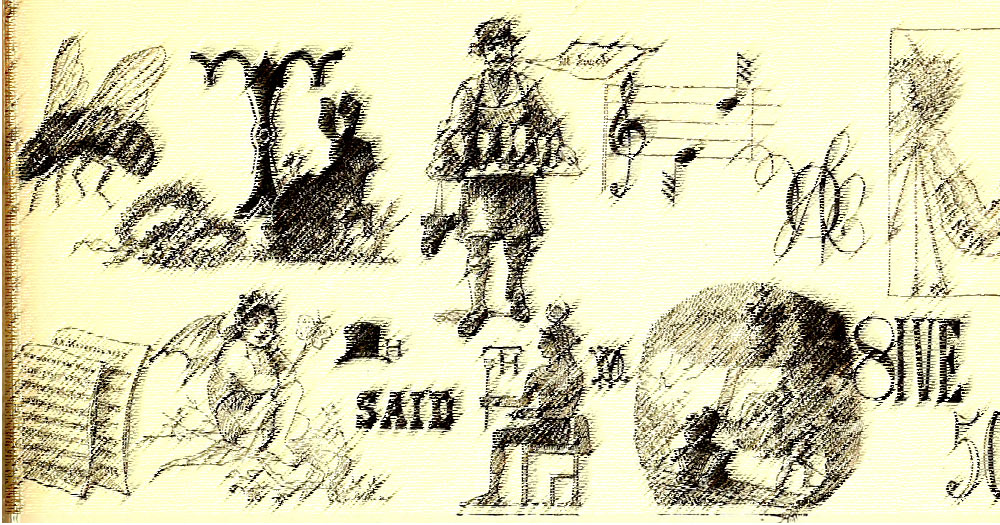
Whatever you think of Thomas Jefferson’s letter to the Danbury Baptists, wherein he celebrated the First Amendment for “building a wall of separation between Church & State,” let’s agree that it would have been nice had he penned another letter — to the Waterbury Methodists or someone — urging a wall of separation between Sports and State.

Last week, actor Tom Hanks became another brick in my hoped-for wall. “It’s a billion-dollar industry,” Hanks said of the National Football League.

[T]hey have billion-dollar TV contracts. All the owners are billionaires. And yet when they want to build a stadium they’re going to use for 10 weeks out of the year, they expect the city taxpayers to buy the building.

Hanks is livid. The recent “deal” that lured his beloved Oakland Raiders to Las Vegas included $750 million in public funds to build a $1.9 billion stadium. The Raiders are planning to stay in Oakland for the 2017 and 2018 seasons, while that new stadium is built. “When the Raiders leave,” the beloved star declared, “I am going on an NFL moratorium for two years.”

Unfortunately, Hanks appears more angry that his team is leaving (eventually), than with the principle that taxpayers ought not be ripped off.

Subsidizing businesses is cronyism, not capitalism. It’s even more outrageous when the poor must pay for the rich.

But how to stop it? In every city where citizens can propose ballot initiatives, let’s petition and pass measures requiring a public vote before any such subsidy.

It may not be the great wall I’d prefer, but it’s a high hurdle providing taxpayers some important protection.

This is Common Sense. I’m Paul Jacob.
 

Printable PDF


Categories
Accountability free trade & free markets general freedom national politics & policies tax policy

Death and . . .

It’s a sure thing — that most folks will like President Trump’s tax cuts. Though we don’t yet know all the details.

When it comes to taxes, less is more

That is, if you’re paying taxes. It is no great mystery that people like it when their own taxes are reduced.

But what about reducing other people’s taxes?

“The core economic case for tax cuts is that they reduce the obstacles to creative and productive activities,” economist Don Boudreaux explained yesterday at the Café Hayek blog.

Cutting the corporate tax rate — which even former President Bill Clinton supported during last year’s campaign — won’t immediately appear in people’s paychecks, but can stimulate economic growth helping everyone. Recent experiences in both Britain and Canada bear this out.

Cutting taxes, of which “the rich” pay more, can also spur growth.

Yet, these ideas do not dominate popular discussions of tax cuts. Boudreaux lamented media reporting that treats any tax reduction as simply a “‘gift’ to high-income earners,” dubbing the coverage: “Biased. Benighted. Blind.”

“Suppose that freedom of the press were reported in the same way as . . . a ‘giveaway to the press’?” he asked. “Most people, of course, do not own newspapers or other media outlets.”

Boudreaux concluded, “When the press is free, the chief beneficiaries are the general public.”

Freedom — of both the press and to keep more of the fruits of our labors — helps the common man. As well as the uncommon man. A tax cut for me helps me directly, and you indirectly. And vice versa. Just as a free press is great for those in journalism as well as those of us not in journalism.

That is not blind, but eyes open; not benighted, but enlightened; not biased, but . . .

. . . Common Sense. I’m Paul Jacob. 


Printable PDF


Categories
Accountability folly free trade & free markets moral hazard national politics & policies porkbarrel politics

Super-Subsidize Me

“In American political discourse, those on the side of the sick, poor, and underprivileged tend to favor more federal government intervention,” writes Heartland Institute policy advisor David D’Amato at The Hill. He explains that many “see government as . . . rather like a charity . . .”

Sure, government can act charitably, except that its money isn’t given voluntarily, and the recipients are often not so needy.

Earlier this month, the stock price of electric car company Tesla, Inc. rose high enough to overshadow General Motors. That’s great news for billionaire Elon Musk, Tesla’s CEO. But an Investor’s Business Daily editorial noted, “[T]he company is heavily reliant on taxpayer support.”

Who benefits (in addition to Musk)? “A study published by the National Bureau of Economic Research found that 90% of electric car subsidies go to the top 20% of households,” the editorial stated. IBD added that it was “a lot of welfare-for-the-rich for very little environmental benefit.”

In addition to funding advanced technology, American taxpayers have spent $6.7 billion over the last few decades to subsidize stadiums for wealthy sports team owners. The latest? In Clark County, Nevada, taxpayers forked over $750 million ($354 for every resident) to bribe — er, bring — the Oakland Raiders to Las Vegas.

The ridiculous Minnesota legislation to feed $5 million in state funds to start two shrimp farms almost seems reasonable in comparison. Almost.

“Maybe growing shrimp in Minnesota is a great idea,” admits John Hinderaker of the Center of the American Experiment. “If so, the owners should do what other small businessmen do: either find investors, or get a bank loan.”

Government’s crony capitalism taxes the poor to give to the rich.

This is Common Sense. I’m Paul Jacob.

Printable PDF


Categories
free trade & free markets general freedom ideological culture moral hazard nannyism national politics & policies responsibility too much government

Escape from New York

“New York City is a walled maximum security prison,” exclaimed posters for Escape from New York (1981, R). “Breaking out is impossible.”

Now, as part of new legislation giving “free college” to New Yorkers, politicians take the same high concept from the film and extend it to the entire state.  

What, you ask, does Escape from New York have to do with free college?

First, it’s not actually free college, but only free tuition for state and city colleges.* And note that tuition costs currently run less than half the price tag of room-and-board, books and fees. Moreover, the freebie is only for students whose parents earn less than $100,000 annually, beginning in Fall 2017. In 2018, the threshold jumps to $110,000 and to $125,000 in 2018.*

Gov. Andrew Cuomo, a likely 2020 Democratic Party presidential candidate, pushed the idea of bestowing free tuition in his State of the State address months ago. He also brought in Vermont Senator Bernie Sanders, who dangled free college during the 2016 campaign and has now introduced legislation in Congress.

But the Empire State Legislature amended the bill. Knowing full well the economic climate created by their previous policies, these venerable solons feared New Yorkers might take the free tuition, earn a degree and quickly move.

To someplace with jobs, perhaps.

So, the legislation requires student recipients of the free money to remain in the state – not escape – for as many years as they received the free moolah.

How will they keep graduates from leaving? Well, the movie trailer hyped that, “The bridges are mined. The rivers are patrolled.”

And those who leave also must pay back the tuition as a loan.

If caught.

This is Common Sense. I’m Paul Jacob. 
 

* There’s also a subsidy program for those attending private institutions of higher learning, if those colleges match the $3,000 the State puts up.

** New York state ranks 16th in median household income, at $60,850 in 2014. Therefore, the cap will deny this benefit to quite a few upper middle class and wealthier families.


Printable PDF