Categories
free trade & free markets individual achievement

Not Just a Recycled Rocket

Last Thursday, SpaceX successfully re-used a previously flown rocket to launch a payload into orbit.

Sure, NASA had re-cycled rocket parts before. That is, the U.S. space agency had recovered spent rockets.* But those were rebuilds.

SpaceX’s most recent triumph was to launch a “stage one” rocket that had gone into space before —and returned. Last April it delivered a payload to the International Space Station and then safely touched down vertically** — just like in 1950s sci-fi!

You could see the evidence: the weathered look of the rocket fuselage.

This Falcon 9 rocket not only placed its Luxembourg-owned SES-10 into orbit last week, it then returned — again! to its ocean “drone ship” platform.

A new age in space commerce thereby hit a new landmark.

Or would that be “spacemark”?

Re-using a rocket is like how airlines re-use jet aircraft. Less waste, expense. Making the whole industry more viable. The technology and expertise to safely land and recover the rocket is astounding.

Alas, videocasting of the most amazing part of the effort, the landing and recovery of the Falcon 9 rocket, failed — noticeable by its lack in both the live Periscope feed and the YouTube archive. But we had seen that very same rocket land last April, onto SpaceX’s charmingly named droneship, Of Course I Still Love You.

Ocean mark? Drone mark? It hit the mark, whatever you call it.

Elon Musk, head of SpaceX, had every reason to breathe a sigh of relief, as well as engage in some apt exultation, after the mission.

We can, too. Space industry privatization and progress? Actually happening.

This is Common Sense. I’m Paul Jacob.

 

* The Space Shuttle was a different technology entirely, a re-usable spacecraft. What we are talking about today is the powerhouse stage-one booster rocket, like the old Saturn V that the Apollo program famously exploited.

** The Space Shuttle, remember, landed horizontally, like an airplane. Future re-usable manned spacecraft will no doubt do this. A private return-entry spacecraft, like Virgin Galactic’s SpaceShip Two, put into orbit by a re-usable Falcon 9 rocket, would be the next logical new achievement. Though, obviously, these are different companies with tech that is not, I think, meant to work together.


Printable PDF


Categories
Accountability crime and punishment free trade & free markets general freedom initiative, referendum, and recall moral hazard nannyism national politics & policies property rights

Good and Bad News

On the issue of “civil asset forfeiture” — police seizing property from folks merely on suspicion, without a criminal conviction — there is good news.

In Idaho, House Bill 202a just passed both legislative chambers overwhelmingly. “Among other changes, HB 202a would no longer allow civil forfeiture of the vehicle of a person who merely possessed a controlled substance,” explained a Spokesman Review report, “without using the vehicle in connection with trafficking offenses or obtaining it with drug-trafficking proceeds. . . .” It also puts off the table “property that’s merely in proximity to illegal drugs” and the mere possession of cash.*

Legislation is moving forward in Arizona, too. House Bill 2477 passed to the Senate Judiciary Committee last week — which unanimously cleared it despite what the Arizona Republic calledstrong opposition from . . . primarily people representing law-enforcement and prosecutors’ groups that benefit from the funds.”

The bill heightens the standard of proof required for making seizures stick from “preponderance of the evidence” to “clear and convincing evidence.” HB 2477 also increases reporting requirements, and creates a process police must follow to spend seized funds.

Unfortunately, there is also bad news.

Even with the new Idaho law and the enaction of the Arizona legislation, police in both states will continue to take people’s stuff without a criminal conviction. The level of abuse would be diminished, but not ended.

Citizens in both states can and should use the ballot initiative process to end this injustice. In total.

We must restore the bedrock principle of innocent-until-proven-guilty.

This is Common Sense. I’m Paul Jacob.

 

* Other provisions include a court determination on “whether a property seizure is proportionate to the crime alleged,” absolving “innocent owners from having to pay the state’s costs associated with an attempted seizure,” and some required record-keeping.


Printable PDF


Categories
free trade & free markets moral hazard nannyism national politics & policies property rights responsibility subsidy too much government

TrumpCare Trumped

It took awhile for the Obama Administration to accept the term “ObamaCare.” Nancy Pelosi was the initial driver of the massive scheme to permanently alter American medicine and insurance, and “PelosiCare” would have been a fit moniker for the wildly mis-named “Affordable Care Act.” But the administration put the whole of the new president’s political capital behind it, and the ACA went into law popularly known as “ObamaCare.”

The Republicans pledged to repeal it, from Day One. And repeatedly passed repeal bills, certain to be vetoed by the president named Obama. They needed a Republican in the White House.

Donald Trump ran, in part, on the promise of getting rid of ObamaCare. But upon taking the reins, two things became obvious: Republicans in Congress lacked the guts to repeal the ACA, and even lacked a coherent scheme to alter it.

The new president could hardly be expected to possess the plan they lacked, though on the campaign trail he suggested* the best approach: repeal, then open up insurance markets across state lines. The GOP Congress, on the other hand, was all promise and no clue.

So Speaker of the House Paul Ryan hastily cooked up what was to be the new TrumpCare — a ridiculous reform package with nothing much to say for it.

He failed to gain support from Democrats (of course) and Freedom Caucus representatives.

TrumpCare, trumped, became RyanCare. A failure.

The Freedom Caucus representatives? They breathe freely.

Sure, they “betrayed” the new president, “robbing” him of glory. But they also saved the country from a “reform” in many ways worse than ObamaCare.

This is Common Sense. I’m Paul Jacob.
 

* It’s worth keeping in mind that Trump had been for socialized medicine before running for office. This is why there was no reason to expect policy leadership on his part.


Printable PDF


Categories
Accountability free trade & free markets moral hazard national politics & policies political challengers porkbarrel politics responsibility subsidy too much government

Trump Proposes a Budget

Will Donald Trump, infamously successful businessman, actually do something about the federal government’s out-of-control deficits and mounting debt?

Economist Pierre Lemieux, writing in the Financial Post, finds some reason for hope in President Trump’s “America First: A Budget Blueprint to Make America Great Again”:

The proposal to eliminate funding for agencies like the Corporation for Public Broadcasting, the National Endowment for the Arts, and the National Endowment for the Humanities is welcome. Artists should be able to stand on their own two feet with the support of private sponsors and organizations, of which there are many in America. Lovers of concerts should finance their own passion.

Though Lemieux gives good reason to want to cut “official arts and humanities” subsidies even sans their budgetary implications, imagine the backlash from Democrats, the media and the whole collegiate sector!

Actually, the backlash has already begun.

Can united government under the GOP cut even these most obviously least necessary aspects of government subsidy?

I’m not holding any pockets of air in my two lungs.

“Many monstrous bureaucracies would be reined in,” Lemieux goes on, listing proposed cuts to the Environmental Protection Agency (-31 percent), Department of Labor (-21 percent), and other departments of the so-called “discretionary” budget. But this is all small potatoes. “Really cutting federal expenditures would require reducing the welfare state — which Trump has no intention of doing.”

And the fortunes Trump wishes to throw at the military? No knack for parsimony there.

Though we can expect a little exceptional hack-and-slashery from Trump, Lemieux remains skeptical of any overall major effect.

Get used to ballooning debt.

Like you haven’t already.

This is Common Sense. I’m Paul Jacob.

Printable PDF


Categories
free trade & free markets general freedom media and media people moral hazard nannyism property rights too much government

Of Salt and Socialism

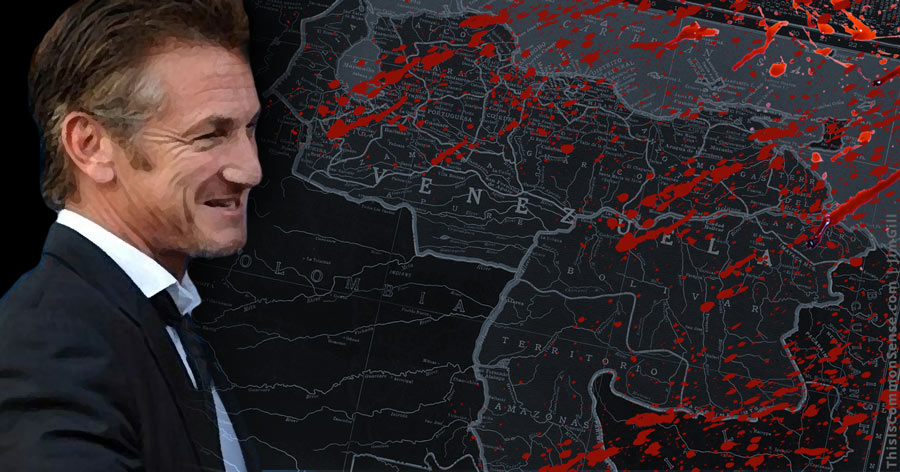
Nearly 75 percent of Venezuelans have lost 19 pounds or more in 2016. “People have become so desperate,” the Miami Herald reported recently, “that they are butchering and eating flamingos.”

While acknowledging the problem, TeleSUR, a television network based in Venezuela and funded by governments including Cuba, Ecuador, Nicaragua, and Venezuela, called the Herald’s story “kooky” and suggested taking reports “like alleged flamingo eating with a grain of salt.”

If, in socialist Venezuela, one could find a grain of salt.

In America, salt is necessary, too, when listening to our socialist Hollywood celebs blather about their kooky diets, for which some are blaming President Trump.*

Socialism kills. The deprivations in Venezuela are no joke, for along with economic chaos, Venezuelans are experiencing political repression on a grand scale. A new report from Luis Almagro, secretary general of the Organization of American States (OAS), documents the thousands arrested for protesting or “having posted something against the national government or a public official on Twitter.” The report details the “curtailment of civil, political and electoral freedoms” and “torture” and “censorship.”

Almagro calls for the suspension of Venezuela’s membership in the OAS, which is long overdue. The Human Rights Foundation demanded that nine years ago.

The Obama administration opposed such a move, as the Washington Post editorialized, in order to pursue “a legacy-making détente” with “the Castro regime in Cuba.”

At Townhall,** I urged Trump to support the effort to boot Venezuela out of the OAS, which might provide some assistance toward political change there . . . and Venezuelans eating more.

And perhaps to socialists in Hollywood and elsewhere eating crow . . . but not flamingo.

This is Common Sense. I’m Paul Jacob.
 

* I covered this last week, when I compared their Trump Diet nonsense to the “Maduro Diet,” named for Venezuelan President Nicolás Maduro, the socialist dictator presiding over the complete economic collapse of what, prior to socialism, had been South America’s richest country.

** From which this Common Sense is adapted.


Printable PDF


Categories
Accountability free trade & free markets national politics & policies property rights too much government

Three, Three, Three Mints in One!

Microsoft just announced an innovation that might give folks who fear business behavior — or are extremely skeptical of the positive public outcome of markets pause.

The Bellevue, Washington, company is adding Google calendar connectivity for its Macintosh users of Outlook 2016.

[Pause.]

You see, monopolies give us the willies. We do not trust them. Yet, despite our fears and suspicions, big business activity in a free market does not lead inevitably to One Corporation Ruling Them All. Or chaos.

Why believe that? This Microsoft Outlook story.

Most folks’ worries about monopoly come down to fear of out-of-control competition. In many industries, for the industry to work, there must be general cooperation among competitors. (Think of telephones and electricity distribution, etc.) The reason many people* want to regulate “natural monopolies” is that it seems only natural that businesses would balk at working together on shared standards — they would balk at any form of cooperation . . . they’re competitors, dagnabbit!

But evidence of competitors cooperating for consumer good is all around us. The classic case? Railroads, when the rail gauges in America were standardized to 4′ 9″ — without government edict.

The current case? This, where one of the three biggest computer outfits in the world offers customers on a competitive platform (Apple) easy syncing with a company that competes directly with it as well as its platform competitor (Google).

Why do this?

The better to serve their customers. As much as Microsoft might want to shun their competitors’ products, its customers do not share that view.

And that is enough.

Welcome to free-market capitalism.

This is Common Sense. I’m Paul Jacob.**


* It is worth noting that economists have a different concern regarding natural monopolies. Something about “cost curves.” Meanwhile, the opposite fear — of cooperation among businesses when cooperation would be generally harmful (price fixing) — has been an issue dealt with by economists since Adam Smith.

** Full disclosure: this came to my attention courtesy of a story on Apple’s News app.


Printable PDF


Categories
Accountability folly free trade & free markets general freedom moral hazard nannyism national politics & policies responsibility too much government

DumpCare

Speaker of the House Paul Ryan insists that his “TrumpCare” plan to replace ObamaCare will decrease medical insurance rates. Others argue that his American Health Care Act will increase those rates. Likewise, he expects it to reduce strain on federal budgets; others deny this outright. The “coverage” issue is just as contentious.

TrumpCare is a mess because it is isn’t “DumpCare.” What’s needed is not yet another regulation-plus-subsidy system. We need repeal and then . . . more repeals.

Unfortunately, President Donald Trump has never really been on board with this. He has promised that no one would lose “coverage,” assuming that “coverage” is “health care.”

It is not. State charity programs like Medicaid (upon which ObamaCare relied way too much) are merely ways to pay for services. Dumping a gimcrack payment system is not the same as decreasing medical services. “DumpCare” wouldn’t dump care, only insane government.

For example, we know that health care outcomes for poor folks without Medicaid turn out to be better than poor folks with Medicaid.* Increasing the number of people on formalized subsidy programs is no panacea.

Besides, ObamaCare severely under-delivered on “coverage.”

New programs, nevertheless, are traps, regardless of demerit: once you provide a benefit, folks come to rely on it and demand more — objecting when it’s taken away. Which is why few programs are ever repealed, despite failing to meet original expectations.

So far, the “small government party” hasn’t found the courage to actually limit government. Do Republicans really believe what they say, that fewer regulations and subsidies will lead to lower costs and better service?

It seems Republicans won’t take their own prescription.

This is Common Sense. I’m Paul Jacob.
 

* Oregon’s 2008 Medicaid “natural experiment” provides reasons to question the merits of the program. As the initial, randomized, controlled study found, “Medicaid coverage generated no significant improvements in measured physical health outcomes in the first 2 years, but it did increase use of health care services. . . .”


Printable PDF


Categories
Accountability education and schooling free trade & free markets national politics & policies responsibility

The Leading Edge of Higher Ed

“People are paying tons of money to be kept out of the real world . . . being taught by people most of whom have never even worked in the business world. It’s kinda crazy.”

Well, yeah. There’s a lot of crazy in modern college life.

Which is one reason to work around it. That’s what Isaac Morehouse — quoted above — has done.

Morehouse is the founder of Praxis. You may have heard him on The Tom Woods Show or seen him interviewed on Fox News. “The mindset of ‘obey the rules, follow procedures, chase credentials, chase grades, and wait to be told what to do and you’ll be handed this magical ticket to a job,’” Morehouse told Fox’s Tucker Carlson, “it’s just not true.”

His alternative is simple: leverage the apprenticeship idea, combine it with counseling and instruction, and arrange with participating companies a guaranteed job at program’s end.

Our college system deserves a failing grade. Colleges sponge away fortunes (often borrowed) from students, while neglecting to train them to do much of anything but . . . college work.

This means not only that college grads have trouble finding work, but, as Mr. Morehouse discovered before he hit upon the Praxis idea, there are many, many companies trying to hire competent workers, but unable to find them.

A market opportunity!! Praxis unites demand and supply, connecting companies needing smart, energetic, cooperative workers with willing, eager young folks seeking meaningful (and well-paid) employment.

You can find a good overview of his effort — and a way to sign up! — at discoverpraxis.com.

Praxis’s testimonials are inspiring.

As the future should be.

This is Common Sense. I’m Paul Jacob.


Printable PDF


Categories
Accountability folly free trade & free markets local leaders moral hazard nannyism porkbarrel politics responsibility too much government

Small Target, Big Subsidy

Something has gone wrong when, to get a tenant to move into an empty space in your prime-location building, you need a $4 million subsidy.

And when I say “prime location,” I’m not engaging in Trumpian over-statement. The downtown Denver, Colorado, property location sees over 35,000 pedestrians per day . . . and that’s with the primo slot empty.

But to get that slot filled, the owners have negotiated with the city government to nab a $2 million “incentive” to fix the place up for Target, which is thinking of leasing the location to put up a smaller-than-usual “flexible-format” store. Oh, and another $2 million for “operational” costs, which seems to be some kind of a loan to be paid back from taxes to be collected — and shared by the city for 20 years with the owners.

In other words, it’s the darnedest business deal you’ll ever see (and never get): up-front money not from a bank or investors, but from Denver’s city government “BIF” — Business Investment Fund — which is obviously part of a convoluted scheme fed by taxes and devised by . . . people I wouldn’t trust with my money.

Structuring deals like this is how modern cronies — er, cities — operate, I know. Am I alone in judging it corrupt on the surface and corrupting in the details?

If prime commercial property has gone unused for about a decade — as this three-storied mall space has — I’d think that maybe the owners have set the rents too high or the city has been a bit too greedy with taxes.

Or both.

This is Common Sense. I’m Paul Jacob.


Printable PDF


Categories
free trade & free markets national politics & policies responsibility too much government

The Skinny on Trumponomics

President Donald Trump does not trust economists. So he is demoting the Council of Economic Advisors, booting out of the Cabinet the Council’s chairperson.

If this were only because economists as economists cannot do what he has been able to do — make a big success in business and trade — we could give him something like a pass.

After all, successful entrepreneurs have a knack for guessing an unpredictable future. Economists, not so much. Why the difference? Maybe because entrepreneurs have “skin in the game.” Governments boards and bureaus — or endowed professorships — don’t risk anything like skin.

Besides, prediction is an art, not a science.

Could Trump be fooled by his knack for working with real risk?

But all this may be irrelevant.

Trump’s problem seems to be that he cannot find enough reputable economists to jump on board his protectionist bandwagon.

Trade barriers, high tariffs and punitive measures to control corporate behavior — among Trump’s most popular policies — aren’t big among economists.

According to Josh Zumbrun, writing in the Wall Street Journal, a “survey of every former living member of the CEA for both Republican and Democratic administrations found that not one member publicly supported Mr. Trump’s campaign.”

Economist Pierre Lemieux, writing in response to Zumbrun’s article, clarified Trump’s particular problem: economists “have methods and theories that prevent them from saying stupidities. They are difficult to turn into parrots. And they believe in the benefits of exchange.”

That latter notion, really basic, is what protectionists like Trump do not understand.

And the kind of predictions economists can successfully make run like this: “Well, that won’t work!”

It’s usually said about protectionism.

But whose skin is on the line now?

This is Common Sense. I’m Paul Jacob.

Printable PDF