Categories
education and schooling initiative, referendum, and recall tax policy

Taxing Panicsville

There is a big problem with Delaware school districts asking voters for additional tax money via ballot referendums. You see, sometimes the people don’t vote the way school officials and politicians want.

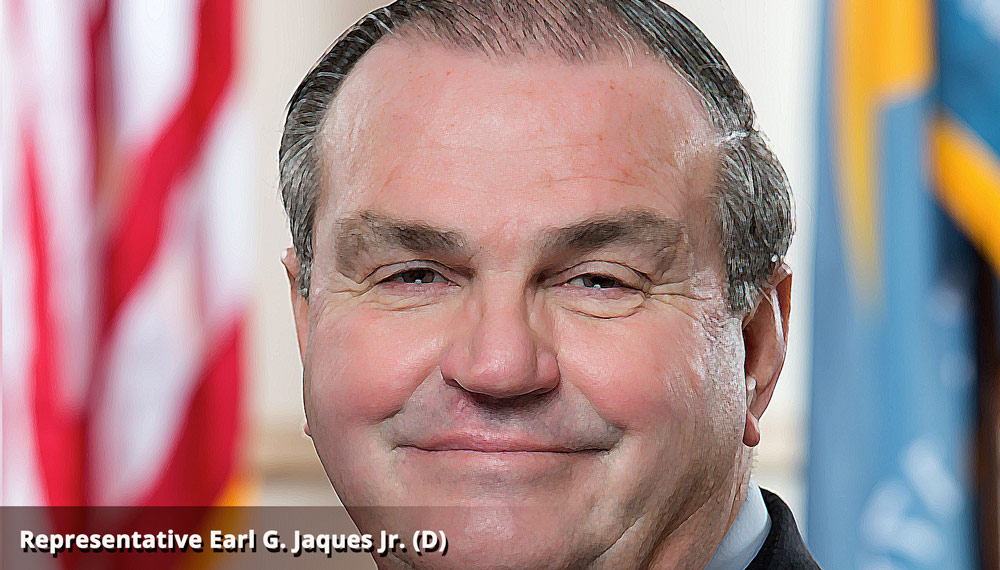
Have no fear: Rep. Earl Jaques (D-Glasgow) has authored House Bill 129 to solve this thorny problem. 

“This bill creates a mechanism,” its official summary reads, “by which school boards may increase funds for a school district both with and without a referendum.” 

Meaning, of course, without a referendum . . . since current law requires a public vote. 

“That way, [school districts] know the money is there if they need it, and they don’t abuse it because they know it’s there,” explained Jaques. “The problem with the referendum system is that they have to ask for more than they actually need, because they know it’s going to be a long time before they can come back.”

“Despite his assurances that the system would not be abused,” the Dover Post reports, “technically, school districts could raise taxes by 2 percent each year.” Or by any increase in the Consumer Price Index, whichever is higher.

Inexplicably, three stories — in the Dover Post, Newark Post and Delmarva Now — told readers it was the “lower” of the two. The bill clearly says the “higher.” Odd that media outlets would not grasp the ever-so-subtle difference between the words “higher” and “lower.”

“Everybody’s in ‘Panicsville,’ but it’s really not that way at all,” offered Jaques. “We, my colleagues in the legislature and I, could raise your income tax right now, and what’s your recourse? Vote us out at the next election.”

Excellent advice.

This is Common Sense. I’m Paul Jacob.


PDF for printing

Earl G. Jaques

See all recent commentary
(simplified and organized)
See recent popular posts

Categories
education and schooling

Down the Up Staircase

or: How I Stopped Worrying and Learned to Love Disadvantage

This weekend at Townhall, Paul Jacob elevates the college admissions discussion. Click on over, then back here for further education upgrades:

Categories
education and schooling

Gaming a Newly Rigged System

Education is important. I want my young adult offspring to get into a great college or university.

Sadly, my bribery fund is empty.

Must she, then, rely only upon working hard for good grades and preparing for the Scholastic Aptitude Test (SAT)? 

No. There is a workaround: find a way to improve our family’s Adversity Score.

“The College Board plans to assign an adversity score to every student who takes the SAT,” The Wall Street Journal reports, “to try to capture their social and economic background, jumping into the debate raging over race and class in college admissions.”

This year 50 universities, including Yale, used these scores; next year, 150 will do so. Students are assessed on 15 not fully disclosed factors, things such as the level of crime and poverty in one’s high school and neighborhood, “the educational level of the parents,” and “family stability.” 

“An adversity score of 50 is average,” notes the Journal. “Anything above it designates hardship, below it privilege.”

Hmmm, how to climb (or descend) the “Overall Disadvantage Index”? What sacrifices to make?

My wife and I could divorce. Coming from a single parent household would improve our daughter’s opportunities in higher education.

We won’t sink her chances by upgrading our own educations. That’s obvious.

And crime-free homeschools certainly place kids at a distinct disadvantage in being disadvantaged. I guess we could move to a more dangerous neighborhood. 

Heck — what am I thinking?! — we can stay put and just commit crimes ourselves. Show some entrepreneurial initiative! Don’t be dependent on others, for heaven sake! Be the change we wish to see in our world.

On that one, though, I better check my exuberance with my wife . . . if our divorce hasn’t yet been finalized.

This is Common Sense. I’m Paul Jacob.


SAT, college, racism, race, fairness,

See all recent commentary
(simplified and organized)
See recent popular posts

Categories
education and schooling general freedom

Top School Fails

Illiteracy, innumeracy, low standards, grade inflation — signs of a general failure of education, sure, and of public schooling in particular. But for the worst failing, look no further than Harvard University.

The Ivy League school just caved to a student mob. 

“Harvard said on Saturday that a law professor who has represented Harvey Weinstein would not continue as faculty dean of an undergraduate house after his term ends on June 30,” explains Kate Taylor at the New York Times, “bowing to months of pressure from students.”

The lawyer in question, Professor Ronald S. Sullivan, Jr., has served with his wife, law school lecturer Stephanie Robinson, at one of Harvard’s residential houses for undergraduate students. 

Now, the African-American couple has not been fired from faculty. Just as deans. No great tragedy, if the official Harvard statement be true — that there were multiple reasons for not renewing their contracts.

But the context: pressure from students who expressed horror — “trauma-inducing”! — at Sullivan’s legal defense of the former Mirimax mogul accused of numerous sex crimes.

We expect lawyers to defend even the worst criminals. Everyone is entitled to a legal defense. It’s sad that not only do some students fail to accept this but also that this crimson-colored college plays along with their uncivilized complaint. Harvard has, in effect, denied one legal foundation of a free society. 

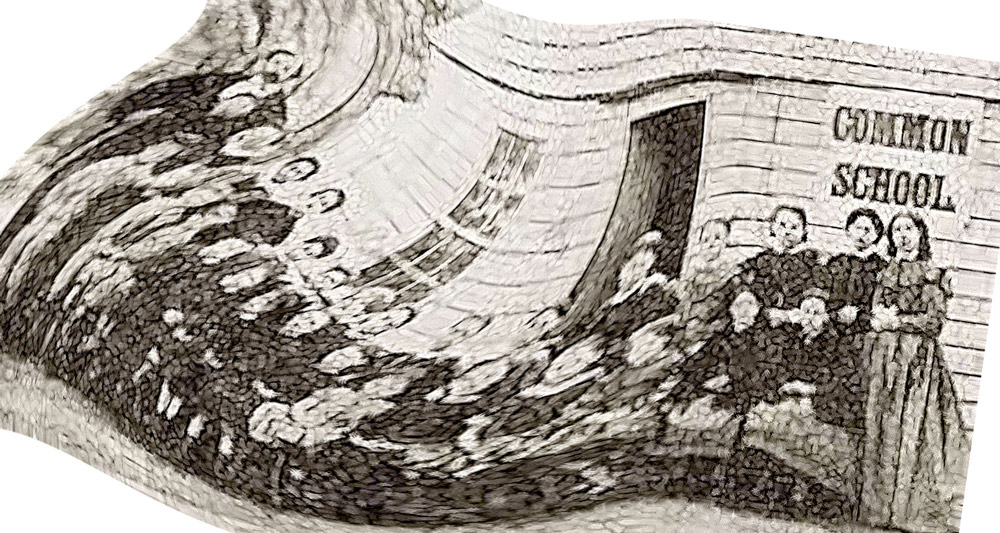
Remember that the “common school movement” for government schools was started to inculcate republican values. Horace Mann’s great big excuse for government control and taxpayer funding of schools was to promote civilized American liberties.

Schools, generally, have failed. And Harvard has just accepted their worst failure as the new passing grade. 

This is Common Sense. I’m Paul Jacob.


PDF for printing

Common School, education, values, American, public school, law, lawyer,

See all recent commentary
(simplified and organized)
See recent popular posts

Categories
education and schooling ideological culture moral hazard nannyism national politics & policies Popular

Make Others Pay?

Special Olympics has found a way to get kids and young adults with disabilities to feel something important: Able.

Three decades ago, as part of a community service requirement, I spent one day each week working with physically and intellectually-challenged adults at Easter Seals in Little Rock, Arkansas. I loved it. 

Most unforgettable were their beaming smiles of pride when they got a chance to show what they could do. I’ve always loved sports, but never as much as there and then. In the decades since, my family has given to the Special Olympics what financial support we could afford. 

So, can you imagine how I must feel hearing Education Secretary Betsy DeVos testify in favor of cutting all $17.6 million in federal funding for the Special Olympics? 

“It’s appalling,” declared Rep. Barbara Lee (D-Calif.).

John Kasich, the former Republican governor of Ohio, called the cut “outrageous” and “ridiculous.”

“Cruel and reckless” were the words Rep. Rosa DeLauro (D-Conn.) used.

“The Special Olympics is . . . a private organization. I love its work, and I have personally supported its mission,” countered Sec. DeVos.* “But given our current budget realities, the federal government cannot fund every worthy program, particularly ones that enjoy robust support from private donations.”

Federal funding provides only 10 percent of Special Olympics revenue, with over $100 million raised annually in private donations.

So, how must I feel about DeVos’s suggested cuts? 

Gratitude . . . for her generous contributions to Special Olympics — and for her fiscal responsibility. Let’s fund this wonderful program without the government forcing (taxing) support from others.

Check, cash or credit card is always preferable to virtue-signaling gum-flapping.

This is Common Sense. I’m Paul Jacob.


* Special Olympics is one of four charities to which DeVos donated her entire 2017 federal salary.

PDF for printing

Betsy Devos, education, special olympics, funding, budget, debt, spending,

See all recent commentary
(simplified and organized)
See recent popular posts

Categories
education and schooling ideological culture

Administrators Strike Back

The academic world is filled with “scholars” who write papers that are almost never cited, and which are so filled with gobbledygook and periphrasis that they are almost impossible to read.

Without cracking up, anyway.

A year and a half ago I wrote about one team who authored fake papers to show up postmodernist academics for the phonies they are. But the sad truth is that even serious papers prove to be nothing more than “cryptic, pretentious, prolix nonsense.” 

Since then, the team that wrote the infamous “The Conceptual Penis as a Social Construct” went on to successfully place some incredibly goofy papers into prestigious journals — and even garner earnest praise from peer reviewers.

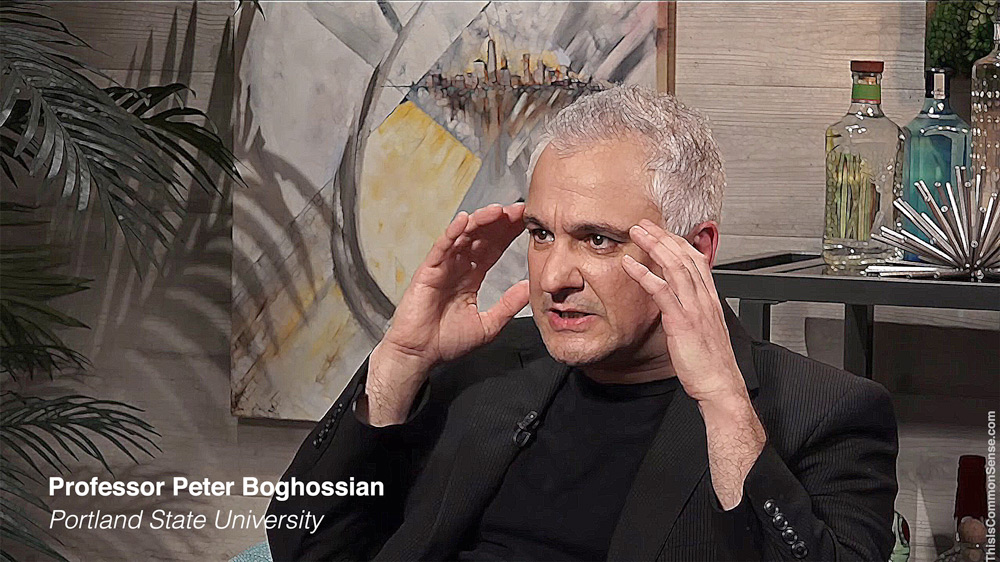
Now, the humiliated academic world is striking back. One of the japers, Professor Peter Boghossian of Portland State University, is facing academic censure and misconduct charges.

“This strikes me (and every colleague I’ve spoken with) as an attempt to weaponize an important [principle] of academic ethics in order to punish a scholar for expressing an unpopular opinion,” wrote Harvard psychologist Steven Pinker, entreating PSU not to persecute their philosopher. Biologist Richard Dawkins and psychologist Jordan Peterson joined Pinker in support of the rogue-but-reasonable academic.

PSU administrators say that Boghossian, by trying to trick academic journals into publishing fake studies, has violated Institutional Review Board protocols. You see, he did not seek approval to carry out experiments on human subjects!

The thing is, the whole post-structuralist, post-modernist, “‘Studies’ studies” mob has been experimenting on their alleged clients, the students, for decades. And the results have been . . . enlightening if not praiseworthy.

It is hard to see Boghossian’s antics as anything but heroic.

And hysterical.

This is Common Sense. I’m Paul Jacob.


PDF for printing

Peter Boghossian, Portland, postmodernism, academic research, education


Categories
education and schooling ideological culture

Why Fire the Dean?

Students and faculty at the University of Southern California are upset because a popular dean of the Marshall School of Business, James Ellis, has been fired by interim USC President Wanda Austin. Hundreds have rallied in protest and petitioned for his reinstatement.

Why the ouster? 

The administration has offered a vague indictment about “lack of diversity” and problematic handling of racial- and gender-bias complaints. There’s apparently a commissioned report, the Cooley report, about the complaints. But few have seen it.

 “Jim has not been allowed to see the Cooley report, despite repeated requests to do so by him, his legal counsel, a trustee, and me,” says donor and USC board member Lloyd Greif. “Nobody has seen it.” 

Greif argues that no complaint dealt with by Ellis’s office “alleged any egregious conduct, and none of them involved inappropriate behavior by Jim.”

Was old white male Ellis expelled for presiding over a too-little-diverse student body (and perhaps for being inadequately “diverse” himself), as determined by an arbitrary standard?

Without transparency or due process, who could know? 

But lack of any official accountability suggests some warped notion of “diversity justice” is being applied here, a notion that dismisses rational goals and relevant facts to focus only on whether the ethnic/gender/other-unchosen-trait makeup of a sub-population sufficiently mirrors that of the general population. 

If so, is this a standard that should be applied universally? 

No matter how you answer that question, note what is not being focused upon: providing a good education.

This is not Common Sense. 

I’m Paul Jacob.


PDF for printing

Dean Ellis, diversity, racism, quotas, protest, blacklisting

See all recent commentary
(simplified and organized)
See recent popular posts


Categories
education and schooling government transparency national politics & policies Popular Second Amendment rights

A Faulty Gun Report

While statistics are generally unreliable, data about gun crimes often qualify as “anti-data.”

“This spring the U.S. Education Department reported that in the 2015-2016 school year, ‘nearly 240 schools . . . reported at least 1 incident involving a school-related shooting,’” National Public Radio told us yesterday. Like previous stats we’ve seen cited on social media, that seems unbelievably high. 

And yes, it is — “far higher than most other estimates,” reporter Anya Kamenetz noted. “NPR reached out to every one of those schools repeatedly over the course of three months and found that more than two-thirds of these reported incidents never happened.”

Were they fibbing? Well, never underestimate the power of incompetence. 

Even that’s harsh: remember that reporting requirements are a burden. And filing bureaucratically-designed forms with the Education Department may be no easier than filing tax returns with the IRS. One of the biggest errors in one school district report resulted from a simple data entry error.

That is not a sophisticated statistical problem, but a simple typo.

Not that there aren’t some difficulties of a not-so-easy-to-understand nature in the story. For one, the degree to which the report was off is said to lie within “the margin of error.”

So, how big was the error, exactly? What’s the number? Well, of the 240 supposed “shootings,” NPR claimed to be “able to confirm just 11 reported incidents.”

Yet the Education Department bureaucrats will only affix an erratum note to their ridiculous report. 

Nor will it be withdrawn or replaced, as it should be.

This is Common Sense. I’m Paul Jacob.


PDF for printing


Categories
education and schooling ideological culture moral hazard responsibility too much government

An Expert Explains Failure

The failures of the public high schools in the District of Columbia go on an on. It is quite a scandal, as I explained this weekend at Townhall.

And yet some “charter schools that serve large populations of children from low-income families,” notes the Washington Post, after providing much detail about the massive failures, “recorded big increases in scores.”

What hint about improving education does that fact give?

Well, Kevin Welner, a professor who heads the National Education Policy Center at the University of Colorado, has an interesting thought: “People want to read into these test scores lessons about what the schools are doing. But these scores, even the growth scores, depend a great deal on students’ opportunities to learn outside of school. If we address the poverty and racism, then we will see these test scores increase.”

Hmmm. Let’s review: (a) the problem is at home and (b) it cannot be overcome by the schools. Moreover, the esteemed professor perceives the cause of these detrimental home environments to be “racism and poverty.” 

Once upon a time, public education was proclaimed to be the great equalizer, allowing the disadvantaged to climb the economic ladder, and, if not wipe out poverty completely, to certainly dramatically reduce it. 

Now, we discover from a certified education expert that we had it backwards.

So maybe it is time to chuck the whole experiment and just try to educate kids.

Not “save” them, or society.

This is Common Sense. I’m Paul Jacob.


PDF for printing


Categories
Accountability crime and punishment education and schooling national politics & policies responsibility U.S. Constitution

Will Feds Foil Foolish Licensing?

It would be nice if the federal government used its often-abused authority over state and local governments to outlaw various forms of state and local oppression.

In his book Leviathan: The Growth of Local Government and the Erosion of Liberty, Clint Bolick argues that the federal government is not alone in hugely violating individual rights. Eminent domain, asset forfeiture, zoning, and occupational licensing are among the modes of sub-federal assault on the innocent. Even as policymakers in various regions of the land act to stop the worst of these abuses, they proceed unchecked elsewhere.

U.S. Senators Marco Rubio and Democrat Elizabeth Warren are the unlikely duo who may interrupt the now-common practice of depriving delinquent borrowers of student loans of their right to earn a living from certain trades. Rubio recently admitted on Twitter that as a Florida lawmaker, he once voted to allow the state “to suspend professional licenses of those who defaulted on student loans. I WAS WRONG. . . . How can they pay back if they can’t work?”

Yes, Rubio was wrong.

Senator Warren, for her part, agrees that the practice is “wrong and counterproductive.”

The bi-partisan duo’s bill would prohibit states from denying driver’s licenses and occupational licenses to borrowers who default on student loans.

I don’t think the legislation goes as far as it should, even in the delimited area of occupational licensing. The absurdities of occupational licensing go way beyond the scope of the proposed remedy.

But it’s a start.

This is Common Sense. I’m Paul Jacob.


PDF for printing


Photos by Gage Skidmore and Edward Kimmel