Categories
crime and punishment ideological culture insider corruption media and media people

Socialist Saboteurs Infiltrate

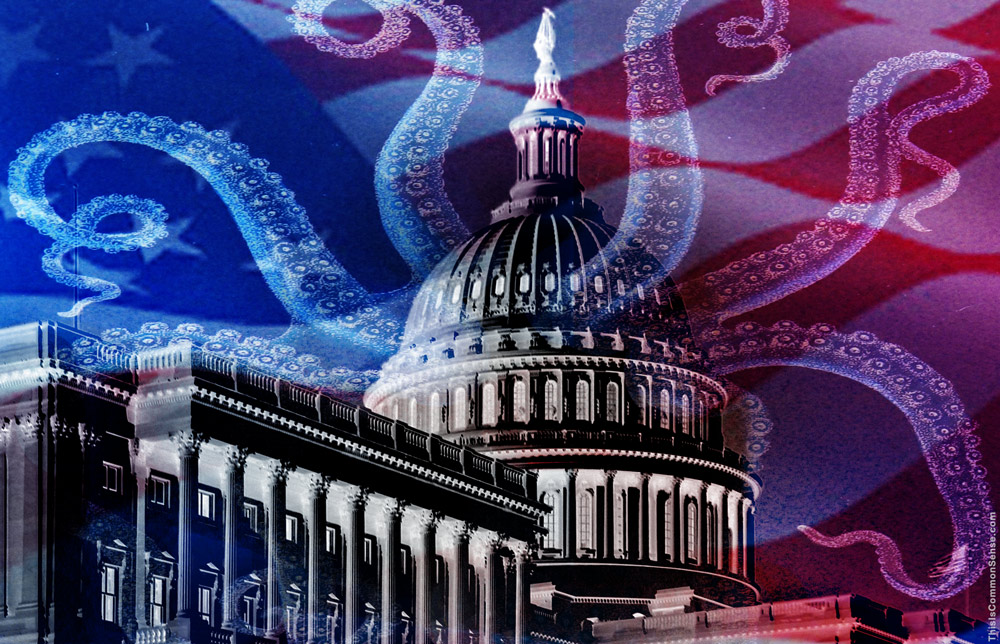
Once upon a time, people who worried about communists infiltrating the government were often dismissed as paranoid. 

“Sure, commies under every bed! Right!”

Communists in the State Department or wherever generally weren’t caught on tape boasting that they were Soviet agents and part of the Resist Truman or Resist Eisenhower movement. Allen Funt did not expose Alger Hiss. But now we have this social-media thing happening. And we have members of the Democratic Socialists of America (DSA) caught on tape touting their illicit exploits as federal employees.

Project Veritas is a conservative group* that conducts hidden-camera interviews with lefty activists. In one of Veritas’s recent exposes, several DSA members confess to abusing their government positions in order to impede Trump Administration policies, including any even slightly pro-market policies. The goal is to “f*ck sh*t up,” as one rebel summarizes.

Several of the Resisters boast that “we can’t really get fired.” That’s probably almost true; they’re federal bureaucrats. But DOJ paralegal Allison Hrabar and others may find that their license to chill is about to expire. 

Hrabar was in the news a few months back for helping chase Homeland Security Secretary Kirstjen Nielsen from a restaurant. Now she has admitted using government resources to dredge up the home address of a DC lobbyist she wanted to target. Address in hand, she and several DSA comrades swooped down on the residence to hold a harassing protest. 

Not quite how taxpayer dollars are supposed to be deployed.

This is Common Sense. I’m Paul Jacob.


* Project Veritas founder James O’Keefe, whom I know and like, has done enormous good with his undercover stings of ACORN and others. Last year’s failed effort against the Washington Post is the exception. Had Project Veritas succeeded in slipping this false accusation into the newspaper, the result would have been to publicize a harmful lie, not show the truth (per his group’s name.

PDF for printing


Categories
crime and punishment general freedom insider corruption

Puppycide

The cost of the War on Drugs is not to be reckoned just in dollars. Or in that more serious accounting index: lost lives. The hit to our civil liberties has been enormous, too, and instrumental in setting up the modern Surveillance State.

But beyond these, there is a stranger result: the War on Drugs is also, de facto, a War on Dogs.

“Detroit police officers shot 54 dogs last year, according to public records obtained by Reason,” writes C.J. Ciaramella. “That’s a marked increase over the number reported by the department in 2016 and 2015, and more than twice as many as Chicago, a city with roughly 2 million more people.”

Reason magazine has been covering the War on Dogs by police forces across the country — identified in Ciaramella’s article as “puppycide” — for years, and I’ve mentioned it here on Common Sense, too. The problem is not dogs shot because they are wild, or have rabies, or the like. One expects that sort of thing.

What is problematic is that a third of the Detroit shootings took place in the course of no-knock raids and other common police actions entailed by contraband interdiction. The Detroit number turns out to be “more animal shootings than the entire Los Angeles Police Department performed — 14 total — in 2016,” Ciaramella relates.

Excessive shooting of dogs is costly to cities, of course — to taxpayers, to be precise — in terms of civil lawsuits filed and settled. And to families, some of them quite innocent of any crime, who lose their pets. 

It is a sign of a police culture corrupted by . . . the War on Drugs.

This is Common Sense. I’m Paul Jacob.


PDF for printing


Categories
crime and punishment general freedom ideological culture too much government

Townhall: Free-Range Kids vs. Deranged Adults

There is something peculiarly anti-life as well as anti-liberty about today’s attitudes towards children — as you can read at Townhall.com.

But for more background, please consider:

This column will be available on this site on Tuesday. You can also download a PDF of this column to share easily with your friends and frenemies.

Categories
Accountability crime and punishment moral hazard property rights U.S. Constitution

Forfeiting Common Sense

Is it okay to steal if you can get away with it?

A full answer would require a treatise. But most of us common-sensibly understand that evil does not magically become good when perpetrators are not stopped or punished. Thrasymachus was wrong to contend, in Plato’s Republic, that justice is merely the “interest of the stronger.”

When it comes to crimes like bank robberies, muggings and car jackings, we have no doubts about this. In such blatant cases, we suffer nothing like the legitimate confusion to which we may be prone regarding the exact border between adjacent parcels of land or the niceties of intellectual property law.

Well, somebody tell the New Hampshire state police.

Some of them apparently believe it’s okay to steal if you can evade laws against the stealing.

New Hampshire’s recent reform of civil forfeiture laws requires criminal conviction of a person before there can be any forfeiture of his property. But a loophole enabled officers to grab $46,000 of Edward Phipps’s money — from his car, stopped on the road — even though he was never accused of a crime. 

How?

It seems that if state cops collaborate with the feds, safeguards established to prevent such abuse can be evaded.

To retrieve even a little of his money ($7,000), Mr. Phipps was forced to relinquish all claim to the balance ($39,000). Even if lawmakers close the loophole, as they should, the robber-cops will probably get away with this particular larceny. 

They shouldn’t.

That’s injustice, not common sense.  I’m Paul Jacob.


PDF for printing


Photo Credit: N.H. State Police


Categories
crime and punishment First Amendment rights general freedom Second Amendment rights too much government U.S. Constitution

Progressive Designs

In February 1979, Professor George Rathjens called the editors of The Progressive, urging them not to publish a story in the works, which included a journalistic best guess as to the design of a hydrogen bomb. The Progressive refused to squelch the story, and the professor of poli-sci (not nuclear physics) contacted the Department of Energy, which sued to suppress the article.

The Progressive defended itself on free speech grounds.

Fast forward to today, with progressives screaming to squelch the freedom of speech and press of Defense Distributed, an Austin, Texas, organization, which expressed its intention to publish easily downloadable plans* to print plastic guns using 3D printing technology.

This hit the news first as the result of a court decision early in the month,** but now Senator Edward Markey (D-Mass.) blames the Trump administration, not the court. “Donald Trump will be totally responsible for every downloadable, plastic AR-15 (gun) that will be roaming the streets of our country.”

Why blame the administration? Because the administration settled its lawsuit holding up the publication.

Amusingly, back in 1979, the government dropped its suit against The Progressive.

Progressives were definitely not for nuclear bombs 40 years ago, and The Progressive had its own agenda in publishing a version of the article that saw print in the magazine’s November 1979 issue. Now progressives express more alarm about private individuals having weapons, not about the government’s weaponry. 

But the biggest change? It has something to do with free speech.

This is Common Sense. I’m Paul Jacob.


* I say “easily downloadable” because plans like this have been available on the not-exactly-easy-to-access Dark Web for some time.

** The decision is clear: “Arguments for tighter restrictions on firearms are, in this case, directly opposed to arguments for the unfettered exchange of information on the internet.”

PDF for printing


Categories
Accountability crime and punishment folly free trade & free markets general freedom local leaders nannyism national politics & policies responsibility too much government

Kick the Addiction, Save Money

The political case for the War on Drugs has always been intuitive. “Drugs are bad” has trumped practical concerns. But the actual, responsible case for the political crusade has depended upon some concept of “social cost.”

Now that marijuana is being legalized state by state, the case against the greater War on Drugs is being taken seriously — enough to rethink all varieties of costs. Indeed, many now see the opioid epidemic as being driven, in part, by the War on Drugs, and not just as an excuse for a stronger crackdown.

Nevertheless, coming to some accounting — especially “social cost” accounting — remains difficult. This is especially true so long as its effects on freedom and the rule of law do not get figured in.

Somewhat surprisingly, even the budgetary effects of legalization have proven a bit tricky.

So it is welcome to read Harvard economist Jeffrey Miron’s study of marijuana legalization as it has occurred in the states of Washington, Oregon, and Colorado. He compares results of legalization with the predictions he had made eight years ago, in a previous Cato Institute study. It turns out that while tax revenues are far greater than expected, law enforcement costs have not gone down.

“Early experience suggests that governments will reallocate rather than reduce those expenditures,” Miron writes. “That reallocation may be beneficial, but it does not have a direct effect on the budget deficit.”

On a federal level, though, we might expect greater savings. How? We could shut down whole bureaus.

Yet, achieving such savings would require progress on Washington’s biggest addiction:  spending.

This is Common Sense. I’m Paul Jacob.


Studies cited:

Jeffrey Miron, “The Budgetary Effects of Ending Drug Prohibition,” Cato Tax & Budget Bulletin, Number 83, July 23, 2018.

Jeffrey A. Miron and Katherine Waldock, “The Budgetary Impact of Ending Drug Prohibition,” Cato Institute white paper, September 27, 2010.

PDF for printing


Categories
Accountability crime and punishment folly free trade & free markets general freedom moral hazard nannyism responsibility too much government

Taking a (Lemonade) Stand

When life hands you lemons. . . .

Once upon a time, putting up a summertime lemonade stand was the American way for kids to learn about hard work, good will, and entrepreneurship. Almost every kid had one, making some spendable profit selling the nectar.*

Some of the youngsters grew up to become Bill Gates and Steve Jobs and, well, lemonade’s one heck of a gateway drink.

But then, along came “progress” — that is, mandates and regulations slapped upon businesses. And the hordes of regulators required to enforce the morass of rules — “swarms of Officers.”

Soon lemonade stands were vanquished from our neighborhoods.

And America was made safe (at long last!) for . . . inane bureaucracy.

“Reports of kids’ lemonade stands being shut down for breaking local health or permitting laws have long left grown-ups feeling sour,” today’s Wall Street Journal informs. But the story also details how “a growing movement of adults is fighting back.”

So, when government policies hand you lemons, what do you do?

Make a map of all the lemonade stand clampdowns.

“I think the Constitution covers [lemonade stands] as written,” Dave Roland told the Journal, explaining the map he and his wife Jenifer have produced. “But if there’s any doubt about that, let’s get it fixed.” The Rolands run the Freedom Center in Missouri, but theirs is a regrettably national map.

Last month, the popular lemonade maker Country Time started “Legal-Ade,”  pledging to come to the defense of any kid “busted” for trafficking in lemonade.

Seriously.

“When life gives you arcane laws,” the company’s video says, “make lemonade.”

Taste the Common Sense. I’m Paul Jacob.


* The profit was made possible largely by pushing their costs off onto their parents. But isn’t that sorta what parents are for? And good lessons were still learned.

PDF for printing


Categories
Accountability crime and punishment free trade & free markets general freedom media and media people moral hazard responsibility

Blame the App?

Who spreads “fake news”?

Gossips, politicians, publicity agents, Twitter eggs, partisan bloggers, lying news journalists?

Or . . . the medium of communication they use?

Do envelopes, stationery, telephones, email, and messaging apps have moral agency?

And who commits the crimes that news (true or false) is used to rationalize?

A New York Times story discusses “How WhatsApp Leads Mobs to Murder in India,” which is like saying that civilization, flying lessons and boarding passes “led” terrorists to 9/11.

The Times reports that fake news about children being kidnapped — dramatized by doctored video clips and forwarded via WhatsApp, a messaging app — provoked anger and fear in many Indians. Some were then willing to attack anyone who “seemed” about to kidnap children.

In recent months, dozens of people have been murdered for being in the wrong place at the wrong time.

Without social media and the mega-popular WhatsApp, the murders probably would not have happened, at least not the way they happened. That seems certain. But this doesn’t mean that without WhatsApp, nobody in India would spread false stories or assault innocent people.

Mob violence in the country antedates the Internet.

Perhaps a thousand material circumstances directly or indirectly enable any particular act of wrongdoing. But no such prerequisites “lead to” anything without individual choices.

If someone pretends it’s okay to kill innocent persons — or persons whose guilt or innocence he doesn’t care to know — he, the killer, is the guilty party. The telecommunications network or messenger app used to provide grist for excuse-making is innocent.

Apps don’t murder people. People murder people.

This is Common Sense. I’m Paul Jacob.


PDF for printing


Categories
Accountability crime and punishment government transparency media and media people moral hazard national politics & policies Regulating Protest responsibility

The Deeply State

FBI agent Peter Strzok is offended.

Deeply.

He takes pains to clarify: he sent emails during the last presidential campaign expressing a willingness and readiness and commitment to preventing a Trump Presidency because he, Agent Strzok, is patriotic.

Deeply.

During yesterday’s contentious congressional interrogation, fielding questions regarding just how anti-Trump he was during the last presidential campaign, Peter Strzok denied that his obvious and admitted political bias affected his professional conduct.

“Like many people, I had and expressed personal political opinions during an extraordinary presidential election,” said Agent Strzok. “My opinions were expressed out of deep patriotism.”

But it wasn’t just a matter of expression, was it? One text message was an assurance that he would “stop” Trump’s election. When challenged on this, Strzok admitted that his memory was faulty.

Deeply?

“At no time, in any text,” Strzok said, decisively, “did those personal beliefs enter into the realm of any action I took.”

When a citizen expresses a credible threat to a president, federal agents investigate. His exchange with his “girlfriend,” Lisa Page, was not what we now call an “existential threat,” of course. Ms. Page had texted her worry about a Trump win: the man was “not ever going to become president, right? Right?!” Strzok’s reply was not vague: “No. No he won’t. We’ll stop it.” The threat is, at most, covert-political, back-room. FBI-ish. The couple were, after all, a part of an investigation into Donald Trump’s alleged Russian connection.

Though one could easily understand a married man assuring his inamorata simply to puff himself up in her eyes, this assurance sure looks different to our eyes — it cannot help but make us suspicious.

Deeply.  

This is Common Sense. I’m Paul Jacob.


PDF for printing


Categories
Accountability crime and punishment folly free trade & free markets general freedom judiciary local leaders moral hazard nannyism Second Amendment rights too much government U.S. Constitution

Ought Implies Cantifornia

“Strip away the absurdity,” writes Scott Shackford at Reason, “and it’s essentially a very technical ruling.”

Shackford is explaining a bizarre recent judgment of the California Supreme Court.

Politicians in Sacramento had, years ago, passed a gun control measure requiring gun manufacturers to “implement microstamping technology that would imprint identifying information on bullets as they were shot from semi-automatic weapons.” In 2014, Smith & Wesson announced that it would pull some guns from the California market rather than comply. Why? The technology just wasn’t ready yet.*

Since California’s Civil Code contains a section reiterating an old commonsense principle to the effect that the “law never requires impossibilities,” the National Shooting Sports Foundation sued to block the law.

But the group just lost.

The Court did say it could protect citizens from punishment, but it refused to nullify the legislation on constitutional grounds.

Unanimously.

Why do this? Apparently to protect California politicians in their ongoing social engineering schemes.

The dollar costs of trying to comply with impossible demands are huge, of course. But the biggest costs may be more subtle.

In moral philosophy, it is a truism to say that “ought implies can.” In natural law as understood long ago, an impossible law was thought not a law at all, justifiably ignored by anyone and everyone.

In a just state, flouting of maddening regulations like California’s would lead not merely to the defense of the absurdly put-upon citizen — as this court ruling still allows — but also to the nixing of the “impossible” law.

This is Common Sense. I’m Paul Jacob.


* Shackford notes that “a cynic might theorize that this is the law’s actual intent.” I wouldn’t limit that suspicion to folks given to cynicism. Pragmatists and political scientists and almost anyone else would be placing bets on that, too.

PDF for printing