Don’t worry…
Bernie only wants “the good kind of socialism.”
Click here for a high resolution version of this image:


Don’t worry…
Bernie only wants “the good kind of socialism.”
Click here for a high resolution version of this image:

Consider the intersection of freedom and decontextualized fragments.
The specific “decontextualized fragments” in question appear in great and not-so-great works of literature, assigned in public schools for young adults to read: a graphic rape scene in Toni Morrison’s Beloved; racial slurs in Huckleberry Finn; sex, violence.
“Virginia regulators are drafting rules that would require school districts to red-flag objectionable teaching material and make it easier for parents to control what books their children see in the classroom,” reports the Washington Post.
Those regulations won’t be finalized for a year or more (because government bureaucracies are painfully slow). Yet an “earlier version of the language released on a state website drew hundreds of comments from the public,” the Post informs.
“Most parents were supportive of the change. . . .”
Teachers? Against.
Stafford County Public Schools literacy coordinator Sarah Crain worries about literature being wrongly labeled “sexually explicit.” To “reduce a book or a work down to something that is a mere decontextualized fragment of the work,” she argues, “actually impedes the ability for teachers and parents to have informed conversations.”
What about freedom?
Well, public schools aren’t primarily about freedom.
Teachers have a job to do; students follow instruction.
And it is pretty easy to see one reason for the opposition by “the professionals”: the new rules would entail more work.
Nonetheless, parents and their kids deserve as much choice as can be provided. And in every context.
Here, freedom means acknowledging the right of parents to decide. Not experts. Parents.
This is Common Sense. I’m Paul Jacob.

Original photo credit: wealhtheow on Flickr
The Berlin terrorist attack just a little over a week ago fit a noteworthy pattern. German authorities had investigated Anis Amri — the Tunisian man who drove that large truck into a crowded Christmas market, killing 12 and wounding 56 others — and found “links with Islamic extremists.”
Later killed in Milan, Italy, Amri had been wanted in Tunisia for “hijacking a van” and jailed in Italy for arson and a “violent assault at his migrant reception center.” And yet with all that known or easily knowable, the German authorities couldn’t prevent him from killing innocent Germans.
It’s not just a European phenomenon, either.
Consider Omar Mateen, this country’s worst mass shooter, having massacred 49 people in Orlando’s Pulse nightclub. The FBI had spent ten months looking into Mateen.
Years before the Boston Marathon bombing, the FBI had tracked Tamerlan Tsarnaev, one of the bombers.*
“In case after case . . . authorities have come forward after the fact to say that they had enough cause to place the suspect under surveillance well before the violence,” the Washington Post recently noted. This was the case with the majority of recent lone-wolf terrorism plots.
“If any lesson can be learned from studying the perpetrators of recent attacks,” a report in The Intercept concluded, “it is that there needs to be a greater investment in conducting targeted surveillance of known terror suspects and a move away from the constant knee-jerk expansion of dragnet surveillance . . .”
Yet intelligence agencies are still grabbing our metadata in violation of the Fourth Amendment. That needs to stop.
The fact that known threats are consistently not being stopped suggests curtailing mass surveillance won’t hurt our security, but improve it.
This is Common Sense. I’m Paul Jacob.
* The same is true regarding the Ft. Hood (work-place) shooter, Nidal Hasan. Likewise, Abdulhakim Mujahid Muhammad (formerly Carlos Bledsoe), who was under the active eye of the FBI after returning from Yemen . . . until he opened fire on a Little Rock, Arkansas, recruiting station killing one soldier and wounding another. Ditto Ahmad Khan Rahami, the less deadly bomber in New York City and New Jersey.

Politicians in Tampa, Florida, have forced citizens there to vote for term limits, and then vote to keep those term limits again and again — against attempts to repeal or weaken the limits. So I keep my eye out for news from the city.
Earlier this month, Mike Deeson, an investigative reporter with WTSP 10 News, Tampa Bay’s CBS affiliate, exposed Mayor Bob Buckhorn’s open violation of the city charter’s requirement that all department heads must be city residents. Buckhorn hired Sonja Little, now the city’s highest paid employee, to serve as his Chief Financial officer, and admits on camera that he promised her she would not have to move into the city.
“The question is,” the mayor explained, “do you want talent or do you really make the residency — she’s only about a mile away from the city border — the issue?” Buckhorn answers his own question, “I would rather have talent” . . . than follow the law.
In even slipperier fashion, Mayor Buckhorn has attempted to get around the clear, unequivocal wording in the charter by claiming Ms. Little has served as the “interim” Chief Financial officer for the last five years!
Reporter Deeson asks the operative question: “[I]f you’re going to ignore the residency requirement, what other parts of the charter should you just ignore?”
Deeson worries about provisions requiring competitive bidding, guarding against conflicts of interest and mandating term limits, which is “particularly problematic for a mayor who is in his second term and has to leave office when it’s over.”
On social media, Tampa residents are unloading on the mayor with numerous variants of: “This is truly what’s wrong with government.”
This is Common Sense. I’m Paul Jacob.


Civil asset forfeiture is stealing. So, why is it still happening?
Police seize boats, cars, houses and cash that they allege were used in the commission of a crime or were proceeds from the crime. Sometimes they simply take cash found on a motorist in a normal traffic stop, claiming it’s “drug money.”
Tragically, only 13 percent of forfeiture is criminal, i.e. involving a conviction. The rest is civil, wherein the person hasn’t been convicted of anything. Often not even charged.
When officials confiscate property without due process of law, it’s theft. The legal rationale government uses to snatch our stuff via civil forfeiture is a sick joke. Our property can be deemed “guilty” without enjoying our presumption of innocence. Instead, we have to go to court to prove our stuff is innocent.
Often officials negotiate a large cut, because hiring an attorney to get one’s money back might well cost more than the money itself.
The good news? People are becoming aware of civil asset forfeiture and overwhelmingly oppose it. A Cato Institute/YouGov poll found 84 percent of Americans against taking property without a criminal conviction.
While New Mexico and Nebraska have outlawed civil forfeiture, and some other states have sought to at least minimize its abuse, there is still significant pushback from police and prosecutors, who like getting all that dough. And who often have the ears of decision-makers.
The time has come to short-circuit the watered-down half-measure. Twenty-four states and a majority of cities enjoy the initiative process.
Let’s do it ourselves.
This is Common Sense. I’m Paul Jacob.

We saw glimmerings last year when Twitter began to selectively enforce “policy” against some (Milo Yiannoupolis) and not against others (the hordes of leftists who threatened to assassinate Donald Trump).
You could see it in Hillary Clinton’s campaign; after Trump won, it loomed to eclipse all reason.
And on Thursday I noted Congress’s reaction.
I refer to the hysteria over non-Democratic “memes” and “fake news” that trumped the erstwhile gatekeepers of the Fourth Estate and the political classes — including the lobbying and bureaucratic cliques — and stymied the ascension of Mrs. Clinton to the Most Powerful Office in the Whole Wide World.
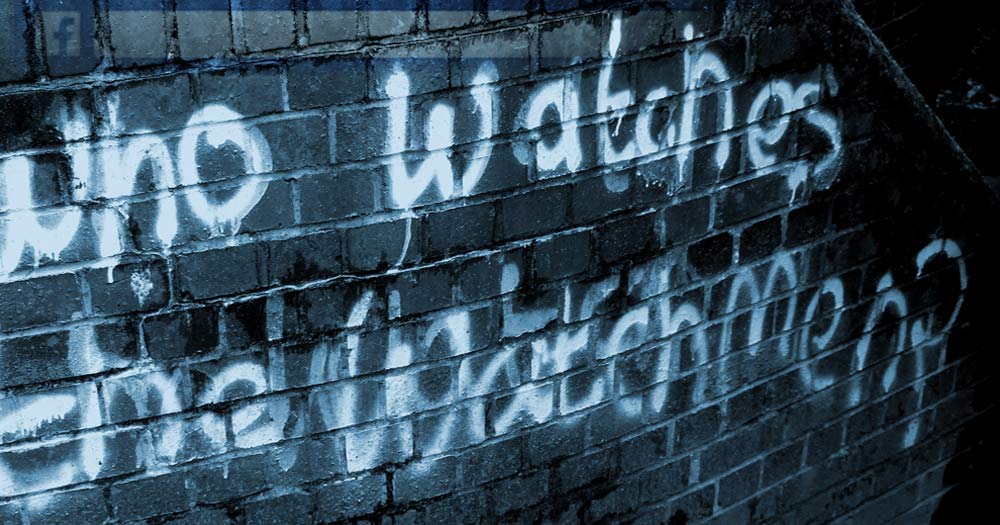
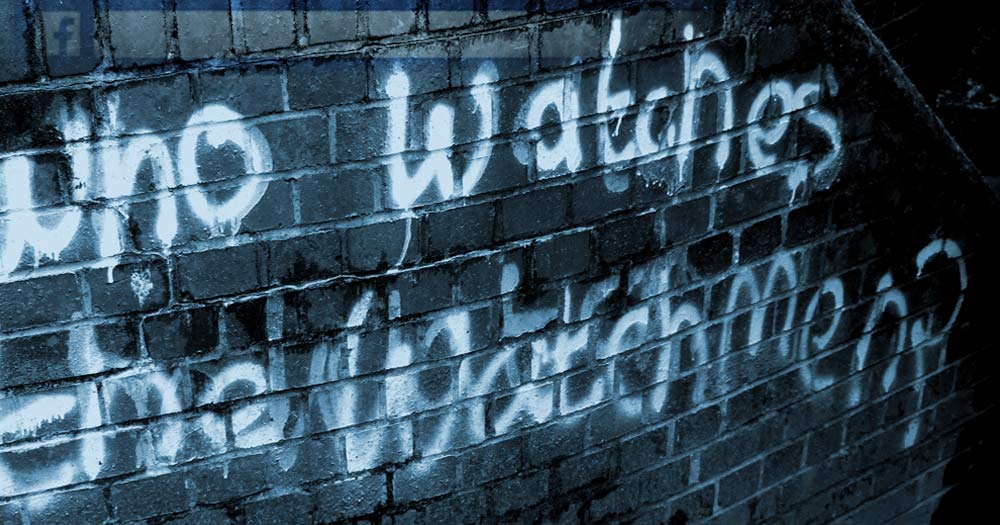
Now Facebook has come on board with a way to combat this freewheeling flow of ideas.
Fact-checking.
Hayley Tsukayama, writing in the Washington Post, explained the new program:
The social network is going to partner with the Poynter International Fact-Checking Network, which includes groups such as Snopes, to evaluate articles flagged by Facebook users.
If those articles don’t pass the smell test for the fact-checkers, Facebook will pass on that evaluation with a little label whenever they are posted or shared, along with a link to the organization that debunked the story.
The problem, here, is not a First Amendment issue: Facebook is not the government; when it tampers with your communications, it does not break the law.
The problem is that the Internet’s self-proclaimed fact-checkers are not exactly fair-minded, or even capable of sticking to the facts. I quoted Nietzsche yesterday (“there are no facts, only interpretations”), today I will merely reference Ben Shapiro, who has a history with false fact-checkers, and riff off of Juvenal: who will fact check the fact checkers? (Obvious, I know.)
Meanwhile, the folks behind new social media service minds.com offer an innovative posting promotion system, and promise never to sneakily favor some ideas over others.
The proper response to a business firm’s discriminatory policy is to provide market pressure.
This is Common Sense. I’m Paul Jacob.

“You think the police deserve to be killed?” That’s what talk show host Michael Savage asked his caller yesterday.
What brought that on?
A self-described liberal woman named Teri had called The Savage Nation. Though not a Trump supporter, she “did not have the antipathy for him that most liberals did.”
“[U]nderneath his brashness and braggadocio,” Teri had thought, “there actually beat a heart for America.” But after his numerous initial appointments, she is now “terrified.”
On air, Teri admitted that her preferred candidate for president had been independent (not turned Democrat) Sen. Bernie Sanders of Vermont. Savage called Sanders a “con man” — a “race-baiter” who “attacked the police regularly.”
That’s when he inquired if it was her desire to see police officers murdered. To which, she replied, “No, my husband was a police captain.”
Savage: “That’s amazing. How could you vote for a man like Bernie Sanders, who hated the police and used the police as a weapon to stir up minorities?”
Teri: “Believe it or not, my husband actually supported him, too.”
Savage: “Why would a police captain support Bernie Sanders?”
Teri: “Well, my husband was a very honored and honorable policeman.”
Savage: “You mean, all the police who were killed deserved to be killed?”
Savage, indeed. Does he really believe that a person criticizing certain police behavior or seeking reform necessarily thirsts for the blood of innocent police? Really?
Or does he simply hope to shut down any thoughtful conversation about the injustice in our criminal justice system?
This is Common Sense. I’m Paul Jacob.


The first I heard of an actual enumeration of federal “intelligence agencies” was from Hillary Clinton. In the final presidential debate, she claimed that the truths spilling out of the Podesta emails had been revealed courtesy of Russian hackers, and she knew this because all 17 U.S. “intelligence agencies” had briefed her.
Seventeen!
The number, at least, does not come from a secret source. Business Insider had popularized it. “These 17 Agencies Make Up The Most Sophisticated Spy Network In The World,” Paul Szoldra informed us three-and-one-half years ago in a fascinating listicle.
Call me paranoid . . . but if I am told that the government has 17 spy agencies, I wonder about one more: The Really, Really Secret Infodump Agency. There is, after all, no official definition of “government agency”; the federal government doesn’t even publish an official overall count, intelligent or otherwise.
Besides, the prime number 17 just seems too . . . contrived. Sixteen or 18? Boring numbers. But 17? Its numerological magic lends plausibility to “the most sophisticated spy network in the world.”
Of course, when Mrs. Clinton insisted that all 17 had concurred that the Russians were on Trump’s side, I did not believe her. And now that mainstream media outlets — in an apparent frenzy to prove themselves a more reliable fake news source than the Twittersphere, blogosphere, Facebook-o-sphere and Breitbart combined — run with nearly the same story, I don’t believe them, either.
It is as if they’ve had their talking points delivered in a secret dossier.
Reasons for doubt? All the anonymous sources, all the hedges on the order of “may be linked to” and “‘one step’ removed.”
Fake news. Brought to you by the number 17.
This is Common Sense. I’m Paul Jacob.


Voting’s a right, not a duty.
So voter registration and actual voting should be made easy. But I’m not for mandating that people vote, or for registering them involuntarily.
Which is why I oppose the Automatic Voter Registration Initiative (AVRI), an indirect Nevada initiative that state officials just announced has turned in enough petition signatures.
Now, you may not be familiar with this “indirect initiative” process. These are initiatives that first go to the legislature and then, should the legislature not pass them, appear on a later ballot (in this case, 2018’s) for voters to either enact or reject.
Currently, when Nevadans conduct business at the Department of Motor Vehicles, they’re asked if they’d like to register to vote. If they opt in, i.e., say “yes,” then the DMV transmits their information to the Secretary of State to be added to the voter rolls.
However, the new initiative would automate the process, so every person’s information gets whisked over to the Secretary of State, whether said person wants to be registered or not. It reads: “Unless the person affirmatively declines in writing,” he or she “shall be deemed to be an applicant to register to vote.”
Declining registration must be “in writing”?
A simple, “No, thank you,” won’t suffice?
Now, I understand: should the AVRI become law, the seriousness of the injury Nevada’s government would inflict on those seeking to remain unregistered admittedly pales in comparison to the Japanese internment camps during World War II, the Trail of Tears, civil asset forfeiture abuse, etc., etc.
But still. Assert a simple truth: people have a right to register and vote, which entails a right not to register and not to vote.
This is Common Sense. I’m Paul Jacob.


Don’t worry, scientist Roger Pielke, Jr., informs us. He is doing fine — he has tenure.
It is too bad, though, that he no longer works in climate science.
He was drummed out of that endeavor by journalists, big-monied foundations, and the White House.
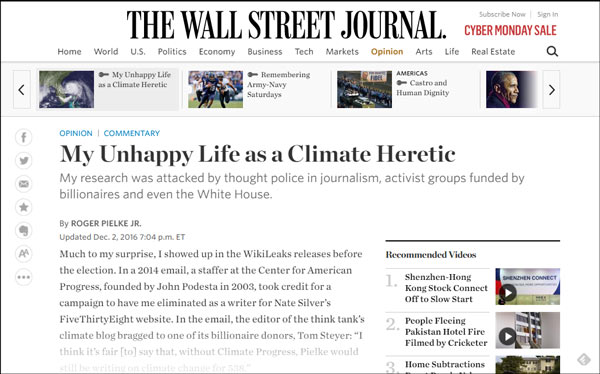
Are you skeptical? Well, drill down into the Podesta emails on WikiLeaks. There you can read infamous billionaire Tom Steyer gloating, “I think it’s fair [to] say that, without Climate Progress, Pielke would still be writing on climate change for 538,” a popular website. Pielke has not been published there at all since 2014.
Pielke had made the mistake of publishing the results of his research. He claims not to be heretical on the main points of the current orthodoxy. But Pielke ticked off all the wrong people with his demonstration that the evidence did not back up the climate change movement’s much-repeated charge that the weather has gotten more traumatic as the planet has gotten warmer.
Pielke relates all this in a fascinating Wall Street Journal commentary, “My Unhappy Life as a Climate Heretic.” Pielke is actually somewhat philosophical about the political and foundational forces arrayed against him — expressing more dismay at his betrayal by journalists and academics.
“You should come with a warning label,” jested one journalist who had merely quoted him. “Quoting Roger Pielke will bring a hailstorm down on your work from the London Guardian, Mother Jones, and Media Matters.”
This “hailstorm” is more widespread and damaging than the results of global warming itself. It effectively distorts both scientific research and the news.
Thus, a political orthodoxy rides herd over public opinion. Over us. By squelching good journalism and honest science.
This is Common Sense. I’m Paul Jacob.