Categories
Common Sense crime and punishment folly general freedom national politics & policies responsibility too much government

Cannabis and Kings

The over-riding reason to end the War on Drugs is to re-establish the rule of law in this country.

From Nixon and Reagan to the present time, America has vastly increased the population of prison inmates, many of them for drug offenses. The “land of the free” shouldn’t boast a larger population (per capita and total) of unfree persons than any other nation on the planet.

Further, in the mania to apprehend contraband drug users, producers, and traffickers, we’ve pretty much lost Bill of Rights protections on our lives and our property.

We’ve armed nearly every conceivable division of government against us, turning local, state and federal police “services” into police state apparatuses that hound and steal from portions of our population — which turns them from citizens into fearful, resentful, servile subjects. Meanwhile, the use of civil asset forfeiture and other policing for profit schemes corrupt our police forces in a serious and fundamental and “King Georgish” way.

Sam and John Adams, Toms Jefferson and Paine — they’d all be aghast at what we have become.

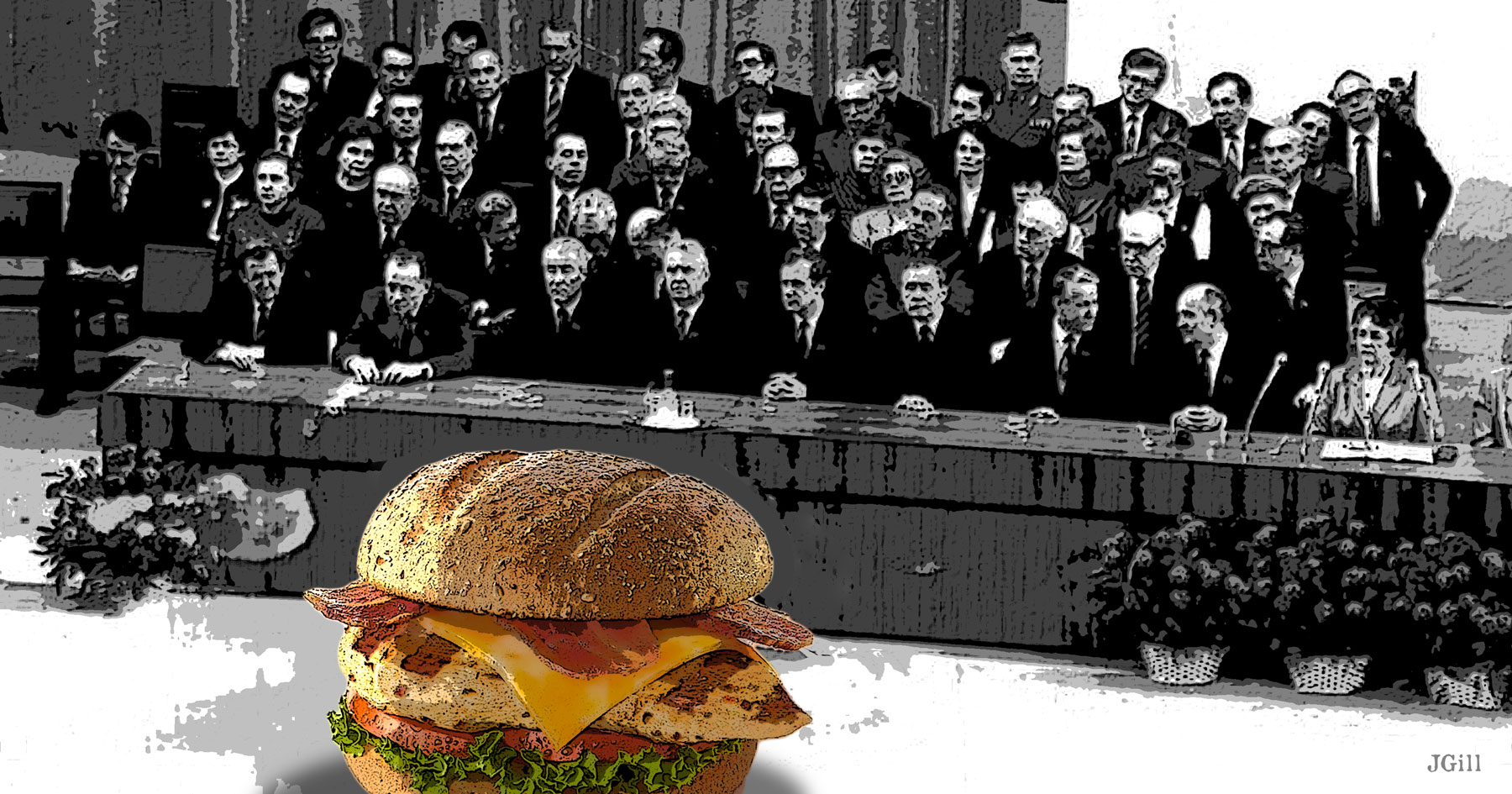
But what of the growing tide to legalize/decriminalize marijuana? Reading a report by Steven Greenhut in Reason, it becomes apparent that not every step moves us towards a rule of law. Some steps in “regulating and taxing” cannabis may be more about using crony capitalism to choose winners and losers.

Let’s use some common sense from lessons learned with alcohol — er, with regulating alcohol, that is. Keep marijuana away from the kids and keep the over-regulation of marijuana away from adults.

This is Common Sense. I’m Paul Jacob.

Printable PDF

Jack boot, photomontage, collage, James Gill, Paul Jacob, Common Sense


Categories
Accountability Common Sense government transparency national politics & policies porkbarrel politics tax policy too much government

The Spenders’ Eternal Excuse

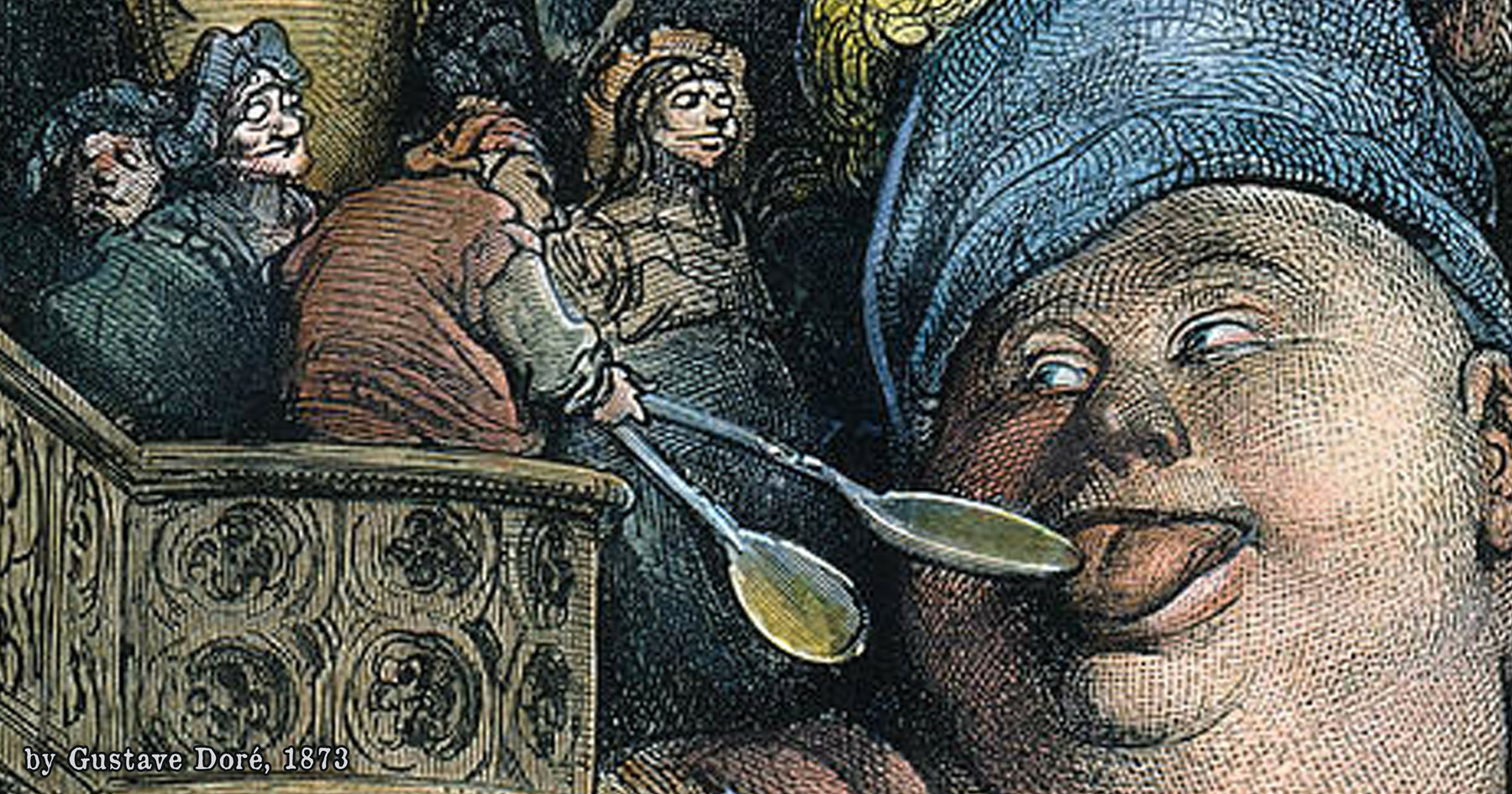
Most modern welfare states have a huge problem: their politicians promise more than government revenue covers. So they borrow and borrow until they can borrow no more.

And then they go down. Like Greece has gone down. Banks are closed there, and the people suffer.

The problem is over-spending and over-promising (the latter being merely committing to future over-spending, so let’s just call it all over-spending). But when you confront a partisan of such extravagance — whether that person be a politician or a constituency beneficiary or an ideological socialist or social democrat — the most common defense is: THEY WOULDN’T LET US TAX ENOUGH.

The “they” in such defenses could be an opposition party, or a constituency, or . . . “the evil rich.”

But anyone with something other than a lump of coal for a brain knows the real truth: responsible people don’t make such defenses. If a political difficulty gets in the way of the extra revenue needed for something promised, it’s practically the same as an economic difficulty, so the excuse falls apart.

Say again?

If you cannot get enough revenue for your favorite program, it doesn’t matter whether the people who are the source of your “needed” revenue are broke — have nothing to give — or they simply balk at giving. The point is, you don’t have the revenue. The responsible reaction would be: cut back on spending.

Responsible people budget; irresponsible people blame others for not having the wherewithal to spend and spend and spend.

This is Common Sense. I’m Paul Jacob.


Printable PDF

Gluttony


Categories
Common Sense crime and punishment free trade & free markets general freedom nannyism responsibility too much government

Must the War Go On and On?

I was still a kid, but I remember: as the Vietnam War dragged on, and on, we Americans continued to receive hopeful missives about how the next assault, or regroup, or dedication of manpower and weaponry, would lead to better results.

That’s what came to mind as I read the latest dispatch from the War on Drugs, in the Los Angeles Times. “White House announces push to combat growing heroin epidemic,” ran the headline.

So, it’s growing again? Haven’t I read this about a thousand times?

Talk about a familiar story:

The path to heroin addiction and overdoses can begin when patients are legally prescribed drugs containing opium, said Dr. Walter Ling, professor of psychiatry and founding director of the Integrated Substance Abuse Program at UCLA. . . .

“Once they get hooked they find out it’s very expensive to get these medicines and it’s much cheaper on the street. . . . That leads to street heroin abuse, which leads to the increase in opium overdoses,” Ling said.

But the rest of the story? Not reported.

Oh, sure: we were regaled with how dangerous the cheap street drugs are, because of how they are diluted. What we are not told, though, is that this is not a characteristic of heroin, as such, but of illegal heroin.

Decriminalize it. Let the legitimate market do what black markets cannot: provide responsible information that would discourage accidental overdoses.

Instead, we have a new and futile $1.3 million plan.

We’re overdosing on government. The cure is to cut down government to the proper dose.

This is Common Sense. I’m Paul Jacob.


Printable PDF

Addiction


Categories
Accountability Common Sense general freedom government transparency too much government

(Un)Intended System Failure

The system worked. The problem? The system doesn’t work.

Last year’s successful term limits ballot initiative in Grand Rapids pitted two pro-limits ladies with scant political experience against a united big business/big labor opposition campaign, sporting Dr. Glenn Barkan, professor emeritus of political science at Aquinas College, as treasurer.

Just before Election Day, Professor Barkan’s group stuffed mailboxes with advertisements warning residents: “Don’t let your vote be shredded.” The mailings seemed odd in two more respects: (1) there was no mention of “term limits,” and (2) according to campaign finance reports, the professor’s committee didn’t have enough money for mass mailings.

Then, after the election, the committee filed reports acknowledging big money raised and spent prior to the election.

“It just seemed odd that they could do all the mass mailings with little money,” said term limits advocate Bonnie Burke. “We ran a totally above-board campaign and they have these seasoned people and they weren’t sticking to the rules.”

Michigan’s Bureau of Elections concluded the professor’s committee “deprived voters from knowing the source and amount of more than half of the contributions it received. . . .” The group was fined $7,500.

The system worked! Reporting led to a violation, which led to a complaint, which led to an investigation, which led to the imposition of a fine.

But to what point?

As my colleague at Liberty Initiative Fund, Scott Tillman, who filed the complaint, explains, “Campaign finance laws do not stop connected insiders from gaming the system and hiding donations. Big money can ignore the laws and pay the fines if they get caught.”

Even worse, Tillman warned, “Campaign finance laws intimidate and discourage outsiders and grassroots activists from becoming active in politics.”

Is either result unintended?

This is Common Sense. I’m Paul Jacob.


Printable PDF

Campaign Finance Follies


Categories
Common Sense general freedom national politics & policies too much government

Forget Frankenstein

Some proposals are so shocking and not common that, no matter how rational or sensible, we cannot legitimately call them “common sense.”

Could this be one?

You tell me.

Congress is right now struggling to pass a highway funding bill. Authorized funding by the federal government on roads ends with the passing of this month, July. So, blogs Scott Shackford at Reason, “the legislature has to pass something. Because the legislature has to pass something, people are trying to squeeze everything into it.”

And our illustrious president wants to revive the recently dead, the Export-Import Bank. “When he was a senator, Barack Obama knew the program was nothing but corporate welfare,” writes Shackford. “But now as president, he has flip-flopped and is trying to keep the institution alive.”

I don’t know if the prez will ultimately succeed, cajoling Congress to revive the monster by stuffing it into the roads bill, but at least “Sen. Marco Rubio has introduced an amendment to the highway bill that would kill the bank and unload its assets to the treasury.”

Go, Rubio! Getting rid of the Ex-Im Bank is just anti-crony common sense.

So what’s the “uncommon” sense? This out-of-the-mainstream notion: We don’t need a federal transportation bill at all. It’s not as if states cannot secure funding for roads. (They already do.) Devolve the whole Interstate system back onto the states!

Radical? Maybe. But the federal government just spends and spends without much sense. Distribute the responsibility for roads to the states; let Congress figure out how to manage its remaining tasks.

For a change.

I think this is . . . Common Sense. I’m Paul Jacob.


Printable PDF

Import Export


Categories
Common Sense folly free trade & free markets general freedom national politics & policies too much government

Fifteen or Fifty or Zero?

Washington Post columnist Catherine Rampell just stumbled into a truth. Raising minimum wages could be disastrous. Depending on the rate.

While “Bernie Sanders, Martin O’Malley and a host of other well-intentioned liberals want to hike the federal minimum wage to $15 an hour,” she calls the proposal “badly misguided.”

And yet she says that the current federal wage floor, at “just $7.25 an hour . . . is absurdly low.”

Why, this Friday, she notes, marks six years since the last minimum wage hike!

Rampell recognizes that raising the minimum wage to $50/hour would cause unemployment, massively. She also realizes that, in many low-wage states, the mere $15 rate would do the same. But raising “the federal minimum wage to $10.10”? Might work! “This is a trade-off . . .”

Yes. Stop right there. Trade-offs, indeed.

She wants us to think about getting the rates right.

Employers and job-seekers do that already, in the marketplace. If businesses don’t pay enough, the workers will move on to employers who will. Force businesses to hire workers for more than their productivity? Unemployment results.

A minimum wage rate helps some and hurts others. Rampell admits that, appearing to “accept” 500,000 people losing their jobs as collateral damage to boost wages for others.

Her proposed fine-tuning of rates supposes that politicians have greater knowledge about the “proper” price of labor than employers and job-seekers. Moreover, she ignores the inevitable political game, whereby politicians take credit for rewarding some, while hiding the costs imposed on others.

Finding the “right minimum wage” rate is mainly about hiding the victims . . . so voters won’t notice.

This is Common Sense. I’m Paul Jacob.


Printable PDF

Finding the Right Balance


Categories
crime and punishment general freedom too much government

Why Police-State Tactics?

What do the War on Drugs, the War on Terror, and campaign finance law have in common?

Police-state tactics.

Most folks now understand how the War on Drugs and the War on Terror can erode civil liberties — but how does campaign finance law fit in with the other two?

My weekend Townhall column explains.

Several years ago, Wisconsin’s Republican Governor Scott Walker sought to tame public unions in his state, and against much opposition — quite a bit of it national — not only succeeded in changing law but beat back a recall vote as well.

So Democratic Milwaukee County District Attorney John Chisholm orchestrated a crack-down on conservative groups supportive of Walker’s reforms, complete with night-time SWAT-team raids on the homes of activists who were, they judged, “on the wrong side.”

The thin rationale was possible campaign finance violations, the idea that citizens and their organizations “coordinating” with the governor to advocate for public policies is somehow illegal.

The police state tactics were used because they were available. And obviously thought to be politically acceptable. That the courts have now ruled the means — indeed, the whole probe by prosecutors — unconstitutional doesn’t negate the terrifying fact that the state used such horrific methods to attack peaceful people.

Clearly, people in government have used understandable fears regarding drugs and terrorism to erode our liberties, even when the “crimes” they fight with such illiberal overkill have nothing — absolutely nothing — to do with drugs or terror.

Except the drug that is — and the terror wielded by — out-of-control government.

This is Common Sense. I’m Paul Jacob.


Printable PDF

Law Corrupted


Categories
Common Sense general freedom ideological culture national politics & policies too much government

C Is For Curmudgeon

Every writer can count among his loyal readers at least one curmudgeon. I have several. Today we consider the criticism of one special curmudgeon.

Let’s call him “Mr. C.”

Mr. C. agrees with my last several invokings of Common Sense. But he wonders, “Sure the [insert expletive here] of Republican presidential candidates are annoying, but never forget: the best Democratic candidate is worse than the worst Republican candidate.”

Mr. C. doesn’t mind ridiculing Trump, or questioning the savvy of Santorum. But, he tells me, “the very existence of a self-professed ‘socialist’ on the Democratic side suggests just how bad things have gotten.”

I don’t disagree. But should I agree with Mr. C. when he insists that “to call oneself a ‘socialist’ at this point in time is worse than calling oneself a ‘Ku Kluxer’”?

Further, Mr. C. informs me, it’s not just the candidate whose initials are “B.S.” who says outrageously commie, er, socialistic things.

“Hillary C.,” he insists, “trumps both Elizabeth Warren [who isn’t running] and B.S. with a whole wheelbarrow load of b.s. She just came out for ‘encouraging’ profit sharing by a business with its workers.”

What could be wrong with that?

Mr. C. has an answer: “All sorts of businesses engage in employee profit-sharing, aiming to encourage the proverbial ‘skin in the game.’ But forcing this is bad for many reasons.”

Again I agree. Mrs. Clinton’s proposal is just a sneaky way to play Robin Hood, without addressing the real issue behind all other issues, a lagging, red-tape bound economy.

Or, as was told to another Mr. C. years ago, “It’s the Economy, Stupid.”

This is Common Sense. I’m Paul Jacob.


Printable PDF

Curmudgeon


Categories
folly free trade & free markets general freedom national politics & policies too much government

A British Puzzle

Most folks think minimum wage laws are there to help the poor in particular and everybody in general. But economist Scott Sumner, exploring “Britain’s new minimum wage: Is there a hidden agenda?” finds Britain’s new Tory double whammy of decreasing welfare payments while hiking mandatory minimum wage something of a mystery:

Why would a Conservative government sharply increase the minimum wage, in a budget that in many other respects favored small government? The minimum wage is currently 6.50 pounds/hour, and 9 pounds/hour is almost $14/hour in US terms. Also recall that average incomes in the UK are lower than in the US.

He finds a possible reason: to dissuade immigration. Migrants usually have low skills, in part because of language difficulties, so they cannot command high wages — market wages, of course, being defined by worker productivity.

Could the new minimum wage be there to influence migration without doing so directly?

Sumner goes on to discuss the racist origins of the minimum wage in America, Australia, and South Africa. The purpose was pretty clearly to hurt poor workers. Minimum wage laws were established to protect white workers from cheap competition by darker skinned folk.

Sumner’s postscript is interesting: “The [American] Democratic surge of interest in the minimum wage occurred soon after the GOP surge of interest in immigration restriction. Let’s see if the GOP jumps on the minimum wage bandwagon.”

Of course, for every advocate of a class-based, favoritist policy who argues deceptively, there are dozens who are merely mistaken.

This is Common Sense. I’m Paul Jacob.


Printable PDF

White labor and minimum wages


Categories
education and schooling free trade & free markets general freedom too much government

The Pushers

When I was a teenager, my mom attended nursing school and became very interested in nutrition. This had consequences.

She stopped buying sugary cereals, for instance. Well! We could not supinely accept this. My younger brother hid Cap’n Crunch and other stuff like that under his bed; and when we wanted a bedtime snack, we’d find him and barter on the black market.

I cite those halcyon days of determined resistance as a relatively benign example of adults regulating kids. Parents have that job. Mom was certainly within her rights. Yet children, although they should gladly obey all reasonable parental injunctions, can only be expected to resist when parental prerogatives stray into sugary-cereal-banning territory.

How much more enthusiastically, then, must we cheer kids who valiantly evade not the proper authority of parents but the improper, pushy, Puritanical programs of joy-stomping institutional busybodies?

Now, I know what you’re thinking. “Are you by any chance referring to the efforts of Michelle Obama and snivelingly acquiescent educrats to expel anything tasty from school lunchrooms across the land, as if innocuous condiments were the equivalent of strychnine?” Correct!

I’m also talking about kids “caught bringing — and even selling[!!] — salt, pepper, and sugar” to rescue their taste buds from the arbitrarily bland fare.

Good going, guys! And if moms and dads want to take this Declaration of Independence even further, let them yank their kids out of these places and find another way to teach them the ABCs.

This is Common Sense. I’m Paul Jacob.


Printable PDF

Lunchroom Black Market