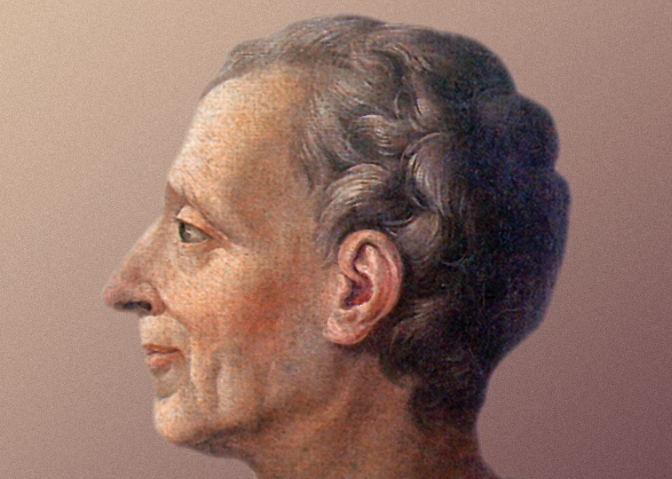
On January 18, 1689, Charles-Louis de Secondat, Baron de La Brède et de Montesquieu, French satirist and philosopher, was born.
His treatise The Spirit of the Laws was a major influence upon America’s founding generation. He is famous for his articulation of the theory of separation of powers, which is implemented in many constitutions throughout the world. He did more than any other author to secure the place of the word despotism in the political lexicon.
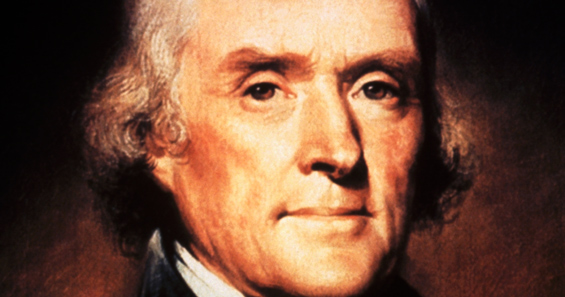
In 1811, former U.S. President Thomas Jefferson translated and published Destutt de Tracy’s Commentary and Review of Montesquieu’s ‘Spirit of Laws,’ a very popular review of republican principles — which helps demonstrate how important these French writers were to the American form of government.
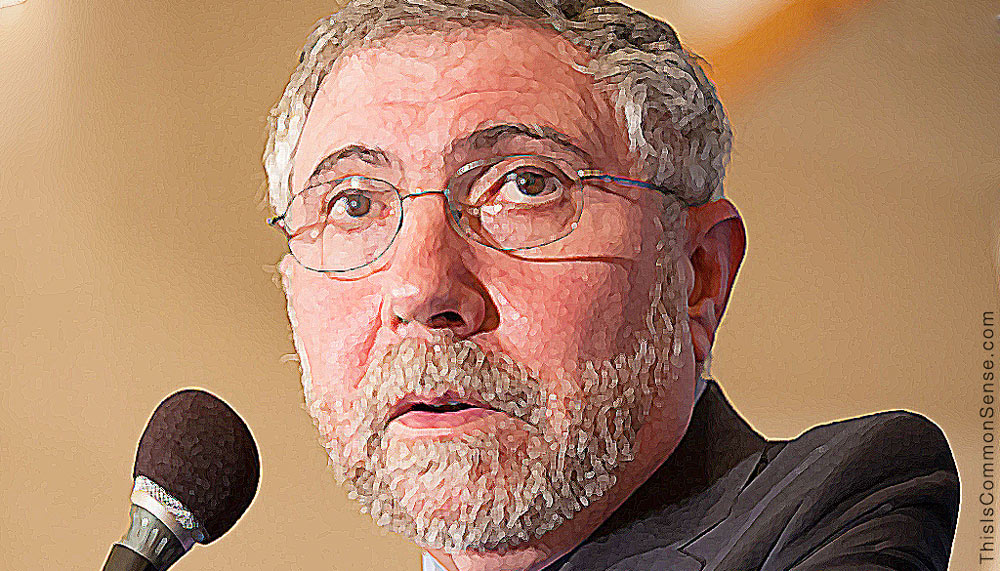
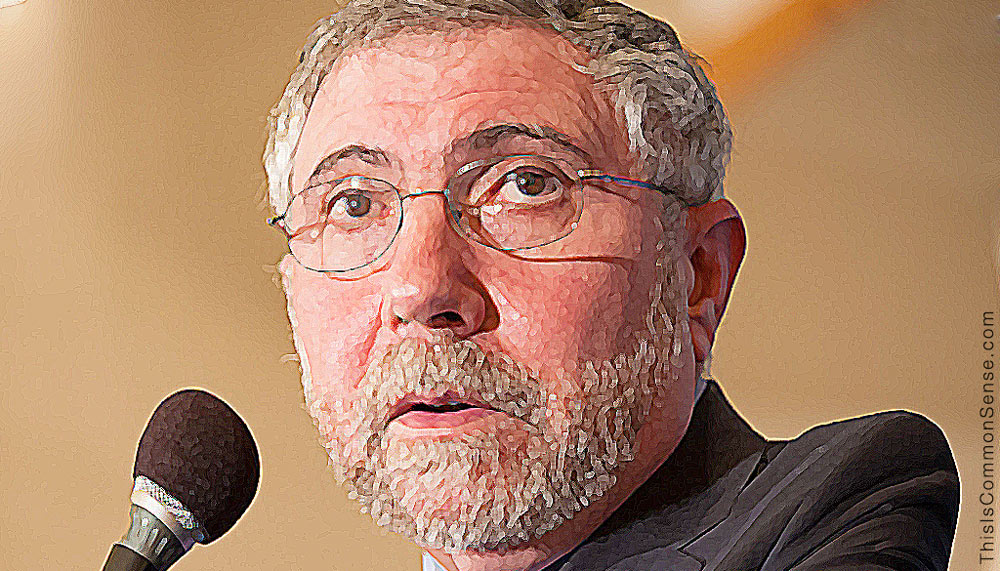
Paul Krugman, New York Times columnist and former economist, tested our patience last week with “Trump’s Big Libertarian Experiment.” How many non sequiturs will squeak past the Gray Lady’s editorial department?
Loads — and all about how the federal government shutdown gives limited government folks what they want: less government.
Subsidy checks to farmers aren’t going out, as “libertarian organizations like Cato” have long advocated. Sure. But it’s no policy change.
As soon as there’s a budget deal, those checks will be made up.
Further, “businesspeople are furious that the Small Business Administration isn’t making loans.”
Well, it’s high time businesses were weaned off the SBA teat — and a few whiners do not a case for subsidy make.
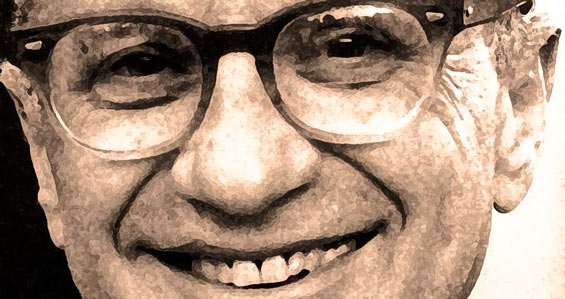
And then there’s the Food and Drug Administration, which can no longer inspect foods. Since “there’s a long conservative tradition, going back to Milton Friedman, that condemns the F.D.A.’s existence as an unwarranted interference in the free market” libertarians must be pleased, eh?
There is also a long tradition among economists that says businesses don’t get rich poisoning their customers, and that there are many mechanisms in place — and, barring the FDA, more would be in place — to ensure customers that they won’t be infected by eating . . . Romaine lettuce.
Which then Krugman admits . . . as if he had belatedly recalled Friedman’s lesson in Capitalism and Freedom. He concedes that the shutdown is not the way Friedman would go about limiting government. Besides, “libertarian ideology isn’t a real force within the G.O.P.”
So what’s the point?
Krugman ends with talk of a smell test: does lack of food inspections smell like freedom?
Something stinks here. But it isn’t spoiled food. Or freedom.
On January 17, 1937, Chicago School economist George Stigler was born. Stigler won a Nobel Memorial Prize for his work. His autobiography is entitled Memoirs of an Unregulated Economist.
Let’s builda wall, I said last week, between the Office of the President and all these emergency powers our Congress has recklessly given away to the chief executive.
After admittedly “scrambling to figure out” the emergency powers possessed by POTUS, the Washington Post’s editorial board lamented its discovery “that Congress has delegated a surprising amount of emergency or quasi-emergency power to the executive branch over the years, possibly too much.”
Possibly? Well . . . it is the Post.
Yet, the paper acknowledges, “The implications for constitutional government are potentially serious.”
The federal government currently operates under “31 presidentially declared national emergencies,” informsPost columnist Charles Lane. “[I]f Trump evades Congress’s refusal to fund a border wall by declaring a national emergency at the border . . . it would not be the first time a president took advantage of the inherent elasticity of the term.”
Congress last legislated on emergency presidential powers in 1976, a mere two years after Richard Nixon became the first president in U.S. history to resign in disgrace. Yet, even then, the law left presidential authority largely unchecked, and the term “emergency” completely undefined.
Why has Congress simply handed away so much power, writing laws with so little accountability? Has Congress been saddled with inexperienced rookies? No. There are no term limits. This is the product of very experienced career politicians.
Read between the lines.
“Only Congress can reclaim the emergency powers it has granted the president,” Lane writes, adding . . . “assuming, of course, that lawmakers want the responsibility back, too.”
Fundamentally, there are only two ways of coordinating the economic activities of millions. One is central direction involving the use of coercion — the technique of the army and of the modern totalitarian state. The other is voluntary co-operation of individuals — the technique of the market place.
Milton Friedman, Capitalism and Freedom (1962), Ch. 1 The Relation Between Economic Freedom and Political Freedom.
If it seems like each new government program is more intrusive than the last, there’s a reason. That last one did not work as planned. So a new one gets concocted to fix its mess.
The latest? New York City Mayor Bill de Blasio has established a new enforcement bureau, the Mayor’s Office to Protect Tenants, to sic a “new sheriff” on property owners.
“When a landlord tries to push out a tenant by making their home unlivable, a team of inspectors and law enforcement agents will be on the ground in time to stop it,” the mayor explained last week in his latest State of the City Address.
And he means business, er, government: “we will seize their buildings, and we will put them in the hands of a community nonprofit that will treat tenants with the respect they deserve.”
Well, that cannot possibly go wrong!
But what was the earlier program that put New York in its current situation?
Rent control protects current renters from rate hikes and the like, sure. But it discourages the production as well as the maintenance of rental properties, which in turn limits supply and ultimately hikes rents for future tenants.
Perhaps even worse, it incentivizes the landlords to boot out tenants while it more than nudges tenants to dig in . . . even when moving would otherwise make more sense.
The market thus thwarted, the de Blasios then set up more laws and more policing . . . and antagonism ramps up another notch.
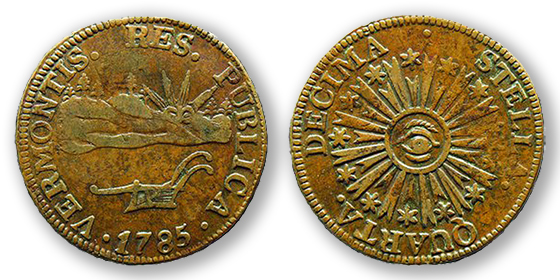
On January 15, 1777, New Connecticut declared independence from the crown of Great Britain and the colony of New York.
Delegates first named the independent state New Connecticut and, in June 1777, finally settled on the name Vermaont, an imperfect translation of the French for Green Mountain.
This new “Vermont Republic” minted copper coins (see above), first struck in 1785. The people of Vermont took part in the American Revolution although the Continental Congress did not recognize the jurisdiction, because of vehement objections from New York, which had conflicting property claims.
In 1791, Vermont was admitted to the United States as the 14th state, upon which its minting of coins ceased.
Charles de Secondat, Baron de Montesquieu, De l’esprit des lois (The Spirit of Laws,1748), Book XXIX: Of the Manner of Composing Laws, Ch. 16: Things to be Observed in the Composing of Laws.