Categories
folly ideological culture media and media people Popular

Inclusivity Not Included

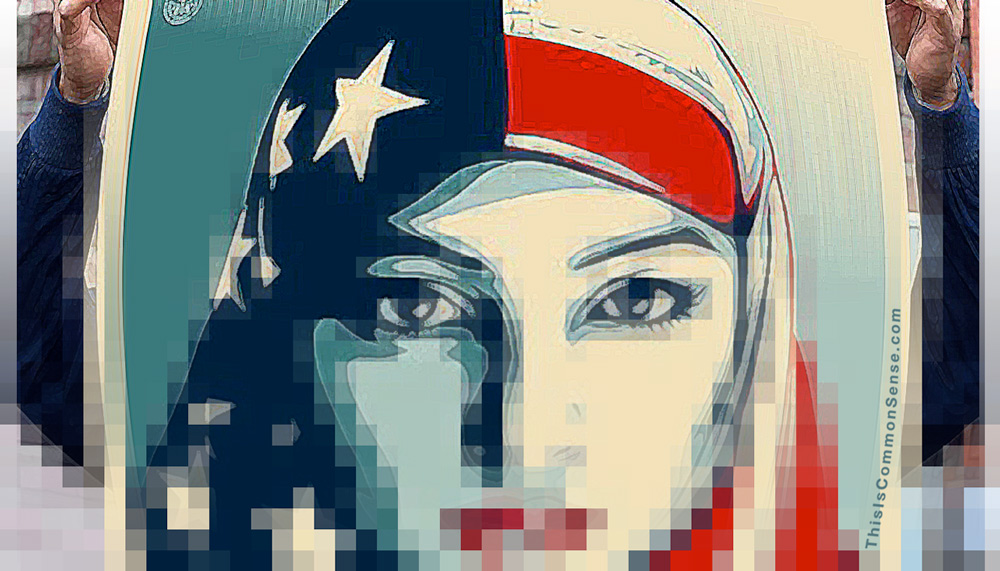
The 3rd annual Woman’s March strolled by over the weekend — a tiny fraction of its former self. 

Two years ago, close to a million protesters converged on Washington, D.C., while this year’s event “appeared to attract only thousands,” The Washington Post reported, “mirroring lower turnout at marches . . . across the country.”

“[A] movement that once bragged about its inclusivity,” explained a separate news analysis, “has been roiled by reports of battles over diversity, hate speech and branding.”

In addition to squabbles over corporate ownership of the very name of the “Women’s March,” the leaders of the main organization have been accused of anti-Semitism. “Board members Linda Sarsour, Carmen Perez and Women’s March, Inc., co-president Tamika Mallory, have publicly affiliated with and praised anti-Semitic Nation of Islam leader Louis Farrakhan,” notes the Capital Research Center’s Influence Watch website.

March founder Teresa Shook called on them to resign, charging “they have allowed anti-Semitism, anti-LBGTQIA sentiment and hateful, racist rhetoric to become a part of the platform . . .” The Democratic National Committee and a number of progressive groups have withdrawn their support.  

But the “inclusivity” was always fake. As a “women’s” march, it started out excluding half the population. Nothing wrong with women having events or organizations that focus on issues of particular interest to females; it’s just not inclusive.

And let’s not ignore that pro-life women were specifically booted from participating in the original 2017 event.  

“Is the Women’s March more inclusive this year?” a USA Today article asked before last year’s pink-hatted festivities. 

Apparently not. This year, everyone was excluded fromthe Eureka Women’s March — cancelled because those hoping to participate were “overwhelmingly white.”

With all this inclusion, no wonder we are so divided.

This is Common Sense. I’m Paul Jacob.

PDF for printing

women, woman, march, inclusion, in group, out group

See all recent commentary
(simplified and organized)
See recent popular posts

Categories
Today

Witness

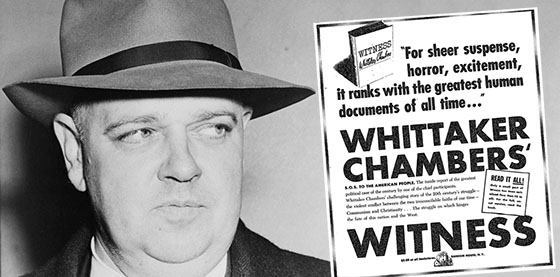
On January 21, 1950, Alger Hiss was convicted of perjury, with Whittaker Chambers being the main witness in Hiss’s prosecution. Chambers confessed to having been a Soviet spy, and accused Hiss as an accomplice, which Hiss denied to his dying day. Chambers gave a fascinating account of all this in his bestselling memoir, Witness.

Categories
Thought

Ayn Rand

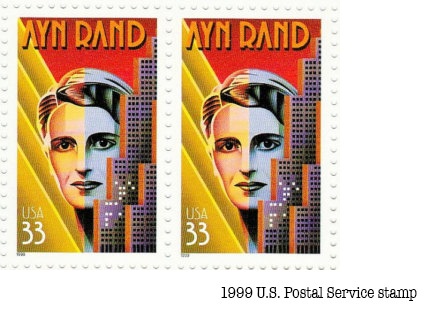
An individualist is a man who says: ‘I’ll not run anyone’s life — nor let anyone run mine. I will not rule nor be ruled. I will not be a master nor a slave. I will not sacrifice myself to anyone — nor sacrifice anyone to myself.

Ayn Rand, “Textbook of Americanism” (1946)
Categories
general freedom links

Service vs. Involuntary Servitude

The National Commission on Military, National, and Public Service will release an interim report this Wednesday at an event at the Newseum in Washington, DC, beginning at 9:00 A.M. The Commission was created by Congress “to consider and develop recommendations concerning the need for a military draft, and means by which to foster a greater attitude and ethos of service among American youth.”

Paul Jacob will attend to demand the government oppose their push for mandatory national service and expanding draft registration. Last April, Jacob testified before the commission and penned this commentary, entitled “Leave Those Kids Alone.”

Paul has long opposed both military and non-military conscription. Back in the 1980s, he served nearly six months in prison for refusing to register for the draft. 

See also: “Paul Jacob on the Draft

Categories
Accountability video

Life, Liberty, and the Pursuit of … Abortion?

Andrew Klavan begins his show with satire, but then segues into a serious discussion of abortion. Oh, and Google, evil Google:

Categories
Thought

William Gibson

The future’s already here; it’s just not evenly distributed.

William Gibson, Distrust That Particular Flavor (2012).

Categories
Today

Lysander Spooner

On January 19, 1808, Lysander Spooner was born.

Spooner’s achievements in American life, law, and political philosophy, are among the most colorful of the 19th century. Studying law privately, he sued to practice without joining the bar, and won the suit. He set up a postal service that directly competed with the United States Postal Service, delivering mail at a fraction of the cost. He wrote The Unconstitutionality of Slavery, and convinced noted Garrisonian abolitionist Frederick Douglass of his argument. (The book became the centerpiece of intellectual ammunition for the Free Soil Party.) Later in life Spooner turned against constiutionalism itself, and penned some of the most radical political works of his day, including Vices Are Not Crimes and The Constitution of No Authority. Spooner also clearly articulated a “jury nullification” position in his classic treatise Trial by Jury.

Categories
Today

Lysander Spooner

On January 19, 1808, Lysander Spooner was born.

Spooner’s achievements in American life, law, and political philosophy, are among the most colorful of the 19th century. Studying law privately, he sued to practice without joining the bar, and won the suit. He set up a postal service that directly competed with the United States Postal Service, delivering mail at a fraction of the cost. He wrote The Unconstitutionality of Slavery, and convinced noted Garrisonian abolitionist Frederick Douglass of his argument. (The book became the centerpiece of intellectual ammunition for the Free Soil Party.) Later in life Spooner turned against constitutionalism itself, and penned some of the most radical political works of his day, including Vices Are Not Crimes and The Constitution of No Authority. Spooner also clearly articulated a “jury nullification” position in his classic treatise Trial by Jury.

Categories
folly ideological culture national politics & policies Popular

Skepticism in Order

It is not a question of “belief,” says Anastasios Tsonis. 

In “The overblown and misleading issue of global warming,” this emeritus distinguished professor at the University of Wisconsin-Milwaukee explains that in a “scientific problem ‘believing’ has no place,” going on to clarify: 

“In science, we either prove or disprove.”

And regarding climate there is no “settled science.” Lacking unquestionable experimental context — “we have only one realization of climate evolution” — no matter how strong our opinions, skepticism is always in order.

But let us admit the obvious, the “global warming”/“climate change” debate has been frustrating for just about everybody. And much of this is the result of dogmatism.

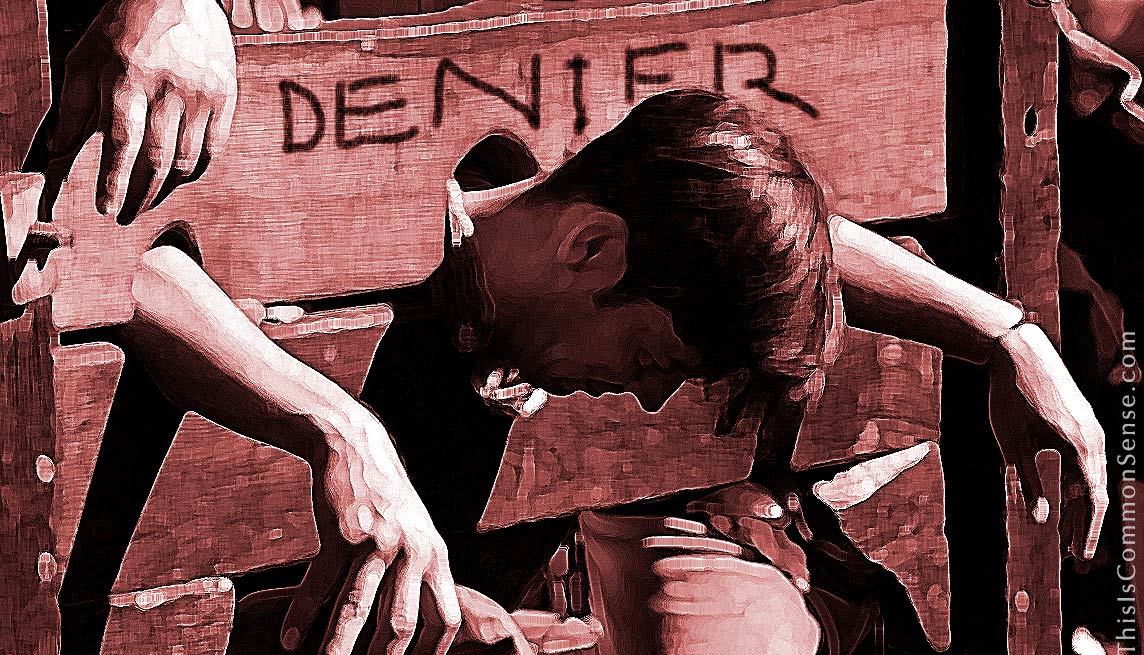
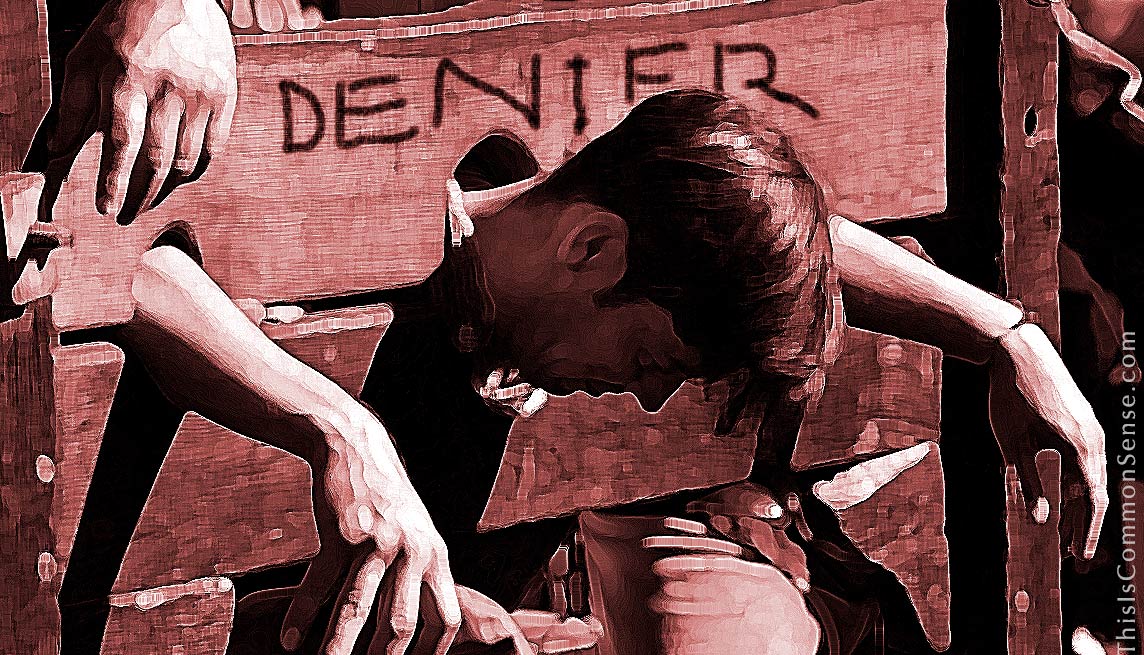
“The fact that scientists who show results not aligned with the mainstream are labeled deniers is the backward mentality,” Tsonis insists. “We don’t live in the medieval times, when Galileo had to admit to something that he knew was wrong to save his life.”

He argues that our lack of knowledge means that we should be circumspect about whether humans have caused the bulk of recent climate change. “Climate is too complicated to attribute its variability to one cause. We first need to understand the natural climate variability” — which, he says, “we clearly don’t.” 

Tsonis concludes talking about problems more urgent than climate change. We can (and should) quibble with his list, but we should be open about our reasoning.

One reason for concentrating on these other issues is that we might be more likely to gain clarity on them.

And thus might be able to do something not foolish.

This is Common Sense. I’m Paul Jacob.


PDF for printing

denier, climate change, globlal warming, skepticism, science

See all recent commentary
(simplified and organized)
See recent popular posts

Categories
Thought

Theodore Dalrymple

“In my study of communist societies, I came to the conclusion that the purpose of communist propaganda was not to persuade or convince, not to inform, but to humiliate; and therefore, the less it corresponded to reality the better. When people are forced to remain silent when they are being told the most obvious lies, or even worse when they are forced to repeat the lies themselves, they lose once and for all their sense of probity. To assent to obvious lies is . . . in some small way to become evil oneself. One’s standing to resist anything is thus eroded, and even destroyed. A society of emasculated liars is easy to control.”