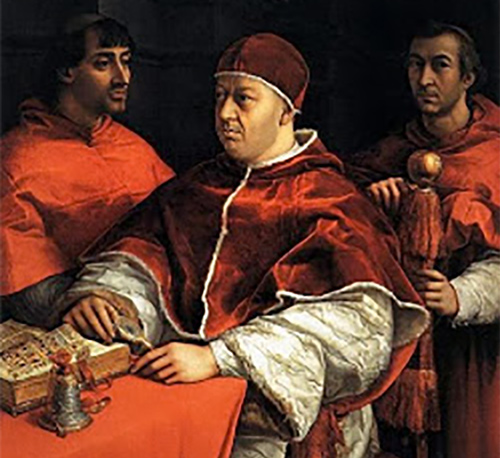
On January 14, 1514, Pope Leo X issued a papal bull against slavery. On the same date in 1639, the first written constitution to create a government, the “Fundamental Orders,” was adopted in Connecticut.
Against Slavery
On January 14, 1514, Pope Leo X issued a papal bull against slavery. On the same date in 1639, the first written constitution to create a government, the “Fundamental Orders,” was adopted in Connecticut.
By far the most important of all the conditions, under which the production of material commodities goes broadly forward, is liberty of action on the part of the individual; because, wherever such liberty is conceded, association and invention and all other needful conditions follow right along by laws of natural sequence.
Arthur Latham Perry, Principles of Political Economy, 1891.
Last week we noted the 243rd anniversary of the publication of Common Sense — Thomas Paine’s Common Sense, that is.
The importance of this document for the formation of the United States of America can hardly be over-estimated. And the general good . . . sense . . . of the pamphlet still impresses. It is, in fact, one of the classics of Western literature, political polemics, and social philosophy. And it radicalized Americans to dare declare their independence from King George III.
We here at ThisIsCommonSense.com can hardly be more emphatic: if you have not read the pamphlet, you really should. If your spouse, or children, or neighbors have not read it, please send them a copy. We provide one in our Library, as a webpage.
And, also in our Library, we offer something else by Tom Paine, his essay against slavery. It seems to be one of the first anti-slavery pamphlets published in America. Read our webpage or download the PDF. And send it to your friends.
And enemies.
The fight against slavery is inextricably linked, in American history, to the fight for freedom. Slavery is one of freedom’s most stark opposites.
“One of?” we hear you protest. Well, tyranny is slavery’s twin. But we grant you, maybe they are the same thing: tyranny is the slavery of a populace, slavery the tyranny over an individual person.
Paine wrote even more controversial works. He also went to France to aid in the French Revolution only to get put in prison for his trouble. And he came back to America, for refuge, and was forsaken by its people, dying in poverty.
His ideas are not impoverished though. And not dead. Not so long as we keep them alive.
This is Common Sense. And he was Tom Paine, American hero.
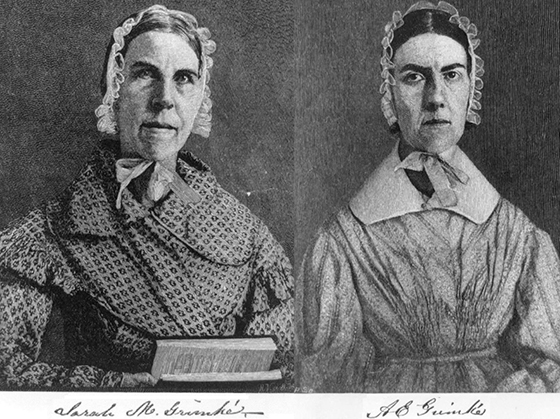
The system of slavery is necessarily cruel. The lust of dominion inevitably produces hardness of heart, because the state of mind which craves unlimited power, such as slavery confers, involves a desire to use that power, and although I know there are exceptions to the exercise of barbarity on the bodies of slaves, I maintain that there can be no exceptions to the exercise of the most soul-withering cruelty on the minds of the enslaved. All around is the mighty ruin of intellect, the appalling spectacle of the down-trodden image of God.
Sarah M. Grimké, from An Epistle to the Clergy of the Southern States, New-York, 12th Mo. 1836.
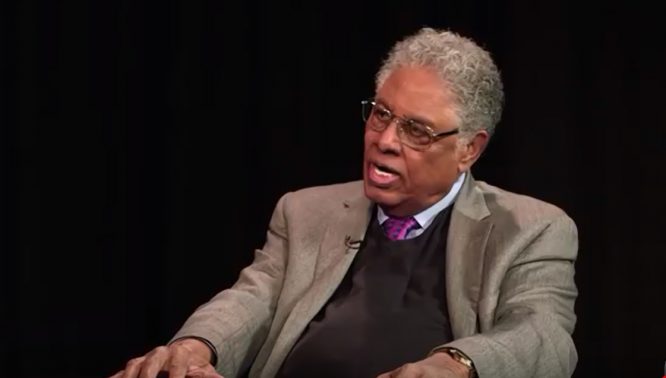
Thomas Sowell’s many books on race and discrimination haven’t made a dent in whole sectors of the body politic; Larry Elder may have convinced Dave Rubin that the standard model of “systemic racism” no longer applies, but he has not convinced everybody; and, generally, there is much work to be done.
Racism will always be with us, but this may very well be the least racist period in human history — so we need to deliver, more widely, a more truly liberal, tolerant perspective that is not driven by victim narratives where victims are scarce, and does not identify racism even where it does not exist.
Here is a video in critique of the standard Racism Everywhere victim narrative, one white guy criticizing another:
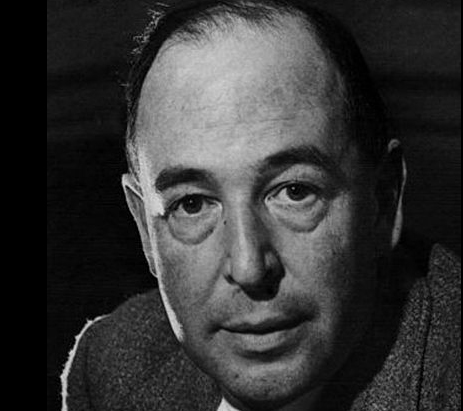
Of all tyrannies, a tyranny sincerely exercised for the good of its victims may be the most oppressive. It would be better to live under robber barons than under omnipotent moral busybodies. The robber baron’s cruelty may sometimes sleep, his cupidity may at some point be satiated; but those who torment us for our own good will torment us without end for they do so with the approval of their own conscience. They may be more likely to go to Heaven yet at the same time likelier to make a Hell of earth. This very kindness stings with intolerable insult. To be ‘cured’ against one’s will and cured of states which we may not regard as disease is to be put on a level of those who have not yet reached the age of reason or those who never will; to be classed with infants, imbeciles, and domestic animals.
C. S. Lewis, “The Humanitarian Theory of Punishment,” reprinted in God in the Dock (1970).
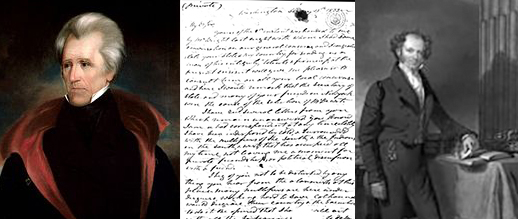
On January 13, 1833, United States President Andrew Jackson (pictured, top left) wrote to Vice President Martin Van Buren (pictured, top right) expressing his opposition to South Carolina’s defiance of federal authority in the Nullification Crisis. Jackson insisted that “the crisis must be now met with firmness” and “the modern doctrine of nullification & succession put down forever.”
South Carolina had blamed protectionist high tariffs for the severity of the economic slump of the time, and Andrew Jackson’s compromise Tariff of 1832 was still too much special-interest “protectionism” for South Carolina, which threatened to nullify the law as unconstitutional. Jackson, a nationalist at heart, had no sympathy for dissidents in the southern states. (The tariffs were designed by northern politicians to encourage the growth of industry. The belief among most economists of that time was that such high “protective” tariffs favored certain businesses at the expense of the general consumer, particularly farmers and agricultural producers.) After the crisis subsided, tariffs were further reduced from the 1832 level, much lower than of 1828’s “Tariff of Abominations,” which had been signed into law by President John Quincy Adams — and written mainly by Martin Van Buren as a way to precipitate the election of Jackson.
Since the somewhat ambiguous end to the Nullification Crisis, the doctrine of state prerogatives — “states’ rights” — has been asserted by opponents of the Fugitive Slave Act of 1850, proponents of California’s Specific Contract Act of 1863 (which nullified the Legal Tender Act of 1862), opponents of Federal acts prohibiting the sale and possession of marijuana in the first decade of the 21st century, and opponents of implementation of laws and regulations pertaining to firearms from the late 1900s up to 2013. State opposition to ObamaCare and to the federal prohibition of marijuana has also recently revived the issue.
On January 13, 1898, Émile Zola’s J’accuse exposed the Dreyfus affair.
On Jan. 12, 1904, Henry Ford set a land-speed record of 91.37 mph on the frozen surface of Lake St. Clair in Michigan, driving a four-wheel vehicle, dubbed the “999,” with a wooden chassis but no body or hood. Ford’s record was broken within a month, but the publicity from Ford’s achievement was valuable to the auto pioneer, who had incorporated the Ford Motor Company the previous year.
Will President Trump declare a “national emergency”? Is he that desperate to get the funds needed to build a wall (or steel-slate fence or barrier of some sort) on the U.S. border with Mexico?
It looks increasingly likely, but who knows . . .
What I do know is how foolish and dangerous it is to provide “emergency” loopholes for politicians.
Words have very mutable meanings to politicians. “Emergency” will entail whatever the president invoking it desires.
In fact, when Congress passed the National Emergencies Act in 1976, the legislation didn’t even bother to define the term, “emergency.”
Every time I hear “national emergency,” it reminds me of Colorado and Oregon, where state constitutions are clear that an emergency entails a true threat to the health and safety of the public. But since those constitutions protect emergency bills from the check of a citizen referendum, legislators make use of the obvious loophole: a majority of bills in those states now carry a clause dishonestly claiming emergency status.
I guess we should not be shocked to discover that Congress has awarded the president at least 136 emergency powers, as Elizabeth Goitein of the Brennan Center for Justice informs The Washington Post.
Ninety-six of those “powers” allow the president to act unilaterally.
What sort of blind power giveaways are we talking about?
Goitein explains that in a declared emergency, under current law, Congress has authorized “the president to shut down or take over radio stations and even suspend a law that prohibits government testing of chemical and biological weapons on unwitting human subjects.”
We need a wall, all right . . . between politicians and this foreign notion of extra-constitutional “emergency” powers.
This is Common Sense. I’m Paul Jacob.

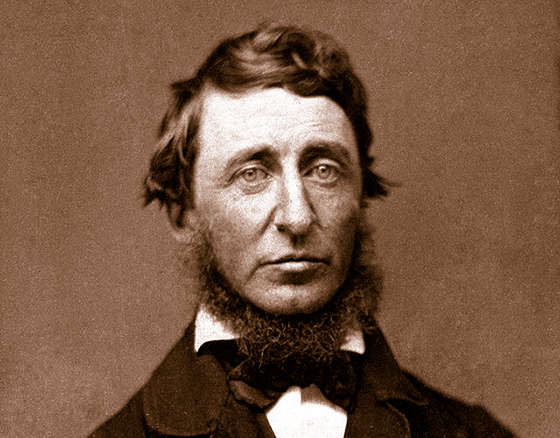
I wish my countrymen to consider, that whatever the human law may be, neither an individual nor a nation can ever commit the least act of injustice against the obscurest individual without having to pay the penalty for it. A government which deliberately enacts injustice, and persists in it, will at length even become the laughing-stock of the world.
Henry David Thoreau, “Slavery in Massachusetts,” July 4, 1854.