Categories
Thought

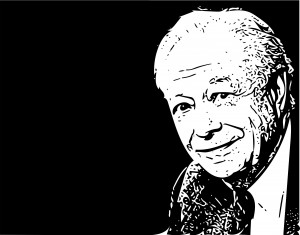
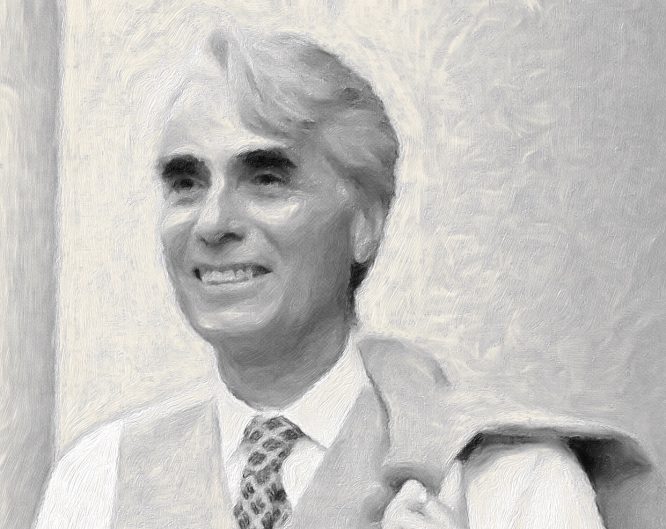
Irving Kristol

The inner spiritual chaos of the times, so powerfully created by the dynamics of capitalism itself, is such as to make nihilism an easy temptation. A ‘free society’ in Hayek’s sense gives birth in massive numbers to ‘free spirits’ — emptied of moral substance but still driven by primordial moral aspirations. Such people are capable of the most irrational actions. Indeed, it is my impression that, under the strain of modern life, whole classes of our population — and the educated classes most of all — are entering what can only be called, in the strictly clinical sense, a phase of infantile regression. With every passing year, public discourse becomes sillier and more petulant, emotions become, apparently, more ungovernable. Some of our most intelligent university professors are now loudly saying things that, had they been uttered by one of their students twenty years ago, would have called forth gentle and urbane reproof.

Irving Kristol, “‘When virtue loses all her loveliness’ — some reflections on Capitalism and ‘the free society,’National Affairs, No. 21, Fall 1970.
Categories
Today

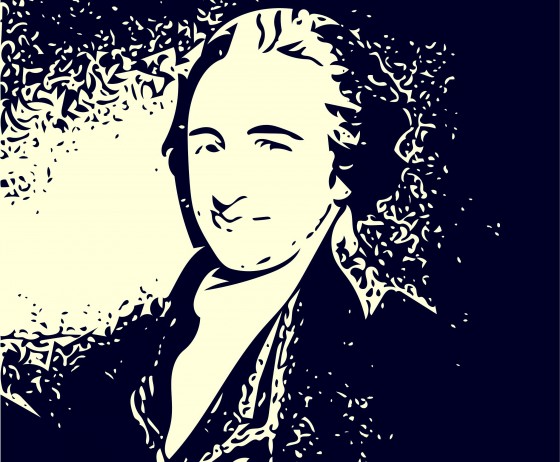
Tom Paine’s Pamphlet

On January 10, 1776, Thomas Paine published Common Sense.

Categories
education and schooling ideological culture

Administrators Strike Back

The academic world is filled with “scholars” who write papers that are almost never cited, and which are so filled with gobbledygook and periphrasis that they are almost impossible to read.

Without cracking up, anyway.

A year and a half ago I wrote about one team who authored fake papers to show up postmodernist academics for the phonies they are. But the sad truth is that even serious papers prove to be nothing more than “cryptic, pretentious, prolix nonsense.” 

Since then, the team that wrote the infamous “The Conceptual Penis as a Social Construct” went on to successfully place some incredibly goofy papers into prestigious journals — and even garner earnest praise from peer reviewers.

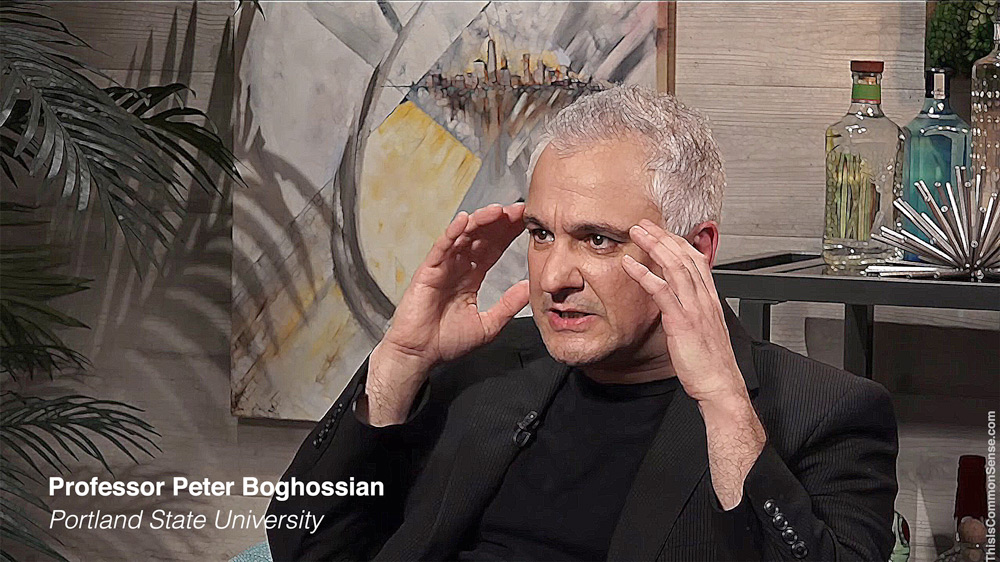
Now, the humiliated academic world is striking back. One of the japers, Professor Peter Boghossian of Portland State University, is facing academic censure and misconduct charges.

“This strikes me (and every colleague I’ve spoken with) as an attempt to weaponize an important [principle] of academic ethics in order to punish a scholar for expressing an unpopular opinion,” wrote Harvard psychologist Steven Pinker, entreating PSU not to persecute their philosopher. Biologist Richard Dawkins and psychologist Jordan Peterson joined Pinker in support of the rogue-but-reasonable academic.

PSU administrators say that Boghossian, by trying to trick academic journals into publishing fake studies, has violated Institutional Review Board protocols. You see, he did not seek approval to carry out experiments on human subjects!

The thing is, the whole post-structuralist, post-modernist, “‘Studies’ studies” mob has been experimenting on their alleged clients, the students, for decades. And the results have been . . . enlightening if not praiseworthy.

It is hard to see Boghossian’s antics as anything but heroic.

And hysterical.

This is Common Sense. I’m Paul Jacob.


PDF for printing

Peter Boghossian, Portland, postmodernism, academic research, education


Categories
Today

Fifth to Ratify

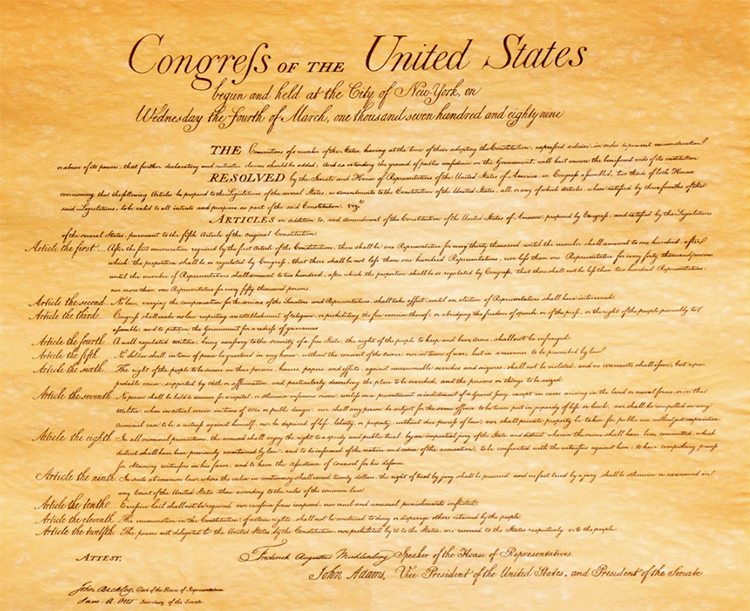
On January 9, 1788, Connecticut became the fifth state to be admitted to the United States under the new Constitution. Connecticut was one of the first nine states of the original union, under the Articles of Confederation, to accept the Constitution, and thus officially ratify it. All 13 original states had ratified that new compact, officially, by May 29, 1790. The first state to be added to the original 13 was Vermont, in 1791.

Categories
Thought

Henry David Thoreau

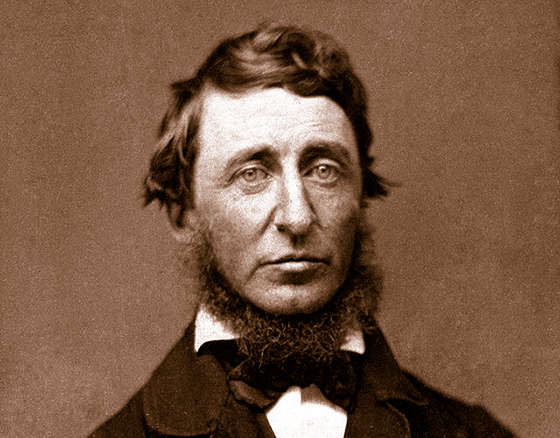
They who have been bred in the school of politics fail now and always to face the facts. Their measures are half measures and makeshifts merely. They put off the day of settlement indefinitely, and meanwhile the debt accumulates.

Henry David Thoreau, “Slavery in Massachusetts,” July 4, 1854.
Categories
crime and punishment Second Amendment rights U.S. Constitution

Resisting Registration

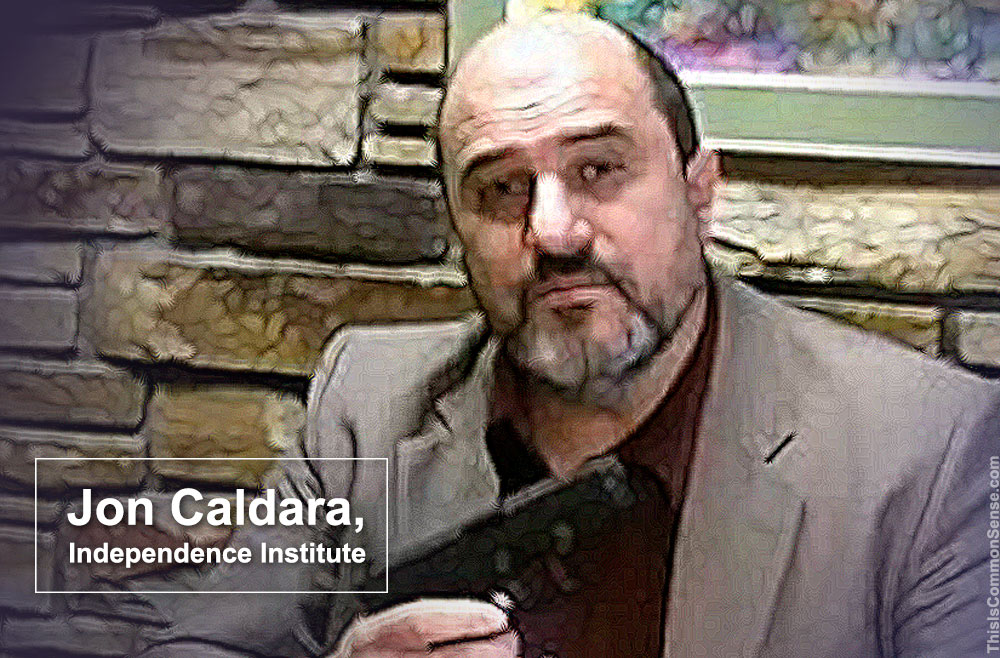
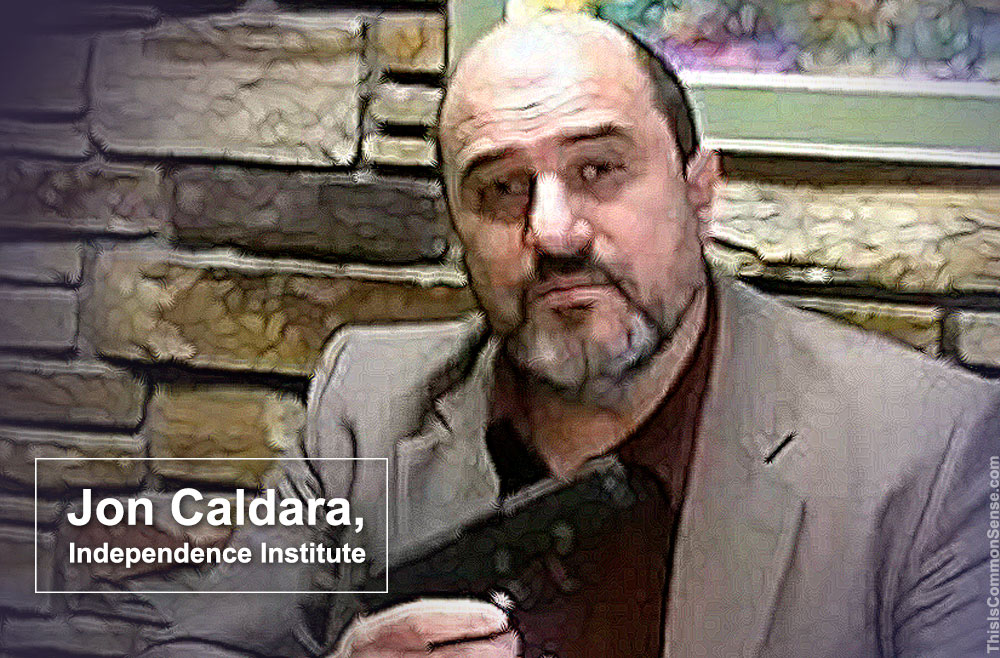
Jon Caldara won’t register his guns. He also won’t remain silent about his refusal.

He has lots of company in Boulder, Colorado, with respect to the former, if not the latter, form of resistance — his unwillingness to compromise his right to bear arms.

The town recently began requiring owners of “assault weapons” to either ditch them or register them with the Boulder police. Owners choosing registration must submit to background checks “to ensure that the weapon holder is legally able to be in possession of the firearm.” If you pass, you get certificates acknowledging rightful ownership.

But if you lose the certificates, apparently you lose your ownership rights.

The city defines an “assault weapon” as a “semi-automatic center-fire rifle” or a “semi-automatic center-fire pistol” with various characteristics. In short, the target is “ugly guns,” as foes of gun control sometimes put it. (“Non-assault” weapon: papier-mâché weapon.)

Many Boulder citizens are quietly refusing to comply with the mandates. They “see this as a registry,” according to Lesley Hollywood, executive director of Rally for Our Rights.

Caldara, head of the Independence Institute, is speaking out despite the risk. Why? Because “somebody has to. . . . In this town that spouts tolerance for alternative lifestyles . . . when it comes to a lifestyle they don’t like, there is no tolerance . . . Tolerance means tolerating things you dislike, that you find scary.”

This idea goes even deeper than tolerance, though. It’s about “freedom” and “rights.” 

There is nothing frightening about Mr. Caldara’s unregistered guns, but much to fear from Boulder officials assaulting his rights.

This is Common Sense. I’m Paul Jacob.


PDF for printing

Caldara, gun rights, 2nd Amendment, Colorado
Categories
Thought

Albert Camus

“The defects of the West are innumerable, its crimes and errors very real. But in the end, let’s not forget that we are the only ones to have the possibility of improvement and emancipation that lies in free genius.”

Albert Camus, as quoted in Beyond Nihilism: Albert Camus’s Contribution to Political Thought, Fred H. Willhoite, Jr. (Baton Rouge: Louisiana State University Press, 1968).
Categories
Today

State of the Union

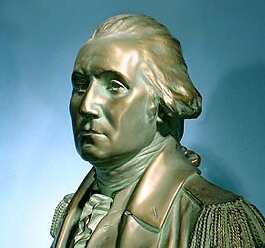
On January 8, 1790, George Washington delivered the first State of the Union address in New York, New York.

In 1835, on this date, the United States federal government achieved a zero debt for the first and only time.

In 1867, African-American men were first allowed to vote in Washington, D.C.

Categories
term limits

The World Wants Term Limits

The Economist magazine has announced its “Country of the Year.” 

It’s Armenia.

The idea behind the award is to recognize the nation that has “improved the most” during the past year. The honorific implies no rosy assumptions about the future. Obviously, a country can backslide. The Economist’s editors admit that this proved to be the case with prior winners France and Myanmar.

This year, Malaysia and Ethiopia were in the running. Malaysians managed to oust a corrupt prime minister, and the new leader of Ethiopia has sought to encourage freedom of speech and liberalize the economy. But, all things considered, the magazine regards the advances in these countries to be too contradictory or uncertain to merit the Most Improved designation.

Progress seems more definitive in Armenia, where former President Serzh Sargsyan did his darnedest to escape presidential term limits — as is attempted by so many heads of state around the world.

Sometimes the power-grabbers succeed and sometimes they don’t. But everywhere, most voters oppose such shenanigans. They know how easy it is for an incumbent to shove his way to perpetual power no matter how unhappy they may be with him. Citizens know the value of term limits.

Armenia’s good news is that Sargysan’s attack on term limits failed — dramatically. He resigned after massive demonstrations. An opposition figure, Nikol Pashinyan, won power “on a wave of revulsion against corruption and incompetence. . . . A Putinesque potentate was rejected.”

Just what the world needs to see — a lot more often.

This is Common Sense. I’m Paul Jacob.


PDF for printing

Armenia, term limits, freedom, progress, The Economist

See all recent commentary
(simplified and organized)
See recent popular posts

Categories
Thought

Robert Nozick

Is not the minimal state, the framework for utopia, an inspiring vision?

The minimal state treats us as inviolate individuals, who may not be used in certain ways by others as means or tools or instruments or resources; it treats us as persons having individual rights with the dignity this constitutes. Treating us with respect by respecting our rights, it allows us, individually or with whom we choose, to choose our life and to realize our ends and our conception of ourselves, insofar as we can, aided by the voluntary cooperation of other individuals possessing the same dignity. How dare any state or group of individuals do more. Or less.

Robert Nozick, Anarchy, State And Utopia (1974), pp. 333-334 (conclusion).