Freedom degenerates unless it has to struggle in its own defence.
Categories
Lord Acton
Freedom degenerates unless it has to struggle in its own defence.
“While internet advertising is incredibly powerful and very effective for commercial advertisers,” Twitter CEO Jack Dorsey said last month in announcing a complete ban on political advertising for candidates or issues, “that power brings significant risks to politics, where it can be used to influence votes to affect the lives of millions.”
But is it the risk to “the lives of millions” that is at issue here?
Really?
Pressure for social media companies to police “renegade” voices came mainly from the left . . . in Congress and major media. These are the groups with the most to lose by the free flow of political debate, as spurred by paid political advertising, which is what challengers often use to break through the incumbents’ natural advantage.
Congress is filled with incumbents, by definition.
Major media sees itself as gatekeeper for political discourse, and feels threatened by an unregulated online culture.
Accordingly, Twitter’s ban received rave reviews from the political left. “Good call,” progressive Congresswoman Alexandria Ocasio-Cortez responded. A spokesperson for former Vice-President Joe Biden’s campaign called it “encouraging.”*
“Good,” tweeted Montana Gov. Steve Bullock (also sort of a presidential candidate). “Your turn, Facebook.”
But Facebook is thankfully not bending to pressure.
“[I]f Facebook were to cut off political ads, it could end up undercutting the scrappy, first-time candidates . . .,” reports The Washington Post. “Voters are more likely to see Facebook ads than television ads from challengers, according to the findings, published in a working paper whose first author is Erika Franklin Fowler of Wesleyan University.”
“Online advertising lowers the cost and the barriers to entry,” Fowler told The Washington Post.
Which is bad for the political establishment because it is good for challengers, the outsiders.
This is Common Sense. I’m Paul Jacob.
* Perhaps the ban encourages top Democrats for the same reason the president’s campaign manager sounded the alarm: “This is yet another attempt to silence conservatives since Twitter knows President Trump has the most sophisticated online program ever known.”
See all recent commentary
(simplified and organized)
See recent popular posts
C.-F. Volney, The Ruins of Empires (1791).
The courageous and strong man repulses oppression, defends his life, his liberty, and his property; by his labor he procures himself an abundant subsistence, which he enjoys in tranquillity and peace of mind. If he falls into misfortunes, from which his prudence could not protect him, he supports them with fortitude and resignation; and it is for this reason that the ancient moralists have reckoned strength and courage among the four principal virtues.

On November 12, 1905, Norwegians established, by referendum, a monarchy — not a republic. Exactly 14 years later, to the day, Austria became a republic.
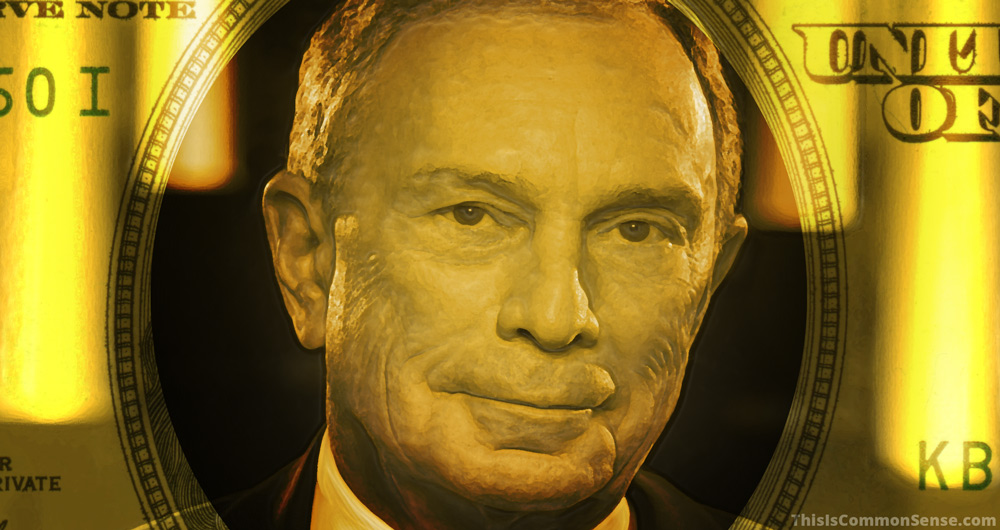
Might Gotham’s gun-and-Big-Gulp-grabber-in-chief catapult to Commander in Chief?
Michael Bloomberg, the former New York City mayor, “is actively preparing to enter the Democratic presidential primary,” writes Alexander Burns in The New York Times.
Bloomberg’s estimated $53 billion could financially pummel even Democratic candidate Tom Steyer, working with a mere $1.6 billion.
“More billionaires seeking more political power surely isn’t the change America needs,” chimed in Faiz Shakir, presidential campaign manager for Vermont socialist and Senator Bernard Sanders.
Billionaires are the really evil ones.
Millionaires? Not so bad anymore.
In 2016, Bernie badmouthed both “millionaires and billionaires” . . . until found to be a millionaire himself — worth $2.5 million to be specific.
Massachusetts Senator Elizabeth Warren, Mr. Sanders’ rail-against-the-rich presidential rival, offered Mayor Bloomberg her “Calculator for Billionaires” — showing how much those sorts of people would have to pay per her Wealth Tax.
No mention of what her own family, worth $12 million would pay.
Bloomberg’s entrance into the race is expected to hurt former Vice-President and multimillionaire Joe Biden the most, both appealing to the more “moderate” wing of the Democratic Party.
Still, Bloomberg is no Democrat messiah, however. He’s not particularly popular. In fact, Bloomberg’s last political campaign for a third term as New York mayor ten years ago was “the most expensive campaign in municipal history.” After double-crossing voters on term limits by supporting a council change allowing him (and them) a third term, Bloomberg had to spend a whopping $183 per vote to win an “unexpectedly close race.”
To garner as many votes for president as Hillary Clinton’s 2016 effort, at that same cost, adds up to $12 billion!
Bloomberg’s good news? He has it.
Bloomberg’s bad news? Hillary lost.
This is Common Sense. I’m Paul Jacob.
See all recent commentary
(simplified and organized)
See recent popular posts
On November 11, 1889, the State of Washington was admitted as the 42nd State of the United States.
In 1918, German officials signed an armistice agreement with the Allies in a railroad car in the forest of Compiègne, France. The fighting officially ended at 11:00 a.m. — the eleventh hour of the eleventh day of the eleventh month. The war officially ended with the signing of the Treaty of Versailles on June 28, 1919.
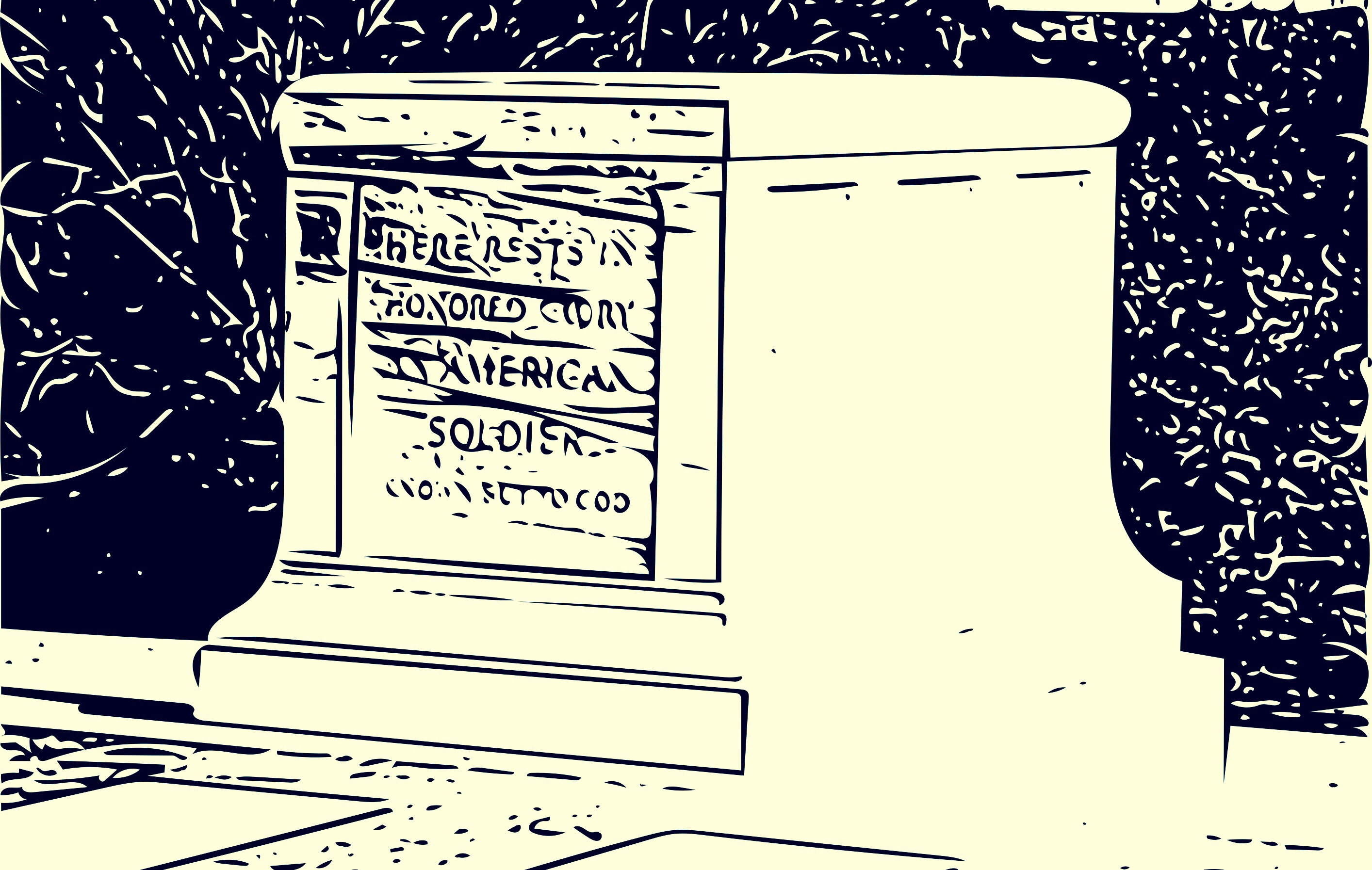
In 1921 on this date, U.S. President Warren G. Harding dedicated the Tomb of the Unknowns at Arlington National Cemetery.

There is always a ‘but’ in this imperfect world.
Helen Graham, a character in The Tenant of Wildfell Hall (1848), Ch. XXII: ‘Traits of Friendship,’ by Anne Brontë (writing as Acton Bell)

Paul’s weekend wrap-up, in audio:
Paul Jacob finishes his weekend wrap-up with stories on Colorado’s TABOR, a squeak by for republican governance with citizen hero Ron Calzone, and the weirdness surrounding the corporate media’s attitudes towards whistleblowers.
Paul began his “Common Sense with Paul Jacob” commentary in 1999, and for a decade he produced these weekly commentary spots for the radio. Now, a decade later, he begins to podcast. Catch him on SoundCloud, and soon to a podcast service you use:
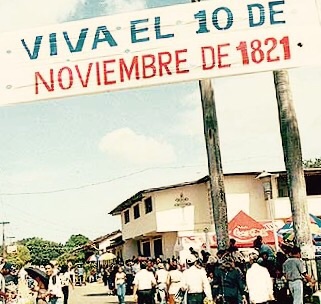
On November 10, 1821, the First Cry of Independence in the small, interior town of Villa de los Santos, occurred in Panama. The November 10 date has since become Panama’s “Cry of Independence Day” in the country. November is a month of independence celebrations in Panama, but the November 10 celebration marks the first signs of the struggle for separation from Spain.