On November 16, 1532, Francisco Pizarro and his men captured Inca Emperor Atahualpa at the Battle of Cajamarca.
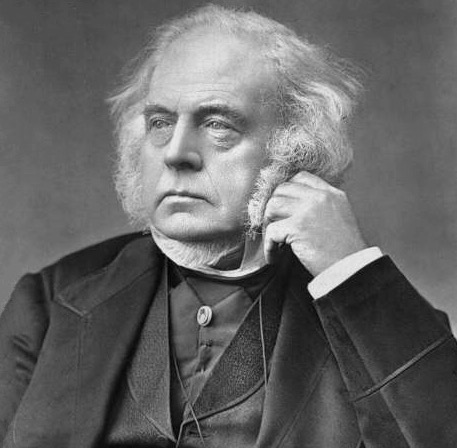
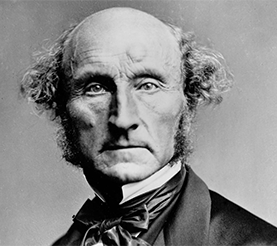
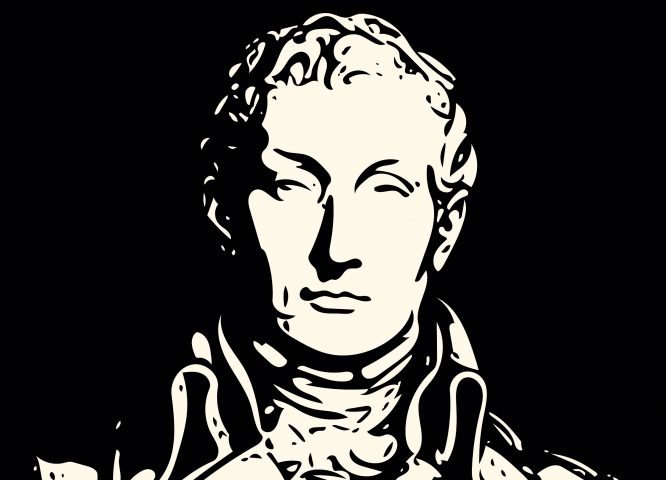
In 1811 on this date, John Bright (pictured above), English academic and politician, Chancellor of the Duchy of Lancaster, was born. Bright (d. 1889), famously worked with Richard Cobden against the Corn Laws (repealed in 1846) as well as for the Cobden–Chevalier Treaty of 1860, which ushered in freer trade and closer interdependence between Britain and France.
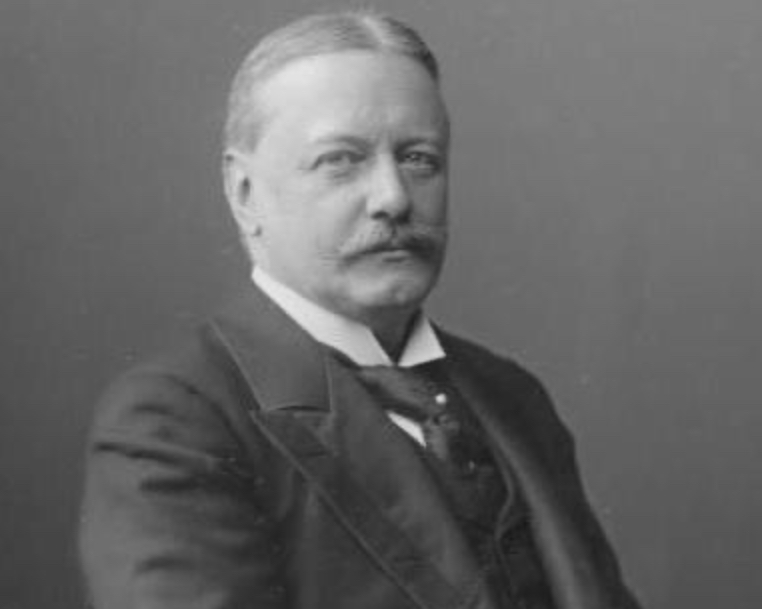
Most of the conflicts the world has seen in the past ten decades have not been called forth by princely ambition or ministerial conspiracy but through the passionate agitation of public opinion, which through the press and parliament has swept along the executive.
Bernhard von Bülow, as quoted in “Karl Kraus, the Press, and War” (International Policy Digest, March 27, 2014), by Franz-Stefan Gady. Von Bülow (1849 – 1929), created Fürst von Bülow in 1905, was a German statesman who served as Secretary of State for Foreign Affairs for three years and then as Chancellor of the German Empire from 1900 to 1909.
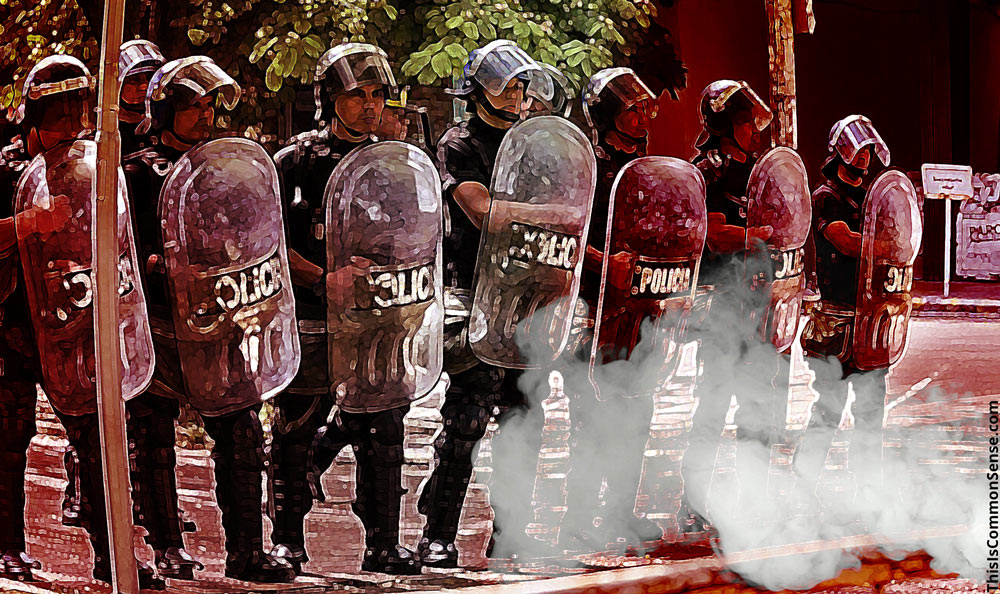
“Something is going on,” writesThe Washington Post’s Adam Taylor. “From Baghdad to Hong Kong, Santiago to Barcelona, sites around the world have seen major protests over recent weeks.”
What is that something?
“Global protests share themes of economic anger and political hopelessness,” reads the headline to Taylor’s article.
He’s way off.
Hope, not hopelessness, drives people to demand change.
“Income inequality seems to have added an economic insecurity that helped lead to anger and protests,” Taylor informs . . . in keeping with a consistent Post narrative.
The millions who have marched in Hong Kong didn’t take to the streets over income equality. Their five clear and reasonable demands are about justice and basic democratic citizen control of government.
The protests and violence in Cataloniastem from the central Spanish government denying self-determination and trying to bully the people by imposing long prison terms on Catalonian officials who committed the crime of holding an “illegal” referendum for independence.
Even where economic concerns are far more prominent (or the main driver of demonstrations, such as in Chile) the frustration is much less about inequality than a lack of opportunity in a stagnant and corrupt system.
“They promise changes every time we protest, but it’s not a new law or a concession that we want,” Iraqi student Ali Saleh explains. “It’s our rights. It’s a fundamental change in how we’re governed.”
The current global explosion of political unrest isn’t about income inequality or even economic insecurity alone. It is about the desire for more fundamental freedoms — economic as well as political — in an unfree world.
In every country, the executive is the branch of the government which wields the immediate power, and is in direct contact with the public; to it, principally, the hopes and fears of individuals are directed, and by it both the benefits, and the terrors, and prestige of government are mainly represented to the public eye. Unless, therefore, the authorities whose office it is to check the executive are backed by an effective opinion and feeling in the country, the executive has always the means of setting them aside or compelling them to subservience, and is sure to be well supported in doing so.
John Stuart Mill, Considerations on Representative Government (1862), Chapter IV
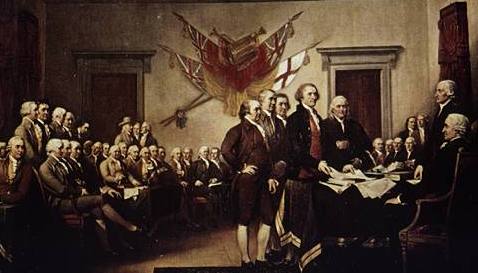
The better to secure and perpetuate mutual friendship and intercourse among the people of the different States in this Union, the free inhabitants of each of these States, paupers, vagabonds, and fugitives from justice excepted, shall be entitled to all privileges and immunities of free citizens in the several States; and the people of each State shall free ingress and regress to and from any other State, and shall enjoy therein all the privileges of trade and commerce, subject to the same duties, impositions, and restrictions as the inhabitants thereof respectively, provided that such restrictions shall not extend so far as to prevent the removal of property imported into any State, to any other State, of which the owner is an inhabitant; provided also that no imposition, duties or restriction shall be laid by any State, on the property of the United States, or either of them.
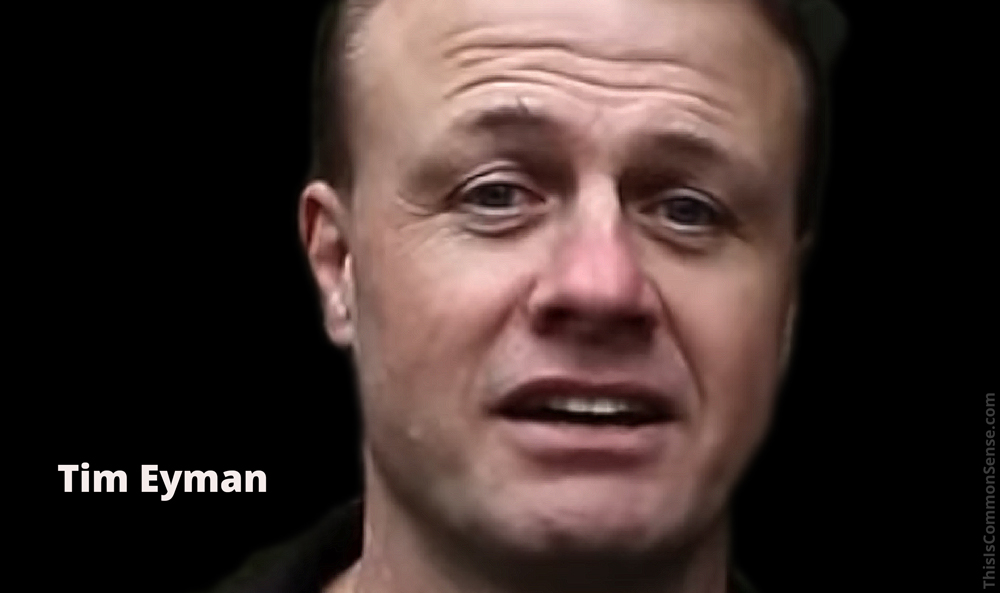
In deep blue Washington State, the ballot measure activist celebrated another Election Day victory last week with Initiative 976, limiting vehicle taxes. Not to mention Referendum 88, whereby voters kept a ban on government use of racial preferences, enacted via an initiative Eyman had co-authored two decades ago.
And still, there were a dozen more issues on last Tuesday’s statewide ballot thanks to Mr. Eyman’s 2007 initiative, I-960, which mandates “advisory votes on taxes enacted without voter approval.” (Also thanks to state legislators, I guess, for racking up 12 new tax increases this year without bothering to ask voters!)
Yet, perhaps it matters not at all. Nearly two million votes cast on each of these measures? Three supported by a majority? Nine rejected? Two esteemed Evergreen State newspaper columnists pooh-pooh them as “meaningless.”
“The Legislature has never taken the voters’ advice when they say a tax should be repealed,” writesSpokane Spokesman Review columnist Jim Camden.
That’s a failing of the Legislature, Jim,* not these advisory measures . . . which you seem to acknowledge when you write that these votes at least “provide a good control group for any experiment on the voters’ knee jerk reaction to higher taxes.”
Helping create an anti-tax mood that spurred support for I-976.
Not bad for being meaningless.
This is Common Sense. I’m Paul Jacob.
* I use his first name because I know Mr. Camden from decades ago when he was a reporter covering House Speaker Tom Foley, who after suing to overturn the 1992 citizen initiative for term limits became the only Speaker defeated for reelection since the Civil War.
The courageous and strong man repulses oppression, defends his life, his liberty, and his property; by his labor he procures himself an abundant subsistence, which he enjoys in tranquillity and peace of mind. If he falls into misfortunes, from which his prudence could not protect him, he supports them with fortitude and resignation; and it is for this reason that the ancient moralists have reckoned strength and courage among the four principal virtues.
We don’t see a lot of pro-term-limits writing in our major, “corporate” media outlets — but a New York magazine account of the ouster of Bolivian President Evo Morales is a welcome exception.
“The disgraceful and chaotic manner in which the once-beloved Morales is leaving office is an object lesson in why presidential term limits are important,” writes Jonah Schepp. “Running a country for more than a decade has a tendency to make people more susceptible to authoritarian impulses, whether or not they started their careers as dictators.”
The Atlantic also acknowledges term limits’ vital role. “Evo Morales Finally Went Too Far for Bolivia,” the “too far” being the “authoritarian powers” claimed “in the name of the popular will.” Yascha Mounk explains how Morales’ once-touted support for presidential term limits evaporated in 2016, when he placed before voters a binding referendum to allow him to stay in office indefinitely. Bolivians voted No, only to witness their supreme court set aside term limits using the bizarre rationale “that limits on the length of his tenure in office would violate Morales’s human rights.”
After irregularities in the October 20 presidential vote, Bolivians took to the streets. Morales resigned on Sunday.
“For a socialist president who was until recently hailed as the great success story of the Latin American left,” New York’s Schepp explains, “this unseemly end serves as a cautionary tale of what happens when world leaders remain in office for too long.”
On a 2015 trip, President Obama remonstrated African leaders for their attempts to overturn popular term limits. “I’ll be honest with you,” he said before the African Union, “I’m looking forward to life after being president.”
Mr. Morales, Bolivia’s now-former president, is not so fortunate. Yesterday, he fled the country.
On this day in 1833, Denison Olmsted, was alerted by his neighbors to something truly amazing, a night sky filled with shooting stars.
Not just a one or two or a dozen or a hundred: 72,000 or more per hour. Though recognizing where among the constellations meteors came from was ancient knowledge, it had not been recorded by modern-era scientists, at least in this case. What Olmsted noticed was that the meteors were coming from one point in the sky, the constellation Leo. This regular meteor event is now called the Leonid meteor stream.
In the morning, Olmsted wrote a brief report on the meteor storm for the New Haven Daily Herald newspaper, which elicited correspondence from around the country, thus beginning a social storm, in a sense: crowd-sourced science.
November 13 is World Kindness Day, which has been celebrated in various countries since 1998. It is not an official celebratory day of the U.S.A., or of the United Nations. But individuals are free to be kind this day . . . or any day, for that matter.