Categories
Common Sense folly general freedom ideological culture national politics & policies political challengers tax policy too much government

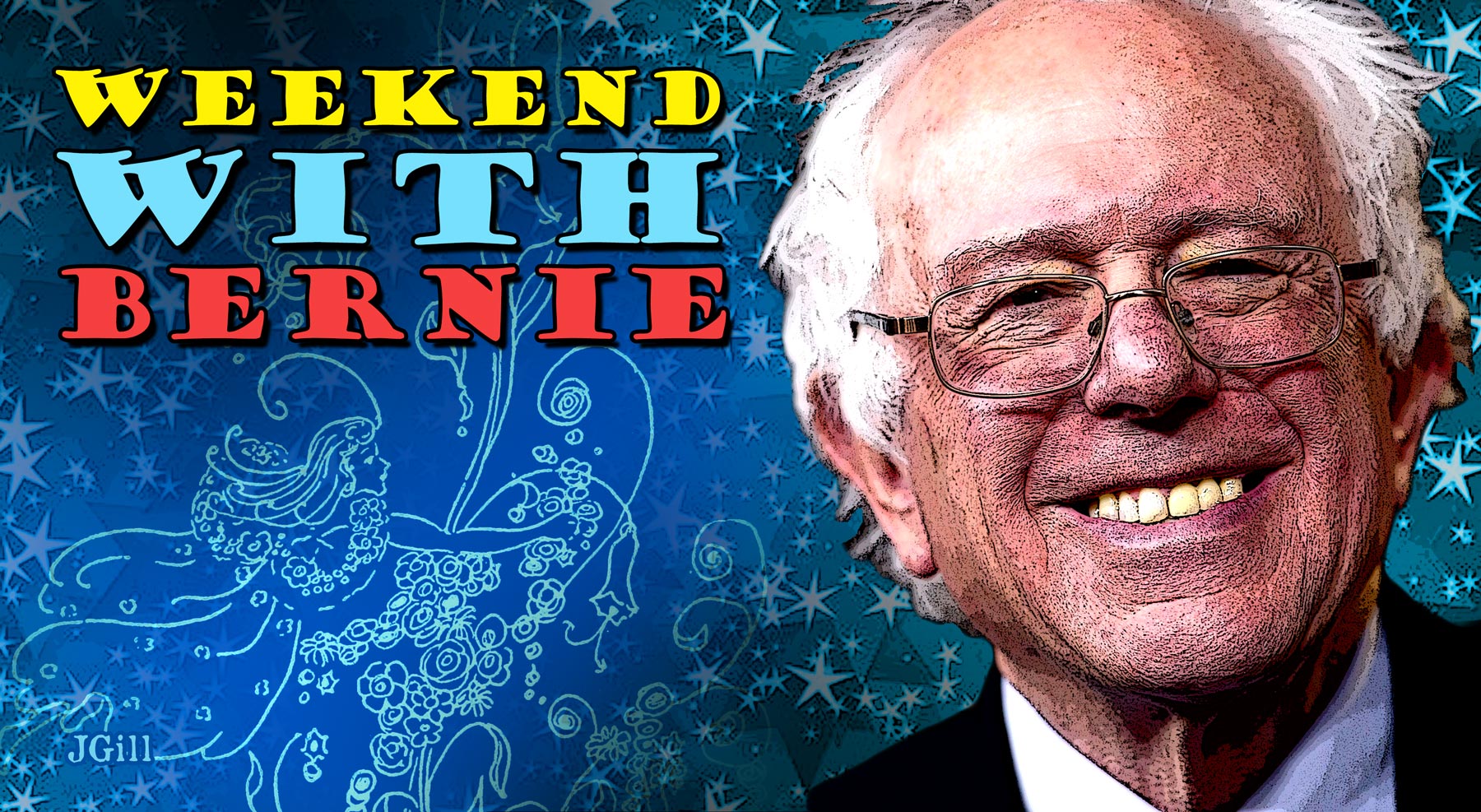
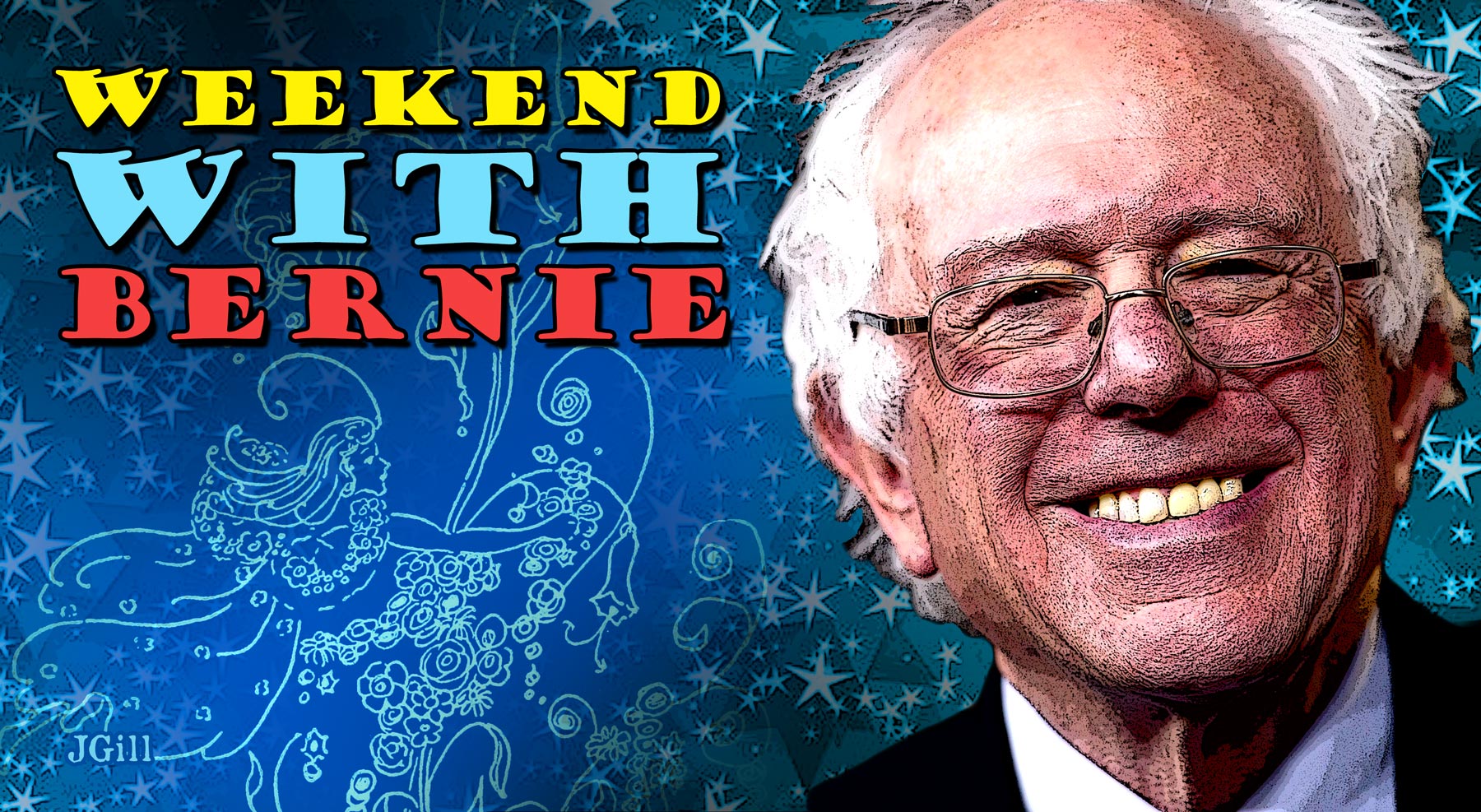
Weekend with Bernie: Fairy-Tale “Free”

Bernie Sanders is many a progressive’s fairy-tale candidate.

Well, yeah.

Not “once upon a time,” but today . . .  the federal government’s public debt is in the double-digit trillions. The total debt — consisting also of unfunded/underfunded welfare state “promises” — may be in the triple digits. Still, politicians pat themselves on their backs when they deliver annual deficits under half a trillion per year.

Meanwhile, Senator Sanders, former member of America’s Socialist Party and current caucuser with the Democrats, is running on the “freebie” platform: let’s spend more!

He serves as the pusher of a very old folly: thinking that good things come to us without cost.

But the costs have to be paid.

And will be.

That’s the essence of common-sense wisdom since ancient times. Usually I conjure up an accountant or an economist to explain this, but why not go back to folklore? Folk and fairy tales, along with myths both ancient and modern (remember Tolkien’s Lord of the Rings?), tell us that magic powers come at a price.

And those costs can be killer.

Far-left-of-center magic pretends that not only can Bernie provide “free” stuff for everyone (including those of us in his “hard-working middle class”), but also that the wherewithal for these goodies (college, medicine, food, shelter, meaningful work) can easily come from . . . three pot-of-gold sources: “the rich,” “print more money,” and that least plausible sprinkle of fairy dust, “government efficiency.”

We tell children fairy tales not to make them wish for magic solutions, but to illuminate the logic of responsibility.

Bernie didn’t get that lesson.

This is Common Sense. I’m Paul Jacob.

Printable PDF

Bernie Sanders, Free, Fairy Tale, promises, collage, photomontage, James Gill, Paul Jacob, Common Sense, illustration


Categories
Accountability Common Sense term limits

Coming to Terms with A Logical Fallacy

Good people can disagree about term limits.

It’s not a moral issue, but about practical governance.

I love term limits, while my friend Lew Rockwell, the former Ron Paul aide who started the Mises Institute and runs the popular website LewRockwell.com, isn’t a fan.

In a brief post to his site, entitled “The Term Limit Hoax,” Rockwell lamented that “Term limits apply only to the institutionally weakest branch of government, the legislature, to further weaken it, and never to the presidential bureaucracy, which actually runs the government, nor to the judges. It’s why neocons, those ultimate presidential supremacists, love term limits.”

This is the classic logical fallacy of guilt by association. Neoconservatives breathe air, too. Should the rest of us turn blue?

Usually if politicians — neocon or otherwise — claim amorous feelings for limits, as the late Bob Novak warned, “They’re lying.” Yet, most regular folks — all races, genders, political parties, levels of neocon-ness, you-name-it — actually do want term limits.

Lew’s correct: Congress is weak. It was designed to be the strongest branch, holding the all-important purse strings and a law-making monopoly. Yet, career politicians have shrunk from fulfilling the First Branch’s constitutional role, consistently handing more and more power to the executive branch and the courts.

That’s not the result of term limits, but a lack thereof.

Why is there “never” a push for term limits on the “presidential bureaucracy”? Well, those bureaucrats don’t even have terms as such. And any limits would have to be legislated by Congress. Congress enacted that bureaucracy, every cubicle of it, and the longer congressmen stay in Washington, the more they champion it.

Limit judges? A term-limited Congress might help there, too.

This is Common Sense. I’m Paul Jacob.


Printable PDF

Neocon, Neo Conservative, Photomontage, collage, Paul Jacob, Common Sense, JGill, Jim Gill


Categories
Common Sense crime and punishment First Amendment rights folly ideological culture meme Popular

Scientists for Censorship

“You have signed the death warrant for science,” scientist Peter Webster wrote to a colleague, recently.

The recipient of this charge had signed onto an entreaty to President Barack Obama, U.S. Attorney General Loretta Lynch, and White House Office of Science and Technology Policy Director John Holdren — along with 19 fellow climate scientists. They asked for an investigation into companies and organizations that publicly express doubt about predictions of impending catastrophic man-made global warming. Specifically, they urge the administration to pursue this line of assault using the oft-abused RICO statute, the Racketeer Influenced and Corrupt Organization Act.

Yes, the scientists are calling for harassment of dissenters and straight-out censorship.

Ronald Bailey, over at Reason, calls this a “new low in politicizing science.” Climatologist Judith Curry, who quoted Webster’s above judgment as an epigraph to her post on the subject, colorfully characterized her reaction: “When I first spotted this, I rolled my eyes — another day, more insane U.S. climate politics.”

The 20 alarmists, for their part, draw a parallel to the tobacco RICO investigations that were so influential a few decades ago. But that original case was badly decided. Moreover, RICO laws are themselves an affront.

The anthropogenic global warming catastrophists have previously undermined their case — lies, conspiracies to hide data, misleading use of computer models, and a relentless campaign to turn scientific inquiry into “settled science” will do that. But now, the grotesque spectacle of scientists demanding that the full weight and force of coercive government come down on their “opponents” completely destroys any remaining shred of credibility.

This is Common Sense. I’m Paul Jacob.


Printable PDF

Climate Crime, Paul Jacob, Common Sense, censorship, global warming


Categories
Common Sense education and schooling national politics & policies

Diversity Double-Talk

“Black teachers flee schools, leading to concerns about diversity,” warned the Washington Post headline. I’m less concerned about “diversity” and more about why teachers — black or otherwise — would “flee.”

The study found a significant drop between 2002 and 2012 in the percentage of teachers who are black in nine large city public schools systems — Boston, Chicago, Cleveland, Los Angeles, New Orleans, New York, Philadelphia, San Francisco and Washington, D.C.

In New Orleans, the percentage of black teachers fell from 74 to 51 percent, while the percentage of white teachers rose from 25 to 43 percent. In the nation’s capital, black teachers tumbled from 77 to 49 percent, while white teachers went from 16 to 39 percent.

“The whole effort . . . toward minority-teacher recruitment . . . [has] been an unheralded victory, really,” argues the University of Pennsylvania’s Richard Ingersoll. “The problem is with retention. Minority teachers have significantly higher quit rates than non-minority teachers.”

Some argue the problem is a system that micromanages teachers. Others cite the expansion of “teacher evaluation systems.” Neither reason explains the racial discrepancy.

However, black teachers do appear to be overrepresented in rougher, lower-performing schools — often with large minority populations. That may be causing a higher “quit rate.”

It may also be purposeful. As The Post article informs, “[R]esearch has suggested that students who are racially paired with teachers — black teachers working with black students and Hispanic teachers working with Hispanic students — do better academically.”

So, all the talk of diversity is aimed at keeping students and teachers with their own race?

This is Common Sense. I’m Paul Jacob.

 

Note: My Townhall column last Sunday was a longer treatment of this subject.


Printable PDF

Diversity, schools, collage, photomontage, Jim Gill, Paul Jacob, Common Sense


Categories
Common Sense general freedom ideological culture

No Reconciliation with Communism

Pope Francis met with Fidel Castro over the weekend.

It’s not the first time the Bishop of Rome has met with a dictator, in Cuba or elsewhere. But it is the first time this particular pope has done so.

Next stop on this tour? The United States.

The pope’s most pointed words were directed not to the Communist nation but south by southwest, to Colombia, from where hail contestant parties to peace talks (the government versus leftist insurrectionists) now being held in Havana. The pope wishes no breakdown in the talks, urging that the world cannot afford “another failure on the path of peace and reconciliation.”

Pope Francis has been credited with the thawing of cold war relations between the United States and Cuba, and, for his part, praises both parties for the detente, which he has dubbed “an example of reconciliation for the whole world.”

But Cuba remains under tyranny; the people cannot speak freely and are impoverished under the thumb of socialistic regulation. The pope may not be seeing elements of causality here, of teleology, of purpose: Cuba’s poverty is not caused by the American embargo, really, but by a pernicious attachment to outdated ideas of government supremacy over people.

Unfortunately, many of the pope’s most famous remonstrances about capitalism suggest that he may be closer to the Castro brothers’ oppressive Marxist ideology than to a more liberatory approach.

While the pope publicly prays for reconciliation, Americans would be better off if we repudiated reconciliation with destructive ideas that too easily get packaged as “humane” and “Christian” when they are really, and deeply, precisely the opposite.

This is Common Sense. I’m Paul Jacob.


Printable PDF

Pope, Castro, Vatican, Cuba, collage, photomontage, illustration, Paul Jacob, James Gill, Common Sense


Categories
Common Sense crime and punishment education and schooling folly general freedom national politics & policies

Another Leaf Out of Gov’t’s Playbook

Could government be a suck-hole for intelligence? Could one’s proximity to government reduce one’s IQ?

America’s public (read: government) schools too often serve as Wisdom-Free Zones.

The Ahmed Mohamed story shocked a lot of people. A kid with a clock was mistaken for a terrorist with a bomb and the school and local police threw reason and procedure and everything else out the window. But no one should be shocked. Every week, maybe every day, news creeps out of America’s “common schools” to prove, once again, that its administrators and teachers seem to be deficient in common sense.

When I wrote about Ahmed’s timepiece yesterday, I mentioned several examples of public school hysteria over fictitious, symbolic, or non-existent weapons. Such stories are Old Faithfuls here at Common Sense. But one case I haven’t written about* is the six-month-old tale of the Bedford County, Virginia, lad who was expelled from school for possession of a marijuana leaf.

The police dropped the drug case upon testing the leaf in evidence. It was not Cannabis sativa but Acer palmatum, the Japanese maple leaf, a harmless shrub.

Still, the school stuck to the year-long suspension, wouldn’t let up. Zero tolerance.

Now, the 11-year-old boy had supposedly boasted about having marijuana. And schools do have rules against “look-alike” drugs. I just wonder why the student received zero due process and how we expect youngsters to grow up in a world without even a tidbit of tolerance.

This dysfunction is not racism or fear or Islamophobia, as some claim in the Ahmed case.

It’s just the inflexible witlessness of those with too much unchecked authority.

This is Common Sense. I’m Paul Jacob.

 

* Coming, as it did, immediately on the heels of the infamous Pop Gun Tart insanity. . . .


Printable PDF

Zero Tolerance, schools, hysteria


Categories
Common Sense folly general freedom ideological culture national politics & policies

Case Closed . . . But Ticking

Irving, Texas, authorities — I use that term loosely — announced yesterday that the case has been closed. Over. Finito. These aren’t the droids you’re looking for.

What case? That of the 14-year-old clock-maker assumed to be a potential bomb-making/let’s-err-on-the-side-of-panic terrorist.

Perhaps it didn’t help that the youngster had the wrong last name: Mohamed. Or that his family had immigrated from Sudan.

Ahmed loves to tinker. On Monday, he brought one project, a clock, to school hoping to impress his engineering teacher. His teacher mistook the clock for an improvised bomb, and told Ahmed not to show it to anyone. When the clock’s alarm went off later, his English teacher took the clock and told him to pick it up after school.

Later, the principal pulled Ahmed out of class. Five policemen then interrogated the lad, eventually handcuffing and marching him to juvenile detention.

A police spokesman admitted there was never any threat made. And, of course, no bomb. Ahmed’s engineering teacher clearly wasn’t scared. Yet, this 14-year-old was still treated like a . . . terrorist.

Before being released.

Some charge this is a case of obvious bias against this student’s race or religion. Maybe that’s why even Hillary Clinton tweeted her support for the student and why President Obama invited Ahmed to bring his clock to the White House.

Though prejudice may be part of this story, I doubt it’s the main issue. Many students not named Mohamed have been treated similarly — for bringing a butter knife to cut an apple at lunch, or gnawing a PBJ sandwich into the shape of a gun, or (horrors!) “shooting” pointed fingers at classmates.

Public school’s zero-judgment zero-tolerance is equal opportunity insanity.

Not Common Sense. I’m Paul Jacob.


Printable PDF

Ahmed, clock, terrorism, terrorist, alarm, hysteria, collage, photomontage, illustration, political, chicken little, fear


Categories
Accountability Common Sense government transparency ideological culture national politics & policies political challengers

Walker vs. Union Power

Governor Scott Walker, who is running for the U. S. Presidency, has cooked up a white paper on the subject for which he is nationally known: labor relations. It’s a doozy.

His main points are:

  • Reduce the power of union bosses by eliminating the National Labor Relations Board.
  • Eliminate big-government unions.
  • Take “right to work”
  • Protect state employees’ First Amendment rights.

And that’s not the whole of it. Some of his points are worth quoting at length, including this:

On Day One of my administration, I will put in place accountability and transparency rules. I will require online disclosure of union expenditures, including revealing the total compensation of union officers, itemizing union trust fund expenditures, increasing reporting requirements for local affiliates of government employee unions, and restoring conflict-of-interest reporting requirements.

Walker’s is not a detailed, in-depth policy paper. It’s a list of goals, really. It does not address how he would accomplish this, if elected. It’s obvious that many (perhaps most) of these reforms would require congressional compliance and even legislation.

Yet by focusing on the inordinate power of government workers’ unions, Gov. Walker advances what many of us were hoping for when we first heard that the surprisingly daring, surprisingly successful Wisconsin governor would make a bid for the top spot in the federal government. Something needs changing.

And that something is the general purpose for government: what and whom government serves, other than itself, and how.

Or, in Walker’s words, “commonsense reforms” to narrow “the federal government’s role. . . .”

He says let’s close “special-interest loopholes . . . once and for all.”

Is that possible? It’s worth a try.

This is Common Sense. I’m Paul Jacob.


Printable PDF

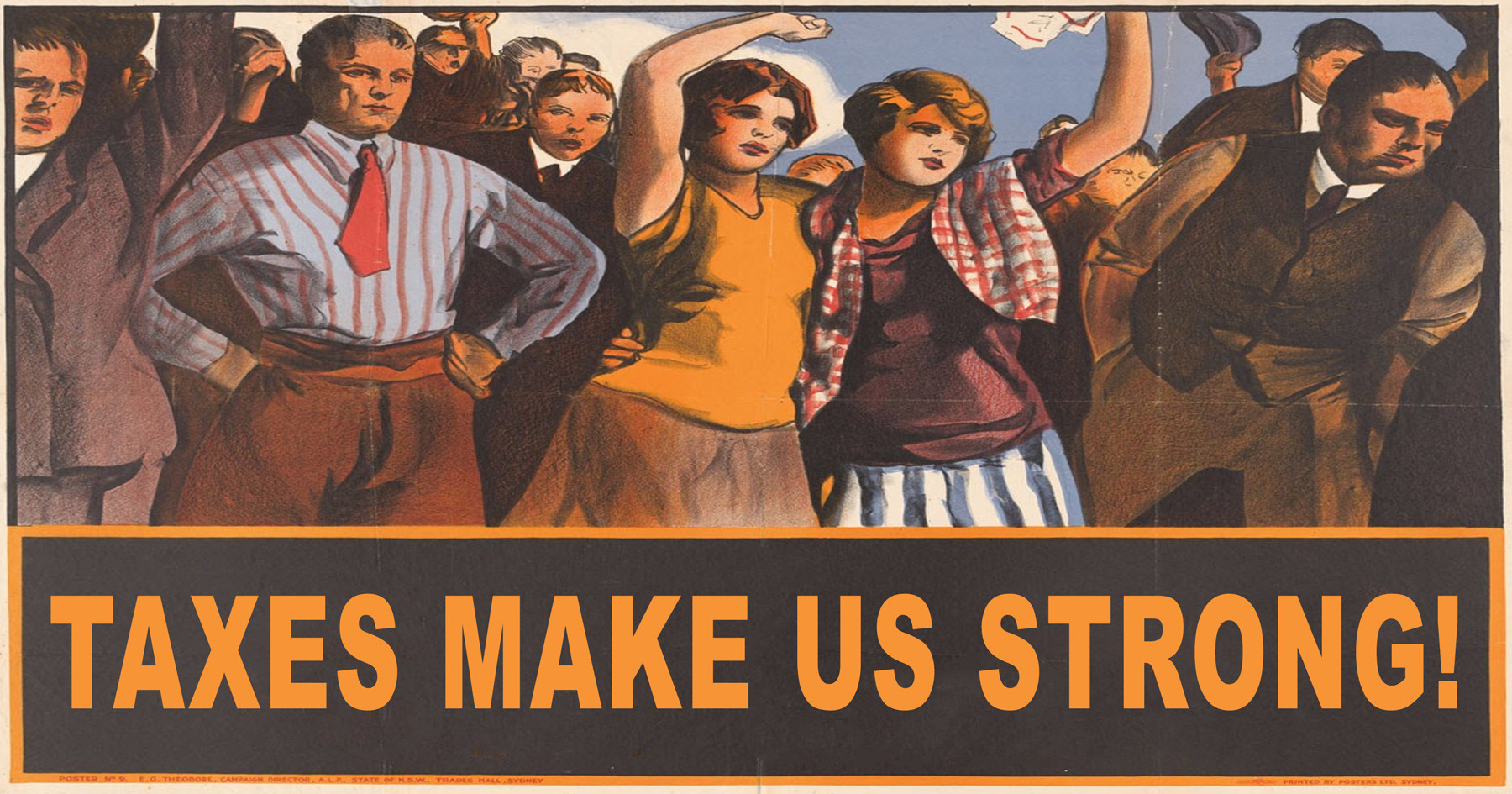
Taxes Make Us Strong


Categories
Common Sense general freedom ideological culture media and media people national politics & policies political challengers too much government

Trump Blot

I’m almost professionally required to say something nice about Donald Trump — because mainstream media feel professionally required to ridicule him. So here goes: he’s doing us a great service in his presidential run.

Trump’s sort of a bung puller; he’s unstopped the cork of polite political society, and shown the massive voter dissatisfaction by giving more realistic voice to just how stupid government is. “Really stupid!”

But, beyond that, where does he stand? On too many issues, that’s murky. For economist David Henderson, a friend of mine from way back, this shows promise.

Henderson is a free-market economist. He’s not into the whole warfare/big stick bullying that some conservatives channel from the first Progressive president, Teddy Roosevelt. Trump, writes Henderson, stands out, by not having “foreign policy advisers.” Which Henderson regards as “refreshing, given the hawkish views of the vast majority of his Republican competitors.”

Henderson also acknowledges Trump’s downsides, including “Trump’s claim, in 2011, that the U.S. government, having won the war in Iraq, should have taken their oil.” This nationalist plunder idea is evil on its face. And disturbingly retro, harkening back to the days of rapine and pillage.

Understandably, Americans fixate on the man’s “charisma.” Should that make us comfortable? Of Max Weber’s three types of authority (traditional, charismatic, and rational-legal), charismatic is the least predictable, least stable. People will follow too far those they love too much. Or find too entertaining?

Trump serves, for now, as a sort of Rorshach inkblot test. What you see depends on your hopes, fears, or the context of Trump’s candidacy, as you understand it.

For my part, I don’t see an accountable proponent of responsible, limited government.

This is Common Sense. I’m Paul Jacob.


Printable PDF

Trump Blot, Rorshach, inkblot, editorial, political cartoon


Categories
Common Sense First Amendment rights folly general freedom initiative, referendum, and recall Regulating Protest too much government

Citizen Registration Fee

It’s not about the ten bucks — or the thousand. An important principle is involved.

Professional lobbyists in Missouri are legally required to submit reports about the corporations, local governments, industries, associations, and special interests for whom they lobby, how much they are paid, and the goodies they bestow upon the politicians they seek to influence. The registration fee is $10.

Problem is, as I revealed at Townhall yesterday, Ron Calzone isn’t a lobbyist. So, naturally enough, he didn’t file.

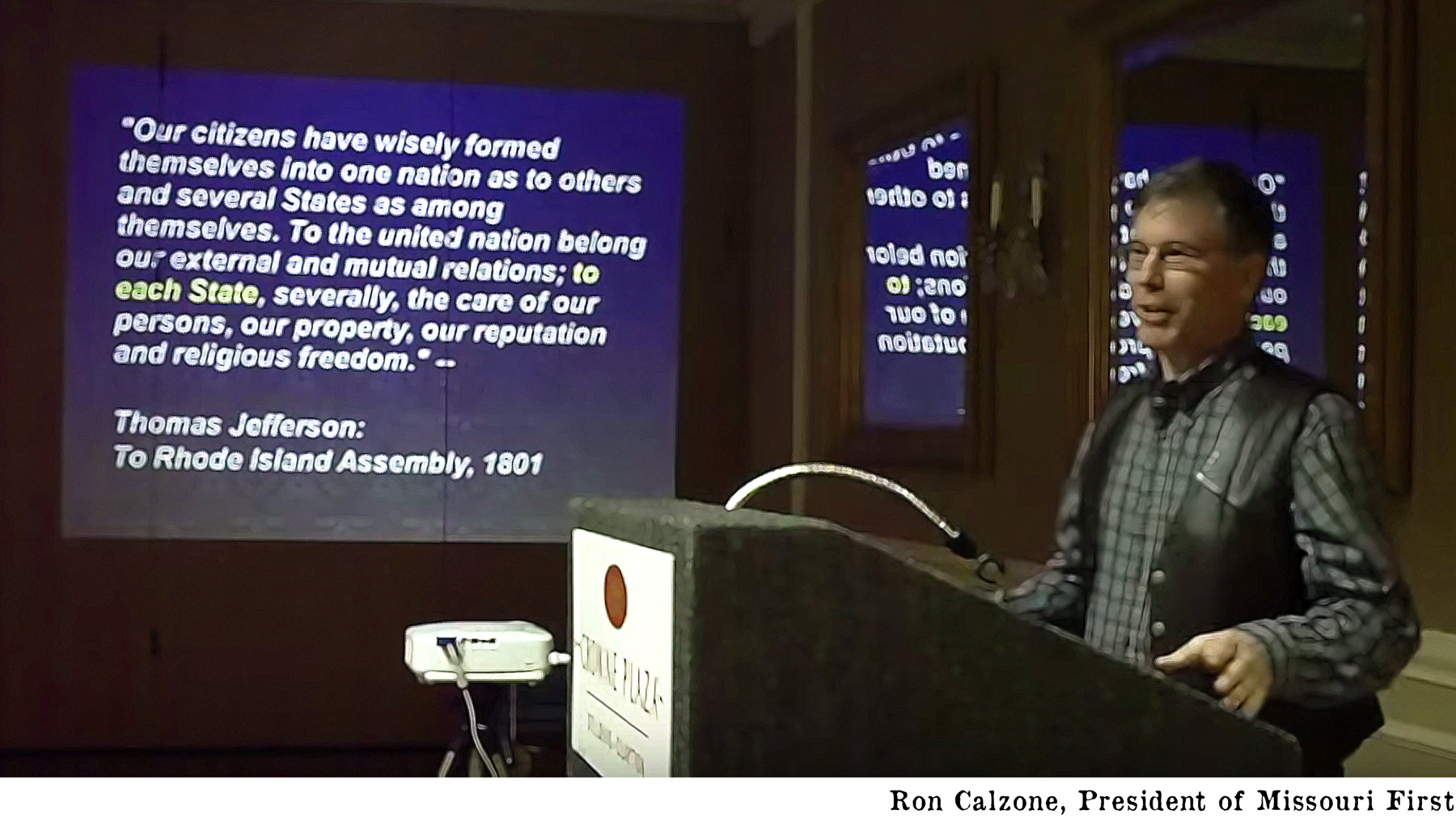
Calzone is president of Missouri First, a group advocating constitutional governance and mobilizing fellow citizens for an enormous impact on Show-Me State government. He regularly treks to the capitol, while Missouri First helps folks who can’t get to Jefferson City submit testimony online . . . all to weigh in on issues like the Second Amendment, property rights, initiative petition rules, and cronyism.

It’s true that Calzone lobbies every time he speaks to a legislator. But hey: he’s not a lobbyist under the legal definition. Why? Because he earns not a penny. Missouri First doesn’t even have a bank account. And Calzone doesn’t represent various clients as a professional lobbyist would; he represents himself — and those citizens who agree with him.

Despite the letter of the law, last week the Missouri Ethics Commission fined Mr. Calzone $1,000 for not registering as a lobbyist. It also ordered him not to speak to any state legislator until he registers.

Ron Calzone — with the help of the Freedom Center of Missouri and the Center for Competitive Politics — is appealing the case.

And will win in court.

Yet, that an “ethics” agency is harassing a citizen volunteer speaking truth to power . . . speaks volumes.

This is Common Sense. I’m Paul Jacob.


Printable PDF

Ron Calzone, Missouri, citizenship, freedom, lobbyists