Categories
Accountability insider corruption media and media people national politics & policies responsibility

Hillary Futures

Trust must be earned; Hillary Rodham Clinton hasn’t earned it.

And yet, if the polls hold, Mrs. Clinton will be elected the next president of these United States — the first-ever female commander-in-chief, sure, but viewed by a clear majority of Americans as untrustworthy.

Part of the problem is her husband Bill. The former president has been accused of inappropriate sexual advances and liaisons . . . and even sex crimes. Hillary’s campaign rightly keeps reminding people that he is not on the ballot. But wasn’t Hillary going to have Bill “run the economy”?

Besides, what’s most relevant is how she defended her philandering husband against his women accusers, with threats, intimidation, and a decided lack of feminist solidarity.

Older folks remember “Travelgate” (a self-serving gaucherie); even Millennials should recall the Bosnian “sniper fire” (self-aggrandizing fib). Then there’s Benghazi. Documents obtained by Congress show Mrs. Clinton immediately telling her daughter that the attack was a planned terrorist attack by an al-Qaeda affiliate. Nonetheless, Hillary publicly blamed the attack on an Internet video.

It was “extremely careless” for Hillary to have set up a private email server, vulnerable to foreign hacking. But how sly to use BleachBit to destroy her hard drive, erasing any money trail. And then, she responded to reporters asking if she wiped her server: “Like with a cloth or something?” Chutzpah.

Ugliest, though, was one of the earliest: cattle futures.

Evidence convinces me that Hillary took a nearly $100,000 bribe disguised as profits from trading cattle futures that she did not actually trade. James Blair, “who at the time was outside counsel to Tyson Foods Inc., Arkansas’ largest employer,” helped Clinton supposedly “out of friendship, not to seek political gain for his state-regulated client.”

The windfall profit was more than lawyer Hillary and Attorney General (and then Governor) Bill earned together annually from their two fulltime jobs. Quite a risky “gamble.” Does Hillary seem like a reckless gambler?

So many scandals and lies. From the next president.

This is Common Sense. I’m Paul Jacob.


Printable PDF

Hillary Clinton, lies, truth, untrustworthy, immigration, trade, drug war, war, Bosnia, Surveillance, Gay Rights, illustration


Categories
ballot access national politics & policies political challengers

Question 5 Fixes Flaw

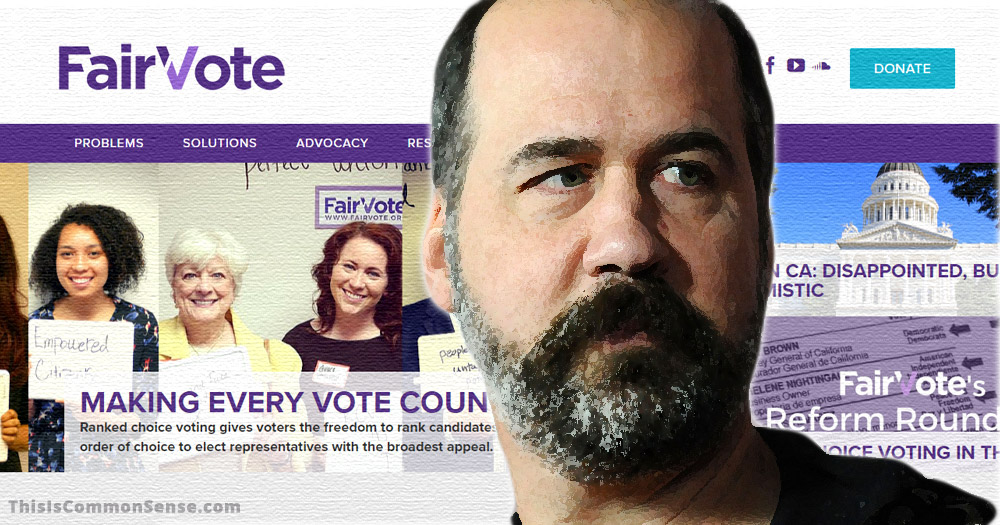
This week, Krist Novoselic, rock-n-roll bassist of Nirvana fame and fellow board member of FairVote.org, appeared on Fox Business’s Kennedy to explain ranked choice voting.

Krist compared a single ranked ballot under the proposed system to two ballots under the current method. Often, a voter will mark the ballot for one candidate in the primary, and, if the candidate doesn’t make the cut, for another in the general election.

Ranked choice voting sort of collapses multi-candidate primaries and the shorter list of the general election into one, allowing voters to rank their choices so that when their first choice doesn’t make it, their less valued candidates get counted.

So if you prefer a candidate unlikely to win you aren’t “wasting” your vote by marking that candidate first, as today in most American elections, because your vote goes to your second choice.

The current system encourages “strategic voting,” where we deny our preferences to work around the defects of the electoral system. We end up voting for candidates we do not like, to avoid even worse, promoting mediocre and downright bad elected officials.

In Maine, Question 5 on the November ballot, sets up a ranked-choice ballot system for “the offices of United States Senator, United States Representative to Congress, Governor, State Senator and State Representative for elections held on or after January 1, 2018.” It has a not insignificant amount of support, from Mainers across the political spectrum.

But not from the state’s governor (and voicemail-performance-artist) Paul Le Page. He dubs it a way for “loser” candidates to get a “second chance.”

Just like a politician! He focuses on politicians’ chances not voters’ options.

This is Common Sense. I’m Paul Jacob.

Printable PDF

fairvote, Krist Novoselic, Nirvana, voting, democracy, illustration


Categories
Accountability folly national politics & policies responsibility

Successful Strategy Fails

A dark cloud hangs over tonight’s debate.

Not the sex assault scandals. Not the WikiLeaks email apocalypse. Not even the banning of Gov. Gary Johnson from the debate stage. I refer, instead, to the obvious failure of American foreign policy.

Last week, U.S. warships in the Red Sea received missile fire. Not from a “policy disaster” country, mind you, but flowing from the fruits of our flagship foreign policy success!

In September of 2014, President Barack Obama spoke directly to the nation about how he would fight ISIS, pointing to the “strategy . . . we have successfully pursued in Yemen and Somalia for years.”

Roughly four months later, Yemen’s U.S.-supported government fell to Houthi rebels allegedly backed by Iran. Still, the Orwellian oasis that is the state department continued to “stand by” the president’s declaration of success there.

Then, Saudi Arabia and a number of other Sunni-run states began bombing and blockading (and then invading) Yemen. With U.S. military support. Amnesty International, aid groups and Congressman Ted Lieu (D-Calif.) allege war crimes, as the bombing campaign targets civilians and medical facilities. Barely a week ago, an errant strike killed 140 members of a funeral party.

Meanwhile, as the U.S. shoots Tomahawk missiles at Yemeni radar installations, our war department spokesman refers to the return fire as “not connected to the broader conflict in Yemen.”

Sure.

And what of Somalia, Obama’s other success? In recent weeks, al-Shabab fighters have twice attacked U.S. soldiers, and a U.S. air strike mistakenly killed 22 Somali soldiers in the country’s north.

Blindly pursuing a failed strategy, Obama’s undeclared wars go on and on. So where does the likely next president stand?

This is Common Sense. I’m Paul Jacob.

Printable PDF

foreign policy, Obama, election, president, illustration


Categories
Accountability general freedom nannyism national politics & policies responsibility too much government

Report from the Lab

The State of Idaho does something the federal government should emulate. The only state I can think of that has a popular candy bar named after it has a legislature that regularly nixes regulations made by the state’s executive branch.

Think of it as a line-item veto for the legislature.

Now, at this point, if you know the Constitution but not today’s “living Constitution,” you might wonder: Don’t legislatures write the regulations? Alas, at the federal level, as in most states, the legislative branch has granted to bureaucrats in the Executive Branch a great deal of leeway to cook up what sure feel like “laws.”

“Last year the Federal Register,” Wayne Hoffman explains in theWall Street Journal, “which publishes agency rules, proposals and notices, exceeded 80,260 pages — the third-highest in its history, according to a report from the Competitive Enterprise Institute.”

Idaho provides a good model for taking back such ceded legislative power.

Let’s remember the idea of “the several states” experimenting with new and old ideas separately, heralded in a famous phrase, “laboratories of democracy.”

This allows good practices to spread slowly throughout all the states . . . based on results.

Meanwhile, Mr. Hoffman informs us, Idaho’s practice is traditional, not hallowed in the state’s constitution. A 2014 referendum narrowly failed to get Idahoans to change the constitution to incorporate this “best practice” into explicit law — the legislature had not adequately explained the situation to the public first time around — Idaho solons are trying again.

Make representatives responsible for regulations, and therefore more accountable.

This is Common Sense. I’m Paul Jacob.


Printable PDF

bureaucrats, regulation, laws, Idaho, illustration


Illustration: Golconda by René Magritte


Categories
Accountability general freedom initiative, referendum, and recall national politics & policies

What Me Vote?

The people, without permission, The New York Times recently explained, in

  • Colombia, rejected a peace deal deemed too soft on the communist FARC guerrillas; in
  • Britain, decided to leave the European Union; in
  • Thailand, ratified a new constitution; and in
  • Hungary, rejected the European Union refugee resettlement plan.

I’ve not perused the Colombian accord. I’m actually not permitted to vote there — though I once stayed at a Holiday Inn Express in Bogotá. In lieu of moi, who better to decide than the Colombian people?

Brexit, too, was a decision for the inhabitants of the United Kingdom, not me.

Thailand is under military rule. Passage of the referendum was promoted as a pre-condition for moving toward democracy; campaigning against the constitution was outlawed. When a gun is held to your head, there is no democracy.

An unbelievable 92 percent of Hungarians rejected the EU plan to set migration policies for Hungary. But turnout below 50 percent invalidated the result.

“Though such votes are portrayed as popular governance in its purest form, studies have found that they often subvert democracy rather than serve it,” claims the Times report, “Why Referendums Aren’t as Democratic as They Seem.”

Without offering any studies.

The problems with these four ballot questions, to the degree there were any, weren’t caused by democracy, but a lack thereof.

Nonetheless, asensible academics pontificated that people are too stupid to be permitted to vote. A London School of Economics professor said referendums are “risky.” They “range from pointless to dangerous” claimed an Irish political scientist. A hyperbolic Harvard professor posited that referendums are “Russian roulette for republics.”

But which is worse: clueless academics, tyrannical pols, or . . . democracy?

This is Common Sense. I’m Paul Jacob.


Printable PDF

initiative, referendum, democracy, voting, legislature, illustration


Categories
education and schooling national politics & policies responsibility

Half a Sawbuck for Civilization

Just gave a fiver to a sixth grader . . . to help the public schools.

He was going door to door, which I’ve had occasion to do, and he was nice and well-spoken. Glad to give.

And it was only five bucks — that’s what I had in my pocket. It was like buying a Starbucks venti-something.

No big deal.

But something does bug me.

What is it?

The fact that the school system sends kids around to pull on our heart-strings but when our homeschooled kids could benefit by taking part in sports or band or debate or other extra-curricular activities through the public schools, without enrolling as a full-time student, they’re told to “go play in traffic.”*

So, why did I give that screwed-up system anything that wasn’t taken at gunpoint?

For starters, a young person stood before me, not the governor or the school superintendent. I don’t want to approach their level of cold-heartedness.

Next, there is something I really do want: Community. My desire, as a committed individualist, is to grow and strengthen and be part of the community of folks who live close to my family.

There’s no contradiction here.

I want civilization. And five dollars is an awfully cheap price for a smidgen of it. I want that kid to receive a good education. I want our community to succeed, including him and all the other kids.

Why call yourself an individualist or libertarian and not work for voluntary community? Free individuals form better, more sustainable communities than those built on state power or authoritarianism.

Hey, maybe I should go door to door.

This is Common Sense. I’m Paul Jacob.

 

* For two straight legislative sessions, Gov. Terry McAuliffe has vetoed legislation allowing homeschoolers to participate in sports, band, debate and other such activities. On a county by county basis, Virginia public schools are free to permit or to block homeschoolers from taking academic classes and joining after-school clubs — with roughly half of counties deciding to accommodate homeschoolers.


Printable PDF

schools, schooling, home, education, civilization, illustration


Original (cc) photo by Swaminathan on Flickr


Categories
Common Sense general freedom ideological culture initiative, referendum, and recall political challengers responsibility term limits too much government U.S. Constitution

Duck/Rabbit, Maiden/Crone, and Taxes

Revolution! Must we?

Can’t we reform at a reasonable pace?

Well, whether we change slowly or quickly, change must occur. Today’s in-place policies are not stable.

But a better future itself must be stable. Or else it will not be better.

And a key to successful change is change in the hearts and minds of the people. The vast majority, East and West, need to shift mental gears and shift their ideological paradigms. (That is the term most famously used by Thomas Kuhn.)

Take yesterday’s story. I first heard about it from proponents of Oregon’s big business excise tax hike. They were saying that Oregon had the lowest business taxes in the union, and took that as a cue to raise taxes. I looked at it as a great political success, and one that had contributed mightily to Oregon’s remarkable economic resilience in these trying economic times.

The difference between the Higher Taxes reaction (which views low taxes as an opportunity only to raise them, and the consequences mainly as who gets the tax funds) and my reaction (which concentrates on the consequences of the expropriation, and looks to a longer period of time to gauge results) is a paradigm shift. To go from one to the other (preferably from the pro-tax to the low tax position) requires a shift in vision.

It is like what happens when you refocus on the Duck/Rabbit image, or the Maiden/Crone. Give a person some time. Be patient. And hint that a shift in perspective is warranted to see both.

And that we might gain something from a paradigm shift.

This is Common Sense. I’m Paul Jacob.


Printable PDF

maiden/crone, illusion, paradigm shift


Categories
meme

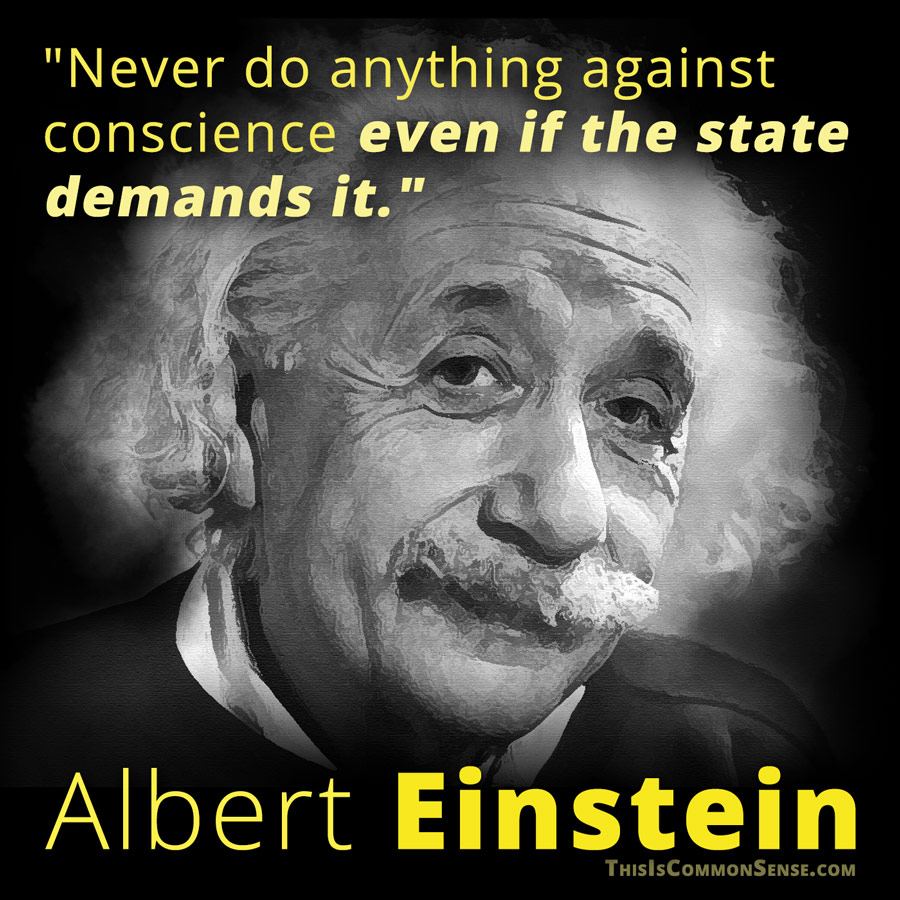
Albert Einstein

“Never do anything against conscience even if the state demands it.”

— Albert Einstein, as quoted by Virgil Henshaw in Albert Einstein: Philosopher Scientist (1949) edited by Paul A. Schilpp


Einstein, quote, the state, conscience, meme, illustration


Categories
Accountability free trade & free markets property rights tax policy

Taxation to What End?

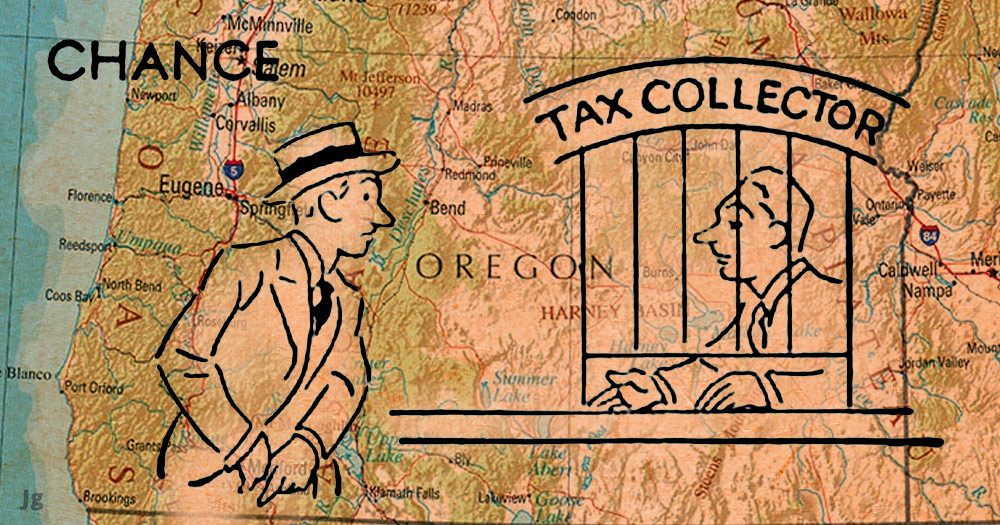
Oregonians have quite a few ballot measures this year.

And only one of them seems obviously nutty: Measure 97.

It would raise taxes on the very biggest of companies. The richest — that is, those with $25 million in sales.

Among the reasons given for this excise hike, which is estimated to be the biggest in the state’s history, are a whole bunch of “ooh, look at what we can do with all that loot!” enticements. Yes, and then there is the tried-and-untrue staple of the left, the “make large and out-of-state corporations pay their fair share in taxes” ploy.

Admittedly, trying to get out-of-state entities to pay for your benefits is classic. What “Let somebody else pay” lacks in nobility and morality it makes up for in avarice’s perennial appeal.

But the practical problem? A tax hike is just a bid on a future expropriation. Tax targets can, in effect, counter-offer by moving, or threatening to move, out of taxing territory.

Imagine yourself a thief. Then imagine first announcing to your victims where, when and how much you intend to take.

Right now Oregon sports the tenth best business environment in the country and, maybe, the lowest business taxes*. Raise taxes to the “middle of the pack” and businesses begin to look at states with lower rates.

Objectionable? Doesn’t matter. Folks go into business to make profits, not pay taxes.

Against this reality? Measure 97’s many bigwig supporters: the progressive Democratic governor, Democratic legislators and big-spending public employee unions eager to expand their bottom lines.

But by seeking to maximize near-term tax rates, these greedy special interests risk losing revenue further off, after businesses flee the state.

This is Common Sense. I’m Paul Jacob.

 

* The Oregon Center for Public Policy ranks Oregon as tied with Connecticut for the lowest in the nation.


Printable PDF

Oregon, tax, taxes, corporate, corporation, illustration, Measure 97


Categories
Accountability Common Sense general freedom ideological culture initiative, referendum, and recall insider corruption media and media people moral hazard nannyism national politics & policies political challengers responsibility too much government U.S. Constitution

America After November

Yesterday, I bemoaned the disaster that is this year’s presidential race. But big whup. As the LifeLock commercial rightly asks, “Why monitor a problem if you don’t fix it?”

Hillary Clinton or Donald Trump will be the next president. That means we have our work cut out for us. And we can’t wait for the 2020 presidential race to fix the problem. We must immediately assert citizen power to create an effective check on government-gone-wild.

So, what to do?

First, let’s admit that fixing Washington isn’t easy. We must fight the Feds through national organizations, of course, but we actually gain greater leverage by working closer to home — at local and state levels.

We need to elect mayors, governors, legislators and councilmembers in 2017 and 2018, men and women who will fight for free markets and against cronyism. And stand up to the federal government.

And where we have the power of ballot initiatives and recall, let’s use it.

By Inauguration Day, we can be changing the conversation in most of the top 25 media markets. How? By petitioning the right issues onto the ballot. By April and May, voters in those cities and counties can directly enact those reforms. Next November, Ohio and Washington state voters can weigh in with ballot initiatives.

Sadly, tragically, it’s too late to stop campaign 2016’s tornado from doing damage. The next disaster of an administration is on its way. But we can create a competing agenda to the Hillary Clinton or the Donald Trump agenda.

A pro-liberty agenda. Starting now.

This is Common Sense. I’m Paul Jacob.


Printable PDF

activism, politics, elections, initiatives, president, Trump, Clinton, meme, illustration


Original (cc) photo by Niklas Hellerstedt on Flickr