Categories
Accountability free trade & free markets insider corruption national politics & policies responsibility

United States of Corruption

When Hillary Clinton assured her insider sponsors (as we learned through WikiLeaks) that there would be a crucial difference between what she tells the people and what her actual policies would be, she was not merely admitting to a private and a public face.

The President is legally, and by honor, bound to serve the American people, not Goldman-Sachs. What she was confessing to was more than the mere appearance of a conflict of interests.

She boasted a plan of betrayal.

In that light, President-elect Donald Trump’s international business deals seem . . . what? His first diplomatic meeting — with Japanese Prime Minister Shinzo Abe — included his daughter and partner-in-business Ivanka.

It seems to at least wander into conflict-of-interest territory, if not stake claim and hoist up a flag proclaiming Trumpistan America!

So I was very pleased, yesterday, when the President-elect vowed to step out from the running of his global business and branding empire.

Earlier, he had brushed off conflict-of-interest concerns, saying he could run his empire and . . . ours.

Apparently, his new White House appointees have convinced him that this business dealing while President was a huge problem. “I feel it is visually important,” he explained Wednesday morning, “as president, to in no way have a conflict of interest with my various businesses.”

Thanks, Steve Bannon?

Or, maybe, Mitt Romney, with whom he dined* the night before?

I hope Mr. Trump follows through with this, as well as distance himself from business partner Ivanka as unofficial policy advisor.

Americans did not reject Corrupt Hillary only to wind up with a Corrupt Trump set.

This is Common Sense. I’m Paul Jacob.


Printable PDF

Romney, Trump, crow, corruption, dinner, illustration


Categories
ideological culture media and media people moral hazard nannyism national politics & policies porkbarrel politics responsibility too much government U.S. Constitution

Diversity, Identity, and the Liberal Implosion

“To paraphrase Bernie Sanders, America is sick and tired of hearing about liberals’ damn bathrooms.”

Finally. Some sense from the New York Times.

Mark Lilla, in “The End of Identity Liberalism,” delivers a valuable lesson about political correctness — without once mentioning the term “political correctness.”

Now this is a lesson we can get behind.

The problem is “diversity.” The center-left became so obsessed with it that it helped sink the last election for Hillary Clinton, Democrats at large, and the coherence and legacy of President Barack Obama.

“However interesting it may be to read, say, about the fate of transgender people in Egypt,” Lilla wrote in the Friday think piece, “it contributes nothing to educating Americans about the powerful political and religious currents that will determine Egypt’s future, and indirectly, our own.”

Fixating on diversity of gender identity and racial make-up in business and government has scuttled the rights-oriented approach of the older liberalism.

Alas, Lilla is not talking about the liberalism of J.S. Mill or Lord Acton. He is talking about FDR.

But compared to today’s “identity liberalism,” FDR’s burdensome promises look like sheer genius. And Lilla understands at least one thing about diversity: “National politics in healthy periods is not about ‘difference,’ it is about commonality. And it will be dominated by whoever best captures Americans’ imaginations about our shared destiny.”

He does not bring up the real liberal message: that the way to find commonality is to avoid making government all things to all people. It is to limit its scope, instead, so the president of the United States isn’t every school’s bathroom monitor.

Perhaps an essay on The End to Hubristic Liberalism is required?

Another day. And probably another paper.

This is Common Sense. I’m Paul Jacob.


Printable PDF

identity, diversity, politics, individualism, rights, individual, illustration, crowd


Original (cc) photo by James Cridland on Flickr

Categories
Accountability First Amendment rights government transparency media and media people national politics & policies

Prestige, Trump & the Media

“Donald Trump’s election has really undermined America’s democratic prestige in China,” offered Claremont McKenna College Professor Minxin Pei on a recent hour of The Diane Rehm Show, public radio from our nation’s capital. When Pei added that it has “set back the prospect of democracy in China for years,” Mrs. Rehm let out an audible moan.

Then Diane asked her guests, “as members of the press” what they “make” of President-Elect Trump’s “rejection of his meeting with The New York Times.”

“It seems,” bemoaned James Fallows, the Atlantic’s national correspondent, “a continuation of his not having any normal press conferences, dealing entirely outside normal press channels and seeming not to recognize the legitimacy of this part of the democratic fabric.”

“I don’t know anything about the specific details about the New York Times meeting,” admitted the Financial Times’ Geoff Dyer. Still, that didn’t stop Dyer from announcing that, “But it’s part of a pattern . . . to a much more conflict-ual, antagonistic, almost bullying relationship with the media.”

Elizabeth Economy, with the Council on Foreign Relations, found it “disturbing” that Donald Trump thinks “he can be his own media, he can simply tweet out whatever he wants, he can make his homegrown videos and sort of impart his information directly to the American public, without the mediating influence of the media.”

Let’s welcome Elizabeth to America.

“We are all recognizing we’re on new terrain now and need to find some way to keep telling the truth, or our best approximation of it, in very different circumstances,” concluded Fallows ominously.

Trump, as you’ll recall, did wind up attending that meeting at The Times.

This is Common Sense. I’m Paul Jacob.


Printable PDF

Donald Trump, media, journalism, twitter, tweet, direct, illustration


Categories
Accountability general freedom ideological culture media and media people nannyism Regulating Protest responsibility too much government

Tyranny’s Days Are Numbered

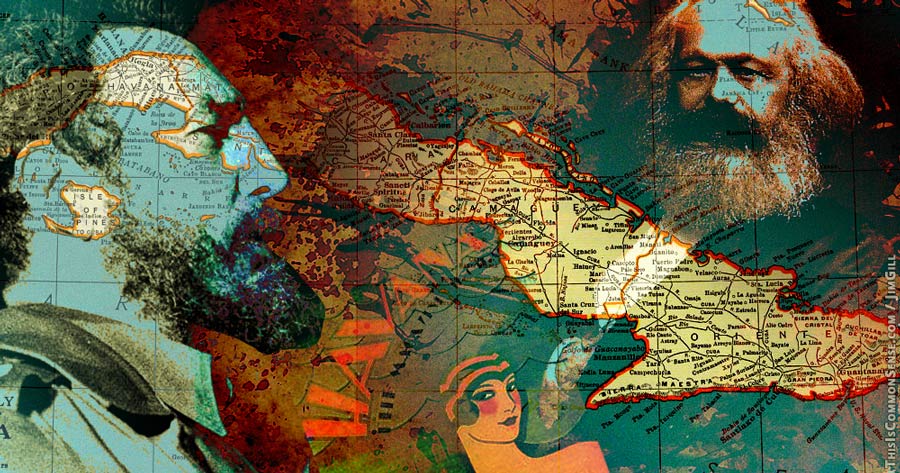
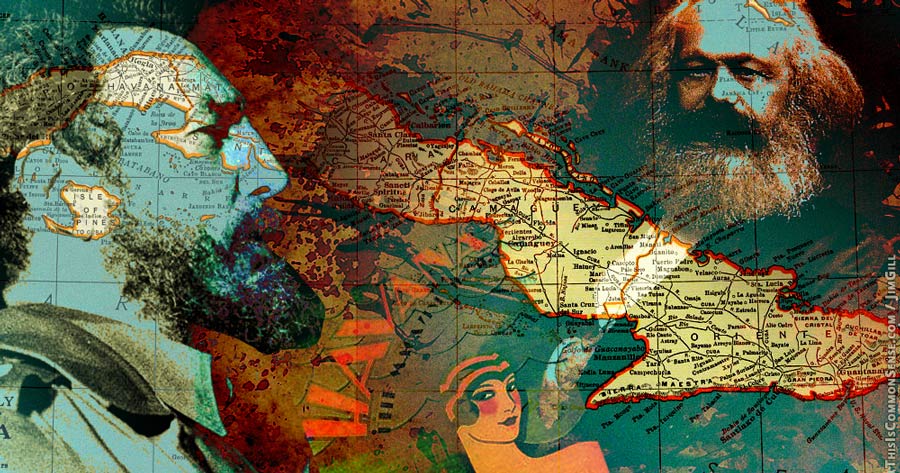
Fidel Castro, the Cuban dictator for half a century, died Friday night.

“Although Castro was beloved by a legion of followers,” The Washington Post acknowledged, “detractors saw him as a repressive leader who turned Cuba into a de facto gulag.”

Many on the American left — especially in Hollywood — have been surprisingly enamored of Castro, and the supposed “accomplishments” of better education and healthcare delivery in his socialist paradise.

I guess we must all weigh whatever policy advances were made against Mr. Castro’s faults.

As the New York Times detailed: “Foreign-born priests were exiled, and local clergy were harassed so much that many closed their churches. . . . a sinister system of local Committees for the Defense of the Revolution that set neighbors to informing on neighbors. Thousands of dissidents and homosexuals were rounded up and sentenced to either prison or forced labor. . . . jailing anyone who dared to call for free elections. . . . imprisoning or harassing Cuban reporters and editors.”

Fidel Castro’s death reminds me of Irving Berlin’s jazz tune about Adolf Hitler, When That Man is Dead and Gone:

What a day to wake up on

What a way to greet the dawn

Some fine day the news’ll flash

Satan with a small mustache

Is asleep beneath the lawn

When that man is dead and gone

Saturday morning, that news finally flashed for Cuban Americans in south Florida. Followed by jubilation. Horns honking. Smiles, cheers and songs. Jigs were danced.

Fidel Alejandro Castro Ruz — that dictator, the person who imprisoned and murdered many seeking freedom — is dead and gone.

For now, sadly, his brand of tyranny continues through brother, Raúl Castro. But its days, too, are numbered.

This is Common Sense. I’m Paul Jacob.


Printable PDF

Castro, death, Cuba, Communism, freedom, illustration


Categories
free trade & free markets general freedom ideological culture media and media people

In the Black

“Black Friday,” reads a meme making the social media rounds. “Because only in America [do] people trample each other for sales one day after being thankful for what they already have.”

Thankfulness is vital, I agree. But I’ve been up at the crack of dawn to “cash in” on Black Friday sales, and I’ve never witnessed any violence of any kind. Not a smidgeon. Not that it doesn’t happen — we’ve all seen the videos. It just isn’t the usual experience.

In fact, the camaraderie of strangers is one of the endearing aspects of standing in line waiting for a big box store to open at some forsaken hour.

Trust me, I’m decidedly not an enthusiastic shopper, so participating in Black Friday wasn’t my idea. My youngest daughter wanted to experience it. And taking a businesslike approach to Christmas shopping, she needed the savings. I liked her interest and initiative and so I said, yes, to getting up at 5:00 am.

But after staying up late talking with friends and relatives, that early alarm hit hard.

What I liked, in order, were: being with my daughter, our sleep-deprived sense of humor, the rush of doing something new, and a comforting visit to Starbucks.

For years, I rode this father-daughter Black Friday fast lane. But not this year. At age 17 (her, not me), with her social life and work, she’s got better things to do than partake in dawn shopping raids.

Still, if she ever asks me to go with her on Black Friday, I’ll be up and at ’em, thrilled for the opportunity.

Why? I know what I’m thankful for. What really matters.

This is Common Sense. I’m Paul Jacob.

Printable PDF

Christmas, Black Friday, family, values, trample, hypocrisy


Categories
Accountability folly free trade & free markets general freedom moral hazard nannyism national politics & policies

Thanksgivings, 1623 AD

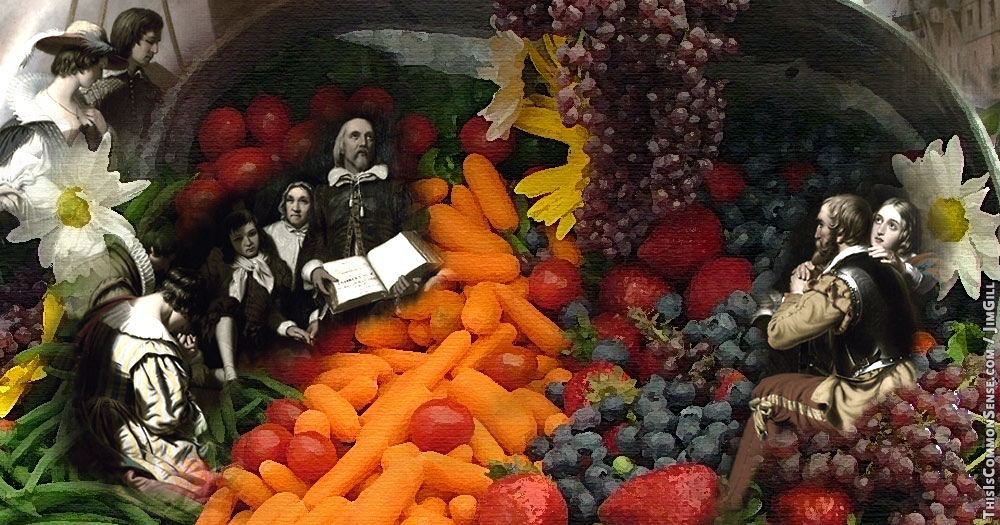
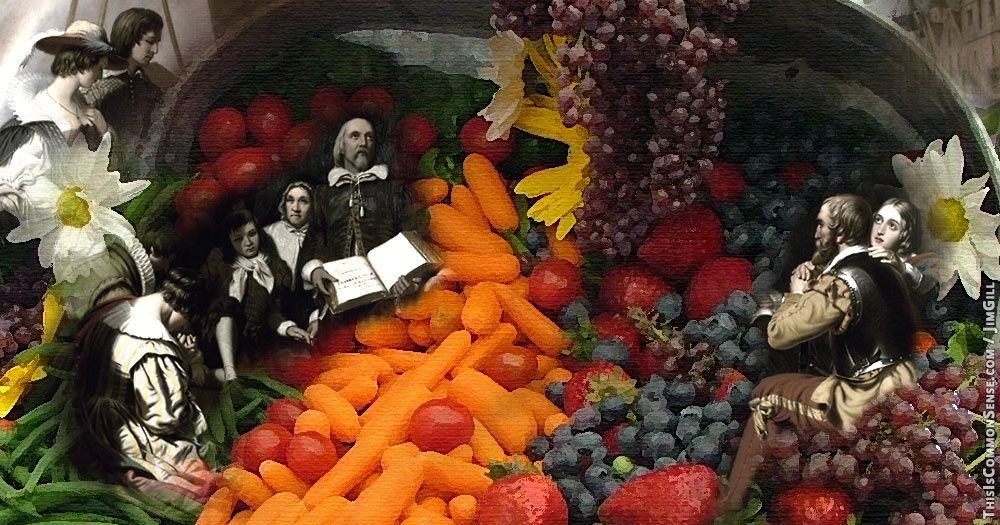
The Pilgrims we were taught about in school deserve a Paul Harveyesque “Rest of the Story” treatment. Most students were not told about how they tried communism before they wised up, though I actually had a teacher who made a point of it.

Yes, initially, the “community” owned everything, and all worked together for the greater good and the Glory of God.

Of course, it was a disaster.

The commune plan sparked sloth, shirking, family quarrels and resentment — with men regarding their wives’ work for others a “kind of slavery.”

And then near-starvation.

The solution? Privatize! They allotted land, setting “corne every man for his owne perticuler.”*

That worked well, but they still had to endure a late Spring drought, and things looked bleak. Then, after prayers and expressions of humility (as Governor William Bradford explained**), the rain returned:

It came, without either wind, or thunder, or any violence, and by degreese in yt abundance, as that ye earth was thorowly wete and soked therwith. Which did so apparently revive & quicken ye decayed corne & other fruits, as was wonderfull to see, and made ye Indeans astonished to behold; and afterwards the Lord sent them shuch seasonable showers, with enterchange of faire warme weather, as, through his blessing, caused a fruitfull & liberall harvest, to their no small comforte and rejoycing. For which mercie (in time conveniente) they also sett aparte a day of thanksgiveing.

So the most obvious political lesson to be drawn from the Pilgrim experience got lost in stories of rain and corn and Indians and such.

But it’s worth noting that Bradford wrote his discussions of communism — and how very wrong Plato and his ilk were — in his primary text, while his talk of the drought was an afterthought in his mss., and appears as a footnote in the edition I’ve consulted.

Both*** Plymouth stories deserve to be told.

This is Common Sense. I’m Paul Jacob.

 

*I wrote about this a few years ago, offering some of the juiciest quotations, in “Plymouth’s Great Reform.”

** Bradford’s History of Plimoth Plantation, available for free at Gutenberg.org.

***The traditional date for the first Thanksgiving is given a few years earlier, with Squanto showing up and helping them plant and all. However, Bradford’s memoirs do not use the term thanksgiving (or “thanks-giveing”) or even “thanks” in relation to the harvests of 1621 at Plymouth Colony. But there is talk of plenty of food, including that Thanksgiving specialty, the turkey:

And now begane to come in store of foule, as winter aproached, of which this place did abound when they came first (but afterward decreased by degrees). And besids water foule, ther was great store of wild Turkies, of which they tooke many, besids venison, &c. Besids they had aboute a peck a meale a weeke to a person, or now since harvest, Indean corne to yt proportion. Which made many afterwards write so largly of their plenty hear to their freinds in England, which were not fained, but true reports.


PDF for printing

pilgrims, socialism, communism, thanksgiving, sharing, shirking, illustration


Categories
ideological culture individual achievement nannyism responsibility too much government

Don’t Dress for Excess

Undoubtedly, men have it easy in several ways that women do not. Take something only seemingly trivial: clothing.

When men need to dress to impress, the answer is simple: a suit. There is not really a lot of variety here, and little is required of a man in his choice of suit.

Women, on the other hand, do not have a business and formal occasion uniform to rely upon.

Instead, they have fashion.

Which is a whirl of constant change and a world of enervating expense.

I wouldn’t put up with it. But then, I’m a man. The modern dress suit was developed to meet men’s needs for functionality as well as excellence. And our need to not think hard on a matter of mere garment.

So it is with no small pleasure to read, in the Telegraph, of a professional woman who forswears fashion to wear just one design of clothing. “‘I can tell you the cashier in the store look[ed] pretty confused when I asked if she had 15 extra sets of the whole outfit,’ she jokes, ‘but all in all, choosing the uniform was a pretty pain-free process.’”

And the style choice seemed obvious: “I’ve always felt that black and white is a cool and classy look,” so that’s what she went with.

She made herself culturally equal with men. Took for herself a formerly all-male advantage. And she did not depend upon a man for that advance, he-for-she style.

And did not look to government.

This is the way forward.

This is Common Sense. I’m Paul Jacob.


Printable PDF

fashion, government, suits, illustration


Categories
general freedom nannyism national politics & policies Popular privacy too much government

Inconvenient Cash?

Everywhere I turn these days, I am hearing something about the push to get rid of cash.

Yes, cash. Greenbacks. Federal Reserve Notes.

You might think that getting rid of cash is a no-brainer. Cash makes up only 11 percent of the money supply. Most of the money stock is already those 1s and 0s in bank computers, on debit cards, and the like. So why not go all the way?

It is the “logical next step,” after all!

But not every “next step” is advisable. When walking towards a cliff, that next step might be a doozy. And when you are dealing with government and the banks, jumping off a cliff proves an apt metaphor.

Don’t go lemming on me, man.

You can probably guess the usual arguments for getting rid of cash. Convenience, for one. It sure would be convenient for government and central bankers if they could just seize control of money “magically” in the banks’ computers.

Somehow, I am not persuaded. Neither is economist Pierre Lemieux, who provides us with a helpful survey of anti-cash arguments. And when the experts argue that it would be more convenient for consumers, incredulity is the best response. “To argue against the usefulness of cash is to deny the revealed preferences of many individuals,” Lemieux insists. “The fact that cash has not disappeared even in non-criminal hands means that it is convenient for many individuals.”

He expands the thought with an important truth: “Economic efficiency is defined in terms of what individuals want.”

And the purpose of governments is to follow individuals, not corral them, manipulate them . . . for bureaucratic convenience.

Let’s keep cash.

This is Common Sense. I’m Paul Jacob.


Printable PDF

currency, money, binary, electronic, cash, illustrattion


Originally (cc) photo by FamZoo Staff on Flickr

Categories
initiative, referendum, and recall nannyism political challengers Regulating Protest

Irony in Spain

When I arrived at the Donostia-San Sebastián City Hall, in the beautiful Basque Country of Spain, I wondered what all the ruckus was about. There were hundreds of noisy protesters waving long, colorful banners.

My goodness, how interesting to witness acts of political agitation on the public square in another country, I thought. Then, atop the crowd some 20 feet opposite the protest, I spied Daniel Schily, a key activist, funder and cheerleading motivator of the direct democracy movement in Germany.

After greeting, he drily brought me up to date: “They’re protesting us.”

“No, really,” I asked, “what are they protesting?”

“Really,” he said, seemingly sincere. “They’re protesting the Global Forum.”

I stood there dumbstruck, for a moment, before I noticed one sign written in English: “Global Forum on Modern Direct Democracy,” with a very large, black, bold question mark beside it.

Schily wasn’t kidding.

In almost no time, I met up with friends from Bulgaria, South Korea, Uruguay, Chile — fellow activists, all. We had gathered in this “cultural capital of Europe” precisely because of our belief that all people have a right to not only speak out, but effect change, through ballot initiatives and referendums.

It turned out that the protestors hailed from the Satorralaia neighborhood movement. Their beef? Even after gathering nearly 9,000 signatures on petitions requesting a public referendum on a proposed through-station for the mass-transit metro system project, the city government shrugs.

The same city council that helped organize our forum, ignoring citizens while claiming the city is “The World Capital of Democracy.”

Government. What more proof do we need that it could use more checks and balances from the people themselves?

This is Common Sense. I’m Paul Jacob.

 

N.B. This is a Common Sense digest version of Paul’s weekend column. For more information, see Saturday’s and Sunday’s posts. Paul was in transit home when this entry was being prepared for the Web; he may offer further reports from his trip in the near future.


Printable PDF

Spain, Paul Jacob, Common Sense, initiative, democracy


Categories
general freedom ideological culture nannyism national politics & policies Popular too much government U.S. Constitution

The Venezuela Chaos

I have friends who call themselves anarchists. Their theory? Government is always merely an open conspiracy of some to live at the expense of others.

Republicanism, on the other hand, proposes that if we limit government, we can hone it down to the level where there is no conspiracy, and everything the government does can plausibly help everybody.

Not just a few insiders.

Socialism is the opposite notion. Socialists seek to grow government so far that it “naturally” serves everybody, not only the few. It’s all about “equality,” you see.

Here’s what we know for sure: socialism, when really tried, is so awful that it makes anarchy-as-chaos sound good.

The latest socialist horror is Venezuela, which is getting worse every day. Now hospitals place newborns in cardboard boxes. There are no other supplies.

But that’s not all. The special program for feeding everybody? It’s now mainly for feeding just those close to the government — precisely as my anarchist friends say all government is:

Six months after the creation of the Local Committees of Supply and Production (Clap) that is designed to “distribute food directly to the people,” the government has decided to change its approach by threatening those using the program.

The Venezuelan government announced that it will suspend delivery of food packages to those who criticize its policies.

Are socialist out to prove anarchists right?

I bet most of my readers still put some hope in limiting government to serve all. Venezuelan socialism demonstrates how badly the opposite idea is, showing us that serving everybody by total government just decays into the folks allied closely with government warring against everybody else . . . who starve in plain sight.

This is Common Sense. I’m Paul Jacob.

 

Ask the next question.

Questions Answered:

What is the difference between a republic and a socialist state?

What do anarchists think of government?

What happens when government tries to do everything for everybody?

The Next Question:

How do we convince well-meaning socialists that total government cannot work for the benefit of everybody? (Since the examples of the USSR, Communist China, and Venezuela haven’t worked so far.)


Printable PDF

government, bathtub, Venezuela, illustration