The weekend podcast is up:
You can also check it out via podcatchers such as Apple’s, Google’s, Pocket Cast and Stitcher.

The weekend podcast is up:
You can also check it out via podcatchers such as Apple’s, Google’s, Pocket Cast and Stitcher.
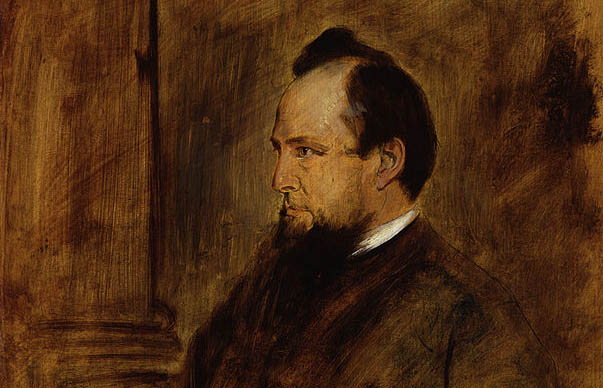
It is bad to be oppressed by a minority, but it is worse to be oppressed by a majority. For there is a reserve of latent power in the masses which, if it is called into play, the minority can seldom resist.
Lord Acton, “The History of Freedom in Antiquity,” 1877.
On September 26, 1786, protestors shut down the court in Springfield, Massachusetts, beginning a military standoff and ushering in Shays’ Rebellion. This anti-tax revolt spurred a dramatic reaction on the part of the day’s politicians, including their attempts to reform the Articles of Confederation and to figure out better ways than high state taxes to pay off Revolutionary War debts. These efforts directly led to the adoption of a new Constitution.
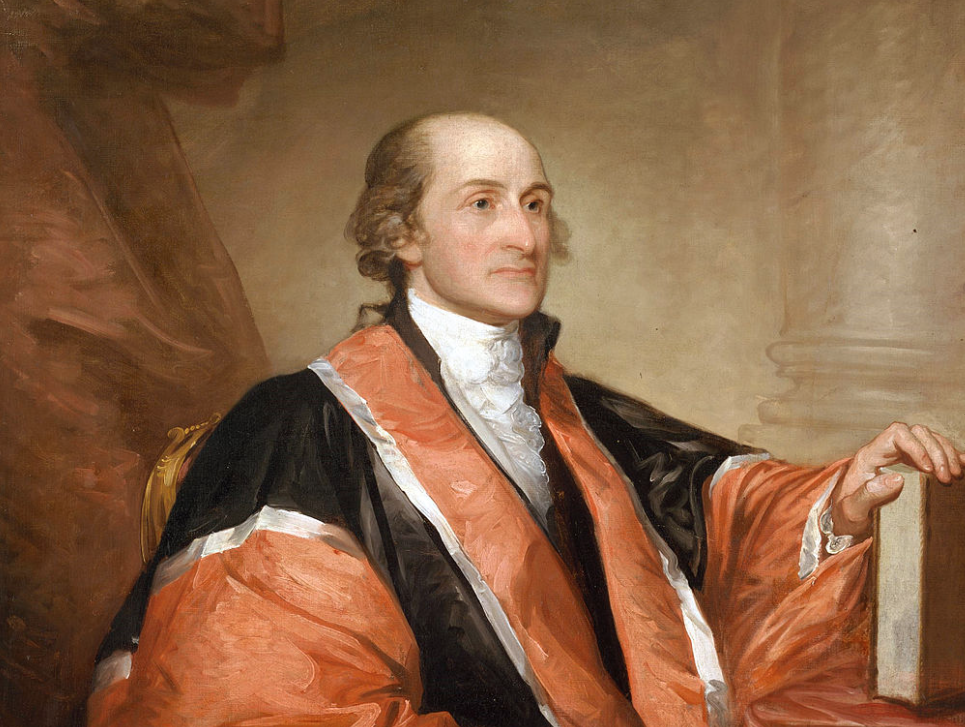
Three years later, to the day, Thomas Jefferson was appointed the first United States Secretary of State, John Jay (pictured) was appointed the first Chief Justice of the United States, Samuel Osgood was appointed the first United States Postmaster General, and Edmund Randolph was appointed the first United States Attorney General — all under the new Constitution.
§ In 1960 on this date, John F. Kennedy and Richard M. Nixon engaged in the first televised presidential campaign debates.
§ September 26 is celebrated, by some who know history, as “Petrov Day,” after Stanislav Yevgrafovich Petrov, who on this day in 1983 may have saved civilization by resorting to hunch. While serving as a lieutenant colonel in the Soviet Air Defense Forces, he took the initiative to downgrade information from the USSR’s computerized early warning missile defense system that the United States had initiated a nuclear first strike against the Soviet Union. He interpreted the warning as a false alarm. His hunch was correct; the U.S. had not initiated a first strike: the data he had received was misleading. A later investigation determined it was the result of high altitutde cloud interference with a satelite view of a U.S. Air Force base. Petrov was not rewarded for his decision, however. His decision showed up the military higher-ups and scientists to have concocted an extremely faulty system, so a reward would also have required some sort of punishment. He retired soon after with a very, very small pension.
Petrov died on May 19, 2017.

Raise a long-stemmed glass to the wineries of Minnesota. And to the Institute for Justice, which fought for their rights in court.
Minnesota wine makers may now make wine with whatever grapes they like! They may make wines that were illegal for them to make before.
Early in September, a federal judge struck down a 1980 Minnesota law which prevented Minnesota wineries from crushing grapes into wine unless most of the grapes being used had been grown in Minnesota. Winemakers were thus thwarted from producing popular varietals requiring grapes that can’t be grown in the state. Temporary exemptions from the law were possible but could not be counted on.
Judge Wilhelmina Wright’s ruling may well inspire challenges to similar prohibitions in other states. You know you’re a fifth of the way into the twenty-first century when dramatic modernistic advancements like letting wineries buy whatever grapes they wish have become possible.
You may be thinking: “Huh? I had no idea that wine makers in Minnesota were not allowed to buy grapes from other states. That’s painfully stupid!”
Of course, that is probably not the opinion of the proponents of the law. At least some Minnesota grape growers no doubt believe that persuading lawmakers to block out-of-state grapes was a smart move.
But is it really so very wise to hobble business competitors for the sake of short-term advantages regardless of the long-term costs to the freedom — not to mention the palates — of all?
This is Common Sense. I’m Paul Jacob.
See all recent commentary
(simplified and organized)
See recent popular posts
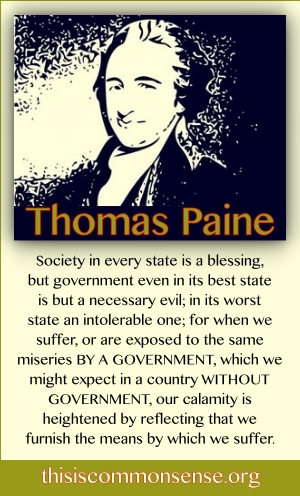
Society in every state is a blessing, but government even in its best state is but a necessary evil; in its worst state an intolerable one; for when we suffer, or are exposed to the same miseries BY A GOVERNMENT, which we might expect in a country WITHOUT GOVERNMENT, our calamity is heightened by reflecting that we furnish the means by which we suffer.
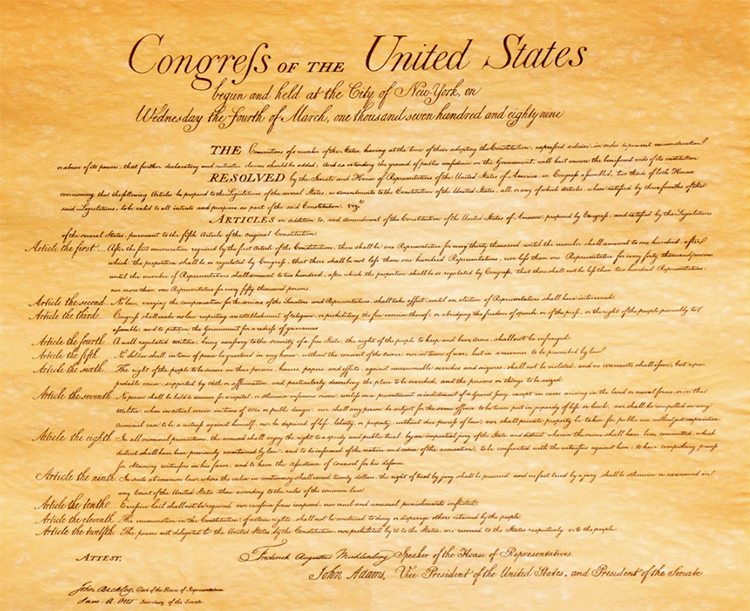
On September 25, 1789, the U.S. Congress passed twelve amendments to the United States Constitution: the Congressional Apportionment Amendment (which was never ratified), the Congressional Compensation Amendment, and the ten that are known as the Bill of Rights.
Many, many years earlier on that date, in 1555, the Peace of Augsburg was signed in Augsburg by Charles V and the princes of the Schmalkaldic League.

Breonna Taylor is dead. She was shot five times by Louisville police, who were returning fire after forcibly entering her apartment.
“[T]he department had received court approval for a ‘no-knock’ entry,” reports The New York Times, but “the orders were changed before the raid to ‘knock and announce,’ meaning that the police had to identify themselves.” There is disagreement as to whether police did so.
It appears that shortly after midnight on March 13, police knocked down Ms. Taylor’s front door and her boyfriend fired his gun at what he thought was an old boyfriend of Breonna’s.
That old boyfriend, Jamarcus Glover, who has a “2015 drug trafficking conviction” and “several pending drug and weapons cases against him,” Louisville’s WAVE-3 TV informs, “was named on the March 13 warrant that sent officers to Taylor’s apartment.”
But three lawmen came through the door instead. One was hit in the leg and they opened fire.
Another of them, already terminated by the Louisville Metropolitan Police Department, was charged yesterday with “wanton endangerment” for firing his weapon indiscriminately. But no charges for Breonna Taylor’s death.
While the apparent police misconduct must not be excused, it is too easy to blame police. Breaking down doors — whether after “no-knock” or a brief wee-hours rap on the door and yodeled announcement (when the target is likely asleep) — leads to gun battles and lost lives . . . of innocent citizens as well as police officers.*
And the drug laws that ultimately brought Louisville’s battering-ram-wielding cops to Breonna’s door were not written by those policemen.
They were written by politicians, and it is they who must change the laws and the policies that led to Breonna Taylor’s death.
But they will never do it unless we make them.
This is Common Sense. I’m Paul Jacob.
* I remember Cory Maye in Mississippi, who was on death row for years after killing a policeman in a late-night no-knock raid on his home. No drugs found. Wrong house. Thankfully, Cory was finally released. But the policeman is still dead; his wife and kids lost a husband and father.
Note: As we put this commentary to bed, two Louisville policemen have been shot and a suspect arrested. Both officers are receiving treatment at a local hospital.
See all recent commentary
(simplified and organized)
See recent popular posts
On September 24, 1789, the United States Congress passed the Judiciary Act, creating the office of the United States Attorney General and the federal judiciary system, and ordered the composition of the Supreme Court of the United States.
On the same day that President George Washington signed the bill into law, he officially nominated John Jay to the new position of Chief Justice of the Supreme Court. Jay (pictured in his official portrait, above) served in that position until 1795, when he resigned to take up his elected position as second governor of the State of New York. The Supreme Court heard only four cases during Jay’s Chief Justiceship; Jay refused to consult, officially, on legislation written by Alexander Hamilton, establishing the precedent that the Supreme Court has followed to this day: the Court would only rule on cases tried before it.
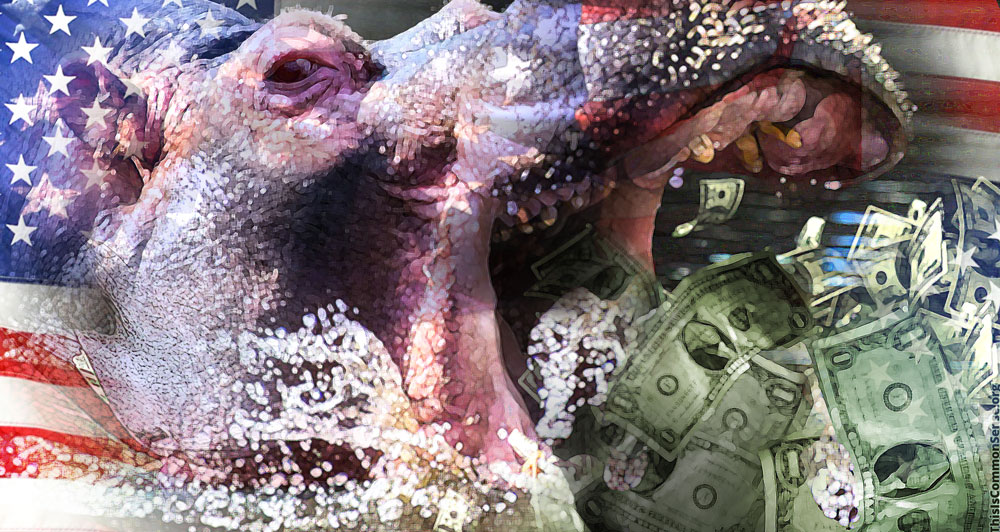
The top federal income tax rate is currently 37 percent.
It’s been higher — 94 percent at one point during the Second World War, 91 percent in the 1950s . . . on income above a certain threshold.
Back in the 1890s, the federal government briefly taxed income at 2 percent. It was quickly struck down by the U.S. Supreme Court as unconstitutional.
Those were the days.
In 1913, the 16th Amendment was ratified, giving Congress “power to lay and collect taxes on incomes” overriding the constitutional provisions that the high court had cited in 1895. The first federal rates were 1 percent for the lowest income bracket, 7 percent for the top bracket, on income above $500,000.*
By 1916, the lowest percentage was 2, the highest 25, on income above $2,000,000.
The good news: skyward tax rates aren’t set in stone. The bad news: once a precedent for a new tax has been established, you can expect worse to come.
So what happens if California Assemblyman Rob Bonda gets his way? He seeks a tax of “just” 0.4 percent on the accumulated wealth of “just” “the top 0.15%” wealthiest Californians, “about 30,000 people.” If these wealthiest leave the state, they would still be subject to the tax for ten years(!).
Presumably, this latter, and quite brazen, aspect of an already brazen tax would be subject to constitutional challenges.
If Bonda’s proposal is enacted and upheld, would the scope of its reach stay put at 0.4 percent of holdings and 0.15 percent of Californian taxpayers?
It would not.
This is Common Sense. I’m Paul Jacob.
* That was a lot of money back then — worth $13 million today.
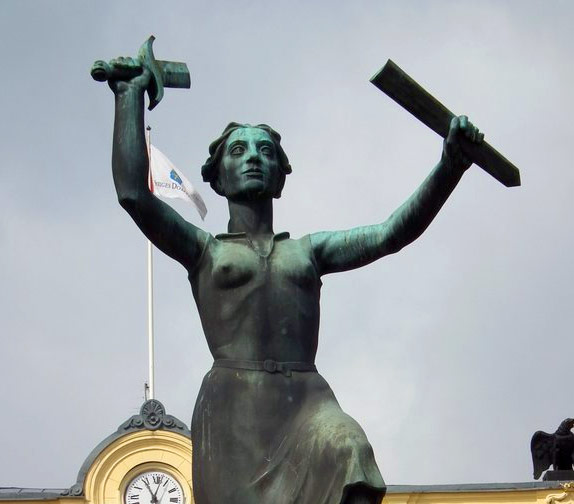
On September 23, 1905, Norway and Sweden signed the “Karlstad treaty,” peacefully dissolving the union between the two countries.