Categories
international affairs

Superpower Blues

I don’t want the Turkish military to wipe out the Kurds.

I also don’t want the Taliban to return to power in Afghanistan.

Nor do I want the Chinese totalitarians to violate the rights of Hongkongers.

Or for the Spanish government to slap long prison terms on peaceful Catalonian separatists.

Or tyrants in Nicaragua and Venezuela to torture and kill the people of those countries.

At the same time, I don’t want U.S. Marines landing on the beaches of Venezuela or Nicaragua or parachuting into Madrid or Kowloon . . . or for our military to endlessly occupy turf in Afghanistan and Syria.

There are limits even to superpower status. We cannot re-make the world in our image. By force. Everywhere at all times.

Except to some degree, by example. And regime change wars have not set a very good example.

The Iraq War destabilized the Middle East and handed Iran a major strategic victory. Leading from behind to help NATO overthrow the government of Libya has produced more chaos for northern Africa and Europe. Efforts at regime change in Syria have only worsened the suffering of millions of people.

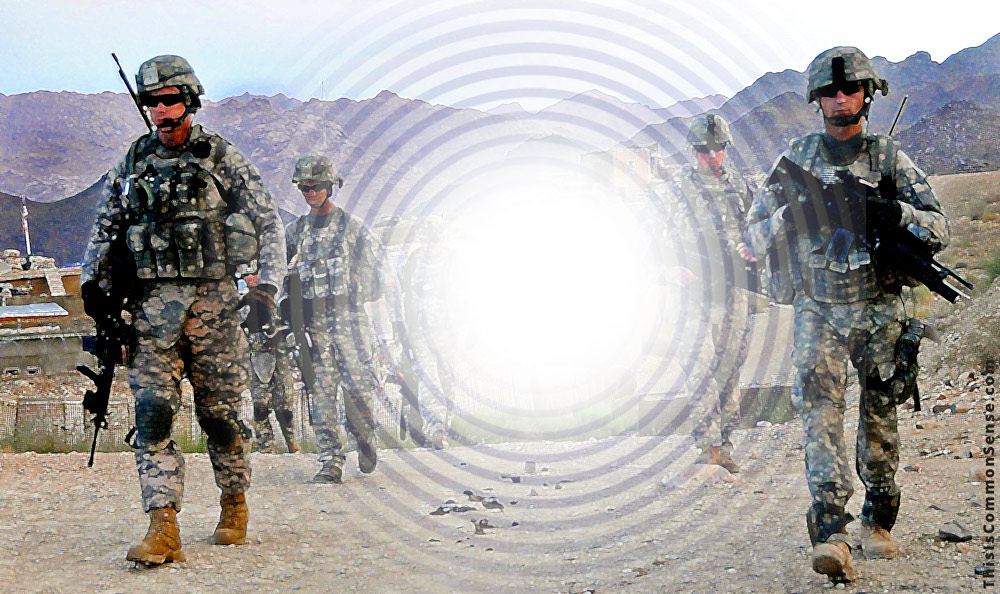
U.S. troops remain in Iraq. After 17 years, we still have soldiers dying in Afghanistan. We can never leave. At least, not without any “gains” evaporating in a hurry. 

And the president who finally ends military involvement in these “endless war” will get endless grief for abandoning allies* and ceding ground to Russia or some other bad actor. That’s what happened after 28 soldiers were pulled out of Syria.

Being a superpower isn’t all it’s cracked up to be. 

Beacon of freedom seems a better gig.

This is Common Sense. I’m Paul Jacob.


* This is not an argument for being a bad ally ourselves. For starters, I think we ought to welcome Kurdish refugees who wish to immigrate to the U.S.

soldiers, world police, war, peace, Syria, Kurds,

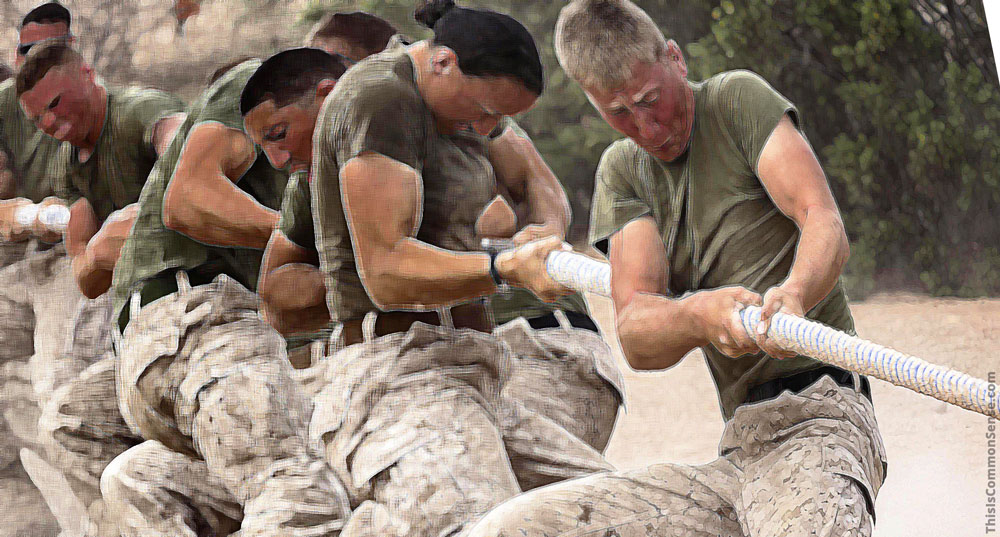
From a photo by: Lance Cpl. Christian Cachola

See all recent commentary
(simplified and organized)
See recent popular posts
Categories
ideological culture national politics & policies

An Opportunity to Forgo

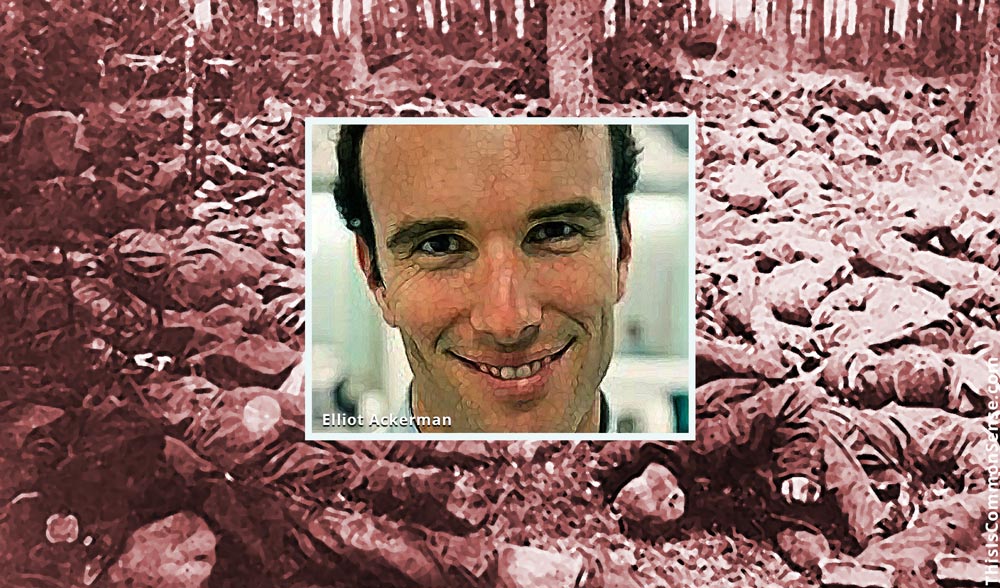
“We just marked the anniversary of 9/11.” 

That’s what Democratic presidential aspirant and South Bend, Indiana, Mayor Pete Buttigieg reminded last night’s debate audience. “All day today, I’ve been thinking about September 12th, the way it felt when for a moment we came together as a country.”

The terrorist attacks in New York City and at the Pentagon, and the attempt foiled by brave citizens who were killed in the crash of their airliner in Shanksville, Pennsylvania, did indeed result in a wonderful bond of unity throughout our country.

Having lost more than 3,000 citizens, we came together.

“Imagine,” instructs Buttigieg, “if we had been able to sustain that unity.”

Before we all sing along with John Lennon, though, consider: (1) It is not so easy for government to re-create the sort of public horror, fear, grief, etc., necessary to ensure maximum national unity, and (2) please don’t try. 

The purpose of government is not to produce a pressure-cooker society where we forever exist on a wartime footing.

Do you miss the good old days of World War II? Totalitarianism threatened much of the globe; 70 million people died in the war. But it unified our country, which defeated Nazism, fascism, and a murderous empire.

We must memorialize the victory, not repeat it . . . just for unity’s sake. 

Yet the Green New Deal resolution introduced by Rep. Alexandria Ocosio-Cortez (D-NY) states that “the House of Representatives recognizes that a new national, social, industrial, and economic mobilization on a scale not seen since World War II and the New Deal is a historic opportunity. . . .”

Opportunity

Our motto should be ‘Liberty’ — not ‘never let a crisis go to waste.’ 

This is Common Sense. I’m Paul Jacob.


PDF for printing

national unity, war, peace, nationalism,

See all recent commentary
(simplified and organized)
See recent popular posts

Categories
ideological culture international affairs

War Minus One Warmonger

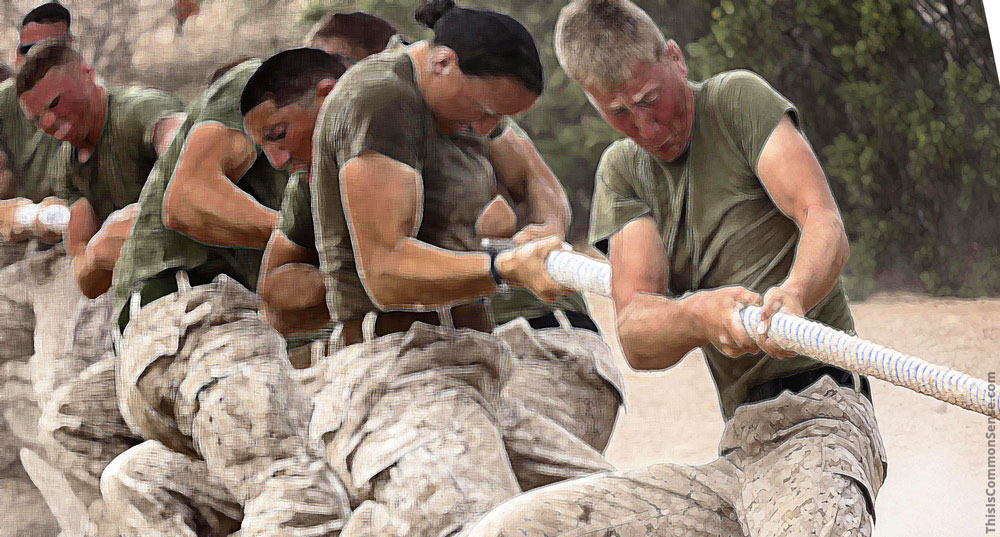
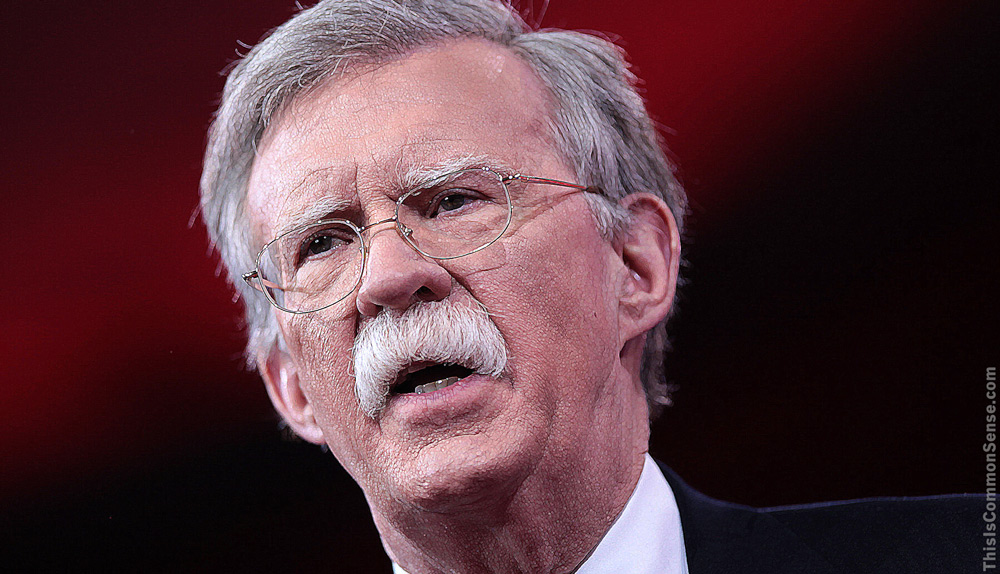
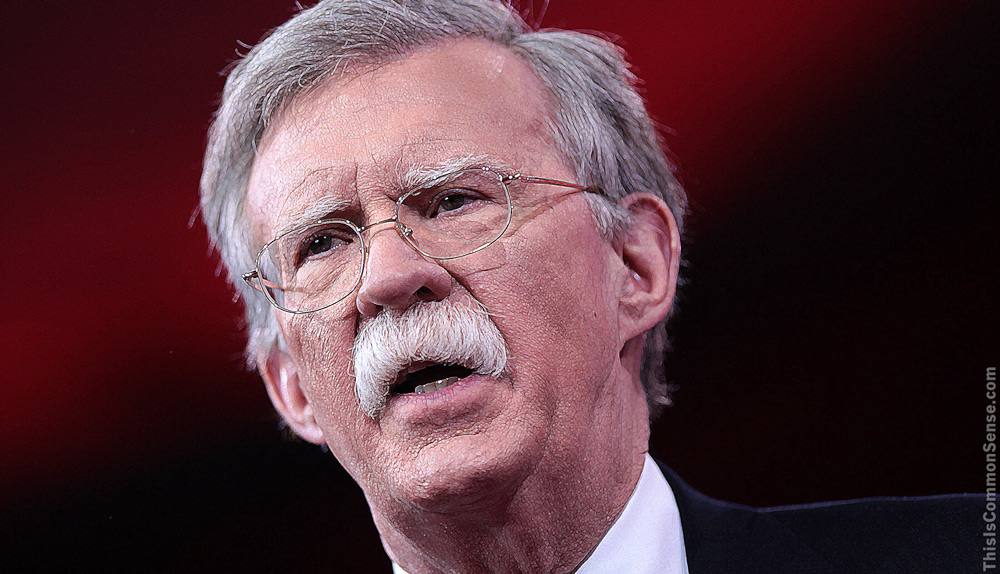
At long last, John Bolton’s 17 month tenure in the Trump Administration is over.

I won’t pretend not to be pleased. Yet I also do not pretend this national security advisor was always and completely on the wrong side. He has consistently claimed to have an ulterior motive for his favored never-ending war footing: “Individual liberty is the whole purpose of political life, and I thought it was threatened then” — when he was a teenager and exposed to the ideas of Barry Goldwater — “and I think it’s threatened now.”

Unfortunately, he rejected the lesson that our Founders knew all too well: constant war-making doesn’t yield freedom. “Of all the enemies to public liberty,” James Madison wrote, it is war that “comprises and develops the germ of every other.” Madison’s list of reasons for war’s dangers include

  • Debts and taxes; 
  • Rule of the many by the few;
  • Discretionary executive power;
  • Special favors greed economy;
  • Propaganda; etc.

Nevertheless, folks like John Bolton continue to think that we can be free while our military micromanages the “resolution” of every conflict across the globe. 

Meanwhile, Donald Trump, who often comes off like a war skeptic, continues to side with the interventionists. 

“We’re going to keep a presence” in Afghanistan, Trump said the other day. “We’re reducing that presence very substantially. We’re not fighting a war over there. We’re just policemen.”

. . . policemen who do not arrest anybody . . .

Not a recipe for freedom. Here or in Afghanistan. 

This is Common Sense. I’m Paul Jacob.


PDF for printing

John Bolton, war, defense, peace,

Photo by Gage Skidmore on flickr

See all recent commentary
(simplified and organized)
See recent popular posts

Categories
national politics & policies political challengers

And Then There Were 20-Something

The media won’t have my favorite Democratic presidential candidate to kick around anymore. 

“Mike Gravel drops out of 2020 race,” Vox headlined Catherine Kim’s report. “He never wanted to be president anyway.” A subhead continued: “The former Alaska senator simply ran to get other candidates to talk about American imperialism.”

It was largely a Twitter campaign, which, as The New York Times featured months ago, was run by two teenagers, David Oks and Henry Williams. “It wasn’t exactly a bid for the presidency,” the paper cautioned, “but neither was it really a prank.”

The goal? Launch Gravel — and, moreover, his issues — onto the debate stage. Though the campaign garnered enough individual donors to qualify, his lackluster polling results kept the former U.S. Senator out of prime time.

During the Vietnam War, Sen. Gravel worked to end the military draft and had the courage to read the Pentagon Papers into the Senate record in order to inform the public about the war. After leaving the Senate, Gravel continued his battle against U.S. military intervention, as well as advocating for initiative and referendum.

Back in 2008, in another quixotic presidential bid, he succeeded getting into the debates, lobbing in a few much-needed zingers. He was 77-years-old then; today he is 89.

Oks’ and Williams’ “real goal was to inject Gravel’s far-left views,”  informed FiveThirtyEight.com, “into the primary.”

Though I disagree with Mike Gravel on a number of his “far-left” issues — and for endorsing Bernie Sanders for president — he has my utmost respect. 

And if “ending ‘imperialist’ wars, legalizing drugs and enacting dramatic political reforms” be “far left,” make the most of it.

This is Common Sense. I’m Paul Jacob.


PDF for printing

MIke Gravel, president, candidate, war, draft,

See all recent commentary
(simplified and organized)
See recent popular posts
Categories
international affairs national politics & policies Popular

Who’ll Stop the Wars?

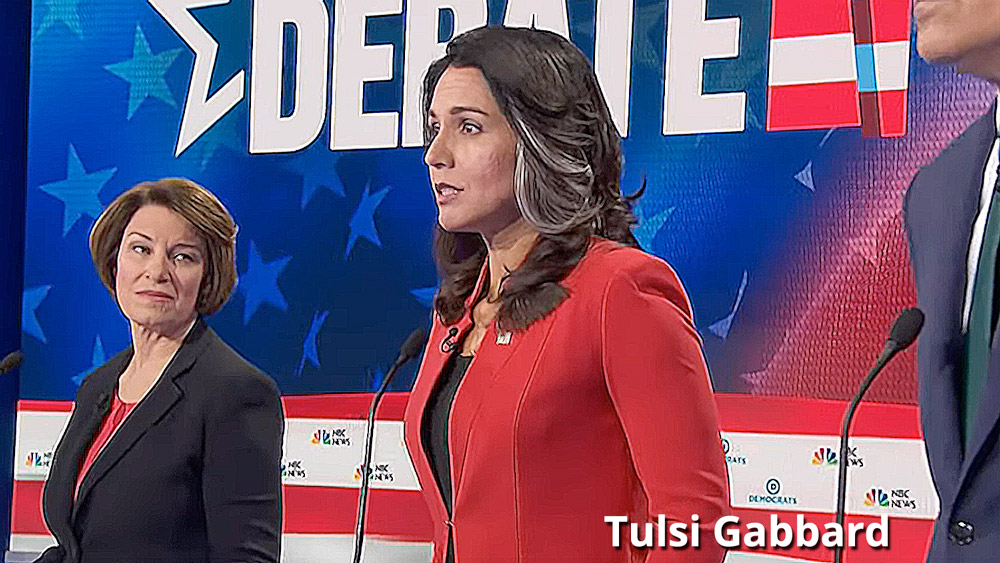
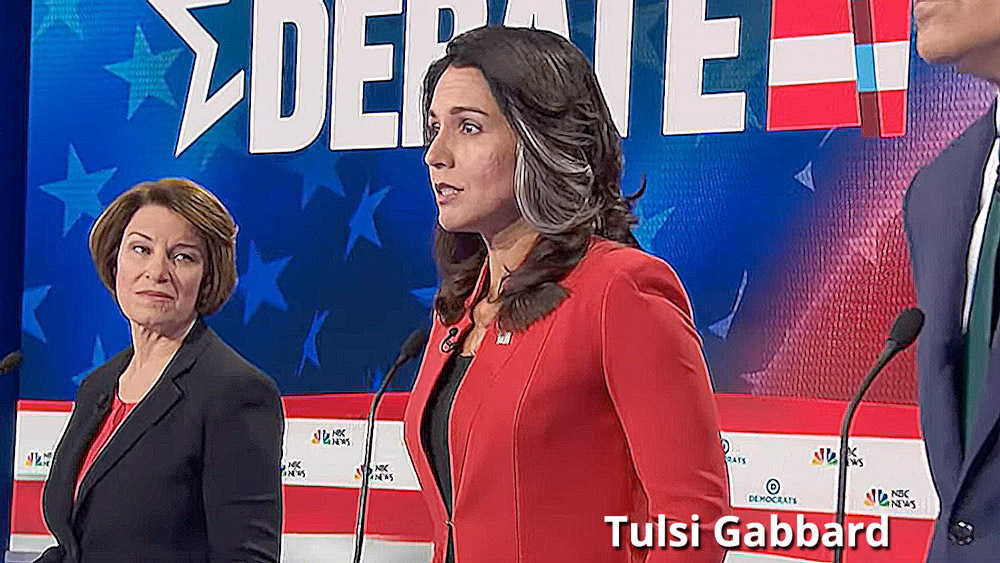
“Why were you the lone voice out there going after the neo-cons, going after the people who took us into these wars?” Chris Mathews, host of MSNBC’s Hardball, asked presidential candidate Rep. Tulsi Gabbard (D-Hawaii) after Wednesday night’s debate. 

Pro-peace candidates do well with voters, but still most politicians and the media remain hawkish. The only time “the mainstream media fawned” over President Trump was after airstrikes against Syria.  

“I deployed to Iraq in 2005 during the height of that war,” she told Mathews. “I served in a medical unit where every single day I saw that terribly high human cost.”

Contrasted with former Vice-President Joe Biden, who voted for the Iraq War as senator, Gabbard pledged not to “bend to the whims of the military-industrial complex or the foreign policy establishment.”

“Today the Taliban claimed responsibility for killing two American service members in Afghanistan,” MSNBC’s Rachel Maddow had posed during the debate. Noting that “leaders as disparate as President Obama and President Trump” have wanted “to end US involvement,” Maddow inquired of Rep. Tim Ryan (D-Ohio), how he might get us out?

Instead, he argued: “We must be engaged in this.” That led Gabbard to cut in, calling Ryan’s answer “unacceptable.” 

“We have to bring our troops home from Afghanistan,” she declared. “We are no better off in Afghanistan today than we were when this war began [nearly 18 years ago].”

Offered the opportunity, not one of the other eight candidates on the stage addressed the country’s longest war. 

This is a problem, since, as I’ve repeatedly posited in this space, there is no plan to defeat the Taliban, only to negotiate power-sharing with them.

Ceaseless intervention.

This is Common Sense. I’m Paul Jacob.


PDF for printing

Tulsi Gabbard, Democratic Presidential Debate, war, peace, foreign policy,

See all recent commentary
(simplified and organized)
See recent popular posts

Categories
folly international affairs national politics & policies Popular

Remember . . . the Maine?

“President Trump warned Thursday that America ‘will not stand’ for Iran shooting down a U.S. drone over the Strait of Hormuz,” a Fox News report summarizes, “while at the same time leaving open the possibility that the attack was unintentional.” 

This incident immediately follows the previous week’s apparent provocation, attacks on Japanese oil tankers in the same vicinity — also said by our government to have been caused by the Iranian military. Nearly everyone now regards these events as portending war,* which some see as a long time coming, since American relations with Iran have been antagonistic since the late 1970s, when Shia clerics raised a popular revolt to oust the American-installed thug, er, Shah.

While Mr. Trump was incredulous that the strike on the drone (opposite of a drone strike) could have been intentional, the rest of us can dare doubt even more: Can we really trust the “intelligence” that blames Iran’s military or paramilitary Revolutionary Guard for these puzzlingly dangerous provocations?

Not based on past performance.

The “intelligence” used to justify America’s several wars with Iran’s neighbor, Iraq, seems more disinformation than mere misinformation. And we now know that the Gulf of Tonkin incident enabling U.S. escalation into Vietnam was a lie.

We should even “remember the Maine!” — the questionable rationale for the Spanish-American War.

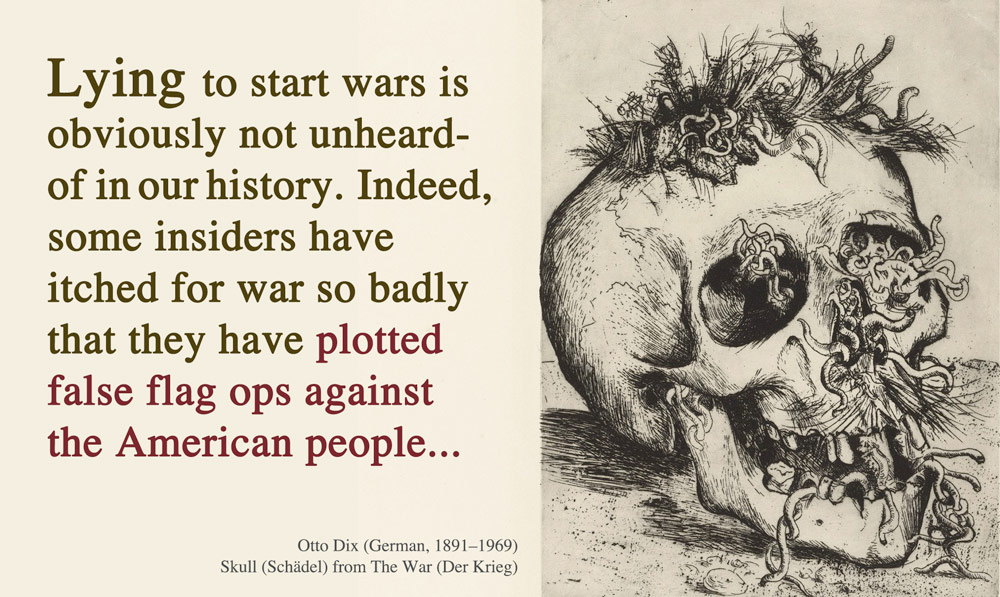
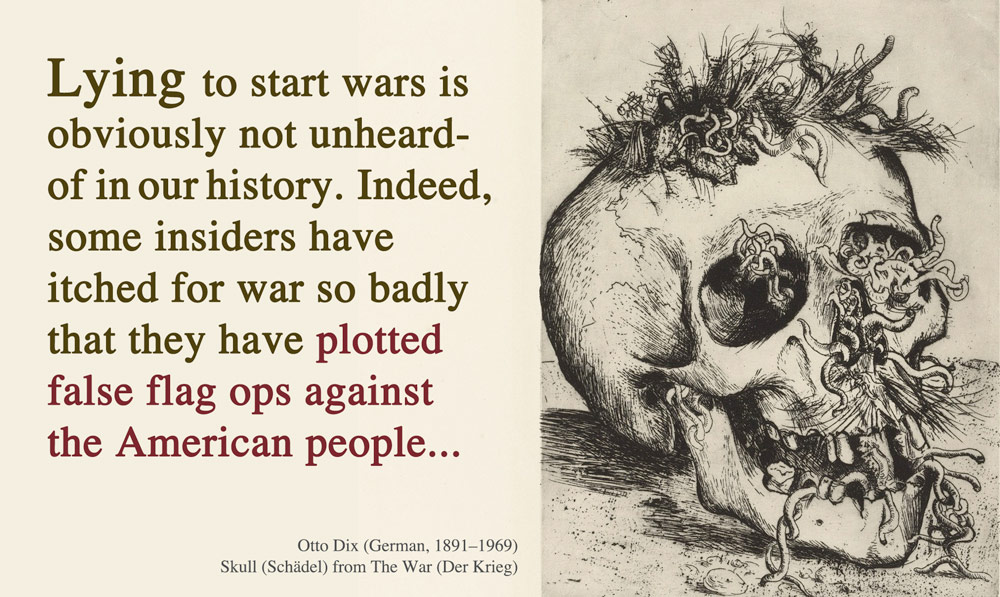
Lying to start wars is obviously not unheard-of in our history. Indeed, some insiders have itched for war so badly that they have plotted false flag ops against the American people.

The truth of what is happening now may not be known for years . . . by us . . . or even by President Trump.

This is Common Sense. I’m Paul Jacob.


* According to the New York Times, late yesterday President Trump authorized and then de-authorized a strike against Iran.

PDF for printing

war, false flag, Iran, Iraq, lies,

See all recent commentary
(simplified and organized)
See recent popular posts
Categories
general freedom international affairs Popular

Bellicose Exclusions

“Jones and his Infowars nutritional supplement sales empire are having a bit of a rough moment,” wrote Justin Peters last year at Slate, “since the bellicose conspiracist has recently been banned from several social media and podcast platforms due to his hostile and hateful behavior.”

Like much of the commentary on Alex Jones, as well as on his colleague Paul Joseph Watson, there is something . . . off . . . about the characterization.

Bellicose?

Sure, he pushes bizarre accounts of conspiracies,* and on a personal level Alex Jones shouts and yells and blusters and worse.

But there is one way he is not bellicose. Alex Jones is almost consistently against war in general and America’s world-policing in particular.

And so, too, has been Paul Joseph Watson — who along with Jones was kicked off Facebook last week.**

If you are generally against war, being called “bellicose” and “hostile” must be galling, especially when personalities at CNN and MSNBC stand hand-in-hand with most at Fox in their obvious onscreen lust for actual warfare, drone bombings, and “tough choices.”

Yes, I know: Watson has been a withering critic of First World immigration policies and of the illiberalism he sees in Islamic cultures, and he relentlessly mocks Third Wave Feminism. That must be his “hateful” — and “hostile”? — element. 

Yet, this seems less about hate and more about ideological disagreement.

More importantly, just whose interests are being served by social media’s current deliberate policy of marginalization?

The biggest cheers for ousting Jones and Watson — outside major media — echo from the left. But how is cheering on the consolidation of the military-industrial complex in leftists’ interest? 

The current “war against Internet freedom” looks very bad for . . . dissent.

This is Common Sense. I’m Paul Jacob.


 * One of which he has even confessed to be “psychotic.”

 ** Others ousted include racial nationalists such as Paul Nehlen and Louis Farrakhan, gay conservative provocateur Milo Yiannopoulos, and Laura Loomer. Their stances on military interventionism are less clearly anti-.

PDF for printing

Alex Jones, Paul Joseph Watson, war, MSM, mainstream media,

Photo Credit: Tyler Merbler from USA

See all recent commentary
(simplified and organized)
See recent popular posts

Categories
folly ideological culture

War Lust Flags

A new poll shows that a narrow majority of Americans would support the President were he to pull troops out of Afghanistan. Less than a quarter of those polled said they would oppose it. 

“The survey also indicates Americans remain unconvinced that the United States has a clear purpose in Afghanistan,” explains the January 10 press release of the Charles Koch Institute, which commissioned the poll. “Almost half of respondents, 45 percent, said the United States has no strategic objective, while only 21 percent said it does. About one-third (34 percent) said they did not know.”

However you slice the public opinion data, the wars in the Mid-East are not gaining in popularity. A plurality of Americans polled want out of Syria, too — no matter “whether the conflict was framed around the Syrian civil war or to counter-ISIS.”

Lucy Steigerwald, writing at Reason, highlights the incoherence in the White House and Pentagon: “no one seems to know what the hell is going on.” Which just shows how far we have come, after all these years. “The long life of the Afghan war makes it hard to remember how popular it was when it began.”

But back then it all seemed so clear: get Osama bin Laden, destroy his training camps, and punish the Taliban for harboring him.

All that was accomplished long ago. Now our leaders fear pulling out because . . . we haven’t established a western democracy there?

That was never going to happen.

It is foolish — even immoral — to keep a war going with impossible and incoherent goals.

This is Common Sense. I’m Paul Jacob.


PDF for printing

soldiers, foreign policy, war, peace, Syria, Afghanistan
Categories
international affairs meme Popular too much government

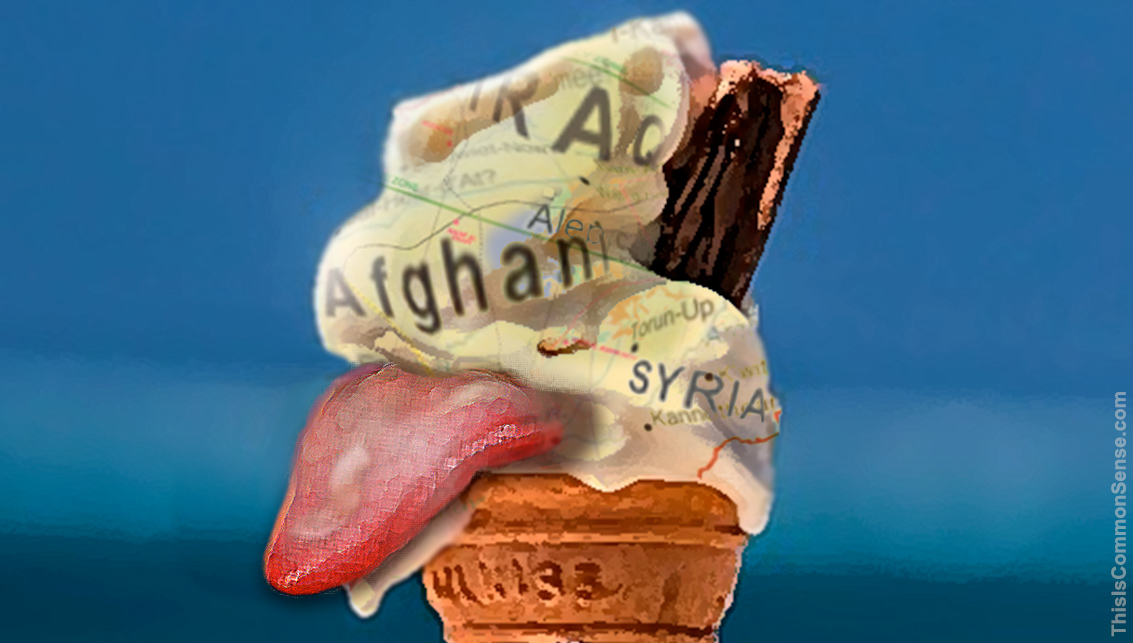
What Kind of Ice Cream Cone?

When I wrote about the Donald’s change of troop positions abroad last week, it was less than completely clear that the US President aimed to withdraw troops from Afghanistan as well as Syria. But multiple reports on the day I posted “Strategic Disengagement” make it clearer: about half of America’s 14,000 troops stationed there are scheduled to exit.

Why not all?

Well, you can see how entrenched foreign intervention is for American leaders. While most of the GOP policy establishment howled at Donald Trump’s betrayal of the cause (whatever that cause is, exactly), so, too, did many of the Democrats. And they seem awfully earnest. More earnest than one has reason to expect from the objectors to “George W. Bush’s wars.”

Even Noam Chomsky came out saying that the U.S. should stay in Syria to save the Kurds, and Howard Dean tweeted that American troops must remain in Afghanistan for the sake of women’s rights.

What we are witnessing are eternal programs that do not ever — and cannot ever — fulfill their basic purpose. No amount of occupation of Syria or Afghanistan or Iraq is going to give us what the neoconservatives promised: freedom and democracy and jubilation in the streets.

Freedom and democracy do not work that way.

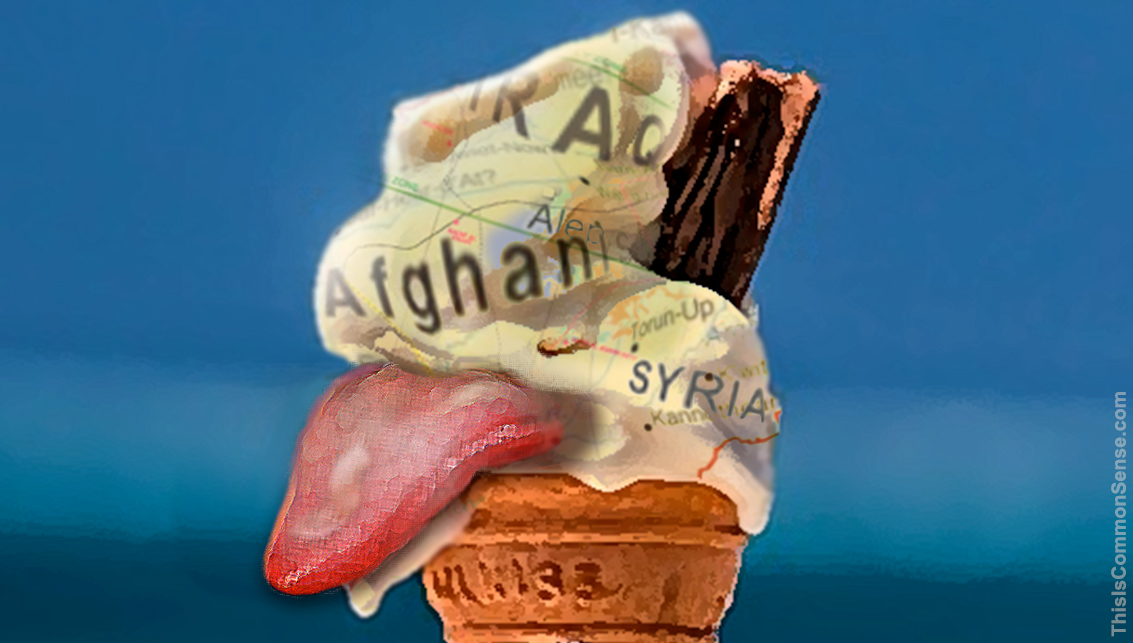
There is a term for such impossible-to-win/impossible-to-stop policy messes: “self-licking ice cream cones.”

The term means a “self-perpetuating system that has no purpose other than to sustain itself,” which is just standard operating procedure for domestic bureaucracies.

But in foreign military action?

Awfully cold imagery, and too comic . . . for tragedy.

This is Common Sense. I’m Paul Jacob.


PDF for printing

self licking ice cream, war, foreign policy, government

See all recent commentary
(simplified and organized)
See recent popular posts

Categories
Accountability general freedom meme moral hazard national politics & policies

Madison on Perpetual War

“Of all the enemies to public liberty war is, perhaps, the most to be dreaded, because it comprises and develops the germ of every other. War is the parent of armies; from these proceed debts and taxes; and armies, and debts, and taxes are the known instruments for bringing the many under the domination of the few. In war, too, the discretionary power of the Executive is extended; its influence in dealing out offices, honors, and emoluments is multiplied; and all the means of seducing the minds, are added to those of subduing the force, of the people. The same malignant aspect in republicanism may be traced in the inequality of fortunes, and the opportunities of fraud, growing out of a state of war, and in the degeneracy of manners and of morals engendered by both. No nation could preserve its freedom in the midst of continual warfare.”


James Madison, Political Observations, Apr. 20, 1795 in: Letters and Other Writings of James Madison, vol. 4, p. 491 (1865)