Categories
initiative, referendum, and recall local leaders

Two Initiatives, With Initiative

Josh Sutinen is 17. He can’t vote yet. But that doesn’t mean he isn’t having an effect on the politics of his hometown of Longview, Washington.

After his father’s second valiant if unsuccessful attempt to get into the Evergreen State’s House of Representatives, Josh became fascinated with political change. Conveniently, an issue soon darkened his town: Red light cameras.

Josh organized an initiative campaign to remove the red light cameras. Indeed, visitors to the family business, Sutinen Consulting, will sometimes find Josh manning the front desk — and then bringing another employee up from the back room (where they fix computers and do other technical things beyond my understanding) while he fields calls from major newspapers around the state, even around the country.

The campaign has been difficult; the powers that be in Longview (“The Planned City”) fought back. First they balked at giving the collected signatures to the county, to be counted. Then they even sued the petitioners — Josh Sutinen and Mike Wallin — to prevent the initiative from appearing on the ballot.

So the petitioners are fighting back. Josh is now preparing to gather signatures for an Initiative 2, which would prevent the city from suing citizens who draw up initiatives that challenge city policies.

Joining Josh is initiative guru Tim Eyman. Eyman has worked against red light cameras up north, and is enthusiastic about Longview’s second initiative as well, saying it is “exceptionally good policy and something I’ve wanted to do for a long time.”

I’ll keep you posted.

This is CommonSense. I’m Paul Jacob.
Categories
initiative, referendum, and recall

Who Should Steer the Bus?

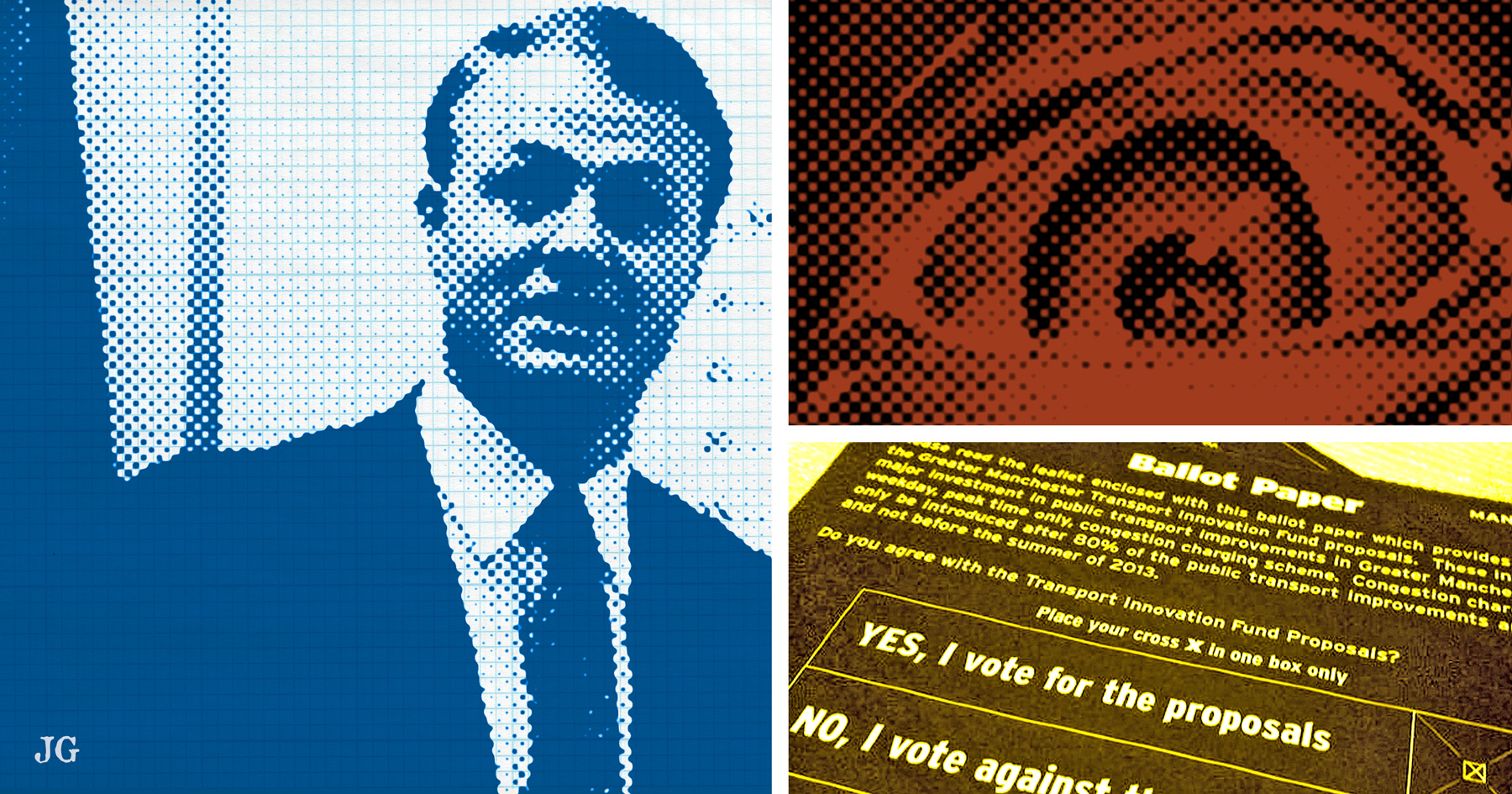
Metropolitan mass transit systems run buses and light rail trains. There’s not much evidence they do it well.

But boy, do they know how to spend money!

Now that the economy has hit the skids, tax revenues are down and metro boards across the country are hurting for money. King County, in Washington State, is no exception. The Metro system there has a multimillion dollar shortfall in funds, and the board threatens to cut services by 17 percent unless more revenue gets raised.

The Metro board suggests a tax hike — what they call a “congestion tax” — on cars.

Tim Eyman, the Evergreen State’s number one tax-​hike watchdog, argues that the voters should get to decide whether to increase taxes to fund existing levels of bus service.

Great idea. Consent of the governed and all. 

It’s amusing to read accounts of the debate over the proposed tax. Once again, we hear stories of bus after bus running without being anywhere near full.

If metro buses were my business, I’d want to make sure it ran in the black.

But with government, alas — relying on taxes for continuous bailout — that’s not even within the bounds of polite discussion. 

And while it might make sense to run some buses on a fixed, reliable schedule, other buses could be supplied to commuters “as needed.” With modern technology this is eminently doable.

But first, let citizens decide how much money they really want to throw at the system.

This is Common Sense. I’m Paul Jacob.

Categories
initiative, referendum, and recall

A Fraudulent Anti-​Fraud Bill

The theory behind Washington State’s Senate Bill 5297 — now worming its way through Olympia — seems to be that the people can’t be trusted to legislate, so the more hurdles thrown up at the initiative process, the better.

But the bill itself shows just the opposite, revealing its legislative supporters as careless, heedless of facts, and nastily bigoted towards some folk and against others. 

The truth? Washington State has had only one known case of signature fraud. A Service Employees International Union official repeatedly just made up names and signatures.

She’s confessed and awaits sentencing. 

So why add SB 5297’s reporting requirements for signature gatherers? To stop frauds such as this?

Well, no. SB 5297 exempts union petitioners!

Par for the course. Politicians in not a few of the 24 states that have statewide initiative rights try such things, all the while talking about the evils of fraud.

The facts? After surveying public records, Citizens in Charge Foundation reported, last year in “Is the ‘F‑word’ Overused?”, that “cases of verified fraud or forgery are not pervasive in initiative or referendum petitions. Furthermore, many of the ‘reforms’ passed by state legislatures to address fraud have shown no positive results.”

Fortunately for Washingtonians, initiative activist Tim Eyman has bashed the bill and nearly every state newspaper, usually editorializing against Eyman, has instead lambasted the legislation. Citizens are rallying. Several legislators have stood against it, and taken away much of its teeth and claws. 

Now it’s time to kill the beast.

This is Common Sense. I’m Paul Jacob.

Categories
local leaders national politics & policies

Persistence, Thy Name Is Eyman

We haven’t had enough Tim Eyman.

I try to rotate the subjects of these Common Sense efforts, moving from freedom to democracy and back again, covering local and state issues as well as national and international ones.

But certain topics make regular returns. Like Tim Eyman. In Washington State, he’s evergreen.

He’s the citizen initiative guy. He keeps plugging away, writing initiatives, working to put them on the ballot, defending them against all comers.

His recurring theme? Lower taxes.

He recently filed an initiative to require a two-​thirds majority in the Evergreen State’s legislature to raise taxes.

He’s done it before. And Washington State citizens have voted this in, before. Four times.

Trouble is, the legislature can repeal any state initiative two years after enactment, by simple majority. Within the first two years, it takes a two thirds super-majority.

So Eyman is back on the horse, whip in hand, and says he’ll keep putting these initiatives before the voters. As many times as it takes.

He’s working on the current effort in case the legislature takes down the recently enacted I‑1053, like they did the three previous citizen-​enacted laws. If lawmakers don’t overturn this, he’ll wait until 2012 to reintroduce it. And he’ll keep this up until legislators at last understand: Citizens don’t have unlimited resources. Taxes come at a cost. Spending less is always an option.

You can’t keep a good man (or the voters) down.

This is Common Sense. I’m Paul Jacob.

Categories
free trade & free markets initiative, referendum, and recall too much government

Pay the Boatman

Attack the outsider — the first resort of the unarmed arguer.

My Townhall column praising Washington State anti-​tax activist Tim Eyman raised the ire of Seattle Times columnist Danny Westneat. He insinuates that it’s easy for me to like Eyman, for I never need to “catch the late boat after a Mariners game,” since I live in Virginia and Eyman’s initiatives affect the Evergreen State’s ferries.

Westneat complains that a voter-​approved Eyman measure reducing car taxes took away the main source of subsidy (he doesn’t use that word) for Puget Sound’s ferry system. Turning common-​sense responsibility on its head, he writes, “instead of levying a tax across a broad group (all car owners), as we did pre-​Eyman to help pay for ferries, the costs now are increasingly heaped on a narrow group — the ferry riders themselves.”

Horrors! People paying for what they use!

Westneat seems to be into financial irresponsibility. “Yes, [the system] wastes money sometimes. What big organization doesn’t?” Nice dismissal of the incompetence and corruption in a state-​run biz that cannot even account for its cash.

When the ferries were taken over from private business by the state, it was, he says, because of the previous owners’ “usurious 30-​percent fare hikes.” Not mentioned? This followed the cessation of Seattle’s wartime shipworks, and a huge decrease in demand.

Some folks sure apply basic economic insights selectively. Dispersing costs, concentrating benefits? That they idolize. Economies of scale? Their arguments run aground.

This is Common Sense. I’m Paul Jacob.

Categories
initiative, referendum, and recall too much government

The Citizen’s Stop Sign

What an election year. It’s not just the drubbing dealt to many statist incumbents that warrants a little triumphalism. We can also cheer about ballot measures whose passage means the defeat of very specific attacks on the citizenry.

Several local referendums targeted all those ticket-​triggering red-​light cameras that have been popping up. The main purpose of the gotcha-​gizmos seems to be lunging for the wallets of hapless motorists, not enhancing anybody’s safety.

Voters are rejecting this fancy tax on driving. In Houston, a group called Citizens Against Red Light Cameras pushed for a ballot question to chuck the cameras. Voters passed it, despite the apoplectic opposition of the city council and the company operating the cameras, American Traffic Solutions. Camera ordinances were also felled in two Ohio towns, Chillicothe and Heath, and in College Station, Texas. In Anaheim, California, 73 percent said Yes to banning red-​light cameras.

It was a tougher battle in Mukilteo, Washington, where ATS tried to stop voters from deciding on the cameras. Citizen activist Tim Eyman, who also has a slew of successful tax-​limitation initiatives under his belt, led the effort to combat that obstructionism, and the state supreme court ordered ATS to back off. The kill-​the-​cameras measure went on to pass by 70 percent.

It’s great whenever voters call a halt to political predation. By no method can they do so more directly and effectively than via the right of initiative and referendum.

This is Common Sense. I’m Paul Jacob.

Categories
initiative, referendum, and recall tax policy

How to Raise Taxes

Times are tough; state revenues, down. So politicians have a choice: 1. Do the one thing economists definitely warn not to do, raise taxes; or 2. Do the one thing powerful lobbies say not to do, cut spending.

In Washington State, guess which one politicians are doing.

Washington’s governor and majorities in both houses are Democrats, and they’re looking to raise taxes. But they have (or had) one little problem: the voters.

In 2007, Evergreen State citizens had voted in a tax limitation measure, I‑960, requiring a public two-​thirds legislative vote to raise any tax. The Democrats are balking at this. By a simple majority vote they have in effect nullified the law made directly by their constituents.

This galls supporters of the citizen-​made law, especially so since I‑960 was the THIRD such initiative. Similar measures had passed earlier, in 1993 and 1998.

House Finance Committee Chairman Ross Hunter says that requiring a two-​thirds vote for tax increases makes the budget process “unworkable.” By this he means he can’t spend as much as he’d like. 

Tim Eyman, who worked to put the measure on the ballot, counters that this kind of attitude is “an admission that Olympia can’t function if it’s forced to obey the law.” Riffing on the theme, Eyman mocked legislators’ arguments as nothing more than “you peasants don’t understand, the rules don’t apply to us.”

This is Common Sense. I’m Paul Jacob.

Categories
initiative, referendum, and recall too much government

No Exaggeration Necessary

Artful exaggeration is a part of good writing. Take this example from Yakima Valley Business Times editor Bruce Smith: “All of us who think we already pay too many taxes should bow west toward Mukilteo at least once a day.”

Smith did not figure he could set up a new religion. He was figuratively conveying the importance to the state of Washington of initiative activist Tim Eyman’s recent, successful measure requiring a two-​thirds’ vote of the Legislature to hike taxes.

Smith also went on to talk about Tim Eyman’s newest proposal, which he is petitioning to place on the 2009 ballot. The measure is called I‑1033, and officially dubbed the Lower Property Taxes Initiative. But Smith notes a feature of the proposal that stretches it, in a sense, beyond a mere property tax lowering device. “What I like most about the measure is that it reins in government growth,” writes Smith. “It limits the rate of government expansion to that of the overall economy.”

But here Smith doesn’t exaggerate at all. “Currently government grows at a level that is about 50 percent higher than that of the private sector,” he explains. 

“[B]ureaucrats and the apologists have all sorts of excuses to rationalize why those levels of growth are necessary, but here’s the bottom line: Unless things change, government will become unsustainable.”

Exactly. No hyperbole.

This is Common Sense. I’m Paul Jacob.