Categories
media and media people social media

Hidden Dissuader

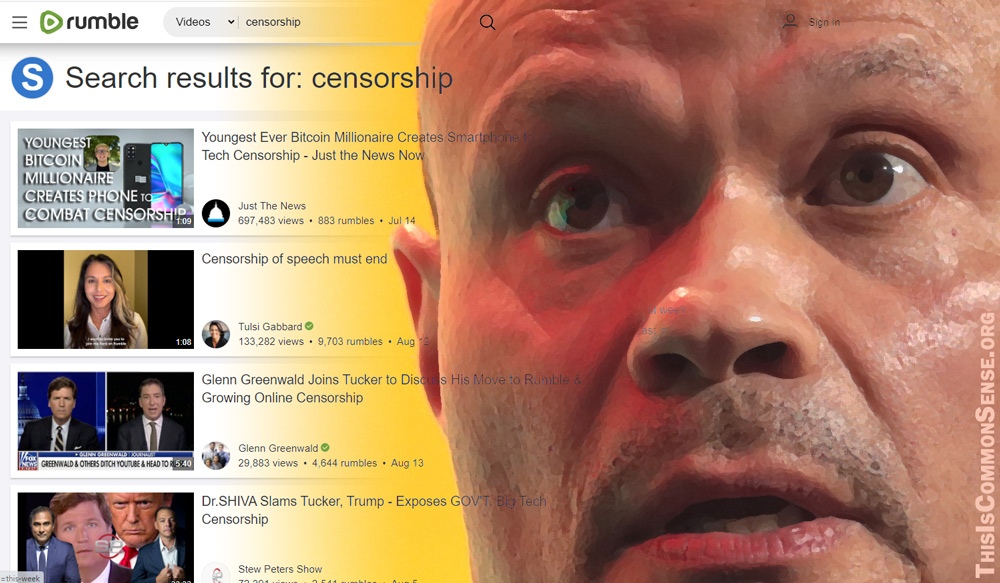
“It’s one thing to let people post UFO content about crop circles in Arkansas,” Ciaran O’Connor was quoted in a recent Washington Post article, talking about YouTube competitor Rumble. “It’s another to allow your platform to be used by someone claiming vaccines are actively harmful and that people should not take them based on conspiracies and misinformation.”

As a cited expert for the Post’s hit piece, O’Connor is the big gun, whom reporter Drew Harwell uses to conclude his vivisection of the upstart video platform: “There’s a duty of care and responsibility as your platform grows and scales up.”

After a year and a half of government lies and flip flops about the novel coronavirus and its treatments, coupled with Big Tech censorship, we must not allow O’Connor’s bald “vaccine” assertions to go unnoticed, but we have other fish to fry.

Sizzling on the platter? Ciaran The Expert.

Who is he?

Well, writes Harwell, O’Connor’s “an analyst with the Institute for Strategic Dialogue, a counter-​extremism think tank in London that has worked with Google on a European fund targeting online hate speech.”

Rumble, claims O’Connor, has “become one of the main platforms for conspiracy communities and far-​right communities in the U.S. and around the world.”

But let us consult one of those right-​wingers, Rumble investor and online commentator Dan Bongino, to learn something more about this “Institute for Strategic Dialogue.”

Bongino points out that the institute gets its funding from various governments, including our own, as well as from Rumble’s competitors Facebook and YouTube. 

And several more subdivisions of YouTube’s parent company also support this critic of Rumble.

The Post, of course, disclosed none of that.

You know, cuz Journalism.

This is Common Sense. I’m Paul Jacob.


PDF for printing

See all recent commentary
(simplified and organized)
See recent popular posts

Categories
international affairs privacy too much government

Privacy with Chinese Characteristics

Governments must appear, at least some of the time, to be riding a silver stallion to rescue The People. All government rests on a kind of consent: not legal; not democratic; instead, the accommodation of the many to the few — to accept being ruled. This has been known since David Hume.

So when governments pretend to be more democratic, more contractual, than they actually are, it’s to maintain and increase power.

Take China.

In a fascinating report by Liz Wolfe, we learn that the Chinese Communist Party (CCP) is establishing new rules regulating corporations’ use of their customers’ data: “the Personal Information Protection Law (PIPL), necessarily weakens big tech companies, forcing onerous regulations that they will now have to comply with.”

This may sound all very consumer- and citizen-​oriented. But Ms. Wolfe not only notes that the regulations are burdensome, she observes that while China’s corporations will soon be prevented from doing things big tech companies routinely do in the West, the Chinese will pointedly not be protected from data collection by the government

Which is vast. 

Intrusive.

Often malign.

“Protection of consumer data, while fine and good, means nothing,” she writes, “if there’s no true rule of law binding governments to privacy-​protecting standards as well.”

Almost certainly China is trying to prevent in China what happened in America: the creation of powerful countervailing organizations competing with the government in one of the oldest activities of government: suppression of opinion to leverage power and revolutionize the State, changing policy from outside formal power centers.

Our social media — and other major tech corporations — have plied their incredible access to information to mold popular opinion for political and ideological purposes.

The CCP will not put up with that. 

This is Common Sense. I’m Paul Jacob.


image credit

See all recent commentary
(simplified and organized)
See recent popular posts

Categories
government transparency media and media people social media

Conspirators versus Conspiracists

“Conspiracy theories circulated online over social media contribute to a shift in public discourse away from facts and analysis,” proclaims a new study by the Rand Corporation think tank, “and can contribute to direct public harm.”

Titled “Detecting Conspiracy Theories on Social Media,” the study, paid for by Google’s Jigsaw unit, proposes to “improve machine-​learning technology for detecting conspiracy theory language by using linguistic and rhetorical theory to boost performance.”

All very fascinating, but … do conspiracy theories shift public discourse away from “facts and analysis”?

They do challenge accepted facts, and are themselves examples of extended analyses. 

Often off track? Sure. 

But their problematic nature is not as stated.

The assumption throughout is that conspiracy theories are always in error. But when the report goes on to say that “conspiracists also distrust authority and believe that those who produce the news are lying to them,” there’s no fact check — why do the Rand authors believe we are not being routinely lied to? 

This becomes almost funny with the COVID origination debate. The Wuhan Lab Leak Theory is one of four current popular conspiracy notions the report looks at. And when the report was being written, the lab leak theory was marginalized on social media and pooh-​poohed amongst most public health experts. Now we know that there was an actual conspiracy to bury evidence for it.

Truth is: conspiracies happen. Most bandied-​about theories may be cuckoo, but a few turn out rock solid.

The honest way to deal with suspicions of a conspiratorial nature is pointed inquiry into relevant facts … with careful analysis.

The Rand Corporation and Google are more interested in defending the authorities.

Who often lie.

This is Common Sense. I’m Paul Jacob.


PDF for printing

See all recent commentary
(simplified and organized)
See recent popular posts
Categories
social media

Reddit Redacts the Internet

The watchdog group Judicial Watch has obtained evidence that the government of California and the Biden camp violated the First Amendment rights of Americans during the 2020 presidential campaign. 

In at least a couple dozen cases, social media companies complied with governmental requests to delete posts containing “misinformation,” the new code word for “stuff that I don’t want people to see or discuss.” 

But hey: were all materials containing “misinformation” deleted from the annals of humankind, historians would be left with maybe ten or twelve pages and scrolls of primary documents. Into the trash? Herodotus, Josephus, Gibbon!

On the other hand, the social-​media giants often curtail online discourse without any apparent urging by government censors.

Example? The popular discussion group Reddit has taken upon itself to block users from viewing the videos hosted by certain popular alternatives to YouTube like Rumble and BitChute. Reddit has China-​walled links to the videos regardless of content. The problem, it seems, is that Rumble and BitChute are too much in favor of free speech.

Now, it may be that Reddit does its redactions in eager pursuit of its own ideological agenda rather than in obedience to some politician(s), but questions remain. When it comes to suppressing voices that socialist social media moguls find politically uncongenial, how much is reluctant submission to government pressure and how much is spontaneous voluntary initiative?

I’d like to know. 

Barring any likelihood of a certain answer, we citizens must vigilantly watch governments — along with the tech firms receiving lucrative government contracts.

This is Common Sense. I’m Paul Jacob.


PDF for printing

See all recent commentary
(simplified and organized)
See recent popular posts
Categories
social media

The Cats’ Pajamas

In all the talk of “social media” — their psychological effects on us; their political power; their abusive treatment of our privacy and our loyalty — one thing does not get talked about enough: that social media’s chief utility for many of us is not social at all.

Facebook, YouTube, SoundCloud, Twitter, Gab, Instagram, Quora — these are personal databases. 

Databases on the Cloud, sure; databases open to the public and open to paying advertisers, surely (that’s how the media giants make money while providing us with a free service). 

But they remain databases. And, as such, they allow us to log our interactions with both online and physical worlds, storing our photos, videos, audios, links, thoughts, questions & answers, and more, so we may retrieve them later for whatever projects we may be engaged in.

This is no small thing if you are in a “business” like ThisIsCommonSense​.org, where mining what I read two weeks ago can turn into something I need tomorrow. 

Trouble is, the search features of most social media services … well … don’t find much. It is often devilishly hard to find that article one linked to last April, or November, or … was it December? The search features to one’s own entries (as well as others’) should be much more robust. Inventive. Useful. 

It would be nice if the social media companies that mine our data for their pecuniary advantage would also allow us to mine our data … for our more humble purposes.

So, take this as advice to alternative social media developers, like the Flote app: if you are literally providing a database for clients (and not true P2P functionality), then give search features more serious attention.

So that we can quickly find and re-​share our most sublime cat photos.

This is Common Sense. I’m Paul Jacob.


PDF for printing

Image from _​DJ_​

See all recent commentary
(simplified and organized)
See recent popular posts
Categories
First Amendment rights social media

Our Info War

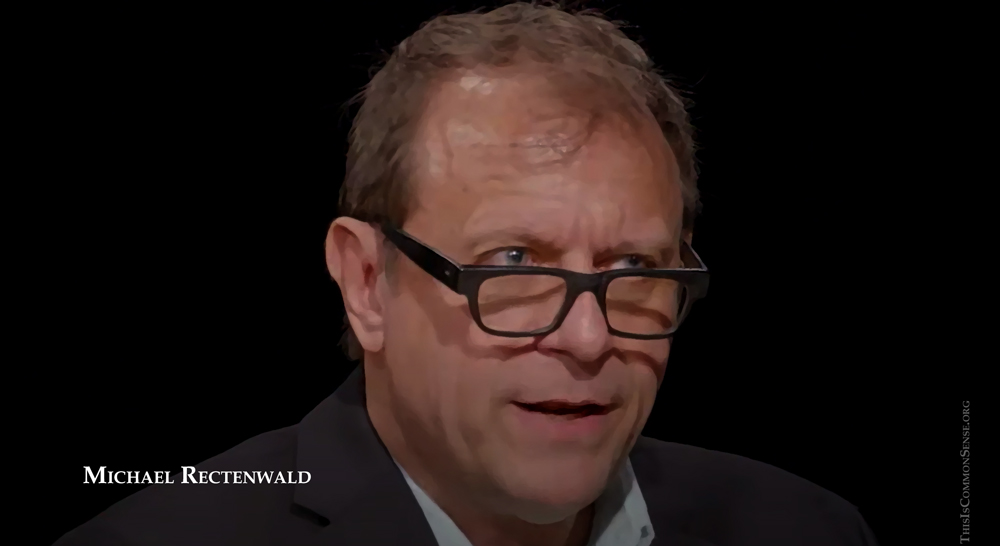
“Do not close your Facebook or Twitter accounts,” wrote Michael Rectenwald a few days ago.

But I already closed my Twitter!

“Do not give up the geography you have and the connections you’ve made within those spaces. Instead, subvert from within.”

Still, I never liked Twitter. It seems a poisonous atmosphere of too much snark, virtue signaling, mobbing, and worse.

“As of now, there are no alternatives. Parler will be shut down by Amazon within hours. It will also be shut out of Apple and Android vis-​a-​vis Apple Store and Google Play.”

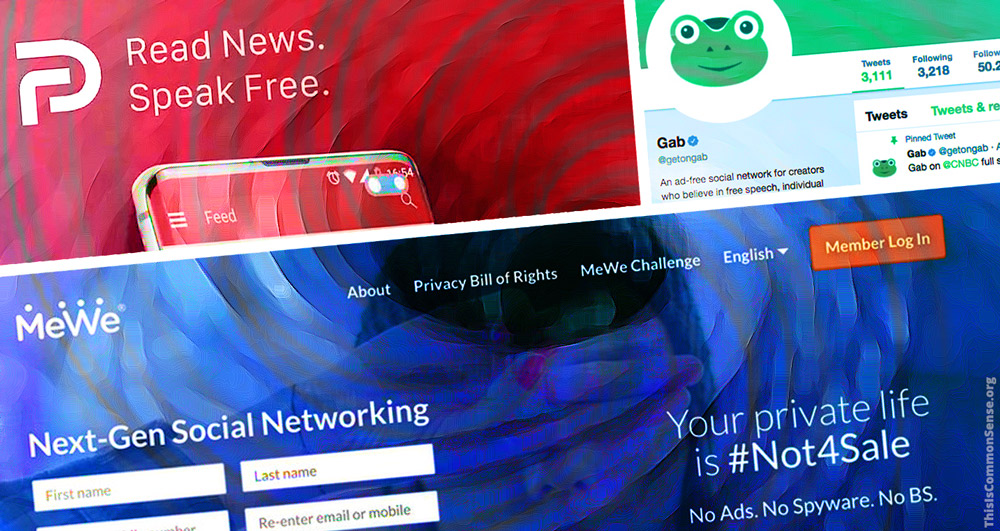
I hopped on Parler, when it got attacked. With the outages, etc., it is impossible to use. 

“Gab is a digital silo or ghetto that contains and isolates deviationism.”

And former leftist professor Rectenwald — author of the books Springtime for Snowflakes, The Google Archipelago, and Beyond Woke, as well as a novel, Thought Criminal — means “deviationism” in an entirely good way.

“MeWe has already succumbed to the oligarchical censors,” he informs.

“Instead, keep the beach heads that we have and spread out. Don’t give up the connections. We must retain the network of thought deviationism .… Read this article and you’ll understand why it’s not as simple as you think,” linking to a Daniel Greenfield essay on Frontpage, “Parler and the Problem of Escaping Internet Censorship” (January 8, 2021).

The problem is oligopoly, argues Greenfield, since five big corporations “control the mobile ecosystem and can shut down an app like Parler anytime they please.… an increasingly small interconnected network of companies … can act in concert to suppress anyone or anything they don’t like.”

And what role does the federal government play? It applies pressure by threats at the top end (Nancy Pelosi, et al.) and who-​knows-​what at the Deep End (the CIA and other intel agencies, which have working arrangements with all major tech companies, including Apple).

All the more reason for you to (ahem) SUBSCRIBE for email service on ThisIsCommonSense​.org, if you haven’t already. Email is harder to control. 

And we have a lot of work to do, to fight back.

This is Common Sense. I’m Paul Jacob.


PDF for printing

See all recent commentary
(simplified and organized)
See recent popular posts
Categories
First Amendment rights ideological culture

The Latest Fake Mystery

We Americans want to have our say, speak our piece — we do not wish to be gagged. No mystery to that. No puzzle. No strange, arcane, unexpected turn of our temper.

But that’s how it must seem to Nathan Bomey, author of “Parler, MeWe, Gab gain momentum as conservative social media alternatives in post-​Trump age,” gracing the pages of USA Today.

“America’s crisis of political segregation — we increasingly don’t live alongside, associate with or even marry people who think differently from us — is increasingly leading conservatives to congregate together on social media outlets designed specifically for people who think like them.”

This is a passage of surpassing dumbness.

To pick one fundamental ideological divide at random: capitalist twitterers have never had any problem with posting tweets “alongside” socialist twitterers. The problem is the growing censorship of tweets that officials and employees at tech giants like Twitter, Facebook, and Google happened to dislike or disagree with for any reason.

This censorship was revved up during the recent election.

Bomey does mention claims of censorship by the persons being censored, but treats these as the ravings of “the extremist crowd.” He adds: “Experts on political polarization say [the rise of alternative social media] is a natural outgrowth of our divided culture.…”

Again: a major reason the alternatives to Twitter etc. are gaining such traction is the censorship. People are leaving the Big-​Tech-​sponsored discourse because they are being censored. 

You don’t kick people out of the room and then scratch your head in wonderment, asking, “Gee willikers, why are you guys going away?”

This is Common Sense. I’m Paul Jacob.


N.B. I have Minds and Gab accounts, but do not use them. Should I start again? I just set up a MeWe account. What alternative social media apps do you use?

PDF for printing

See all recent commentary
(simplified and organized)
See recent popular posts
Categories
First Amendment rights

Fake News; Real Assault

I don’t defend the way Twitter, Facebook, and others target users for expressing views that these firms dislike. I do defend the individual rights of all persons, including owners of companies. Our freedom to act includes the freedom to act in ways others consider to be wrong — if we do so while respecting the (actual) rights of others.

But something is extra-​disturbing about the way Facebook, Google, Apple, Spotify, etc. (though not Twitter) ejected Alex Jones from their platforms. The firms apparently obeyed journalists and politicians demanding InfoWar’s ouster for purveying “hate speech.”

And now: “These companies must do more than take down one website,” intones incumbent U.S. Senator Chris Murphy.*

Such statements aren’t laws. But every company must worry about the arbitrary government power that incumbents like Murphy can deploy. And fellow U.S. Senator Mark Warner’s leaked paper on the dangers of technology-​abetted fake news tells us we’re in for a more direct assault on free speech.

“The size and reach of these platforms demand that we ensure proper oversight, transparency and effective management of technologies that in large measure undergird our social lives … and our politics,” says the plan. The goal is to “ensure that this ecosystem no longer exists as the ‘Wild West’,” i.e., unfettered by government.

So … the idea is to rescind that wild First Amendment? 

I would sooner press for a new law penalizing politicians who threaten the liberty of firms on the basis of catering to the “wrong” customers.

But there is no crying need for this. Let’s stick with “Congress shall make no law …”

This is Common Sense. I’m Paul Jacob.


* These companies did not take down a website, by the way. Alex Jones’s InfoWars​.com appears to be going gangbusters. Those companies ousted InfoWars from their Web services. This is a distinction with a difference.

PDF for printing


Categories
Accountability crime and punishment free trade & free markets general freedom ideological culture moral hazard nannyism national politics & policies property rights responsibility too much government

The Owners of Twitter Have Rights

Roger Stone is suing Twitter for kicking him out. 

Without saying exactly why they booted him, Twitter implies that the reason is abusive language. For his part, Stone accuses the social media giant of targeting right-​wing tweeters while letting left-​wing tweeters off the hook for the same or worse alleged wrongdoing. 

I’ll stipulate that Stone is justified in accusing Twitter of rank, ideologically motivated hypocrisy in applying its micro-​blog policies. But he’s wrong to sue.

As I have argued before — indeed, just yesterday — government should not regulate Internet forums and should not compel Twitter or other firms to provide a soapbox for anybody else. The only relevant legal issue here is whether Twitter has violated a contract. But Twitter does not agree to let anyone use its services unconditionally. And I don’t think that Stone is alleging any violation of contract. 

Our right to freedom of speech does not include the right to force others to give us access to their property in order to exercise that freedom. Nor do the rights of any individuals to use and dispose of their own property disappear if they happen to create a very big and successful enterprise. There are many ways to try to make Twitter pay for bad policies without using force against the company, including boycott and direct competition.

I agree with the guy who said that one’s right to freedom is not contingent upon a guarantee “that one will always do the right thing as others see it.” 

This is Common Sense. I’m Paul Jacob.


PDF for printing


Photo by Nigel on Flickr