Categories
Accountability government transparency media and media people national politics & policies too much government

Seventeen, Again

The first I heard of an actual enumeration of federal “intelligence agencies” was from Hillary Clinton. In the final presidential debate, she claimed that the truths spilling out of the Podesta emails had been revealed courtesy of Russian hackers, and she knew this because all 17 U.S. “intelligence agencies” had briefed her.

Seventeen!

The number, at least, does not come from a secret source. Business Insider had popularized it. “These 17 Agencies Make Up The Most Sophisticated Spy Network In The World,” Paul Szoldra informed us three-​and-​one-​half years ago in a fascinating listicle.

Call me paranoid … but if I am told that the government has 17 spy agencies, I wonder about one more: The Really, Really Secret Infodump Agency. There is, after all, no official definition of “government agency”; the federal government doesn’t even publish an official overall count, intelligent or otherwise.

Besides, the prime number 17 just seems too … contrived. Sixteen or 18? Boring numbers. But 17? Its numerological magic lends plausibility to “the most sophisticated spy network in the world.”

Of course, when Mrs. Clinton insisted that all 17 had concurred that the Russians were on Trump’s side, I did not believe her. And now that mainstream media outlets — in an apparent frenzy to prove themselves a more reliable fake news source than the Twittersphere, blogosphere, Facebook-​o-​sphere and Breitbart combined — run with nearly the same story, I don’t believe them, either.

It is as if they’ve had their talking points delivered in a secret dossier.

Reasons for doubt? All the anonymous sources, all the hedges on the order of “may be linked to” and “‘one step’ removed.”

Fake news. Brought to you by the number 17.

This is Common Sense. I’m Paul Jacob.

Printable PDF

spy, spies, intelligence, agency, 17, Hillary Clinton, Russia


Original (cc) photo byAli T on Flickr

Categories
Accountability media and media people moral hazard national politics & policies responsibility

A Leaner Bear

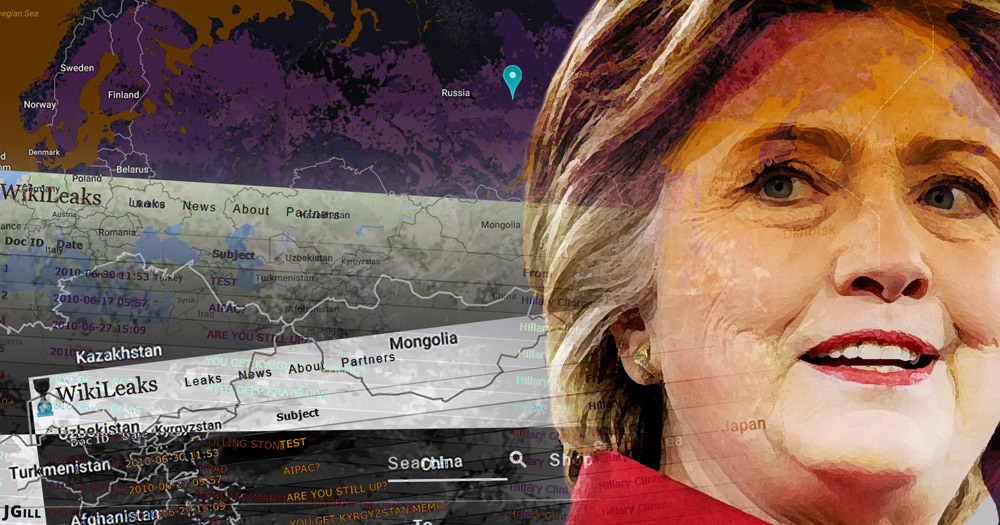
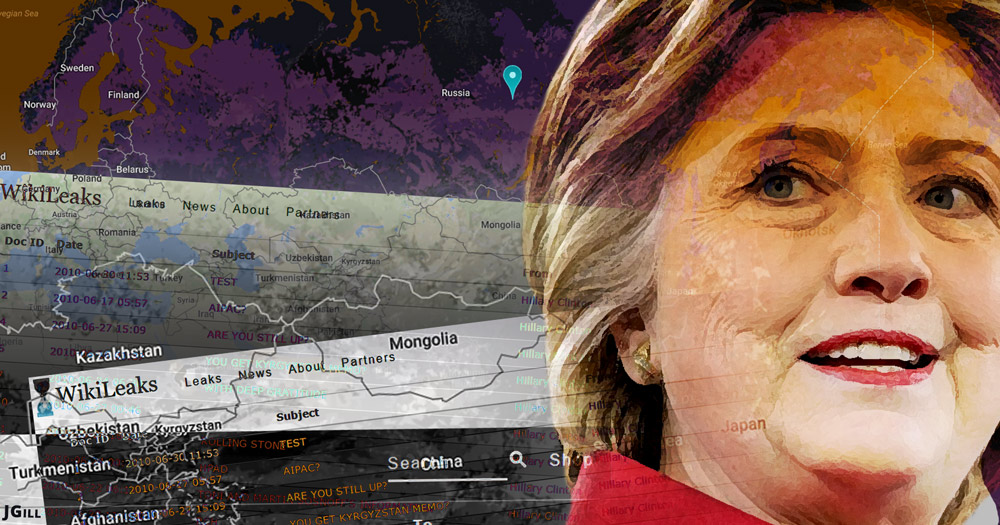
Russia is being painted as Enemy No. 1 by Hillary Clinton, despite her predecessor’s mocking of the same notion four years ago, when Republican Mitt Romney said it.

Of course, Mrs. Clinton is just using Russia as a distraction from her conspiracies and crimes and inadequacies as revealed by WikiLeaks.

What’s more worrying is Russia’s military adventuring, surely.

Before we wander into the morass that is foreign policy, maybe we should consider the Russian military itself … and its supporting economy.

Last year, TASS confidently informed us that the military budget was going up 0.8 percent in 2016, with $750 million slated for nuclear weaponry. I still hear talk of the latter fact; not much of the former factoid, that shockingly modest increase.

Even last year it was commonly noted that Russia’s military budget was getting “squeezed” … by hard times. Lack of revenue.

Now the hammer has fallen on the sickle: “Russian defence budget set to drop by 12%” in yesterday’s IHS Jane’s 360 article by Craig Caffrey.

First, don’t be alarmed: “defence” is how Brits misspell “defense.”

Second, take heart: Russia simply cannot do all it may want even in its darkest hearts.

Third, take caution: a weaker Russia is still dangerous, in some ways more so. We might see increased (and relatively cheap) cyber-​warfare, of which Mrs. Clinton is so particularly mindful.

Finally, let’s acknowledge that American politicians have never focused rationally on the Russian threat, often hyping it gratuitously to enhance their own power, or, for that same reason, ignoring the threat entirely, as when smirking at Romney’s wise concerns.

This is Common Sense. I’m Paul Jacob.

Printable PDF

Hillary Clinton, Russia, Wikileaks


Questions Answered:
Is Russia a threat?
Why are Democrats obsessed with Russia?
Why is Russia reducing its military budget?

Ask the next question. --Theodore Sturgeon

Ask The Next Question:
What kind of defense should a free people insist upon?


Categories
general freedom moral hazard national politics & policies responsibility

The Russians Are Coming

There’s no accounting for taste, especially regarding humor.

For instance, the 1966 film “The Russians Are Coming, the Russians Are Coming” is, to me, a classic. And I think Donald Trump’s recent sarcasm — “Russia, if you’re listening, I hope you’re able to find the 30,000 emails that are missing.” — was funny.

And surprisingly appropriate to the situation.

Did the Russians give WikiLeaks the hacked DNC emails? We don’t know.

Was Trump malevolently, traitorously standing in the middle of Fifth Avenue inviting a foreign adversary to criminally cyber-​attack his political opponent, as hyped? No.

Still, I’m not copasetic with Trump’s apparent buddy-​fest with Russian President — and thug — Vladimir Putin. Yet, Trump is hardly the first American politician to act the fool before Putin.

Republican President George W. Bush bizarrely claimed to have looked into Putin’s soul. It was cloudy that day.

Secretary of State Hillary Clinton jetted over to the Kremlin with a silly “Reset” button. Still, friendly Russian interests have been financially generous to the Clintons.

Russia bailed out President Obama (and Assad) after Syria crossed Obama’s apparently evanescent red line. Recall that open microphone that caught Obama telling outgoing Russian President Dmitry Medvedev to let Putin know, “After my election, I have more flexibility.”

Vladimir Putin must wonder how his Soviet forebears could have possibly lost the Cold War to a country led by such ninnies.

In 2012, Republican Mitt Romney called Russia our number one geopolitical foe … only to be ridiculed by Obama and mocked in the media. “The 1980s are now calling to ask for their foreign policy back,” scoffed a contemptuous Obama. Current Secretary of State John Kerry called it a “preposterous notion.”

Since then, Russia has annexed Crimea, made war in eastern Ukraine and occasionally bombed U.S. forces in Syria.

The Baltic nations, some of which have significant Russian minorities, understandably feel threatened. America has pledged to militarily defend these tiny countries bordering Russia.

But no discussion of that on the campaign trail.

This is Common Sense. I’m Paul Jacob.

Printable PDF

Russia, Putin, Trump, horseback, illustration


Categories
Accountability national politics & policies

Bombed into Submission?

Was the United States of America recently bombed into submission?

In the Battle of Britain, the Brits survived the German blitz. The North Vietnamese persevered through storms of our B‑52s, for years. Bombing alone never seems to conquer an opponent.

But Russian air strikes against U.S. positions in Syria sent Secretary of State John Kerry scurrying to the negotiation table.

In June, but just reported last week, Russian planes bombed a “secret base of operations for elite American and British forces” in Syria. (No Brits were at the base at the time, only Americans.) Putin’s planes also attacked “a site linked to the Central Intelligence Agency.”

“U.S. military and intelligence officials” told the Wall Street Journal that the strikes were “part of a campaign by Moscow to pressure the Obama administration to agree to closer cooperation over the skies in Syria.”

It seems to have worked. Sec. Kerry quickly struck a deal with the Russian Federation – but “over Pentagon and CIA objections.”

Those critics complained that “the White House gave in to Russian bullying,” and also “doubt[ed] that Moscow would abide by the terms of the agreement,” according to the Journal.

“Officials close to Mr. Kerry said he shares the skepticism of military and intelligence officials about Russian intentions, which is why he inserted a clause during negotiations to allow the U.S. to suspend cooperation with the Russians if they started bombing U.S. allies again.”

What a deal! Kerry sure knows how to lead from behind.

Does anybody think our Middle East policy makes sense?

This is Common Sense. I’m Paul Jacob.


Printable PDF

Russia, Syria, Air Base, bombing, John Kerry


Categories
general freedom

Don’t Aid and Abet

Some countries are ratcheting up their regulation of foreign Internet companies. These efforts, a New York Times article explains, “increasingly” oblige firms like Google, Facebook and Twitter to mull “which laws and orders to comply with,” which to resist.

The juggling act is nothing new. Cyber-​companies have always wrung their hands about which tyrannical demands to obey.

On the one hand, we have such praiseworthy examples as Google’s eventual decision, in 2010, to stop censoring its search results in China. In consequence, the Chinese government kicked Google off its Internet.

More recently, Turkey sought to prevent leaked documents from being distributed via Twitter, demanding that Twitter block posts providing access to those documents. When Twitter refused, the Turkish government blocked its service. But it then lost a court battle over the issue even as users found ways to skirt the ban.

Also heartening is the fact that, so far, American tech firms seem determined to reject a new Russian imperative that they store user information on Russian servers.

But the firms do sometimes obey demands — saying they must abide by laws that, however lamentable, are verifiably on the books — and such obedience does amount to abetting repressive efforts.

Here’s what I suggest, instead: always say No.

Never agree to help violate the rights of users, even if your services are formally banned as a result. Instead, use your ingenuity and resources to help people end-​run the obstacles to free expression that governments keep imposing.

This is Common Sense. I’m Paul Jacob.

Categories
First Amendment rights general freedom ideological culture

Registering Dissent in Russia

Russian politics — does it consist in anything but the progressive unraveling of what modest liberalization of civic life the Russians benefited after the crackup of the Soviet Union?

The latest assault on liberty? The government targeting of Russian bloggers. The most popular ones — those with 3,000 or more daily readers — must now register with the government or risk being shut down. As Bloomberg’s Ilya Khrennikov puts it, “Russian President Vladimir Putin is taking names. Potentially thousands.”

The registrants must supply real names, real addresses.

Mother Russia says it’s doing this to combat inaccurate or defamatory information — i.e., opinions it dislikes; i.e., any too critical of the government. Putin already has authority to shut down “extremist” web pages sans judicial oversight. The new law tightens the noose.

It seems there’s little we can do about this in the West except express our sympathy for Russians fighting the commissars.

Well, one other thing, at least; and not so little. Western tech firms can refrain from abetting such repression the way Yahoo did when, several years ago, it turned over user info on Chinese dissidents Wang Xiaoning and Shi Tao to the Chinese government and thus enabled their imprisonment. Facebook, Google+ and other hosts of Russian-​language blogs can flatly reject demands to censor or delete these blogs — or to supply the Russian government with identifying info on the authors.

Obviously, predictions of the end of history have indeed proven premature. We’re not all liberal democrats now.

This is Common Sense. I’m Paul Jacob.