Categories
crime and punishment free trade & free markets general freedom

Rogue City Government?

Is it a coup?

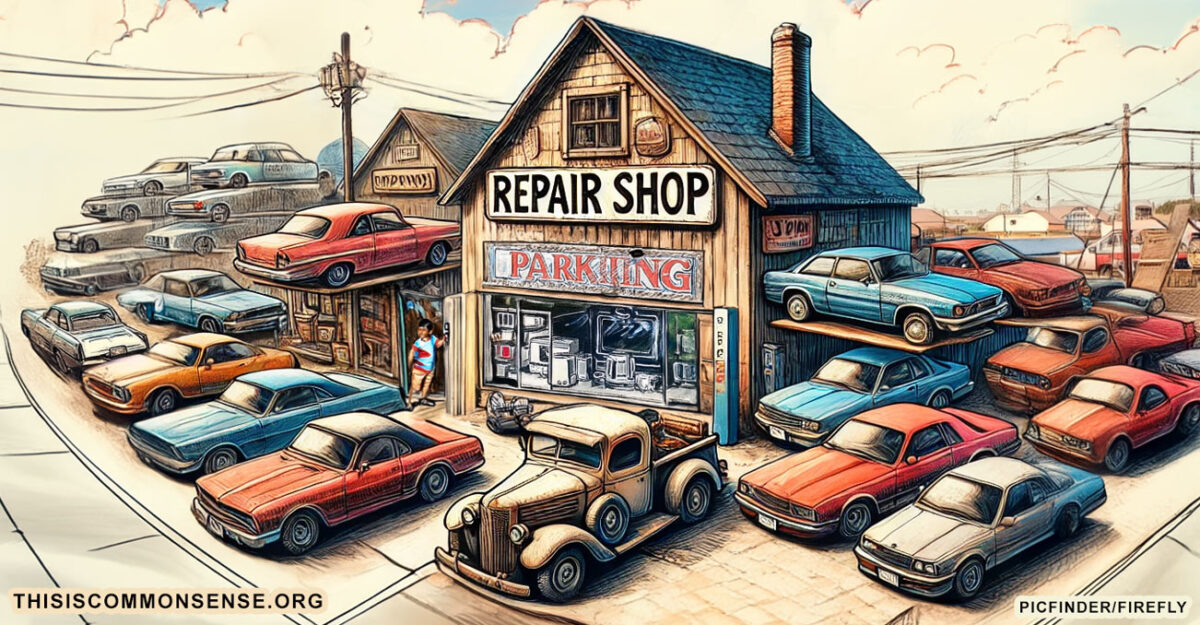
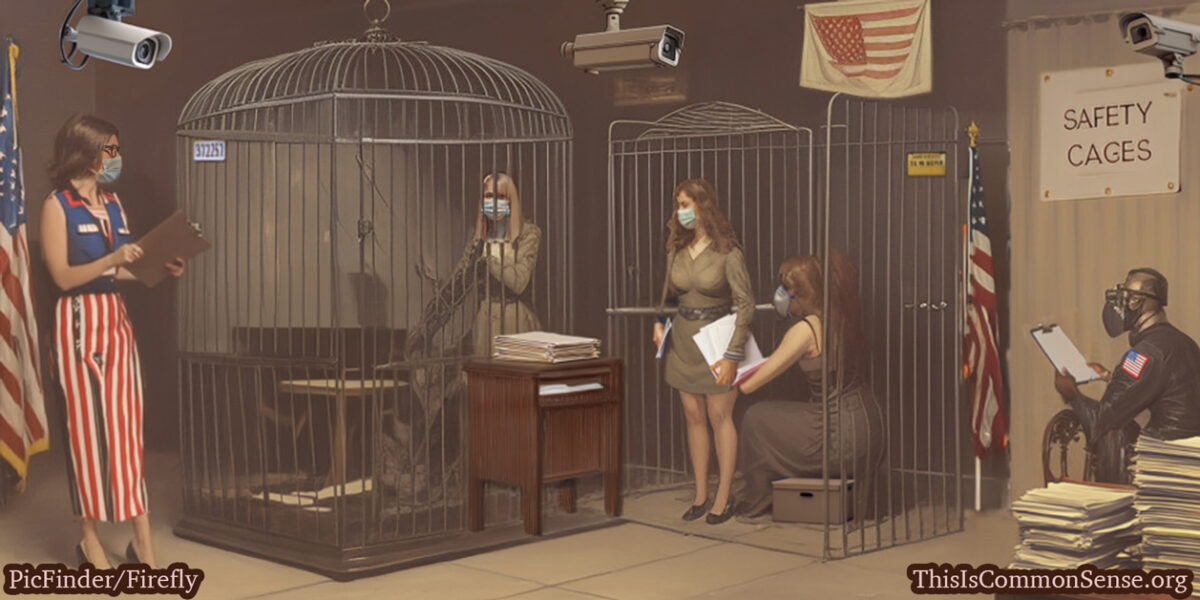
Two years ago, Azael Sepulveda, a mechanic, sued the city of Pasadena. The city had demanded that he provide 28 parking spots before he could open a shop to fix things. The property his shop is on can accommodate only a few parking spaces.

With the help of Institute for Justice, which fights for people’s right to earn an honest living all over the country, Sepulveda reached a settlement with the city. He would be allowed to open.

Hurray. Big hassle, but now he could go on with his life.

Except that for two years the city has still blocked him from opening up.

So IJ had to sue again. And get this. Members of the Pasadena City Council recently said that for the past year they have been kept in the dark about developments in the case. This, “even though the city’s attorney claims to be acting on ‘instruction from city council.’”

That attorney, Bill Helfand, has been arguing that the city should be immune from litigation to enforce the city’s own settlement.

So . . . is it a coup? Is Helfand running local government himself, unauthorized, randomly ignoring settlements and whatnot?

Could some weirdly pervasive and persistent miscommunication be the problem? It just seems unlikely that mislaid telephone messages are why Sepulveda is still being stonewalled.

Whatever the problem is, Pasadena, fix it. “Stop with the games,” as IJ says. And let Azael Sepulveda get started fixing other things.

This is Common Sense. I’m Paul Jacob.


PDF for printing

Illustration created with PicFinder and Firefly

See all recent commentary
(simplified and organized)
See recent popular posts
Categories
crime and punishment ideological culture

Noncriminal Advice Not a Crime

I have now learned, or relearned, that doing legal things may well be illegal.

A recent example of the legal-is-illegal syndrome is the apparent criminalization, ex post facto, of helping your clients legally promote their legally vendible wares.

According to an April 2024 Wall Street Journal report, the consulting firm McKinsey is in trouble with the Justice Department for advising Purdue on how to sell more of its drug OxyContin, which is legal to sell. The Department has criminally opened a criminal investigation into McKinsey’s “role in advising” opioid manufacturers like Purdue “on how to boost sales.”

McKinsey consultants suggested pitching more to doctors who prescribe OxyContin the most, pitching less to docs who don’t prescribe it.

Which part of this shockingly standard advice is the criminal activity?

As economists David Henderson and Charles Hooper note, there is “nothing mysterious or nefarious” about going where the sales are. It’s “economically rational. To do otherwise would be inefficient and wasteful.”

But there’s an Opioid Crisis. 

And whenever there’s a Crisis, lawmakers and launchers of criminal investigations hurtle to ignore subtle distinctions about legal, illegal, etc.

I’m not quite sure what we do in light of this information, that all the legal-to-do things are now subject to senseless investigations by Justice Department hacks, bored or maniacal.

I guess the safest thing would be to stop doing things. All the things. Well, you can’t really live by pursuing safety — or a mirage of safety — at all costs.

This is Common Sense. I’m Paul Jacob.


PDF for printing

Illustration created with PicFinder and Firefly

See all recent commentary
(simplified and organized)
See recent popular posts
Categories
crime and punishment judiciary regulation

The Court v. the Power Grabbers

The U.S. Supreme Court giveth and the U.S. Supreme Court taketh away.

A slew of Supreme Court decisions is keeping us off balance. While we were still reeling from the blow delivered by Murthy v. Missouri’s go-ahead for federal suppression of social-media speech, the court also acted to rein in runaway bureaucrats.

The decision, which some call a “major blow to big government”  — let’s see how it plays out before echoing this — is Loper Bright Enterprises v. Raimondo. In this 6-3 ruling to limit the administrative state’s power to expand its power, the court reversed its own 1984 ruling, Chevron USA v. NRDC.

According to Stanford Law professor Michael McConnell, Chevron meant that when the actions of a federal agency — to stop you from cleaning up a pond (“wetland”) on your own property or whatever — end up being litigated, courts must “defer to the agency’s own construction of its operating statute” unless that construction is too wildly unreasonable.

Agencies consequently enjoyed “considerable leeway in determining the scope” of what they can do to us. 

Guess what. They typically prefer more power to less, less constitutional restraint to more.

“Chevron is overruled,” the new ruling states. Courts must “exercise their independent judgment in deciding whether an agency has acted within its statutory authority, and courts may not defer to an agency interpretation of the law simply because a statute is ambiguous.”

Maybe more courts will now more often stop runaway bureaucrats in their tracks.

This is Common Sense. I’m Paul Jacob.


PDF for printing

Illustration created with PicFinder and Firefly

See all recent commentary
(simplified and organized)
See recent popular posts

Categories
crime and punishment free trade & free markets regulation

Natural vs. Regulated

“I don’t need metabolically unhealthy politicians and obese bureaucrats watching out for my health,” The Telegraph quotes an anonymous source. 

The subject? “How milk became the new culture war dividing America,” published on June 22. It’s a “natural” vs. “technological” debate.

“For more than 130 years, Americans have been instructed that drinking milk that comes directly from a cow’s udder can be dangerous,” Tony Diver’s article begins, but how it ends is telling: “‘With respect to the question of food being natural — arsenic is natural,’ Prof Schaffner said.” And so, too, he says, is cyanide. 

“Sharks are natural. Those things can all kill you. So just because something is natural does not mean that it’s safe.’”

That sounds like something I’d say. 

But is it something to say about raw milk?

Consider the historical context. Raw milk and its products have been produced for human consumption for millennia. Of course there are dangers, and pasteurization has done wonders to curb bacteriological infections and death. Still, a lot of people wonder what we’ve lost in the pasteurization process. Nutrition and immune system health, for example. So for decades — perhaps as long as there have been regulations to make pasteurization mandatory — there’s been a “pro-natural” backlash.

On the Nature side, we note that our populations aren’t as healthy as you’d expect from the benevolent tyranny of politicians, regulators, and, uh, “obese bureaucrats.”

So, last week, “the latest bill to repeal an outright ban on raw milk hit the governor’s desk in Louisiana, after similar efforts in West Virginia, Iowa, Georgia and North Dakota.”

If signed into law, Louisianans will be able to purchase raw milk in stores — “albeit with a warning, in capital letters, that it is ‘not for human consumption.’

“Everyone, including the legislators, knows that instruction will be ignored.”

There’s something sickness-inducing about that.

This is Common Sense. I’m Paul Jacob.


PDF for printing

Illustration created with ChatGPT4o and Firefly

See all recent commentary
(simplified and organized)
See recent popular posts

Categories
free trade & free markets general freedom regulation

Leave Us Alone to Do Our Work

Drearily, an appeals court has dismissed Uber’s challenge to California’s anti-gig-work law.

According to the 9th Circuit, the ride-sharing company couldn’t show that the California anti-freelancer law AB5, which took effect in 2020, unfairly targeted Uber while allowing other types of contract work to continue unhindered.

In fact, the many exceptions to AB5 — determined by abundance or lack of political pull of various groups — mean that Uber is hardly alone in suffering from uneven application of the law.

But suppose AB5 had in fact been evenly imposed on everybody. Suppose every single gig worker in California, without exception, had been forced to become a regular employee of all of his clients — with all the additional costs for employers that this entails — or else lose all work altogether.

This would be worse, not better. 

Inconsistent tyranny is bad for the victims. Absolutely consistent and uniform tyranny is bad for the victims — which would be greater in number.

Maybe the 9th’s misjudgment won’t stand. If the case makes its way to the U.S. Supreme Court, maybe the high court will unambiguously affirm our right to contract with each other in order to make a living and get stuff done.

Meanwhile, the fate of Uber also hinges on another court case, one determining the fate of Proposition 22, a 2020 California initiative affirming Uber’s right to contract with drivers.* A labor union says Prop 22 is unconstitutional. The state supreme court is deciding whether this is so. 

It is not so.

This is Common Sense. I’m Paul Jacob.


* Citizens in Charge, a pro-initiative and referendum group, for whom I serve as president, filed an amicus or friend of the court brief with the California Supreme Court in this case.

PDF for printing

Illustration created with Midjourney and Firefly

See all recent commentary
(simplified and organized)
See recent popular posts

Categories
judiciary national politics & policies regulation

Regulatory Pressure?

Should government regulators be able to urge financial institutions to cancel clients that regulators dislike for political reasons? Such as oil companies and groups advocating Second Amendment rights?

Although a court of appeals has said Yes, the Supreme Court has just said Maybe No in a case involving the National Rifle Association (NRA v. Vullo).

The NRA hasn’t won final victory. But the court is unanimously letting it proceed with its lawsuit, which argues that by pressuring banks and insurance companies to cancel their business with the NRA, New York regulator Maria Vullo violated its freedom of speech.

The Supreme Court seems to accept an artificial distinction, though, between a regulator’s “persuading” an organization to hurt a client and “forcing” it to do so.

An official with power over a company who seeks as a government official to “persuade” that company to do something is engaging in coercion. The implicit threat is: “I have the power to hurt you if you don’t do this little favor for me.”

Moreover, in sending the case back to the lower court, the Supreme Court has also said that it may consider whether Ms. Vullo is protected by qualified immunity, the get-away-with-anything card that government officials are too often able to rely on when they commit wrongdoing.

So this decision is hardly a final, definitive victory for the NRA and other victims of thug-regulators. But at least the NRA can keep fighting — for itself and the rest of us.

This is Common Sense. I’m Paul Jacob.


PDF for printing

Illustration created with ChatGPT 4o and Firefly

See all recent commentary
(simplified and organized)
See recent popular posts

Categories
free trade & free markets ideological culture political economy too much government

Sweden’s Electric Sense

Common sense in Sweden! Energy in Sweden!

Under the policy of Sweden’s current government, the Swedish people are to be allowed to illuminate and heat their homes and do all the other things they use electricity for. The Swedish parliament has formally relinquished the government’s former target of somehow reaching “net-zero” renewable energy by 2045.

Such unreliable means of generating power as erratic wind and erratic sunshine just don’t cut it, says Finance Minister Elisabeth Svantesson.

“We need more electricity production, we need clean electricity, and we need a stable energy system. In substantial industrialized economies . . . only a gas-to-nuclear pathway is viable to remain industrialized and competitive.”

The new energy policy is an about-face for Sweden, which decided in the ’80s to nuke nuclear power and pursue 100 percent “renewable” energy.

Sweden is now following the lead of Finland. After Finland’s latest nuclear power plant went on line in April, reports Peta Credlin, “wholesale power prices dropped 75%, almost overnight. The Olkiluoto 3 plant is . . . delivering 15 percent of the country’s power needs. Nuclear now provides around half of the country’s total electricity generation.”

Nuclear power has gotten a bad rap in many countries, including the United States. But if societies and governments are rightly or wrongly determined to retreat from reliance on fossil fuels while also not pulling the plug on industrial civilization, a steady supply of electricity has to be obtained somehow or other.

Nuclear power is one major way to do the job.

This is Common Sense. I’m Paul Jacob.


PDF for printing

Illustration created with ChatGPT 4o

See all recent commentary
(simplified and organized)
See recent popular posts

Categories
free trade & free markets general freedom too much government

Exemptions, Not Repeal

If you light the fuse of a bomb, after warnings that this will cause it to explode, you should not be surprised at the explosion.

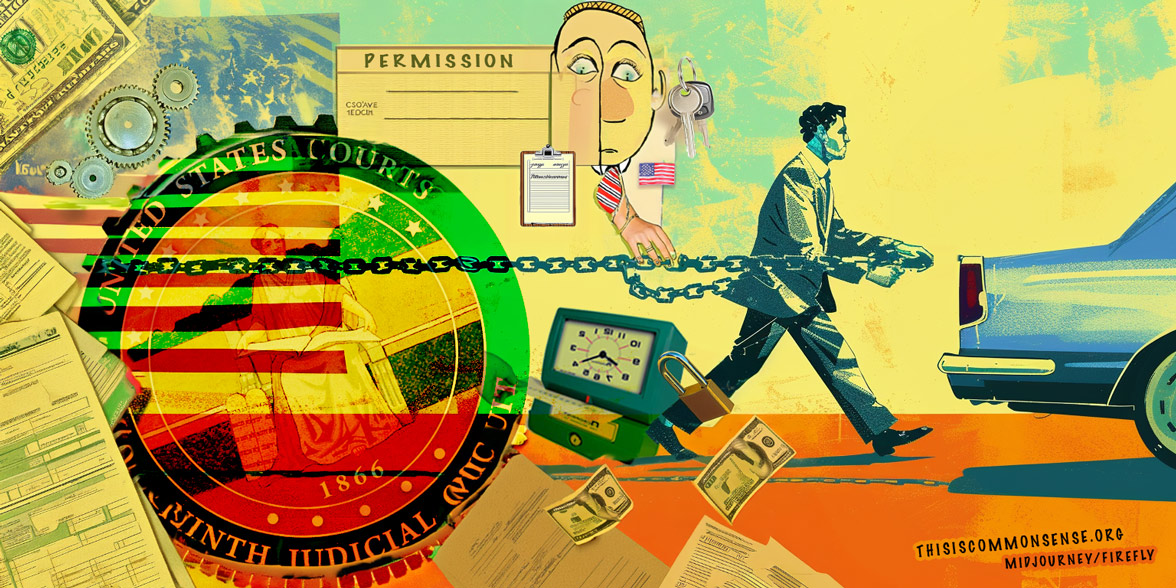
California’s lawmakers and governor recently imposed super-high minimum wages for workers in fast-food restaurants ($20 an hour) and workers in healthcare facilities ($25 an hour). When the legislation was in process, the impact on companies, customers, and job applicants was deemed irrelevant. What mattered was appeasing the labor lobby.

Governor Newsom is suddenly “realizing” (he’d been warned) that these new costs will also burden the state government, currently facing a $45 billion budget deficit.

But this isn’t causing him to seek repeal.

No. Instead, he has signed legislation granting an exception to the new minimum for fast-food restaurants that are on government land. “Democrats don’t want the mandate interfering with government concession licenses,” The Wall Street Journal observes.

And Newsom also wants to defer the kick-in of the new minimum wage for workers in healthcare facilities — which he projects would cost the state $4 billion more annually because of the impact on Medicaid and state-paid health workers — until state revenue is in better shape. He would also permanently exempt state-owned facilities from having to pay the new minimum.

Carveouts and minor delays are as far as the governor and lawmakers are willing to go. Whatever gets them past the uncomfortable present — the next moment and the one after are things to worry about later. With any luck, with time the voters will have forgotten the issue, and who caused what.

Exemptions are the order of the day for politicians and bureaucrats. Private sector businesses must remain on the rack.

This is Common Sense. I’m Paul Jacob.


PDF for printing

Illustration created with PicFinder and Firefly

See all recent commentary
(simplified and organized)
See recent popular posts
Categories
crime and punishment First Amendment rights general freedom regulation

Criminal Discrimination?

It’s okay.

You don’t have to associate with criminals. You don’t have to employ them and worry how they’ll act on the job. It’s not your duty to give criminals or persons with a criminal record access to your life or property and hope for the best.

If only we could leave it at that. 

That’s not our world though. In our world, our government, working hard to rip America apart in every way possible, is suing the Sheetz chain of convenience stores because it doesn’t hire applicants with a criminal record.

The “problem” is that too many such failed applicants are nonwhite.

The Equal Employment Opportunity Commission accuses Sheetz of “disproportionately screening out Black, Native American/Alaska Native and multiracial applicants.” The agency babbles that “employment practices causing a disparate impact because of race or other protected classifications must be shown by the employer to be necessary to ensure the safe and efficient performance of the particular jobs at issue.”

Of course, the “disparate impact” exists not because of these classifications but because the denied applicants have criminal records. Sheetz didn’t decline these applicants because of their skin colors.

Nevertheless, Sheetz is supposed to have somehow “shown” that refusing to hire applicants with criminal records reduces Sheetz’s own risks and the risks for customers.

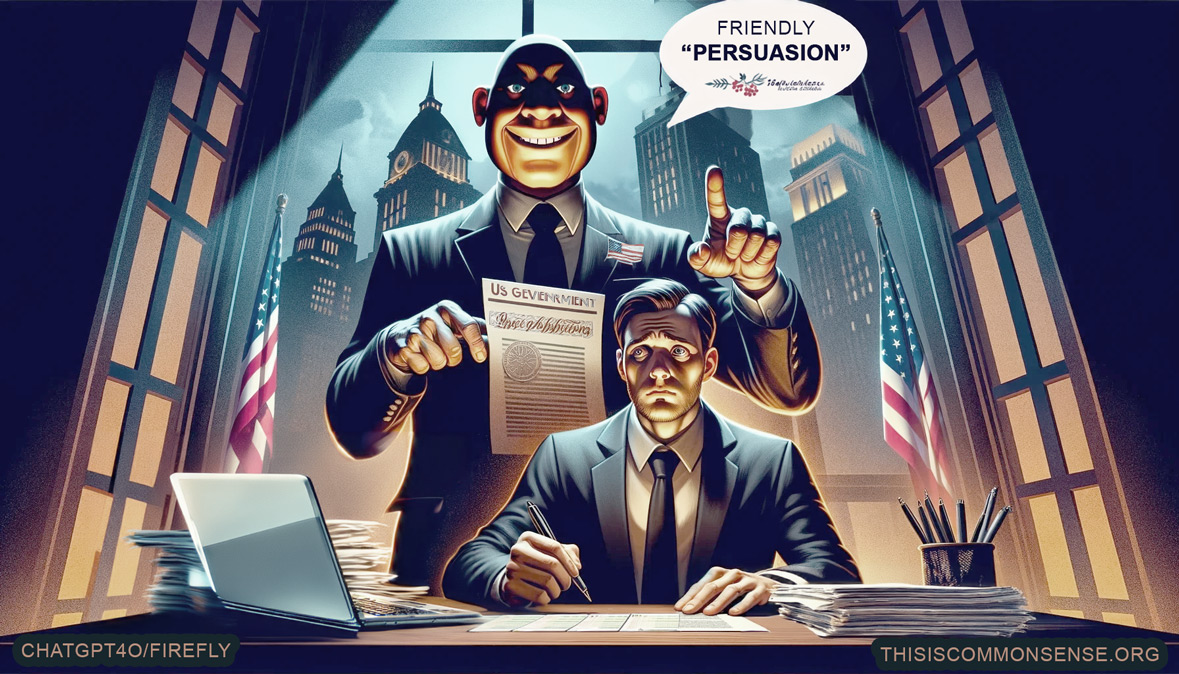
Elon Musk, commenting on this story, has it right: “You know The Joker is running things when the law-abiding are being prosecuted by the government for not hiring criminals!”

These days Uncle Sam and The Joker do look alarmingly similar.

This is Common Sense. I’m Paul Jacob.


PDF for printing

Illustration created with PicFinder and Firefly

See all recent commentary
(simplified and organized)
See recent popular posts
Categories
free trade & free markets general freedom too much government

Supermarket Slavery

How to sue supermarkets for shutting down:

One. Move to San Francisco.

Two. Support a proposed ordinance “amending the Police Code to require large supermarkets to provide six months notice to their customers and the City before permanently closing, and to explore ways to allow for the continued sale of groceries at the location.”

Three. If the ordinance passes, wait for a large supermarket to go out of business without having known six months in advance that it would need to do so.

Four. Sue.

That the proposed law would amend the police code is perversely apt. The idea is use the state’s police power to penalize ending an activity that as a free man, not a slave, you have no obligation to continue.

Ending any project may inconvenience people who benefit from what you’re doing. But unless you are bound by contract, these other people have no right to your further efforts. 

Not for six months, not for six seconds.

The San Francisco ordinance would exempt supermarkets that must close because of a natural disaster or other circumstance not “reasonable foreseeable.” These exemptions don’t solve the problems that the ordinance could cause for innocent businessmen. As Reason magazine notes, any stores that closes “without providing the proper notice” could still be sued for damages, supposedly exempted or not.

In the 1980s, when this notion was originally proposed (unsuccessfully), supermarket executives argued that making it harder for them to shut down would also discourage them from opening a store to begin with.

True. But that’s just common sense.

I’m Paul Jacob.


PDF for printing

Illustration created with PicFinder and Firefly

See all recent commentary
(simplified and organized)
See recent popular posts