Categories
Accountability government transparency insider corruption local leaders moral hazard national politics & policies political challengers responsibility

Omission of Character

One downside to jumping to the wrong conclusion is that the failure to even look for the correct, accurate conclusion inevitably follows. 

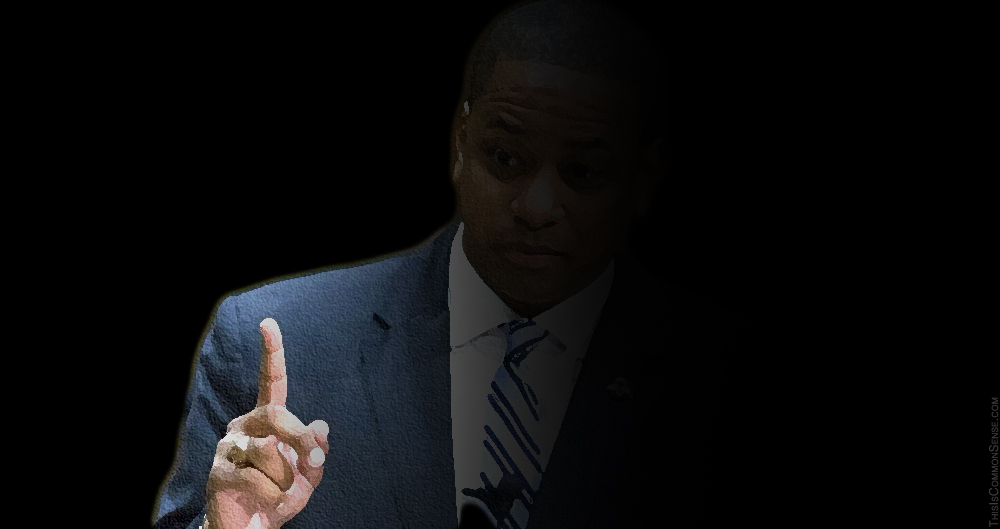
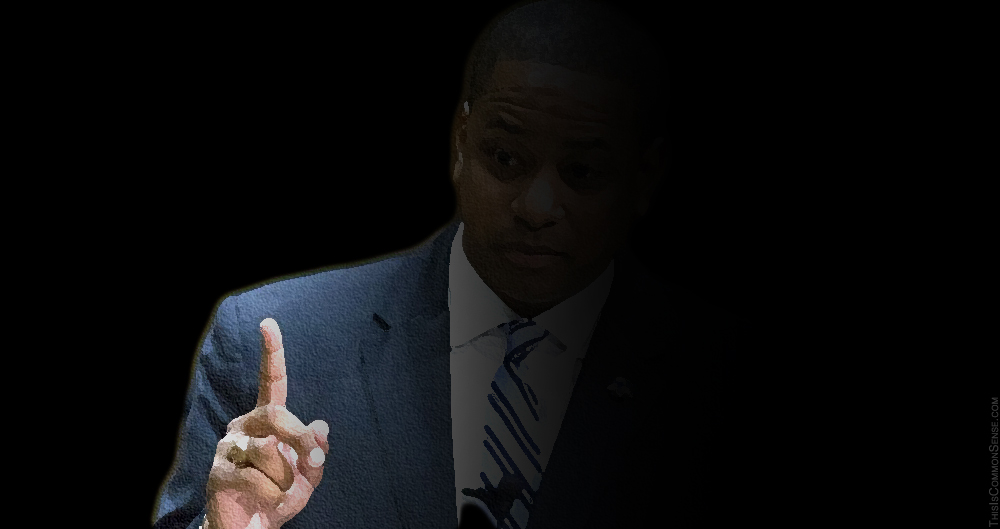
This sleepy odd-year campaign for governor of Virginia has recently been riled by charges of racism. Democratic Party gubernatorial nominee Frank Northam made the “mistake” of “omitting the party’s candidate for Lt. Governor, Justin Fairfax, from a small printing of literature for union members about the Democrats’ statewide slate. 

Northam is white and Fairfax is black. 

“[A] slap in the face to Justin and to black voters,” is what Quentin James, who runs a PAC working to elect black candidates, called the removal of Fairfax from the literature. He added that it “reeks of subtle racism” and “sends a signal across the state, that we, as black voters, are expendable.”

Noting that black voters make up 20 percent of the state’s electorate, Think Progress dubbed Fairfax’s deletion: “mindboggling.”  

Was this a “dis” and did it really have anything to do with Fairfax being black?

Well, Fairfax labeled it a “mistake,” but his exclusion from the flyer was certainly not inadvertent. It was by clear-eyed design.

The Laborers’ International Union of North America (LiUNA), a $600,000 donor to the coordinated state Democratic campaign, requested that Fairfax be removed from literature their members will distribute. The union is at odds with Fairfax over his opposition to two state pipeline projects the union favors.

So, Northam didn’t throw Fairfax under the bus because Fairfax is black. No sirree. Northam threw Fairfax under the bus to placate a powerful, well-heeled special interest group.

Northam isn’t a racist. He’s just a self-interested, disloyal politician.

This is Common Sense. I’m Paul Jacob.

PDF for printing


Categories
Accountability general freedom local leaders term limits too much government

Term Limits for the Memories

Opponents say term limits destroy “institutional knowledge.”

Imagine legislatures where unsophisticated solons blindly fashion public policies lacking any knowledge of the pluses or minuses of past legislation.

Well . . . actually that explanation bears a striking resemblance to the status quo in our career-dominated Congress. Who wants that?

Now comes an interesting real-world example of such institutional memory: term limits itself.

Back in 1991, residents of Jacksonville, Florida, petitioned a limit of two consecutive terms for city council members onto the ballot — after the city council voted not to place it before voters. When voters had their say, a very loud 82 percent endorsed term limits.

The Florida Times Union called it a “landslide decision.”

That was 26 years ago.* Last month, Councilman Matt Schellenberg proposed that the voter-enacted two-term limit should be replaced by a more politician-friendly three-term limit. He wants to stay in office for 12 years, rather than just eight.

“I think we restrict democracy when we put limits on us,” he declared. “I find the position of being on the council for 12 years is a perfect number . . .”

That’s when Councilman John Crescimbeni offered a dose of outside-the-institution memory, explaining that council members who voted against placing term limits on that 1991 ballot were run over.

“Six of the ten people who voted against [term limits] didn’t come back to office,” Crescimbeni warned. “If you want to push the green button tonight, I suspect that’s going to seal your fate.”

Suddenly, the city council decided to push off making any decision . . . until this week’s meeting. **

This is Common Sense. I’m Paul Jacob.

 

* A new poll commissioned by U.S. Term Limits shows  that Jacksonville voters oppose weakening their term limits law by a better than four-to-one margin.

** Your displeasure can be communicated to the Jacksonville council by calling (904) 630-1377.


Printable PDF


Illustration based on a photograph by Mark Bonica


Categories
Accountability general freedom initiative, referendum, and recall local leaders national politics & policies responsibility term limits

Today’s Leaders

We have a new president. Many people put a lot of trust in him — and many more hate him and seek to bring him down. In both cases, presidential politics takes up an inordinate portion of our brain space.

Over the weekend I twice wrote about four heroic senators, standing up to the insiders in their own party. Getting a lot of deserved attention.

But remember: the real leaders are not in Washington, D.C.

Right now, a half dozen issues are undergoing revolution. Legalized gay marriage swept through state after state; meanwhile, Democratic leaders (Clinton, Obama) lent none of their prestige to the cause.*

It was local and state activists who led. And even wide swaths of “the people” were out in front.

Not politicians.

Marijuana legalization has occurred in state after state, mostly by initiative petitioning. It wasn’t the politicians who pushed this through. It was activists.

And, again, the people.

The politicians — including, now, the new Attorney General — largely obstructed the advance of freedom on this issue.

Much the same can be said for improving police-citizen relations with mandatory cop cams and transparency protocols. In the past, much the same pattern could be seen regarding term limits and tax limitation measures. In most cases of progress, politicians have actually represented the rear guard.

Which should give us something to think about. We face a looming sovereign debt crisis, the pension system bubble, and ongoing culture wars regarding campus (and general) free speech.

If you think something should be done, minds should be changed, don’t look for a national figure. Look locally. Look to yourself. Go online.

Master the mechanisms of social change.

This is Common Sense. I’m Paul Jacob.

 

*That is, these politicians “became leaders” on the issue at the point the issue needed no leadership. They remained opposed to change until the last moment, when the direction was firmly set and most of the watershed marks had been made.


Printable PDF


Categories
Accountability First Amendment rights incumbents local leaders Regulating Protest U.S. Constitution

Homer’s Recall Odyssey

Freedom of speech isn’t a free pass to avoid the consequences of what one says. Or does. Tell that to three members of the Homer, Alaska, city council — Donna Aderhold, David Lewis and Catriona Reynolds — who are the subject of a recall petition.

Well, a superior court judge just did.

Represented by the ACLU, the trio sued to block a recall petition with more than enough voter signatures. Their lawsuit challenged the city attorney’s acceptance of the legal rationale for the recall, claiming the recall attempt punishes the politicians for their speech.

“To conclude that anytime a recall petition is based in part or in whole on what a politician said is protected by the First Amendment,” Superior Court Judge Erin Marston ruled, “would be to eviscerate the recall statute to such an extent that the populace would almost never be able to seek recall of any of their elected officials.”

Now the recall moves forward.

In most of this Land of the Free, citizens lack the ability to recall their elected officials. In places that do have the process, it is rarely used. When it is used, it is often portrayed as voters throwing a temper tantrum.

Or an unfair election do-over.

Or mean-spirited ‘vendetta politics.’

Not so. The petition requirements make recalls very difficult. Recalls don’t happen without some serious problems with the current officeholder(s). And once a recall is triggered, there follows a democratic vote to decide whether citizens want to keep the sitting hireling or find someone new.

Seems pretty reasonable.

When politicians are recalled and removed, they deserve it.*

This is Common Sense. I’m Paul Jacob.
 

* The problem seems never to be that good politicians are being recalled, but that too many politicians who should be recalled are not. Back in 2003, the governor of California was recalled. He deserved it. In 2011, a whopping 88 percent of Miami-Dade County voted to recall Mayor Carlos Alvarez. He earned it, too.


Printable PDF


Categories
Accountability insider corruption moral hazard national politics & policies porkbarrel politics too much government

Cronyism Pays

Daniel Mitchell, a senior fellow in fiscal policy at the Cato Institute, is a nice guy. But he’s sort of depressing, too.

Weeks ago, writing for the Foundation for Economic Education (FEE), Mitchell offered that “The Washington, DC Gilded Class Is Thriving.” He even provided a “depressing chart” graphing “median inflation-adjusted household income for the entire nation and for the District of Columbia.”

There is a graphic divide: while “the nation’s capital used to be somewhat similar to the rest of the nation . . . over the past 10 years, DC residents have become an economic elite, with a representative household ‘earning’ almost $14,000 more than the national average.”

Dan Mitchell highlights that “the entire region is prospering at the expense of the rest of the nation.” Among the nation’s counties, the top four wealthiest are in suburban Washington, D.C. The nation’s capital region boasts nine of the country’s top 20 richest counties.

Now Mitchell’s back with another FEE column exclaiming more bad news: “The ROI for Cronyism is Huge.” (ROI is “return on investment.”)

Mitchell cites a study entitled, “All the President’s Friends: Political Access and Firm Value,” conducted by University of Illinois professors Jeffrey R. Brown and Jiekun Huang. “Using novel data on White House visitors from 2009 through 2015,” they explain, “we find that corporate executives’ meetings with key policymakers are associated with positive abnormal stock returns. . . .”

The authors find a lot evidence showing that “political access is of significant value to corporations.”

None of this should surprise. Cronyism pays, and it sticks close to power, even geographically.

This is Common Sense. I’m Paul Jacob.

Printable PDF


Categories
Accountability national politics & policies political challengers responsibility too much government U.S. Constitution

How to Corrupt Politicians Without Really Trying

In a Townhall.com column last January, I argued that politicians weren’t “stupid,” as Mr. Trump had loudly proclaimed — to few objections.

The problem is worse: too many politicians lack honesty and integrity. They’re in the politics biz for their own lucrative ends.

Six weeks ago, I declared — again, to few objections — that “Politicians Must Suffer.” Despite the provocative, sizzling-with-Schadenfreude title, my point was simple: “lavish pay, pensions and other benefits for city councilmen, state legislators and congressmen constitute a serious problem.”

“It breeds,” I added, “bad behavior when politicians line their own pockets. . . .”

Well, I’m right.

At least, I’ve got some academic back-up from a new study by Mitchell Hoffman of the University of Toronto and Elizabeth Lyons of the University of California-San Diego, entitled, “A Time to Make Laws and a Time to Fundraise? On the Relation Between Salaries and Time Use for State Politicians.”

Sounds like a fascinating read, eh?

“Using data on time use and legislator salaries, we show that higher salary is associated with legislators spending more time on fundraising,” the study’s abstract reads. “In contrast, higher salary is also associated with less time spent on legislative activities and has no clear relation to time spent on constituent services.” [Emphasis added]

While their study jives with my experience, the Wall Street Journal reports that others were surprised. Authors Hoffman and Lyons explain: “When salaries are higher, politicians face a greater incentive to get re-elected (as the value of serving in office is greater). Thus, they will optimally respond by increasing the time spent on fundraising.”

Sounds like in addition to lower pay for politicians, we need term limits, too.

This is Common Sense. I’m Paul Jacob.

Printable PDF

politicians, public servants, service,


Categories
Accountability moral hazard national politics & policies responsibility too much government

Did We Pay for That?

It takes a treasure trove of love for government to demand that taxpayers fund politicians and political parties, in addition to basic government services — and “handouts for everybody.”

Most of us have enough horse sense to seek to reduce the scope of subsidy in society. Especially subsidies to politicians and activists. Who wants their tax money going directly to their ideological opponents?

Well, at least there is one area in recent times that has been defunded: the major parties’ national conventions.

The quadrennial indoor parades and awards shows that constitute the modern presidential nominating conventions don’t have the same function that they used to. Because of the primary system, and a number of other factors as well, the conventions aren’t so much selection mechanisms as “four-day infomercials.”

That’s Anthony L. Fisher’s term for the spectacles.

Fisher, in “Who Paid for the Conventions” — which appears in the October 2016 issue of Reason magazine — informs us that “this year, for the first time since 1972, the parties and their host cities’ host committees were on the hook to raise all the money” to pay for these festivals of folly.

Specifically, the directive was 2014’s Gabriella Miller Kids First Research Act, which diverted the convention subsidy funds to pediatric health care research.

It sounds like a good cause. But it is worth noting, once again, that Congress, when it defunds one thing, rarely just neglects to “spend the money.”

It’s the Spending, Stupid. Or stupid spending.

In any case, one small step for Congress, one giant leap for getting taxpayers out of politics.

This is Common Sense. I’m Paul Jacob.

Printable PDF

convention, politician, money, spending, taxes, illustration


Artwork based on original cc photo by Purple Slog on Flickr

Categories
Accountability general freedom moral hazard nannyism national politics & policies too much government

Politicians Must Suffer

Politicians make us suffer. Isn’t turnabout fair play?

No. Two wrongs don’t make a right. And equal suffering is not a worthwhile goal.

Nonetheless, politicians do indeed need to “suffer” — by which I mean to bear a serious and sobering cost for their service in pubic office, to view their relationship with power through the lens of sacrifice . . . not as cashing-in.

Like every other decent person, I’ve always been offended by midnight pay raises and the myriad sneaky, sleazy ways that our so-called servants enrich themselves at our expense. But, until recently, I considered politicians being over-compensated as a symptom of the problem and not a big problem in and of itself.

Now I’m convinced that lavish pay, pensions and other benefits for city councilmen, state legislators and congressmen constitute a serious problem. It breeds bad behavior when politicians line their own pockets — and laugh their way into retirement.

But even without the tricks, when our representatives receive too many treats for their, ahem, “service,” they tend not to serve us very well.

Some contend that compensation must be “competitive” to attract the best and the brightest. But with rare exceptions, we’re not getting those folks to run for office. Instead of enticing successful people or those committed enough to public service to accept less lucrative pay, we’re getting folks who see public office as their path to success — personal financial success.

One cannot serve two masters. If our representatives are in it for their own benefits, as opposed to making a sacrifice for the greater good . . . well, we wind up with government like we have now.

This is Common Sense. I’m Paul Jacob.


Printable PDF

politicians, public servants, service,


Categories
Accountability folly government transparency incumbents local leaders responsibility term limits

Incumbent Upon Heaven

Many who pledged to limit their terms in Congress have gotten elected and, then . . . actually kept their word. Yet, with the temptations of power, combined with the acute narcissism of politicians, not a few have flung their honor aside to break their promise.

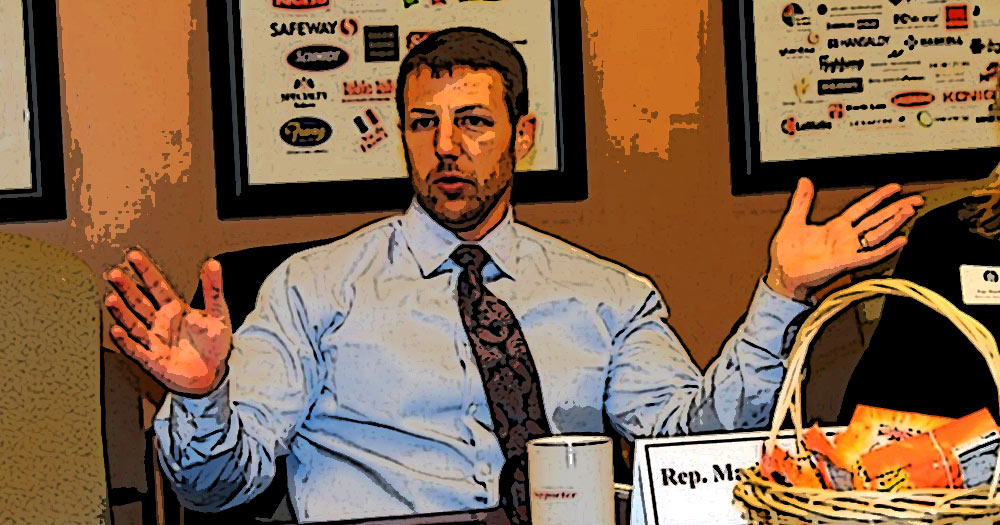
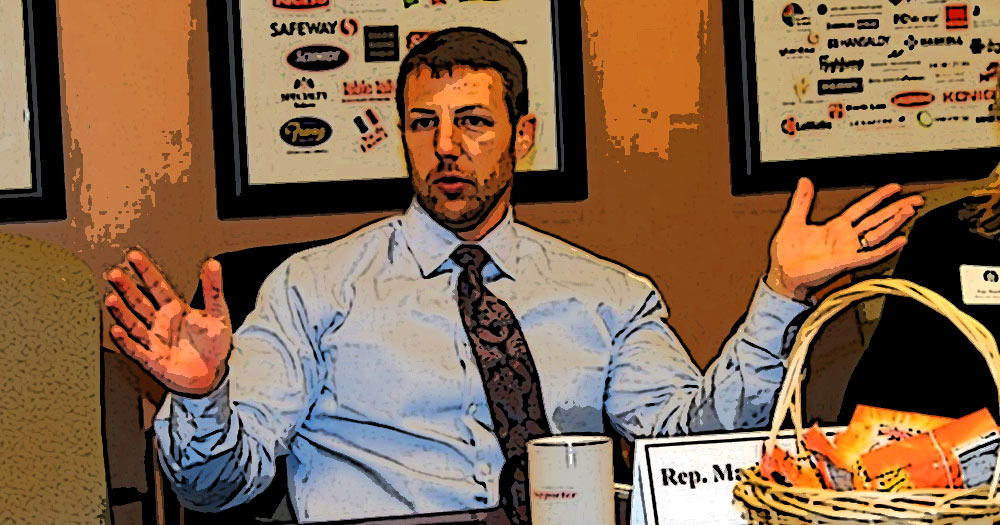
Four years ago, Oklahoma Congressman Markwayne Mullin was a challenger, “who pledged repeatedly . . . not to serve more than six years in the House.” Okie voters limited their congressional reps to three terms (six years) via a ballot initiative back in 1994. Of course, the U.S. Supreme Court struck down that and 22 other state-imposed congressional term limits laws just a year later.

NewsOK.com reporter Chris Casteel asked Rep. Mullin if this coming term would, as Mullin vowed, be his last.

A simple yes or no question, eh?

Well, the incumbent’s response was less than unequivocal, “leaving open the possibility that he may run for a fourth term,” Casteel reported.

“Our position on this has not changed,” read Mullin’s official statement. “However, Christie and I will continue to seek the Lord’s guidance and do what is best for our family and the 2nd District of Oklahoma. The only election I am focused on right now is in 2016.”

Hmmm. Do you recall the Lord ever guiding anyone to break his word to the people?

What a dodge!

Mullin is like a burglar announcing, “I’m not sure if I’m going to rob your home when I get out of jail. That’s too far off in the future. But I’m seeking spiritual advice about it.”

Come to think of it, incumbent politicians and burglars have quite a lot in common.

But not Common Sense. I’m Paul Jacob.


Printable PDF

Markwayne Mullin, term limits, lies, Oklahoma, politicians, lie


Common Sense Needs Your Help!

Also, please consider showing your appreciation by dropping something in our tip jar  (this link will take you to the Citizens in Charge donation page… and your contribution will go to the support of the Common Sense website). Maintaining this site takes time and money. Your help in spreading the message of common sense and liberty is very much appreciated!


Categories
general freedom national politics & policies responsibility U.S. Constitution

Thank You for Your Service

When people risk their lives, saying thanks is the least we can do.

But it’s not enough.

Today on Veterans’ Day, we honor those who have served and are serving in the military.

The holiday was once Armistice Day, marking the peace agreement that concluded World War I at the eleventh hour on the eleventh day of the eleventh month of 1918. That’s where the phrase “the eleventh hour” comes from. It’s also why the holiday has remained on whatever day Nov. 11 falls — not the closest Monday to provide non-military government workers another three-day weekend.

Of course, Woodrow Wilson’s “war to end all wars” didn’t end warfare. Numerous wars have followed. Today, the president goes to war whenever he feels like it, not only without a declaration, without any authorization — or even discussion — by Congress.

So, here’s what I think we owe veterans:

A federal government that keeps its word.

The Veterans Administration’s continued failure to adequately care for returning soldiers is unacceptable. Until the VA is fixed, don’t vote for any incumbent.

Don’t let our uniformed sons and daughters be shipped off to any conflict where (a) our freedoms are not directly threatened, and (b) where there’s no sane plan to end the conflict and bring our troops home.

Don’t trust politicians.

From the sinking of the Maine (Spanish-American War) and the Lusitania (WWI) to the Gulf of Tonkin incident (Vietnam) and the faulty intelligence that greased the path into the Iraq Conquest, distrust is rational, almost a duty.

Disagree over foreign policy? Over whether to go to war or not? Sure, but we cannot leave these decisions to an insulated cabal of politicians. Deinsulate them. Speak your mind.

This is Common Sense. I’m Paul Jacob.


Printable PDF

veteran's day, war, soldiers, peace, politician, Common Sense, Paul Jacob