Categories
ideological culture media and media people national politics & policies term limits

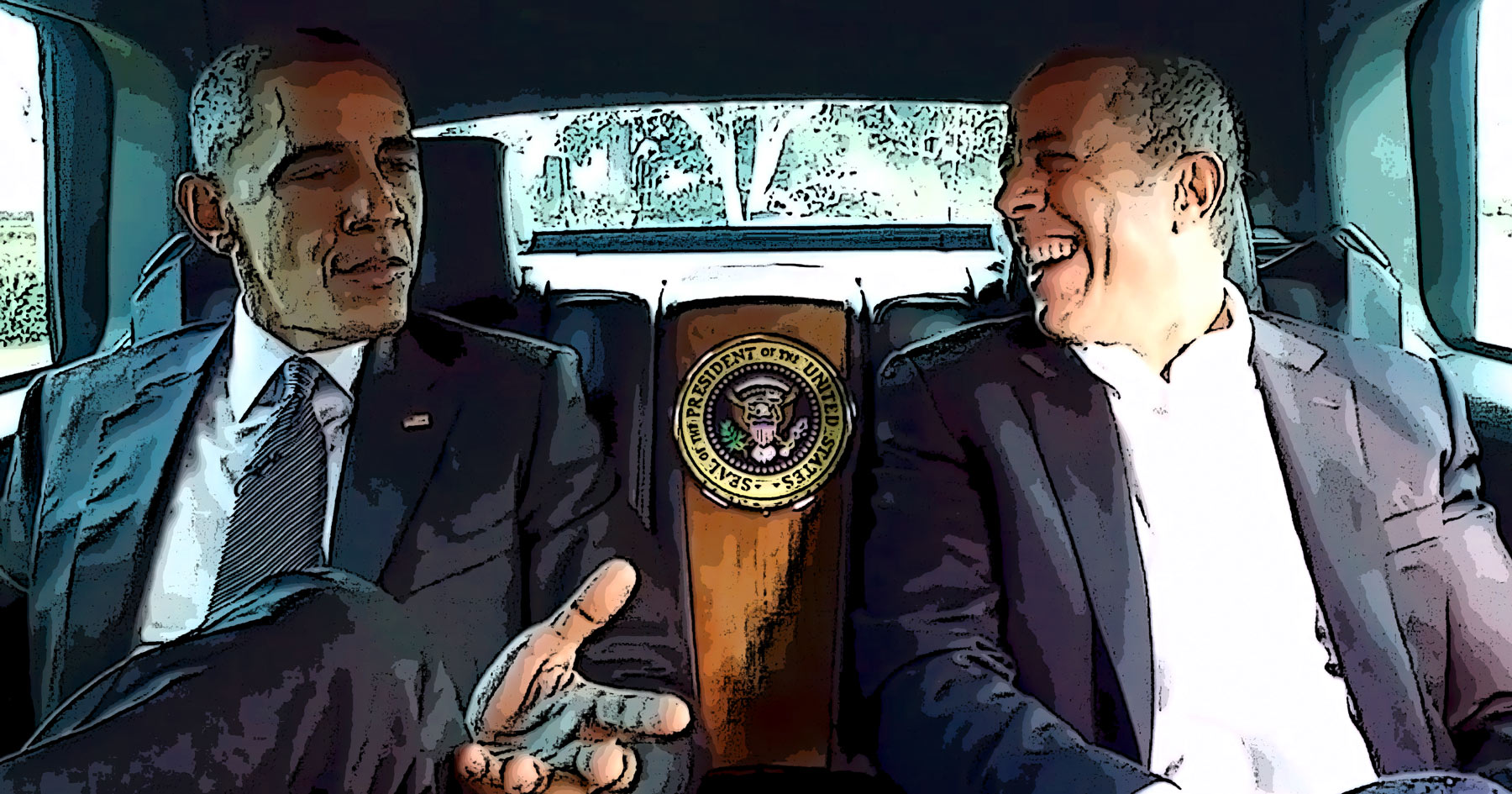
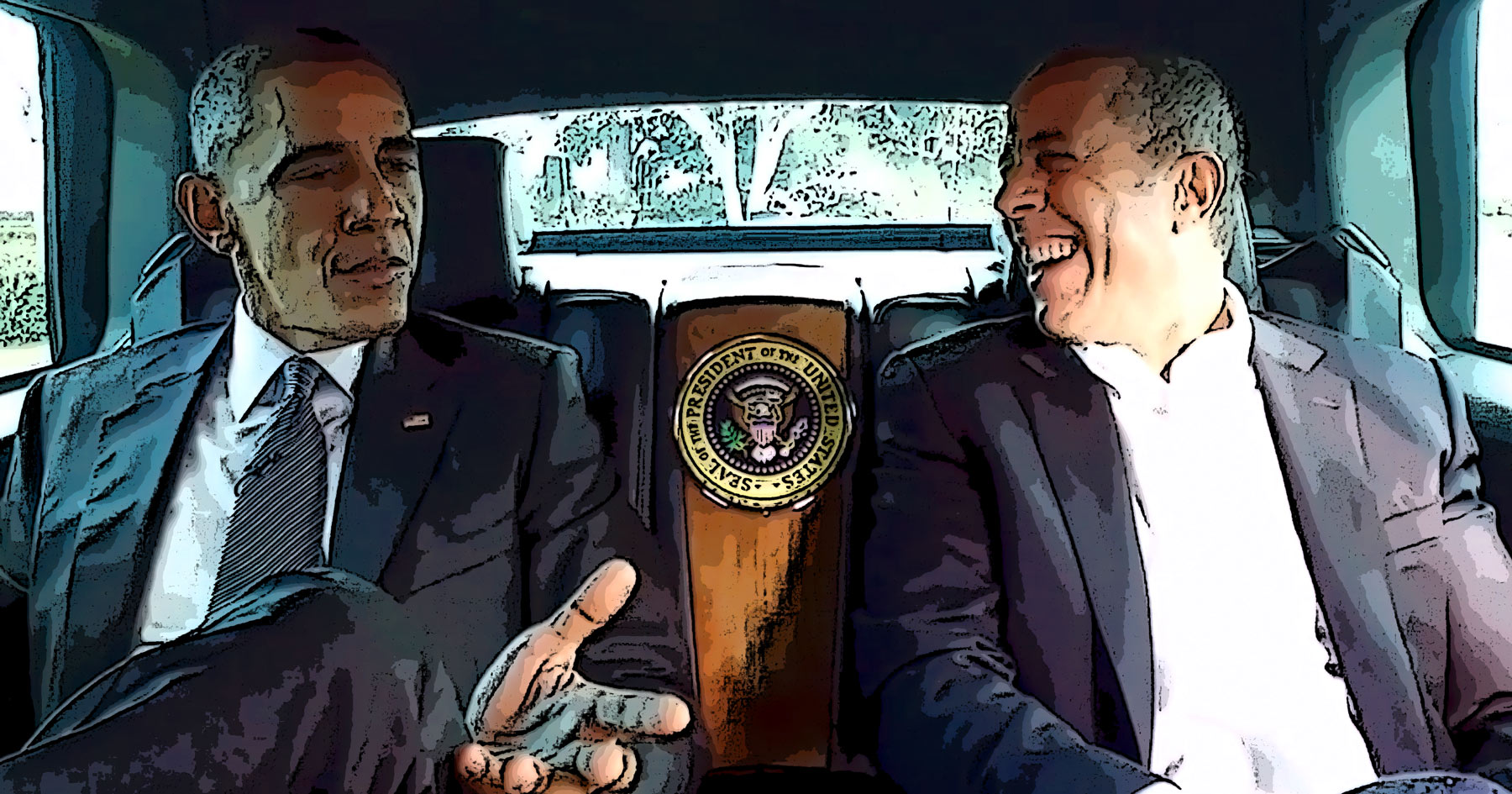
Cool Car and Hot Coffee for President Cool

The President of the United States claims to be very popular with “the zero to eight demographic.” The kids like his name, which they say in an unbroken string of syllables: Barackobama.

Politics is a lot like football.

Teddy Roosevelt was the coolest president … until Barackobama.

All this, and more, we learn from the latest episode of Comedians in Cars Getting Coffee, Jerry Seinfeld’s online interview show, in which Jerry drives a comedian to a coffee shop for a video-​recorded chat.

In the recent Barack Obama episode, the comedian and the Commander in Chief drive inside the confines of the White House fences in a nice silver blue 1963 Corvette Stingray … and then go for a coffee inside the White House. Seinfeld’s excuse for this special episode is that the Prez has gotten off just enough funny lines to qualify.

Some of us wonder whether Mr. Obama could be planning an entertainment career after being ejected from office by the normal workings of presidential term limits. As this and other one-​on-​one interviews have shown, he gives great repartee.

But back to term limits. Aside from the football comment, Seinfeld’s chat did indeed yield a few substantive ideas. Such as:

JS: How many world leaders are completely out of their minds?

BO: A pretty sizable percentage.

And Obama knows why: “The longer they stay in office, the more likely [going bonkers] is to happen.”

“At a certain point,” Obama explains, “your feet hurt, your have trouble peein’, you have absolute power.…”

Good thing we have term limits!

Here’s to a future episode of Former Presidents in Limos Getting Lattes.

This is Common Sense. I’m Paul Jacob.

Printable PDF

Obama, Seinfeld, coffee, cool, Common Sense


Categories
folly general freedom ideological culture meme national politics & policies U.S. Constitution

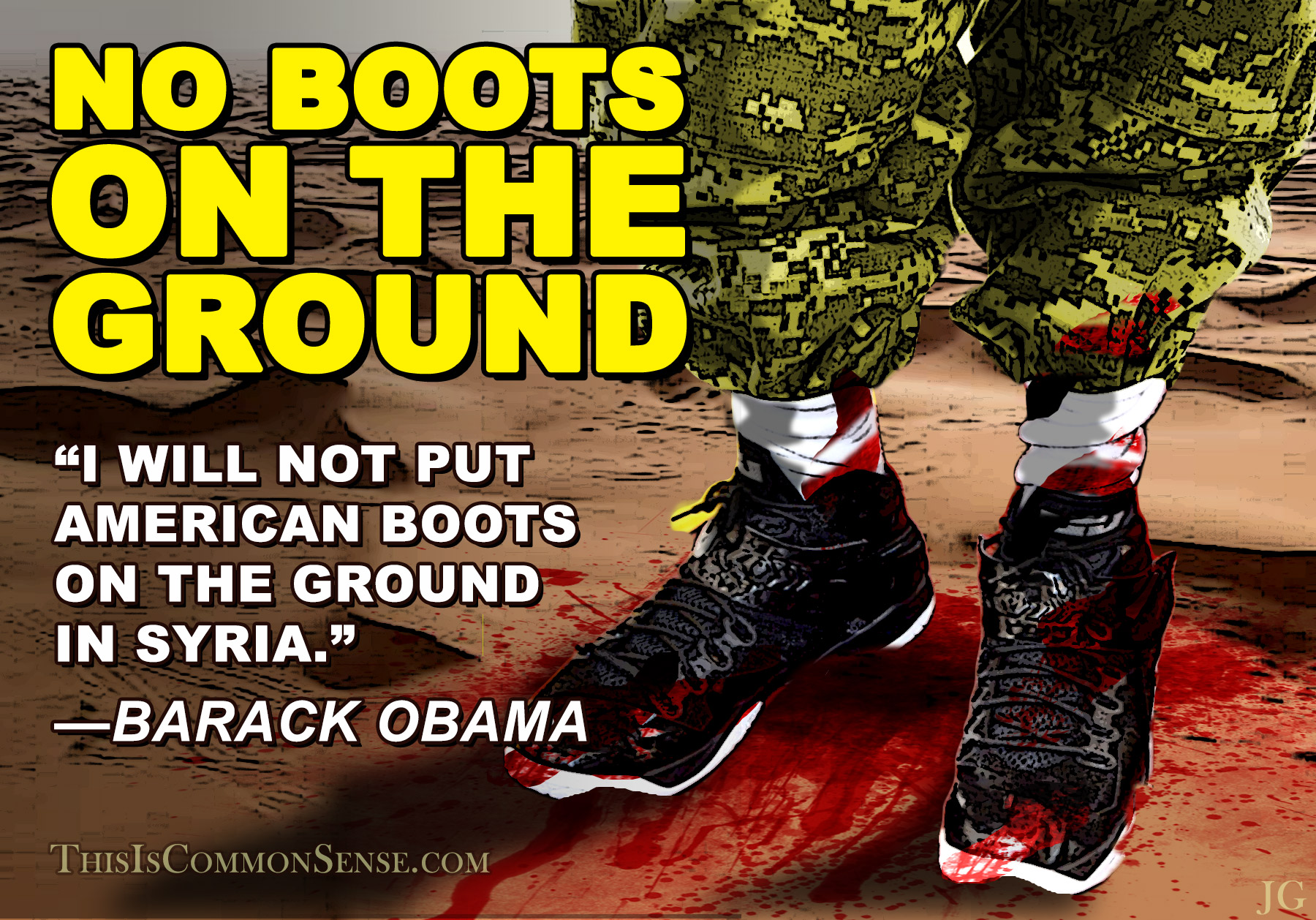
“No Boots on the Ground”

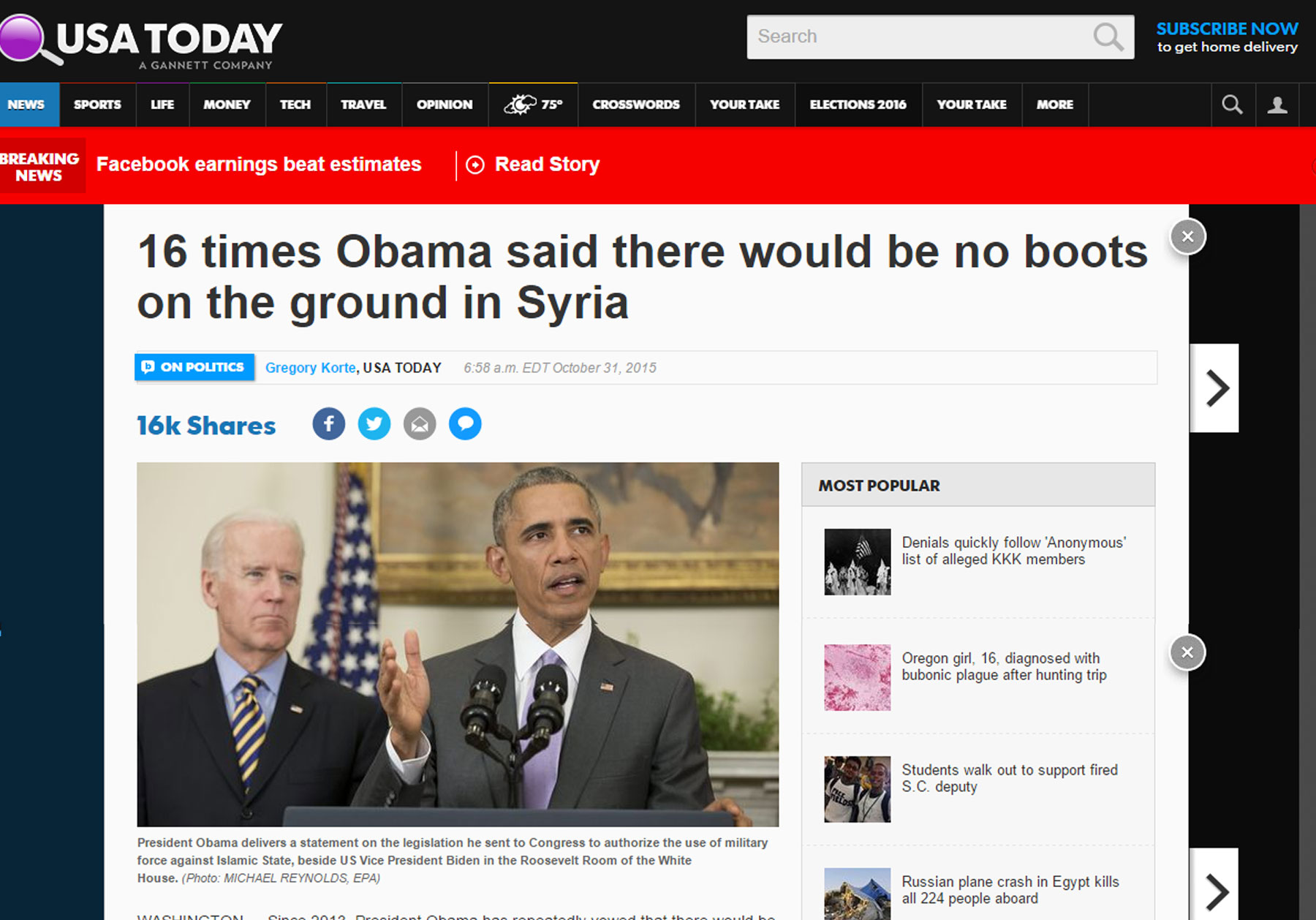
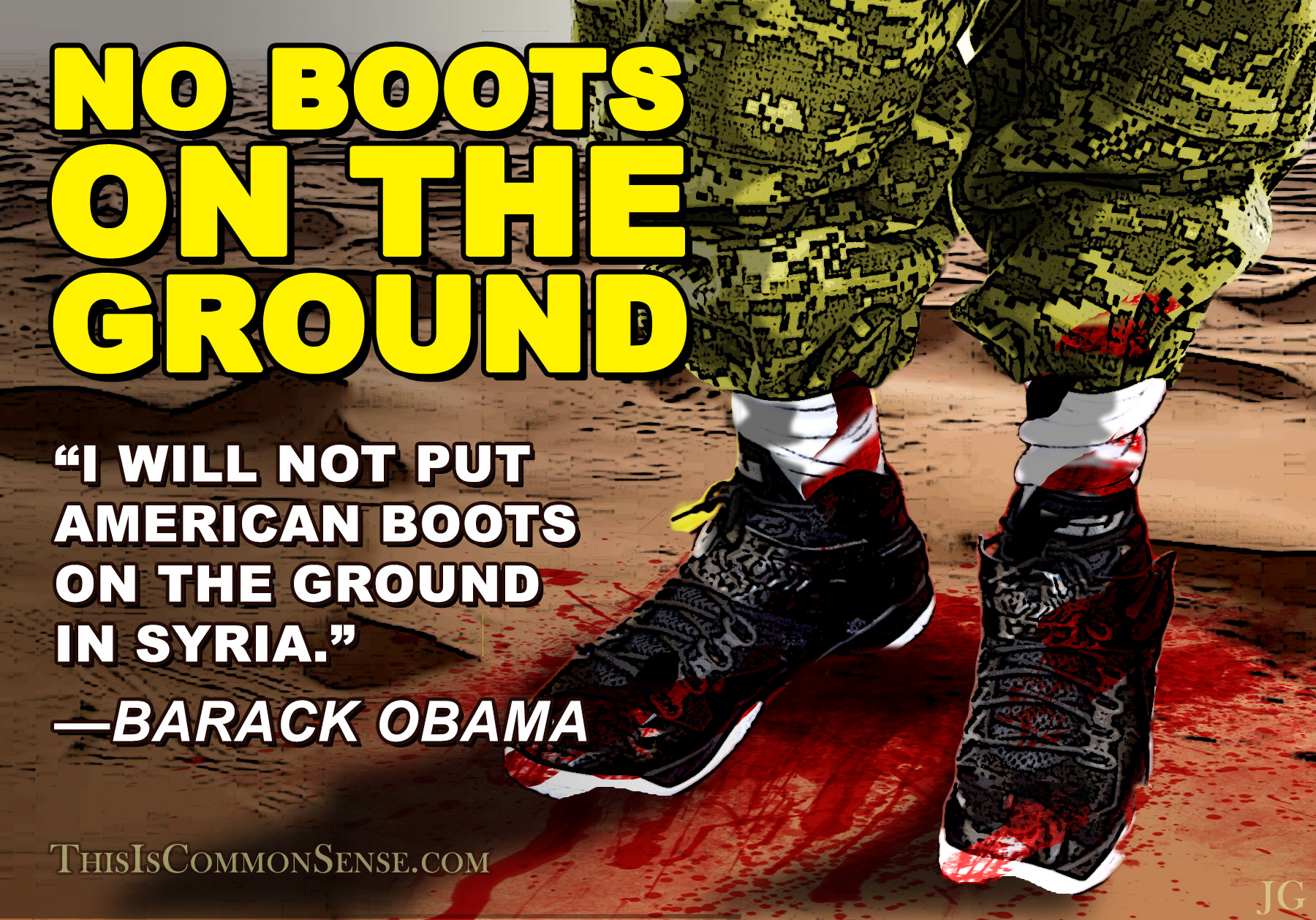
Obama has put “boots on the ground” in Syria after promising 16 times that he would not put “boots on the ground” in Syria. Our Nobel Peace Prize winner seems to have trouble staying out of wars.

USATodayBoots


U.S. Sends Ground Troops to Syria. Here Are 3 Reasons Why That’s Bad.


Click below for high resolution image:

no boots on the ground, meme, Obama, war, Syria, lies, peace, Common Sense, Paul Jacob, Jim Gill, illustration


Categories
folly national politics & policies

A Tunnel with No Light

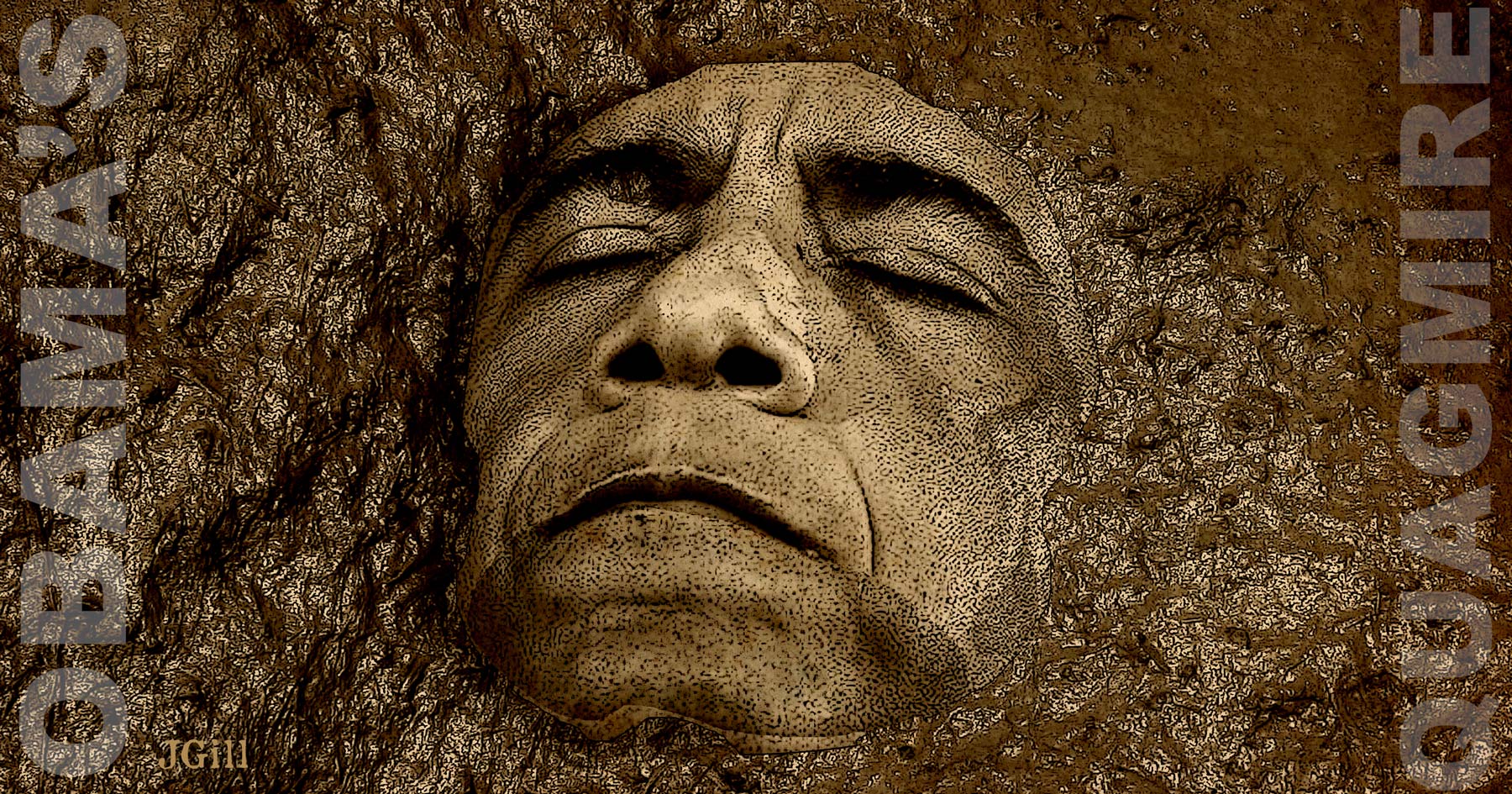
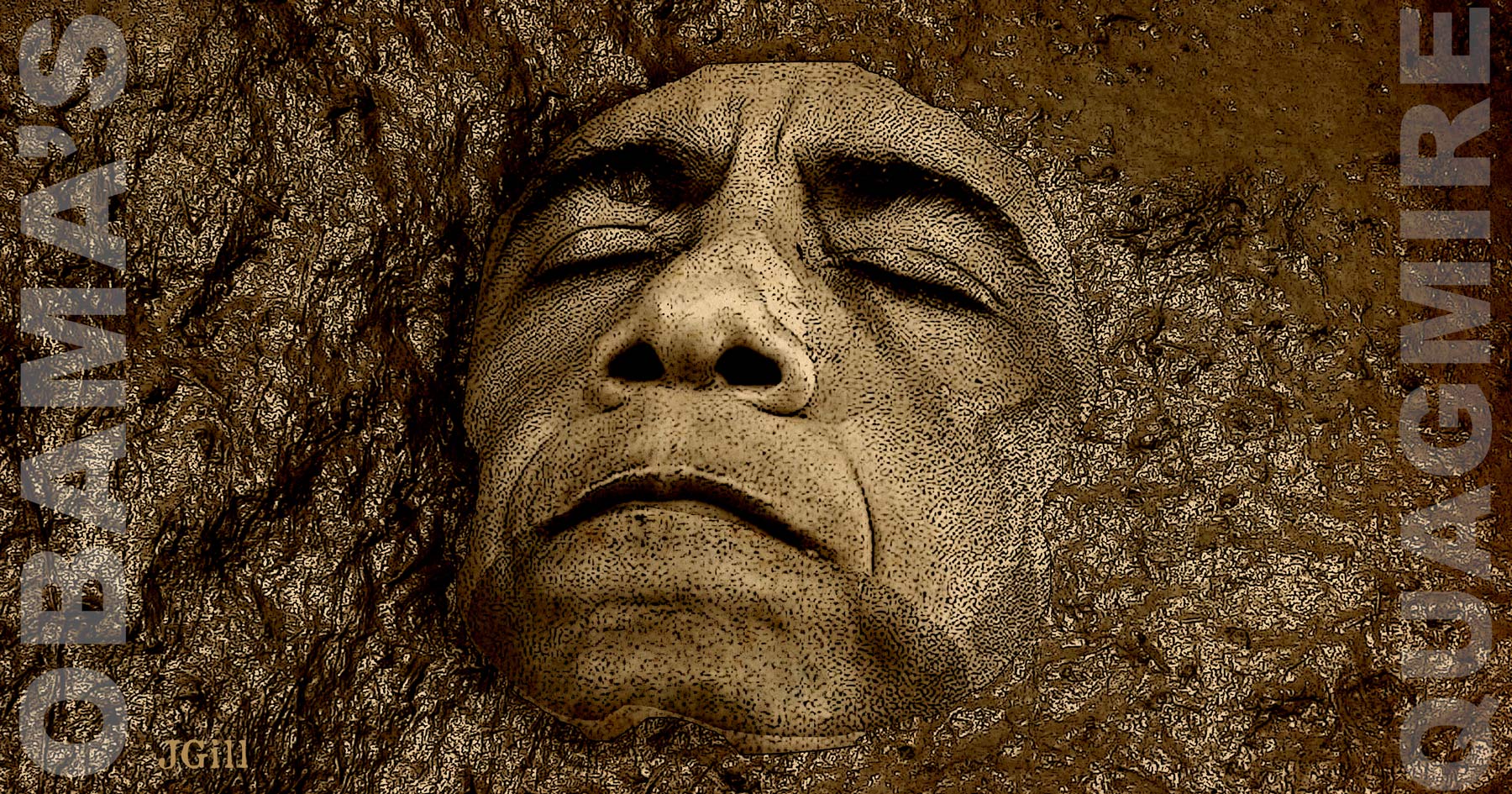
President Barack Obama pledged we’d be out of Afghanistan by 2016, but yesterday announced a “modest but meaningful extension of our presence” — keeping the 10,000 troops currently stationed there for all of 2016, and then, in perpetuity, maintaining a force five times larger than previously planned.

Why? Because, after 14 years of conflict and nation-​building, Afghanistan is still neck-​deep in violence. Last month, the Taliban briefly captured Kunduz, a city of over 250,000 people. Going forward, Obama admitted, “There will continue to be contested areas.”

The Afghan government is not self-​sustainable and nobody seems to know how many years or decades or centuries that might take to achieve.

Meanwhile, over in Syria, the U.S. cannot train more than four or five moderate soldiers after much bluster and promise — and splurging a cool $500 million.

The U.S. invaded and “regime-​changed” Iraq, helping shape a new government and national army. With all that effort — a cost of thousands of lives — once our soldiers weren’t doing the daily fighting to tamp down the bloody sectarian chasm, ISIS formed, the Iraqi army ran away and the country soon collapsed into civil war.

The Iraq Conquest put southern Iraq into Iranian orbit. How many lives was that worth?

The problem? Not military incompetence. The mission is the problem. Has any politician or military leader plausibly put forth a plan whereby our country’s intervention actually creates an improved and sustainable political order in any of these nations?

If so, let’s see it.

If not, why are our soldiers still in harm’s way?

This is Common Sense. I’m Paul Jacob.

Printable PDF

Obama, quagmire, foreign policy, Afghanistan, Syria, war, collage, photomontage, JGill, Paul Jacob, Common Sense


Categories
ideological culture national politics & policies too much government

The Rise in Unrest

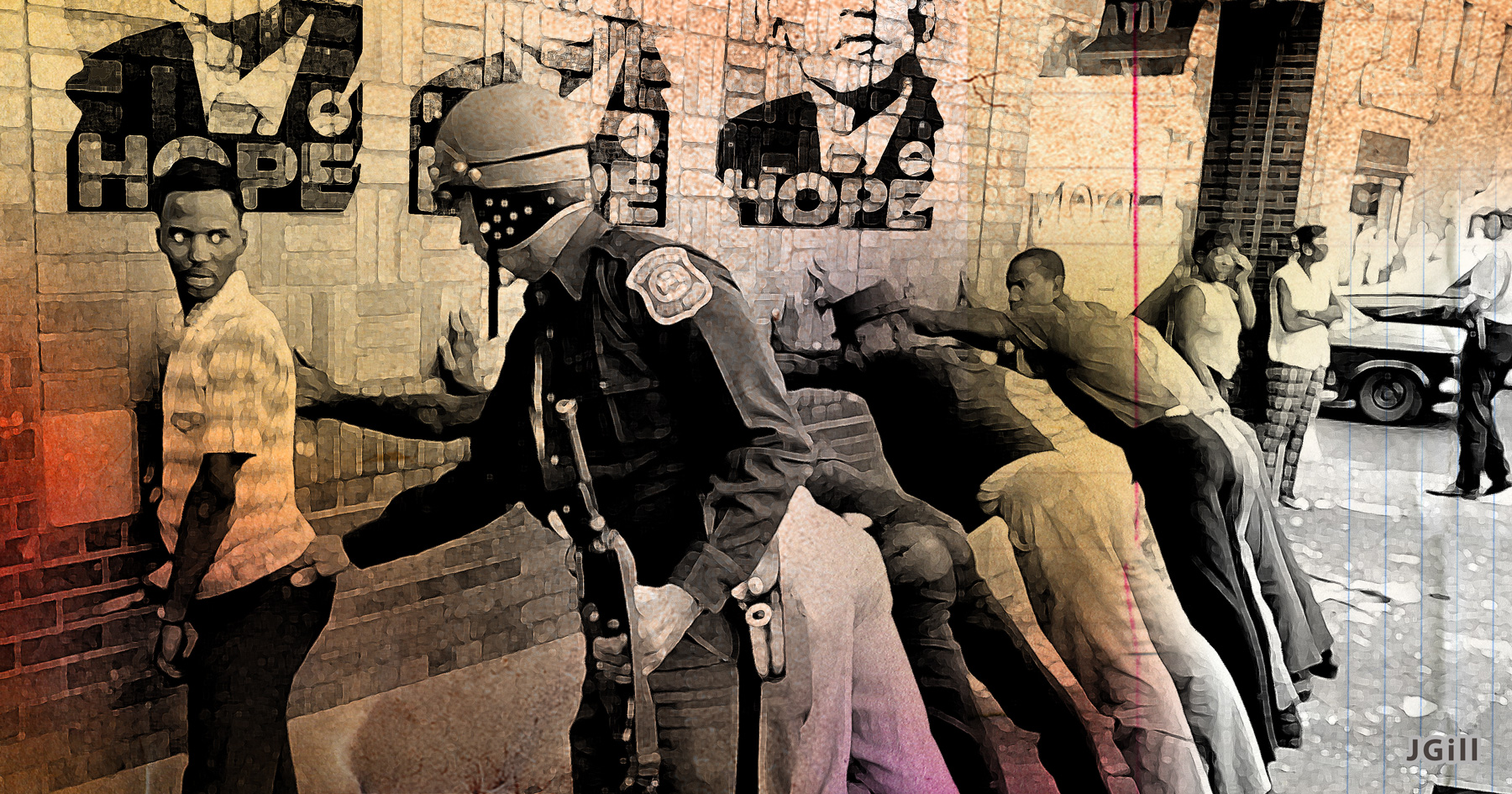
On Monday, pushing an expansion of his “My Brother’s Keeper” initiative, President Barack Obama gave a talk about the recent rise in racial discord.

Does he ever ask himself, “Under whose watch?”

When the financial system melted down in 2008, candidate Obama — not without some justification — blamed President Bush and the Republicans. Why shouldn’t he and his party be today held somewhat responsible for rising racial unrest?

Wasn’t his very status as the First Black American President supposed to continue the healing process between blacks and whites?

In his talk, Obama recognized the “sense of unfairness, of powerlessness, of not hearing their voices, that’s helped fuel some of the protests.…” Well, sure. But there would be no occasion for this were inner-​city blacks not treated unfairly in the first place.

The president wants to spend more money on education, for example, despite the high levels of per-​student public ed funding in hot spot Baltimore.

It is quite clear that other programs have done the most damage. We still have a War on Drugs, which is unpopular enough that it turns cops “racist” perhaps even against their wills — as I’ve explained before, police tend to focus their unpopular policing against drug use to the classes of society that have the least direct political power, most especially against inner-​city blacks.

But even more bedrock: we see protests and talk about inequality during economic downturns. Obama should learn from Bill Clinton’s initial presidential campaign: It’s the economy, stupid.

Or put more bluntly: It’s your stupid economic policies.

This is Common Sense. I’m Paul Jacob.

Printable PDF

Brothers' Keeper


Categories
free trade & free markets too much government

What Private Builders Build

In 2012, President Obama caused an uproar among those of us who praise individuals for their individual achievements. Sneering at persons proud of their success, Obama stressed the truism that in a society, achievers get help from other people. On his short list of invaluable assistance: government’s helpful building of roads and other infrastructure.

Like many of us, Donald Boudreaux criticizes the president’s philosophical assumptions. But he adds that Obama is also wrong to imply that it’s government which makes most or all of the infrastructure on which we rely.

“[A] great deal of infrastructure is built privately. FedEx, for example, is infrastructure: It’s a combination of vehicles, warehouses, organizational knowledge and other specific capital that businesses and households rely upon to transport freight and packages.…

“Of course, FedEx isn’t a road or a bridge. But so what? FedEx, no less than a road or bridge, enhances our abilities to pursue our private goals. [I]nfrastructure isn’t only those things supplied by government.”

Moreover, we don’t benefit from government’s monopolization of the segments of infrastructure provision that governments do monopolize. If government hadn’t permitted competition in packages from UPS, Fed-​Ex and others, Obama could have added “you didn’t ship that package” to “you didn’t build that road.” But how could this justify disparaging individual achievement, or be anything to boast about? Government’s commandeering of enterprises reduces quality and alternatives.

The answer to “You didn’t build that,” if and when it’s true, is: “Well, let us.”

This is Common Sense. I’m Paul Jacob.
Categories
Accountability

Boots on the Ground

Our congressional representatives, as well as each and every mouthpiece sent forth to speak for the Obama Administration, all repeat, ad nauseam, the “no boots on the ground” mantra regarding a U.S. military intervention in Syria.

Give them their due: politicians can recite poll-​tested phrases better than the best-​trained kangaroos.

But I’m decidedly not reassured. Saying “no boots on the ground” while advocating military actions that might trigger the need for ground-​stomping boots simply suggests a dangerous naivety about the nature of war among policymakers.

If the situation in Syria is so serious that the United States should launch a military attack, is it really so unthinkable that at some point after intervening directly in an evolving civil war — say if things don’t go so swimmingly — that the circumstances could arise for U.S. soldiers to be placed on the ground in this devastated country?

War isn’t always easy-​going and reasonable — or predictable. And firing missiles to blow up things in Syria, almost certainly killing people, is very much an act of war.

Granted, the U.S. can fire Tomahawk missiles destroying targets in Syria from Navy ships sitting safely far away in the Mediterranean Sea. But what if the Syrian government found a way to respond militarily or via a terrorist attack killing large numbers of American soldiers or civilians?

Wouldn’t that lead to a major military response, including the distinct possibility of boots on the ground?

Of course.

Politicians have long needed remedial instruction. Whatever your view on intervening in Syria, shouldn’t we begin with a lesson on actions having consequences?

This is Common Sense. I’m Paul Jacob.
Categories
ideological culture national politics & policies too much government

A Matter of Trust

You don’t trust President Barack Obama?

No faith in the massive federal bureaucracy? Do you lack confidence in Congress representing your interests? How much do you trust the federal courts that handle secret requests from the Department of Justice …and then issue secret decisions based on the judge’s secret interpretation of the law?

Be advised: President Obama finds “your lack of faith disturbing.”

“If people can’t trust not only the executive branch, but also don’t trust Congress and don’t trust federal judges to make sure we’re abiding by the Constitution, due process, and rule of law,” Obama told reporters in response to the public uproar to a leak of classified information suggesting that the detailed phone records of every American have been seized by the National Security Agency, “then we’re going to have some problems here.”

Agreed. Problems galore. The morning paper reads like a dystopian novel.

Are we really supposed to feel protected by a federal judge in a secret court wherein only the government is represented?

Or represented by Congress, for goodness sake?! Only a few congressmen are told, and those sworn to secrecy.

The Obama Administration incredibly calls this set-​up “an unprecedented degree of accountability and transparency.”

There are compelling national security interests, upon which our rights must be balanced, the president explains. But in our constitutional system, as I argued at Townhall​.com yesterday, there is no more compelling national interest than that the government fully obey the Fourth Amendment — and the entire document, please.

Thank you.

This is Common Sense. I’m Paul Jacob.
Categories
national politics & policies too much government

Four Percent Off the Top

Suppose you get a 4 percent pay cut.

Suppose you can’t borrow; you can only reduce your spending. Your household budget includes rent, videos, food, saving for a rainy day, and a front-​door lock to replace the one destroyed when your home was broken into yesterday. What’s the first thing that pops into your head?

“Well! Better forget that lock!”? No.

Now suppose you head the executive branch of the federal government and want to entrench disastrously high spending. So you want to “prove” that even trivial budget cuts must produce blatant, instant pain. Then, for example, school kids en route to DC find that White House tours have been canceled. Then, for another example, airline passengers find that security delays at the airport drag on longer than ever.

Congress has tasked the Federal Aviation Administration with safely and efficiently directing airplanes on and off the tarmac. The sequester reduces the FAA’s budget by some 4 percent. What to do? What else but furlough controllers for one working day out of ten, inflicting delays in an estimated four of ten flights?

That’s what the Obama administration has done, even though many less destructive budgetary changes are not only possible, but far more preferable.

Much more than 4 percent must be cut from government spending. It won’t be painless. But the Obama administration, consulting a very old, very nasty “insider’s” playbook, seeks to “prove” that the only feasible way to even begin to reform is the least sensible way. False.

This is Common Sense. I’m Paul Jacob.
Categories
national politics & policies U.S. Constitution

Drone Strikes at Home?

The main controversy over the current administration’s drone strikes program has not been about committing acts of war without a declaration of war.

It has not been about committing acts of war within the boundaries of allied countries.

It has not been about killing innocents.

And it has certainly not been about the reliability of information that gets to the president’s desk that might cause him to order a drone strike.

No, the controversy has centered on the killing American citizens abroad with drone strikes. Some people favor it, since the main American targets are “traitors” and “terrorists.” But many others balk: Without a trial, how do we determine their guilt?

The usual response to that? “This is war!”

But no war has been declared. And, ahem, our side often blows up people far away from any battlefield and in allied territory … including a 16-​year old American citizen killed in Yemen for being related to his father, Anwar al-Awlaki.

This, however, is just the tip of the enormity. The language from the folks in the administration suggests that borderlines mean nothing to them. Which raises a big question: “What about within our borders?”

The administration has been evasive.

This disturbs Sen. Rand Paul. “What I’m asking is about drone strikes on Americans, on American soil. The president will not answer that he cannot do this. In fact, he seems to be asserting that he can do this; all he’ll say is he doesn’t intend to do this.”

Sending drones to kill foreigners, innocents as well as enemies, on allied soil, in secret, without any method of accountability, is the behavior of a rogue nation. To claim the same power  on our own soil? That’s tyrannical.

This is Common Sense. I’m Paul Jacob.
Categories
national politics & policies responsibility

Bankruptcy, Not Bailouts

America’s bailout economy started many administrations ago, but really went Big Time under President George W. Bush … and then went Enormity Time with President Barack Obama.

The Washington Post provides the latest in bailout news by noting an inter-​departmental squabble:

The Special Inspector General for the Troubled Asset Relief Program said Treasury approved all 18 requests it received last year to raise pay for executives at American International Group Inc., General Motors Corp. and Ally Financial Inc. Of those requests, 14 were for $100,000 or more; the largest raise was $1 million.

Though this is all quite scandalous, don’t expect policies to change or heads to roll — barring a joint Tea Party/​Occupy uprising. The nature of the modern “regulatory” state is clear: government bureaus are quickly captured by the industries they aim to regulate. It’s an old story. The revolving door between business and bureaucracy is as well-​established as between journalism and politics.

So why do we have bailouts?

  1. They show that politicians are “doing something”;
  2. They mimic the welfare state logic of “helping the poor” (if, with caustic irony, by stuffing the wallets of the rich);
  3. They aggrandize the showy machinations of the legislative and executive branches at the expense of the branch of government designed to handle massive business failure, the courts.

Perhaps Americans shouldn’t have voted in either an MBA grad (Bush) or a constitutional lawyer (Obama). Maybe what the country needs is a bankruptcy lawyer in the White House.

This is Common Sense. I’m Paul Jacob.