Categories
general freedom media and media people

Trust the Spies?

“The Biden administration is spying on us,” Fox News host Tucker Carlson told his Monday night audience. 

“On Sunday, we heard from a whistleblower within the U.S. government, someone with direct knowledge, who warned us the NSA was reading our electronic communications, our emails and texts,” he explained, “and was planning to leak them selectively in an effort to hurt us.”

Quite an explosive allegation.

“[T]he evidence for this claim is lacking,” a Vox story argued, adding that “on Tuesday the NSA took the unusual step of releasing a carefully worded statement denying it.” 

Carlson quickly responded that there was no actual denial in the NSA’s verbiage. Huh? Referring directly to Carlson’s charge, the National Security Agency’s statement read, in part: “This allegation is untrue.”

Awfully clear to me. In fact, so straight-​forwardly worded that I wonder if the writer is new to Washington, D.C.

Of course, the problem isn’t really one of language.

The problem? Trust

Back in 2013, James Clapper, then-​President Barack Obama’s Director of National Intelligence, was asked under oath if the NSA “collected any data at all on million of Americans.” Clapper lied to Congress. He has never been held accountable for making that knowingly false statement.

Carlson showed viewers 2006 footage of then-​Senator Joe Biden voicing concerns about NSA spying. “And we’re going to trust the president and the vice-​president of the United States that they’re doing the right thing?” inquired Biden. “Don’t count me in on that.”

On Tuesday, Carlson contended “the NSA does routinely spy on Americans. It won’t call it spying — that’s exactly what it is. Millions of Americans. And sometimes it does it for political reasons. And everyone knows this. Everyone.”

But many still deny it.

This is Common Sense. I’m Paul Jacob.


Note: Today’s Thought about lying in the old Soviet Union is relevant to the “everybody knows”/“everybody denies” mentality. Share it far and wide. This wasn’t a feature of America three decades ago, was it?

PDF for printing

See all recent commentary
(simplified and organized)
See recent popular posts
Categories
Accountability crime and punishment general freedom moral hazard nannyism national politics & policies

Inch, Meet Mile

Give ’em an inch, they will take … a continent.

When Edward Snowden broke the secrecy of the NSA’s illegal surveillance on innocent Americans, many folks (especially those in government) said the snooping was OK, because

  1. it is necessary for our security, and, besides,
  2. the collected data would only be used against terrorists, as supervised by the FISA courts.

Well, it is now known that, whatever “a.” may be, “b.” is a dead letter, swept away by broken promises and a new information practice.

Yes, the National Security Agency now shares its (unconstitutionally obtained) information with various and sundry government agencies, for a wide variety of purposes.

Last week, Radley Balko noted in the Washington Post that “the ‘sneak-​and-​peek’ provision of the Patriot Act that was alleged to be used only in national security and terrorism investigations has overwhelmingly been used in narcotics cases. Now the New York Times reports that National Security Agency data will be shared with other intelligence agencies like the FBI without first applying any screens for privacy.”

That didn’t take long, eh?

Many of us have opposed the NSA’s data collection on American citizens because we believed the data would not continue to be used just for the alleged purpose they were collected.

It is not a “slippery slope” argument so much as an “inch-​mile” one. Government tends to grow, in size and especially in scope.

And usually at the expense of our freedoms.

This is Common Sense. I’m Paul Jacob.


Printable PDF

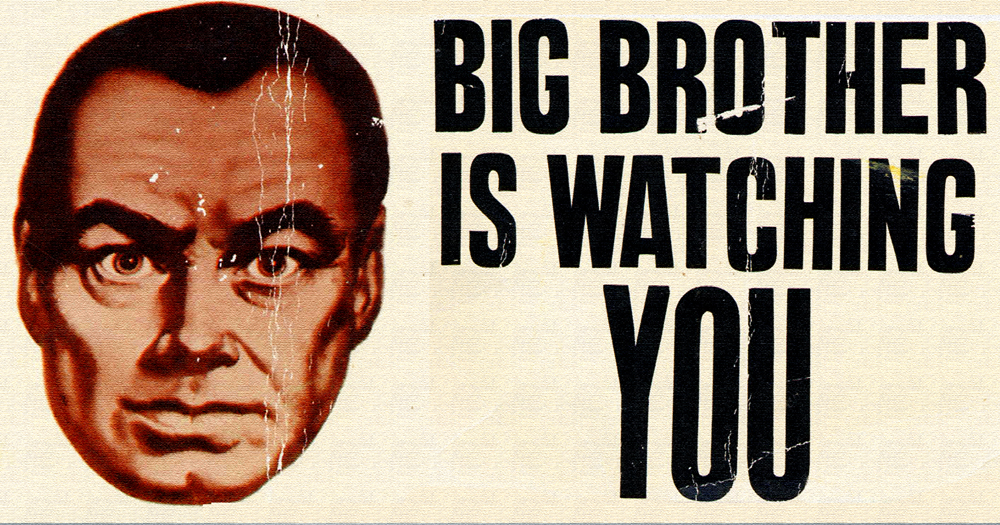
NSA, surveillance, 1984, Big Brother


Categories
Accountability crime and punishment general freedom government transparency moral hazard nannyism national politics & policies responsibility too much government U.S. Constitution

Zetabytes and Zombies

Zombie government wants to eat our brains. Did I overstate this on Sunday?

Most folks don’t look at the Apple/​FBI controversy over digital security quite that starkly.

The National Security Administration sure doesn’t see it that way. The NSA is in the “information harvesting business,” says Business Insider. And boy, “business is booming.” The NSA measures its operations in zetabytes. And in the acreage of its Maryland and Utah sprawls.

The idea is that the NSA protects us.

But notice that government, collecting all that information, and in trying to beat back malicious and sportive hacker attacks from around the world, treats computer companies antagonistically. And it doesn’t provide us, individually, with help on our personal cyber-​security: we have to pay for our own cyber-​security. When some thief (local or overseas) steals a digital identity and grabs a netizen’s wealth and credit, of what help is government?

Not much.

It’s little different from back in Herbert Spencer’s day, over a century ago, when he noted that government practiced “that miserable laissez faire,” making citizens bear the costs of their own protection, to financial ruin defending themselves in court.

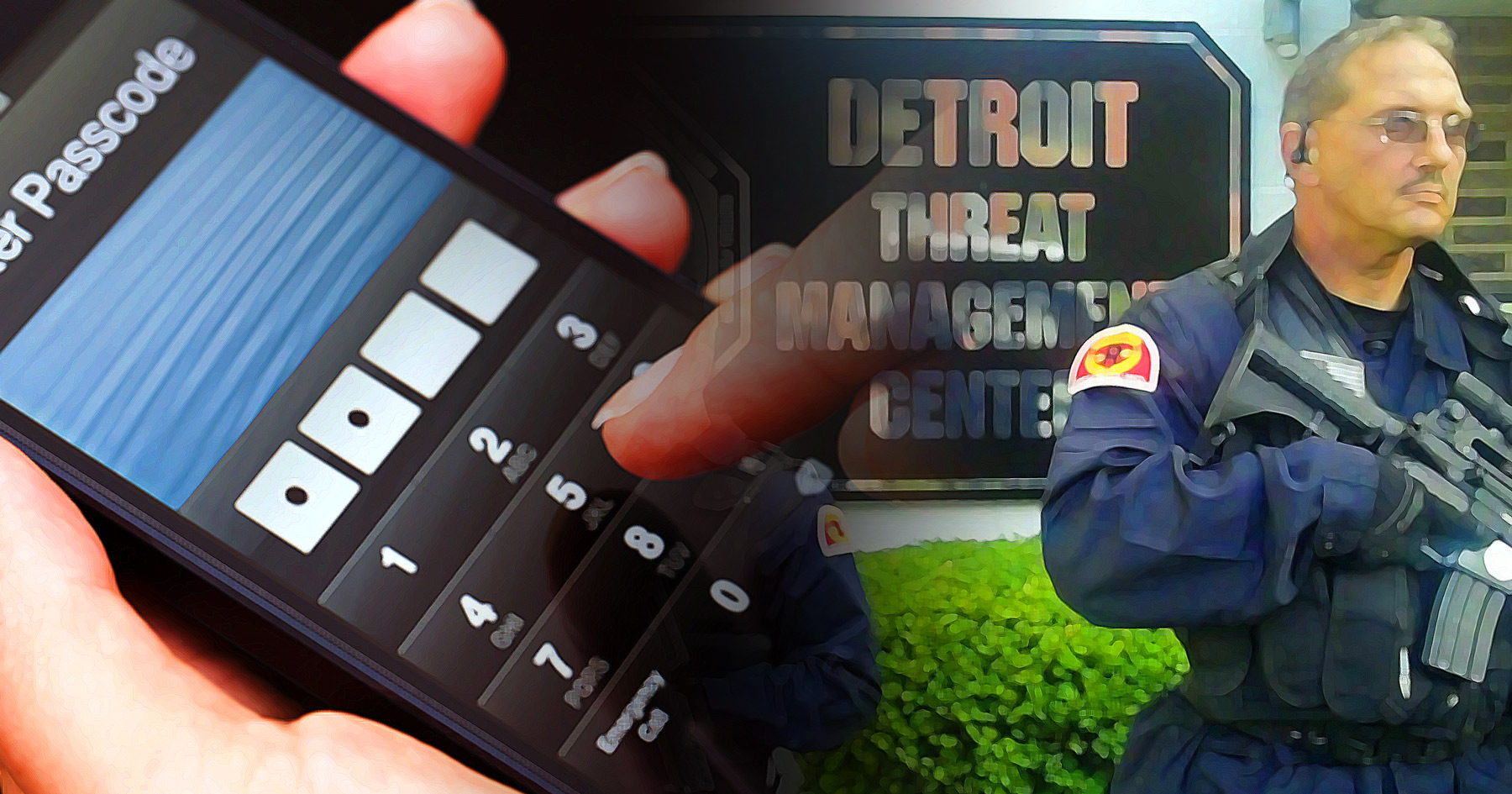
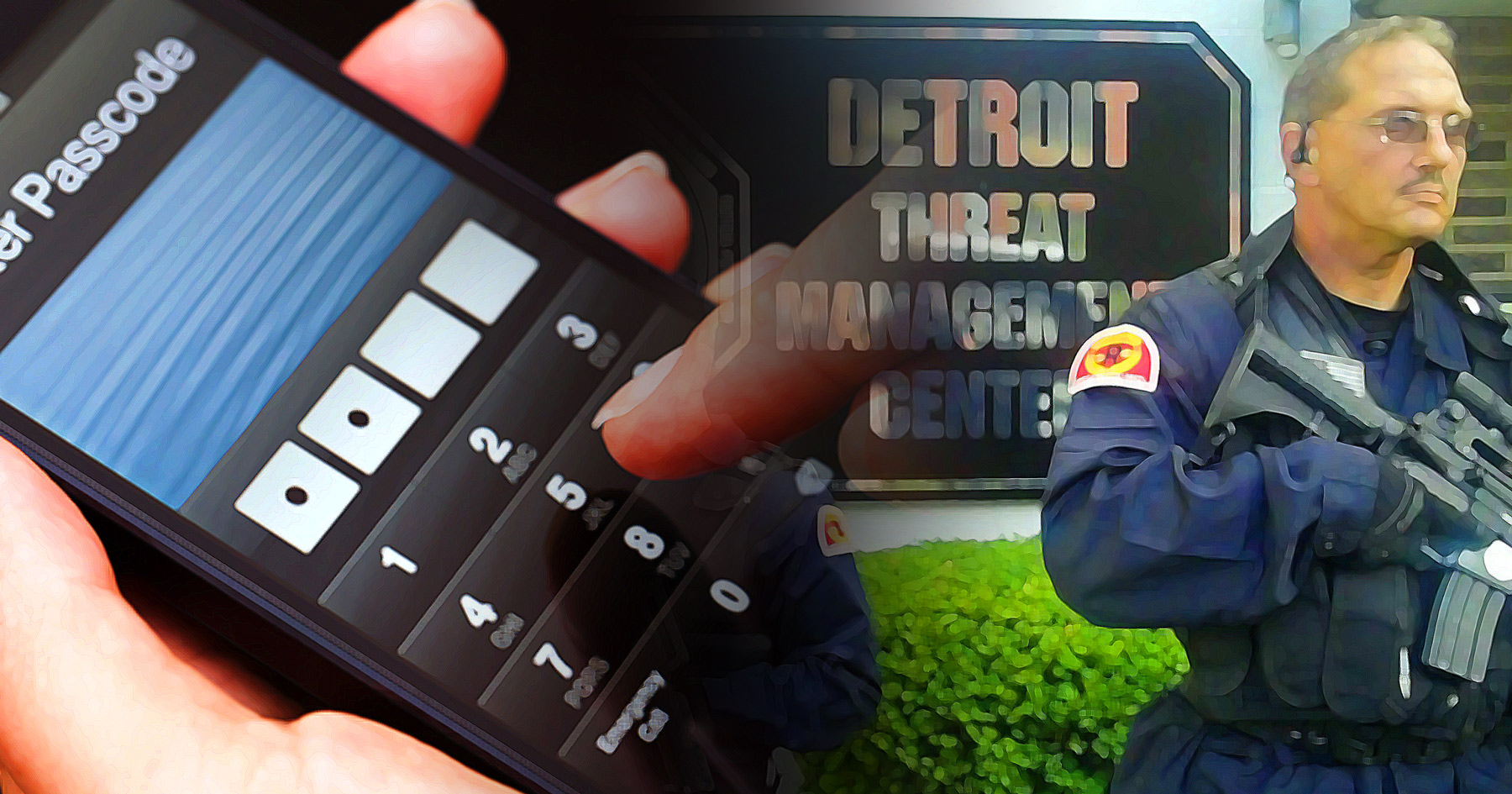
Indeed, for all our reliance upon law enforcement, we have to notice that the real work of defense and conflict avoidance happens best outside of government “help” — as is the case in Detroit, Michigan, where it is private security that does what many expect the police to do.

As long as the police and the federal government operate mainly as antagonists to peaceful citizens as well as to criminals, then looking warily at police power and privilege (and thus the NSA and the FBI) seems like …

… Common Sense. I’m Paul Jacob.


Printable PDF

Apple, iphone, security, police, NSA


Categories
folly general freedom government transparency national politics & policies too much government

Safety, Savings and Symbolism

How can the U. S. save $2.5 billion a year, reduce the federal workforce by 4,000 hires, and engage in a symbolic act of undoubted patriotism, all at the same time?

Get rid of the Department of Homeland Security.

Matt A. Mayer, a former DHS employee who claims to have “written more on DHS than just about anyone,” writes in Reason that dismantling DHS would increase co-​ordination and decrease inefficiencies.

Since DHS was put in place, in 2003, to increase governmental co-​ordination in the face of terrorist threats, Mayer’s charge that it serves the opposite cause should … give us pause.

Establishing the DHS didn’t get rid of turf wars. Why would it? It increased the turf rather than merely reroute chains of communication and command. All other agencies still exist. Extra turf exacerbates co-​ordination difficulty.

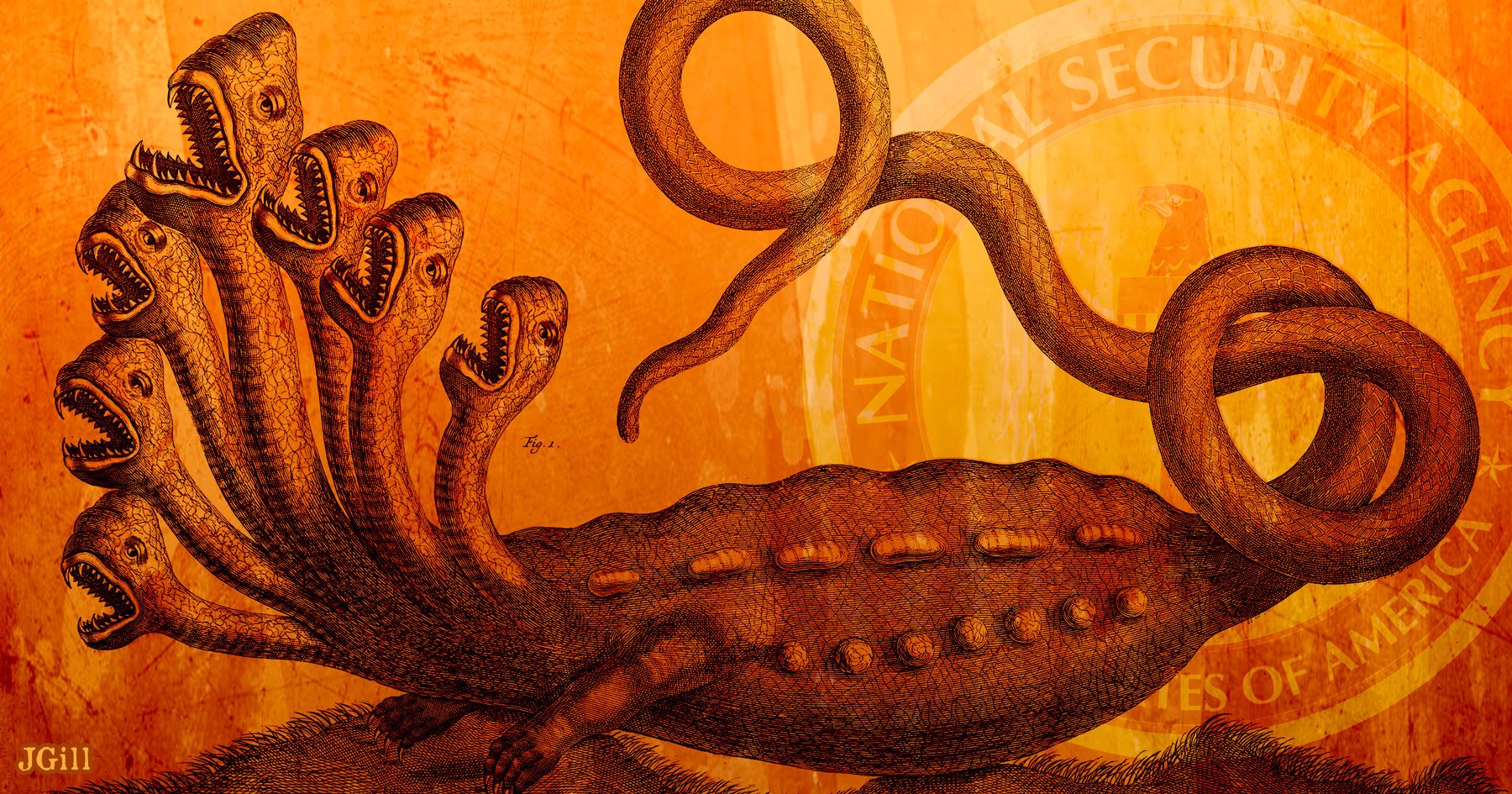
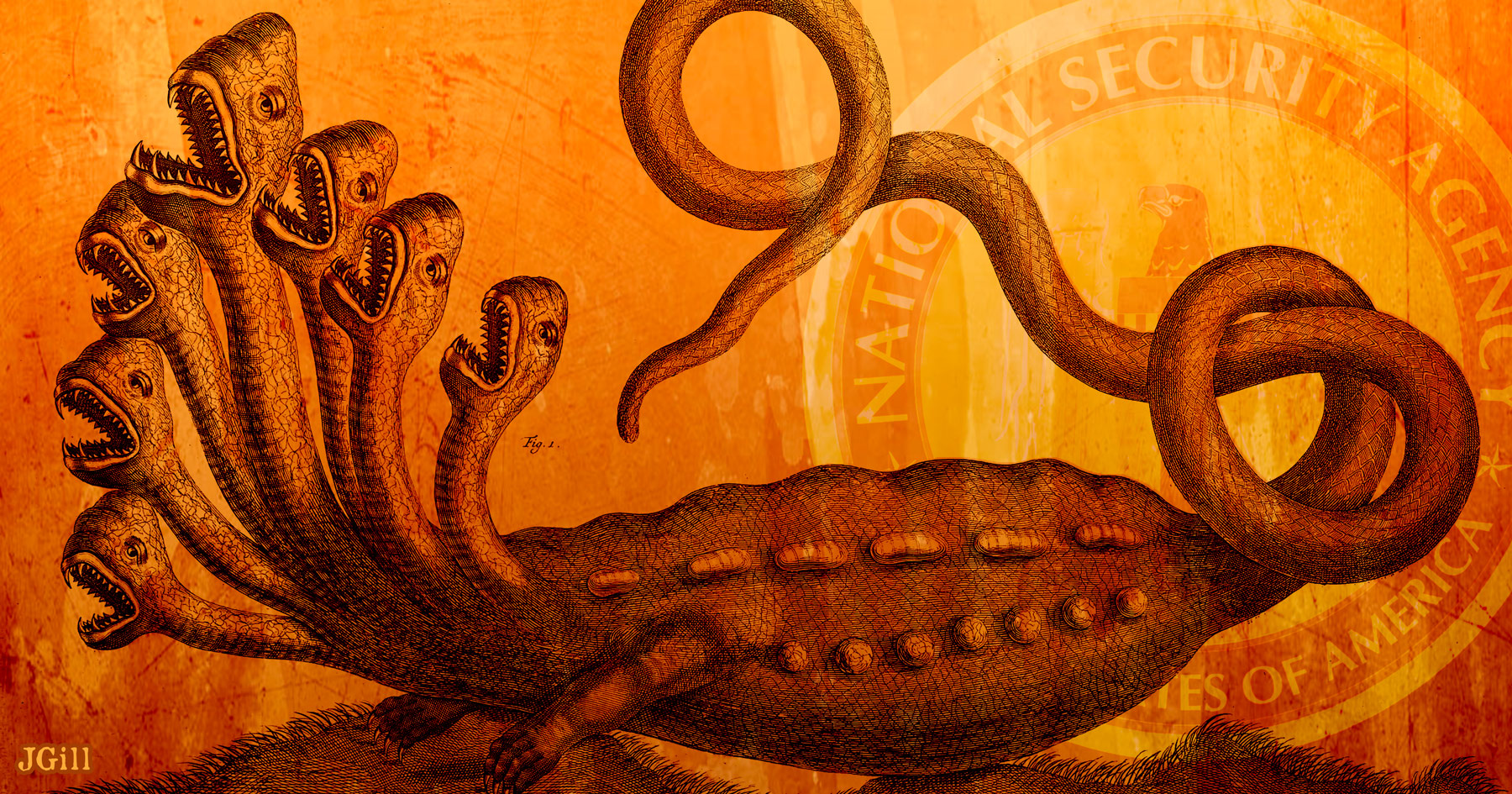
And then there’s what state and local law enforcement faces: “the multi-​headed hydra.” The federal operation remains fragmented, which “only ensures that key items will fall through the cracks between these departments, whose personnel spend far too much time fighting each other for primacy than they should. Our enemies couldnt ask for a more fertile environment within which to attack us.

I added the italics, for emphasis.

Ever since Jimmy Carter ran for the presidency on consolidating bureaucratic departments in the nation’s capital, but delivered, instead, new departments, the “logic” of adding new bureaucracies onto old has proven to be the “easy answer” for insiders. But a transparent failure, for everyone else.

So, start over. Get rid of the inefficient monster.

And take heart: republics don’t have “homelands”; empires do. Let’s stop playing the wrong game.

This is Common Sense. I’m Paul Jacob.


Printable PDF

NSA Hydra


Categories
too much government

Yes, You Are a Suspect

Sometimes the Internet makes a mistake.

The other day, one of my favorite websites embedded a Fox News video about NSA spying. Fox News entitles their video “Citizens Treated As Suspects.” At the site showcasing Fox’s story, though, the headline reads: “The NSA Grabs Information from Non-​Suspects; Ninety percent of those spied upon are under no suspicion.”

Can this be right? When you’re treated as a suspect, you are a suspect, aren’t you? You’re being suspected of … something. At least of being somebody who might be up to something worth snagging in an all-​embracing fishing expedition. If you’re not guilty, somebody else leaving comparable data traces is, surely.

On the other hand, no matter how innocent you feel, you gotta be guilty of something for which the government could come after you, right?

I do not say you have done something actually wrong. Only something some policeman or bureaucrat could hassle you for. We live in an era when parents get arrested for letting their kids play in the park

Fox News reporter Shephard Smith says that most Americans caught up in the particular NSA surveillance net discussed in his story are just ordinary, everyday blokes — not reasonably suspected of anything NSA-​spy-​worthy. This is unsurprising given all we’ve been learning from the NSA documents released by whistleblower Edward Snowden (see ProPublica’s revelation-​chart).

These days, in the eyes of our government we are all suspects. Continuously.

And there’s something very suspicious about that.

This is Common Sense. I’m Paul Jacob.

Categories
video

Video: An NSA Whistle-​blower Before Snowden

William Binney interviewed by Nick Gillespie:

Categories
First Amendment rights national politics & policies

How to Protect Yourself from Spying

We value our privacy.

No wonder we’re nervous. The National Security Agency, in blithe disregard of our constitutional right against unwarranted search and seizure, has been indiscriminately scooping up data (“meta” data) about our communications (among other covert acts that have compromised the security of our transactions).

However the controversies triggered by the scandals play out, it’s clearer than ever that you can’t trust the government to respect your right to privacy. Your line of first defense has to be you.

Even before the NSA scandal broke, the Electronic Frontier Foundation (EFF) was on the case, explaining how to reduce your risk when saving data to your computer, sending the data elsewhere, and entrusting it to third parties. Their Surveillance Self-​Defense site spells out what the government can legally do to spy on you and what you can legally do to protect yourself. The discussion includes nitty-​gritty stuff like advice on the proper use of passwords and encryption, protecting yourself against malware, and lowering the risk of eavesdropping on confidential conversations.

That’s right, SSD talks about “what the government can legally do” to breach your data or listen in on your life, not so much about what it can do illegally. A banner atop the home page notes that the site “has not yet been updated to reflect the 2013 revelations about the NSA.…”

Updates are coming. Meanwhile, we can fill in some of the blanks ourselves.…

This is Common Sense. I’m Paul Jacob.

Illustration by ocularinvasion used under a Creative Commons license.

Categories
national politics & policies too much government

Something to Protect

Blasé about sweeping government surveillance? Think you have “nothing to hide”?

I bet you do.

Ever draw curtains? You have “something to hide.” If you balk when a con man says, “I need your birthday and Social Security Number,” you have “something to hide.” When you feel comfortable giving certain information about yourself to some persons but not others, you demonstrate your preference to hide some things from some people.

That’s not nothing.

Philosopher Harry Binswanger, however, says he is not worried. “I have no secrets. Those who raise the specter of Big Brother are not on a wrong basic premise, but they are being unrealistic: when and if we fall into the grip of totalitarianism, there will be nothing to stop the dictatorship from spying on us by any means it wishes. Such a regime does not require that the tools have been set up in advance.” Some reining in may be appropriate, but “alarmism” is unwarranted.

It’s warranted.

Totalitarianism doesn’t happen with a flip of the switch. Tyranny works from precedents. Daily encroachments help establish it.

And our government violates our rights in the here and now, in days prior to any fully Orwellian dystopia. The tools usable tomorrow by an American-​style GPU or Gestapo to violate our rights can be thus used today by an IRS or NSA.

Our governments snoop on us unwarrantedly today. They hide the extent of their spying on innocent people, today. They have motives to use what they get by their spying — today.

It should stop.

Today.

This is Common Sense. I’m Paul Jacob.

Categories
insider corruption media and media people national politics & policies too much government

The Tyrants’ M.O.

Somewhere, recently, I saw the Lord Acton maxim about power (how it corrupts, and, if absolute, corrupts absolutely) referred to as a “cliché.”

Just because a phrase is common doesn’t mean it’s cheapened by repetition. Some expressed truths are that profound.

If anything, we need to repeat the Acton Axiom more often, and louder. For we live in a time when the federal government usurps power, denigrates, evades and undermines the rule of law, and appears “hell bent” (now that’s a cliché) on accumulating power in concentrated form … you know, like Sauron did with the ring of power in The Lord of the Rings. (Another possible cliché, eh?)

The NSA spying program story, as it unfolds, exemplifies the typical pattern:

  1. Information gets leaked.
  2. The government denies it.
  3. Further information comes out, establishing the lying nature of the denial and
  4. Adding more details of even more shocking nature.
  5. The government makes further denials …

And repeat ad nauseam.

Retired Lieutenant General James R. Clapper still serves the president as Director of National Intelligence, even after lying directly to Congress about the existence of NSA “metadata” collection system.

Meanwhile, the long arm of the secrecy establishment has retaliated against journalist Glenn Greenwald (who helped break Snowden’s first and subsequent leaks) by detaining the journalist’s partner without charge for the legal maximum of nine hours in Great Britain, upon coming home from a trip.

And the gentleman I reported on last week, who shut down his encrypted email service and erased his records rather than fork it all over to the government, says he has been repeatedly threatened with imprisonment.

Typical modus operandi of tyrant wannabes. Don’t worry about “cliché”; worry about tyranny.

This is Common Sense. I’m Paul Jacob.

Categories
national politics & policies too much government

The Philosophy of the Fig Leaf

The temptation to cover up a bit of ugliness with the proverbial fig leaf will always be with us.

According to Rep. Zoe Lofgren (D‑Calif.), that is just what the U.S. House did when it squashed Justin Amash’s amendment to the 2014 defense bill, replacing it with a weaker measure dredged up from the abyss known as Business As Usual by Rep. Mike Pompeo (R‑Kansas). Though 94 Republicans and 111 Democrats supported the Justin Amash (R‑Mich.) position, the measure went down by twelve votes.

Business As Usual continues its reign in Washington; there will be no reining in of the NSA.

Or, as Amash said before the vote, “We are here to answer one question. Do we oppose the suspicion-​less collection of every American’s phone records? When you had the chance to stand up for Americans’ privacy, did you?”

Amash’s amendment would have de-​funded NSA’s collection of data of individuals not under investigation. Pompeo’s amendment merely reiterated current law about not targeting Americans in their surveillance — assurances that have as much efficacy as the rules limiting partisanship in IRS activities.

Behind Pompeo, and working against Americans’ privacy, was the Obama Administration, which went to great lengths Tuesday to make sure Amash’s attack on NSA surveillance wouldn’t “hastily” be put into action.

Administration spokespeople continued to press the figgy and leafy line about “welcoming debate” and “continuing to discuss” the issue of homeland surveillance.

Blah, blah, blah. No wonder Lofgren used the term “fig leaf.” The ugliness of Big Government surveillance remains. Congress has done nothing to curtail it.

This is Common Sense. I’m Paul Jacob.