Categories
education and schooling First Amendment rights general freedom international affairs

Cold Climate in Hong Kong

“There is no ‘red line,’” says an anonymous thirty-​something Hong Kong humanities professor. “If they want to come after you, everything can be used as an excuse.”

Grace Tsoi, writing for the BBC, shows what happens when political correctness returns to its roots in totalitarianism. As it has in Hong Kong, in the “People’s [sic] Republic [sic] of China [sick].” The young academic Ms. Tsoi is quoting elaborated the situation: “He says his nightmare is being named and attacked by Beijing-​backed media, which could cost him his job, or worse, his freedom.”

Political correctness can cause academics in America their jobs, of course. But as relentless as our woke media and online mobs may be to “de-​platform” people they disagree with, it’s harder to go all the way.

Under a totalitarian state, it’s easier to be more thorough.

That’s why totalitarianism is the modish form of tyranny that tyrants aspire towards.

More power.

“In the academic year 2021/​22, more than 360 scholars left Hong Kong’s eight public universities,” Ms. Tsoi explains. “The turnover rate — 7.4% — is the highest since 1997, when Hong Kong returned to Chinese rule, according to official data. Foreign student enrolments have dropped by 13% since 2019.”

The chilling effect is arctic. Self-​censorship has become the rule, in advance of expected censure, censorship, or worse. Hong Kong academics blame all this on 2020’s National Security Law, which “targets any behaviour deemed secessionist or subversive, allowing authorities to target activists and ordinary citizens alike.”

It’s worth remembering that while “secession” is a dirty word for the powerful, and subversion the enemy of all, it does depend on context: secession from a tyrannical state is liberation; subversion of an unjust system is justice.

This is Common Sense. I’m Paul Jacob.


PDF for printing

Illustration created with PicFinder and Firefly

See all recent commentary
(simplified and organized)
See recent popular posts
Categories
international affairs media and media people

China’s Many Rushdies

Since when do police place bounties on the heads of former residents who have committed no crime?

Since just now. 

But it depends on how you define “crime.”

For me, to be guilty of a crime you must have committed an objectively definable, willful violation of the rights of others — fraud, robbery, kidnapping, torture, rape, murder. Speech criticizing the crimes of a crime-​committing government cannot count as “crime.” To pretend otherwise would be an abuse and usurpation of proper standards of thought.

But the dictatorial Chinese regime is unbound by such considerations.

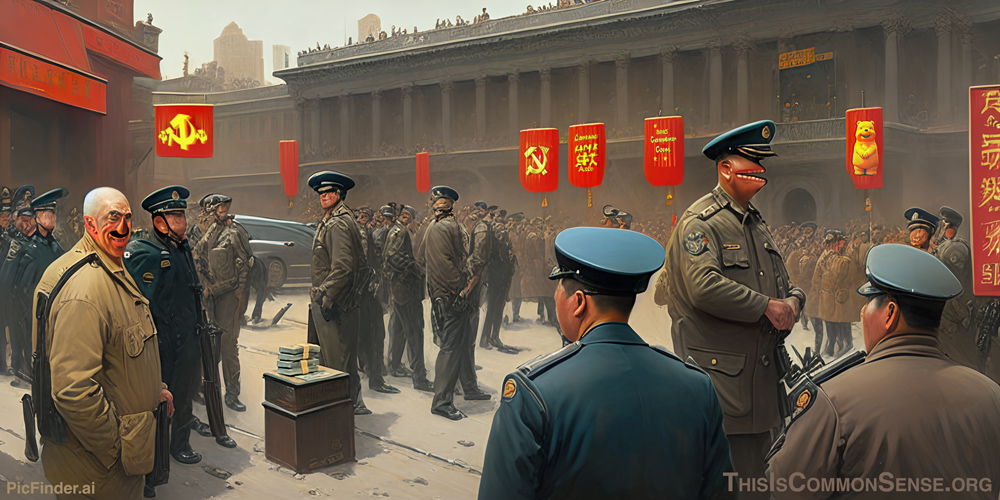
On July 3, the Hong Kong police, mere lackeys of the mainland government, placed bounties of one million Hong Kong dollars (about $128,000 USD) on the heads of eight pro-​democracy dissidents no longer living in Hong Kong.

“We’re absolutely not staging any show or spreading terror,” says top HK police official Steve Li. “We’re enforcing the law.” Oh.

CNN notes that “many of the activists have continued to speak out against what they say is Beijing’s crackdown on their home city’s freedoms and autonomy.”

“What they say” is Beijing’s crackdown? 

Just a smidgen of investigative journalism would enable CNN’s reporters to report, as fact, that there has indeed been a crackdown, that it’s not just “critics” who say that the 2020 National Security Law has been used to destroy the pro-​democracy, pro-​human rights movement in Hong Kong and “cripple its once vibrant society.”

But I guess folks at CNN dare not risk bounties on their heads, also.

This is Common Sense. I’m Paul Jacob.


PDF for printing

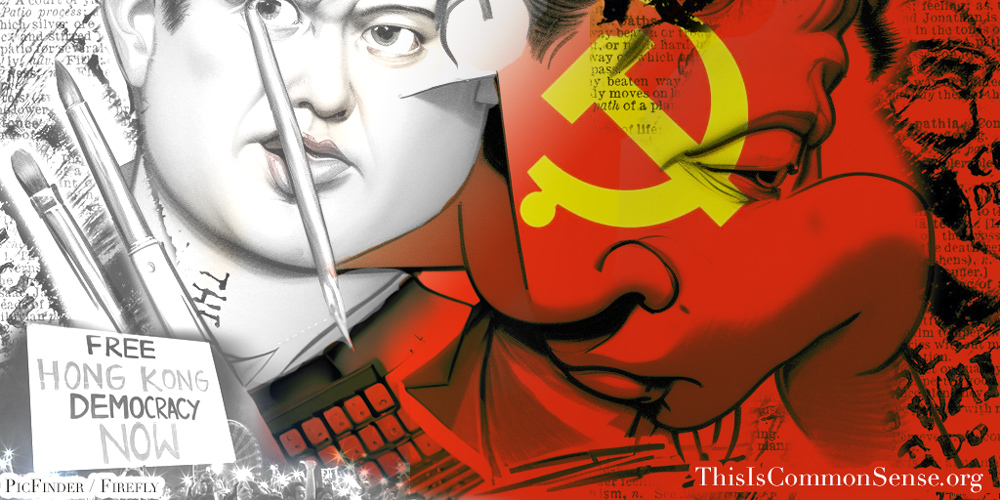
Illustration created with PicFinder​.ai

See all recent commentary
(simplified and organized)
See recent popular posts
Categories
general freedom individual achievement

A Life of Meaning

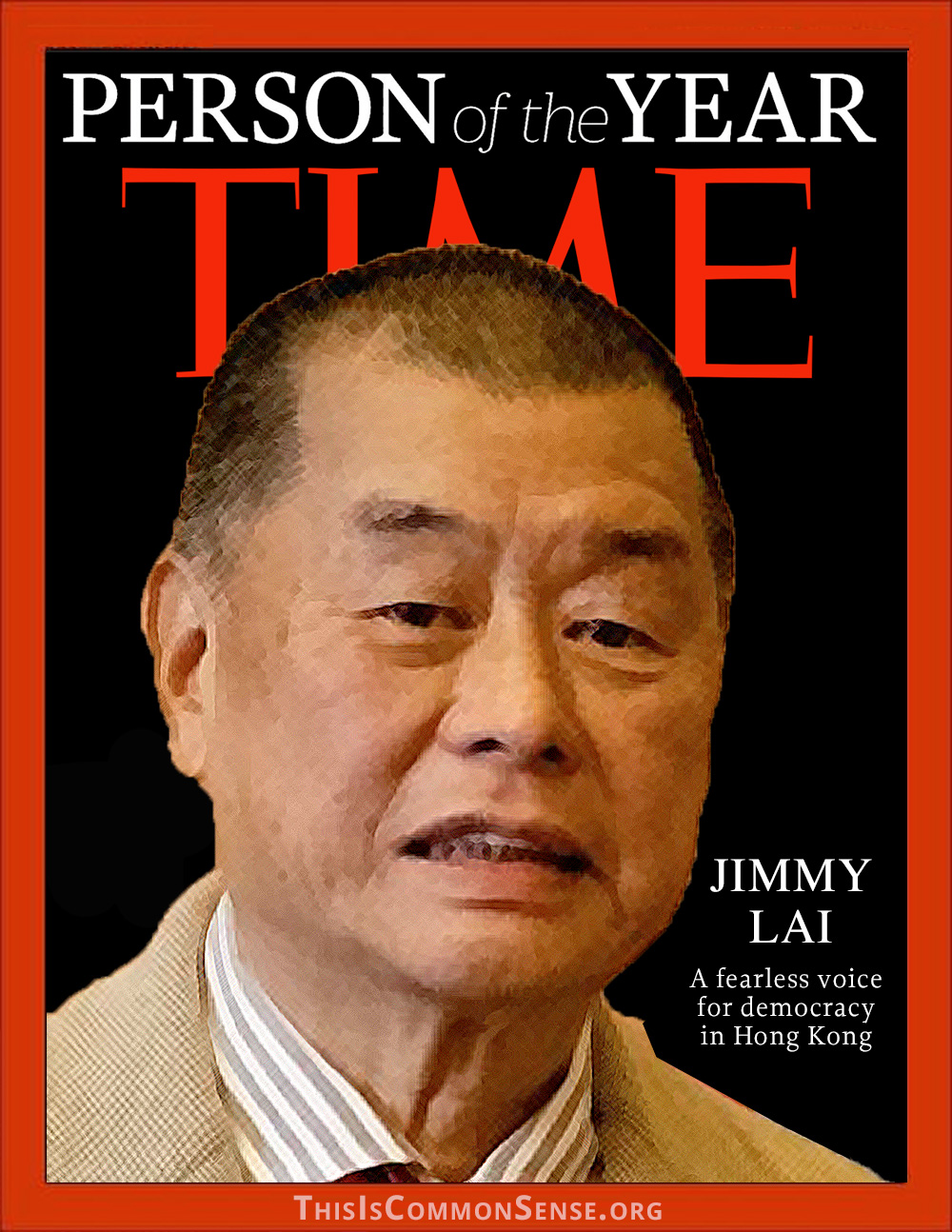
My wife and I are attending tonight’s Milton Friedman Prize for Advancing Liberty dinner at the Cato Institute. We are very excited, for this year’s award will be given to a very worthy recipient: Jimmy Lai.

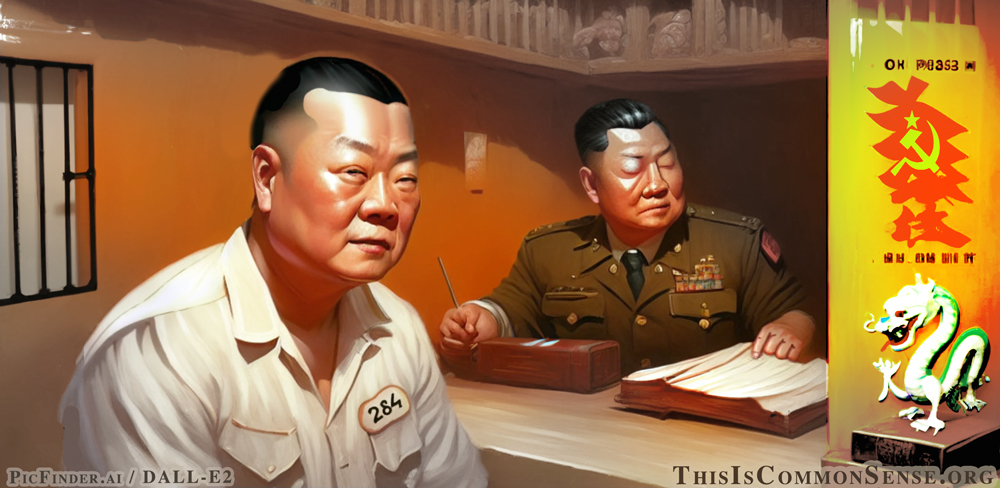
The 75-​year-​old Lai, alas, won’t be there.* He sits in a Hong Kong jail for committing the Chinese Communist Party’s most feared crimes: speech, association, practicing religious faith, advocacy for democracy and human rights. And he awaits more charges that could (and probably will) keep him in prison for life.

Lai is no stranger to this audience. Last December, I gave two thumbs up to the Acton Institute’s documentary†, “The Hong Konger: Jimmy Lai’s Extraordinary Struggle for Freedom”; back in 2020, I noted his long deployment on Hong Kong’s front lines of freedom.

Lai escaped to Hong Kong from Communist China as a kid. His hard work and entrepreneurial skills made him a wealthy man. He used that wealth to advance freedom, including publishing the pro-​democracy Apple Daily, which was shuttered by Chinese authorities in 2021 under the National Security Law. 

Mr. Lai could have escaped it all with plenty of money to live comfortably somewhere far away from the Chinazis. “I think you have to live a life of meaning,” he offers. “And I find taking responsibility to fight for freedom is meaningful for me.”

Thanks to Jimmy Lai and the Hong Kong protesters for standing up against the CCP, the world has a much clearer view of those imprisoning him. Let’s hope the world acts accordingly.

This is Common Sense. I’m Paul Jacob.


* The Wall Street Journal’s William McGurn, a friend of Lai, will give the keynote address. Jimmy Lai’s son, Sebastian, will be there to receive the award. 

† The documentary now has over a million views on YouTube, which may be why Tik Tok “shut down” the Acton Institute’s account. Meanwhile, for context , a documentary to “mark the handover anniversary,” on which the Hong Kong government spent $1.3 million, garnered only 4,000 views.

PDF for printing

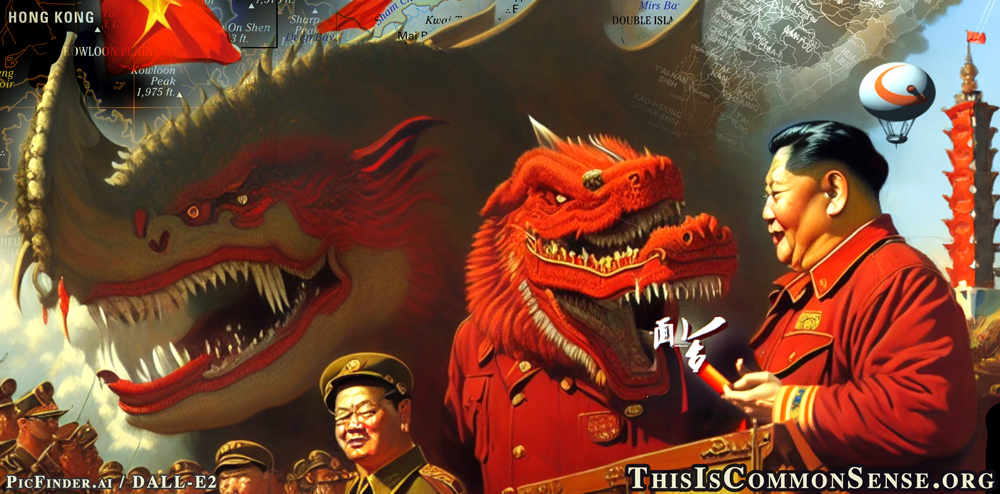
Illustration created with PicFinder​.ai and DALL-E2

See all recent commentary
(simplified and organized)
See recent popular posts
Categories
international affairs

Here-​at-​Home Problem

The China problem is “not just a distant ‘over there’ problem,” Rep. Mike Gallagher (R‑Wisc.) recently argued. “As the spy balloon incident as well as the illegal CCP police stations on American soil illustrate, it’s a ‘right here at home’ problem.”

It’s also a just-​north-​of-​us problem. Canada is currently expelling a Chinese diplomat and dealing with the fallout over China’s interventions in Canadian politics, along with big financial gifts to a foundation for Prime Minister Justin Trudeau’s father.

An article in The Globe and Mail nonchalantly explained the reasons China is engaged in trying to control the speech of every one of the planet’s inhabitants. The Chinese Communist Party (CCP) has many international goals:

  • “build acceptance abroad for its claims on Taiwan, a self-​ruled island that it … reserves the right to annex by force.”
  • “play down its conduct in Xinjiang, where the office of former UN Human Rights commissioner Michelle Bachelet last year said China has committed ‘serious human-​rights violations.’”
  • “generate support for a draconian 2020 national-​security law to silence opposition and dissent in Hong Kong.”
  • “quell foreign support for Tibet, a region China invaded and annexed more than 70 years ago, and to discourage opposition to Beijing’s militarization of the South China Sea and sweeping maritime claims in the region.”

Having committed a long list of crimes against humanity, the CCP understandably demands that everyone keep their mouths shut. 

Rep. Gallagher believes the U.S. should improve “our deterrent posture across the Taiwan Strait” and communicate “in clear terms that we will not stand idly by while the CCP continues to increase its aggression internationally” — while President Biden has repeatedly pledged U.S. military support for Taiwan.

But for some reason, Biden has never discussed the prospect with the American public. 

As if it weren’t our concern, too.

This is Common Sense. I’m Paul Jacob.


PDF for printing

Illustration created with PicFinder​.ai

See all recent commentary
(simplified and organized)
See recent popular posts
Categories
Common Sense general freedom international affairs

Hong Kong Help

“What can we do to help?” the woman asked after seeing the Acton Institute’s new documentary, “The Hong Konger.” The film tells the life of billionaire Jimmy Lai, the owner of Apple Daily, the pro-​democracy newspaper shut down by the Beijing-​controlled Hong Kong government. 

Lai went from rags to riches in the city’s free enterprise system, but presently sits in a jail cell already convicted of a ridiculous fraud charge (for which he was sentenced to a whopping 69 months) and awaits trial for violating the totalitarian national security law that criminalizes anti-​government speech. 

This week, that trial was postponed until next September. A conviction could keep him in jail for the rest of his life.

What can we do?

Well, for Lai and the others: precious little, beyond prayers. 

We should focus, instead, on what these freedom-​fighters have done for us. Their agitation — culminating in the 2019 protests that brought millions (close to one of every three HK residents) into the streets to demand basic democracy and human rights — woke up the world to the threat posed by the Chinese regime.

Lai could have taken his wealth and left to sip Mai Tais on a sunny beach on the far side of the globe. The student leaders of the protests — the best and the brightest — likewise knew how long their odds were, how dangerous their stand. 

Yet, Lai and the protesters stood up to the Chinazis anyway. Why? Because good people must stand up to evil … or evil wins.

We must also honor their sacrifice by preparing to protect ourselves, our freedom and all that we hold dear against this tyranny. 

This is Common Sense. I’m Paul Jacob. 


PDF for printing

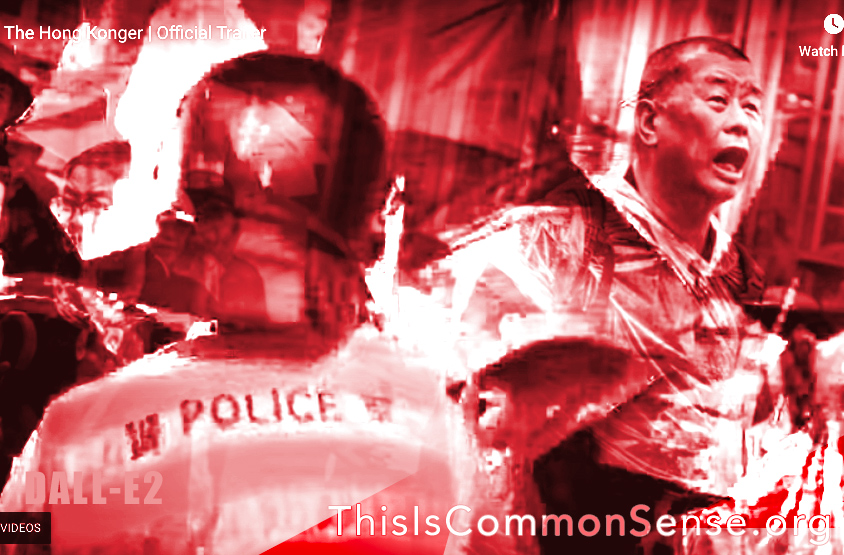
DALL-​E2

See all recent commentary
(simplified and organized)
See recent popular posts
Categories
general freedom individual achievement meme

Jimmy Lai

Categories
general freedom ideological culture international affairs

‘Ideological Prejudices’

“‘One country two systems’ has been tested and proved time and again,” Chinese ruler Xi Jinping told his hand-​picked Hong Kong audience last week, “and there is no reason to change such a good system.”

Twenty-​five years into that “good system” — created when the United Kingdom signed it over to the Chinese Communist Party with the proviso it would recognize basic civil liberties in Hong Kong until 2047 — Xi was taking a victory lap. 

He had successfully squelched freedom of speech and of the press.

“China’s government is,” Ian Easton writes in The Final Struggle: Inside China’s Global Strategy, “far more powerful and sophisticated than any that came before. Nazi Germany, Imperial Japan, the Soviet Union, and Putin’s Russia all pale in comparison.”

Easton, who studies defense and security issues involving the U.S., China, Japan, and Taiwan at the Project 2049 Institute, also pointedly suggests that it is “of national importance that Hollywood begins to make movies about China that are not censored.”

Censored by Beijing, he means

China’s long list of tyrannies has gotten so bad that even NATO — yes, the North Atlantic Treaty Organization — has recognized the threat posed by the totalitarian country engaged in the largest military build-​up in human history. 

“NATO has listed China as one of its strategic priorities for the first time,” Al Jazeera reported weeks ago, “saying Beijing’s ambitions and its ‘coercive policies’ challenge the Western bloc’s ‘interests, security and values.’”

To which the Chinese objected, arguing the NATO statement “vilifies China’s foreign policy” and “China’s natural military development” and was “filled with … ideological prejudices.”

They have a point. It’s about time the West shows a bit of “bias” against totalitarianism and genocide.

This is Common Sense. I’m Paul Jacob.


PDF for printing

See all recent commentary
(simplified and organized)
See recent popular posts
Categories
general freedom international affairs

China Trip Itinerary

It’s nice to be invited.

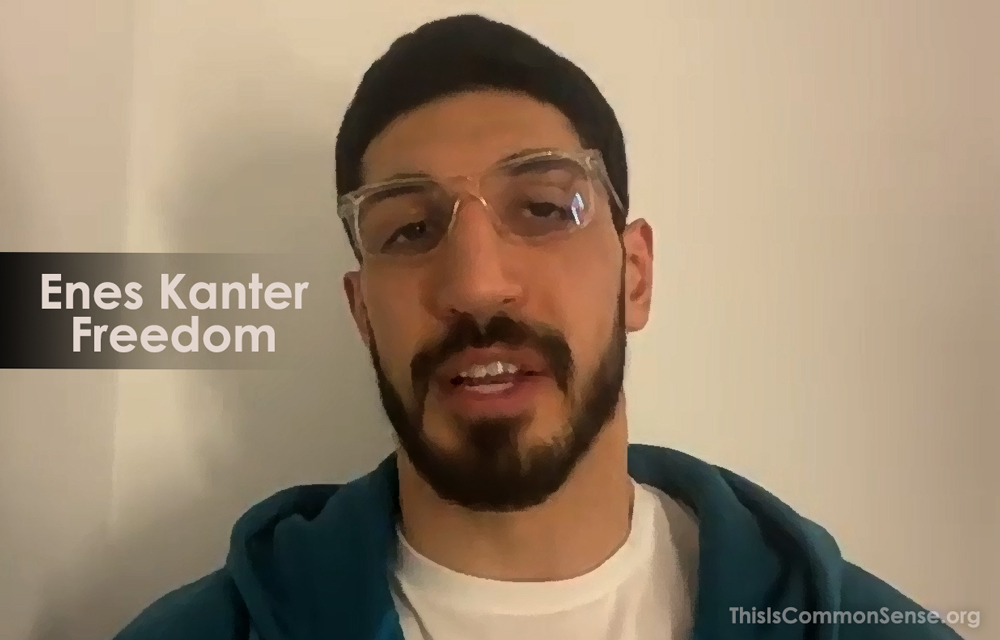
Either former NBA basketball player Yao Ming or a Chinese Communist Party handler standing just behind him had the idea of inviting Enes Kanter Freedom to visit China, where Yao Ming would be his tour guide.

Mr. Freedom, a current NBA player, is a sharp critic of the Chinazi regime and advocates boycotting the Beijing Olympics. Yao Ming says the proposed trip would help Freedom to “have a more comprehensive understanding of us.”

Enes Freedom has accepted the invitation, conditionally.

  • He asks, in a video reply, whether he and Yao Ming could “visit the Uyghur slave labor camps? Or visit the innocent women being tortured, raped, and abused?”
  • What about the Tibet Autonomous Region? “Can we see what the regime is doing to these beautiful people?” Such a trip could show the world how the CCP is “erasing Tibetan identity, religion, and culture.”
  • Hong Kong too. “On this trip, can we please visit Hong Kong together? Hong Kong used to be one of the freest cities in the world, yet now the destruction of the free press, crackdowns on rights, and more arrests are happening each and every day.”

Enes Freedom is ready to learn more about China and Chinese government policies in the company of Yao Ming. But will the Chinazi government permit the trip to proceed as outlined?

We know the answer. 

On the other hand, Enes invited Yao to visit Taiwan to witness how “democracy is thriving.”

This is Common Sense. I’m Paul Jacob.


PDF for printing

See all recent commentary
(simplified and organized)
See recent popular posts
Categories
First Amendment rights international affairs

Disney’s Memory Hole

China’s leaders fear Winnie the Pooh.

And The Simpsons.

The totalitarian regime’s opponents liken Xi Jinping, the latest Dear Leader, to Winnie the Pooh — due to an obvious resemblance. So Xi’s government works hard to expunge Winnie images.

The Chinazis also want everyone in China and Hong Kong (not to mention across the universe) to forget the Tiananmen Square massacre of 1989, when hundreds or thousands of people demanding democratic reform were killed. 

The Walt Disney Company is eager to cooperate with this besieging of memory.

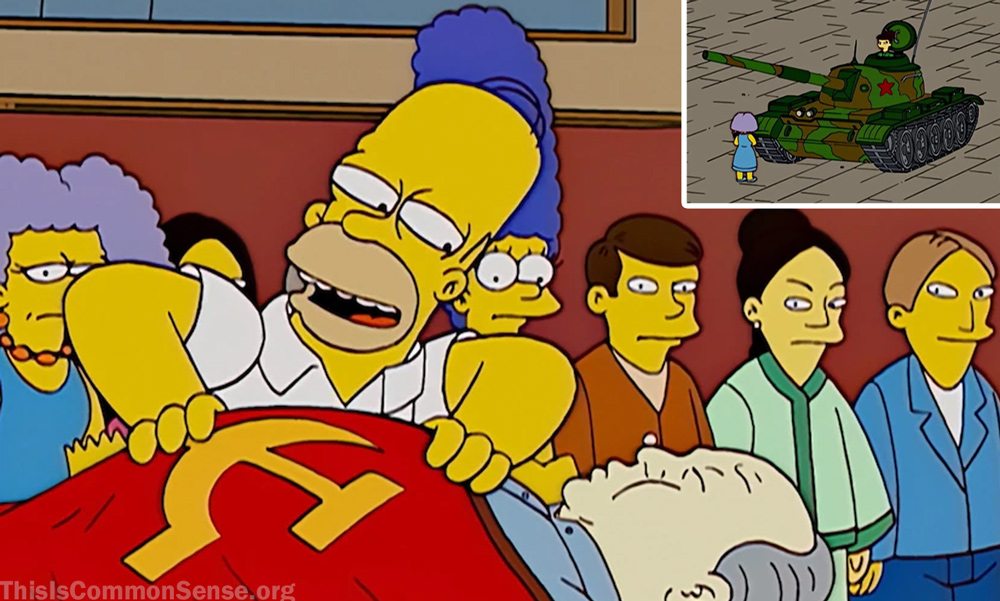
The Simpsons is part of its new streaming service in Hong Kong, where citizens have been losing the last remnants of political freedom permitted under the two-​systems agreement of 1997. Whether preemptively or in compliance with instruction from the Chinese government, Disney has deleted a certain episode from the series’ archive available to Hong Kongers.

In the memory-​holed episode, “Goo Goo Gai Pain,” Homer, presiding over the corpse of Mao, opines that Mao is “like a little angel that killed fifty million people.”

Another character has a stare-​down with a tank, recalling the briefly effective “tank man” confrontation with a row of tanks in that fateful June of 1989.

The episode also satirizes the Chinazi determination to erase all discussion of Tiananmen. For instance, the Simpsons see a sign at Tiananmen Square announcing “on this site, in 1989, nothing happened.”

Instead of appeasing Xi’s government, what should Disney do? 

What anybody who is paid to help repress a people and blank out the past: Stop doing that. 

Forfeit the money. 

Stand up for human rights. 

Or lose them.

This is Common Sense. I’m Paul Jacob.


PDF for printing

See all recent commentary
(simplified and organized)
See recent popular posts
Categories
international affairs

Slow on Subjugation

Latest: China opposes democracy!

When Great Britain turned Hong Kong over to China in 1997, the half-​capitalist, ninety-​nine-​percent-​totalitarian mainland government promised, scout’s honor, to preserve “one country, two systems” for 50 years. Hong Kong was to be mostly autonomous.

Almost immediately, China began interfering in Hong Kong’s democracy with the help of puppet officials on the island. 

In 2003, China tried to impose a “national security law” to squelch the Hong-​Kong-​system part of the two systems. Criticism of the Chinese government would be treated as sedition. Five hundred thousand Hong Kongers marched in protest. Not wanting to send bombs and tanks, China retreated.

Hong Kongers blunted other assaults in 2012, 2014, and 2016.

But this last year, with the help of pandemic-​rationalized restrictions on civic life, China has been making great leaps forward with its agenda. Recently, it detained 53 Hong Kongers for the terrible crime oftrying to run candidates in local elections.

Observing this, Victoria Hui, a political science professor at the University of Notre Dame, has reached an insight. 

“This is a total sweep of all opposition leaders,” she says. Why, if it is judged “subversion” just to run for office in Hong Kong, then the true purpose of the new security law is “the total subjugation of Hong Kong people.”

This goal has been blatant at least since 2003; longer, to anyone who knows China’s history. Sounds like Ms. Hui is only now catching on. 

This is Common Sense. I’m Paul Jacob.


PDF for printing

See all recent commentary
(simplified and organized)
See recent popular posts