Categories
general freedom ideological culture Popular

What It Means

The most inspiring political event of my six decades on this planet remains the pro-freedom and democracy protests of three decades ago, when for seven weeks first students and then other Chinese citizens occupied iconic, historic Tiananmen Square in Beijing.

“In the history of communist China,” said a CNN correspondent as a million people swelled into the square, “there has never been anything like this.”

The students’ demands were strikingly similar to those articulated in America’s Declaration of Independence, and their symbol was the Goddess of Democracy and Freedom, something of a replica of our Statue of Liberty.

Now, one might ask what the protestors knew of liberty and democracy. “To them,” offered Princeton Professor Perry Link, “democracy just meant ‘get off our back.’”

What, it doesn’t mean that?

“We probably don’t know what democracy is, living in China,” acknowledged student leader Wuer Kaixi, “but we have a pretty good idea what totalitarianism, what non-democracy, is.”

That totalitarian tyranny exploded late this very evening 30 years ago, when Chinese troops fired on unarmed protesters and tanks rolled; the massacre continued into the wee hours of June 4, 1989. Death counts range from 300 to several thousand, and there’s uncertainty as to whether the carnage took place in or out of the square, killing mostly workers or students. Regardless, it is all-too-typical behavior from an illegitimate regime.*

The saddest news is that, as a survivor told the South China Morning Post, “What happened [30] years ago in China . . . is still happening now in China.”

Over a million Uighur Muslims are, reportedly, confined in concentration camps right now.

What can we do? Remember, for starters.

This is Common Sense. I’m Paul Jacob.


*Firing on one’s own citizens is far too common, and delegitimizes any regime that practices it, as I have pointed out per Nicaragua, Venezuela, and U.S.-subsidized Egypt — the list goes on and on.

PDF for printing

Goddesss of Democracy, China, freedom, protest,

See all recent commentary
(simplified and organized)
See recent popular posts

Categories
crime and punishment

Prisoners All

The logic for drug prohibition is direct: to keep people from hurting themselves with recreational drugs, we must prevent them from accessing those drugs.

Voilà!

There are a number of things wrong with that, though, and one is this: governments cannot even keep illegal drugs out of prisons

In California, nearly 1,000 men and women overdosed last year in “an alarming spike in opioid use by those behind bars,” reports the San Francisco Chronicle

Steven Greenhut, writing in Reason, notes that confinement centers are “among the most tightly controlled environments on Earth, yet correction officials can’t figure out how to deal with dramatic spikes in the number of inmates who are dying from drug overdoses and alcohol poisoning.”

Doesn’t this make the prohibitionist “solution” absurd?

“If they can’t keep heroin off of death row,” Greenhut concludes, “then maybe they should rethink their ability to control the rest of us.”

There is a problem, here, though — it is easier to control “the rest of us.”

As with gun control laws, it is the law-abiding folks who fall in line. It is the edgier, less civic-minded people who tend to rebel. 

But the two issues remain distinct: generally lawful and level-headed citizens still need to defend themselves from criminals, but do not feel a need to take drugs that can be deadly even in innocent hands. Thus the War on Drugs seems a bit less obviously tragic than gun control.  

Which is why conceiving of the War on Drugs as unworkable prison policy writ large remains important.

Why would we want to make our society more like drug-ridden prisons?

This is Common Sense. I’m Paul Jacob.


drug war, prison, jail, prohibition, ban, freedom,

Photo credit: Thomas Quine

See all recent commentary
(simplified and organized)
See recent popular posts

Categories
free trade & free markets political economy

Bitcoin to the Rescue

I own no Bitcoin; it’s not my thing. The blockchain concept Bitcoin is based upon seems clever, sure, but I often curse at my “devices,” so only my politics prevents me from full-blown Luddism. 

Besides, when I think “the people’s money” I don’t think “private fiat currency.” Which is what Bitcoin sure looks like to me.

But to quote from these very pages, “When times get tough, the tough . . . switch currencies.”

And times cannot get much tougher than in Venezuela right now. No wonder “many are turning to digital assets such as Bitcoin as an alternative to the Venezuelan bolivar,” writes Matthew Di Salvo for the BBC.

“Critics say Bitcoin and other cryptos — there are more than 1,600 globally — are unstable, use too much energy, and are used by money launderers or those wanting to buy illicit goods on the web,” Di Salvo explains.

These points need addressing. I’ll try:

  1. A wannabe money will be as unstable as investor demand. When actually used as money, though, we may expect more stability. And Bitcoin is deflationary, so it should be more stable than government money.
  2. As if our banks and ATMs don’t use energy!
  3. Used by bad people? Well, you can say that about cash. But if we get rid of cash — as many experts want to — you can kiss any hope for freedom goodbye.

Venezuelans, by turning to keeping “their money in a digital wallet in the form of Bitcoin, Litecoin, Dash or any of the others,” are grabbing at something much better than what their malign inflation-happy government provides.

It is a pity that the “free-market” alternative is called “crypto” — meaning secret.

Freedom is the world’s best-kept secret?

This is Common Sense. I’m Paul Jacob.


PDF for printing

Bitcoin, cryptocurrency, Venezuella, freedom, privacy, cash, money

See all recent commentary
(simplified and organized)
See recent popular posts
Categories
crime and punishment general freedom media and media people moral hazard

Porn, Video Games and British Crime

British freedom is eroding. The attack comes from two directions.

First, there is the over-bearing police-state style, surveillance-everywhere government.

Second, there is the increasing violence.

Thing is, the justification for Britain’s mass surveillance, as well as for strict gun controls, was to prevent crime.

Oops.

So of course the Labour Party “shadow home secretary” Diane Abbott points an accusatory finger at porn and video games. These two influences may be “desensitising young people to vicious behaviour.”

Well, porn and video games are changing our cultures, on both sides of the pond. But in America, at least, the crime rate for the past two decades plumetted while video games and Internet porn have become ubiquitous, explicit and . . . admittedly, appalling.

Look elsewhere for the crime uptick.

The Brexit fiasco, with the Tory government messing up implementation of the 2016 referendum results, has surely increased, not decreased, tensions all around, as has immigration policy, the collapsing National Health system, and much more. But worst of all? The nanny state, treating citizens as childish subjects. The police arrest people for nothing more than saying mean or just edgy things online. 

If people cannot be free legally, they will take license — illegally. 

Previously, we heard about a rash of acid attacks: acid thrown in the faces of pedestrians. More recently, the headlines are about stabbings — after years of knife control, of government crackdowns on even kitchen knives.

Ms. Abbott places the primary blame for rising crime not on the above, however, but on poverty and malfunctioning education. Not mentioned? The possibility that taking away British citizens’ rights of self-defense may have the perverse (unintended?) consequence of increasing offensive violence.

This is Common Sense. I’m Paul Jacob.


PDF for printing

Great Britain, British, England, knives, violence, freedom, surveillance,

See all recent commentary
(simplified and organized)
See recent popular posts
Categories
general freedom national politics & policies The Draft too much government

Green New Conscript?

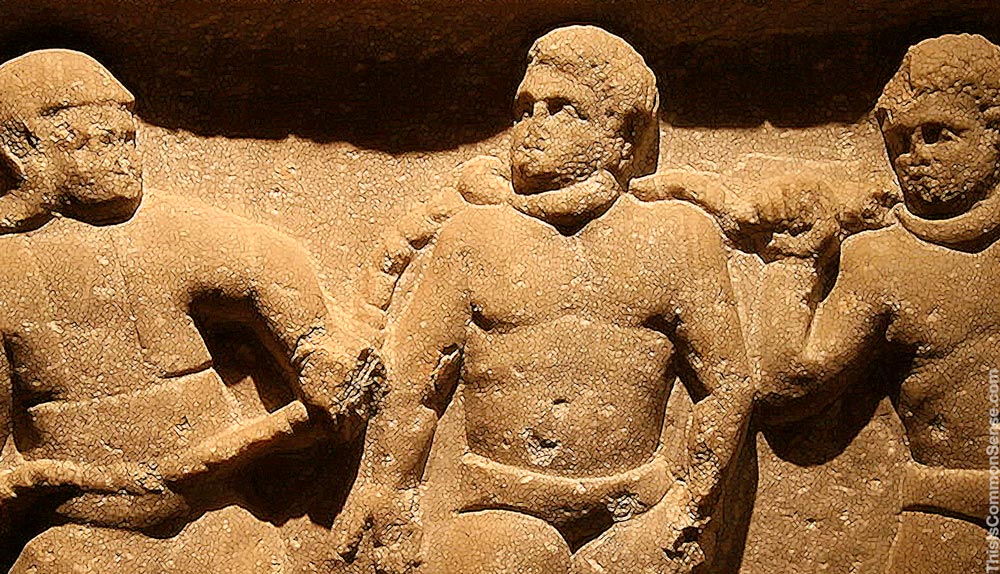
It can happen here. Congress could simply identify a group of citizens and pass a law forcing them into servitude.

At least, Congress thinks it has this incredibly abusive power . . . even though the 13th Amendment specifically prohibits it.*

In fact, the idea of conscription — not merely for military service, but also for performing the most routine civilian government functions — is this very day being debated in Washington by a congressionally-empowered body: The National Commission on Military, National and Public Service. The commission is charged with advising Congress on whether to expand draft registration to women or end it for men, as well as whether or not to create a mandatory “national service” program for young people.**

“Should Service be Mandatory?” is the title of the afternoon hearing at American University. 

The Brookings Institution’s William Galston and author Ted Hollander will advocate for drafting all young Americans and sentencing each to a year of compulsory service to the federal government. Thank goodness, my friend Doug Bandow, a senior fellow at the Cato Institute, will speak against mandatory national service, as will soon-to-be-friend Lucy Steigerwald, a contributing editor at Antiwar.com. 

The public can comment for up to two minutes, and I certainly will demand the commission abandon any contemplation of assaulting the freedom of young people under the false claim of “national service.” 

True public service is not involuntary servitude to the government. And vice-versa. Americans, even young Americans, have rights.

Tell the Commission to tell Congress: No forced service.

This is Common Sense. I’m Paul Jacob. 


TELL THE COMMISSION: NO

MY STATEMENT: Leave Those Kids Alone


* Regarding the military draft, the U.S. Supreme Court has somehow sidestepped the Amendment’s very clear language.

** No surprise that politicians and “experts” are targeting the politically least established adult age group.

PDF for printing

See all recent commentary
(simplified and organized)
See recent popular posts
Categories
free trade & free markets media and media people too much government

A Former Economist

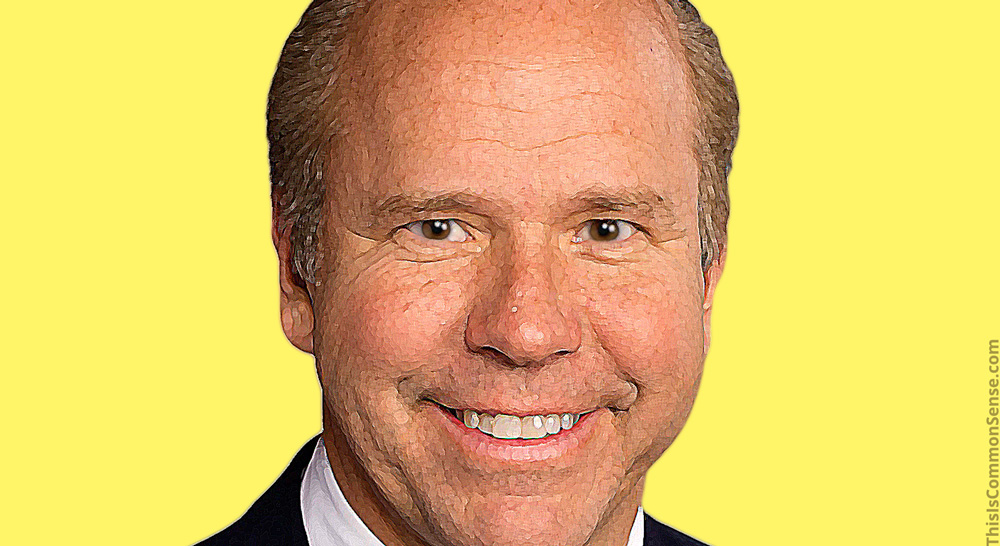
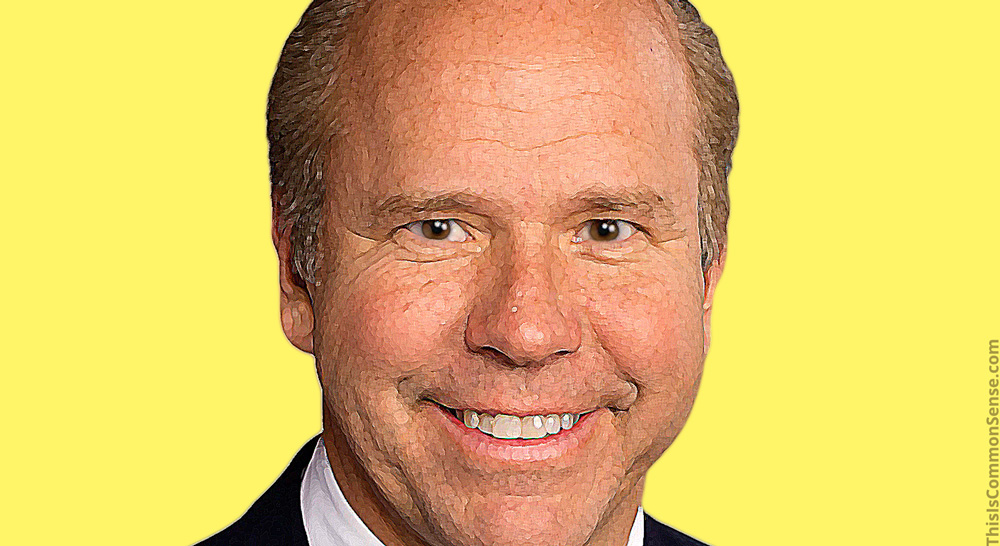
Paul Krugman, New York Times columnist and former economist, tested our patience last week with “Trump’s Big Libertarian Experiment.” How many non sequiturs will squeak past the Gray Lady’s editorial department? 

Loads — and all about how the federal government shutdown gives limited government folks what they want: less government.

Subsidy checks to farmers aren’t going out, as “libertarian organizations like Cato” have long advocated. Sure. But it’s no policy change.

As soon as there’s a budget deal, those checks will be made up.

Further, “businesspeople are furious that the Small Business Administration isn’t making loans.” 

Well, it’s high time businesses were weaned off the SBA teat — and a few whiners do not a case for subsidy make.

And then there’s the Food and Drug Administration, which can no longer inspect foods. Since “there’s a long conservative tradition, going back to Milton Friedman, that condemns the F.D.A.’s existence as an unwarranted interference in the free market” libertarians must be pleased, eh?

There is also a long tradition among economists that says businesses don’t get rich poisoning their customers, and that there are many mechanisms in place — and, barring the FDA, more would be in place — to ensure customers that they won’t be infected by eating . . . Romaine lettuce.

Which then Krugman admits . . . as if he had belatedly recalled Friedman’s lesson in Capitalism and Freedom. He concedes that the shutdown is not the way Friedman would go about limiting government. Besides, “libertarian ideology isn’t a real force within the G.O.P.”

So what’s the point?

Krugman ends with talk of a smell test: does lack of food inspections smell like freedom?

Something stinks here. But it isn’t spoiled food. Or freedom.

This is Common Sense. I’m Paul Jacob.


PDF for printing

Paul Krugman, libertarianism, libertarian, freedom, shutdown

See all recent commentary
(simplified and organized)
See recent popular posts
Categories
term limits

The World Wants Term Limits

The Economist magazine has announced its “Country of the Year.” 

It’s Armenia.

The idea behind the award is to recognize the nation that has “improved the most” during the past year. The honorific implies no rosy assumptions about the future. Obviously, a country can backslide. The Economist’s editors admit that this proved to be the case with prior winners France and Myanmar.

This year, Malaysia and Ethiopia were in the running. Malaysians managed to oust a corrupt prime minister, and the new leader of Ethiopia has sought to encourage freedom of speech and liberalize the economy. But, all things considered, the magazine regards the advances in these countries to be too contradictory or uncertain to merit the Most Improved designation.

Progress seems more definitive in Armenia, where former President Serzh Sargsyan did his darnedest to escape presidential term limits — as is attempted by so many heads of state around the world.

Sometimes the power-grabbers succeed and sometimes they don’t. But everywhere, most voters oppose such shenanigans. They know how easy it is for an incumbent to shove his way to perpetual power no matter how unhappy they may be with him. Citizens know the value of term limits.

Armenia’s good news is that Sargysan’s attack on term limits failed — dramatically. He resigned after massive demonstrations. An opposition figure, Nikol Pashinyan, won power “on a wave of revulsion against corruption and incompetence. . . . A Putinesque potentate was rejected.”

Just what the world needs to see — a lot more often.

This is Common Sense. I’m Paul Jacob.


PDF for printing

Armenia, term limits, freedom, progress, The Economist

See all recent commentary
(simplified and organized)
See recent popular posts
Categories
Accountability general freedom meme moral hazard national politics & policies

Madison on Perpetual War

“Of all the enemies to public liberty war is, perhaps, the most to be dreaded, because it comprises and develops the germ of every other. War is the parent of armies; from these proceed debts and taxes; and armies, and debts, and taxes are the known instruments for bringing the many under the domination of the few. In war, too, the discretionary power of the Executive is extended; its influence in dealing out offices, honors, and emoluments is multiplied; and all the means of seducing the minds, are added to those of subduing the force, of the people. The same malignant aspect in republicanism may be traced in the inequality of fortunes, and the opportunities of fraud, growing out of a state of war, and in the degeneracy of manners and of morals engendered by both. No nation could preserve its freedom in the midst of continual warfare.”


James Madison, Political Observations, Apr. 20, 1795 in: Letters and Other Writings of James Madison, vol. 4, p. 491 (1865)

Categories
general freedom ideological culture Popular too much government

Socialism Is Anti-Democracy

Common sense politics must peer beneath the superficial attractions of “democratic socialism.”

In “Civil Liberties and Socialism Don’t Mix,” Matthew Harwood explains why those who call themselves democratic socialists may “say they believe in civil liberties” nevertheless “will always be hostile to individual freedom.”

In this short Reason piece, Mr. Harwood starts out by showing that socialism cannot merely be “a more generous welfare state along Nordic lines.” For “socialism” to remain distinct socialists must offer a Unique Selling Proposition. You cannot plausibly push a “new” philosophy and stick to pushing the old liberal stand-bys of private property and markets.

Their own pretensions force them back to central planning, to economic planning for all by a few.

Which is not democratic, of course. It goes far further, to anti-majoritarian.

Actual economic planning requires micromanagement. Harwood quotes socialist economist and luminary Robert Heilbroner, who expresses this requirement as “the necessity to intervene deeply, and probably ruthlessly, into the economy in order to establish the socialist order in the first place.”  

But it cannot stop there. Once established, a socialist state must feel a “need to continue a policy of painful intervention” to adjust to “the constricting limits of the environment.”

“Democratic socialism is not freedom,” Harwood concludes. “It is authority paternalistically dressed up in the language of liberation and wielded on behalf of that fuzzy abstraction, ‘the people,’ regardless of what flesh and blood individuals want.”

Sure, democratic socialists may hope that majorities will allow their elites to plan for everybody. 

But once that handoff is made, the power obtained, then the tyranny.

Inescapably.

This is Common Sense. I’m Paul Jacob


PDF for printing


Categories
general freedom ideological culture Popular too much government

Who Benefits From Our Fears?

“Think of the children!”

I have daughters. And neighbors, nephews, nieces, cousins, friends with children. And friends who used to be children. But when the command to “think of the children” is screamed out by freaked-out paranoiacs demanding more laws, more punishments, more prison time, more surveillance — and consequently less freedom — I try to think responsibly.

As did one Corey Widen, when she “let her 8-year-old do the most normal, cheerful thing in the world — walk the dog around the block.” Lenore Skenazy tells the tale in Reason. “After the girl returned home, the doorbell rang. It was the police.”

Someone in Widen’s Wilmette, Illinois, community had seen the child and dog walking around “unsupervised” and called 911.

The thing, there was no lack of supervision, here. The child was supervising the dog.

What could be more natural?

The neighbor could have walked outside and smiled at the kid and talked about the dog and, in general, been a good neighbor.

Think of it as a peaceful order of supervision.

Instead: in came the police.

Then, after the police let it go, the Department of Children and Family Services stepped in to “investigate.”

Because nothing says DANGER more than a kid walking a dog.

Skenazy notes that this attitude is commonly justified by crimes against kids. And yet, Ms. Skenazy notes, crime in Wilmette has gone down dramatically over the years. As it has most elsewhere.

The culture has become more paranoid.

Who is served by this?

Authoritarians. Haters of freedom. Demagogues.

Certainly not kids, for kids cloistered from simple responsibilities cannot grow up to take on real responsibilities.

Think of the . . .  future adults.

This is Common Sense. I’m Paul Jacob.


PDF for printing