Categories
ideological culture national politics & policies

The Blue Plate Special

The biggest stories don’t always come in threes, but they sure did this week.

The Iowa Democratic Caucus debacle, President Trump’s State of the Union Address, and the Senate’s acquittal of the president after the House’s impeachment — big stories of big losses for Democrats.

As I write this, we still lack a “winner” on the Democratic side in Iowa. Blame is publicly given to the goofy “app” the Iowa Democratic Party bought to make the caucusing and counting oh-so-much easier. But I wouldn’t blame Bernie supporters for engaging in a little conspiracy conjecturing — the maker of the app has close ties to the Clinton machine. 

And if you cannot sniff a concerted anti-Bernie agenda on the part of establishment Democrats, your sniffer is broken.

Indeed, The Young Turks ably showed how major-media news sources skew stories away from the socialist from Vermont — by emphasizing the candidacies of Biden and Buttigieg.*

One can see why centrist Democrats would want to scuttle a serious socialist movement within their party, but it may be too little too late. After decades of courting the Gimme-Gimme vote with Loot the Rich demagoguery, socialistic attitudes have long been on the menu. So getting a hot, steaming socialism served back at them as a Blue Plate Special?

Priceless.

Literally.

But not costless.

For the cost is reasonability and decorum. After Trump ceased speaking before Congress yesterday, Speaker of the House Nancy Pelosi ripped up copies of the president’s address just to show her disdain for the president.

But it also shows frustration. The speech is over. Impeachment is over. Iowa is, incredibly, not yet over. And Pelosi’s party — under her guidance — is in complete and utter disarray.

This is Common Sense. I’m Paul Jacob.


* Ana Kasparian makes a pretty convincing case that Senator Bernie Sanders is the most popular of the three, and could even bring in independent voters.

PDF for printing

Blue Plate Special, Democrats, socialism,

See all recent commentary
(simplified and organized)
See recent popular posts

Categories
insider corruption international affairs national politics & policies

The Democrats’ Wrong Number

“Where’s Hunter?” Donald Trump asks in front of his pro-Trump rallies (and of course on Twitter), referring to Joe Biden’s son and his cushy Ukrainian sinecure. 

From the beginning of the Phone Call quasi-scandal, the upshot sure seemed to portend disaster for the Democrats, in general, and Biden’s presidential bid in particular — for, nested in the secrecies of Ukrainian corruption are not only the ties to the Biden Family Biz, but also perhaps to the conspiracy behind the Russiagate fizzle.

Surely, President Trump cannot kill two birds with one phone.

Impeaching him, however, still seems risky — for Democrats.

Mark Tapscott explored just how perilous by focusing on what might happen in the Senate, after a House impeachment. “Trump’s defense lawyers for the trial will have wide latitude to call witnesses and subpoena documents,” wrote Tapscott in late September.* “That could lead to devastating blows damaging Democrats for years to come, which possibility they would be foolhardy not to ponder seriously, given Trump’s love of political fisticuffs.”

Can the party of Big Government afford to publicize the most obvious lesson coming from their hyping of the Phone Call? 

The lesson being that the undrained swamp is nothing other than Crony Capitalist Politics As Usual.

No matter how divisive all this may seem, it may prove awfully educational — in the case against Big Government.

Bob Hope had a funny punchline, way back in the Eocene: “Boy, did I get a wrong number.”

In impeaching Trump over a phone call, Democrats may have dialed their destruction.

This is Common Sense. I’m Paul Jacob.


*  See “Assessing the Most Dangerous ‘What Ifs’ of the Democrats’ Impeach Trump Frenzy,” The Epoch Times (September 29, 2019).

Donald Trump, telephone, phone call, impeachment,

See all recent commentary
(simplified and organized)
See recent popular posts


Categories
Common Sense general freedom ideological culture

Dependence or Independence?

“America does not want to witness a food fight,” Senator Kamala Harris said at last week’s debate, reprimanding her squabbling fellow Democratic Party presidential contenders. “They want to know how we’re going to put food on their table.”

The no doubt well-rehearsed line drew raucous applause. She’s right; we’re not interested in a food fight.

But her second statement struck me as . . . odd . . . and not true. 

Harris spoke of how “we” — meaning they, the assembled politicians on the stage — are “going to put food” on “their” — meaning our — tables. 

Does she imagine that presidents produce our food, not farmers? Is she trying to say, “You didn’t grow that”? 

“Were we directed from Washington when to sow and when to reap,” the author of the Declaration of Independence wrote, “we should soon want bread.”

Perhaps this presidential aspirant remains unaware of how America became a land of abundance? It wasn’t the exertion of career politicians. Or regulators. Or bureaucrats. It was the amazingly productive engine that is a free people.

“Yet this government never of itself furthered any enterprise, but by the alacrity with which it got out of its way,” Henry David Thoreau explained in his famous 1849 essay, entitled Resistance to Civil Government. “The character inherent in the American people has done all that has been accomplished.” 

The difference between a society where people honor independence and one where, conversely, they idolize dependence on the government is the difference between bright day and darkest night. 

Today’s date is July 4th, but the holiday is Independence Day. It is not a celebration of dependence on cradle-to-grave big brother government. We celebrate freedom for the individual.

A Republic . . . if We, the People can keep it.

But how? How do we restore freedoms lost while retaining extant freedoms?

Well, with ideas. Arguments. Promotion of others’ efforts.

And for two decades, this daily commentary has defended freedom and those fighting for it. And I hope to keep the Common Sense coming far into the future. 

Yet, this effort is totally dependent on you — and your generosity. In this 20th year, won’t you make a special pledge of $20? Or $200? Or $2,000 if you have the financial freedom to do so.

“Those who expect to reap the blessings of freedom, must,” wrote Tom Paine in 1777, “undergo the fatigues of supporting it.”

Don’t worry, it won’t be so fatiguing. We stand up for freedom and against dependence on big government — with a rhetorical flourish now and again . . . and a sense of humor. 

Please pass the ammunition. And no food fight.

This is Common Sense. I’m Paul Jacob.


Kamala Harris, debate, Democrats, Fourth of July, Independence Day,

See all recent commentary
(simplified and organized)
See recent popular posts

Categories
incumbents political challengers term limits

Knock Down the Incumbency

Over the weekend, I suffered through Knock Down the House . . . so you don’t have to. 

While the documentary heralding four inexperienced Democratic women running for Congress in 2018 cost Netflix $10 million, I did not have to spend a dime — beyond my regular monthly subscription.

The award-winning film, directed by Rachel Lears, who wrote it along with her husband, Robin Blotnick, is expertly crafted. Unfortunately, it is geared to democratic socialists predisposed to adoring the subjects. 

The star is now Rep. Alexandria Ocasio-Cortez (D-N.Y.), who defeated then Rep. Joe Crowley, a ten-term, 20-year incumbent . . . the Number 4 Democrat in the House of Representatives.

In addition to Ocasio-Cortez, the movie follows Amy Vilela, seeking to replace a retiring Nevada Democrat; Cori Bush, challenging the Clay Family’s hereditary congressional dynasty in Missouri’s 1st district*; and Paula Jean Swearengin, battling incumbent Sen. Joe Machin in West Virginia’s Democratic Party Primary. Of the four challengers chronicled, all of whom received extensive support from two progressive groups, Justice Democrats and Brand New Congress, AOC was the only winner.

“Let’s assume all the energy in this room can get you on the ballot and into office,” offers a fellow at one of Ocasio-Cortez’s early meetings. “How, then, do we overcome the drop in power?”

“I think we really need to have to look at what that power does now,” AOC responds. “When it matters, [Rep. Crowley] doesn’t stand up for us; when it matters, he doesn’t advocate for our interests.”

Whatever one thinks of AOC’s politics, her point here is not without merit: the idea that we citizens benefit from longtime incumbents who ‘bring home the bacon’ is . . . baloney. 

This is Common Sense. I’m Paul Jacob.


* At the completion of this term, Rep. Lacy Clay, Ms. Bush’s opponent, will have served 20 years. His father, Bill Clay, held the seat for 32 years before that. Together, over half a century. The film alludes to the fact that Clay Jr. gained the seat in 2000 only after the surprise retirement of Clay Sr. on the very last day to file for the office . . . with Jr. filing, instead.

PDF for printing

Knock Down the House, socialism, term limits,

See all recent commentary
(simplified and organized)
See recent popular posts

Categories
term limits

In the Pudding

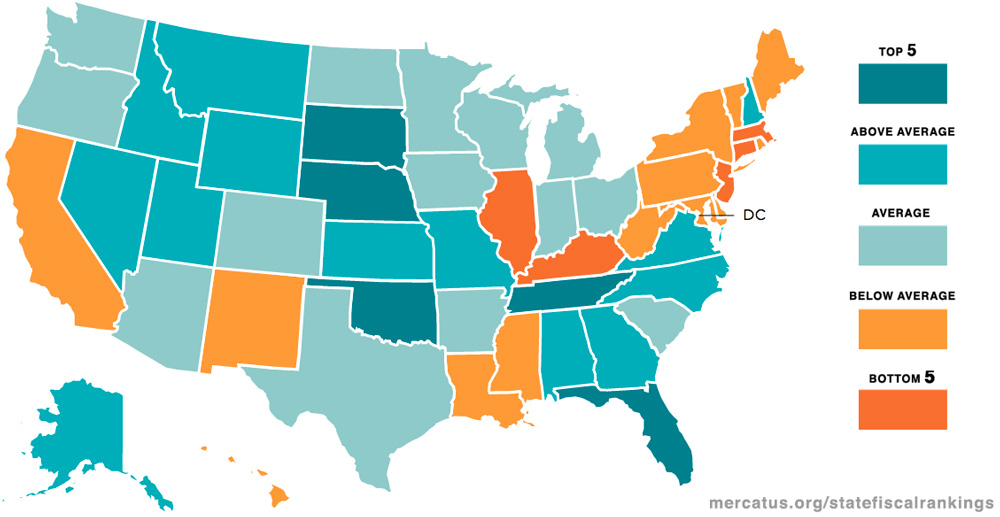
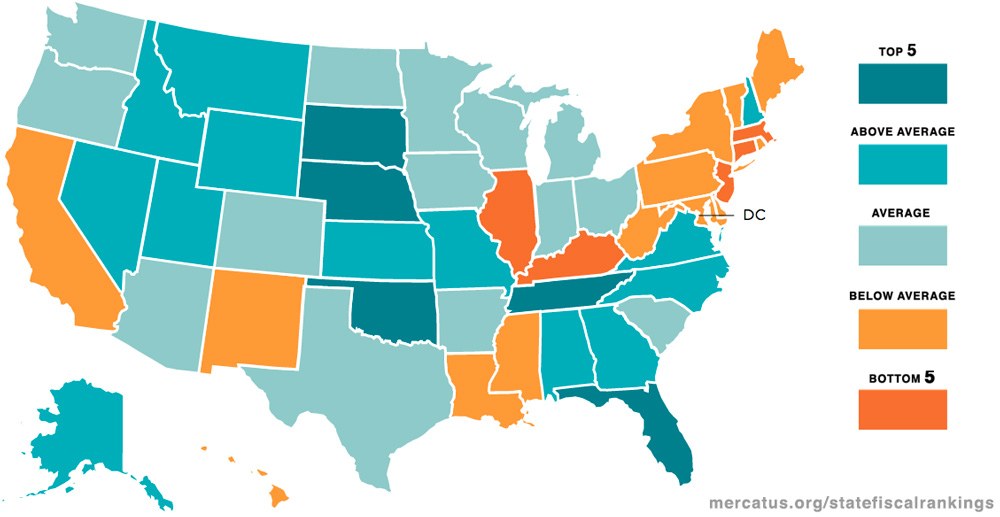
Republicans have made much hay of the Mercatus Center map of our United States, colored by fiscal condition. Why? Well, nine out of the ten least financially stable state governments are run by Democrats.

But there’s another way to look at it.

“Only 15 state legislatures in the U.S. are term limited,” U.S. Term Limits President Philip Blumel writes in a letter to the Mercatus folks. “However, four of your top five fiscally healthy states are term limit states.”

And how many of Mercatus’ bottom five states possess term limits?

Zero.

That’s 80 percent of the top states from a fiscal standpoint coming from just 30 percent of states where legislators are limited. And no state with term limits can be found at the bottom of the heap.*

Now, these impressive results do not prove “that this fiscal outperformance is due primarily to term limits,” Blumel admits. Instead, they do “effectively disprove a common objection to term limits.”

Legislators sans term limits are not “too inexperienced.” Indeed, these state rankings show the suffering, instead, lopsided on the states with no limit on how long legislators can stay in office. 

Blumel points out that term-limitless Illinois, with the “longest speakership in U.S. history under Mike Madigan,” ended up dead last, fiftieth.

“Legislators in term limit legislatures,” he argues, “have a broader range of experience than in non-term limited legislatures.” 

Reasonable. 

No extrapolation necessary, however, for the basic conclusion: State government fiscal health correlates strongly with legislative term limits.

This is Common Sense. I’m Paul Jacob.


* Mercatus’ results are no aberration. “We have seen term limit states crowd the top end of the ALEC rankings as well,” notes Mr. Blumel.

PDF for printing


Categories
incumbents insider corruption

The Politics of Exclusion

“The mainstream media screams about Russia stealing elections,” says U.S. senatorial candidate Dale Kerns, “but behind the scenes they pull the strings to keep the duopoly in control.”

Mr. Kerns, who is running in Pennsylvania as a Libertarian in a four-candidate race, has had the rug pulled out from under him. Early on, the League of Women Voters had assured him that he would be able to participate in televised candidate debates in Philadelphia. That opportunity was dashed as the date of the event neared.

“Make no mistake, this is cronyism,” insists Kerns, who notes that “big media corporations collud[e] with big government political parties to keep out competition.”

Eric Boehm covers the scandal/not-a-scandal over at Reason. The early promise of inclusion came from the League, and it was “other organizers” of the event who decided that the Libertarian and Green candidates’ polling numbers were low enough to excuse exclusion.

You might wonder why debate organizers would want to have less interesting debates. But remember: the two entrenched parties’ candidates want to win. Period. The last thing they want are challengers from other parties included, because those challengers can only peel off voters from them.* And though the major-media hosts may wish to seem non-partisan, they almost never refrain from taking a side. 

I do not (and cannot) know which reason contributed more to the Philadelphia renege, so will let you hazard your own guesses. 

This is Common Sense. I’m Paul Jacob.


* Which helps explain why the parties tend to “cheat with both hands,” as Nicholas Sarwark, the Libertarian candidate for the mayorship of Phoenix, Arizona, put it.

PDF for printing


Photo from Max Pixel


Categories
Accountability general freedom ideological culture porkbarrel politics responsibility too much government

Ask the Next Question

Republicans are very reliable. When given our system’s “Mandate of Heaven” — majorities in both houses of Congress and the Presidency — they can be relied upon to do one thing: add debt by piling up huge deficits.

It happened under George W. Bush, and it is happening under Donald J. Trump: “The Trump administration expects annual budget deficits to rise nearly $100 billion more than previously forecast in each of the next three years,” the Wall Street Journal tells us, “pushing the federal deficit above $1 trillion starting next year.”

Republicans should ask themselves why. And while they ask themselves that, everyone else should ask the next question: why do politicians who say they want one thing so often deliver its opposite?

This is not a mere “right-wing” phenomenon. Leftists say they want “democratic socialism,” but, as Irving Kristol noted, at some point not far down their road to Utopia, “democratic socialists” must choose between democracy and socialism.* By promising everybody everything, too quickly everybody gets shanghaied into service to produce that “everything,” finding themselves conscripts in socialism’s army.

The equation of socialism with regimentation and general un-freedom has been clear for over a century, explained carefully by sociologists, economists and even politicians.* And yet, increasingly, today’s Democrats are embracing a philosophy with proven anti-democratic features.

Could some deep principle be at play?

Probably. It is built into the very nature of state governance, of politics itself. It may be why republics metamorphose into empires, conservatives go radical and liberals become serviles.

Which is why effective democracy requires limited government. To minimize that boomerang effect.

We might start by limiting spending.

This is Common Sense. I’m Paul Jacob.


* Herbert Spencer’s writings on socialism include The Man versus the State (1884) and Industrial Institutions (1896, Principles of Sociology, Vol. III, Part VIII); German politician Eugene Richter’s satire Pictures of the Socialist Future (1896) is well worth reading; and economist Yves Guyot preceded Ludwig von Mises’ classic Die Gemeinwirtschaft (1922, translated as Socialism: An Economic and Sociological Analysis, 1950) with several books, including The Tyranny of Socialism (1893) and Socialistic Fallacies (1910).

PDF for printing


Categories
Accountability crime and punishment general freedom ideological culture moral hazard nannyism national politics & policies privacy too much government U.S. Constitution

Hooray for Congress!

When Congress behaves badly, I criticize. When it works well, I applaud.

I’ve waited a long, long, long time to put my hands together in polite applause.

It happened yesterday.

The U.S. House of Representatives passed a Senate bill, largely along party lines, to give those facing a terminal illness the “right to try.” That is, the right to try experimental drugs and treatments that haven’t yet been approved by the federal Food & Drug Administration (FDA). 

Of course, Congress doesn’t actually give us rights. We have always had the common law right — indeed, the human right — to freely seek a path to wellness when we are ill.

From time immemorial. Even before the FDA.

So, this legislation was, more correctly put, a way to announce that the congressionally-created FDA would stop blocking our freedom . . . provided we are dying and the government-approved medical establishment has no more licensed hope to offer.

The bill now goes to President Trump. “People who are terminally ill should not have to go from country to country to seek a cure,” he declared in his last State of the Union, “I want to give them a chance right here at home.”

Democrats overwhelmingly disagreed. 

“This will provide fly-by-night physicians and clinics the opportunity to peddle false hope and ineffective drugs to desperate patients,” argued Rep. Frank Pallone (D-N.J.).

Rep. Jan Schakowsky (D-Ill.) likewise charged that the legislation “puts patients at risk by allowing the sale of snake oil.”

But of course these patients are dying. That’s already as “at risk” as it gets. Our right to live includes a right to try to live.

This is Common Sense. I’m Paul Jacob.


PDF for printing


Categories
Accountability folly ideological culture media and media people national politics & policies tax policy too much government

The Hyperbole Is Falling

A mad killer is on the loose!

That is one way to get attention . . .

The sky is falling!

You are getting the idea . . .

Trump is literally Hitler!

Extravagant hyperbole is not necessary to criticize the current President. Indeed, as Chicken Licken and the Boy Who Cried Wolf demonstrate, that can backfire. Especially when you are complaining about something on which Trump has proved to be pretty darn good — the tax bill, for instance.

Nevertheless, as it passed through Congress, Democrat pols and the major media dinosaurs have doubled down on overstatement: A “middle-class con job” was Sen. Ron Wyden’s characterization; singer-actress Barbra Streisand (presumably now living in Australia or Canada), re-tweeting a New York Times piece on “the Great American Tax Heist,” accused Trump of pushing the bill for “personal gain”; Bernie Sanders calls it a “tax cut for billionaires” who, instead of being helped, he says, should be “asked to pay more in taxes.”

Yes, the richest (by and large) will get the most reductions, since they pay the most taxes already. Bernie should be reminded that it is the very nature of taxes that “ask” is the wrong active verb. And calling a cut in what’s taken from taxpayers a “heist” is too absurd for commentary.

It does look like most taxpayers will get tax relief. That’s good. Alas, the debt may grow larger, depending on the economic growth spurred by the tax reform. But I notice that the Democrats tend to complain about deficits only when Republicans are in charge. And vice-versa.

Partisan Derangement Syndrome at work.

This is Common Sense. I’m Paul Jacob.


PDF for printing


Categories
general freedom incumbents local leaders moral hazard national politics & policies responsibility too much government

Democracy — or Too Much Government?

The Democratic Party’s Unity Reform Commission met last week to concoct measures to pull the party from the brink of madness and oblivion.

The commission’s main recommendation? Limit the role of “superdelegates” in the nomination process.

Great — a first step I’ve long advocated. But the whole system needs more serious reform.

Jay Cost covered some of the problems associated with the parties’ candidate selection processes, yesterday, in the online pages of the National Review. Unfortunately, he went off the rails about an alleged “trend toward an unadulterated democratic nomination process,” which he regarded as a “major mistake.”

He misdiagnosed both the problem and the Democrats’ proposed cure. Neither is “too much democracy.”

America’s partisan voters keep selecting bad candidates because the major party duopoly is a rigged game — designed and regulated by incumbents for incumbents to solidify a protected class of insiders.

Which voters understandably seek to overthrow on a regular basis.

The problem is the whole primary process, which is faux-democratic, a clever ruse to prevent real challengers from emerging, forcing effective politicians through the two-party mill.

To make things more democratic — to add effective citizen checks on power and privilege — the parties need to be completely divorced from official elections. That is, junk the whole primary system, making the parties bear fully the costs of their own selection processes. Further, the general elections should be thrown open to a wider variety of parties and candidates, with the voting system itself reformed to avoid the sub-optimal results of our first-past-the-post system.

The problem with our politics isn’t “too much democracy” so much as “too much partisan government.”

This is Common Sense. I’m Paul Jacob.


PDF for printing